

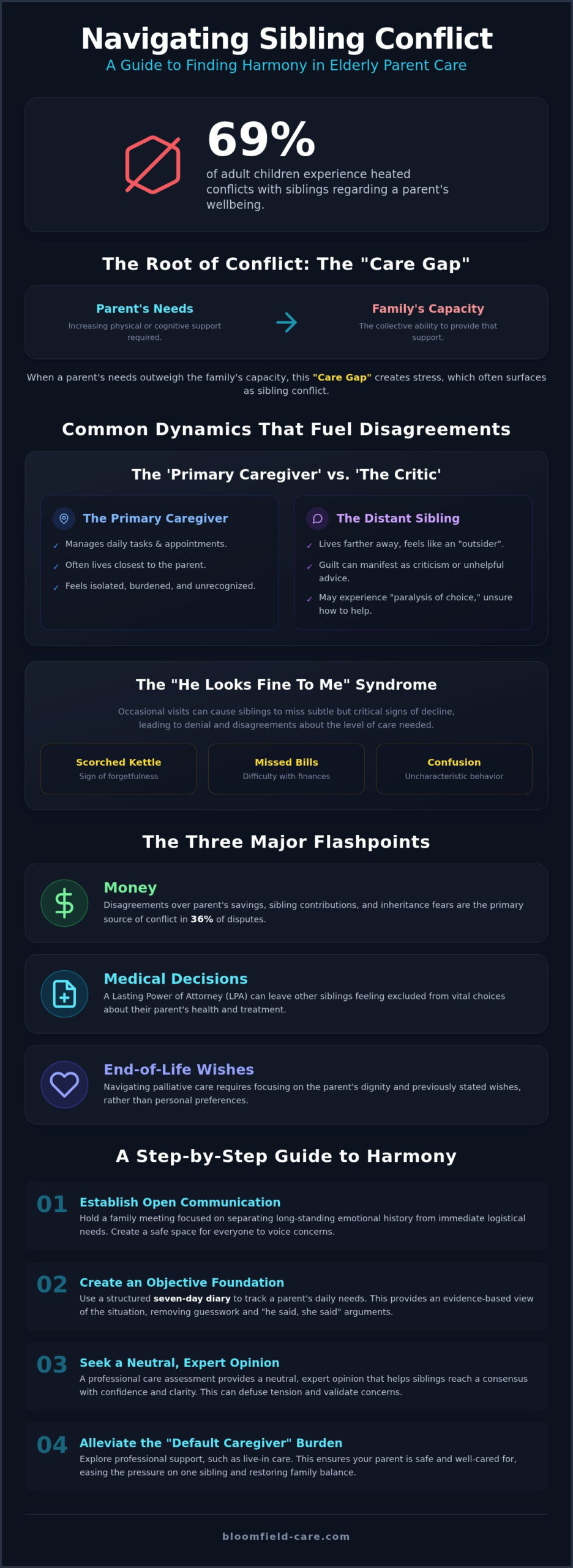
Did you know that 69% of adult children have experienced heated conflicts with their brothers or sisters regarding a parent’s wellbeing? If you’ve found yourself at the centre of sibling disagreements about elderly parent care, you aren’t alone. It’s incredibly draining to feel as though the entire weight of responsibility rests on your shoulders, or to feel misunderstood when you’re simply trying to do what’s best. You might be struggling with the anxiety of rising costs or the quiet resentment that builds when help isn’t shared equally.
We understand that these tensions often come from a place of deep love and shared grief. This guide is designed to help you navigate these complex emotions and find a path toward family harmony. You’ll learn how to establish a fair distribution of caregiving duties and create a clear, agreed-upon plan that ensures your parent receives the highest quality of support. We will explore how open communication, professional assessments, and services like live-in care can transform a source of stress back into a foundation of family connection.
Key Takeaways
- Identify why childhood roles often resurface during care transitions and how to bridge the “care gap” between your parent’s needs and your family’s capacity.
- Discover practical strategies to resolve sibling disagreements about elderly parent care by separating long-standing emotional history from immediate logistical requirements.
- Learn how to use a structured seven-day diary of daily needs to create an objective, evidence-based foundation for all future family discussions.
- Explore how professional support, such as live-in care, can alleviate the “default caregiver” burden and ensure your parent remains safe in their own home sanctuary.
- Understand the value of a professional care assessment in providing a neutral, expert opinion that helps siblings reach a consensus with confidence and clarity.
Why Sibling Conflict Arises During the Elderly Care Journey
Families often face what we call the “Care Gap” when a parent’s health begins to change. This is the space between the physical or cognitive support a parent requires and the family’s collective capacity to provide it. When this gap widens, sibling disagreements about elderly parent care often emerge as a symptom of collective stress rather than a lack of love. Old childhood dynamics frequently resurface during these times. The eldest child or the one living closest often instinctively takes on the role of the default caregiver. This shift isn’t always a conscious decision; it is an inherited role that can lead to deep feelings of isolation and burden.
Understanding the broader context of elderly care helps families realise that these transitions are a universal challenge. However, they feel deeply personal when your own family is involved. Geographical distance adds another layer of complexity. Siblings who live further away often feel like “outsiders,” leading to a cycle of guilt that manifests as criticism of the sibling who is physically present.
The ‘Primary Caregiver’ vs. ‘The Critic’
Resentment often builds when one sibling handles the vast majority of daily tasks. While one person manages medical appointments and household safety, siblings living in Oxford or London may experience a “paralysis of choice.” They feel the weight of the situation but lack the proximity to act, which sometimes leads them to offer suggestions that feel like criticisms to the person on the ground. We often see the profound emotional exhaustion that comes from providing the kind of domiciliary care Weymouth families rely on, especially when that effort feels unrecognised by those living elsewhere.
Denial and the ‘He Looks Fine to Me’ Syndrome
Conflict frequently arises when siblings aren’t on the same page about a parent’s health. Those who visit only occasionally might miss the subtle red flags of cognitive decline, such as a scorched kettle, missed bills, or uncharacteristic confusion. This can lead to significant tension when the primary caregiver suggests the parent is moving through different dementia stages that others aren’t yet ready to acknowledge. Care denial is a psychological defense mechanism against the fear of losing a parent. Ignoring medical advice regarding home safety doesn’t just put the parent at risk; it creates a rift that can take years to heal.
Common Flashpoints: Money, Medical Decisions, and End-of-Life
Sibling disagreements about elderly parent care often intensify when tangible decisions about money and medical authority come to the fore. These aren’t just logistical hurdles. They are deeply emotional flashpoints that can strain even the closest bonds. Research indicates that money is the primary source of conflict in 36% of caregiving disputes. These arguments often involve disagreements over how to use a parent’s savings or whether sibling contributions are necessary to maintain a certain standard of living.
Medical Power of Attorney, known as a Lasting Power of Attorney (LPA) in the UK, establishes a legal decision-maker. However, this can leave other siblings feeling excluded from vital choices. This friction is especially visible when discussing palliative care and ensuring end-of-life wishes are respected. Navigating these moments requires a focus on the parent’s dignity rather than personal preferences. It’s about finding a path that honours their life while managing the practicalities of their health.
The Financial Burden of Long-Term Care
Inheritance fear is a difficult but real topic that can simmer beneath the surface. Some siblings worry that expensive care will deplete their future inheritance, while others believe no cost is too high for a parent’s comfort. To avoid these battles, it’s vital to look at the cost of home care through a lens of long-term sustainability. Professional financial assessments in Oxfordshire and Dorset provide an objective roadmap. This removes the guesswork and finger-pointing, allowing everyone to see exactly what is affordable and necessary.
Quality of Life vs. Safety
The debate between “Home Care vs. Care Home” often centres on the perceived loss of independence. One sibling might prioritise total freedom, while another, often the one closer to the daily risks, prioritises constant supervision. Live-in care serves as an effective middle ground. It allows your parent to remain in their own sanctuary while ensuring professional safety is always present. Balancing the parent’s voice with these sibling concerns requires patience and a person-centred approach. If you’re finding it hard to agree on the next steps, a professional care assessment can offer the neutral perspective your family needs to move forward together.
Comparing Solutions: Family Meetings, Mediation, and Professional Support
Resolving sibling disagreements about elderly parent care requires moving from reactive arguments to proactive problem-solving. While the emotional weight of these decisions is high, structured solutions provide the stability your family needs. The first step for many families is a DIY approach, focusing on open dialogue before tensions escalate into legal or clinical disputes. By creating a shared space for discussion, you can address the “Care Gap” mentioned earlier without it feeling like a confrontation.
Using a professional agency adds a layer of objective data to these conversations. When a neutral third party provides a detailed care plan, it often silences the “he looks fine to me” syndrome. This professional oversight ensures that decisions are based on the parent’s actual needs rather than sibling perceptions or old family roles. It shifts the focus from who is doing the most work to what is best for the parent’s wellbeing.
The Power of the Family Meeting
A productive family meeting starts with neutral ground. Avoid holding these discussions in the parent’s home if it feels like their sanctuary is being invaded. Instead, choose a quiet space where everyone feels equal. The goal is to follow a clear agenda that avoids “parent-bashing” or digging up old childhood grievances. Focus entirely on the present and the future.
Dignity is maintained when you involve the parent in the conversation. Even if they have cognitive challenges, their voice should be heard. To keep everyone in the loop after the meeting, use shared digital calendars or care logs. This transparency reduces the anxiety of the “outsider sibling” and ensures the primary caregiver doesn’t feel abandoned. It turns a fragmented family into a cohesive support team.
When to Call in a Professional Mediator
Sometimes, conflict becomes toxic or “stuck” despite your best efforts. If communication has completely broken down, it’s time to involve an elder law solicitor or a professional mediator. These experts are trained to navigate the complex legal and emotional intersections of aging. You don’t have to wait for a crisis to seek help. A GP or a Social Worker can also provide an “official” recommendation that serves as a neutral baseline for the family.
In many cases, the friction is simply a result of burnout. This is where respite care becomes a vital tool for family harmony. It gives the primary caregiver a much-needed break from the daily physical and emotional toll, while also lowering the pressure from other siblings. Taking a step back allows everyone to gain perspective, ensuring that sibling disagreements about elderly parent care don’t lead to permanent relationship damage. Sometimes, the best way to care for a parent is to first care for the family bond.
A Step-by-Step Guide to Resolving Care Disputes with Your Siblings
Moving from conflict to a collaborative care plan requires a structured approach. When sibling disagreements about elderly parent care stall progress, following a clear path can help lower the temperature. It isn’t about winning an argument; it’s about ensuring your parent remains safe and supported in their preferred environment. By focusing on actionable steps, you can shift the energy from frustration to partnership.
- Step 1: Document your parent’s actual daily needs (ADLs) over a seven-day period. This creates a baseline of reality that everyone can see.
- Step 2: Schedule a ‘Business Only’ meeting. Keep this separate from family dinners or holiday gatherings to ensure emotions don’t cloud the logistics.
- Step 3: Research local options in areas like Wallingford, Abingdon, or Weymouth to understand what support is available nearby.
- Step 4: Request a professional care assessment to get an objective third-party opinion that siblings can’t argue with.
- Step 5: Create a rotating schedule or a shared funding pot to ensure the load is distributed fairly among all family members.
Gathering Objective Evidence
Facts neutralize feelings when discussing a parent’s decline. It’s much easier to agree on a solution when you’re looking at a formal Care Needs Assessment rather than relying on subjective opinions. We recommend tracking ‘near misses’, such as falls, scorched pans, or missed medications, over a week. These data points help clarify whether you should consider a bloomfield care home alternative or if domiciliary support is the safer path forward.
Defining Roles Based on Strengths
Not every sibling can provide hands-on care, and that’s okay. To maintain harmony, try to align responsibilities with individual strengths. Let the sibling with a head for figures handle the bills and insurance, while the local sibling manages the GP appointments. If you live far away, schedule regular ‘Check-in’ calls to provide emotional support to both your parent and your siblings. Setting clear boundaries about what you can and cannot do prevents the resentment that often fuels sibling disagreements about elderly parent care. If you’re ready to find a neutral starting point for your family, we invite you to book a professional care assessment with our compassionate team.
How Bloomfield Care Restores Family Harmony Through Person-Centred Support
At Bloomfield Care, we believe that professional support should do more than just manage physical health; it should heal family relationships. Our “Family First” philosophy recognizes that sibling disagreements about elderly parent care often stem from a lack of clear, objective information. By acting as a professional partner, we provide the structure and transparency needed to replace tension with peace of mind. Our detailed care plans serve as a shared roadmap, ensuring every sibling understands the daily support their parent receives in the sanctuary of their own home.
Our local branch managers act as a central point of contact for the whole household. This prevents the “he said, she said” dynamic that often occurs in family group chats. Whether you are based locally or watching from afar, you have access to the same reliable updates. We prioritize parent autonomy, ensuring your mother or father remains at the heart of every decision, while providing you with the professional safety net you need to feel secure.
An Objective Partner in Care
Our initial assessment is designed to identify real clinical and social needs rather than perceived ones. It is common for siblings to have different views on a parent’s safety at home. Having a professional carer in the private residence provides an unbiased perspective on progress. This significantly reduces the “burden of duty” for the primary family caregiver. It allows you to step back from being a manager of logistics and return to simply being a son or a daughter again.
Tailored Support Across Oxfordshire and Dorset
We provide bespoke assistance in communities across the region, including Newbury, Thatcham, and Poole. Our flexible domiciliary care and live-in care options are designed to cater to different family requirements. We focus on enhancing life quality through companionship and specialized dementia support, ensuring that your parent’s lifestyle is respected at every turn. This professional intervention ensures that sibling disagreements about elderly parent care don’t stand in the way of high-quality, person-centred support.
Book a free, no-obligation care assessment with our compassionate team today to begin your family’s journey toward harmony.
Finding Peace and Clarity for Your Family
Navigating the journey of aging is rarely a straight path. It’s natural for emotions to run high when sibling disagreements about elderly parent care occur, but these moments don’t have to define your family’s future. By documenting your parent’s actual needs and moving toward a structured, business-like approach to logistics, you can protect both your parent’s dignity and your own sibling bonds. Objective data remains your strongest ally in moving past old childhood roles and finding a sustainable way forward.
Separating the clinical “burden of duty” from the joy of family connection allows you to return to being a supportive son or daughter. Our team is here to act as your professional partner, providing a neutral and expert perspective that everyone can trust. With our CQC regulated excellence and local expertise across Oxfordshire, Dorset, and West Berkshire, we provide the person-centred reassurance you deserve. Request a Free Care Needs Assessment to help your family find a path forward and restore the harmony your household needs. You don’t have to carry this weight alone; we’re ready to listen and support you every step of the way.
Frequently Asked Questions
What do I do if my sibling is in denial about our parent’s dementia?
Denial is often a psychological defense against the fear of losing a parent’s guidance. To move forward, suggest a formal GP visit or a professional care assessment from a provider like Bloomfield Care. Objective medical facts are much harder to ignore than sibling opinions. This shift helps move the conversation from personal feelings to expert recommendations, which naturally reduces the friction within your family during this difficult transition.
How can we fairly split the cost of home care between siblings?
Fairness doesn’t always mean an equal financial split. Some families contribute based on their individual income, while those with less capital might contribute more of their time. It’s helpful to view the parent’s own assets as the primary source of funding first. Maintaining total transparency through a shared account for expenses in areas like Abingdon or Poole ensures everyone stays informed and feels the process is equitable.
Can a care agency help mediate a family disagreement?
While we aren’t legal mediators, a professional agency provides the objective evidence needed to settle sibling disagreements about elderly parent care. By conducting a thorough needs assessment, we identify the actual risks and requirements of the individual. This neutral third-party perspective often helps siblings reach a consensus because the care recommendations are based on clinical safety and the parent’s wellbeing rather than long-standing family dynamics.
What are the legal rights of a primary caregiver vs. other siblings?
In the UK, being the primary caregiver doesn’t grant you extra legal rights unless you hold a Lasting Power of Attorney (LPA). Without this legal document, no sibling has the unilateral authority to make decisions about a parent’s health or finances. It’s a common misconception that the child doing the most work has the final say. We encourage families in Wallingford and Weymouth to establish these legal frameworks early to avoid confusion.
How do I ask my siblings for more help without starting a fight?
Approach the conversation with specific, actionable tasks rather than general complaints. Instead of saying “I need more help,” try asking, “Could you manage the medication orders each month?” or “Can you visit on Saturdays?” This makes the request feel manageable and less like an attack on their character. Focusing on the parent’s specific needs in Newbury or Thatcham keeps the discussion productive and reduces the likelihood of defensive reactions.
Is it better to have a parent move in with a sibling or hire home care?
Moving a parent in can drastically change family dynamics and often leads to caregiver burnout. Hiring domiciliary care or live-in care allows your parent to remain in their own sanctuary while receiving professional support. This choice often preserves the parent-child relationship because you can focus on companionship rather than nursing tasks. It’s a popular solution for families across Dorset and Oxfordshire who value both safety and independence.
What happens if one sibling has Power of Attorney and others disagree?
An attorney has a legal duty to act in the parent’s best interests at all times. If other siblings believe the attorney is failing in this duty, they can report their concerns to the Office of the Public Guardian. However, it’s usually better to seek professional mediation first. Transparent communication about care plans in Abingdon or Christchurch can often resolve these disputes before they require formal legal intervention or investigations.
How do we handle a sibling who criticises our care choices from a distance?
Criticism from a distance often stems from a place of guilt or a lack of daily information. Invite the distant sibling to attend a professional care assessment via video call so they can hear the expert’s view directly. Giving them a specific role, such as managing the household bills from afar, helps them feel involved. This transparency often turns a critic into a supportive partner who understands the reality of sibling disagreements about elderly parent care.