
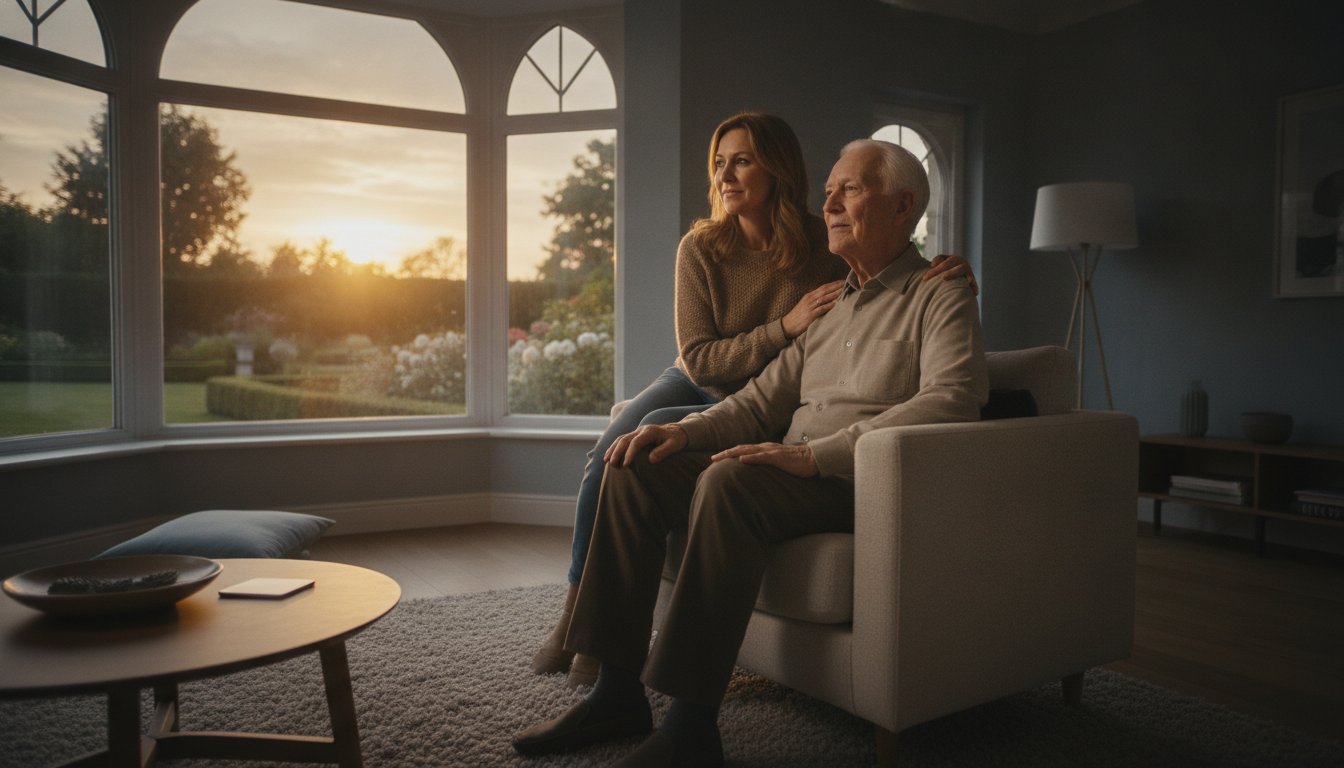
It’s 4 PM, and the kitchen you’ve shared for forty years suddenly feels like a foreign land to the person you love most. You see the confusion in their eyes turn into agitation as the sun begins to set, and your heart aches because you aren’t sure how to bring them back to the present. It’s an incredibly heavy burden to carry, especially when the person you’re caring for starts to feel like a stranger in their own skin.
We understand that you’re likely feeling exhausted from the sleepless nights caused by sundowning and perhaps even a little unsettled in the place that should be your sanctuary. Managing dementia behaviours at home is one of the greatest challenges a family can face, but it’s important to remember that every difficult moment is actually a form of communication. You deserve to feel supported, and your loved one deserves to feel understood and safe.
This 2026 guide offers practical, person-centered strategies to help you decode these distress signals and restore a sense of calm to your household. We’ll walk you through effective de-escalation techniques, ways to adapt your environment for safety, and how to identify when professional domiciliary or live-in care can help preserve the quality of life you both cherish. Our goal is to help you move from a place of constant crisis to one of connection and peace.
Key Takeaways
- Learn how to view challenging behaviours as a vital form of communication, helping you identify the unmet physical or emotional needs behind a loved one’s distress.
- Master the “ABC” model to pinpoint specific environmental triggers like lighting or noise, allowing you to prevent agitation before it starts.
- Discover practical, person-centred techniques for managing dementia behaviours at home, specifically addressing the challenges of sundowning and repetitive questioning.
- Explore how to adapt your living space into a dementia-friendly sanctuary using subtle layout changes and modern assistive technology to enhance safety and independence.
- Recognize the early signs of caregiver burnout and understand how a partnership with specialist live-in care can restore balance and peace to your family home.
Why Behaviours Change: Understanding Dementia as Communication
When we discuss managing dementia behaviours at home, we’re often looking at the surface of a much deeper emotional and physical experience. For many families, “behaviour” is seen as something to be stopped or controlled. However, a person-centred approach views these moments as vital communication. Your loved one isn’t trying to be difficult; they’re trying to tell you something they can no longer put into words. This shift in mindset is the foundation of modern care in 2026, moving away from clinical management and toward empathetic decoding.
The brain undergoes physical changes that strip away the ability to filter thoughts or control impulses. In Alzheimer’s, the damage often hits memory and logic first, making the world feel like a constant puzzle with missing pieces. In Vascular dementia, the focus is frequently on decision-making and speed of thought. These biological shifts mean that the person’s home, once a sanctuary, can suddenly feel threatening or confusing. Research into Dementia caregiving approaches suggests that when we understand the “why” behind the action, we can reduce distress for everyone in the household.
The Concept of ‘Unmet Needs’
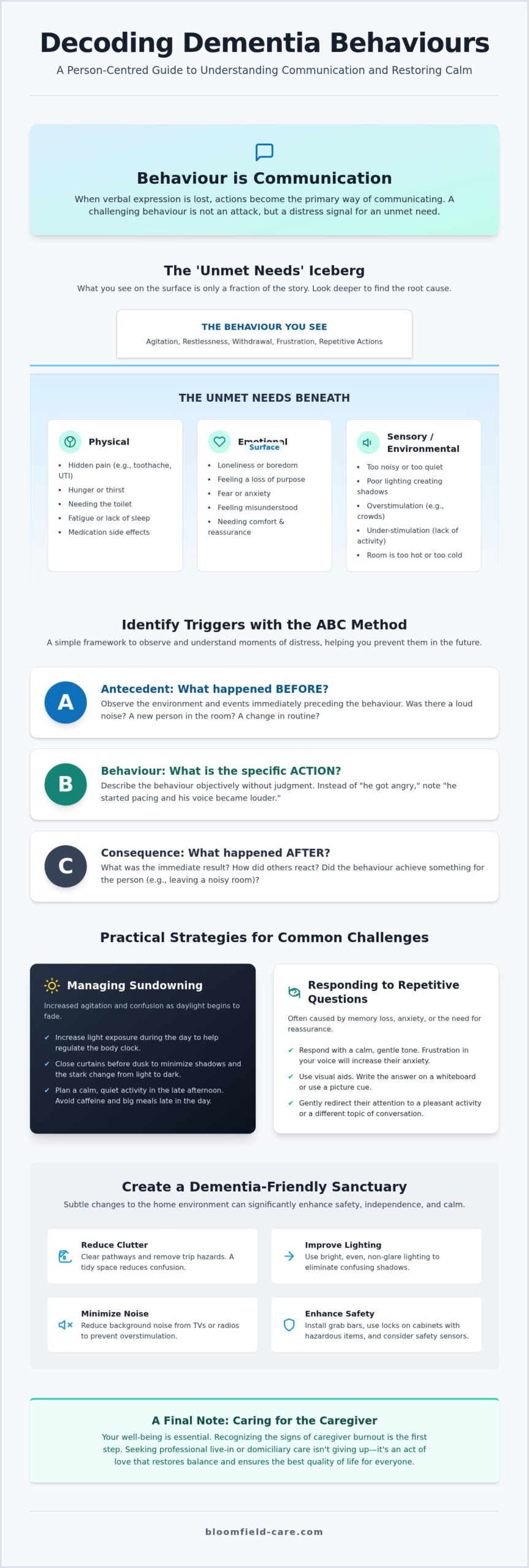
Think of behaviour as the tip of an iceberg. Beneath the surface, there’s usually a need that isn’t being met. By identifying these needs, you can often resolve the agitation before it escalates. These needs generally fall into three categories:
- Physical: They might have a hidden pain, such as a toothache or a urinary tract infection, or they may simply be hungry, thirsty, or needing the toilet.
- Emotional: A sense of loneliness, even when you’re in the room, or a feeling that they’ve lost their purpose can lead to profound restlessness.
- Sensory: A room that’s too noisy, lighting that creates scary shadows, or even a lack of activity can leave someone feeling overstimulated or forgotten.
Differentiating Between Stages
Distress looks different as the condition progresses. In the early stages, you might see frustration or withdrawal as the person realizes they’re losing their grip on daily details. By the later stages, this can evolve into physical agitation or vocal distress. Our Understanding Dementia Stages guide provides a deeper look at these transitions and how they affect the household dynamic. Recognizing these stages allows for earlier intervention, which is key to maintaining a peaceful home environment. When you address the root cause of a behaviour early on, you’re not just managing a symptom; you’re preserving the dignity and comfort of the person you love.
Identifying Triggers: The Key to Preventing Distress
Distress rarely appears without a reason. When you’re managing dementia behaviours at home, the most effective tool in your kit isn’t a medical intervention; it’s your power of observation. By identifying the specific triggers that lead to agitation, you can often rearrange the environment or the daily routine to prevent a crisis before it begins. This proactive approach transforms the home back into a sanctuary where both you and your loved one can feel at ease.
Triggers are often invisible to those without dementia. A sudden outburst might seem random, but it’s frequently a reaction to a sensory overload or an internal discomfort. For instance, a person might become restless because of a side effect from a new medication or a silent physical issue like a urinary tract infection (UTI). In 2026, we encourage families to look for patterns using a behaviour diary. This simple record helps you spot trends, such as increased confusion during specific times of day or in response to certain household sounds.
The ABC Method of Observation
To move beyond guesswork, many caregivers find success with the ABC model. This framework helps you document moments of distress with professional clarity. It allows you to see the situation objectively rather than through the lens of emotional exhaustion.
- Antecedent: What happened immediately before the behaviour? Perhaps a loud lorry passed the window in a busy area like Abingdon, or the television was turned on too high.
- Behaviour: Describe exactly what happened. Use factual terms like “pacing” or “shouting” rather than interpretations like “being difficult.”
- Consequence: How did you respond? Did a calm reassurance help, or did trying to reason with them increase the agitation?
Sensory Triggers in the Private Residence
The way a person with dementia perceives their environment changes significantly. A dark rug on the floor might look like a deep hole, causing them to stop or panic. This “black-hole” effect is a common visual trigger that is easily fixed by using high-contrast, lighter flooring. Mirrors can also become problematic; a person might not recognise their own reflection and feel there’s a stranger in their private residence.
Soundscapes play a huge role too. In bustling parts of Oxford or Dorset, external noise can bleed into the home, creating a confusing layer of stimulation. Managing these sensory inputs, such as using soft lighting to reduce harsh shadows in the evening, can significantly lower distress levels. If you find that identifying these patterns is becoming overwhelming, our specialist dementia care teams can work alongside you to create a more supportive home environment.
Practical Strategies for Managing Common Challenges
When you are managing dementia behaviours at home, it’s helpful to remember that your approach is not about controlling your loved one, but about supporting their emotional state. Each day brings a new set of puzzles, and having a toolkit of practical strategies can help you respond with grace rather than reacting out of frustration. By focusing on person-centred techniques, you can preserve the bond of love that defines your relationship while ensuring the household remains a place of safety.
Coping with Sundowning and Sleep
The late afternoon and early evening, often called the “witching hour,” can bring a distinct rise in restlessness known as sundowning. To help ease this transition, try establishing a rhythmic winding down routine that signals the end of the day. Close the curtains before the sun begins to set; this prevents the confusing shadows and reflections we discussed in the previous section. Reducing caffeine and sugar after midday can also help the body prepare for rest. Creating a sensory sanctuary with soft music or gentle aromatherapy, such as lavender, can provide a calming anchor during these busy hours.
De-escalation in the Moment
If agitation escalates into aggression, your primary goal is de-escalation. One of the most effective tools is the Validation Method. This involves acknowledging the person’s reality instead of correcting them. If they are distressed about “going home” to a house they haven’t lived in for years, don’t tell them they are already home. Instead, ask them about that house or what they miss most about it. This meets their emotional need for security without triggering an argument. Your body language is just as important as your words. Keep your stance open and your voice low and steady. If you remain calm, your loved one is less likely to “mirror” your tension, which can help the moment pass more quickly.
Managing Repetition and Fidgeting
Repetitive questioning and constant fidgeting are often signs of underlying anxiety or boredom. If a question is asked ten times, try answering the “feeling” rather than the words. They might be asking “What time is it?” because they feel a loss of control over their schedule. Providing a simple visual timetable can offer the reassurance they crave. For those who feel a physical need to move or “rummage,” creating a box filled with meaningful items, like old photos, textured fabrics, or tools from a former hobby, can channel that restless energy into something purposeful. You can find more inspiration for engagement in our guide on Dementia Activities in Newbury, which explores how to create moments of connection through shared tasks.
Adapting the Home Environment for Safety and Calm
Your home is more than just a building; it’s a collection of memories and a place where you should feel most secure. When managing dementia behaviours at home, the physical layout plays a silent but powerful role in either increasing agitation or fostering peace. A well-adapted environment reduces the cognitive load on your loved one, making daily tasks feel less like a hurdle and more like a natural part of their day. By making subtle changes, you can promote independence and dignity without turning the residence into a clinical space.
The goal is to create a “choice-based” environment where your loved one can still make simple decisions. For families in the rolling hills of Dorset or the quiet lanes of Oxfordshire, a safe garden is a precious resource. Fresh air and a change of scenery can break a cycle of restlessness. Ensure garden paths are flat and circular so there are no dead ends that might cause confusion or a sense of being trapped. Nature has a profound way of grounding us, and a familiar outdoor space can be a vital part of a person-centred care plan.
Visual Cues and Wayfinding
Recognition is often easier than recall for someone living with dementia. Using high-contrast colours can make a world of difference in how they navigate their sanctuary. For example, a bright red or blue toilet seat stands out against white tiling, helping someone find the bathroom without distress. Similarly, using a plate that contrasts sharply with the colour of the food can encourage better nutrition and reduce the confusion that leads to “fussy” eating.
Simple, clear labels on cupboards—perhaps a picture of a cup alongside the word “Mugs”—reduce the frustration of searching for everyday items. It’s also wise to remove distracting patterns from wallpaper or carpets. Busy designs can sometimes appear to move or vibrate in the eyes of someone with dementia. This can lead to dizziness or the mistaken belief that there are objects or insects on the floor, which triggers unnecessary anxiety.
Safety Without Restriction
Dignity is best preserved when safety measures are discreet. Instead of installing restrictive locks that might cause panic or a sense of imprisonment, consider smart technology. Discreet sensors can alert you if a door is opened or if there is unusual movement in the night. This allows your loved one the freedom to move while giving you the peace of mind you need to rest. This monitored independence is a hallmark of modern care, especially for families living in more rural areas of West Berkshire or Dorset where emergency help might be further away.
Preparing for emergencies is essential for maintaining a calm household. Keep a checklist that includes current medications, a recent photo, and contact details for your local healthcare team. If you feel that the physical demands of maintaining a safe environment are becoming too much to handle alone, our specialist dementia care at home provides the expert partnership you need to keep your loved one safe in the place they love most.
Specialist Support: Professional Dementia Care in Oxfordshire and Dorset
Caring for a family member is an act of profound love, but it’s also a journey that can become physically and emotionally exhausting. You might begin to notice the subtle signs of caregiver burnout: a persistent feeling of tiredness that sleep doesn’t fix, a sense of irritability, or even a feeling of isolation in your own home. These aren’t signs of failure. They’re signals that the complexity of managing dementia behaviours at home has reached a point where a professional partnership is needed to restore balance to your life.
Moving from a state of constant “crisis management” to a sustainable care routine is the kindest thing you can do for both yourself and your loved one. When you have expert support, you’re no longer alone in decoding distress or navigating sleepless nights. You can step back from the role of a primary clinical observer and return to being a daughter, son, or spouse, knowing that the safety and dignity of your loved one are in capable hands.
The Role of a Specialist Live-in Carer
Consistency is the foundation of cognitive stability for someone living with dementia. A specialist live-in carer provides a steady, familiar presence that helps reduce the confusion often caused by multiple visiting staff or a change in environment. They’re trained in professional de-escalation techniques, allowing them to handle moments of agitation with the calm, gentle authority we’ve discussed throughout this guide. This constant Compassionate Live-in Care ensures that routines are maintained precisely, which is vital for reducing the anxiety that leads to challenging behaviours.
Beyond safety, a live-in carer provides meaningful companionship. Loneliness is a significant trigger for distress, and having someone there to share a cup of tea, look through a rummage box, or take a gentle walk in the garden can transform a person’s mood. It’s about enhancing life quality, not just managing symptoms.
Bloomfield Care: Your Local Partner
We believe that care should feel like a natural extension of your domestic environment. Our teams across Wallingford, Weymouth, and the wider Oxfordshire and Dorset regions are deeply rooted in the communities they serve. We don’t believe in one-size-fits-all solutions. Instead, we create tailored care plans that respect the autonomy and history of the individual. Whether you need hourly domiciliary care to help with specific daily tasks or 24-hour support, our person-centred approach is designed to keep the private residence as a sanctuary.
Deciding on the right path forward is a significant step. If you’re currently weighing the benefits of staying in the place you love versus other options, our 2026 guide on Bloomfield Care Home or Care at Home? provides the clarity you need to make an informed decision. We’re here to listen and to walk this path with you, ensuring your family finds the peace and stability you deserve.
Restoring Peace and Connection to Your Household
Managing dementia behaviours at home is a continuous journey of learning and adaptation. By shifting your perspective to see every action as a form of communication, you’ve already taken the most important step toward a calmer household. Whether it’s identifying a hidden physical trigger or making small, thoughtful adjustments to your living environment, these person-centred strategies help preserve the dignity of the person you love while protecting your own well-being.
You don’t have to navigate these complexities alone. As a family-run provider with professional standards, we believe that the right support should feel like a natural extension of your own care. Our team provides specialist dementia training for all carers to ensure the highest level of expertise in every household. We are a CQC regulated provider committed to excellence and kindness, helping you move from a place of exhaustion to one of stability.
Take the first step toward a more sustainable and peaceful future for your family today. Book a Compassionate Care Needs Assessment with Bloomfield Care to discover how a professional partnership can enhance your quality of life. Remember, with the right support, your home can remain a place of safety, comfort, and enduring love.
Frequently Asked Questions
What is ‘sundowning’ and how can I stop it at home?
Sundowning refers to a state of increased confusion, anxiety, and agitation that occurs as daylight fades in the late afternoon. You can’t always stop it entirely, but you can minimize its impact by closing curtains before dusk to prevent confusing shadows. Keeping the home brightly lit in the early evening and maintaining a calm, predictable routine helps signal that it’s time to wind down. Reducing noise from televisions during this period also prevents sensory overload.
Is it normal for dementia to cause sudden aggressive behaviour?
Sudden aggression is a common symptom of dementia, often resulting from the person’s inability to express a physical or emotional need. It is usually a reaction to feeling overwhelmed, frightened, or frustrated by a task they can no longer complete. When this happens, stay calm and give them plenty of space. Try to identify if a specific trigger, such as hidden pain or a loud noise, caused the outburst before attempting to redirect their attention.
How should I respond when someone with dementia asks for their deceased parents?
When your loved one asks for someone who is no longer living, it’s best to respond with empathy rather than factual correction. Correcting them can cause fresh grief and unnecessary distress. Instead, use the validation method by asking them to tell you a story about their parents. This allows them to connect with the comfort of the memory without the pain of being told their reality is wrong. It meets their emotional need for security and love.
Can certain foods or drinks make dementia behaviours worse?
Yes, certain substances can significantly impact mood and sleep patterns. Caffeine and high-sugar foods in the afternoon can lead to increased restlessness and worsen agitation. Dehydration is another major factor that often leads to increased confusion and urinary tract infections, which trigger distress. Providing water or herbal teas throughout the day, while limiting alcohol, can help maintain a more stable and peaceful environment for your loved one in their private residence.
When should I consider professional live-in care for my loved one?
You should consider professional live-in care when the daily demands of managing dementia behaviours at home begin to compromise the safety or health of everyone involved. If you’re experiencing chronic sleep deprivation or if your loved one requires constant supervision to prevent falls, a specialist carer can provide the 24/7 consistency needed. This partnership allows you to focus on being a family member again while experts handle the complexities of cognitive support and safety.
How can I keep my loved one from wandering out of the house at night?
To prevent night-time wandering, focus on making the home environment feel secure using discreet technology. Installing motion sensors or door alarms can alert you if they leave their bed or try an external door without restricting their movement. Ensure that the path to the bathroom is well-lit with nightlights to reduce confusion. Sometimes, placing a dark mat in front of the exit can act as a visual deterrent, as it may appear like a hole to someone with dementia.
What should I do if my loved one refuses to wash or change clothes?
Resistance to bathing often stems from a fear of water or a feeling of vulnerability. Instead of insisting on a full bath, try a “towel bath” or breaking the process into very small, manageable steps. Use warm, familiar scents and ensure the bathroom is comfortably heated to make it feel like a spa experience. It’s often helpful to wait for a “window of opportunity” when they are in a better mood rather than forcing a strict schedule that leads to confrontation.
Where can I find local dementia support groups in Oxfordshire or Dorset?
Local support is available through the Oxfordshire and Dorset County Councils, which provide directories for dementia-friendly communities and local hubs. You can also reach out to the Alzheimer’s Society local branches for peer support groups in your specific town. At Bloomfield Care, we are deeply involved in the local community and can often signpost you to regional resources in areas like Weymouth, Abingdon, or Wallingford to help you build a wider support network.