

What if the outbursts and restlessness you see aren’t just symptoms of a disease, but a silent plea for something your loved one can’t put into words? When you’re managing challenging behaviour in dementia at home, it’s easy to feel like you’re failing, especially when the nights are long and the days are filled with confusion. You aren’t alone in feeling exhausted or even a little fearful of the next sudden change in mood. It’s a heavy burden to carry, and the guilt of feeling overwhelmed is something many families face as they try to maintain a sense of normalcy.
We believe that every home should be a sanctuary of safety and respect. This guide is designed to help you transform your approach by looking at the “why” behind the actions rather than just the actions themselves. You’ll discover practical, person-centred strategies to de-escalate tension and preserve the dignity of your family member while protecting your own mental well-being. From understanding the triggers of “sundowning” to knowing when it’s time to reach out for professional companionship or live-in care, we’ll walk through the steps to restore a sense of calm and stability to your daily life.
Key Takeaways
- Learn to view difficult moments as a form of communication, helping you decode the unmet needs behind a loved one’s distress.
- Discover how the “ABC” framework provides a structured way of managing challenging behaviour in dementia at home by identifying triggers and adjusting your responses.
- Understand how to transform your living space into a calming sanctuary by reducing visual clutter and creating a soothing atmosphere for mental well-being.
- Recognise the signs of caregiver burnout and learn how specialist live-in or domiciliary care can help maintain a peaceful home environment.
What is Challenging Behaviour in Dementia?
When we talk about the changes in how a loved one acts, we often use the clinical term “Behavioural and Psychological Symptoms of Dementia,” or BPSD. While that sounds technical, it simply describes the moments of agitation, anxiety, or aggression that can occur as the condition progresses. If you’re currently managing challenging behaviour in dementia at home, it’s vital to remember that these actions aren’t a choice. They aren’t a reflection of your loved one’s character or their feelings toward you. Instead, they’re a physical manifestation of the changes happening in the brain.
Think of these behaviours as a form of communication. When language begins to fail and the ability to process the world diminishes, actions become the only way to express distress. Distinguishing between your loved one’s personality and the symptoms of their condition is a key step in providing compassionate care. The person you know is still there; they’re just struggling to navigate a world that has become increasingly confusing. Understanding the foundations of Dementia caregiving helps us see that these outbursts are usually a reaction to something in their environment or an internal feeling they can’t describe.
Common Types of Behavioural Changes
You might notice your loved one becoming restless, perhaps pacing the floor or wringing their hands. This agitation often stems from a feeling of being trapped or misunderstood. A specific challenge many families face is “sundowning.” This is a period of increased confusion and hyperactivity that typically occurs in the late afternoon or early evening. It can be exhausting for everyone involved, as the person may become more vocal or try to “go home” even when they’re already in their own living room. Repetitive questioning is another common sign, often used as a way to find security in a world that feels like it’s constantly shifting.
Identifying the “Unmet Needs” Behind the Action
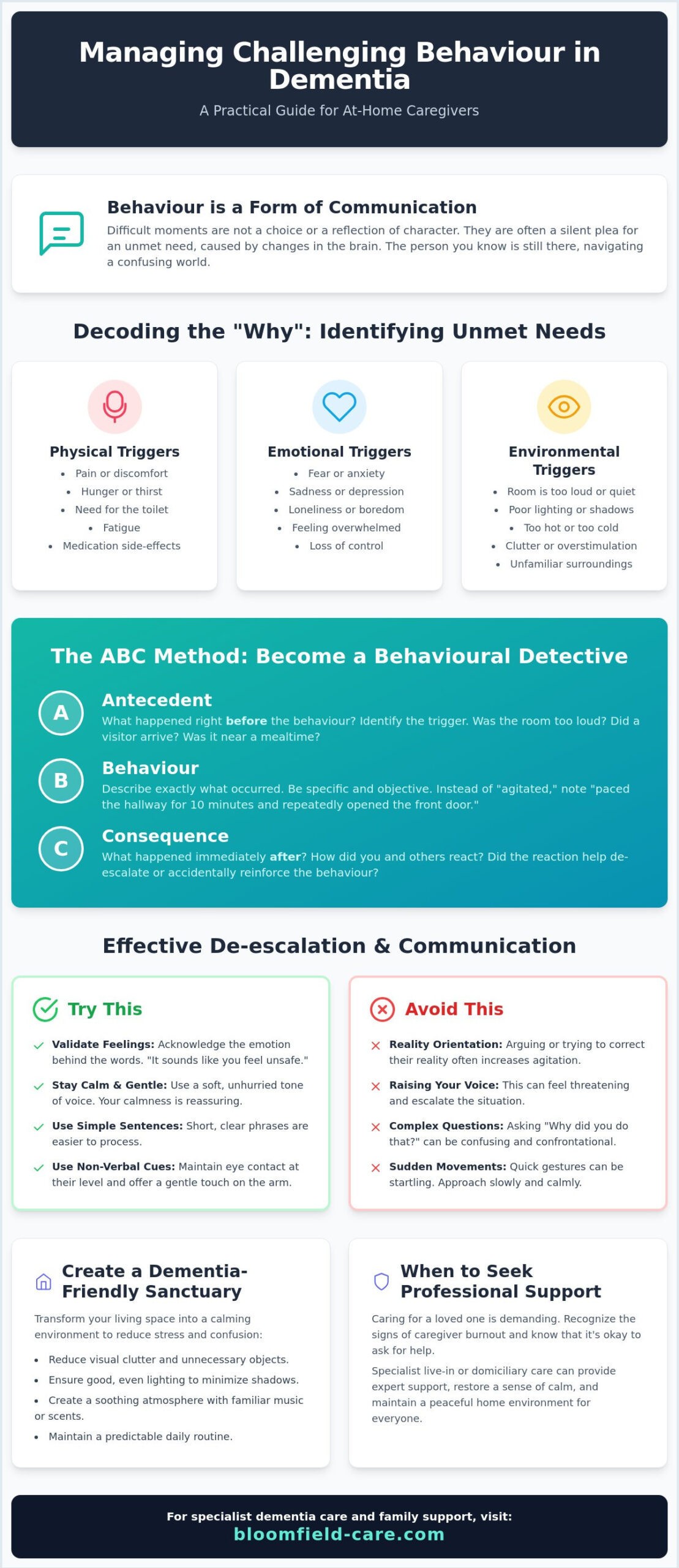
To support someone effectively, we have to become detectives. Most challenging behaviours are triggered by an unmet need. Physical triggers are the most common; your loved one might be in pain—perhaps from a dental issue that Peacock Dental Spa could help identify—thirsty, or simply need the toilet but can’t find the words to tell you. Emotional triggers, such as fear or a profound sense of loneliness, can also cause a sudden change in mood. Finally, don’t overlook sensory triggers. A room that’s too noisy, lighting that’s too dim and creates scary shadows, or even a slight chill in the air can be enough to cause significant distress for someone with dementia.
Practical Strategies for De-escalation and Prevention
Responding to an outburst can feel like walking a tightrope. Your first instinct might be to correct a confusion or explain why a request is impossible, but for someone living with cognitive decline, this “reality orientation” often feels like an attack. Instead, focusing on validation—acknowledging the emotion behind the words—de-escalates the situation much faster. Staying calm is your most powerful tool. A gentle, unhurried tone signals safety, even when your own heart is racing. If these daily interactions are becoming overwhelming, seeking specialist dementia care can provide the expert guidance needed to restore peace to your home.
The ABC Method: Becoming a Behavioural Detective
The ABC framework is a cornerstone of managing challenging behaviour in dementia at home. It helps you move from reacting to understanding. This NIH guide to managing dementia behaviors highlights how these non-drug interventions are often the most effective first line of support. By tracking these three elements, you can identify patterns that were previously invisible:
- Antecedent: What happened right before the behaviour? Was the room too loud? Did a specific person enter? Identifying the trigger is the first step toward prevention.
- Behaviour: Record exactly what occurred. Instead of writing “they were angry,” note “they shouted and paced for ten minutes.” This clarity helps when speaking with healthcare professionals.
- Consequence: How did you react, and what happened next? Sometimes our natural reactions, like raised voices or sudden movements, accidentally reinforce the distress.
Communication Techniques That Work
Non-verbal cues often speak louder than words. Maintaining eye contact at the same level as your loved one and using a gentle touch on the arm can provide immense comfort. It’s helpful to use short, simple sentences to reduce the cognitive load on their brain. If a conversation becomes circular or heated, try redirection. Gently shifting focus to a comforting activity, like listening to a favourite song or looking at a photo album, can break the cycle of agitation.
When an active outburst occurs, follow these immediate steps to ensure everyone’s safety:
- Stop what you’re doing and take a deep breath to centre yourself.
- Lower your voice and slow your speech.
- Give them physical space; don’t try to restrain or crowd them.
- Remove any immediate hazards, such as sharp objects or loud background noise.
- Acknowledge their feelings with phrases like, “I can see you’re upset, and I’m here with you.”
Creating a Dementia-Friendly Sanctuary at Home
A home is much more than a physical structure. It’s a sanctuary where memories are held and where your loved one should feel most secure. However, as cognitive function declines, the environment that once provided comfort can become a source of profound confusion. Effectively managing challenging behaviour in dementia at home starts with looking at your surroundings through their eyes. What we see as a cozy, lived-in living room might appear to them as a chaotic obstacle course of visual clutter. Reducing this clutter isn’t about stripping away the home’s personality; it’s about removing the “noise” that the brain can no longer filter out, which often leads to sensory overload and subsequent agitation.
Lighting plays a vital role in maintaining a sense of peace. Dimly lit corners or flickering bulbs can create long, distorted shadows that a person with dementia might mistake for intruders or frightening figures. By ensuring rooms are brightly and evenly lit, you can significantly reduce shadow-induced fear and late-afternoon anxiety. At the same time, maintaining familiarity is essential for emotional stability. Keep cherished photos and favourite chairs in their usual places, but consider subtle upgrades like removing rugs with busy patterns that might be mistaken for “holes” or obstacles on the floor. This balance of safety and familiarity helps preserve the sanctuary feel of the private residence.
Reducing Sensory Overload
The hidden stress of background noise is often underestimated. A television left on all day or a loud radio can create a constant hum of sensory input that leads to irritability and outbursts. Try to keep the home environment quiet and unhurried to mirror the patient nature of the care you provide. The role of visual contrast is also a simple yet powerful tool. For example, using a brightly coloured plate that stands out against the tablecloth or a contrasting toilet seat helps a person recognise these objects more easily. Even temperature control matters; being too hot or too cold is a common physical trigger for agitation that a person may not be able to articulate. Keeping the home at a steady, comfortable temperature can prevent many episodes of restlessness.
Promoting Independence Through Environment
Helping your loved one navigate their own home preserves their dignity and reduces the frustration that leads to difficult behaviours. Clear, simple signage on doors, perhaps a picture of a toilet or a bath, can act as essential wayfinding markers. If they have a tendency to pace, creating a “safe wandering” path that is free of trip hazards allows them to move freely without constant intervention. As the condition progresses through the various dementia stages, your focus may shift toward maximum comfort and specialized support. Integrating palliative care principles ensures that even in the later stages, the home remains a sanctuary of gentle care and profound respect for the individual’s lifestyle.
When to Seek Professional Support in Oxfordshire and Dorset
Caring for a loved one with dementia is a profound act of devotion, yet it’s also one of the most physically and emotionally demanding roles a person can undertake. While you may feel a deep sense of responsibility, managing challenging behaviour in dementia at home isn’t a journey you have to walk alone. There often comes a point where the complexity of the condition exceeds what one person can provide, especially when the home environment begins to feel more like a place of constant crisis than a sanctuary. Recognising that you need help isn’t a sign of failure; it’s an act of love that ensures both you and your family member remain safe and well.
Professional intervention can be the key to breaking negative cycles of behaviour that have become entrenched. Whether it’s through hourly domiciliary care to assist with morning routines, overnight care to manage restlessness, or full-time support, bringing in a specialist can restore the balance of your relationship. It allows you to return to being a daughter, son, or spouse, rather than just a primary caregiver. If you’re feeling overwhelmed, exploring dementia care services can provide the unhurried, expert assistance your family deserves.
Identifying the Tipping Point
Burnout and compassion fatigue often settle in gradually. You might notice you’re becoming more easily frustrated, feeling a sense of constant dread, or experiencing physical exhaustion that sleep doesn’t fix. Sleep deprivation is a major tipping point; if your loved one’s night-time restlessness means you aren’t getting the rest you need, your ability to provide patient care during the day will naturally diminish. Safety is the ultimate priority. If there’s a risk of your loved one wandering or if outbursts have become physically difficult to manage, it’s time to look at professional options to safeguard everyone involved.
Local Support Pathways
Families in Wallingford, Abingdon, and across Oxfordshire, as well as those in Weymouth and Dorset, have access to dedicated local resources. Navigating the local authority assessment process is a vital first step in understanding what help is available in your specific area. These assessments can help determine if you’re eligible for support and guide you toward the right level of assistance for your situation.
In many cases, respite care provides a necessary pause, allowing you to recharge while your loved one receives specialist attention. For those who require more consistent support to stay in their familiar surroundings, live in care offers a way to manage complex dementia behaviours around the clock. This level of support ensures that the individual’s lifestyle and autonomy are preserved within the comfort of their own home, even as their needs become more complex.
How Bloomfield Care Supports Families with Specialist Dementia Care
At Bloomfield Care, we believe that the most effective way of managing challenging behaviour in dementia at home is through a partnership-driven, person-centred approach. We don’t just see a set of symptoms; we see a person with a rich history and a family who cares deeply for them. Our role is to provide the unhurried, patient support that allows your loved one to remain in the comfort of their own surroundings while ensuring their dignity is always preserved. We treat every private residence as a sanctuary, focusing on human connection and the sanctity of your family’s lifestyle above all else.
The Bloomfield Difference: Expertise and Empathy
Our carers aren’t just staff members; they’re dedicated professionals trained to look beyond the surface. They use the ABC method and validation techniques we’ve discussed to identify triggers before they lead to significant distress. By providing a consistent, familiar face, we reduce the anxiety that often comes from having different people entering the home. This stability is vital for mental well-being. Our personalised care plans aren’t static; they adapt as the condition progresses, ensuring that the level of assistance always matches your loved one’s specific needs and your own requirements for peace of mind.
For families in the South West, our domiciliary care Weymouth services focus on maintaining the routines that provide a sense of safety. Whether it’s a specific way of making a morning coffee or a preferred route for a garden walk, we honour the small details that matter. We understand that these familiar patterns are essential for reducing confusion and preventing outbursts, helping to maintain a calm and predictable environment.
Taking the First Step Toward a Calmer Home
Deciding to seek help is a significant moment, and we’re here to guide you through it with grace and clarity. To support you, we offer a free care needs assessment across Oxfordshire and Dorset. This is a chance for us to listen more than we speak, understanding your unique challenges and discussing how we can work in partnership to support your loved one’s independence. We focus on enhancing life quality, providing a sense of reliability that alleviates the anxieties of caregiving. Most importantly, we want you to know that you don’t have to do this alone. We’re here to provide the stability and heart you need to restore peace to your home.
Restoring Peace and Connection to Your Home
Moving from a place of distress to one of understanding is a gradual process that begins with viewing every action as a form of communication. By identifying triggers through the ABC method and adapting your living space into a calming sanctuary, you can significantly reduce the frequency of outbursts. It’s vital to remember that managing challenging behaviour in dementia at home is not something you have to master alone. It’s about finding the right balance between your own well-being and the specialised support your loved one needs to thrive.
Since 2014, Bloomfield Care has been a trusted partner for families across Oxfordshire, Dorset, and West Berkshire. As a CQC-regulated provider, we specialise in creating highly personalised, person-centred care plans that respect the autonomy of the individual and the comfort of the private residence. Our dedicated carers bring the expertise and patience required to navigate complex behaviours with genuine kindness and integrity. We’re here to help you preserve the sanctity of your home while enhancing the quality of life for your loved one.
Request a Compassionate Care Needs Assessment Today to explore how we can support your family’s journey. You’ve already taken the first step by seeking knowledge; let us help you take the next one toward a calmer, more stable home life.
Frequently Asked Questions
What are the most common triggers for aggressive behaviour in dementia?
Aggressive behaviour is often triggered by physical pain, constipation, or environmental sensory overload. Because a person with dementia might struggle to communicate these needs, they express frustration through their actions. Identifying these unmet needs is the first step in managing challenging behaviour in dementia at home effectively. Changes in routine or the presence of unfamiliar people can also cause a sudden rise in agitation.
How can I stop someone with dementia from wandering at night?
Night-time wandering can be managed by creating a soothing evening routine and ensuring the bedroom is comfortable. Using blackout curtains to signal it’s night and sensor mats to alert you to movement can help maintain safety without being intrusive. For families who need a professional presence in the home to prevent wandering, specialized house-sitting and care services from Elite Caregivers United LLC can offer peace of mind. It’s also helpful to limit caffeine and heavy meals late in the day to promote better sleep and reduce the confusion that leads to restlessness.
Can medication help manage challenging behaviours at home?
Medication is sometimes used to manage severe agitation, but it’s usually considered a secondary option after non-drug strategies. Doctors often prefer to address the underlying causes of distress, such as infections or environmental triggers, first. Always discuss any concerns with a GP or specialist to ensure the chosen approach supports your loved one’s overall well-being and safety within their domestic environment.
Is it possible to manage late-stage dementia behaviour without a care home?
It’s entirely possible to support someone with late-stage dementia at home with the right specialist assistance. Live-in care provides 24-hour support in the familiar sanctuary of their own residence, allowing the individual to maintain their autonomy and dignity. This level of personalised care ensures that even complex needs are met in a way that feels safe and familiar to the person.
How do I deal with a loved one who refuses personal care or bathing?
If a loved one refuses a bath, it’s best to stop and try again later when they feel more relaxed. Forcing the issue often leads to greater distress and potential outbursts for everyone involved. Try making the bathroom feel more inviting with warm towels and familiar scents, or consider a towel bath as a gentler, less threatening alternative to a full shower.
What should I do if I feel I can no longer cope with the behaviour at home?
If you feel you can no longer cope, the most important step is to reach out for professional help immediately. You might start by contacting your local authority for a carer’s assessment or speaking with a specialist care provider about respite options. Recognising your own limits is an act of love that protects your health and ensures your family member receives the patient care they require.
How does live-in care differ from a traditional care home for dementia patients?
Live-in care offers dedicated one-to-one support within the person’s own home, preserving their specific lifestyle and familiar routines. In contrast, a care home involves moving to a communal facility where staff must balance the needs of multiple residents. Live-in care provides a more personalised and unhurried approach to managing challenging behaviour in dementia at home while maintaining the sanctuary of the private residence.
Can changes in the home environment really improve dementia symptoms?
Simple changes like improving lighting and removing busy patterns from rugs can significantly reduce confusion and fear. Shadows or complex designs can be misinterpreted by a brain affected by dementia, leading to hallucinations or anxiety. By creating a clearer, more predictable environment, you provide a sense of stability that naturally lowers agitation levels and promotes a calmer atmosphere for the whole family.