

Most families assume that keeping a professional carer in the home 24 hours a day is the most expensive path to take, but the reality of live-in care vs domiciliary care costs often tells a very different story. It’s completely natural to feel a sense of anxiety when looking at your savings, wondering if the hard-earned resources your loved one worked a lifetime for will vanish into a complex web of hourly rates and travel fees. You want to protect their independence and their home, which should always be a sanctuary, but the fear of choosing a service that doesn’t provide enough support is a heavy burden to carry.
We’ve created this guide to help you find the “tipping point” where comprehensive, person-centered support actually becomes more cost-effective than fragmented hourly visits. You’ll gain a clear understanding of how to balance financial sustainability with the high-quality, dignified care your family deserves. We’ll explore the updated 2026 financial thresholds in England, compare regional rates across Oxfordshire and Dorset, and help you decide which model truly honors your loved one’s autonomy and your family’s peace of mind.
Key Takeaways
- Differentiate between scheduled visits and 24/7 presence to ensure your loved one receives the right level of support without feeling overwhelmed.
- Pinpoint the exact moment when live-in care vs domiciliary care costs balance out, making a flat weekly rate more sustainable than multiple daily visits.
- Discover how live-in support provides a more affordable alternative for couples compared to the high cost of two separate care home placements.
- Review the 2026 pricing trends for Oxfordshire and Dorset to ensure your care plan aligns with local industry standards.
- Learn how to preserve the sanctuary of home by choosing a care model that prioritizes dignity, mental well-being, and personal autonomy.
Comparing Live-in Care vs. Domiciliary Care Costs in 2026
Families across Oxfordshire and Dorset are increasingly looking for ways to avoid the clinical atmosphere of residential facilities. The home isn’t just a building; it’s a sanctuary filled with memories and a sense of belonging. When exploring live-in care vs domiciliary care costs, the decision usually begins with understanding how these two models function within the wider framework of Social care in England. While both options prioritize keeping your loved one in their own environment, they offer different levels of intensity and financial structures.
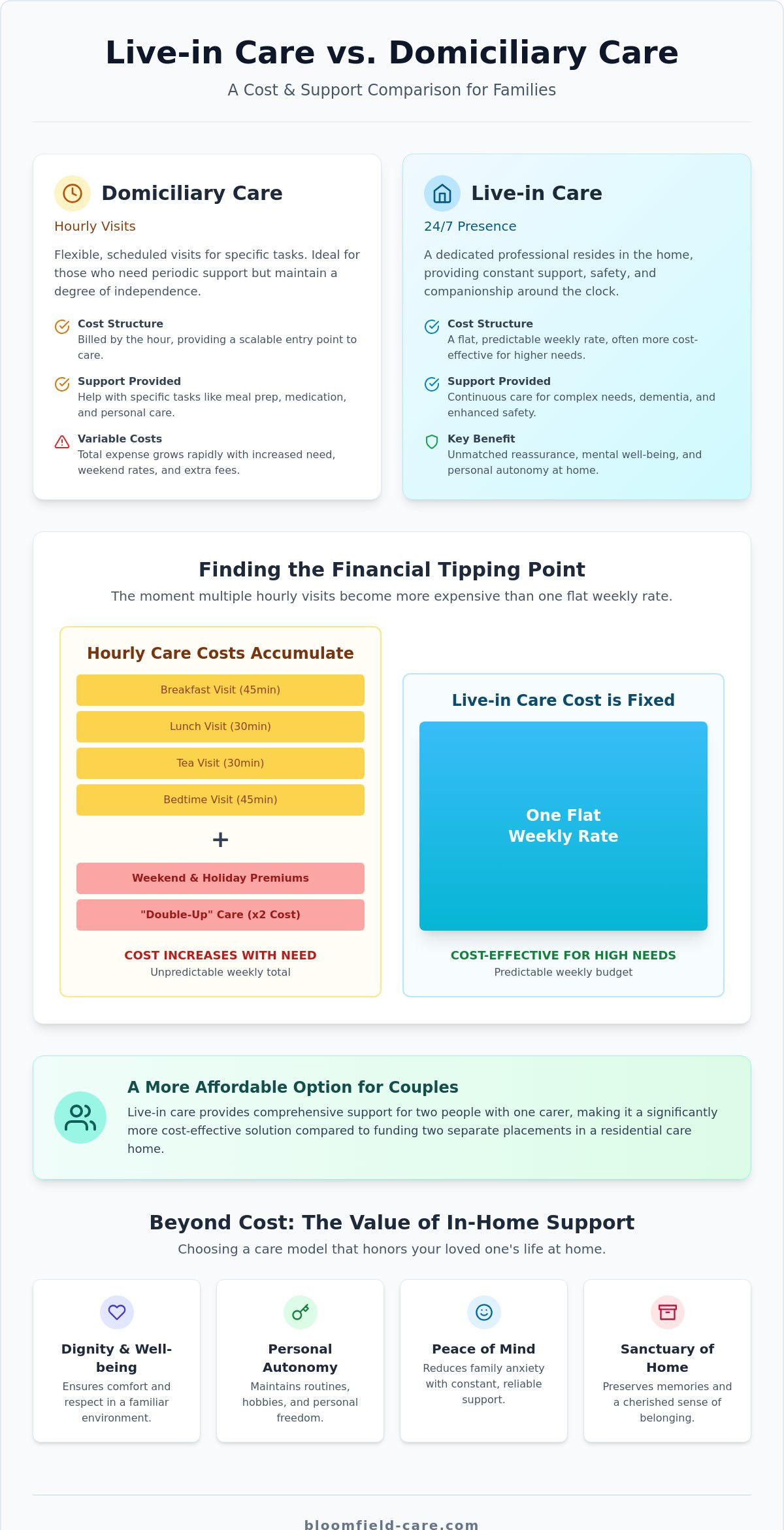
The choice between these two often comes down to the “tipping point” of need. If a loved one requires multiple visits throughout the day and perhaps a presence overnight, the cumulative cost of hourly care can quickly surpass the flat weekly rate of a live-in professional. This is why many families in our local communities are moving toward live-in support. It offers a more predictable financial path while ensuring that the individual’s lifestyle remains uninterrupted.
What is Domiciliary Care?
Domiciliary care, often referred to as hourly care, is built on the foundation of flexibility. It involves a professional visiting the home for specific durations, which could range from a brief 30-minute check-in to several hours of companionship. It’s an ideal choice for those who still maintain a degree of independence but need help with specific tasks like personal care, meal preparation, or medication reminders. Because it’s billed by the hour, it provides a scalable solution for families who are just beginning their care journey. It keeps social connections alive without intruding on the individual’s privacy more than necessary.
What is Live-in Care?
Live-in care offers a profound level of reassurance that hourly visits simply cannot match. A dedicated professional resides within the home, providing a constant presence that supports mental well-being and physical safety around the clock. This model is particularly effective for individuals living with dementia or those with complex health needs where gaps in support could lead to anxiety or accidents. Choosing compassionate live-in care means there’s always a familiar face nearby, turning the home into a safe haven where autonomy is celebrated rather than restricted. It’s a partnership that focuses on the whole person, ensuring they don’t just manage their day, but truly enjoy it.
Calculating the Cost of Hourly Domiciliary Care
When families first begin exploring support, they often look toward hourly visiting care as a gentle introduction to professional assistance. In the South of England, particularly across Oxfordshire and Dorset, the local market reflects a higher demand for specialist care, which influences the regional pricing landscape. Unlike a fixed placement, the total cost of this model is entirely dependent on the frequency and duration of the visits required to keep your loved one safe and comfortable. It is also helpful to understand how social care is funded in England, as this can determine whether your family will be responsible for the full cost or if local authority support is available.
Beyond the standard hourly rate, several variables can catch families off guard. Weekend and bank holiday premiums are common across the industry, often increasing the cost significantly during festive periods or Sundays. You should also consider “hidden” expenses that some providers include, such as travel time for the carer, administration fees, or coordination costs. If your loved one requires “double-up” care, where two professionals are needed for safe transfers or complex personal care, the cost of each visit effectively doubles. This makes the initial quote only a starting point for your weekly budget.
How Hourly Rates Accumulate
For many, hourly care is the most affordable entry point because you only pay for the time the carer is physically present. Consider a typical day: a 45-minute visit for breakfast and medication, a 30-minute lunch check-in, a 30-minute tea-time visit, and a final 45-minute call to help with the bedtime routine. While each individual visit seems manageable, the cumulative weekly total can grow rapidly. Domiciliary care costs are a variable expense based on specific daily tasks. This model works beautifully when needs are low, but it requires careful monitoring as those needs evolve. If you are feeling overwhelmed by these calculations, our team at Bloomfield Care can help you map out a schedule that respects both your budget and your loved one’s needs.
When Hourly Care Becomes Complex
As health needs progress, the logistical challenge of hourly care often becomes apparent. Managing a “revolving door” of different carers throughout the day can disrupt the peace of a private residence. This is particularly true for those navigating various dementia stages, where consistency and a calm environment are vital for reducing anxiety. When a loved one starts to require four or five visits a day, the gaps between support can become a source of worry for family members. The constant coming and going can eventually compromise the client’s sense of privacy and routine, signaling that a more stable, continuous presence might be a more compassionate choice.
The Investment in 24/7 Support: Live-in Care Fees
While hourly visits offer a flexible starting point, many families find that a more comprehensive solution provides greater emotional and financial stability. Live-in care operates on a flat weekly rate, which eliminates the stress of counting minutes or worrying about travel premiums. This model transforms the care experience from a series of tasks into a continuous partnership. Against a backdrop of rising long-term care costs, having a predictable invoice each month allows families to plan with confidence. It’s a structured approach that prioritizes the person’s needs rather than a clock.
When you look at the cost of home care in Oxfordshire and Dorset, live-in support stands out for its all-inclusive nature. You aren’t just paying for assistance with physical needs; you’re investing in the preservation of your loved one’s lifestyle. In 2026, industry averages for standard live-in care typically range from £900 to £1,400 per week in Oxfordshire, while Dorset averages sit around £1,096 per week. These figures reflect the high level of dedication required to maintain a private residence as a safe, thriving sanctuary. By choosing this path, families often find that the live-in care vs domiciliary care costs comparison begins to favor the live-in model as soon as daily needs become more frequent.
What’s Included in a Weekly Rate?
A single weekly fee covers a wide spectrum of support, from personal care and medication management to housekeeping and nutritious meal preparation. Beyond these practicalities, the real value lies in the companionship that naturally develops. This constant presence significantly reduces the risk of loneliness, which is often a primary concern for families living far away. Live-in care costs cover 24-hour presence, even if active care is not required every minute. It’s about the peace of mind that someone is there to share a cup of tea or offer a steady arm whenever it’s needed. This continuity builds a deep sense of trust and security that hourly visits often struggle to replicate.
Specialist Care Premiums
For those with more complex health journeys, such as those living with advanced dementia or requiring a palliative care guide for end-of-life support, weekly fees may increase. Specialist care requires professionals with advanced clinical training and a deep understanding of behavioral nuances. These premiums, which can push weekly costs toward £1,400 to £1,800 or more depending on complexity, ensure that your loved one receives the highest standard of excellence without having to move into a nursing facility. It allows for a level of customization that truly honors the individual’s dignity and autonomy, even during the most challenging times.
Live-in vs. Domiciliary: Finding the Financial Tipping Point
Deciding between these two models involves more than just comparing hourly rates. It requires identifying the specific moment when the intensity of support makes a flat weekly fee more sustainable than a collection of separate visits. For many families in the South of England, the live-in care vs domiciliary care costs balance shifts when a loved one requires between four and six hours of assistance every day. Beyond this threshold, the cumulative expense of hourly care often matches or exceeds the cost of a dedicated professional living in the home.
The “Couple’s Advantage” is perhaps the most significant financial benefit of the live-in model. In 2026, the average cost of a residential care home in the UK is approximately £1,300 per week. For a couple, two placements would total £2,600 weekly. By contrast, a single live-in carer can often support both partners for a fee that is substantially lower than two care home beds. This allows couples to remain together in their own sanctuary, surrounded by their belongings and shared history, while receiving highly personalized assistance.
| Care Level (Daily) | Estimated Weekly Hourly Cost* | Standard Live-in Weekly Cost* |
|---|---|---|
| 2 Hours | Approx. £448 | £900 – £1,400 |
| 4 Hours | Approx. £896 | £900 – £1,400 |
| 6 Hours (The Tipping Point) | Approx. £1,344 | £900 – £1,400 |
*Based on 2026 industry averages for Oxfordshire and Dorset. Costs vary by complexity.
When to Switch from Hourly to Live-in
There are clear physical and emotional signals that the tipping point has been reached. You might notice frequent falls, a rise in “sundowning” behaviors associated with dementia, or a general sense of burnout among family members who are filling the gaps between visits. Moving to a fixed weekly cost provides a welcome sense of budget predictability. It removes the anxiety of fluctuating invoices and allows you to focus on the quality of the time you spend with your loved one. If you’re unsure where your family sits on this scale, you can contact our team for a personalized assessment to explore the best path forward.
Beyond the Price Tag: Quality of Life
The true value of live-in support is found in the continuity of the relationship. Instead of a rotating team of workers, your loved one benefits from a single professional who understands their unique routine, their favorite meals, and the small details that make them feel safe. This stability supports autonomy and dignity in a way that fragmented visits cannot. In communities like Oxford or Weymouth, the psychological benefit of staying in a familiar environment is immeasurable. It preserves the individual’s connection to their local neighborhood while ensuring they have a constant, reassuring presence to guide them through each day with grace.
Choosing the Best Path for Your Family in Oxfordshire and Dorset
Selecting a care provider is a deeply personal decision that extends far beyond a simple comparison of rates. It is about finding a partner who understands the local landscape and the unique rhythm of life in the South of England. When evaluating live-in care vs domiciliary care costs, the most sustainable solution is always one that prioritizes the individual’s happiness and safety within their own home. At Bloomfield Care, we believe that the best care isn’t just about managing a condition; it’s about enhancing the quality of every day while keeping the home as a cherished sanctuary.
Our approach is rooted in the creation of a ‘Person-Centred Care Plan.’ This living document serves as the foundation for determining whether hourly visits or a permanent presence is the most cost-effective model for your situation. By looking at the whole person, their social preferences, and their clinical requirements, we help families avoid the trap of paying for fragmented services that don’t quite meet the need. We provide compassionate live-in care that adapts as life changes, ensuring that your investment always translates into genuine well-being.
The Bloomfield Difference
We aren’t a distant corporate entity. With local branches in Wallingford, Oxford, and Weymouth, our roots are firmly planted in the communities we serve across Oxfordshire, Dorset, and West Berkshire. This local presence allows us to be responsive and attentive, providing a level of family-oriented support that national agencies often struggle to match. We place a profound emphasis on dignity and respect, which begins with our matching process. We don’t just assign a carer based on availability; we match them based on personality and shared interests. This ensures the professional entering your home becomes a trusted companion rather than just a visitor.
Requesting a Compassionate Assessment
The journey toward the right support begins with a free care needs assessment. During this unhurried visit, we spend time understanding the physical environment, health challenges, and personal goals of your loved one. It’s a collaborative process where we look at the big picture of your family’s needs. We also help you navigate the complexities of the 2026 funding landscape, providing clarity on how social care is funded and how our services compare to other local options. Our goal is to provide you with an accurate, transparent quote that reflects the true cost of excellence.
If you’re ready to explore how we can support your loved one’s independence while providing you with peace of mind, we’re here to listen. You can contact Bloomfield Care to discuss your family’s needs and take the first step toward a care plan that honors the sanctity of your home.
Planning for a Life of Dignity and Comfort
Choosing the right support is a journey that balances financial logic with the deepest emotional needs of your family. We’ve seen that the “tipping point” for live-in care vs domiciliary care costs often arrives sooner than expected, particularly when a loved one requires consistent support to stay safe and happy. By looking beyond the hourly rate and focusing on the long-term value of continuity, you can ensure the home remains a sanctuary rather than a place of logistical stress.
As a CQC Registered Provider with local branches across Oxfordshire and Dorset, we’re here to help you navigate these choices with clarity and kindness. Our specialist dementia care expertise ensures that even the most complex needs are met with excellence and heart; for families who want to combine home care with dedicated private medical oversight, Kingsford Medical Services offers the specialist clinical support that can make a significant difference. You don’t have to make these difficult decisions alone. We’re dedicated to helping you find a solution that honors your loved one’s autonomy while protecting your family’s peace of mind.
Request a Free, Compassionate Care Assessment today to find the most sustainable path forward for your family. We’re ready to listen and help you preserve the lifestyle your loved one deserves.
Frequently Asked Questions
Is live-in care cheaper than domiciliary care for couples?
Live-in care is often significantly more cost-effective for couples than hourly visits or residential care. A single live-in professional can support both partners for one flat weekly fee, whereas most other care models charge per person. This allows couples to remain together in their own home while receiving dedicated support for a total cost that is much lower than two separate care home placements.
How much does domiciliary care cost per hour in Oxfordshire in 2026?
In Oxfordshire, the current market rate for hourly visiting care typically ranges between £25 and £35 per hour. These rates vary depending on the complexity of the support required and the specific location within the county. When you are analyzing live-in care vs domiciliary care costs, these hourly figures serve as the starting point for calculating your total weekly expenditure.
Does the local council fund live-in care in Dorset?
Local authorities in Dorset provide financial assistance if an individual’s savings and assets fall below the upper capital limit of £23,250. While councils often prioritize funding for home visits or residential beds, you can request a “Direct Payment.” This gives you the autonomy to choose a private provider and apply those funds toward a live-in care model that better suits your family’s lifestyle.
What is the average weekly cost for live-in dementia care?
Specialist live-in support for individuals living with dementia typically ranges from £1,400 to £1,800 per week in 2026. This rate reflects the requirement for carers with advanced clinical training and expertise in managing complex behavioral needs. This investment ensures a consistent, calm presence that is vital for reducing anxiety and maintaining a safe, familiar environment for your loved one.
Can I switch from hourly care to live-in care if my needs increase?
Most families find it very simple to transition from hourly visits to a 24-hour presence as health needs evolve. You might start with companionship for a few hours a week and move to a live-in model if you notice signs like frequent falls or increased confusion at night. This flexibility ensures that the level of support always matches the individual’s requirements without disrupting their sense of sanctuary.
Are there hidden costs in live-in care fees like food or travel?
While most weekly fees are comprehensive, you should clarify if a food allowance for the carer is included or if you need to provide their meals. Families generally provide a private bedroom and basic food for the professional living in the home. Some agencies may bill separately for the carer’s travel during handovers, so it’s important to request a transparent breakdown during your initial consultation.
Is live-in care safer than hourly visits for someone with a high risk of falls?
Live-in care provides a much higher level of safety because a professional is always nearby to assist with mobility and transfers. Hourly care leaves significant gaps in support where an individual is left alone, increasing the risk of an unobserved accident. The constant presence of a live-in carer is a key factor when weighing live-in care vs domiciliary care costs for those with physical vulnerabilities.
How do I know if I can afford live-in care long-term?
Determining long-term affordability starts with a formal care needs assessment and a review of your financial situation. Since the planned lifetime cap on care costs was officially scrapped for 2026, families must rely on the means-tested system. Checking eligibility for NHS Continuing Healthcare can also provide a vital source of non-means-tested funding for those with primary health needs, making 24/7 support more sustainable.