
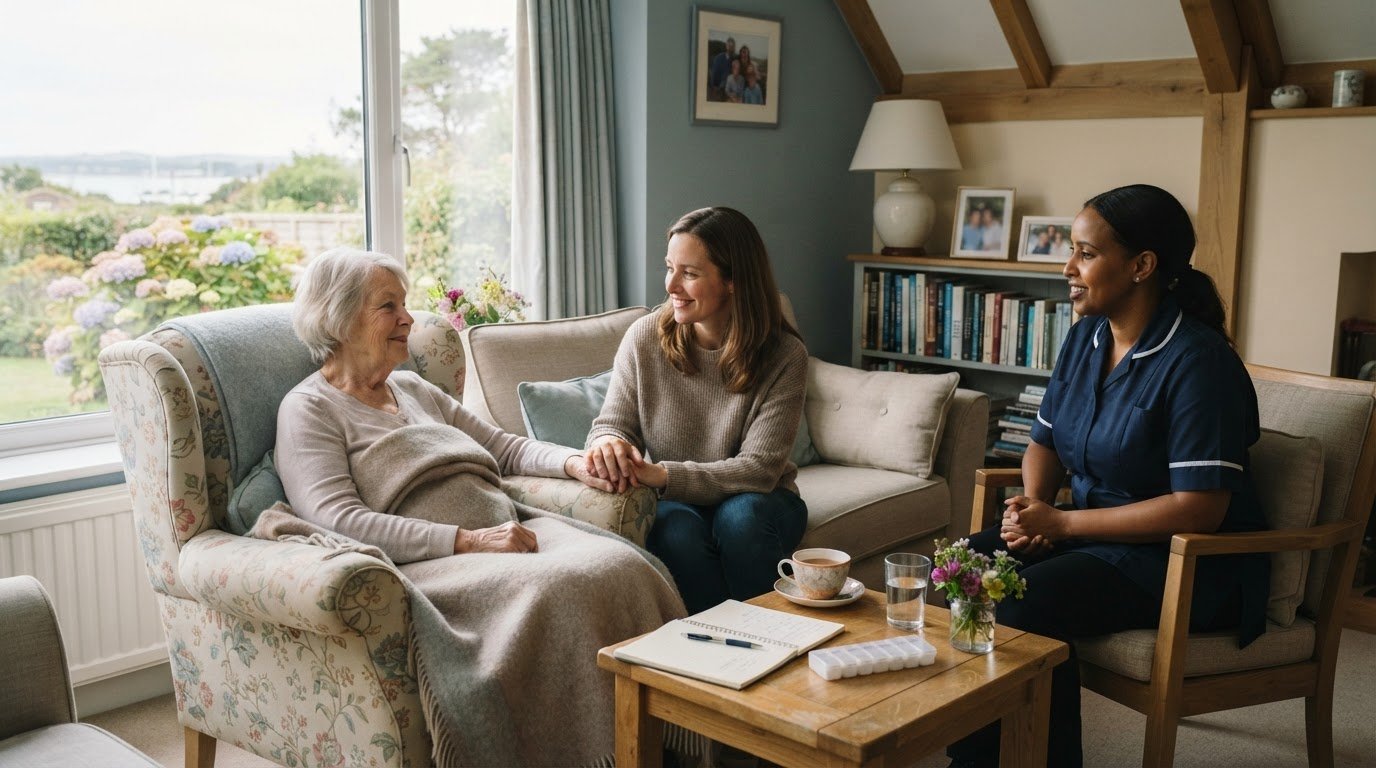
A change in someone’s health can leave a Poole family asking an urgent question: what should we arrange first? When transitioning to end-of-life care at home in Poole, it’s natural to feel unsure about who to contact, how changing needs will be managed and what family members can realistically take on. Choosing home doesn’t mean you have to work everything out alone. The person’s wishes, clinical support and practical help can be considered together, one step at a time.
This guide covers practical next steps, from speaking with the person’s existing clinical team to identifying help with daily routines. It explains how family support, visiting domiciliary care and live-in care differ, and what to ask when exploring those options. It also considers the needs of family carers, so the plan can stay centred on the person’s comfort, dignity and preferences.
Key Takeaways
- When transitioning to end-of-life care at home in Poole, take decisions one step at a time, guided by the person’s wishes and changing needs.
- Speak with the person’s GP or clinical team about health needs, symptoms, medicines and care planning. Practical home care can complement, but not replace, clinical support.
- Compare family help, visiting domiciliary care and live-in care against the person’s preferences, daily needs and the support available to you.
- Prepare by noting familiar routines, useful belongings and agreed care contacts. Ask health professionals about equipment or safety needs.
- Bloomfield Care can discuss practical domiciliary or live-in support needs, subject to confirming current availability in Poole.
Starting the transition to end-of-life care at home in Poole
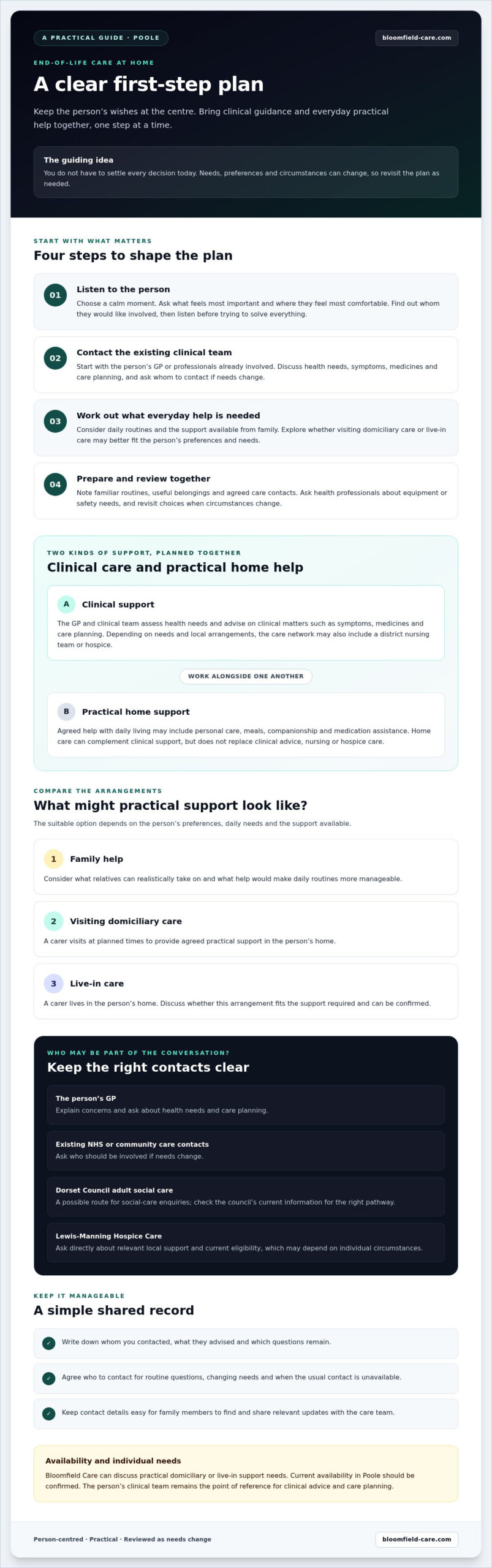
Considering care at home doesn’t mean every decision has to be made today. Needs, wishes and circumstances differ, so there’s no single timetable that applies to everyone. Begin by asking what matters most to the person, contacting their GP or existing care team, and identifying what practical support might help at home.
End-of-life care is support for a person approaching the end of life, focused on their needs and quality of life. It describes the care and support provided, not a care-home placement. Depending on the person’s wishes, needs and available support, care may be arranged in their own home.
How to begin a conversation about care at home
Choose a calm moment and ask open questions, such as, “What feels most important to you right now?” or “Where do you feel most comfortable?” Ask whom they would like involved in conversations and decisions, too. Listen before trying to solve everything. The person may want time to think, and preferences can be revisited as circumstances change.
A GP or existing clinical team can discuss health needs and appropriate care planning, including clinical matters such as symptoms and medicines. Once those needs are clearer, family members can consider what everyday help might make staying at home more manageable. Keep the person’s choices central throughout.
Who to contact first in Poole
If you’re unsure where to begin when transitioning to end-of-life care at home in Poole, start with people already involved in the person’s care. They may clarify the next conversation or point you towards relevant local support.
- The person’s GP: Explain your concerns and ask about health needs and care planning.
- Existing NHS or community care contacts: Contact professionals already supporting the person and ask who should be involved if needs change.
- Dorset Council adult social care: This may be a route for social-care enquiries. Check the council’s current information to confirm the right pathway for the person’s circumstances.
- Lewis-Manning Hospice Care: Ask whether the organisation offers relevant local support and what its current eligibility criteria are. Confirm services directly, as support and eligibility may depend on individual circumstances.
Keep a brief record of whom you contacted, what they advised and what questions remain. This makes follow-up conversations easier and helps relatives share information without relying on one person to remember every detail.
Planning clinical care and home support together in Poole
Separating clinical care from everyday practical support helps everyone understand their role. The person’s GP and clinical team assess health needs and advise on clinical matters, including symptoms, medicines and relevant care planning. A home-care agency can help with agreed daily living needs, but it does not replace clinical care. The NHS explains how end of life care can be provided at home, including the potential involvement of health professionals.
What the GP, district nursing team, and hospice may contribute
Depending on the person’s needs and local arrangements, their care network may include a GP, district nursing team or hospice. These services aren’t automatically involved in every household. Their roles depend on clinical assessment and the support available locally. Ask the person’s current care team whom to contact in Poole, how referrals or advice are arranged, and which professional to approach if health needs change.
Agree a simple communication plan. Find out who to contact with routine questions, whom to call if needs change, and what to do if the usual contact isn’t available. Keep the details somewhere family members can find them, and share relevant updates with the people involved in the person’s care.
What domiciliary and live-in care can support
Practical home support may include personal care, help with meals, companionship and agreed medication assistance. Bloomfield Care provides domiciliary and live-in care in Poole, with support discussed around the person’s preferences and daily needs. Visiting domiciliary care involves planned visits; with live-in care, a carer lives in the person’s home. The suitable option depends on the support required and the arrangements that can be confirmed. Neither replaces clinical advice, nursing or hospice care.
For a broader family-focused overview, read this guide to palliative care at home. If practical help with daily routines may be useful, you can talk with Bloomfield Care about home support and ask about current availability in Poole and how support may fit alongside the person’s clinical care.
Is end-of-life care at home manageable? Assessing needs and options
Care at home may be manageable for some people, but there’s no arrangement that suits every household. Consider the person’s wishes, health and daily living needs, the home environment, and the practical support available. If needs can’t be met safely or in a way that respects the person’s preferences, review the plan with their care team and discuss other options.
The comparison below can help you identify what to discuss. Different sources of support may work alongside one another, but they have distinct roles.
| Support option | What it may contribute | What to consider |
|---|---|---|
| Family support | Familiar company and help with agreed everyday tasks. | Who is willing and able to help, and whether the demands are sustainable. |
| Visiting care | Planned visits for practical daily living support, based on agreed needs. | Whether the visit pattern fits the person’s routines and the gaps between visits. |
| Live-in care | A carer lives in the home and provides agreed practical support. | Whether the person and household are comfortable with this arrangement, and what support remains outside the carer’s role. |
| Clinical team | Assesses health needs and advises on clinical care and changes in condition. | Which professionals are involved and how the family should contact them. |
Questions to consider before choosing a care arrangement
Start with the person’s preferences. What matters most to them? How much privacy do they want, and which routines or belongings help them feel at home? Consider the home layout and who can realistically help, without assuming relatives can take on every task. Ask the clinical team what health-related support may be needed and who is responsible for providing it. Family carers should consider, too, whether they need planned breaks or additional practical help.
When transitioning to end-of-life care at home in Poole, understanding each person’s role can make it easier to see what is manageable and where more support may be needed.
When to review the plan or seek additional help
Needs and preferences can change. Review care arrangements when the person’s needs or wishes change, so support continues to reflect what matters to them. Contact the person’s clinical team if you notice a change or have concerns, and ask them to confirm the right local contact and escalation arrangements. For an urgent or emergency situation, use the appropriate NHS or emergency route. Clarify in advance which route applies to different concerns. If the current plan no longer feels workable, ask the team to discuss reassessment and other options.
Preparing the home and family for the transition in Poole
Shared preparation can help the home feel familiar and make agreed responsibilities clearer. There’s no need to reorganise everything at once. Start with the person’s preferences, practical arrangements and the right contacts for questions. When transitioning to end-of-life care at home in Poole, keep the plan simple enough for everyone involved to follow and update.
A simple checklist for getting home support ready
Write useful details in a place the person and agreed family members can find. Check what the person is comfortable sharing, and update the notes when preferences or circumstances change.
- Preferences and routines: Note preferred names, daily routines, meaningful belongings and communication preferences.
- Contacts and responsibilities: Record agreed care contacts and who is taking on particular tasks, so everyone knows where to direct questions.
- Visits and access: Discuss suitable visit times, household routines and agreed access arrangements with any home-care provider.
- Equipment and safety: Ask the person’s health professionals whether equipment or changes at home are appropriate. Needs vary, so don’t make changes based on assumptions.
Clear notes can reduce repeated questions and support consistency. They should help uphold the person’s choices, not override their privacy or autonomy.
Supporting family carers without taking over
Family members may need reliable information, emotional support and time to rest. Caring can be demanding, and asking for help is a practical part of planning, not a failure to cope. Where possible, share tasks and agree how updates will be passed between relatives. Check what the person wants kept private and whom they’re comfortable involving.
If responsibilities are becoming difficult to sustain, ask the person’s care team what additional practical support may be appropriate. Families can also explore whether respite options fit their circumstances. This guide to respite care in Oxfordshire and Dorset may help you identify questions to raise. Confirm current services and suitability directly with the relevant provider.
Bloomfield Care provides domiciliary and live-in care in Poole, with practical support that may include personal care, meal preparation and companionship. To discuss day-to-day support, contact Bloomfield Care about home care and confirm current Poole availability and arrangements.
Taking the next steps with Bloomfield Care in Poole
There’s no need to arrange everything in one conversation. First, confirm what the person wants. Then speak with their GP or clinical team about health needs and care planning. Once you have a clearer picture, explore practical home support for daily life. This approach keeps the person’s choices and clinical advice central while giving family members a manageable way forward.
Bloomfield Care provides domiciliary and live-in care in Poole. The team can discuss practical support needs, subject to confirming current local availability and arrangements. This support may complement clinical care, but it isn’t a substitute for medical advice, nursing or hospice services.
What to ask when discussing home-care support
Before a conversation, note the person’s routines, preferences and tasks where practical help may be useful. Ask how these details could shape the proposed support and what the next steps would be. Clarify communication arrangements and boundaries, too, so family members know which questions to raise with the home-care provider and which belong with clinical professionals.
- What day-to-day tasks could the support include, such as personal care, meals or companionship?
- How will the person’s preferences be reflected in the proposed care arrangements?
- What assessment or planning process should the family expect?
- How should concerns or changes be shared, and which matters should be discussed with the clinical team?
- Is support currently available in Poole, and what visit or live-in arrangements can be considered?
Ask directly about availability and arrangements rather than assuming a particular start date or response time. Clear answers can help you compare proposed support with what the person needs and wants.
Keeping the plan person-centred as needs change
Keep checking with the person and relevant professionals that the support still feels suitable. A change in routine, preference or daily needs may mean reviewing the plan. Keep communication open, and raise health-related concerns with the appropriate clinical contact.
If live-in care is one option you’re considering, Bloomfield Care’s guide to live-in care offers further information about that type of practical home support.
Taking the next step can be as simple as asking a few questions and finding out what may be possible. For a conversation about practical support at home, contact Bloomfield Care about support at home and confirm current availability in Poole.
Take the next step at your own pace
Transitioning to end-of-life care at home in Poole doesn’t mean every detail must be settled at once. Start with the person’s wishes, speak with their clinical team about health needs, then consider what practical support could make home life more manageable. Keep communication open and revisit the plan if preferences or circumstances change.
Home care and clinical care have different roles. Bloomfield Care provides domiciliary and live-in care, which may help with agreed daily needs alongside the person’s existing clinical support. Bloomfield Care operates through branches covering areas including Dorset, Oxfordshire and West Berkshire. Its local areas include Poole, Weymouth, Christchurch, Wallingford, Newbury, Thatcham, Abingdon and Oxford. Confirm current availability and arrangements directly.
To discuss practical support at home, talk with Bloomfield Care about home support in Poole. Explain what matters to the person and ask whether available support may suit your family’s situation. Take things one step at a time, guided by comfort, dignity and the person’s wishes.
Frequently Asked Questions
Can someone receive end-of-life care at home in Poole?
Yes, someone may receive end-of-life care at home in Poole if it reflects their wishes and their health and practical support needs can be met there. The person’s GP or existing clinical team can discuss the health care required and which local services may be involved. Home care can be considered alongside clinical support, but it won’t suit every situation. Let the person’s needs and available support guide the decision, and review the plan if circumstances change.
What is the difference between palliative care and end-of-life care?
Palliative care aims to improve comfort and quality of life for someone with a serious illness, and may be provided alongside other treatment. End-of-life care is support for a person approaching the end of life, addressing their individual needs and preferences. The terms can overlap: end-of-life care may include palliative support, but palliative care isn’t limited to the final stage of life. Ask the person’s clinical team which services are relevant to their circumstances.
Who should I contact first to arrange end-of-life care at home in Poole?
Start by contacting the person’s GP or the NHS or community professionals already involved in their care. They can discuss health needs, appropriate care planning and the right local contact route. Once clinical needs are clearer, explore practical support at home. Dorset Council adult social care may also be a route for social-care enquiries. Confirm current pathways directly, as the right contacts depend on the person’s situation and local arrangements.
What support can a home-care agency provide at the end of life?
A home-care agency may help with agreed daily living needs, such as personal care, meal preparation, companionship and medication assistance. Bloomfield Care provides domiciliary and live-in care, with Poole included in its stated Dorset coverage. Confirm current local availability and discuss which tasks could be included. Home-care support complements clinical services; it isn’t nursing, medical advice or specialist palliative care. Ask the clinical team about health concerns, symptoms and clinical support.
Is live-in care enough for someone receiving end-of-life care at home?
Not necessarily. Live-in care can provide practical support at home, but whether it meets someone’s needs depends on their wishes, daily living requirements and clinical care plan. A carer’s presence doesn’t replace nursing or other clinical input. Discuss health-related responsibilities with the person’s clinical team, and ask any care provider to explain the proposed tasks, arrangements and boundaries. If needs change, review whether the overall plan remains suitable.
What should we do if someone’s needs change while they are receiving care at home?
Contact the person’s GP or relevant clinical team to discuss changes in health or support needs, and ask whether the care plan should be reviewed. Make sure family members know whom to contact for routine questions and what to do if a concern becomes urgent. Use the appropriate NHS or emergency route for urgent situations, following any guidance already provided by the clinical team. Don’t assume a home-care agency can assess or treat medical changes.
Can family members combine their help with professional home care?
Yes. Families can share agreed tasks with professional home care, provided everyone understands their role and the arrangement reflects the person’s preferences. For example, relatives may offer companionship or help organise updates, while a carer supports agreed daily living needs. Discuss responsibilities with the person and provider, and respect their privacy about what information is shared. Bloomfield Care’s stated coverage includes Poole and wider areas such as Dorset, Weymouth, Christchurch, Wallingford, Newbury, Thatcham, Abingdon and Oxford.