Creating a Personal Care Plan for Elderly at Home: A Compassionate Guide (2026)
What if the most effective way to keep your loved one safe wasn’t a clinical schedule, but a gentle return to the familiar rhythms of their own home? It’s natural to feel a sense of anxiety about “clinicalising” a family sanctuary or getting lost in the maze of assessments required to create a personal care plan for elderly at home. You want the highest standard of support, but you also want your parent to feel like themselves, surrounded by the memories and comforts they’ve built over a lifetime.
We understand that this journey is about more than just logistics; it’s about heart. This guide will show you how to design a respectful, person-centred approach that balances professional safety with genuine dignity and independence. We’ll walk you through the 2026 NHS standards for personalised care, help you understand the assessment process, and provide a clear path to creating a bespoke support system that honours your loved one’s autonomy and your family’s peace of mind.
Key Takeaways
- Understand how a personal care plan for elderly at home acts as a collaborative roadmap, prioritizing your loved one’s dignity and independence over clinical routines.
- Identify the essential elements of support, from respectful assistance with daily personal care to the careful management of health and medication needs.
- Learn how to navigate the assessment process in Oxfordshire and Dorset, focusing on safety while preserving the sanctuary of the family home.
- Discover why your care plan should be a living document that evolves through regular reviews and adapts quickly to any sudden changes in health.
- Explore the benefits of a person-centred approach that matches carers based on personality and shared values, ensuring a warm and familiar support system.
Understanding the Personal Care Plan for Elderly at Home
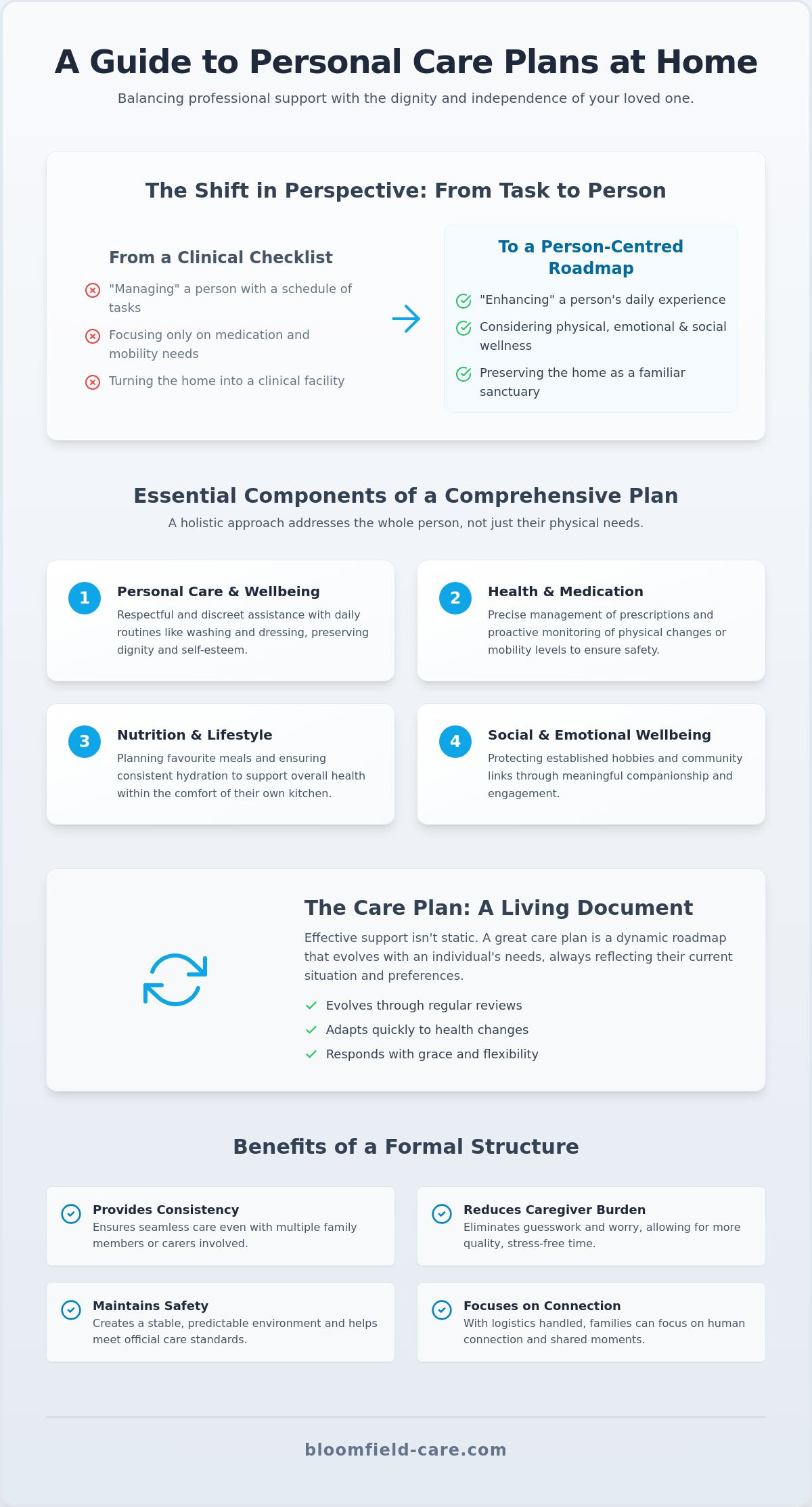
A personal care plan for elderly at home is a collaborative roadmap for support at home that ensures your loved one feels empowered while remaining the author of their own life. It isn’t just a schedule of tasks or a checklist of chores. The core goal is to strike a delicate balance between providing necessary assistance and fiercely protecting a loved one’s dignity. By looking at physical, emotional, and social wellness together, we move away from the idea of “managing” a person and toward “enhancing” their daily experience. A plan that only looks at medication or mobility ignores the person’s heart and their unique personality. We believe that true care starts with listening and understanding what makes each day meaningful for the individual. Ultimately, we view the care plan as a dynamic document that evolves alongside the individual, responding to their changing needs with grace and flexibility.
The Difference Between Clinical Tasks and Person-Centred Support
Professional support goes much deeper than simple “home help.” It respects a person’s history and the small details that make their house a home. Maintaining familiar routines is the most effective way to reduce anxiety, especially for those living with memory challenges. By focusing on the person rather than the task, we prevent the “clinicalisation” of the private residence. Your home remains a sanctuary, not a medical facility. This holistic approach is a core part of geriatric care management, ensuring every intervention feels like a natural extension of your loved one’s lifestyle. It’s about knowing how they like their tea or which chair they prefer in the morning sun.
Maintaining this sense of sanctuary also involves keeping the physical environment clean and restorative; for those who value professional standards in home fabric maintenance, you can visit UK Carpet Care Ltd.
Why Families in Oxfordshire and Dorset Need a Formal Structure
Families in Oxfordshire and Dorset often juggle multiple responsibilities across busy households. A formal structure provides the consistency needed when several carers or family members are involved in daily support. This documentation isn’t just for peace of mind; it’s a vital part of meeting CQC standards and maintaining safety. By having clear, actionable steps, the “caregiver burden” is significantly reduced. You don’t have to guess what needs to be done or worry about missed details. Instead, you can focus on human connection and quality time, knowing the logistics are handled with professional precision and heart. A structured plan transforms a potentially chaotic situation into a stable, predictable environment for everyone.
Essential Components of a Comprehensive Care Plan
Building a personal care plan for elderly at home requires a shift in perspective. Instead of viewing support as a series of medical requirements, we see it as a way to safeguard the small joys and familiar rhythms that define a person’s life. A truly comprehensive plan must address mental health and social connection alongside physical safety. When creating a personal care plan, we look at the individual as a whole, ensuring that every detail reflects their choices and values. A robust plan typically includes:
- Personal care: Respectful, discreet assistance with washing, dressing, and continence needs that preserves self-esteem.
- Health and medication: Precise management of prescriptions and proactive monitoring of physical changes or mobility levels.
- Nutrition and lifestyle: Planning favourite meals and ensuring consistent hydration within the comfort of a familiar kitchen.
- Social and emotional wellbeing: Protecting established hobbies and community links through meaningful companionship.
If you’re feeling unsure about how to begin balancing these different needs, our team is here to help you explore options for domiciliary care that prioritises your family’s unique situation.
Personal Care and Physical Wellbeing
Physical support should never feel intrusive. We focus on providing discreet help with morning and evening routines, allowing your loved one to maintain their sense of self-respect. Safety is a priority, so we carefully assess mobility needs to prevent falls while still encouraging safe, independent movement around the home. For families managing more complex health journeys, we also ensure that any palliative care requirements are integrated seamlessly into the daily routine. This ensures that even as health needs change, the home remains a place of comfort rather than a clinical environment.
The Social Pillar: Companionship and Identity
A person’s identity isn’t defined by their age or their diagnosis. We place a high value on documenting life stories, personal preferences, and those “non-negotiables” that bring daily happiness, like a specific morning radio show or a walk in the garden. In rural areas across Dorset and Oxfordshire, companionship plays a vital role in preventing isolation. We believe the most effective personal care plan for elderly at home focuses on “what matters to you” rather than simply “what is the matter with you.” This approach ensures that your loved one remains connected to their community and their own sense of purpose, which is just as important for longevity as any physical treatment. For families who are also nurturing infants and value similar person-centred wellness, you can visit Mother And More to explore their baby massage and yoga classes.
How to Create a Personalised Care Plan in Oxfordshire and Dorset
Developing a personal care plan for elderly at home shouldn’t feel like a clinical procedure. It’s a journey we take together to ensure your loved one stays safe while keeping the soul of their home intact. In 2026, the focus has shifted toward more integrated and person-centered plans, making the process smoother and more transparent for families. The creation of this roadmap follows a clear, unhurried path.
The first step is always a gentle home assessment. This isn’t an inspection; it’s a conversation. We talk about wishes, fears, and daily habits. Following this, we conduct risk assessments. We identify safety needs, like trip hazards or mobility aids, without compromising the sanctuary feel of the residence. We then move to defining outcomes. Instead of just listing tasks, we ask: “What does a good day look like for you?” It might be a walk in the garden or reading the paper in a favourite chair. Once outcomes are clear, you can select the right care type, whether that’s hourly domiciliary care or more intensive support. Finally, we finalise the plan only when both the family and the individual give their full consent.
The Assessment: A Partnership-Driven Approach
Our team conducts these assessments across Wallingford, Abingdon, and Weymouth with local experts who understand the community. We believe involving the elderly individual in every part of the conversation is vital for their autonomy. It’s common for seniors to have objections or fears about “losing independence.” We address these moments with empathy and patience. We listen more than we speak. By making them a partner in the process, the care plan becomes something they own rather than something imposed upon them.
Navigating Local Support in Oxfordshire and Dorset
Understanding the difference between local authority support and private agencies is essential for long-term stability. While councils provide basic assessments, private services like Bloomfield Care offer a more tailored, unhurried experience. You’ll also need to consider financial planning early in the process. It’s helpful to link your personal care plan for elderly at home to our guide on funding home care in Oxfordshire to see how capital limits apply to your situation. Each region has unique needs. The coastal geography of Dorset or the rural reaches of West Berkshire require local knowledge to ensure carers are always there when needed, regardless of the weather or location.
Reviewing and Adapting: The Care Plan as a Living Document
A care plan isn’t a trophy to be placed on a shelf and forgotten. It’s more like a garden that needs regular tending to flourish. Static plans often fail because they don’t account for the fluid, changing nature of the aging process. To ensure your personal care plan for elderly at home remains a source of strength, it requires regular 6-month or annual reviews. In the context of elderly care, we define a living document as one that grows with the person’s journey, adapting to their triumphs and their challenges alike.
Sometimes, we can’t wait for a scheduled review. It’s vital to identify “red flags” that require an immediate update to the support structure. These might include sudden changes in appetite, unexplained bruising, or a noticeable shift in mood and social engagement. Our professional carers play a crucial role here. Because they see your loved one regularly, they’re trained to observe and report subtle changes in wellbeing that might otherwise go unnoticed. This proactive approach prevents small issues from becoming significant crises. By staying ahead of these shifts, we ensure the home remains a place of safety and calm.
Recognising Changing Needs in Dementia and Alzheimer’s
For families managing memory loss, the need for flexibility is even more pronounced. As dementia stages progress, the care plan must shift from simple reminders to more structured, specialized support. Routines for those with memory loss shouldn’t be rigid. Instead, they should provide a soft framework that can bend when a loved one is having a particularly difficult or confusing day. Specialist dementia care plans focus on sensory comfort and emotional security, differing from standard personal care by prioritizing the “feeling” of the day over the completion of tasks.
Involving the Family in the Review Process
We believe that families in Newbury, Poole, and across the region are our most important partners. Maintaining open lines of communication ensures that the care provided aligns with your observations at home. We also use these reviews as a moment to check in on family caregiver wellbeing. It’s okay to admit when the current level of support isn’t enough. These conversations allow us to adjust care levels smoothly, perhaps transitioning from short hourly visits to live-in care if your loved one requires more consistent, round-the-clock presence.
If you’ve noticed changes in your loved one’s needs, it may be time to request a care review to ensure their support remains perfectly tailored to their life today.
The Bloomfield Care Approach to Person-Centred Planning
At Bloomfield Care, we believe that the best support feels less like a service and more like a natural extension of your family system. Our philosophy is built on professional safety delivered with the warmth of a domestic environment. We don’t just assign a name to a time slot. Instead, we match carers to clients based on personality, shared interests, and temperament. This ensures that the person entering your home is someone your loved one genuinely looks forward to seeing. This human connection is the foundation of every personal care plan for elderly at home we create.
The “Bloomfield Signature” is our commitment to enhancing quality of life rather than just managing it. We focus on self-sufficiency, encouraging our clients to remain as active and independent as possible within their own space. Whether it’s helping someone continue to tend to their window box or supporting them as they prepare a light lunch, we aim to empower. We invite you to experience this difference through a free, no-obligation care needs assessment, where we can listen to your story and explore how we can help your family find a sense of calm and stability.
Expertise Across Oxfordshire, Dorset, and West Berkshire
Our roots run deep across the region. We support families in Oxford, Thatcham, Christchurch, and the surrounding villages, bringing local knowledge that larger corporate entities often lack. This local expertise ensures that every personal care plan for elderly at home is grounded in the reality of the community where your loved one lives. Being a CQC-regulated agency provides the reassurance that our standards are monitored and held to the highest level of excellence. We know the local resources and the geographical nuances of West Berkshire and Dorset, which means we can be a more responsive and reliable partner for your family.
Next Steps: Starting the Conversation with Bloomfield Care
Starting the conversation is a simple, unhurried process. You can request a visit from one of our compassionate care managers who will come to your home for a gentle discussion. During this first meeting, we won’t rush you or overwhelm you with technical jargon. We’ll listen to your concerns, answer your questions about the assessment process, and begin to sketch out what a bespoke support system could look like. It’s a partnership-driven approach designed to provide stability and peace of mind from the very first day. Contact Bloomfield Care today to discuss a bespoke care plan for your loved one.
Embracing a Future of Supported Independence
Designing a personal care plan for elderly at home is more than a logistical necessity; it’s an act of love that provides a clear path forward for the entire family. By focusing on dignity, autonomy, and the sanctuary of the home, you ensure that your loved one doesn’t just receive assistance, but truly thrives in their familiar surroundings. These plans must remain flexible, evolving as a living document to meet changing needs with grace and precision. Professional support should always feel like a natural extension of your own family’s care and devotion.
Since 2014, we’ve proudly served families across Oxfordshire, Dorset, and West Berkshire as a CQC regulated provider. As specialists in dementia and live-in care, we understand the delicate balance between professional safety and the heart of a domestic environment. You don’t have to navigate these decisions alone. Our compassionate team is here to listen, support, and guide you through every step of the process with patience, integrity, and genuine kindness.
Ready to find the right support? Book a Free Care Needs Assessment with Bloomfield Care today. Let’s work together to protect the independence and wellbeing of those you hold most dear.
Frequently Asked Questions
What is a personal care plan for the elderly?
A personal care plan for the elderly is a collaborative, person-centred document that outlines the specific support needed to ensure an individual’s safety, dignity, and independence at home. It acts as a roadmap for daily life, covering everything from physical assistance with washing and dressing to emotional companionship and social engagement. By focusing on the individual’s history and preferences, it ensures care is delivered as a partnership rather than a set of clinical tasks.
How often should a care plan be reviewed?
A care plan should be reviewed at least every six months or annually to ensure it still meets the individual’s needs. However, it’s vital to update the plan immediately if there’s a “red flag” or a sudden change in health, mobility, or cognitive ability. Treating the care plan as a living document allows the support system to grow and adapt alongside the person’s unique journey, providing stability during times of change.
Can I create a care plan without a professional agency?
You can certainly create an informal care plan within your family, but a professional agency provides the expertise needed to meet CQC safety standards and clinical requirements. Professional care managers are trained to conduct thorough risk assessments that identify hazards without making the home feel like a hospital. Using an agency also ensures consistency across multiple carers, providing a stable structure that family-led plans might lack.
How much does a personalised care plan cost in Oxfordshire?
While the cost of a personal care plan for elderly at home varies based on specific needs, Oxfordshire families should be aware of the 2026 financial thresholds. If an individual has assets above the upper capital limit of £23,250, they’re generally responsible for the full cost of their care. Many families choose to link their plan to a formal assessment to understand their specific funding eligibility and ensure their budget aligns with the required level of support.
Does a care plan include help with medication?
Yes, a comprehensive care plan includes the management of prescriptions and the monitoring of any physical changes related to health. This ensures that medication is taken safely and consistently while allowing professional carers to observe the individual’s response to their treatment. By integrating health needs into the daily routine, the plan helps maintain physical wellbeing without clinicalising the sanctuary of the private residence.
What happens if my parent refuses the care plan?
If a parent refuses support, we recommend a partnership-driven approach that prioritises their autonomy and addresses their fears with patience. Often, resistance stems from a fear of losing independence or privacy. By involving them in the initial conversation and focusing on “what matters to them” rather than “what is the matter with them,” we can often find a middle ground that respects their wishes while ensuring their safety.
Is a care plan the same as a medical record?
No, a care plan is a lifestyle and support document rather than a clinical medical record. While it includes health information and medication details, its primary focus is on how the individual wants to live their daily life. It documents personal preferences, life stories, and social goals, ensuring that the support provided enhances their quality of life rather than just managing a medical condition.
How do I know if the care plan is working?
You’ll know the care plan is working when you see an improvement in your loved one’s mood, social engagement, and overall sense of calm. A successful plan results in more “good days” where the individual feels empowered and respected. Regular reviews with professional carers allow you to monitor subtle changes in wellbeing, ensuring the support remains perfectly tailored to their evolving needs and happiness.