
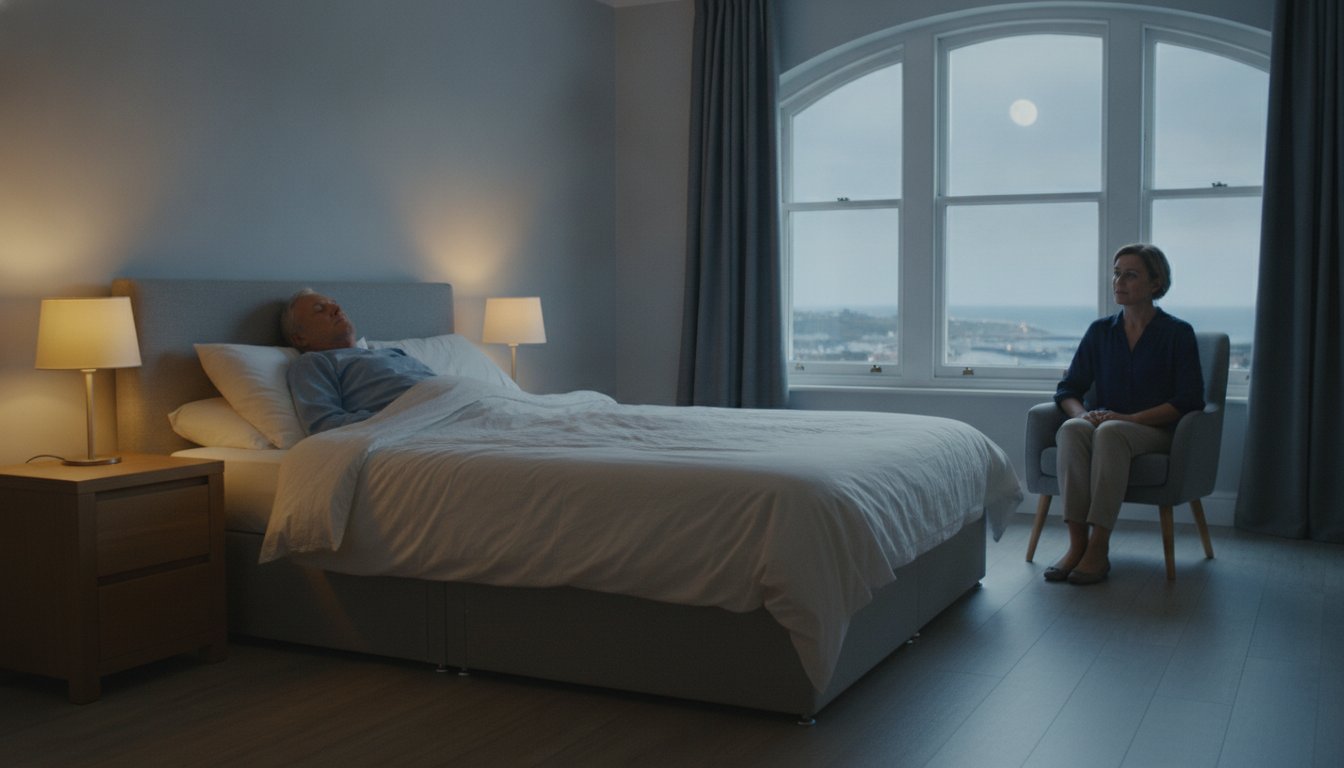
Imagine it is 3 AM in a quiet home in Weymouth. You are awake, heart racing, listening for the slightest sound from the next room. You wonder if your father has tried to get up alone or if he is feeling the familiar confusion that often arrives after dark. This constant vigil is a profound act of love, yet it often leaves you depleted and overwhelmed. You aren’t alone in this struggle. Securing the overnight care Dorset families trust is the first step toward healing that exhaustion and ensuring your own well-being remains a priority.
We promise to show you how professional support can transform night-time anxiety into a period of genuine, restorative rest. This guide explores the essential differences between various support levels and how to prepare your home for a seamless transition. You’ll discover how a dedicated professional presence provides safety and dignity, helping your loved ones stay in their own homes in Poole or Christchurch rather than moving into residential care. It’s time to replace fear with the peace of mind that comes from knowing a compassionate expert is watching over the people you love most.
Key Takeaways
- Distinguish between sleep-in and waking night care to ensure your loved one receives the precise level of professional support required for their safety.
- Discover how professional overnight care Dorset can transform night-time anxiety into restful sleep by expertly managing the unique challenges of dementia.
- Gain practical guidance on preparing your home environment to ensure a seamless and respectful transition for everyone involved.
- Explore how professional night-time assistance supports the reablement process after a hospital stay, helping your loved one regain their strength in familiar surroundings.
- Understand the value of choosing a local, person-centered provider that prioritizes dignity and autonomy to preserve the home as a sanctuary.
The Vital Role of Overnight Care for Dorset Families
Overnight care provides professional support during the vulnerable hours between 10 PM and 8 AM, ensuring that the sanctuary of home remains safe even in the dark. For many families across our county, daytime visits are simply not enough to manage complex needs. While a morning call might help with breakfast or medication, the “night-time gap” is when risks often escalate. Professional overnight care Dorset services bridge this gap, offering a steady presence when family members are exhausted and the house is quiet. It is a specialized form of assistance that focuses on safety, comfort, and the immediate management of any nocturnal challenges that arise.
The impact of this support on the mental well-being of family caregivers cannot be overstated. Constantly listening for a footfall or a cry for help leads to profound sleep deprivation, which eventually erodes the quality of care you can provide during the day. Accessing Respite care during the night allows you to reclaim your own rest. This professional presence also serves as a vital safeguard for the local healthcare system. By preventing falls or managing sudden distress at 3 AM, we can often avoid unnecessary emergency admissions to Dorset County Hospital, keeping your loved one in the environment where they feel most secure.
Recognising the Signs: When is it Time for Night Support?
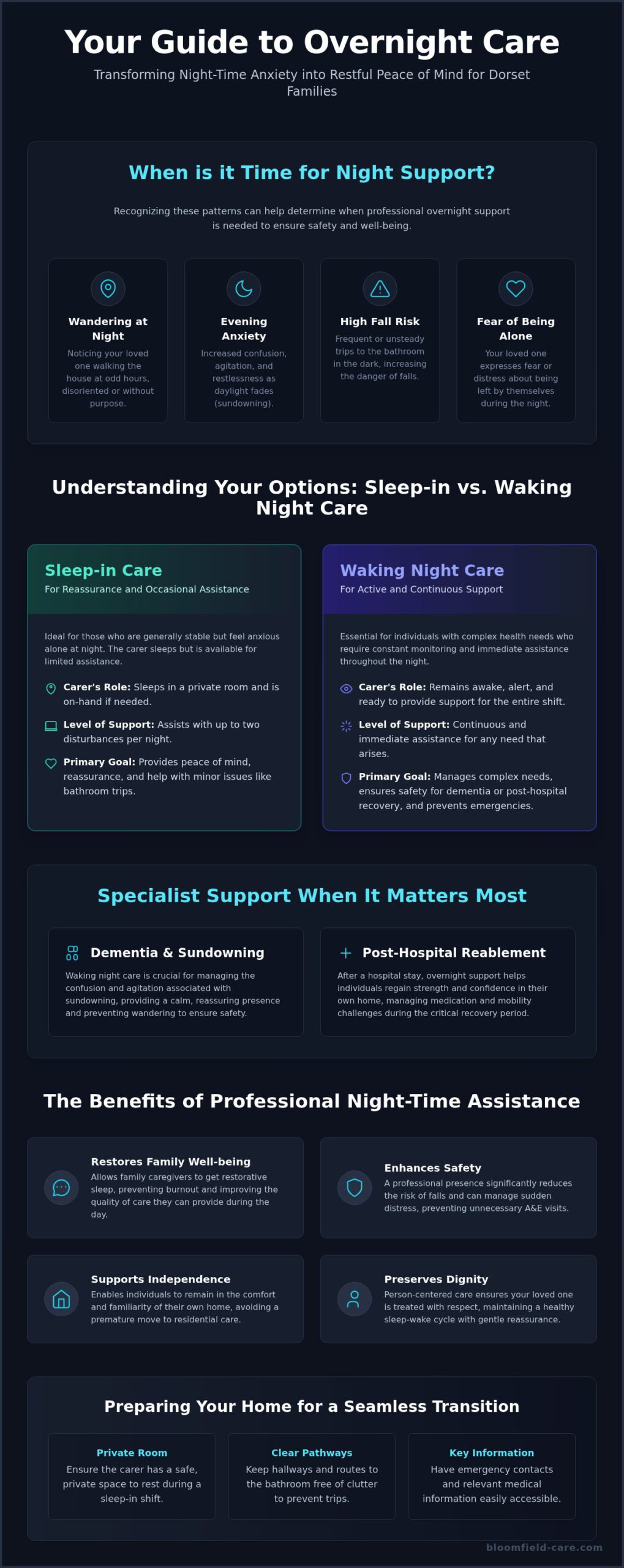
Determining when to transition to overnight support is a deeply personal decision, but certain patterns often signal the need for professional help. You might notice your loved one wandering the house at odd hours or becoming increasingly anxious as evening approaches. This is often linked to the phenomenon known as sundowning. Sundowning is a state of increased confusion, agitation, and restlessness that frequently affects Dorset residents living with dementia as the natural light begins to fade. Beyond confusion, a high risk of falls during bathroom trips in the dark is a significant red flag. If the fear of being alone is causing your loved one distress, it’s likely time to consider a professional night-time partner.
Supporting Independence in Weymouth and Beyond
Choosing overnight care Dorset is often the key to avoiding a premature move into a residential care home in Weymouth or Poole. By providing support during the most difficult hours, we empower individuals to maintain their autonomy and stay in the homes they love. This isn’t just about safety; it’s about dignity. A dedicated carer helps maintain a healthy sleep-wake cycle, providing gentle prompts and reassurance that keep the rhythm of the night predictable. Our person-centered approach ensures that even during the quietest hours, your loved one is treated with the respect and kindness they deserve, preserving their independence for as long as possible.
Understanding the Options: Sleep-in vs. Waking Night Care
Deciding on the right level of support is a vital step in creating a safe and restful home environment. Every individual has a unique nocturnal rhythm; some may simply need the comfort of knowing someone is in the next room, while others require active, clinical intervention throughout the early hours. Our goal is to match the carer’s specific skills to these requirements, ensuring that the overnight care Dorset residents receive is both safe and effective. Choosing the wrong level of care can lead to caregiver burnout or safety risks, so we take the time to understand the clinical and emotional profile of every person we support.
What is Sleep-in Care?
Sleep-in care is designed for individuals who are generally stable but feel anxious or vulnerable being alone at night. In this role, the carer is provided with a private room and expects to sleep for the majority of the shift. However, they remain available to assist with up to two disturbances per night, such as helping with a bathroom trip or providing reassurance after a bad dream. It’s important to understand that legal and regulatory requirements focus on ensuring carers receive adequate rest periods to maintain their own health and safety. If a loved one consistently needs help more than twice a night, we’ll gently suggest transitioning to a more active level of support to ensure everyone’s well-being is protected.
The Benefits of Waking Night Care
For those with more complex health profiles, waking night care provides an essential safety net. The carer remains alert and awake for the entire duration of the shift, ready to provide immediate assistance at any moment. This level of support is crucial for managing sleep disturbance in dementia, where individuals may wander or experience high levels of confusion. It’s also necessary for clients who require regular medication, frequent repositioning to prevent pressure sores, or continuous monitoring of medical equipment. If your loved one is navigating advanced dementia stages or complex physical disabilities, having a professional who is fully present throughout the night ensures their dignity and safety are never compromised.
At Bloomfield Care, we don’t believe in one-size-fits-all solutions. During our initial consultation, we’ll sit down with you to perform a detailed assessment of your loved one’s needs, routine, and medical history. We look at everything from their current sleep patterns to their specific mobility challenges. This person-centered planning ensures we recommend the most appropriate level of overnight care Dorset has to offer, keeping the home a sanctuary of rest. If you’re unsure which path is right for your family, speaking with our compassionate team can provide the clarity and reassurance you need to make an informed choice.
Specialist Support: Dementia and Post-Hospital Recovery
Night-time often heightens the clinical and emotional needs of those living with complex conditions. When the sun sets, the familiar environment of home can sometimes feel confusing or even frightening for individuals with cognitive challenges. Specialist overnight care Dorset provides more than just a watchful eye; it offers a skilled intervention that adapts to these changing needs in real-time. Whether it’s managing a strict medication schedule that requires doses at 2 AM or providing gentle reassurance during a period of distress, a professional presence ensures that medical requirements are met without sacrificing the comfort of a private residence.
With current estimates indicating over 7,000 people are living with dementia in Dorset, the necessity for specialized dementia care weymouth is a growing reality for families seeking to keep their loved ones safe at home. Returning from a stay at Dorset County Hospital also requires a careful period of adjustment. While NHS support after coming home from hospital provides a foundation for recovery, private night care ensures that the reablement process continues safely through the small hours, preventing setbacks and promoting a faster return to independence.
Night-time Dementia Care Strategies
Caring for someone with dementia after dark requires a blend of patience and specialized technique. Our carers use “soft” communication, using a calm, rhythmic tone of voice to de-escalate agitation and reduce the fear often associated with night-time waking. We also focus on subtle environmental adjustments, such as ensuring clear, low-level lighting is available to prevent trips without disrupting the natural sleep cycle. Continuity is perhaps the most vital element here. Seeing a familiar face at 3 AM provides a sense of security that a rotating door of strangers simply cannot offer, helping to maintain a peaceful atmosphere throughout the sanctuary of the home.
Post-Operative and Palliative Support
The recovery phase following surgery or the sensitive journey of palliative care demands constant vigilance. During these times, our carers provide essential physical support, including gentle turning to prevent pressure areas and assistance with pain management. We monitor for any subtle changes in condition or complications that might arise, acting as a professional bridge between the individual and medical services. This dedicated overnight care Dorset ensures that even in the most challenging health phases, your loved one is supported with the highest level of dignity, professionalism, and genuine heart.
Preparing Your Dorset Home for an Overnight Carer
Welcoming a professional into the sanctuary of your home during the quietest hours is a significant transition. It’s a partnership based on profound trust and mutual respect. To ensure the overnight care Dorset families receive is seamless, a little preparation goes a long way in creating a safe environment for both your loved one and their carer. This preparation isn’t just about logistics; it’s about providing the stability and reassurance needed to turn a new routine into a source of comfort.
Start with essential safety checks to minimize night-time risks. Ensure that hallways and the path to the bathroom are well-lit with motion-sensor lights or low-level plug-in lamps. Clear away any loose rugs, trailing wires, or clutter that could become a trip hazard in the dark. It’s also helpful to introduce the new carer during daylight hours first. A relaxed afternoon cup of tea allows your loved one to build rapport in a familiar setting, which significantly reduces “stranger anxiety” if they wake up confused during the night. If you’re ready to take this step, our dedicated Dorset team can help you conduct a thorough home environment assessment.
The Carer’s Environment: What You Need to Provide
The requirements for a carer’s workspace depend entirely on the level of support being provided. For sleep-in care, you’ll need to provide a private, clean bedroom with a comfortable bed and fresh linens. This allows the carer to get the rest they need to be alert when they are called upon. For waking night care, the carer won’t be sleeping, so they don’t require a bedroom. Instead, they need a comfortable chair in a communal area or the client’s room, adequate lighting for reading or quiet activities, and access to a kettle for a warm drink. Setting clear boundaries early on, such as which kitchen facilities are available for use, helps everyone feel respected and at ease in the shared space.
Emergency Protocols and Communication
Clear communication is the foundation of professional safety. We recommend creating a dedicated “Night-time Care Plan” folder that is kept in a prominent place. This should include up-to-date GP details, a list of current medications, and a clear hierarchy of family emergency contacts. Logistical access is equally vital; many families find that installing a secure key safe is the most reliable way to ensure the carer can enter the property without delay or the need for your loved one to get out of bed. Remember, you aren’t managing this alone. The Bloomfield Care management team provides constant oversight and support to our night-time staff, ensuring that the overnight care Dorset residents rely on is always delivered with professional precision and genuine heart.
The Bloomfield Care Difference for Dorset Residents
We believe that the highest quality of care is rooted in deep human connection and a profound respect for the individual. Our approach to overnight care Dorset isn’t just about safety monitoring; it’s about preserving the dignity and autonomy that make a house a sanctuary. We’re a local team, deeply committed to the communities of Weymouth, Poole, and Christchurch. Our carers aren’t just employees; they’re neighbors who understand the unique rhythm of life in our county. Every specialist we hire undergoes a rigorous selection process and intensive training to ensure they provide the gentle, professional precision our families expect from a CQC-regulated provider.
Our Compassionate Approach to Night Support
True support starts with listening more than speaking. We take the time to learn your loved one’s life story, their preferences, and even the small habits that bring them comfort before they settle for the night. This knowledge helps us build a foundation of trust, making our presence a source of peace rather than a cause for alarm. We don’t just set a plan and walk away. We perform regular reviews to ensure our support evolves alongside your loved one’s needs, always prioritizing their mental well-being and sense of self. It’s this commitment to being a person-centered provider that allows us to enhance life quality rather than just managing a condition.
Starting Your Journey with Bloomfield Care
Beginning the journey toward professional assistance can feel like a heavy decision, but we’re here to guide you through every step with grace and clarity. Your first experience with us will be a free home visit and assessment. During this time, we’ll listen to your concerns, answer your questions, and map out a path that fits your family’s unique situation. We provide transparent guidance on the cost of home care, ensuring you have all the information needed to make a choice that feels right for your circumstances.
We take great care in matching the perfect carer to your loved one’s personality and health profile. It isn’t just about clinical skills; it’s about finding a kindred spirit who can provide the warmth and heart of a domestic environment while maintaining professional safety. Whether you need specialized overnight care Dorset in Weymouth or a helping hand in Christchurch, our goal is to bring restful sleep back to your home. We invite you to reach out to our compassionate team today to book your assessment and discover how we can support your family’s journey toward peace of mind.
Restoring Peace and Safety to Your Night-time Routine
Choosing the right support for the small hours is a transformative step for any family. By understanding the distinction between sleep-in and waking assistance, you can ensure your loved one’s specific health profile is respected while you reclaim your own vital rest. Whether you’re navigating the complexities of a dementia diagnosis or managing recovery after a hospital stay, the right overnight care Dorset provides a foundation of safety that allows the home to remain a sanctuary. You don’t have to face the anxiety of night-time wandering or fall risks alone.
As a CQC-regulated provider with specialist dementia-trained night staff, we’re committed to delivering local support across Dorset and Weymouth that feels like family. We invite you to take the first step toward a more restful future for everyone in your household. Book a Free Overnight Care Assessment in Dorset Today to see how our person-centered planning can make a difference. Better nights are possible, and we’re here to help you find them with patience, integrity, and genuine kindness.
Frequently Asked Questions
What is the difference between a waking night and a sleep-in carer?
A waking night carer remains alert and fully awake throughout the entire shift to provide active support and monitoring. In contrast, a sleep-in carer is provided with a private room to sleep but stays available to be woken up to two times if assistance is needed. This choice depends on whether your loved one requires continuous clinical intervention or just the reassurance of a professional presence in the home.
How much does overnight care in Dorset typically cost?
The cost of overnight care Dorset families pay varies depending on the level of clinical need and whether you require a waking or sleeping night service. Waking nights generally involve a higher fee because the carer is providing active, one-to-one support for the duration of the shift. We recommend a personalized assessment to help you understand the most sustainable options for your family’s specific circumstances and care requirements.
Can an overnight carer help with medication during the night?
Yes, our professional carers are trained to assist with medication administration during the quiet hours. They ensure that all doses are given exactly as prescribed by a GP, maintaining accurate records of every intervention in the care plan. This is essential for individuals with complex health needs where strict adherence to a night-time medication schedule is vital for their ongoing comfort and safety.
What happens if the carer needs to sleep during a waking night shift?
A waking night carer is specifically employed to remain alert and vigilant for the entire duration of their shift. They don’t sleep during their working hours, as their primary responsibility is to provide continuous monitoring and immediate assistance whenever it’s needed. This professional commitment ensures your loved one is never left unsupported, allowing you to rest with complete confidence in their safety.
Do I need to provide a bed for a waking night carer?
You don’t need to provide a bed for a waking night carer because they remain alert throughout the night. They simply require a comfortable chair and a well-lit area where they can sit and perform their duties. However, for a sleep-in carer, you must provide a private bedroom with a proper bed and fresh linens so they can rest effectively between any calls for assistance.
How do we know if our loved one needs overnight care or full live-in care?
Overnight care is designed for those who only need professional support during the hours of darkness, while live-in care provides a 24-hour presence. If your loved one is independent during the day but experiences confusion, anxiety, or fall risks at night, overnight care Dorset may be the most appropriate solution. We can help you determine the right level of support during a free home assessment.
Is overnight care covered by Dorset Council funding?
Eligibility for financial support from Dorset Council is determined by a care needs assessment and a financial assessment. As of 2026, individuals with savings and assets over £23,250 are generally considered self-funders and must pay the full cost of their care. If your assets fall below this upper capital limit, you might be eligible for a contribution from the council toward your home care services.
What happens if there is a medical emergency during the night?
Our carers follow a strict emergency protocol to ensure your loved one’s safety. In a medical emergency, they’ll immediately call 999 and then contact the family members listed in the emergency care plan. While waiting for paramedics to arrive, the carer stays by your loved one’s side to provide first aid, comfort, and vital information to the emergency responders, ensuring they aren’t alone during a crisis.