
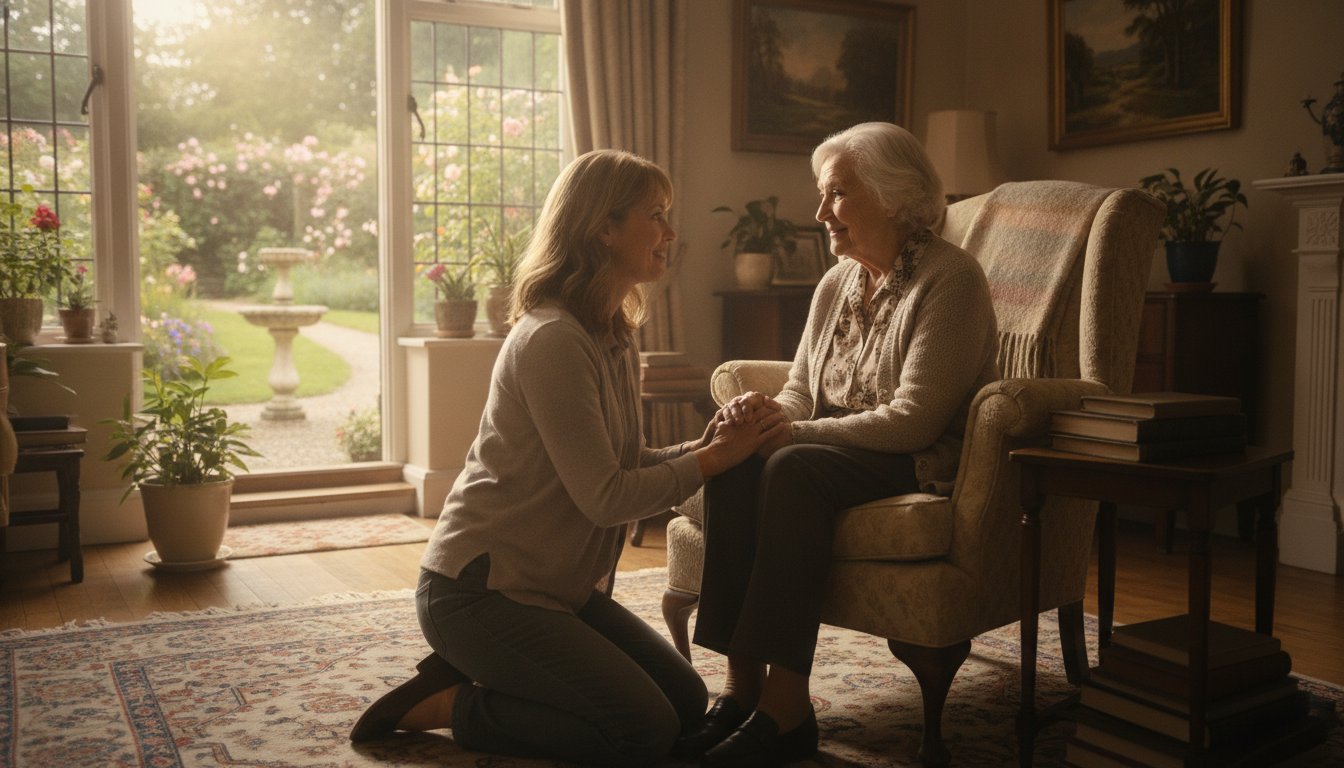
Imagine your mother sitting in her favourite armchair in Abingdon, surrounded by the familiar scent of her own garden rather than the antiseptic smell of a clinical ward. It’s a quiet wish shared by many families across the county who want their loved ones to remain in the sanctuary of their own four walls. You likely agree that the most compassionate way to honour a life is to ensure the final chapter is written in a place of comfort and love. Yet, the reality of providing end stage dementia care at home Oxfordshire often brings a heavy weight of exhaustion and confusion over local healthcare systems.
This guide promises to show you how to provide your loved one with a dignified, peaceful end-of-life journey within their own Oxfordshire home. We’ll explore how professional live-in and domiciliary care can lift the burden of nursing from your shoulders, finally allowing you to be a daughter or son again. From coordinating with local Oxford GPs to managing seamless hospital discharges, you’ll learn how a person-centred approach creates a stable, pain-free environment for the person you love.
Key Takeaways
- Discover why the familiar sanctuary of a private residence is the most effective environment for reducing agitation and promoting peace during the final stages of dementia.
- Understand the clinical benefits of live-in support and how end stage dementia care at home Oxfordshire helps avoid the “transfer trauma” often associated with moving to a residential facility.
- Learn how to navigate the local healthcare system, including coordinating with Oxfordshire GPs and hospitals like the John Radcliffe for a smooth transition back home.
- Get practical advice on preparing your home as a dignified care space, including essential equipment like profiling beds and pressure-relieving mattresses.
- Shift your focus from the exhaustion of being a primary carer back to being a son or daughter, supported by professional, heart-centred expertise.
What is End Stage Dementia Care at Home in Oxfordshire?
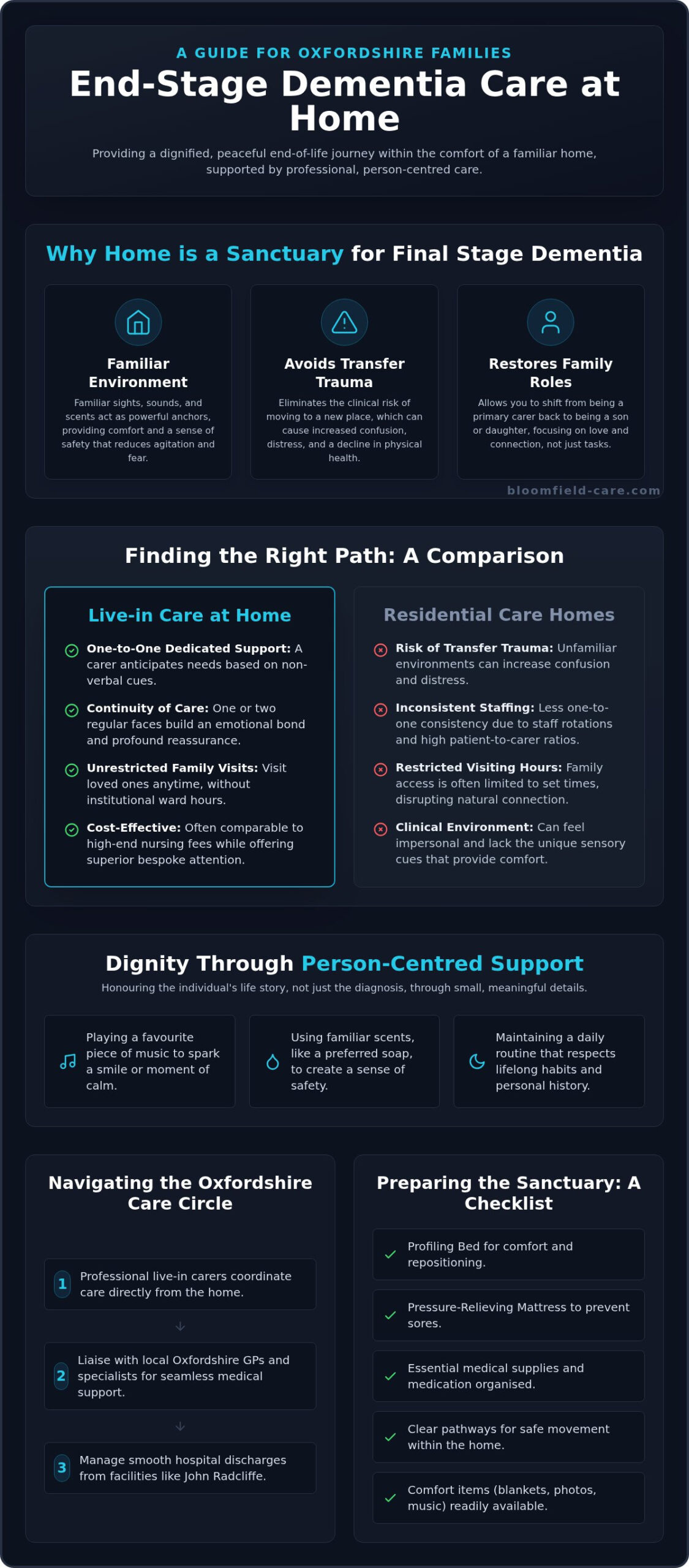
Specialist end stage dementia care at home Oxfordshire is more than just a healthcare service; it’s a commitment to preserving the peace and dignity of your loved one within the walls they know best. For families in Oxford, Abingdon, and Wallingford, this approach transforms the final stages of dementia into a journey defined by comfort rather than clinical routine. The philosophy of “home as sanctuary” is central here. Familiar sights, like a well-loved garden or the light through a specific window, act as powerful anchors that reduce the agitation and fear often triggered by the busy environment of a hospital ward.
Professional carers in this setting do far more than manage complex symptoms. They provide a steady, calming presence that filters through the entire household. By handling everything from delicate personal care to medication management, they ensure the environment remains serene. This allows you to step away from the physical demands of caregiving and return to your primary role as a family member. When families choose end stage dementia care at home Oxfordshire, they’re choosing a path that prioritises the individual’s lifestyle above all else.
The Transition to End-of-Life Care
Moving from general dementia stages to dedicated end-of-life support is a significant emotional shift. It’s the point where the focus moves entirely to comfort and quality of life. At this stage, specialised dementia support often merges with palliative care to ensure pain management is handled with the utmost sensitivity. Starting these conversations early with your local Oxfordshire GP or specialist helps ensure that when the time comes, every preference is already documented and respected.
Dignity Through Person-Centred Support
True support honours the person, not just the diagnosis. Person-centred care means we look beyond the illness to the individual’s life story. It’s about the small details that bring a sense of self back to the surface. These might include:
- Playing a favourite piece of music that sparks a rare smile or a moment of calm.
- Using familiar scents, like a preferred lavender soap, to create a sense of safety and recognition.
- Maintaining a daily routine that respects their lifelong habits and personal history.
Even when communication becomes difficult, maintaining a person’s autonomy is vital. We treat every individual with the respect they’ve earned over a lifetime, ensuring their voice is heard through their established preferences and the quiet advocacy of their family. This approach ensures that the final weeks are defined by the person’s identity, not just their medical needs.
Live-in Care vs. Care Homes: Finding the Right Path
Deciding between a residential facility and staying at home is one of the most difficult choices a family faces. For those requiring end stage dementia care at home Oxfordshire, the primary advantage is the avoidance of “transfer trauma.” This is the clinical risk associated with moving a person with dementia to an unfamiliar environment, which can lead to increased confusion, distress, and a decline in physical health. In the sanctuary of their own home, the individual remains surrounded by the sensory cues that provide comfort. Family members in Abingdon or Wallingford enjoy the freedom to visit whenever they wish, without the restriction of institutional ward hours.
High-quality end of life care for a person with dementia requires a coordinated effort that prioritises the individual’s peace. While care homes offer medical oversight, they often lack the one-to-one consistency found in a private residence. When you consider the cost of home care in Oxfordshire, it’s often comparable to high-end nursing fees, yet it offers a level of bespoke attention that a busy care home simply cannot match.
The Benefits of a Dedicated Live-in Carer
A dedicated live-in carer becomes a trusted advisor and a calm presence within the home. They don’t just wait for a call bell; they anticipate needs based on subtle non-verbal cues that only someone who knows the client deeply can recognise. This continuity of care builds an emotional bond that provides profound reassurance to both the client and the wider family. Having one or two regular faces ensures that routines remain steady, which is vital for managing the complex symptoms of late-stage dementia.
When Hourly Care is No Longer Enough
There often comes a point where visiting domiciliary care is no longer sufficient to maintain safety and comfort. Signs that it’s time to transition to live-in support include increased nighttime agitation, a higher risk of wandering, or the simple fact that the primary carer is reaching a point of total exhaustion. Live-in support provides a 24-hour safety net, allowing you to step back from clinical tasks. This shift lets you focus on being a loved one again, knowing that professional hands are managing the complexities of end stage dementia care at home Oxfordshire. If you’re feeling overwhelmed by the current care schedule, exploring personalised live-in care options can help you find a sustainable way forward.
Navigating the Oxfordshire Care Circle: Hospitals and GPs
Providing effective end stage dementia care at home Oxfordshire involves more than just a dedicated carer; it requires a coordinated “care circle” of local professionals. This network ensures that the clinical needs of your loved one are met without compromising the peace of their home environment. We act as the professional bridge between various services, from the specialist consultants at the Churchill Hospital to the district nurses visiting homes in Abingdon and Wallingford. By managing these connections, we allow you to focus on being present with your loved one rather than chasing prescriptions or medical updates.
Local GPs play a central role in this journey, particularly in managing pain relief and complex medication regimes. We maintain close ties with primary care teams across the county, ensuring that any changes in a client’s condition are reported immediately. This collaborative approach is supported by the Oxfordshire Palliative and End of Life Care Services, which provides the expertise needed to manage symptoms effectively at home. Whether it’s coordinating with a pharmacy in Oxford for an urgent prescription or arranging a visit from a specialist palliative team, our goal is to keep the care seamless and stress-free.
The Discharge Process in Oxford
The transition from a hospital ward, such as those at the John Radcliffe, back to a private residence requires meticulous planning. We work alongside hospital discharge teams to ensure a safe and dignified return. Before your loved one arrives, we verify that the home is “care-ready” with any necessary equipment already in place. Our care managers establish clear communication protocols with NHS clinical teams, ensuring that the care plan we implement at home perfectly mirrors the medical requirements established in the hospital.
Collaborating with Local Primary Care
Many GP practices across Oxfordshire follow the Gold Standards Framework, which prioritises high-quality care for people nearing the end of life. Our carers are trained to provide the detailed, daily observations that help GPs adjust these care plans in real-time. This level of detail is vital when communication becomes difficult for the individual. We also ensure that families have clear information on how to access out-of-hours medical support in Oxfordshire, providing total peace of mind that professional help is always available, even in the middle of the night.
Preparing the Sanctuary: A Checklist for Oxfordshire Families
Creating a space for end stage dementia care at home Oxfordshire requires a delicate balance between medical necessity and the warmth of a private residence. It’s about transforming a familiar bedroom into a suite that supports clinical needs while remaining a place of profound love. This preparation isn’t just about physical changes; it’s about building a sensory and legal safety net that allows the final journey to be as peaceful as possible. When the environment is right, the focus shifts from the logistics of illness back to the person themselves.
Practical adjustments are often the first step. You’ll likely need specialist equipment to maintain comfort and prevent skin issues. Profiling beds and pressure-relieving mattresses are essential tools that preserve dignity by making personal care and movement much gentler. We recommend sourcing these through local Oxfordshire providers early to ensure everything is in place before the high-dependency stage begins. Beyond the hardware, consider your sensory toolkit. Dimmable lighting, soft music, and familiar scents like lavender or a preferred perfume can significantly reduce the agitation often associated with late-stage dementia.
Don’t overlook the administrative foundations. In the UK, having a Health and Welfare Power of Attorney and Advance Directives in place is vital. These documents ensure that your loved one’s wishes are respected even when they can no longer communicate them. Having this clarity provides a sense of control and peace for the entire family during an otherwise uncertain time.
Creating a Comfort-First Environment
A comfort-first environment is one that prioritises sensory peace and familiar triggers over clinical efficiency. While medical access is necessary, try to keep clinical supplies discreetly stored to maintain the room’s “home” feel. Simple steps like reducing household noise, using blackout curtains for better rest, and keeping a favourite photograph within the individual’s line of sight can make a world of difference. It’s these small, thoughtful touches that reinforce the sense of sanctuary.
Supporting the Oxfordshire Family
Caring for a relative in the final stages is a marathon, not a sprint. To prevent burnout and ensure you can remain emotionally present, it’s essential to identify local respite care in Oxfordshire early on. Setting up a communication chain for friends and neighbours in Oxford or Abingdon helps manage the flow of information and offers of help. We also encourage families to access Oxfordshire-specific bereavement support and counselling services before they feel they “need” them, providing a steady emotional anchor for the days ahead. If you need help preparing your home for these final stages, our Oxfordshire care managers can provide a bespoke home assessment.
Choosing Bloomfield Care for Dignity and Peace
Choosing a provider for end stage dementia care at home Oxfordshire is a decision rooted in love and the desire for lasting peace. At Bloomfield Care, we understand that you aren’t just looking for a medical service; you’re looking for a partnership that respects the sanctity of your home. Since our founding in 2014, we’ve focused on delivering high-quality live-in and domiciliary support that prioritises the individual’s lifestyle and preferences. Our approach is unhurried and supportive, mirroring the patient nature of the care we provide. We act as your trusted advisors, guiding you through every sensitive step with integrity and genuine kindness.
The Bloomfield Difference lies in our selection process. We don’t just look for clinical competence; we look for a heart-centred personality. Our carers are chosen for their deep empathy and receive specialist dementia training to manage complex end-of-life needs with grace. This ensures that the support provided is truly person-centred, honouring your loved one’s life story and their deep-rooted connection to the Oxfordshire community. By tailoring every journey to specific wishes, we ensure that the final chapter is written with the dignity your family deserves.
Our Presence in Oxford, Abingdon, and Wallingford
Our local roots are the foundation of our reliability. With branches serving the entire county, from the historic streets of Oxford to the quiet villages around Abingdon and Wallingford, our team possesses an intimate knowledge of the area. This local expertise ensures our care is always punctual and responsive to the specific needs of Oxfordshire families. Whether you’re in a busy town centre or a rural hamlet, our community-focused team is ready to provide a gentle, no-obligation care assessment to help you understand the options available for your unique situation.
The Promise of Home
For many, the decision to choose care at home remains the most compassionate path during the final stages of dementia. It allows for a seamless blend of professional safety with the heart and warmth of a domestic environment. We promise to maintain that sanctuary, ensuring your loved one feels safe, valued, and autonomous for as long as possible. Taking that first step can feel daunting, but we’re here to guide you through the transition with clarity. We listen more than we speak, ensuring that the care plan we build together is as unique as the person it serves, providing a stable and reassuring presence for the whole family.
Creating a Legacy of Peace within Your Home
Choosing end stage dementia care at home Oxfordshire is a profound act of love that honours your relative’s life story and their deep connection to the local community. By maintaining the sanctuary of their own residence, you’re offering them a sense of safety and recognition that simply cannot be replicated in a clinical setting. You’ve seen how professional live-in support provides a reassuring bridge between hospitals like the John Radcliffe and a dignified home life, finally allowing you to step back from the role of nurse and return to being a son or daughter.
Since 2014, our CQC registered team has served families in Oxford, Abingdon, and Wallingford with genuine kindness and bespoke Palliative Care expertise. Our specialist carers are here to ensure that the final chapter of your loved one’s journey is written with grace, clarity, and the utmost respect. You don’t have to navigate these complexities alone. We invite you to Request a Compassionate Care Assessment in Oxfordshire today. You’re making a brave and beautiful choice for the person you love, and we’re here to support you every step of the way.
Frequently Asked Questions
What exactly does end-stage dementia care at home involve?
It involves providing high-dependency, person-centred support that prioritises comfort and dignity in the client’s own residence. This includes managing complex symptoms like pain and agitation, assisting with personal care, and providing medication support. For those receiving end stage dementia care at home Oxfordshire, the focus is on maintaining a peaceful environment where familiar surroundings help reduce distress. It also involves coordinating closely with local healthcare teams to ensure seamless clinical oversight throughout the final journey.
How quickly can live-in care be set up in Oxfordshire?
We aim to respond as quickly as possible, often initiating the process with a gentle care assessment within a few days. Our local presence in Abingdon and Wallingford allows us to mobilise our team efficiently to meet urgent needs. The timeline usually depends on the complexity of the requirements and the availability of a carer who perfectly matches your loved one’s needs. We work closely with discharge teams to facilitate a safe, unhurried transition back home.
Can end-stage dementia pain and agitation be managed effectively at home?
Yes, pain and agitation can be managed very effectively through a combination of professional care and clinical coordination. Our carers are trained to recognize non-verbal cues of distress, allowing for immediate intervention. By working in partnership with your local Oxfordshire GP and specialist palliative teams, we ensure that medication and comfort-based strategies are implemented. Creating a sensory sanctuary with soft music and familiar scents also plays a vital role in maintaining a calm, reassuring atmosphere.
What is the difference between hospice care and home care for dementia?
The primary difference lies in the setting and the level of personalised attention. While a hospice provides specialist clinical care in a dedicated facility, home care brings that same level of expertise into the sanctuary of your own residence. This allows the individual to stay in familiar surroundings, which is vital for reducing dementia-related confusion. Home care also offers one-to-one support from a dedicated carer, ensuring your loved one’s unique routines and life story are always respected.
Will we still have access to our local Oxfordshire GP if we choose home care?
Absolutely, staying at home ensures you maintain your relationship with your trusted local GP practice. Our carers act as a professional bridge, providing the daily observations and reports that GPs need to adjust care plans in real-time. We coordinate closely with primary care teams across Oxford and the surrounding villages to manage prescriptions and medical equipment. This collaboration ensures that clinical oversight remains consistent while your loved one enjoys the comfort and safety of home.
How much does private end-stage dementia care cost in Oxfordshire?
Costs for private care vary depending on whether you require hourly domiciliary visits or 24-hour live-in support. Factors such as the level of dependency and the frequency of assistance required will influence the final rate. Many families find that home-based care is a sustainable alternative to residential nursing fees. You should check if you’re eligible for local authority funding or non-means-tested benefits like Attendance Allowance to help support your loved one’s choice to stay at home.
What happens if my loved ones needs change suddenly during the night?
If you have live-in care, your carer provides a constant 24-hour safety net to respond to any sudden changes or nighttime agitation. For those on hourly plans, we can discuss transitioning to overnight care fees to ensure someone is always present. We also help you coordinate with Oxfordshire’s out-of-hours medical services for urgent clinical support. This ensures that even in the middle of the night, professional help and heart-centred reassurance are just a moment away.
How do we talk to other family members about choosing home care?
We suggest starting the conversation by focusing on your loved one’s comfort and their well-documented wishes. Highlighting the benefits of the “home as sanctuary” philosophy can help alleviate fears about safety or clinical oversight. It’s helpful to explain how professional support allows the family to focus on being loved ones again, rather than acting as primary nurses. We can provide guidance to help you present a clear, compassionate plan that everyone in the family feels comfortable with.