
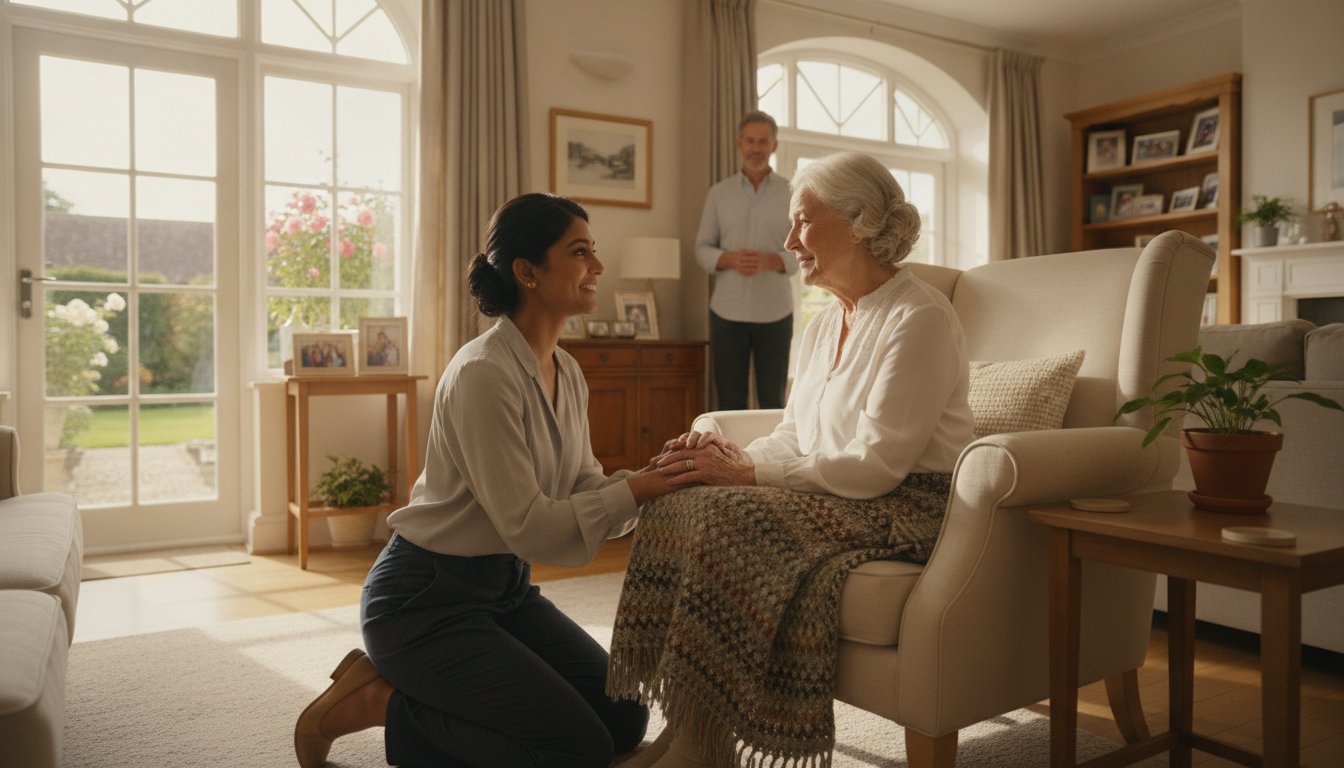
What if the most clinically robust environment for your loved one isn’t a specialized facility, but the very hallway they have walked for decades? Many families believe that once symptoms progress, a residential facility becomes the only safe option, yet specialist late stage dementia care at home Oxfordshire offers a profoundly different path. You might be feeling the heavy weight of sleep deprivation or the constant anxiety of a potential fall, wondering how much longer you can manage these complex medical and hygiene needs on your own.
We understand that you want to protect your loved one’s dignity without sacrificing their safety or your own well-being. This guide demonstrates how expert live-in and domiciliary support can handle the heavy lifting of clinical oversight, allowing you to return to being a daughter, son, or spouse rather than just a caregiver. We’ll walk you through the 2026 standards for home-based support, showing you how to maintain a familiar sanctuary while ensuring professional safety is managed 24/7.
Key Takeaways
- Learn how a person-centered approach manages complex symptoms like sundowning and agitation by honoring your loved one’s unique life story.
- Discover why late stage dementia care at home Oxfordshire offers a safer, 1-on-1 alternative to residential care by eliminating the risks of “transfer trauma.”
- Identify essential home adaptations and assistive technologies that turn a private residence into a secure, clinically robust sanctuary.
- Compare the benefits of live-in support versus care homes, focusing on the continuity of environment and personalized daily rhythms.
- Explore how specialist local care in Wallingford, Abingdon, and Oxford provides expert clinical support while preserving the warmth of the family home.
Understanding Late-Stage Dementia Care at Home in Oxfordshire
When a loved one enters the advanced phase of their journey, the definition of home often shifts from a place of residence to a vital source of stability. Late-stage dementia is characterized by a profound need for physical assistance, where tasks like mobility, nutrition, and personal hygiene require constant, expert hands. By Understanding Late-Stage Dementia through a clinical lens, we see that the environment plays a starring role in managing distress and confusion. For many families, late stage dementia care at home Oxfordshire has become the preferred choice because it preserves the person’s identity within their own sanctuary, surrounded by the sights and sounds they’ve known for years.
Late-stage home care is a specialized, 24/7 clinical and emotional support system. It’s designed to bridge the gap between medical necessity and the comfort of a domestic setting. In Oxfordshire, we’re seeing a shift away from residential moves as families realize that the transfer trauma of leaving a familiar home can often accelerate decline. Staying in a private residence isn’t just about comfort; it’s a strategic choice for mental well-being and long-term dignity.
Recognising the Transition to Advanced Care Needs
It’s often a quiet realization rather than a sudden event. You might notice that hourly domiciliary visits no longer provide the safety net your parent needs. Perhaps wandering has become a risk, or sleep-wake cycles have flipped, leaving you exhausted and worried. This shift marks the move from simple companionship to a requirement for complex personal care and medication assistance. When you are seeking late stage dementia care at home Oxfordshire, the goal is to provide a seamless safety net that adapts as needs grow. You can find more detail on these transitions in our guide to understanding dementia stages, which helps local families identify when a higher tier of support is necessary for safety.
The Legal and Regulatory Framework in Oxfordshire
Choosing care involves trust, and that trust is backed by rigorous standards. The Care Quality Commission (CQC) monitors home care providers to ensure they meet essential safety and quality marks. In our local area, Oxfordshire County Council works to support elderly residents by promoting independence, yet they also recognize when specialist intervention is required. Every care plan we create respects the rights to dignity and autonomy enshrined in the Mental Capacity Act. This ensures that even when cognitive abilities change, the individual’s voice and history remain at the heart of their care. It’s a partnership between the family, the local authorities, and the care provider to ensure safety never feels clinical or cold.
The Pillars of Specialist Dementia Support at Home
Specialized care isn’t just about safety; it’s about honoring the person behind the diagnosis. For those seeking specialist dementia support at home, the focus shifts toward maintaining a gentle, predictable rhythm that respects the individual’s life history. In late-stage dementia, verbal communication might fade, but deeply held preferences for music, specific scents, or the way a morning routine unfolds remain. Our approach to late stage dementia care at home Oxfordshire prioritizes these small but vital details, ensuring that every interaction feels familiar and safe rather than clinical or intrusive.
Consistency is the cornerstone of this support model. Having a dedicated carer who understands your loved one’s unique non-verbal cues reduces the anxiety and “stranger distress” often triggered by rotating staff in larger facilities. This 1-on-1 relationship allows for robust clinical oversight, where carers meticulously manage medication regimes and monitor nutritional intake. They become the “eyes and ears” of the healthcare team, spotting subtle changes in physical health or mood that might otherwise go unnoticed. This level of personalized attention ensures that the home remains a true sanctuary, even as needs become more complex.
Managing Behavioural and Psychological Symptoms
Distress often stems from an unmet need that an individual can no longer express. We utilize evidence-based techniques to de-escalate agitation and anxiety without immediate recourse to sedative medication. Sensory therapy, such as the use of familiar textures or calming soundtracks, provides a grounding anchor during periods of confusion. Maintaining the visual cues and predictable layout of a familiar Oxfordshire home helps reduce the severity of sundowning symptoms, as the environment remains a known sanctuary even as the natural light changes and evening approaches. If you are struggling to manage these transitions alone, our specialist dementia care can provide the expert partnership you need.
Personal Care with Dignity
Intimate tasks like bathing, dressing, and continence care require a delicate balance of professional skill and profound empathy. For clients with limited mobility, maintaining skin integrity is a primary clinical focus to prevent pressure sores and discomfort. Our carers are trained in specialist lifting and positioning techniques that prioritize the individual’s comfort and safety. Beyond the physical task, we focus on the emotional experience, using unhurried movements and soft, reassuring communication to preserve the person’s dignity. This person-centered approach transforms routine personal care into a moment of connection and respect, ensuring your loved one feels valued and secure in their own home.
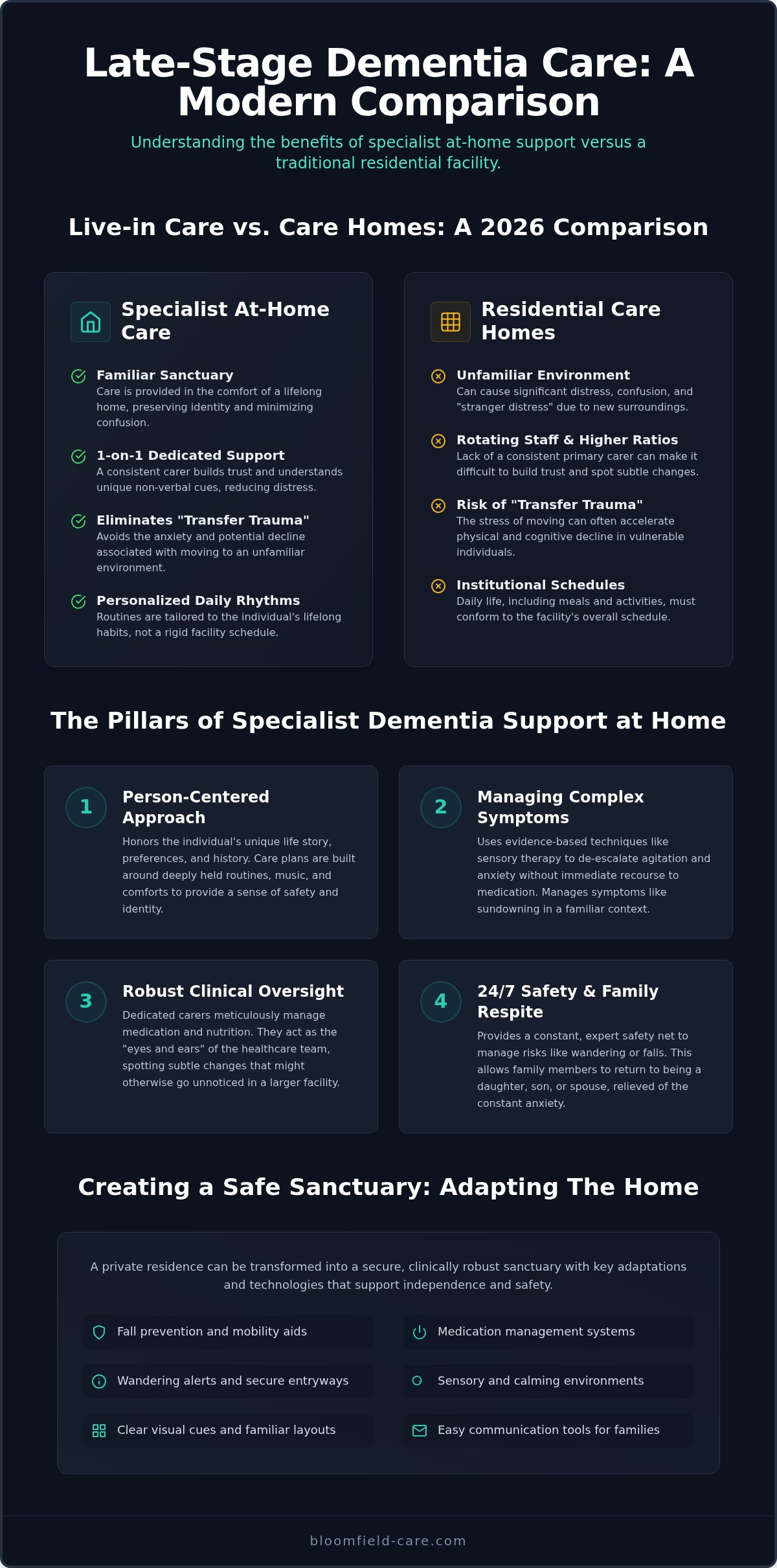
Live-in Care vs. Oxfordshire Care Homes: A 2026 Comparison
Choosing between a residential facility and staying at home is one of the most difficult decisions a family can face. Many assume that a care home is the only way to guarantee 24/7 safety, but the reality of the support ratio often tells a different story. In a typical Oxfordshire residential setting, a single staff member might be responsible for eight or more residents at once. Conversely, late stage dementia care at home Oxfordshire provides a dedicated 1-to-1 ratio. This means your loved one has the undivided attention of a professional who knows their rhythms, their history, and the subtle signs of distress that a busy facility worker might miss.
This level of personalized attention aligns with the official NICE dementia care guidelines, which emphasize the importance of person-centered support. Beyond the numbers, there is the vital factor of environmental continuity. Moving an individual with advanced dementia can trigger “transfer trauma,” a state of extreme confusion and distress caused by unfamiliar surroundings. By remaining in their own sanctuary, they keep their pets, their favorite armchair, and the specific view from their window. For a detailed breakdown of these differences, explore our comparison of care homes vs home care.
Evaluating Clinical Safety and Oversight
It’s a common myth that care homes offer “hospital-grade” safety that cannot be replicated at home. In truth, bespoke home care often provides more agile clinical oversight. Our specialist carers work in close partnership with Oxford-based GPs and district nurses to manage complex medical needs right in the person’s living room. Emergency protocols are designed specifically for your home’s layout and your loved one’s specific health profile. This creates a safety net that is both robust and deeply personal, avoiding the cold, institutional feel of a facility while maintaining high clinical standards.
The Financial Reality for Oxfordshire Families
Understanding the costs of care in 2026 is essential for long-term planning. High-dependency residential dementia care in our region often comes with significant weekly fees, which can sometimes include hidden charges for “extras” like specialized activities or laundry. Live-in care offers a more transparent alternative. You’re investing in a dedicated professional who becomes a part of the household fabric, focusing entirely on one person’s well-being. You can find more specific data in our 2026 guide to home care costs, which helps families navigate the financial aspects of maintaining a loved one’s independence and dignity at home.
Creating a Safe Sanctuary: Adapting the Oxfordshire Home
Transforming a house into a secure care environment is about more than just safety; it’s about preserving the dignity of a lifelong sanctuary. For families managing late stage dementia care at home Oxfordshire, the goal is to integrate clinical safety without erasing the home’s personality. We start with a comprehensive audit of the physical space. This means ensuring lighting is bright and consistent to eliminate shadows that can cause fear or distress. Flooring needs to be matte and non-slip, as glossy surfaces can often be mistaken for water or holes by those with declining depth perception. Simple sensory adjustments, like increasing color contrast between doors and walls, can also help your loved one navigate their space with greater confidence.
Technology plays a silent but vital role in this transition. Bed sensors and floor pressure mats provide 24/7 peace of mind, alerting carers to movement without the need for intrusive, constant checks. When mobility becomes a greater challenge, specialist lifting equipment like hoists or stand-aids can be introduced. These tools, while clinical in nature, are used with a gentle touch to ensure your loved one feels supported rather than handled. Even in Oxfordshire’s more rural or suburban properties, safe access to a garden or patio can provide essential sensory stimulation and a comforting connection to the changing seasons.
Zoning the Home for Care and Comfort
Effectively managing late stage dementia care at home Oxfordshire often involves moving the primary living space to the ground floor. Creating a “care hub” in a familiar lounge or dining room allows for the installation of a hospital bed while keeping the person at the heart of the family’s daily life. It’s vital to balance this equipment with soft furnishings and family photos to maintain a warm, domestic feel. We also ensure that our live-in carers have their own private space nearby, allowing them to recharge so they can continue providing the patient, empathetic support your family deserves.
Nutritional Support and Meal Preparation
In the later stages, managing dysphagia, or swallowing difficulties, becomes a primary clinical focus. Our carers are trained in specialist meal preparation, creating nutritious, soft-textured foods that remain visually appealing and flavorful. Hydration is equally critical, especially when a loved one can no longer easily express thirst. We use creative strategies, such as offering high-water-content snacks or using colorful glassware that provides high contrast against the table. If you’re ready to see how your home can be safely adapted for your loved one’s needs, explore our specialist dementia care services to learn more about our personalized approach.
How Bloomfield Care Supports Families in Oxfordshire
At Bloomfield Care, we believe that providing late stage dementia care at home Oxfordshire is a profound responsibility that requires more than just clinical skill; it requires a partnership of the heart. We don’t view our role as a simple service delivery, but as a dedicated support system that wraps around the entire family. Our local branches in Wallingford, Abingdon, and Oxford are staffed by professionals who understand the unique character of our community, from the quiet villages to the busy city center. This local expertise ensures that we’re always close at hand, providing a steady presence that family members can rely on when the challenges of advanced dementia feel overwhelming.
We recognize that primary caregivers often face immense emotional and physical strain. To address this, our approach includes flexible respite options that allow you to take the time you need to rest, knowing your loved one is in the safest possible hands. We provide unhurried, emotional guidance, helping you process the changes in your loved one’s condition with grace and clarity. By choosing our specialist live-in care services, you’re not just hiring a carer; you’re gaining a trusted advisor who is committed to maintaining the sanctuary of your home and the dignity of your family life.
The Assessment and Matching Process
The journey begins with a deep dive into who your loved one truly is. We don’t just look at medical charts; we explore their life story, their past career, their favorite music, and their unique personality traits. This allows us to match a carer who isn’t just skilled in dementia support, but who shares similar interests or a compatible temperament. Bloomfield Care offers a comprehensive, free care needs assessment to help families understand the best path forward for their loved ones. Once a match is made, we guide you through a step-by-step transition, ensuring that the introduction of care feels like a natural and supportive addition to the household.
Palliative and End-of-Life Excellence
As the journey nears its conclusion, our focus shifts toward the highest standards of comfort and peace. We’re deeply committed to the Gold Standards Framework, ensuring that end-of-life care is delivered with the utmost respect and clinical precision. Our team works in seamless coordination with Oxfordshire palliative care teams and local hospices to manage pain and symptoms effectively within the home environment. You can find more information on this delicate phase in our palliative care at home guide, which details how we support families through these final chapters with compassion and professional excellence.
Choosing a Path of Dignity for Your Loved One
The journey through advanced dementia is undeniably challenging, yet it doesn’t have to mean leaving the comfort of a lifelong home. We’ve explored how a 1-on-1 support ratio provides a level of safety and personal connection that larger facilities simply cannot match. By adapting your environment and leaning on specialist clinical oversight, you can transform a private residence into a secure sanctuary. Choosing late stage dementia care at home Oxfordshire ensures that your loved one’s unique life story remains the heart of their care plan, preserving their identity during the final chapters of life.
Since 2014, Bloomfield Care has served as a dedicated alternative to residential care homes. Our CQC-regulated and highly trained local teams specialize in person-centred care plans tailored to advanced dementia needs. You deserve the peace of mind that comes with expert partnership and 24/7 safety management. We invite you to Request a Compassionate Care Assessment for Your Loved One in Oxfordshire today. You don’t have to carry this weight alone; we’re here to walk this path with you, ensuring every day is met with kindness and professional excellence.
Frequently Asked Questions
Is late-stage dementia care at home safe for my loved one in Oxfordshire?
Yes, late stage dementia care at home Oxfordshire is a safe and clinically robust option when managed by specialist 1-on-1 carers. Unlike residential settings where staff attention is divided among many residents, a dedicated carer provides constant supervision and an immediate response to distress. This environment reduces the risk of transfer trauma and uses familiar surroundings to maintain a sense of security and stability for your loved one.
Can home care manage the medical needs of advanced dementia?
Specialist home care is specifically designed to manage complex medical requirements. This includes medication assistance, nutritional support for those with swallowing difficulties, and rigorous skin integrity monitoring to prevent pressure sores. Our carers work in close partnership with local Oxfordshire GPs and district nurses to ensure a high standard of clinical oversight. This collaborative approach allows for professional healthcare delivery within the comfort and dignity of a private sanctuary.
How much does 24/7 live-in dementia care cost compared to an Oxford care home?
While individual costs vary based on specific needs, live-in care is often financially comparable to high-dependency residential dementia care in the local area. The primary difference lies in the support ratio. You’re investing in dedicated 1-on-1 attention rather than sharing staff in a facility. Many families find this model offers greater transparency and value by focusing entirely on one individual’s well-being and personal preferences.
What happens if my loved one’s condition worsens suddenly at home?
Our carers follow rigorous emergency protocols specifically tailored to your loved one’s health profile and home layout. If a condition worsens suddenly, the carer immediately contacts local medical services and coordinates with your designated GP or the community nursing team. This proactive monitoring ensures that changes in health are identified early, allowing for swift intervention while keeping the family fully informed and supported throughout the process.
Will we have the same carer every day to ensure consistency?
We prioritize consistency because we know that familiar faces are essential for reducing anxiety in the later stages of cognitive decline. While a single person cannot work 24/7 indefinitely, we build a small, dedicated team of matched carers who rotate on a predictable schedule. This ensures your loved one always feels safe with someone who understands their unique life story, their daily rhythms, and their non-verbal cues.
How do we prepare our house for advanced dementia care?
Preparing a home involves optimizing safety and accessibility, such as improving lighting to eliminate shadows and ensuring non-slip, matte flooring. You might consider zoning the ground floor to create a care hub that includes a hospital bed and easy access to facilities. These adaptations, combined with assistive technology like bed sensors, help create a safe sanctuary that supports both the individual and the professional carer.
Does Oxfordshire County Council provide funding for late-stage home care?
Oxfordshire County Council funding for home care is means-tested and depends on your loved one’s financial assets and care needs. For the 2026/27 period, individuals with capital above £23,250 are generally expected to self-fund their care. We recommend requesting a formal care needs assessment from the council to determine eligibility for financial support or non-means-tested benefits like Attendance Allowance to help with costs.
How quickly can Bloomfield Care start providing support in Abingdon or Wallingford?
We can typically begin providing support in Abingdon, Wallingford, or Oxford within a few days of a completed care needs assessment. Our local team works efficiently to understand your family’s requirements and match the right carer to your loved one’s personality and clinical needs. This unhurried yet responsive process ensures that care starts safely and provides immediate reassurance to the family during a difficult time.