

Did you know that 80% of older adults prefer to remain in the sanctuary of their own home as they age, even when their health needs become complex? Realizing that a loved one can no longer be left alone is a heavy moment, often filled with worries about falls or wandering during the night. You might feel a deep sense of guilt or confusion about what to do when elderly parent needs 24 hour care at home, but this transition doesn’t have to mean a loss of independence. Instead, it’s an opportunity to wrap your parent in a layer of professional safety that respects their lifelong autonomy.
It’s completely normal to feel stretched thin, yet you want the very best for your family. We’re here to help you move from a place of anxiety to one of quiet confidence. In this 2026 guide, you’ll discover how to navigate the latest regulations and funding options to build a bespoke support system. We’ll clarify the differences between live-in and shift-based care, ensuring you have a clear plan to keep your parent safe, comfortable, and truly at home.
Key Takeaways
- Recognize the subtle physical and cognitive signs, such as frequent falls or nighttime wandering, that indicate your loved one requires the safety of continuous support.
- Understand what to do when elderly parent needs 24 hour care at home by choosing between the companionship of dedicated live-in care and the security of a shift-based visiting team.
- Prepare for a professional care needs assessment that focuses on enhancing your parent’s quality of life and preserving the sanctuary of their own home.
- Navigate the 2026 social care funding landscape, including how to access Attendance Allowance and understand the current UK means-testing thresholds.
- Learn how to initiate a compassionate conversation about care that emphasizes safety and independence while respecting your parent’s dignity and autonomy.
Recognising the Need for 24-Hour Care at Home
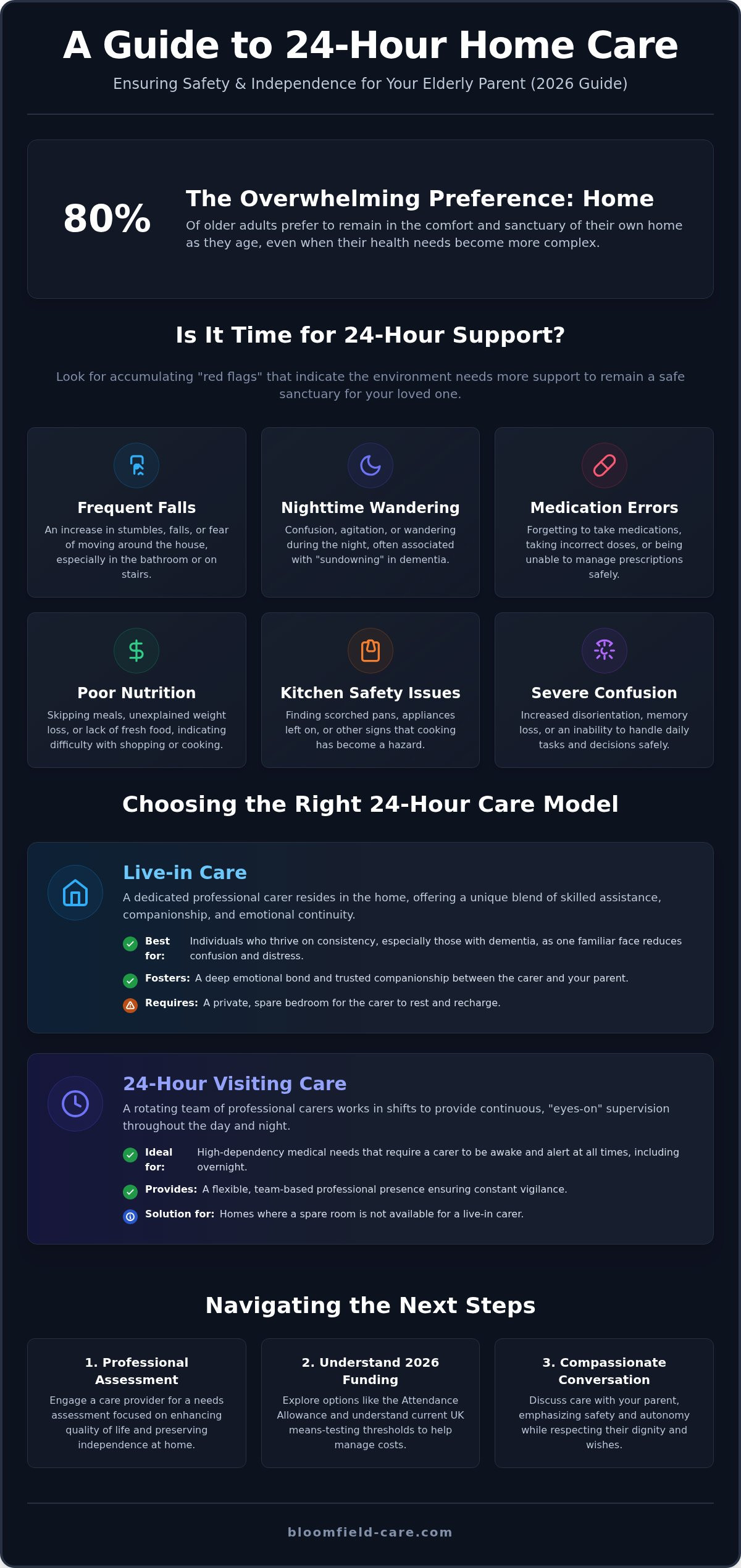
Deciding what to do when elderly parent needs 24 hour care at home is a journey rooted in love and responsibility. Understanding What is Home Care? is the first step in creating a sanctuary for your loved one. When we speak about 24-hour care, we’re referring to continuous support delivered either by a dedicated live-in carer or a rotating team of visiting carers who provide “eyes-on” assistance around the clock. Essentially, 24-hour home care is a proactive safety net for independence that ensures your loved one is never alone during vulnerable moments. Often, the need for this support doesn’t arrive as a single event but is the result of “salami slicing,” where small care needs gradually accumulate until they become a 24-hour requirement. You might start with help for shopping, then medication, and suddenly find they can no longer be left alone safely due to wandering, frequent falls, or severe confusion.
The Emotional Impact on Families
It’s common for adult children to live in a state of constant “crisis mode,” jumping every time the phone rings. This leads to profound caregiver burnout, a weight that can strain family bonds and mental well-being. Moving from the stress of wondering what to do when elderly parent needs 24 hour care at home to a structured care plan provides a sense of profound reassurance. Acting early prevents the trauma of an emergency hospital admission, which often occurs when needs outpace a family’s ability to cope alone. You deserve peace of mind; your parent deserves the stability of a familiar environment.
Physical and Cognitive Red Flags
Specific signals often point toward the need for constant supervision. For those with dementia, “sundowning” can lead to increased agitation as the sun sets, making nighttime particularly dangerous. You might notice scorched pans in the kitchen or a parent who has become fearful of the bathroom. If nutrition is slipping or medication is being missed, the risk to their comprehensive wellness becomes critical. These red flags aren’t failures of aging; they’re indicators that the environment needs more support to remain a safe sanctuary. We believe that professional support should always empower the individual rather than restrict them.
Comparing 24-Hour Care Models: Live-in vs. Visiting Care
When families research what to do when elderly parent needs 24 hour care at home, they often encounter two distinct paths. Live-in care involves a dedicated professional residing within the private residence, providing a blend of skilled assistance and companionship. Conversely, 24-hour visiting care utilizes a rotating team of professionals who work in shifts to ensure “eyes-on” supervision throughout the day and night. This partnership-driven approach ensures that the home remains a sanctuary, tailored entirely to the individual’s lifestyle and personal preferences.
Deciding what to do when elderly parent needs 24 hour care at home often comes down to the layout of the property and the intensity of the support required. A critical practical consideration for families in Oxfordshire or West Berkshire is the availability of a spare room. For live-in care, the caregiver requires their own private space to rest and recharge. If your parent’s home doesn’t have an extra bedroom, visiting care becomes the logical choice. However, if space allows, the consistency of a single carer often fosters a deeper emotional bond, turning a professional service into a trusted, familiar presence.
When Live-in Care is the Best Choice
Live-in care is the premier alternative to a residential care home for those who value a single point of contact. It’s particularly effective for those living with dementia or Alzheimer’s, where changes in personnel can cause significant distress. Having one familiar face provides a steady rhythm to the day, which is vital for mental well-being and reducing confusion. You can learn more about our compassionate live-in care in Oxfordshire, Dorset, and West Berkshire to see how this model preserves the dignity of the individual.
The Benefits of 24-Hour Visiting Care
While live-in care offers stability, 24-hour visiting care provides a different kind of professional safety. This model is ideal for individuals with high-dependency medical needs who require a carer to be awake and alert at all times, rather than sleeping in a separate room. It’s a flexible option for families who prefer a team-based professional presence. Similar programs, such as home and community based services for veterans, highlight the importance of tailoring care to the specific physical requirements of the individual. If you’re unsure which path fits your family best, our team at Bloomfield Care can help you evaluate your specific needs through a person-centered care planning process.
How to Transition Your Parent to 24-Hour Care
Moving toward full-time support is a significant milestone for any family. It requires a patient, partnership-driven approach that prioritizes your parent’s comfort and emotional well-being. When considering what to do when elderly parent needs 24 hour care at home, the transition should be viewed as a gradual journey rather than a sudden change. By following a structured plan, you can transform a period of uncertainty into a stable, supportive new chapter.
- Step 1: Start the conversation early. Use “I” statements to express your concerns. For example, “I feel worried when I think about you being alone at night,” rather than telling them what they must do.
- Step 2: Arrange a professional assessment. A person-centered care planning process identifies specific physical and cognitive needs, ensuring the support is tailored to their unique lifestyle.
- Step 3: Prepare the home environment. Focus on both safety equipment and the personal comfort of the incoming carer to ensure a harmonious living arrangement.
- Step 4: Implement a “Trial Period.” Introduce a carer gradually, perhaps starting with companionship hours, to build trust before moving to a full 24-hour schedule.
- Step 5: Review and adjust. Comprehensive wellness is dynamic. Regularly meet with your care provider to refine the plan as your parent’s needs or preferences evolve.
Navigating Difficult Conversations
It’s natural for a parent to resist the idea of a “stranger in the house.” Address this objection with deep empathy by reframing the narrative. Emphasize that 24-hour care is the very tool that allows them to stay at home in their own sanctuary, rather than moving to a residential facility. To maintain their autonomy, involve them in the selection process. Let them interview potential carers, focusing on shared interests or personality traits. This empowers them to see the carer as a chosen companion rather than an imposed supervisor.
Preparing the Home Sanctuary
Creating a welcoming environment is essential for both your parent and their new support team. Simple modifications, such as improved lighting or bathroom grab rails, enhance safety without making the home feel clinical. If you are arranging live-in care in Newbury or Oxford, ensure the carer’s room is a private, comfortable space. Most importantly, protect your parent’s favourite routines. Whether it’s a specific morning tea ritual or a preferred chair for reading, keeping these familiar elements central to the day helps preserve their sense of self and dignity. Knowing what to do when elderly parent needs 24 hour care at home means ensuring their private residence remains a place of comfort and joy.
Understanding Funding and Costs for 24-Hour Care
Financial planning is often the most daunting part of deciding what to do when elderly parent needs 24 hour care at home. In 2026, the UK social care funding landscape remains structured around a means-testing threshold. If your parent’s savings and assets exceed £23,250, they’ll likely be responsible for their own care costs. For those with assets between £14,250 and £23,250, the local authority may contribute, while those below £14,250 generally receive the most significant support. Regardless of wealth, most individuals over 65 with a physical or mental disability can claim Attendance Allowance. This non-means-tested benefit provides either £76.70 or £114.60 per week, offering a helpful contribution toward the cost of home care.
For families in Dorset or Oxfordshire who qualify for local authority support, “Direct Payments” offer a way to maintain autonomy. This system allows the council to pay the care budget directly to you or your parent, giving you the freedom to choose your own provider and carers. It transforms the experience from a standard service into a bespoke partnership that fits your family’s specific rhythm.
The Financial Assessment Process
When you contact Oxfordshire or Dorset Council, they’ll perform a financial assessment to determine how much they’ll contribute. It’s vital to distinguish this from NHS Continuing Healthcare (CHC). CHC is a fully-funded package for those with a “primary health need,” which is assessed based on the complexity and intensity of a condition rather than a specific diagnosis. Because these assessments are rigorous, we recommend seeking independent financial advice early. Professional advisors can help you navigate the nuances of long-term care planning, ensuring your parent’s sanctuary remains financially sustainable for years to come.
Why Private Home Care is an Investment
Choosing to keep a parent at home is an investment in their long-term mental well-being and physical health. Unlike residential facilities, where the ratio of staff to residents is one-to-many, 24-hour home care provides a dedicated one-to-one relationship. This level of individualized assistance prevents the emotional decline often seen when a person is moved from a familiar environment. When you weigh the options in our guide on Bloomfield Care Home or Care at Home?, the value of the home as a sanctuary becomes clear. The hidden savings are found in the preservation of dignity and the reduction of hospital admissions through alert, constant supervision. If you’re ready to explore a tailored care plan, our team is here to guide you through the next steps with compassion and clarity.
Why Bloomfield Care is the Trusted Choice for 24-Hour Support
Bloomfield Care understands that deciding what to do when elderly parent needs 24 hour care at home isn’t just a logistical choice; it’s a deeply personal one. Since our founding in 2014, we’ve focused on a person-centered philosophy that prioritizes the sanctity of the individual’s lifestyle. We don’t just manage daily tasks. We work to enhance life quality by fostering genuine human connections. Our specialist dementia and Alzheimer’s care teams are trained to provide stability and comfort, ensuring that your parent’s home remains a true sanctuary. This commitment to excellence ensures that every person we support feels empowered and respected within their own residence.
Unlike national agencies that operate from a distance, we believe in the power of local accountability. Our branches in Wallingford, Weymouth, Newbury, and Abingdon provide a neighbourly presence that families can trust. This local expertise means our managers are always nearby to offer hands-on support and advice. It’s about providing professional safety with the warmth of a domestic environment. We know the local communities in Oxfordshire, Dorset, and West Berkshire, and we use that knowledge to provide a more responsive, attentive service.
Our Local Commitment to Oxfordshire and Dorset
Our branch managers are deeply involved in every care plan we create. We maintain rigorous recruitment standards, selecting our team members based on their compassion, integrity, and clinical skill. We know that the best care happens when a carer becomes a trusted part of the family circle. Local families frequently tell us that having a consistent, familiar face has transformed their experience from one of anxiety to one of profound reassurance. We don’t just send a carer; we introduce a companion who understands the importance of your parent’s history and home.
Starting Your Journey with Us
The first step in understanding what to do when elderly parent needs 24 hour care at home is a simple, no-obligation care assessment. When you call us, we listen more than we speak. We’ll visit your parent’s home to learn about their history, hobbies, and personal tastes. This allows us to customize a care plan that reflects who they are, not just what they need. Whether it’s matching a carer who shares a love for gardening or ensuring a specific morning routine is preserved, we focus on every detail. If you’re ready to find a partnership that values your parent’s autonomy as much as you do, contact our compassionate team today to discuss your parent’s needs.
Embracing a Future of Safety and Comfort at Home
Deciding what to do when elderly parent needs 24 hour care at home is a profound act of love. By understanding the differences between live-in and visiting care, you can ensure your parent remains in the sanctuary they’ve built over a lifetime. Transitioning to this level of support doesn’t mean a loss of autonomy; it’s about providing the professional safety net required to maintain their dignity and mental well-being.
At Bloomfield Care, we combine CQC-regulated services with specialist dementia support to create a truly person-centered environment. Our local branches across Oxfordshire and Dorset mean we’re always nearby when you need us most. You don’t have to carry this responsibility alone. We’re ready to listen and help you build a care plan that prioritizes your loved one’s unique history and comfort.
Request a Compassionate Care Assessment today to explore how we can support your family. You’ve taken the first step by seeking information; now, let’s walk the rest of the journey together with confidence and peace of mind.
Common Questions About 24-Hour Home Care
How quickly can 24-hour care at home be arranged?
We aim to respond as quickly as possible to families in crisis. Typically, we can arrange a care assessment within 48 hours and have a dedicated carer in place within a week. For those wondering what to do when elderly parent needs 24 hour care at home in an emergency, our local managers in Wallingford or Weymouth work tirelessly to expedite the process. This ensures your parent’s safety is never compromised while we build their person-centered plan.
Is 24-hour home care cheaper than a care home in Oxfordshire?
Live-in care is often a financially viable alternative to residential care homes, particularly in Oxfordshire where facility fees are high. Because the costs cover a dedicated one-to-one carer rather than the high overheads of a large facility, many families find it offers better value. It also allows your parent to keep their home, which is often their most significant asset. We provide transparent weekly rates that reflect the specific level of support required for your loved one.
Can a live-in carer help with dementia and complex needs?
Yes, our carers are specifically trained in specialist dementia and Alzheimer’s care. They understand the nuances of communication and safety required for complex cognitive needs. By maintaining a consistent routine in a familiar sanctuary, we help reduce the agitation often caused by sundowning or environmental changes. Our approach focuses on preserving the individual’s dignity and mental well-being through patient, personalized assistance that adapts as their condition evolves over time, ensuring they feel safe and understood.
What happens if the carer and my parent do not get along?
Human connection is at the heart of our service. If the chemistry isn’t right, we’ll work with you to find a more suitable match immediately. We use a trial period to ensure both parties feel comfortable and respected. Our local branch managers in Abingdon or Thatcham stay in close contact with families to monitor these relationships. We believe that a successful care partnership requires genuine friendship and mutual trust to flourish within the sanctuary of the home.
Does my parent need to pay for the carer’s food and bills?
For live-in care, the homeowner typically provides a private bedroom and basic meals for the carer. Your parent isn’t expected to pay for the carer’s personal bills or external expenses. The carer uses the home’s existing utilities, such as heating and water, as they’re residing there to provide 24-hour safety. We’ll discuss these practical domestic arrangements during your initial care assessment to ensure everyone understands the expectations before the service begins, maintaining a comfortable domestic environment.
Can I get 24-hour care if my parent lives in a remote part of Dorset?
Absolutely. Live-in care is an ideal solution for those living in more rural parts of Dorset or West Berkshire. Because the carer resides in the home, geographic isolation doesn’t affect the consistency of support. Our branches in Weymouth and Wallingford have deep local roots and can coordinate care in even the most remote villages. This ensures your parent remains safe in their own sanctuary without the need for stressful travel to a central residential facility or care home.
What is the difference between 24-hour care and overnight care?
24-hour care provides continuous support throughout the day and night, ensuring someone is always present to help with what to do when elderly parent needs 24 hour care at home. Overnight care is a more targeted service, typically lasting eight to ten hours to assist with nighttime toilet visits or medication. Depending on your parent’s needs, we can provide sleeping night support or waking night care where the professional remains alert at all times to ensure maximum safety.
Is 24-hour home care regulated by the CQC?
Yes, Bloomfield Care is fully regulated by the Care Quality Commission (CQC). This means our services are regularly inspected to ensure they meet high standards of safety, effectiveness, and compassion. Regulation provides families with peace of mind that their loved ones are in professional, capable hands. We take our accountability seriously, maintaining rigorous recruitment and training protocols across all our local branches to ensure we consistently deliver excellence in person-centered home support and comprehensive wellness.