

The clock strikes four, the shadows begin to stretch across the living room, and you feel that familiar tightening in your chest. You’ve spent the day providing dedicated care, yet as evening approaches, your loved one becomes restless, perhaps even distressed or insistent on leaving a home they’ve lived in for decades. If you find yourself physically exhausted and grappling with the guilt of losing your patience during these difficult hours, please know you aren’t alone. These evening outbursts are often a biological response to a world that suddenly feels overwhelming, rather than a deliberate choice or a personal failing. Finding effective sundowning dementia support strategies is about more than just managing a schedule; it’s about restoring a sense of sanctuary to your home.
We understand the profound weight of this responsibility and the fear that comes with late-day confusion. This guide offers compassionate, practical techniques to help you de-escalate tension and create a predictable, calming environment for your family. We’ll explore how simple sensory adjustments can quiet the environmental noise of the evening, provide you with communication tools to bridge the gap during moments of distress, and help you recognize when professional intervention might be the kindest step for everyone involved.
Key Takeaways
- Understand the biological link between circadian rhythms and cognitive fatigue to better anticipate your loved one’s evening needs.
- Learn how to conduct a “Golden Hour” audit of your home’s lighting to eliminate confusing shadows and create a peaceful sanctuary.
- Master practical sundowning dementia support strategies like the Validation Method to de-escalate tension with empathy and respect.
- Recognise the signs of carer burnout and discover how professional dementia care can restore balance to your family’s evening routine.
- Explore the Bloomfield Approach to personalised support, which focuses on the unique triggers and dignity of the individual.
Understanding Sundowning: Why Late-Day Confusion Occurs
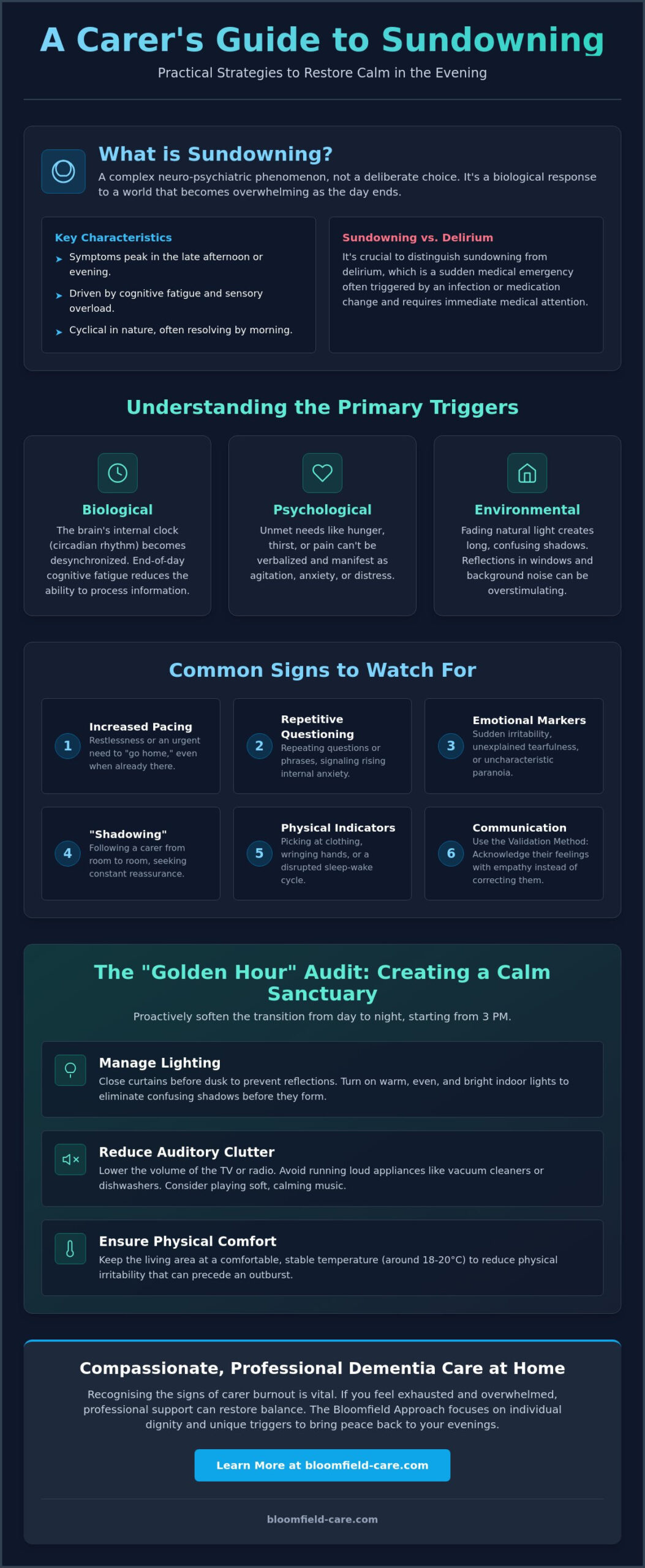
Sundowning isn’t just a difficult phase of the day; it’s a complex physiological reaction to the world around us. As the sun begins to set, many families notice a distinct shift in their loved one’s temperament and clarity. This phenomenon, often called late-day confusion, occurs when the brain’s internal clock becomes desynchronized from the environment. If you’ve found yourself searching for What is Sundowning?, you’ll find it described as a cluster of neuropsychiatric symptoms that peak in the late afternoon or evening. By 2026, clinical research has increasingly pointed toward sensory overload as a primary catalyst. When the brain is cognitively fatigued, it loses its ability to filter out background noise or process changing light, leading to an overwhelmed state that manifests as distress.
It’s vital to distinguish these episodes from the general progression of dementia or sudden delirium. While cognitive decline is a constant presence, sundowning is cyclical, typically resolving by morning. Delirium, by contrast, is often a sudden medical emergency triggered by an infection or medication change. Recognising these nuances is the first step in developing effective sundowning dementia support strategies that respect the individual’s dignity while maintaining the home as a sanctuary. Understanding that this is a biological response, rather than a behavioural choice, helps alleviate the guilt many carers feel during these long evenings.
Common Signs and Symptoms to Watch For
The transition often begins with subtle shifts that can be easy to miss if you aren’t looking for them. You might notice “shadowing,” where your loved one follows you from room to room, seeking the safety of your constant presence. Other common indicators include:
- Increased pacing or an urgent, restless need to “go home,” even when they’re sitting in their own lounge.
- Repetitive questioning or phrases that signal rising internal anxiety.
- Emotional markers like sudden irritability, unexplained tearfulness, or uncharacteristic paranoia.
- Physical indicators such as picking at clothing, wringing hands, or a complete disruption of the sleep-wake cycle.
Biological and Psychological Triggers
Why does this happen so consistently as the day wanes? Think of the brain as a battery that has been slowly drained by the immense effort of navigating a confusing world. This end-of-day fatigue makes it nearly impossible to process new information. Psychological triggers often stem from unmet physical needs. Hunger, thirst, or undiagnosed pain can’t always be put into words, so they manifest as agitation instead. Environmental factors are equally powerful. As natural light fades, long shadows stretch across the floor. To a compromised visual system, a dark rug might look like a deep hole, or a coat hanging on a door might appear as a frightening stranger. Proactive sundowning dementia support strategies involve looking at the home through their eyes to catch these triggers before they cause distress.
Creating a Calm Environment: UK Home Strategies
Transforming a private residence into a sanctuary is the foundation of successful sundowning dementia support strategies. In our experience, the environment speaks more loudly than words during the late afternoon. We recommend performing a “Golden Hour” audit at 3 PM. Walk through each room to identify where shadows might stretch across floors or where reflections begin to flicker in windows. In the UK, our winters bring an early, heavy gloom that can trigger confusion much earlier than in the summer months. By identifying these environmental triggers early, you can proactively soften the transition from day to night.
Managing the dusk transition involves more than just flicking a switch. It’s about a gradual, unhurried shift in the home’s atmosphere. Close the curtains or blinds before the streetlights come on to eliminate the unsettling “black mirror” effect of dark windows. Simultaneously, reduce the auditory clutter. The sudden whirr of a dishwasher or the aggressive tone of a news broadcast can be overwhelming for a fatigued brain. Even experts at the Mayo Clinic suggest that Practical De-escalation and Communication Techniques start with a quiet, stable environment. We also find that keeping the living area slightly cooler, around 18 to 20°C, can significantly reduce the physical irritability that often precedes an evening outburst.
Lighting Strategies for Oxfordshire & Dorset Homes
In regions like Oxfordshire and Dorset, where natural light varies dramatically by season, lighting must be used intentionally to support the internal clock. Use “daylight” or full-spectrum bulbs in the morning to signal the start of the day. As afternoon fades, transition to warm, amber-toned lighting. Strategic use of low-level night lights in hallways and bathrooms can prevent the disorientation that occurs when someone wakes in a dark room. This simple adjustment ensures that the home remains a place of safety rather than a source of fear. If you feel overwhelmed by these adjustments, our dementia care specialists can provide a personalised home assessment to help.
Sensory Soothing Techniques
A sensory-aware home management plan focuses on quietening the world. We often employ the “Bloomfield Care Sanctuary” approach, which uses familiar, low-tempo music to provide a rhythmic steadiness to the evening. Gentle aromatherapy, such as lavender or lemon balm, can be effective, though we suggest using it with caution to ensure it isn’t overstimulating. Creating a “comfort kit” is another practical tool. Fill a basket with tactile items like soft wool blankets, old photo albums, or familiar keepsakes. These items offer a sense of autonomy and connection, helping to anchor your loved one in their surroundings when the world feels like it’s shifting.
Practical De-escalation and Communication Techniques
While environmental adjustments provide a vital foundation, the way we interact during moments of distress is often the most powerful tool in our toolkit. Communication during the late afternoon requires a shift in perspective. Instead of focusing on factual accuracy, we prioritise emotional connection. These sundowning dementia support strategies are designed to de-escalate tension by honouring the individual’s current reality. When a loved one feels heard and safe, the physical symptoms of restlessness often begin to subside, allowing the home to remain a peaceful sanctuary for everyone.
The “Validation Method” is a cornerstone of compassionate care. If your loved one insists they need to leave for work or check on their parents, resist the urge to correct them with logic. Telling someone they retired twenty years ago often increases agitation because it challenges their sense of self. Instead, meet them in their reality. Ask them about their job or what their parents were like. This approach validates their feelings and reduces the need for defensive outbursts. By leaning into their world, you transform a potential confrontation into a moment of shared connection and dignity.
Your non-verbal cues often speak louder than your words. When anxiety rises, keep your body language open and relaxed. Approach from the front so you don’t startle them, and try to communicate at eye level. A gentle touch on the hand or shoulder can provide profound reassurance, provided it feels welcome. We also find that knowing when to use distraction versus redirection is essential. Distraction might involve a simple change of subject to break a cycle of repetitive questioning. Redirection is more purposeful, gently guiding them toward a familiar, soothing activity like folding soft towels or listening to a favourite piece of music.
Families often ask, “What if they become aggressive?” It’s a frightening prospect, but it’s important to remember that aggression is almost always a manifestation of fear or pain. If an episode escalates, prioritise safety. Give them physical space and use a low, steady voice. Avoid arguing or trying to restrain them unless absolutely necessary for safety. Often, a “Quiet Presence” is enough. Simply sitting nearby without demands can signal that they are safe and you are there to help, not to control.
Empathetic Scripts for Difficult Moments
When your loved one says, “I want to go home,” and they are already in their lounge, they are often expressing a need for comfort rather than a specific location. Try responding with, “You feel like things aren’t quite right here. Tell me about your favourite home. What did the kitchen smell like?” This invites a pleasant memory rather than a factual debate. Use phrases like, “I can see you’re feeling worried, and I’m right here with you,” to soothe anxiety without sounding patronising. These small shifts in language preserve their autonomy while providing the stability they crave.
Structuring the Daily Routine
A predictable rhythm is a natural antidote to evening confusion. We recommend front-loading the day, scheduling demanding tasks like bathing or doctor appointments for the morning when cognitive energy is at its peak. Maintaining a consistent, early evening mealtime helps regulate the body’s internal clock. Crucially, plan for “quiet time” between 3 PM and 5 PM. This isn’t necessarily a nap, which might disrupt night-time sleep, but a period of low stimulation. This pause helps prevent the total cognitive exhaustion that makes sundowning dementia support strategies more difficult to implement later in the evening.
Specialist Support: When Professional Care is Needed
Caring for a loved one with dementia is a journey of profound love, yet it’s also one that can lead to significant physical and emotional exhaustion. For families in Abingdon or Weymouth, the onset of evening confusion often marks the most stressful part of the day. Recognising the signs of carer burnout is crucial for the well-being of the entire household. If you find yourself feeling constantly overwhelmed, irritable, or dreading the sunset, it may be time to consider how professional assistance can help restore balance. Seeking help isn’t a sign of failure; it’s a responsible step toward ensuring your loved one continues to live with the dignity they deserve.
Professional dementia care at home offers more than just an extra pair of hands. It provides evening continuity that is often difficult for a tired family member to maintain. A “fresh face” can often de-escalate late-day tension simply because they haven’t been part of the day’s earlier frustrations. This new energy, combined with specialised training in sundowning dementia support strategies, allows the home to remain a peaceful sanctuary. While hourly domiciliary care can provide much-needed breaks, many families find that transitioning to live-in care offers the ultimate peace of mind, ensuring a dedicated professional is always present to manage the complexities of the evening hours.
The Role of Live-in Care in Managing Sundowning
Live-in care provides a level of stability that is particularly beneficial for those experiencing late-day restlessness. A dedicated carer provides continuous monitoring, which is essential for preventing evening wandering or falls that can occur when a loved one is disoriented. Beyond safety, professional carers are experts at identifying “micro-triggers.” They might notice that a specific shadow from a floor lamp or a certain household noise consistently leads to agitation. By addressing these triggers immediately, they can maintain a sanctuary-like environment without the family reaching a point of total exhaustion. This proactive approach ensures that the evening remains a time of comfort rather than a period of crisis.
Choosing a Care Partner in Oxfordshire or Dorset
When selecting a dementia-specialist agency in Oxfordshire or Dorset, it’s important to look for a partner that values human connection as much as clinical safety. The right provider will offer a partnership-driven approach, involving you in every step of the planning process. High-quality support is built on Person-Centred Care Oxford, where the individual’s history, preferences, and lifestyle are at the heart of the service. We also recommend evaluating CQC ratings specifically for dementia-specific support excellence to ensure the agency meets the highest standards of safety and compassion. If you’re ready to discuss how we can support your family’s evening routine, explore our personalised care options today.
The Bloomfield Care Approach: Compassionate Dementia Care at Home
At Bloomfield Care, our philosophy is rooted in a simple but profound belief: we see the person, not just the diagnosis. While previous sections have focused on environmental and communication tools, the core of our service is the human connection that makes those techniques effective. We understand that dementia changes how someone interacts with the world, but it doesn’t change who they are at their core. By focusing on the individual’s history and personality, we develop bespoke sundowning dementia support strategies that respect their autonomy and dignity. Whether we’re providing care in Wallingford, Newbury, or Poole, our team is dedicated to preserving the home as a sanctuary. The “Bloomfield Care Difference” lies in this seamless blend of professional safety with the warmth and heart of a domestic environment, ensuring your loved one feels secure and valued throughout the day and into the evening.
Our approach is never static. We recognise that triggers for late-day confusion are as unique as the individuals themselves. Perhaps it’s a specific time of day or a certain household sound that causes distress. Bloomfield Care carers are trained to identify these subtle cues and adjust the environment or their communication style accordingly. This level of customisation is what allows us to restore peace to your evening routine, providing the stability that families often find so elusive during the “sundown” hours.
Specialist Dementia Support in Your Community
Our local carers across Oxford and Dorset receive extensive training in empathetic de-escalation and sensory management. We don’t work in isolation; we integrate our services with local GPs and memory clinics to provide a holistic support system for your family. For a family we support in Wallingford, this integrated approach was life-changing. They’d been struggling with intense evening outbursts for months. By working closely with their memory clinic and introducing a consistent Bloomfield Care professional who understood their father’s love for gardening, we were able to create a calming evening ritual that replaced agitation with a sense of quiet companionship.
Next Steps for Your Family
If you feel that your current routine is becoming unsustainable, we’re here to listen and help. You can request a free Home Care Assessment to begin the process of finding the right support for your needs. During our first home visit, we take the time to listen to your concerns and observe the evening environment. We look for specific triggers and discuss how our tailored care plans can provide the continuity and safety your loved one deserves. We move at your pace, ensuring you feel empowered and informed at every stage of the journey. Contact our compassionate Bloomfield Care team for a reassuring conversation today.
Restoring Peace to Your Evening Routine
Bringing a sense of sanctuary back to your home during the challenging twilight hours is possible with the right approach. By addressing environmental triggers like confusing shadows and employing empathetic communication techniques, you can significantly reduce the distress of late-day confusion. Remember that implementing sundowning dementia support strategies isn’t just about managing symptoms; it’s about honouring the dignity of your loved one while protecting your own well-being. Whether you’re adjusting the lighting at 3 PM or leaning into their reality through validation, every small step helps restore a calm, predictable atmosphere.
If you find that your family’s needs are growing, specialist assistance can provide the continuity and safety you deserve. Our CQC-regulated person-centred support is delivered by specialist dementia-trained carers who understand the nuances of evening restlessness. With local branches across Oxfordshire and Dorset, we’re here to help you navigate this journey with grace and expertise. You don’t have to face these long evenings alone. We invite you to Book a Compassionate Care Assessment for Your Loved One today. Let’s work together to ensure your home remains a place of comfort and connection for everyone.
Frequently Asked Questions
What is the primary cause of sundowning in dementia patients?
The primary cause of sundowning is a disruption of the body’s internal clock, also known as the circadian rhythm, combined with cumulative mental fatigue from the day. As natural light fades, the brain struggles to process sensory information, leading to heightened confusion and anxiety. This biological response is often intensified by environmental factors like long shadows or household noise that a tired mind can no longer filter out.
Can sundowning happen in the morning instead of the evening?
Sundowning specifically occurs in the late afternoon and evening, though some individuals may experience confusion in the morning due to poor sleep quality or dehydration. While the symptoms might look similar, sundowning is distinct because it’s triggered by the transition from day to night and the depletion of cognitive energy. If confusion is constant throughout the day, it’s important to consult a healthcare professional to rule out other medical issues.
Are there specific foods that can make sundowning symptoms worse?
Caffeine and high-sugar foods consumed in the afternoon can significantly worsen sundowning symptoms by disrupting sleep-wake cycles and causing energy spikes. Large, heavy meals late in the evening may also cause physical discomfort or indigestion, which a person with dementia might express through restlessness or agitation. Providing a substantial lunch and a lighter, earlier evening meal often helps maintain a more stable and comfortable routine.
Is sundowning a sign that my loved one’s dementia is getting worse?
Sundowning isn’t always a sign that dementia is progressing, as these episodes can be triggered by temporary factors like fatigue, minor infections, or changes in the home environment. However, if the frequency or intensity of late-day confusion increases, it may indicate a need for more robust sundowning dementia support strategies. Monitoring these patterns helps you determine if your loved one’s current care plan needs adjustment to ensure their continued comfort.
How can I prevent my loved one from wandering during a sundowning episode?
Preventing wandering during a sundowning episode involves creating a secure, calming environment and maintaining a predictable afternoon routine. Installing discreet safety locks or sensors on exit doors can provide peace of mind, while ensuring the home is well-lit at dusk reduces the urge to “find home.” Engaging your loved one in a soothing, familiar activity around 4 PM often helps ground them and reduces the restlessness that leads to wandering.
What should I do if my loved one becomes aggressive during the evening?
If your loved one becomes aggressive, your first priority is to remain calm and ensure everyone’s physical safety. Give them plenty of personal space and avoid trying to restrain them or arguing about their reality, as this often escalates the situation. Use a low, steady voice and try to identify any immediate triggers, such as a loud television or a bright glare, that you can gently remove to help them feel safe again.
Is medication the only way to treat severe sundown syndrome?
Medication is not the only way to manage sundowning; in fact, environmental and behavioural adjustments are often the most effective first steps. Techniques such as light therapy, music, and consistent routines can profoundly reduce agitation without the side effects sometimes associated with sedative medications. We always recommend exploring these compassionate sundowning dementia support strategies before considering pharmacological options, though you should always discuss medical concerns with a GP or specialist.
How can live-in care help with sundowning compared to a care home?
Live-in care offers a level of continuity and familiarity that a care home often cannot match, allowing your loved one to stay in the sanctuary of their own residence. A dedicated carer can focus entirely on your loved one’s specific triggers and preferences, providing one-to-one support that is highly personalised. This consistent presence helps maintain a calm evening rhythm, reducing the disorientation that often occurs when moving to an unfamiliar clinical setting.