
What if rebuilding confidence after a fall at home in Wallingford starts with one familiar routine, taken at your own pace? A fall can make ordinary movements feel uncertain, even in a home that once felt comfortable. It’s understandable to worry about falling again, and family members may want to help while still respecting your independence.
There’s no need to rush back to “normal”. A person-led approach can make daily routines feel more manageable, while medical advice can guide health concerns after a fall. This article covers practical ways to feel more at ease at home, when to seek professional advice, and how clinical rehabilitation differs from home-care support.
Bloomfield Care provides tailored domiciliary support in Wallingford, including companionship, personal care, medication assistance and help with meals. Support is shaped around a person’s preferences and abilities, so everyday routines can feel more manageable without taking control away from them. Here’s how family and carers can offer reassurance, support dignity and encourage independence as confidence grows.
Key Takeaways
- Feeling hesitant after a fall is understandable. Confidence can return gradually, without pressure to move faster than feels comfortable.
- Try a considered sequence for everyday activities: discuss concerns, choose a suitable step, prepare the space, then review how it felt. Seek clinical advice when injury, pain or health conditions are involved.
- Clinical assessment or rehabilitation differs from practical home-care support. Both may have a place in someone’s recovery.
- Thoughtful changes to lighting, walkways, frequently used items and footwear may make familiar routines feel more manageable.
- A personalised care plan can support rebuilding confidence after a fall at home in Wallingford while respecting preferences, abilities and independence.
Why a fall can shake confidence at home in Wallingford
A fall can affect more than the body. Someone may feel worried, embarrassed or unsettled afterwards, even in familiar surroundings. People respond differently, and a loss of confidence doesn’t mean someone is incapable. This concern is sometimes described as fear of falling: the possibility of another fall can make ordinary movements feel less certain.
That hesitation may lead someone to avoid activities they used to manage independently. Getting up, moving around or reaching for everyday items can begin to feel difficult, leaving the person more reliant on others and less in control of their routine. Rather than assuming what might happen next, listen to what has changed and offer support that respects their choices.
Confidence-building shouldn’t replace medical advice. New, severe or worsening symptoms after a fall need prompt attention from a healthcare professional. Any plan for returning to everyday activities should follow appropriate clinical guidance, not take its place.
What can make familiar activities feel difficult after a fall?
Getting out of bed, walking to the kitchen or using the stairs may suddenly feel daunting. The reasons vary: pain, tiredness, a change in balance or uncertainty about what might happen can all affect how safe a movement feels. An activity that looks straightforward to someone else may feel very different to the person doing it.
Ask what feels hardest instead of guessing. “Is it standing up, taking the first few steps, or something else?” gives the person room to explain. Their answer can show family members where reassurance or practical help might be welcome, without making assumptions about what they can manage.
How can families respond without taking over?
Begin by asking what kind of support would help, then agree on one manageable activity at a time. The person might want someone nearby while they get up, or simply appreciate company as they move through a familiar part of the home. Let them set the pace and pause if they feel uncomfortable.
Avoid dismissing their worry with “you’ll be fine” or urging them to hurry. Acknowledge how they feel: “I can see this feels uncertain. What would help right now?” Respect privacy and personal choices while staying attentive to safety concerns. Rebuilding confidence after a fall at home in Wallingford means supporting the person’s next steps, not taking over their routine.
How to rebuild confidence after a fall through small, safe steps
Confidence often grows through manageable experiences, not pressure to return to every activity at once. A gradual approach lets the person choose what to try and pause or change the plan. If injury, pain or an existing health condition may affect movement, seek clinical advice before attempting activities that could put them at risk.
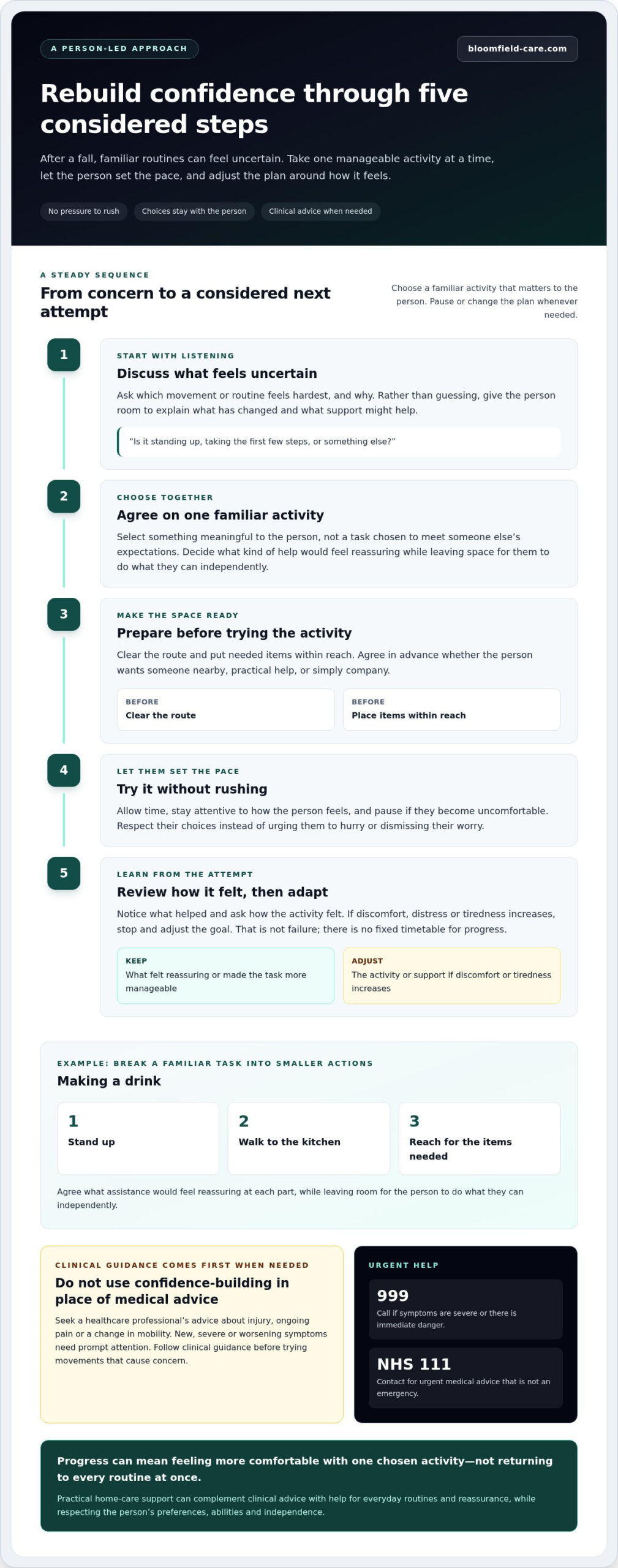
Use this simple sequence to make each step more considered:
- Discuss concerns: Ask which movement or routine feels uncertain and why.
- Agree on an activity: Choose something familiar and meaningful to the person.
- Prepare the space: Clear the route and place needed items within reach.
- Try it at their pace: Agree in advance what support they want and allow time without rushing.
- Review how it felt: Notice what helped and adjust the next attempt accordingly.
How can someone set manageable goals after a fall?
Break a familiar task into smaller actions. Making a drink, for example, might mean standing up first, then walking to the kitchen, then reaching for the items needed. Agree on what assistance would feel reassuring, such as having someone stay nearby, while leaving room for the person to do what they can independently.
Afterwards, ask how the activity felt. Completing a familiar task with less reassurance, or feeling more settled during one part of it, is worth recognising. If discomfort, distress or tiredness increases, stop and adapt the goal rather than treating this as failure. There’s no fixed timetable for progress.
When should a clinician guide the return to activity?
Discuss an injury, ongoing pain or a change in mobility after a fall with a healthcare professional. A clinician can assess the situation and advise on appropriate activity. Physiotherapy may provide clinician-led rehabilitation when recommended, but it doesn’t replace medical review when symptoms need assessment.
If symptoms are severe or there’s immediate danger, call 999. For urgent medical advice that isn’t an emergency, contact NHS 111. Follow the clinician’s guidance before trying movements that cause concern. Home-care support can complement clinical advice by helping with everyday routines and offering reassurance, without taking the place of treatment.
Rebuilding confidence after a fall at home in Wallingford can mean feeling more comfortable with one chosen activity, rather than meeting someone else’s expectations. Person-centred home support in Wallingford can provide practical help and companionship shaped around the person’s preferences and changing needs, while supporting independence.
Home-care support or physiotherapy: what may help after a fall?
The right support depends on what the person needs. A clinician can assess health or mobility concerns and recommend treatment or rehabilitation. Domiciliary care has a different role: it can help with agreed everyday tasks and provide companionship at home. The two forms of support may work alongside each other, but they aren’t interchangeable.
Carers don’t diagnose injuries or replace a clinician’s treatment plan. If movement is painful or a health concern is affecting daily life, seek clinical advice about what is appropriate. Practical support at home can then be shaped around the person’s preferences and relevant guidance. For an overview of home-based assistance, read our guide to domiciliary care.
What can a physiotherapist contribute to recovery?
A physiotherapist may assess movement and, where appropriate, guide rehabilitation tailored to the individual. Advice depends on the person’s symptoms, health and clinical needs, so recommended movements or exercises should follow the treating clinician’s guidance. Physiotherapy isn’t a one-size-fits-all plan. Someone who is concerned about an activity should seek advice rather than feel expected to practise it.
Physiotherapy is a clinical service. It differs from companionship and practical help with household routines.
What can domiciliary care contribute at home?
Everyday tasks can feel more demanding when someone is tired, unsettled or adjusting to a change in confidence. With the person’s agreement, a domiciliary carer can help with personal care, meal preparation or other daily routines. Companionship can offer a reassuring presence while leaving the person in control of their choices and the pace of their day.
This support doesn’t promise clinical recovery or prevent another fall. Its value is practical and personal: easing pressure around agreed tasks so someone can focus on the routines that matter to them. Bloomfield Care provides person-centred home support in Wallingford, tailored to a person’s preferences, abilities and changing needs.
If ongoing assistance at home is relevant, our guide to live-in care explains this form of support. Rebuilding confidence after a fall at home in Wallingford may involve both clinical guidance and thoughtful everyday help, with each playing a distinct part.
How to make everyday routines feel safer after a fall
Thoughtful changes around the home may make familiar routines feel more manageable without changing the character of the person’s surroundings. Start by asking where they feel uncertain. The concern might be dim lighting on the way to the bathroom, a crowded walkway or carrying a cup between rooms. The person’s perspective is more useful than assumptions about what needs changing.
Which household routines are useful to review first?
Consider everyday movements in context: getting in and out of bed or a chair, making nighttime trips, using the bathroom and carrying items between rooms. Check whether lighting is adequate, walkways are clear, frequently used belongings are easy to reach, and footwear feels comfortable and secure. Keep familiar arrangements where possible, and avoid adding equipment or making adaptations without suitable advice.
Use this checklist to guide a conversation with family or a health professional:
- Which routine feels most uncertain or tiring?
- Are walkways clear, and can the person see the route they use?
- Are everyday items within comfortable reach?
- Would it help to discuss footwear, equipment or a home adaptation with a relevant professional?
- What practical help would the person welcome, and what would they prefer to do independently?
For equipment, home adaptations or individual concerns about falls risk, seek advice from an appropriate health or home-safety professional. A change that suits one person may not suit another. The aim is to support safer routines while preserving the person’s preferences and sense of home.
How can family support stay reassuring and respectful?
Agree on check-ins and practical help together. Someone may appreciate company during a particular routine but prefer privacy at other times. Avoid rushing, repeated warnings or removing everyday choices without discussion. These responses can leave a person feeling less in control, even when they come from care and concern.
If worries keep coming up, note what the person notices, when it happens and what support feels useful. This can help them explain their concerns to a GP or another relevant professional, who can advise on individual needs. It also gives family members a clearer way to offer support without trying to diagnose the cause themselves.
Rebuilding confidence after a fall at home in Wallingford can include practical help that fits around the person’s routines. Explore person-centred home care support from Bloomfield Care, with assistance shaped around individual preferences and the aim of supporting independence.
Personalised home care after a fall in Wallingford: practical next steps
Considering support at home can start with a calm conversation led by the person who may receive care. Talk about which parts of the day feel difficult, what they’d like to keep doing independently and what kind of help would feel comfortable. The aim is to understand how practical and emotional support could fit around familiar routines, not to take over.
What should families discuss when considering care at home?
Talk through a usual day, from getting ready in the morning to preparing meals or settling in the evening. Identify where support could ease pressure while recognising the tasks the person wants to continue managing. Discuss preferences for visits and companionship, personal care or help with meals. Share relevant advice from their GP or another health professional so everyday assistance respects any care plan.
Bloomfield Care provides person-centred domiciliary support in Wallingford. Support is shaped around the person’s preferences, abilities and changing needs, with practical help and companionship to support daily living and independence. It isn’t physiotherapy or medical treatment, and it doesn’t replace advice from a clinician.
How can support adapt as confidence changes?
Needs and preferences may change, so review arrangements with the person. Ask what’s working, whether any assistance feels unnecessary, or whether another routine has become challenging. Someone might welcome help with a particular task while preferring to manage other parts of the day independently. Keep them involved in decisions and recognise signs of growing comfort without setting a deadline or promising a particular outcome.
Family carers may also need planned support of their own. If that’s relevant, our guide to respite care for families offers further background.
Rebuilding confidence after a fall at home in Wallingford is personal. A considerate care plan can provide practical assistance while leaving room for choice, privacy and familiar ways of living. Families don’t need every detail worked out before starting a conversation. Talk with Bloomfield Care about support at home and discuss what may suit the person’s daily routines and preferences.
Take the next step towards confidence at home
Rebuilding confidence after a fall at home in Wallingford doesn’t mean rushing back to every routine. Small, person-led steps can make everyday activities feel more manageable, while new or worsening symptoms call for professional medical advice. Practical changes at home and support that respects the person’s choices can also make familiar routines feel more comfortable.
Bloomfield Care provides domiciliary support in Wallingford, tailored to individual preferences and needs. This may include personal care, medication assistance, meal preparation and companionship, with the aim of supporting people to live safely and independently at home. It’s everyday assistance, not clinical rehabilitation, and can sit alongside advice from health professionals.
If you’re considering support, start by discussing what the person would like to manage themselves and where a little help could make the day easier. Talk with Bloomfield Care about supportive care at home.
With patience, respect and the right support, confidence can grow one familiar step at a time.
Frequently Asked Questions
Is it normal to feel afraid after a fall at home?
Yes, feeling shaken or cautious after a fall can happen, although everyone responds differently. Fear deserves to be heard rather than brushed aside. If worry is making everyday activities difficult, encourage the person to speak with their GP or another relevant health professional. A gradual return to suitable routines may help, but if there’s an injury, pain or a health condition affecting movement, clinical advice should guide what feels safe.
How can I help someone regain confidence after a fall?
Ask what feels difficult and what kind of support they’d welcome. Choose a familiar, manageable activity, prepare the space and allow time without rushing. Rebuilding confidence after a fall at home in Wallingford can involve noticing small steps, such as attempting part of a routine with less reassurance. Adapt the plan if the person feels tired or distressed. If they have pain, an injury or changed mobility, seek professional advice before changing their activity.
What should I do if someone falls at home?
Check whether they’re responsive and appear seriously injured, and don’t rush them to stand. If there’s immediate danger, a serious injury or another urgent medical concern, call 999. If it isn’t an emergency but you need medical advice, contact NHS 111 or the person’s GP. Follow current NHS guidance and stay with them if it’s safe to do so. If you’re unsure how serious the situation is, seek professional advice.
Can home care help someone after a fall?
Yes, domiciliary care can provide agreed practical help with everyday routines, personal care, meals or companionship at home. Support can be tailored to the person’s preferences and the tasks they want help with, while encouraging them to remain involved in their own routine. Home care isn’t a medical assessment or physiotherapy. Discuss concerns about injuries, symptoms or rehabilitation with an appropriate health professional.
Should someone have physiotherapy after a fall?
Physiotherapy may be appropriate depending on the person’s health, symptoms and recovery needs. A GP or another relevant clinician can advise on assessment and whether referral is suitable. If recommended, a physiotherapist may provide guidance on movement or rehabilitation. Family members and home carers can support everyday routines, but they shouldn’t replace clinical advice. Don’t start exercises or increase activity against the treating clinician’s guidance.
How can we make a home safer after a fall?
Begin by asking which routines or areas feel uncertain to the person. Review lighting, clear walkways and whether frequently used items are easy to reach, while keeping the home familiar and comfortable. Avoid installing equipment or making major changes without suitable advice when individual needs are involved. An occupational therapist or another relevant professional can advise on adaptations and equipment that may suit the person’s circumstances.
How can Bloomfield Care support someone in Wallingford after a fall?
Bloomfield Care provides person-centred home support in Wallingford, shaped around the individual’s routines and preferences. Depending on agreed needs, assistance may include personal care, meal preparation, medication assistance or companionship. This practical domiciliary care can support someone to live as independently as possible at home, but it isn’t clinical treatment or physiotherapy. Bloomfield Care also serves Newbury, Thatcham, Abingdon, Oxford, Dorset, Weymouth, Christchurch and Poole.