
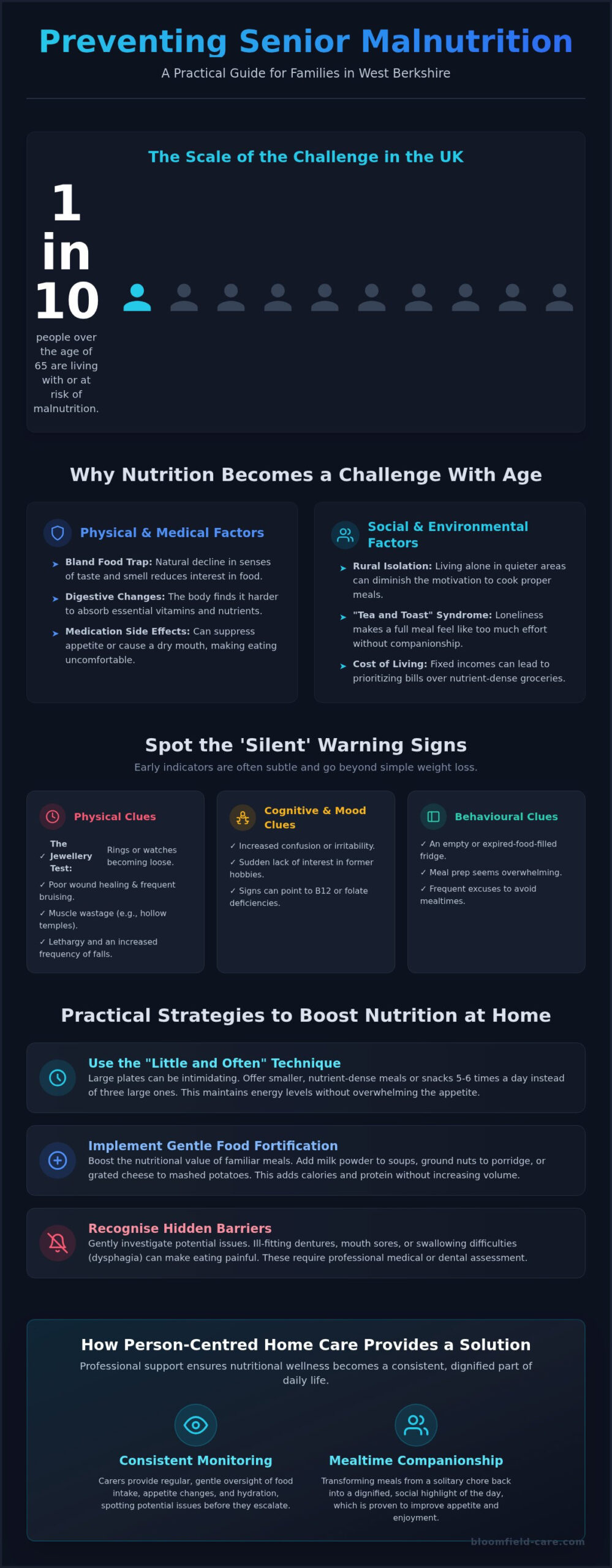
Did you know that approximately one in ten people over the age of 65 in the UK are currently living with or at risk of malnutrition? For many local families, the challenge of avoiding malnutrition in seniors at home in Newbury feels like a constant weight on their shoulders. It’s natural to feel a sense of guilt when you can’t be there for every meal, or to feel anxious when a parent’s appetite begins to fade. You might wonder if they’re simply becoming a picky eater as they age, or if there’s a more serious concern beneath the surface.
We believe that every person deserves to enjoy their meals with dignity in the sanctuary of their own home. This guide offers practical strategies and professional insights to help your loved ones maintain a healthy, balanced diet. We’ll explore how to spot the subtle warning signs of nutritional decline, share tips for encouraging better eating habits, and highlight the local support options available right here in West Berkshire to restore your peace of mind and confidence.
Key Takeaways
- Understand how local factors like rural isolation in West Berkshire can increase nutritional risks and how to protect your loved one’s well-being.
- Learn to spot “silent” indicators of poor nutrition, including subtle changes to skin, hair, and mood, before they lead to serious health concerns.
- Implement practical strategies for avoiding malnutrition in seniors at home in Newbury, such as gentle food fortification and the “little and often” meal technique.
- Recognise hidden barriers to eating, such as ill-fitting dentures or swallowing difficulties, and understand the steps to take for professional support.
- Discover how person-centred home care provides consistent nutritional monitoring and mealtime companionship to ensure every meal is a dignified experience.
Understanding the Risks of Malnutrition for Seniors in Newbury
Malnutrition is a preventable decline in health status. At its core, it represents a deficiency of energy, protein, or vital nutrients that the body requires to remain strong and resilient. For many families, the challenge of avoiding malnutrition in seniors at home in Newbury is compounded by the unique geography of West Berkshire. While our market towns are vibrant, the surrounding rural areas can inadvertently foster a sense of isolation. When a senior lives alone in a quiet village, the motivation to prepare a balanced meal often fades, replaced by simpler, less nutritious options.
It is helpful to distinguish between clinical malnutrition and what is sometimes called “the dwindles.” Clinical malnutrition is a medical state often identified through specific weight loss or blood markers. The dwindles, however, is that subtle, gradual slide where a senior appears to be shrinking or losing their spark. In 2026, the rising cost of living has added another layer of complexity. With the price of fresh, high-quality produce remains a concern for those on fixed incomes, many seniors may prioritise household bills over a nutrient-dense grocery shop, making consistent monitoring within the home sanctuary essential.
Why Ageing Makes Nutrition More Challenging
Our bodies change as we age, often making the act of eating feel like a chore rather than a pleasure. A common hurdle is the “bland food trap,” caused by a natural decline in the senses of taste and smell. When food no longer tastes vibrant, interest in cooking wanes. Additionally, undernutrition in older adults is frequently linked to digestive changes that make it harder to absorb vitamins. Certain medications can also suppress appetite or cause a dry mouth, making the process of chewing and swallowing uncomfortable.
The Social Factor: Why Eating Alone is a Risk
Eating is fundamentally a social activity. In Newbury’s elderly population, loneliness is a significant driver of what professionals call “tea and toast” syndrome. Without someone to share a conversation with, a senior might decide that a full meal isn’t worth the effort. The psychological link between companionship and appetite is profound. When a meal is shared, people tend to eat more and enjoy a wider variety of foods. Ensuring your loved one has regular interaction is a cornerstone of avoiding malnutrition in seniors at home in Newbury, as it transforms dining from a clinical necessity back into a dignified, social highlight of the day.
Identifying the ‘Silent’ Signs of Poor Nutrition
Spotting the early stages of nutritional decline can be challenging because the changes are often subtle. While many families focus on the numbers on a scale, weight loss is frequently a late-stage indicator. A more immediate way to gauge changes is the “Jewellery Test.” If you notice that a loved one’s wedding ring is spinning or their watch strap is being fastened a hole tighter, these are clear signs of physical shrinking. Avoiding malnutrition in seniors at home in Newbury starts with these quiet observations during routine visits.
Beyond physical size, cognitive and mood changes are powerful indicators of Malnutrition in the Elderly. Deficiencies in vitamins like B12 or folate can manifest as increased confusion, irritability, or a sudden lack of interest in hobbies. To provide a more structured approach, families can use the MUST (Malnutrition Universal Screening Tool) framework. This involves looking at Body Mass Index (BMI), recent weight loss, and the “acute disease effect” to categorise risk. If you’re concerned, observing these three areas can help you decide when it’s time to seek more structured domiciliary care support.
Physical Red Flags to Watch For
Keep a gentle eye on your loved one’s physical resilience. Poor wound healing and frequent bruising suggest that the body lacks the protein and vitamins needed to repair tissue. You might also notice muscle wastage, particularly in the “hollowing” of the temples or the thinning of the fleshy part of the hand between the thumb and forefinger. This loss of strength often leads to lethargy and an increased frequency of falls, as the body simply doesn’t have the fuel to maintain balance and mobility.
Behavioural Changes at Mealtimes
Mealtimes often reveal the most telling behavioural shifts. When visiting a parent in Newbury, take a moment to look in the fridge. An empty fridge or one filled with out-of-date food suggests that shopping and meal prep have become overwhelming. Some seniors become experts at making excuses to avoid eating, claiming they “had a big lunch” or “feel a bit full” to hide their lack of appetite. If you notice them struggling with cutlery or taking an unusually long time to chew, it may indicate that the physical act of dining has become a barrier to their wellness.
Practical Strategies to Boost Appetite and Nutrient Intake
When a senior’s appetite begins to dwindle, the traditional rule of three large meals a day can become more of a hurdle than a help. For many, a full dinner plate feels overwhelming, leading them to push the food away entirely. A more effective approach for avoiding malnutrition in seniors at home in Newbury is the “little and often” method. By offering five or six smaller, nutrient-dense snacks throughout the day, we can ensure a steady intake of energy without the pressure of a large meal. This strategy aligns with authoritative guidance on senior malnutrition, which emphasises making every bite count through thoughtful, domestic adjustments.
We must also remember that hydration is the forgotten half of nutritional wellness. Even mild dehydration can lead to lethargy, confusion, and a further loss of appetite. Encouraging regular sips of water, herbal teas, or even hydrating snacks like melon and cucumber helps maintain the body’s natural balance. When the home is treated as a sanctuary of health, these small, rhythmic habits provide a sense of stability and well-being for your loved one.
Nutritional Fortification for Small Appetites
Fortification is the art of adding calories and protein without increasing the volume of food on the plate. It’s a gentle way to boost nutrition in every mouthful. You can easily enrich everyday dishes by stirring a knob of butter or a splash of double cream into mashed potatoes, soups, and porridge. Full-fat dairy products are excellent allies here. Between meals, offer protein-rich snacks such as a small handful of walnuts, a few cubes of cheddar cheese, or a creamy yoghurt. If you feel these additions aren’t quite enough, it’s a good idea to consult a Newbury GP to discuss whether nutritional supplement drinks might be a beneficial addition to their daily routine.
Enhancing the Mealtime Experience
The environment in which we eat has a profound impact on how much we consume. Creating a “dining sanctuary” involves more than just the food itself; it’s about the sensory experience. Using a slow cooker is a wonderful way to fill the home with the comforting scents of a home-cooked stew or soup. These aromas naturally stimulate the hunger hormone, ghrelin, making the prospect of eating more attractive.
Try to reduce distractions like loud televisions or radio news during mealtimes, allowing your loved one to focus on the textures and flavours of their food. Incorporating fresh produce from local Newbury markets can also spark interest. The familiarity of a locally grown apple or a fresh vegetable from a known stall can trigger fond memories and encourage a more engaged, dignified eating experience. This person-centred focus is vital for avoiding malnutrition in seniors at home in Newbury while preserving their connection to the community.
Overcoming Barriers: Medical, Dental, and Social Hurdles
Sometimes, the challenge of avoiding malnutrition in seniors at home in Newbury isn’t about the quality of the food provided, but the physical or emotional hurdles that make dining difficult. For many, dental health is a primary barrier that often goes unmentioned. Ill-fitting dentures can turn a pleasant meal into a painful ordeal, leading many seniors to quietly opt for softer, less nutritious alternatives like tea and biscuits. If you notice your loved one avoiding certain textures or leaving meat untouched, it might be time for a dental check-up rather than a change in recipe.
Swallowing difficulties, known as dysphagia, also present a significant risk and require professional assessment to ensure that the texture of food is safe and manageable. Beyond the physical, we must consider the emotional weight of what is often called “widow’s appetite.” After decades of sharing meals with a partner, the silence of a kitchen sanctuary can feel heavy and uninviting. In these moments, the goal of avoiding malnutrition in seniors at home in Newbury becomes as much about providing emotional support and companionship as it is about tracking calories.
Medical and Physical Barriers
Navigating these challenges often requires a close partnership with West Berkshire health services. If swallowing or coughing during mealtimes is a concern, coordinating with local speech and language therapists can provide a clear roadmap for safe eating. For those living with arthritis or dexterity issues, simple adjustments like adaptive cutlery with thicker grips or weighted plates can restore a sense of autonomy. Additionally, we must be mindful of the “forgetting to eat” cycle often seen in those living with dementia or Alzheimer’s. How Live-in Care in Newbury Supports Independence provides a detailed look at how 24/7 support can manage these complex nutritional needs with patience and grace.
Community Resources in Newbury
Fortunately, our local area offers a wealth of community-focused support designed to bring people together. Local lunch clubs and “Warm Spaces” in Newbury provide more than just a hot meal; they offer the vital social connection that naturally stimulates a healthy appetite. These gatherings allow seniors to reconnect with their community in a supportive, friendly environment. Some local grocery delivery services in West Berkshire have also evolved to offer more than just a drop-off, with some staff happy to help bring bags into the kitchen. If you feel your loved one needs more personalised, one-to-one assistance with meal preparation, exploring our domiciliary care services can help bridge the gap between community support and individual wellness.
How Professional Home Care in Newbury Ensures Nutritional Wellness
Professional care offers a gentle transition from family anxiety to a structured, reassuring support system. When a Bloomfield carer enters the home sanctuary, their role extends far beyond simply placing a plate on the table. They provide the consistent, professional observation necessary for avoiding malnutrition in seniors at home in Newbury, ensuring that any subtle changes in appetite or mood are caught early. This partnership-driven approach allows families to step back from the role of “food monitor” and return to being a son, daughter, or spouse, knowing their loved one’s nutritional health is in safe hands.
One of the most profound benefits of live-in care is the ability to provide 24/7 nutritional monitoring. Unlike a fleeting visit, a live-in carer observes the rhythm of the day, noticing if a senior is skipping breakfast or struggling with hydration during the night. The “companionship factor” is equally vital. Our carers often sit and share a conversation during mealtimes, transforming a solitary task into a social event. This simple act of presence often encourages seniors to eat more than they would alone, preserving their dignity and enhancing their overall quality of life.
Our Approach to Meal Planning
We believe that food should be a source of joy and familiarity. Our person-centred approach involves developing bespoke menus that reflect a client’s unique history, cultural preferences, and dietary needs. Carers often visit local Newbury markets and independent shops to source fresh, seasonal ingredients, ensuring that meals are vibrant and appetising. To keep families informed, every meal and fluid intake is recorded in detailed care logs. This transparent documentation provides profound peace of mind, allowing you to see exactly how your loved one is thriving in their own residence.
Taking the Next Step with Bloomfield Care
The journey toward better health often begins with a comprehensive care needs assessment. During this unhurried process, we identify specific nutritional risks and discuss how our services can best support your family’s goals. Whether you require domiciliary care for specific mealtime support or more intensive live-in care, our focus remains on excellence and kindness. If you’re beginning to plan for the future, reading about The Cost of Home Care in Oxfordshire and Dorset can help you understand the practicalities of arranging professional assistance in West Berkshire.
Supporting a Healthy Future in the Heart of Newbury
Ensuring your loved one maintains a healthy, dignified diet doesn’t have to be a journey you take alone. By remaining observant of the silent physical and emotional signs of nutritional decline, you’ve already taken the most important first step. Whether it’s implementing the “little and often” approach or addressing hidden dental barriers, these small changes within the home sanctuary make a profound difference to their daily vitality and spirit.
Bloomfield Care has been providing compassionate support across West Berkshire since 2014. As person-centred care experts with dedicated local carers, we understand that avoiding malnutrition in seniors at home in Newbury requires more than just meal preparation; it requires heart, patience, and consistent professional monitoring. We’re here to help you transition from a place of anxiety to one of confidence and stability.
If you’re ready to explore how tailored assistance can enhance your loved one’s well-being, we’re ready to listen. Book a Free Care Needs Assessment in Newbury Today to start building a plan that protects their health and independence. You’re doing a wonderful job for your family, and we’re here to support you every step of the way.
Frequently Asked Questions
What are the first signs of malnutrition in an elderly person living alone?
The earliest indicators often involve subtle physical changes like loose-fitting clothing or a wedding ring that slips easily. You might notice their energy levels dropping or a sudden lack of interest in grocery shopping. In the home sanctuary, an empty fridge or one filled with expired items is a significant red flag. These quiet signals suggest that the effort of meal preparation has become overwhelming, making it harder to maintain a balanced diet.
How can I encourage my parent to eat if they say they aren’t hungry?
Try moving away from the pressure of three large meals. Offering small, nutrient-dense snacks throughout the day is a gentle way of avoiding malnutrition in seniors at home in Newbury. You can also use a slow cooker to fill the residence with appetising aromas, which naturally stimulates the hunger hormone. Sometimes, simply sitting with them for a cup of tea and a light snack provides the companionship needed to spark their appetite.
Are there any local Newbury services that help with senior meals?
Newbury offers several community-led initiatives, including local lunch clubs and “Warm Spaces” where seniors can enjoy a hot meal in a social setting. West Berkshire Council also provides information on community meal support and local delivery options. These resources are excellent for providing variety and connection, helping to ensure that dining remains a dignified and social highlight of your loved one’s week rather than a solitary chore.
Can a home carer help with grocery shopping and meal prep in Newbury?
Yes, our carers specialise in person-centred meal support. Whether you choose domiciliary care for specific mealtimes or live-in care for 24/7 monitoring, we assist with everything from sourcing fresh ingredients at Newbury markets to preparing favourite home-cooked recipes. This professional assistance ensures that your loved one enjoys high-quality nutrition while remaining in the comfort and familiarity of their own home, providing you with much-needed peace of mind.
What foods are best for seniors who have lost their appetite?
Focus on “every mouthful counts” by choosing foods that are high in calories but small in volume. Full-fat dairy, fortified soups with added cream, and protein-rich snacks like cheese cubes or nut butters are ideal. These options provide vital energy without overwhelming a small appetite. It’s also helpful to offer finger foods that are easy to manage if using cutlery has become difficult, ensuring that the act of eating remains stress-free and dignified.
When should I see a doctor about my loved one’s weight loss?
It’s important to consult a GP if you notice unintentional weight loss, such as losing 5% to 10% of their body weight over three to six months. Other urgent signs include persistent difficulty swallowing, a sudden change in bowel habits, or extreme lethargy that affects their daily movement. A medical professional can rule out underlying clinical issues and provide authoritative guidance on the best nutritional path forward for your family member’s specific needs.
Is malnutrition common in seniors with dementia?
Yes, those living with dementia or Alzheimer’s are at a higher risk because they may forget to eat or lose the coordination needed for cooking. Specialist dementia care plays a vital role in avoiding malnutrition in seniors at home in Newbury by providing patient, consistent mealtime prompts. Our carers understand the unique sensory changes that occur with dementia, using familiar routines and person-centred strategies to ensure that every client receives the nourishment they need to thrive.
What is the MUST tool and can I use it at home?
The Malnutrition Universal Screening Tool (MUST) is a professional framework used to identify adults at risk of undernutrition. While healthcare providers use it formally, families can use the basic steps at home to monitor health. This involves checking Body Mass Index (BMI), tracking recent unplanned weight loss, and noting any acute illnesses that have prevented eating for more than five days. It’s a practical way to stay informed about your loved one’s nutritional status.