

Last Tuesday, Sarah found herself staring at her mother’s pill dispenser, heart racing as she tried to remember if the morning dose had been taken or if the empty slot was from yesterday. It’s a heavy burden that many families face, where the role of daughter or son is slowly replaced by the exhausting task of being a medication monitor. You aren’t alone in feeling that constant knot of anxiety over a potential overdose or the quiet heartbreak of a refused tablet. Managing medication for parent with dementia in Poole shouldn’t feel like a constant battle of wills that erodes the warmth of your relationship.
We’re here to help you move from a state of worry to one of structured, gentle support. This article provides practical safety strategies and introduces you to local Poole resources designed to protect your loved one’s health without compromising their dignity. You’ll discover how to build a reliable safety system and where to find expert assistance right here in our community, ensuring your home remains a sanctuary rather than a place of conflict. We’ll guide you through making these daily routines safer, simpler, and much more manageable for everyone involved.
Key Takeaways
- Understand the difference between memory loss and executive dysfunction to better support your parent’s unique safety needs at home.
- Learn how to collaborate with local pharmacies in Parkstone and Broadstone to simplify managing medication for parent with dementia in Poole.
- Discover how a professional medication audit with your local GP surgery can identify risks and introduce tools like automated dispensers to reduce errors.
- Master gentle de-escalation techniques, such as the “Wait and Retray” method, to handle medication refusal while protecting your loved one’s dignity.
- Recognize the “safety threshold” that indicates when professional live-in or domiciliary care can help return your focus to being a family member rather than a monitor.
The Challenges of Medication Management for Dementia in Poole
Medication management is rarely just a matter of following a schedule; it’s a delicate balance of safety, health, and emotional stability. For families in our community, managing medication for parent with dementia in Poole often starts as a simple reminder but quickly evolves into a source of daily friction. What begins as a helpful nudge can feel like “policing” to a parent who values their independence, creating a rift in a relationship that should be built on comfort and trust.
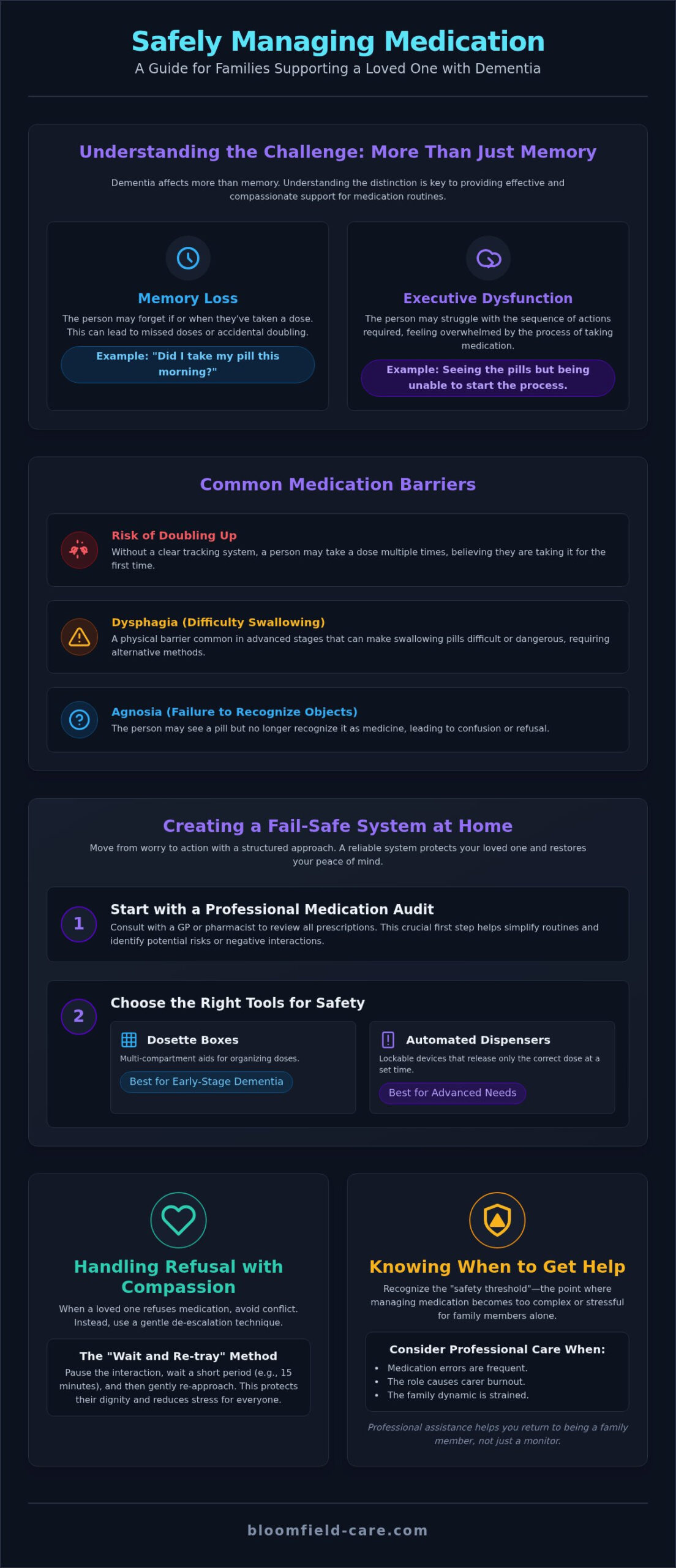
A core part of Understanding Dementia is recognizing that it affects more than just memory. While memory loss might cause someone to forget a dose, executive dysfunction disrupts the ability to plan or sequence the steps required to take it. Your loved one might see the pill bottle but feel overwhelmed by the process of opening it, identifying the correct tablet, or remembering to drink water. In the later stages of Alzheimer’s, the risk of self-medication increases significantly, as the internal logic that governs safe habits begins to fade.
Within the local Dorset NHS framework, families often find that regular medication reviews are essential. GPs across Poole can help simplify prescriptions, but the daily administration still falls on the shoulders of relatives. Without a structured approach, the private residence can stop feeling like a sanctuary and start feeling like a clinical environment, filled with the stress of monitoring every tablet.
Common Barriers to Safe Medication
Several physical and cognitive hurdles can make the simple act of taking medicine a high-risk activity:
- Risk of Doubling Up: Without a clear tracking system, a parent might take their morning dose multiple times because they don’t remember doing it five minutes ago.
- Dysphagia: In advanced stages, difficulty swallowing (pilling) becomes a physical barrier that requires specialized medical advice or alternative administration methods.
- Agnosia: This involves a failure to recognize objects. A parent might look at a blue capsule and no longer understand that it is medicine intended to help them.
The Impact on the Family Dynamic
For many families in Parkstone or Canford Heath, the role of “medication monitor” is one they never asked for. This 24/7 vigilance can lead to profound carer burnout. When every conversation revolves around whether a pill was swallowed, the warm, person-centered connection between child and parent begins to erode. You might find yourself feeling more like a supervisor than a daughter or son, which creates a cycle of resistance and anxiety. Recognizing these signs of exhaustion is the first step toward finding a more sustainable, professional solution that restores the sanctity of your family time.
Creating a Fail-Safe Medication Routine at Home
Establishing a reliable system begins with a thorough medication audit. Schedule a consultation with your local Poole GP or a community pharmacist to review all current prescriptions. This step ensures that no medications are interacting poorly or contributing to increased confusion. Once the list is clear, you can move from worry to action by choosing the right tools for your home environment. Managing medication for parent with dementia in Poole becomes significantly safer when you leverage these local professional networks and expertise.
Tools like multi-compartment compliance aids, commonly known as dosette boxes, are helpful for early-stage independence. However, for those with more advanced needs, automated pill dispensers provide a higher level of security by only releasing the correct dose at a set time. Following NHS advice on medication reminders can help you decide which system best fits your parent’s current cognitive abilities and physical dexterity.
Essential Tools for Safety
The right equipment acts as a silent partner in your care routine. While simple dosette boxes are accessible, they can be easily misplaced or opened at the wrong time. Smart technology, such as medication alarms or automatic dispensers, adds a layer of fail-safe protection. For those in the early stages, clear, large-print labeling on every bottle helps maintain a sense of autonomy. If the process starts to feel overwhelming, introducing domiciliary care can provide professional assistance with these daily routines, ensuring every dose is handled with precision.
Legal and Safety Documentation
Beyond the physical tools, legal and administrative safeguards provide a necessary safety net. A Lasting Power of Attorney (LPA) for health and welfare is vital, as it allows you to make medical decisions if your parent’s capacity changes. We also recommend creating a “What to do if a dose is missed” emergency sheet, kept in a prominent place for all family members to see.
To professionalize your home approach, consider maintaining a Medication Administration Record (MAR). This is a simple but effective log used to track every dose given, preventing the risk of doubling up. Many pharmacies across Parkstone and Broadstone support this by offering blister-pack delivery services. These pre-sorted packs remove the high-risk task of manual sorting from your schedule, allowing you to focus on spending quality time with your loved one rather than managing a complex pharmacy at the kitchen table.
Handling Medication Refusal with Compassion
Refusal can be one of the most distressing aspects of managing medication for parent with dementia in Poole. It’s vital to remember that when a loved one pushes a hand away or closes their mouth, they aren’t trying to be difficult. Often, they are reacting to a world that feels increasingly unpredictable. They might be experiencing fear, a bitter taste, or a deep-seated need to maintain some form of autonomy over their own body. Understanding the “why” behind the refusal is the first step toward a gentler, more successful approach.
Instead of engaging in a battle of wills, try the “Wait and Retray” method. If your parent refuses, gently end the attempt and wait for 15 to 20 minutes. During this time, the initial anxiety or confusion may pass. When you return, the environment might feel different, and they may be more receptive. If refusal persists throughout the day, it’s vital to contact a healthcare professional rather than forcing the issue. Constant pressure can lead to trauma and a breakdown in the trust you’ve worked so hard to build.
One common mistake is hiding medication in food or drink without professional guidance. This is known as covert administration. It’s a “no-go” zone because it can alter the medication’s effectiveness and raises significant legal and ethical concerns. Always seek medical approval from your Poole GP or pharmacist before considering this route, as they must confirm it’s in the person’s best interest and safe to do so.
Communication Strategies That Work
Logical arguments rarely work when someone is confused. Instead, use short, reassuring sentences. Your body language speaks louder than words; a calm, unhurried presence can lower the emotional “temperature” of the room. Offering simple choices can also restore a sense of control. For instance, asking, “Would you like your tablet with a glass of water or a sip of orange juice?” empowers them to participate in the process rather than feeling like a passive recipient of care. In Poole homes, where the goal is to keep the atmosphere as a sanctuary, a quiet, well-lit environment can make a world of difference.
Medical Alternatives for Refusal
Sometimes, refusal isn’t about the mind but the body. As people progress through different Understanding dementia stages, physical changes like dysphagia can make taking pills painful or frightening. Discuss liquid versions or skin patches with your Dorset GP surgery. These alternatives can often remove the physical barrier to adherence, making the process much smoother for everyone involved. If you notice your parent coughing or grimacing while swallowing, it’s a clear sign that a physical review is needed.
Building Your Poole Medication Support Network
You aren’t meant to carry the weight of caregiving in isolation. Managing medication for parent with dementia in Poole is a responsibility that can be shared with a dedicated network of local professionals. By tapping into the expertise available across our community, you can transform a stressful, fragmented schedule into a seamless routine that prioritizes your loved one’s safety and your own peace of mind. This collaborative approach ensures that the home remains a place of connection rather than a site of medical anxiety.
Your first port of call should be your parent’s GP surgery. Whether they are registered at a practice in Poole Town, Canford Heath, or the surrounding areas, you can request a formal medication review. These reviews are vital for identifying unnecessary prescriptions or tablets that might be contributing to increased confusion. Many pharmacies in Parkstone and Broadstone offer more than just prescriptions; they can provide specialized delivery services and pre-sorted blister packs that take the guesswork out of daily dosing.
The Dorset Adult Social Care team at BCP Council also plays a crucial role. They can conduct assessments to determine if your parent is eligible for specific support or equipment. In some cases, utilizing local respite care can act as a helpful “reset.” A short stay in a professional environment allows clinicians to monitor the effectiveness of a medication regime and stabilize a routine that has become difficult to manage at home.
Poole Healthcare Liaisons
Working closely with community nurses, particularly for families in the BH15 and BH12 postcode areas, provides an extra layer of clinical oversight for complex needs. These professionals can offer guidance on managing side effects or adjusting administration techniques as dementia progresses. Don’t hesitate to ask your local pharmacist about their experience with dementia support; many are trained to help families navigate the logistical hurdles of long-term medication management with patience and clarity.
Integrating Professional Help
There often comes a point where the “policing” of medication begins to damage the family bond. This is where Bespoke Domiciliary Care in Weymouth & Poole can make a profound difference. Having a professional carer visit to provide structured medication prompts allows you to step back from the clinical role and return to being a supportive daughter or son. A third party often faces less resistance, as the routine becomes a standard part of the carer’s visit rather than a point of contention between family members. If you’re finding the daily schedule increasingly difficult to navigate, we invite you to explore how our professional medication assistance can restore balance to your home life.
When to Consider Professional Medication Assistance
Deciding to step back from the direct responsibility of managing medication for parent with dementia in Poole is often one of the hardest choices a family makes. It’s a moment usually born from love and a desire to keep a parent safe rather than a sign of failure. When the daily routine begins to feel like a series of high-stakes hurdles, it might be time to move from being a “medication monitor” back to being a supportive family member. Recognizing this safety threshold is the first step toward restoring peace in your home sanctuary.
The Care Readiness Framework
We recommend a simple 30-day tracking approach to help you assess the situation objectively. Document every “near miss,” such as a tablet found on the floor, a forgotten morning dose, or an instance where you felt unsure if the medicine was taken. If these events occur more than once a week, the risk to your loved one’s health may be outweighing the benefits of family-led management. Consider also the emotional cost. If medication times are consistently causing arguments or distress, the parent-child relationship is being eroded. For those with complex schedules or increased confusion at night, Live-in Care provides the 24/7 oversight needed to ensure safety without the rush of hourly visits.
The Bloomfield Difference in Poole
At Bloomfield Care, we don’t just deliver medicine; we provide dignified medication assistance that respects the individual’s autonomy. Our specialist dementia training ensures our carers understand the psychological roots of refusal. We know how to navigate moments of paranoia or disorientation with patience and a gentle touch. Our approach is person-centered, meaning we adapt to your parent’s unique rhythms rather than forcing them into a rigid clinical schedule. We focus on enhancing life quality, ensuring that every interaction feels supportive and kind.
The first week of professional assistance is about building trust and establishing a rhythmic steadiness. We spend time learning your parent’s preferences, such as their favorite chair or the specific cup they like to use. This focus on the domestic environment helps lower anxiety, making the transition feel like a supportive addition to their lifestyle rather than an intrusion. By taking over the clinical role, we allow you to focus on wellness and companionship once again. Taking the next step is a gentle process. You can book a comprehensive care needs assessment right here in Poole, where we’ll listen to your concerns and help develop a tailored plan that prioritizes safety and dignity.
Restoring Peace and Safety to Your Home
You’ve explored how to transform a source of daily stress into a structured, gentle routine. By understanding the cognitive barriers your loved one faces and utilizing local Poole resources, you can move away from the exhausting role of a medication monitor. Managing medication for parent with dementia in Poole is ultimately about protecting their health while preserving the dignity of your relationship. Whether it’s through simple routines, specialized tools, or a supportive community network, the goal is always to keep your home a sanctuary of comfort and familiarity.
If the weight of these responsibilities is beginning to overshadow your time together, professional support is here to help. Our CQC Regulated Service features Specialist Dementia Trained Carers who provide expert, local Poole and Dorset support tailored to your family’s needs. You don’t have to navigate these complexities alone. We invite you to Book a Free Care Needs Assessment in Poole today. Let us help you return to being a daughter or son while we ensure your parent’s safety is handled with the heart and expertise it deserves. You’re doing a wonderful job, and reaching out for support is simply the next step in your caring journey.
Frequently Asked Questions
Can I legally force my parent with dementia to take their medication?
No, you cannot legally force a parent to take medication. If they have the mental capacity to refuse, their choice must be respected. When capacity is lost, decisions are made in their “best interests” following the Mental Capacity Act. This usually involves a conversation with their GP and any legal representatives, such as those holding a Lasting Power of Attorney. Forcing can cause significant distress and damage the trust in your relationship.
What local Poole pharmacies offer blister pack (dosette) delivery?
Many pharmacies across the BH15 and BH17 areas provide this support. Locations in Parkstone, Broadstone, and Canford Heath often offer pre-sorted blister pack delivery to help with managing medication for parent with dementia in Poole. It’s best to speak with your current pharmacist to see if they can transition your parent’s prescriptions into these weekly aids, which simplifies the daily routine and reduces the risk of manual sorting errors.
Is it safe to crush pills and put them in food for someone with dementia?
You shouldn’t crush pills or hide them in food without explicit medical approval. Altering a tablet can change how the body absorbs the medicine, which might lead to an overdose or make the treatment ineffective. This practice, known as covert administration, requires a formal “best interests” meeting involving a doctor. If your parent is struggling to swallow, ask their GP about liquid or patch alternatives to ensure they receive their treatment safely.
How do I know if my parent is double-dosing their medication?
Signs of double-dosing often include increased confusion, sudden drowsiness, or unusual physical symptoms like dizziness. You can track this by counting tablets or using a Medication Administration Record (MAR) to log every dose. If you’re managing medication for parent with dementia in Poole and notice pills are missing from the dispenser unexpectedly, it’s a clear signal that a more secure, automated system or professional assistance is needed to prevent accidental overdose.
Can a home carer in Poole legally administer medication or just prompt?
Yes, a CQC regulated home carer can provide medication assistance and administration. Unlike simple prompting, trained carers from a professional agency can physically help with opening bottles or placing tablets in a hand. They follow strict safety protocols and maintain detailed records of every dose given. This ensures your parent remains safe in their home while allowing you to focus on your role as a family member rather than a clinical monitor.
What should I do if my parent refuses their medication three times in a row?
If your parent refuses three consecutive doses, you should contact their GP or the NHS 111 service for immediate advice. Persistent refusal can lead to a decline in their health or a relapse of symptoms. Don’t try to argue or force the medicine. Instead, document the time and the reason given for the refusal. This information is vital for healthcare professionals to determine if a prescription change or alternative administration method is necessary.
How much does professional medication assistance cost in Poole?
The cost of professional support varies based on whether you require hourly domiciliary care or a more comprehensive live-in care arrangement. Fees are typically structured around the duration of visits or a daily rate for 24-hour presence. Since every situation is unique, we recommend contacting the BCP Council Adult Social Care Hub for information on local funding and speaking with a regulated provider to discuss a tailored care plan for your loved one.