
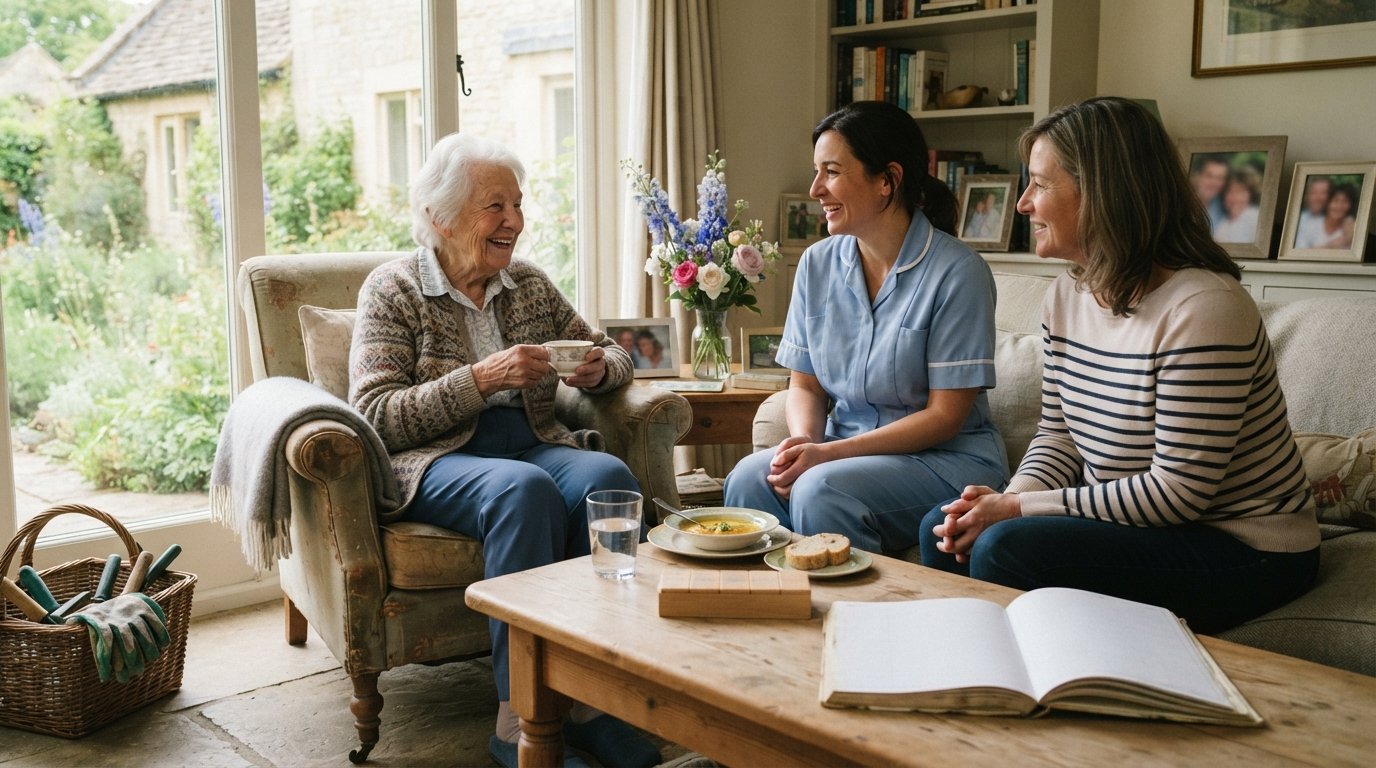
If your loved one’s care plan is ticking every box on a checklist but they still seem a little less like themselves lately, is the care actually working? It’s a heavy weight to carry, that quiet worry that you’re paying for a professional service while slowly losing the person behind the patient. You deserve to know that your family member is truly thriving in the comfort of their own sanctuary, not just being managed by a rigid schedule. Measuring the success of a home care package requires looking past the timesheets to see if their dignity, joy, and independence are being actively nurtured every single day.
We understand the guilt and uncertainty that often come with arranging support, especially when you can’t be there yourself to witness every interaction. This guide provides a clear, compassionate framework to evaluate the real world impact of care on your loved one’s health and happiness. You’ll learn how to move beyond clinical metrics to assess emotional wellbeing and the quality of human connection. From improving communication with your agency to identifying early signs of success, this 2026 checklist ensures your peace of mind while keeping your loved one’s lifestyle at the heart of every decision.
Key Takeaways
- Learn to distinguish between “inputs” like hours worked and “outcomes” like your loved one’s sense of purpose and comfort.
- Recognise the subtle physical signs, including hydration levels and skin health, that confirm professional standards are being upheld.
- Use our 2026 checklist for measuring the success of a home care package to evaluate emotional engagement and social wellbeing.
- Master the art of effective communication with care agencies through digital logs and scheduled six-monthly reviews.
- Discover how bespoke care planning prioritises your loved one’s personal history and lifestyle to ensure they are truly thriving.
Beyond the Timesheet: Defining Success in Home Care
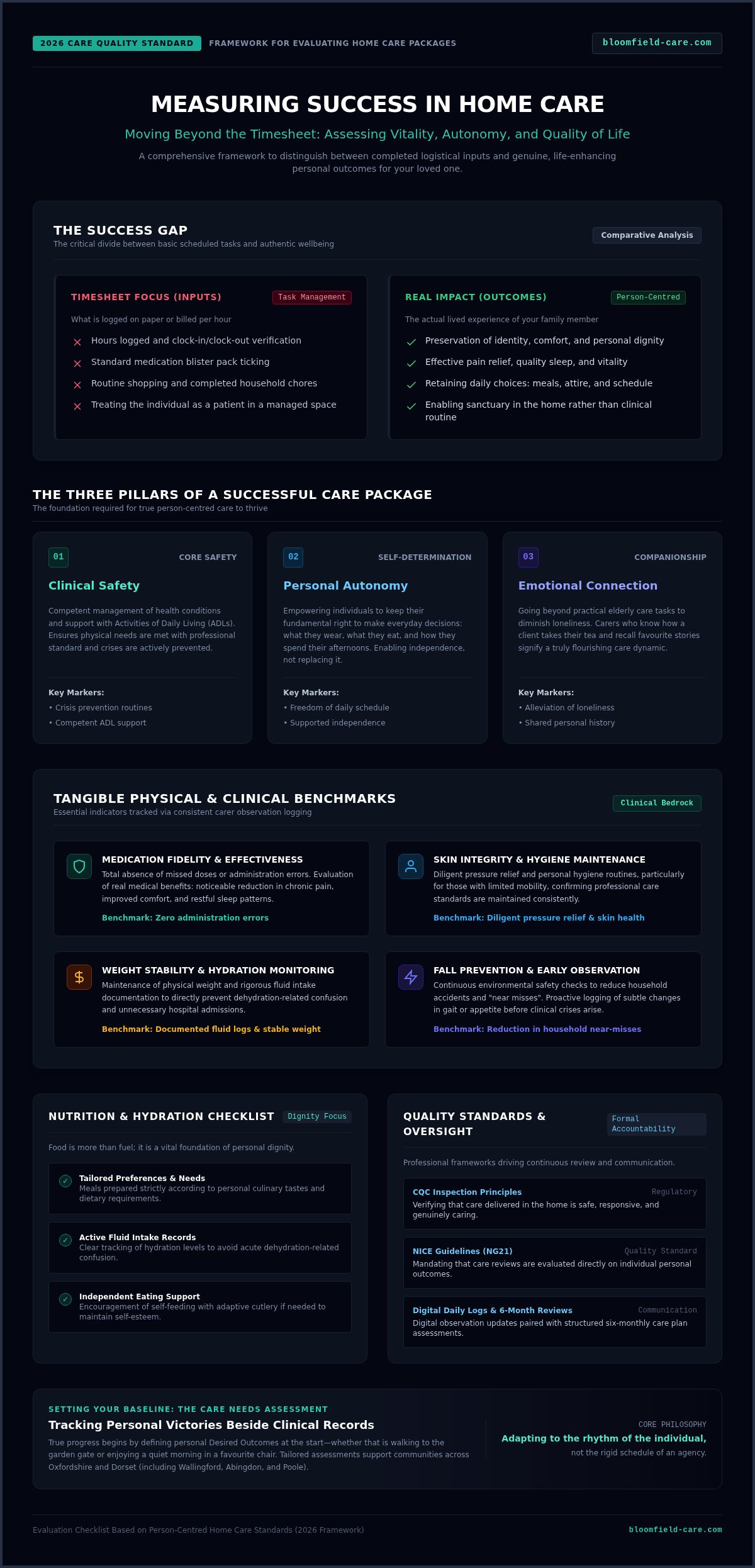
When you first arrange support, it’s easy to focus on the logistics. You look at the clock, check the medication logs, and ensure the shopping is done. While these tasks are essential, they don’t tell the whole story. We call this the Success Gap. It’s the space between a list of completed chores and the actual wellbeing of your loved one. Measuring the success of a home care package involves looking deeper than just hours on a timesheet. You aren’t just paying for a visitor; you’re investing in the preservation of your family member’s identity within their own sanctuary.
A clinical ward prioritises efficiency and safety above all else, but a home should remain a place of comfort and familiarity. The Care Quality Commission (CQC) reflects this in their inspections, looking for evidence that care is not just safe, but also responsive and caring. True success means your loved one feels empowered in their own space, rather than feeling like a patient in a managed environment. It’s about outcomes that enhance life, not just inputs that manage it.
The Three Pillars of a Successful Care Package
To evaluate if the support is truly working, we look at three specific areas that form the foundation of person-centred care:
- Clinical Safety: This involves the competent management of health conditions and support with activities of daily living (ADLs), ensuring that physical needs are met with professional grace and crises are prevented.
- Personal Autonomy: Success is found when a person keeps their right to choose what they wear, what they eat, and how they spend their afternoon. It’s about enabling independence, not replacing it.
- Emotional Connection: Beyond the practicalities of elderly care, genuine companionship reduces the profound weight of loneliness. A caregiver who knows how a client takes their tea or remembers their favourite stories is a sign of a thriving arrangement.
Setting Your Baseline: The Care Needs Assessment
You can’t measure progress without a clear starting point. This begins with a comprehensive home care assessment. Whether your family is in Wallingford, Abingdon, or Poole, this initial meeting identifies the Desired Outcomes that matter most to you. It might be the ability to walk to the garden gate or simply enjoying a quiet morning in a favourite chair. Measuring the success of a home care package means tracking these personal victories alongside health metrics. A successful care package is one that adapts to the rhythm of the individual, not the rigid schedule of an agency.
Clinical and Physical Health Success Metrics
While emotional wellbeing is the heart of care, physical health remains the bedrock of safety. When measuring the success of a home care package, tangible health indicators offer the first clear sign that a loved one is being properly supported. It isn’t just about avoiding illness; it’s about seeing a person maintain their strength and vitality within their own home. Consistent observation logging by professional carers allows for the early detection of subtle changes, such as a slight loss of appetite or a change in gait, before they escalate into clinical concerns.
A thriving client shows stability in several key areas. Skin integrity is a vital metric, particularly for those with limited mobility, as it proves that pressure relief and hygiene routines are being followed diligently. Weight stability and adequate hydration are equally important. According to the NICE home care quality guidelines, care should be reviewed based on personal outcomes, which includes monitoring these physical benchmarks to ensure the support remains effective as needs evolve.
Medication management is another critical pillar. Success here is measured by the total absence of missed doses or errors. Beyond the paperwork, it’s about whether the client feels the benefits of their treatment, such as reduced pain or better sleep. Similarly, a reduction in household accidents or “near misses” demonstrates that the carer has successfully implemented fall prevention strategies, making the home a safer sanctuary.
Nutrition and Hydration Checklist
Food is more than fuel; it’s a source of comfort and dignity. A successful care plan ensures that:
- Meals are prepared according to personal preferences and nutritional need.
- There’s a clear record of fluid intake to prevent dehydration-related confusion.
- The carer encourages independent eating, using adaptive cutlery if necessary, to maintain the client’s self-esteem.
Mobility and Physical Activity
Physical decline isn’t always inevitable. Measuring the success of a home care package includes tracking how well a client maintains their existing abilities. Carers should follow physiotherapy plans or simple exercise routines that encourage safe movement. This might mean walking to the kitchen together or performing seated stretches. If you’re unsure if your current arrangement is meeting these benchmarks, a bespoke care needs assessment can help identify where improvements can be made to support physical independence.
The Social and Emotional Quality of Life Checklist
Measuring the success of a home care package often reveals its most profound results in the quiet moments of connection. While medical stability is vital, the emotional landscape of your loved one’s life is what truly defines their quality of existence. Companionship isn’t just a supplementary service; it’s the secret ingredient that transforms a clinical routine into a supportive partnership. A caregiver who understands the subtle nuances of a client’s personality can provide the cognitive stimulation and mental wellbeing that prevents the slow creep of social withdrawal.
We often look for “Joy Points” as a metric for success. These are visible markers of engagement: the frequency of shared laughter, a renewed interest in a long-forgotten hobby, or the excitement of a planned social visit. This holistic approach aligns with National Institute on Aging home care guidance, which emphasises that evaluating support must include addressing the emotional and social needs of seniors ageing in place. When these needs are met, the home remains a vibrant sanctuary rather than just a place of residence.
The Bloomfield Difference is rooted in this person-centred philosophy. Our approach to companionship care is designed to prevent social isolation by matching carers with clients based on shared interests and temperaments. This ensures that every visit isn’t just a task to be completed, but a meaningful interaction that honours the individual’s history.
Dignity and Personal Identity
Dignity is found in the details. You should observe whether your loved one is dressed in their preferred style and groomed to the standards they’ve always kept. A respectful carer uses person-centred language and treats the individual as a partner in their own care. They integrate the client’s life stories and personal history into daily conversation, ensuring that their identity remains intact even as their physical needs change.
Social Engagement and Community
True success means your loved one remains a visible part of their local Abingdon or Weymouth community. Whether it’s support to attend a local garden club or simply meeting a friend for coffee, a successful care package facilitates these vital connections. When measuring the success of a home care package, we look for the absence of loneliness-induced anxiety, knowing that the client feels connected to the world outside their front door. This sense of belonging is essential for maintaining a positive outlook and a sense of purpose.
Effective Care Plan Reviews and Communication
A care package isn’t a set and forget solution. It’s a living arrangement that must evolve alongside your loved one’s needs. Measuring the success of a home care package relies heavily on consistent, transparent communication between the family and the care agency. Formal care reviews should take place every three to six months, or immediately if there’s a significant change in health or circumstances. These meetings aren’t just administrative check-ins; they’re opportunities to ensure that the support provided still aligns with the individual’s aspirations and comfort.
Modern digital care logs are invaluable tools in this process. They allow families to see real-time updates and spot subtle trends, such as a gradual decrease in sleep quality or a change in appetite, before they become urgent problems. This partnership approach transforms the care agency from a service provider into a dedicated support system that listens and reacts with grace. It provides a sense of stability, knowing that professional eyes are watching for the small details that matter most.
During these reviews, don’t be afraid to ask direct questions to your care manager. You might ask: “How has my mother’s mood been during morning routines?” or “Are we seeing any improvements in her mobility since the new exercise programme started?” These inquiries help bridge the gap between clinical data and the lived experience of your loved one within their home.
The 5-Step Care Review Process
A structured review ensures no detail of the sanctuary is overlooked. This process helps maintain the high standards your family deserves:
- Step 1: Compare the original goals set during the initial assessment against the current daily reality.
- Step 2: Analyse incident reports and health logs for patterns that might indicate a need for more specialised support.
- Step 3: Gather direct feedback from the client to ensure they feel respected, heard, and empowered.
- Step 4: Assess the consistency of the care team, as familiarity is crucial for building trust and dignity.
- Step 5: Adjust the person-centred care plan to reflect any new preferences or health requirements.
Red Flags: When the Package is Not Succeeding
It’s vital to stay alert to signs that the current arrangement isn’t meeting its goals. High carer turnover is a significant red flag; a constant rotation of new faces can cause distress and disrupt the continuity of care. You should also watch for unexplained changes in your loved one’s mood, such as increased withdrawal or irritability, or a decline in their physical appearance and personal hygiene. Finally, if you find that the agency is slow to respond to your concerns or communication feels fragmented, it may be time to reassess the partnership. Measuring the success of a home care package means being honest about when a change is necessary to protect your loved one’s wellbeing. If you have concerns about your current support, you can speak with our local care managers for professional, reassuring guidance.
Bespoke Success: The Bloomfield Care Approach
At Bloomfield Care, we believe that measuring the success of a home care package should focus on life enhancement rather than just basic management. It isn’t enough to simply exist; we want our clients to thrive in the sanctuary they’ve built over a lifetime. This philosophy is championed by our local branch managers in Wallingford, Newbury, and Poole, who personally oversee each care plan to ensure it remains person-centred and responsive. They aren’t distant figures in a corporate office; they are local advisors who understand the rhythm of our communities across Oxfordshire and Dorset.
For families seeking specialist dementia care, success metrics are often more nuanced and deeply personal. We look for signs of reduced agitation, a steady appetite, and those precious moments of genuine connection that signal an individual feels safe and understood. Our local presence means we’re always close by to adjust support as the journey changes, providing the steady hand and calm perspective that families need during challenging times.
Our Commitment to Professional Reassurance
We place immense value on the human connection between a carer and a client. Success often depends on matching the right personality to your loved one’s unique history and temperament. This consistency provides vital stability for families across Oxfordshire and Dorset who need to know their support team is a reliable part of their daily life. Our role as a trusted advisor allows us to guide families through the complexities of care with clarity and heart, ensuring every transition feels like a natural step toward a better quality of life.
Taking the Next Step
Every successful journey begins with a clear baseline. A free care needs assessment allows us to sit down together and define exactly what success looks like for your family. Whether you’d like to visit our local offices for a friendly chat or prefer a call from the comfort of home, we’re here to listen more than we speak. Measuring the success of a home care package starts with this bespoke roadmap, tailored specifically to your loved one’s lifestyle, routines, and long term wellbeing. We invite you to reach out and discover how we can help your family member live with the dignity and joy they deserve.
Request a Free Care Needs Assessment Today
Ensuring Your Loved One Thrives at Home
Finding the right support is a journey of trust, and measuring the success of a home care package is the only way to ensure that trust is well-placed. By looking beyond simple timesheets to observe physical stability, emotional engagement, and the preservation of personal dignity, you can gain true peace of mind. Effective care is always a partnership; it requires open communication with your agency and a willingness to adapt the plan as your loved one’s needs evolve within their own sanctuary.
As a CQC registered provider with locally managed branches across Oxford and Dorset, Bloomfield Care is dedicated to a compassionate, person-centred approach that puts your family first. We focus on enhancing life quality, not just managing routines. If you’re ready to see how bespoke support can make a difference, we invite you to book a free care needs assessment today. It’s the first step toward a future where your loved one doesn’t just survive, but truly flourishes at home. You don’t have to navigate these changes alone; we’re here to support you every step of the way.
Frequently Asked Questions
How often should a home care package be reviewed for success?
Regular reviews are essential for maintaining safety and comfort. Typically, a formal care review should occur every three to six months. However, if your loved one experiences a significant health change or is discharged from hospital, an immediate reassessment is necessary. These meetings allow our local managers in Wallingford or Poole to ensure the care plan still reflects the individual’s personal goals and physical health requirements.
What are the most important outcomes to track in dementia care?
When measuring the success of a home care package for someone with dementia, focus on emotional stability and “moments of joy.” We track indicators like reduced agitation, consistent nutritional intake, and engagement in familiar hobbies. Success in Alzheimer care is found when a client feels safe in their sanctuary and maintains a sense of self through respectful, person-centred communication with their dedicated, professional carer.
Can I change the care plan if I feel it is not succeeding?
You absolutely have the right to request changes to a care plan at any time. We view care as a flexible partnership between the family and our agency. If you notice a decline in wellbeing or feel certain tasks aren’t being met, we’ll work with you to adjust the support. This might involve changing visit times, increasing companionship hours, or introducing specialist equipment to enhance safety.
How do I know if my loved one is happy with their carer?
Look for subtle signs of comfort and rapport during visits. A happy client often appears more relaxed, engages in conversation more freely, and shows a genuine smile when their carer arrives. We also encourage families in Abingdon and Weymouth to provide direct feedback. If your loved one seems withdrawn or anxious after a visit, it’s a sign that the personality match may need to be reviewed.
What role does the CQC play in measuring the success of my care agency?
The Care Quality Commission (CQC) provides an independent assessment of whether a service is safe, effective, caring, responsive, and well-led. Their ratings, such as “Good” or “Outstanding,” offer a professional benchmark for quality. While we monitor daily success through digital logs and personal feedback, CQC inspections ensure that our branches in Oxford and Dorset consistently meet rigorous national standards for domiciliary and live-in care services.
Is cost a reliable indicator of the success of a care package?
Cost alone doesn’t guarantee a successful outcome. While fees often reflect staff training and lower turnover, success is truly measured by the quality of the human connection and the achievement of personal health goals. A well-priced package that prioritises dignity and autonomy is far more valuable than an expensive, rigid schedule. We focus on providing bespoke, person-centred care that offers real benefit for every pound spent.
What happens if the care package needs to increase in intensity?
If a loved one’s needs become more complex, we simply conduct a new care needs assessment to identify the necessary adjustments. This might mean moving from short domiciliary visits to more intensive live-in care or overnight support. Our goal is to provide a seamless transition that maintains the individual’s comfort and safety, ensuring they can stay within their own home even as their health requirements evolve over time.
How can I measure the success of live-in care specifically?
Measuring the success of a home care package that involves live-in support requires looking at the harmony of the household. You should see a strong bond between the carer and your loved one, alongside consistent management of medication and nutrition. Success is evident when the client feels empowered to lead their life as they choose, supported by a professional who respects the sanctuary of their private residence and their personal daily routines.