

What if the most financially sustainable way to care for your loved one in Dorset also happened to be the one that preserves the sanctuary of their own home? Many families initially assume that round-the-clock support is a luxury beyond their reach, but when you compare the live in carer cost Dorset residents typically face against premium residential fees, the value becomes remarkably clear. It’s about more than just a price tag. It’s about the dignity of waking up in a familiar bedroom and the peace of mind that comes from one-to-one professional attention.
We know that the anxiety of “selling the family home” or navigating complex Dorset Council funding can feel overwhelming for any family. You’re likely looking for a balance between high-quality support and absolute financial transparency. This guide is designed to provide that clarity, offering a detailed breakdown of 2026 pricing factors and local eligibility thresholds. We’ll explore why live-in care is often the smarter choice for couples, how to access partial assistance if your assets fall within specific limits, and the ways bespoke support enhances overall wellness without the worry of hidden agency fees.
Key Takeaways
- Compare the financial reality of residential home fees against the dedicated, one-to-one value of remaining in the sanctuary of your own home.
- Identify the specific dependency levels and specialist needs, such as dementia or palliative care, that influence the live in carer cost Dorset families plan for.
- Clarify exactly what is included in a professionally managed fee, from 24/7 companionship and personal care to meal preparation and local errands.
- Learn how to navigate the 2026 Dorset Council financial thresholds and the essential steps for requesting a local Care Needs Assessment.
- Discover how a person-centered approach and the “perfect match” between carer and client can significantly enhance a loved one’s quality of life.
Comparing Live-in Care Costs vs. Residential Homes in Dorset
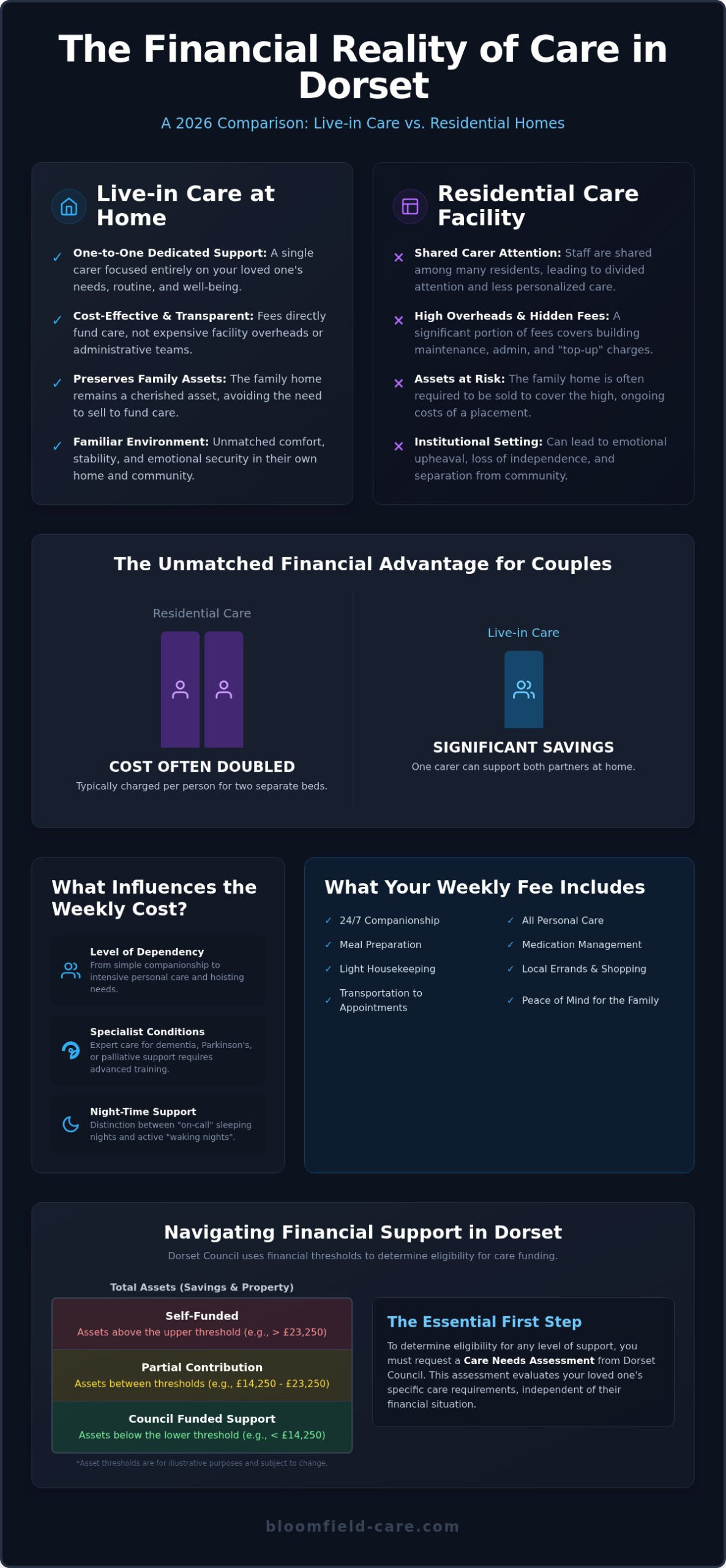
Deciding between a residential placement and home-based support is one of the most sensitive choices a family can make. In Dorset, the financial reality of residential care in 2026 often includes high room premiums and “top-up” fees that aren’t always clear at the start. When you evaluate the total live in carer cost Dorset families encounter, it’s helpful to look beyond the weekly invoice and consider the level of dedicated attention provided. Residential homes must maintain massive buildings and administrative teams, meaning a significant portion of your fee pays for overheads rather than direct care.
In a residential setting, your loved one shares a carer with several other residents. Live-in care flips this dynamic. It ensures that every penny spent goes toward 1-to-1 support that adapts to their specific rhythm of life. This bespoke approach also changes the “total cost of ownership” for a family’s future. By opting for care at home, the property remains a family asset rather than a resource that must be sold to fund a placement. It provides a sense of stability and financial security that institutional settings simply cannot match.
The Financial Advantage for Dorset Couples
For couples living in towns like Christchurch or Weymouth, the financial argument for home-based support is even more compelling. Most residential homes charge for two separate beds, effectively doubling the cost. A single live-in carer can often support both partners, which significantly reduces the overall expense while allowing them to stay together in their own familiar surroundings. This approach helps preserve shared assets and keeps the family home as a legacy. The support is naturally personalised, adapting to two different sets of health needs within the same household.
Bespoke Support vs. Residential Overheads
Choosing compassionate live-in care in Dorset means your investment stays focused on the individual. The regulatory framework for Home care in the United Kingdom ensures high standards of safety, but the real value lies in the social and emotional stability of remaining in the community. Staying at home allows a person to keep their local social circles and neighbourhood links. It avoids the “cost” of emotional upheaval that often follows a move into an institutional setting. When you calculate the live in carer cost Dorset residents pay, you’re investing in a lifestyle that prioritizes autonomy and mental well-being over corporate facility management.
What Factors Influence the Cost of a Live-in Carer in Dorset?
Calculating the live in carer cost Dorset families can expect involves looking closely at the specific rhythm of a loved one’s daily life. It isn’t a one-size-fits-all figure. Instead, it’s a reflection of the level of support required to maintain safety and dignity at home. A person who only needs companionship and light help with household chores will have different requirements than someone living with advanced health conditions. The expertise of the carer, their specific skill set, and the complexity of the daily routine all play a part in determining the final fee. Higher dependency levels, such as the need for hoisting or intensive personal care, require more experienced professionals who can navigate these challenges with grace and technical proficiency.
Condition-Led Care and Pricing
Specialist support often requires a higher level of clinical training. For instance, specialist dementia care at home involves managing complex behavioural changes and ensuring a secure environment, which naturally influences the daily rate. Similarly, conditions like Parkinson’s or palliative care require carers who are experienced in specific medication regimes and mobility assistance. If a loved one has significant health needs, they might be eligible for NHS Continuing Healthcare, which can help cover these costs. Another factor is night-time support. There’s a distinction between a carer who is “on-call” for occasional assistance and “waking nights,” where a professional remains alert throughout the night to provide active care to ensure safety.
Logistical Considerations in the Dorset Area
Dorset’s unique geography also influences the overall cost structure. Providing care in a busy hub like Weymouth or Poole is logistically different from supporting a client in a remote rural village deep in the Dorset countryside. Travel expenses for carers and the ease of access to local amenities can vary based on the specific location. Families should also plan for seasonal adjustments. Bank holiday rates and the costs associated with “rest bites” or handover periods are standard parts of a managed service. These handovers are vital. They ensure that when one carer takes a well-deserved break, the replacement is fully briefed on every detail of the client’s preferences, from medication timings to how they like their morning tea. If you’re unsure how these factors apply to your situation, you can speak with our local Dorset team for a personalised assessment.
Breaking Down the Weekly Live-in Care Fee: What is Included?
When families look at the live in carer cost Dorset providers present, they’re seeing an all-inclusive figure that covers far more than just hourly labour. It’s a comprehensive package of support designed to keep a household running smoothly. This includes professional 24/7 companionship, personal care assistance, and the management of daily routines. From preparing nutritious meals to light housekeeping and running local errands in places like Poole or Dorchester, the carer becomes a seamless part of the domestic environment. You’re also paying for clinical oversight. A local manager regularly reviews the care plan to ensure it evolves as your loved one’s needs change.
A unique advantage that often gets overlooked in typical care comparisons is how this fee structure benefits couples. While residential homes almost always charge per bed, live-in care allows two people to receive support for a single, slightly adjusted fee. This makes it a significantly more cost-effective choice for partners who wish to stay together. It avoids the heartbreak of separation and the financial strain of paying for two separate placements. One professional can often manage the household and provide support to both individuals, ensuring a shared quality of life that institutional settings struggle to replicate.
Household Contributions and Carer Expenses
It’s standard practice for the family to provide a private, comfortable room for the carer and a weekly food allowance or shared meals. This creates a welcoming environment for the professional residing in the home. You don’t need to worry about complex employment contracts or separate household bills for the carer. These practicalities are typically factored into the overarching service agreement. It ensures that the focus remains on the quality of the human connection rather than administrative friction or hidden extras.
The Value of Managed Care vs. Private Introduction
Choosing a managed service over a private introduction agency provides a critical safety net that many families find indispensable. The total cost of home care in Oxfordshire and Dorset through a regulated provider includes guaranteed emergency cover. If a carer falls ill or needs a break, the agency handles the replacement immediately. This peace of mind is built into the fee, covering the costs of recruitment, rigorous vetting, and ongoing specialist training. The agency also manages insurance, holiday pay, and pension contributions. Being CQC-regulated means there’s an external stamp of quality and safety. This professional management relieves the family of the burden of becoming an employer, allowing you to simply be a supportive family member again.
Funding Options and Financial Support in Dorset
Understanding how to manage the live in carer cost Dorset families face requires a clear pathway through local support systems. The first step is always a Care Needs Assessment from Dorset Council. This is a free service where a social worker evaluates what support is necessary to maintain safety and independence. Following this, a financial assessment determines your eligibility for funding based on assets and savings. For 2026, the upper capital limit is £23,250. If your assets are above this amount, you’ll likely be responsible for self-funding your care. However, if your savings fall between £14,250 and £23,250, the council may provide partial financial assistance toward your weekly fees.
It’s vital to explore non-means-tested benefits that can offset the live in carer cost Dorset residents pay. Attendance Allowance is a key resource for those over state pension age, with the higher rate currently set at £114.60 per week and the lower rate at £76.70. For individuals with significant, complex medical needs, NHS Continuing Healthcare (CHC) is another essential avenue. If a person’s primary need is health-based, the NHS may cover the full cost of their live-in support. While the assessment process is rigorous, it provides a vital safety net for those requiring intensive clinical care at home.
Local Authority Support in Weymouth and Poole
If you’re eligible for council support, you can request “Direct Payments.” This system gives you the autonomy to choose your own regulated provider rather than relying on council-commissioned services. Many families in areas like Weymouth and Poole use these payments to “top up” a private live-in care package. This allows you to combine state funding with personal resources to secure a premium, person-centred service. Starting this local financial assessment early is the best way to ensure stable long-term planning for your loved one’s future.
Private Funding Strategies for Families
The fear of “selling the family home” is a common anxiety, but several strategies can protect your assets. In Dorset, the Deferred Payment Scheme allows the local authority to pay for care costs, with the debt secured against the property to be repaid at a later date. This ensures the home remains a family sanctuary during the individual’s lifetime. Other options include immediate need care annuities, which provide a guaranteed income for life, or carefully managed equity release. We always suggest consulting with a SOLLA-accredited financial advisor in the South West who specialises in later-life lending. If you’re feeling overwhelmed by these choices, contact our Dorset team for guidance on how to navigate the local funding landscape with confidence.
The Bloomfield Difference: Ensuring Value for Dorset Families
While understanding the logistics of the live in carer cost Dorset families pay is essential, the true value of our support lies in the human connection we foster. We believe that care shouldn’t just be about managing health; it’s about enhancing life quality. By choosing compassionate live-in care in Dorset, you’re investing in a service that prioritises dignity, respect, and the preservation of a loved one’s unique personality. Our approach moves beyond the clinical, focusing on the emotional and physical benefits of remaining in a familiar sanctuary where memories are kept and routines are respected.
One of the most vital aspects of our service is finding the “perfect match” between the carer and the client. We don’t just assign a professional based on a schedule. We look at shared interests, personality traits, and lifestyle preferences. This partnership-driven approach ensures that the carer becomes a trusted companion who understands the client’s rhythm of life. Because we maintain local management teams in Weymouth, Poole, and Christchurch, we can provide a level of oversight and rapid response that distant agencies can’t match. We’re your local neighbours, dedicated to providing a sense of stability and reassurance to every family we support.
Person-Centred Care as a Standard
Our care plans are living documents that we tailor to the individual’s specific hobbies and Dorset routines. Whether it’s a daily stroll along the Weymouth seafront, attending a local garden club, or simply enjoying a quiet afternoon in a beloved armchair, we ensure these moments continue. We conduct regular reviews to make sure the level of support matches the client’s current needs, providing a flexible service that evolves over time. We also understand that the transition to live-in care can be an emotional journey for the whole family, and we’re here to guide you through every step with patience and genuine kindness.
Taking the Next Step with Confidence
If you’re ready to explore how we can help, the process begins with a comprehensive Bloomfield Care Needs Assessment. This is a gentle, unhurried conversation where we listen to your concerns and understand your loved one’s specific requirements. We believe in absolute transparency, which is why we provide detailed, no-obligation quotes that clearly outline the live in carer cost Dorset residents can expect for their bespoke plan. You won’t find hidden fees or complex corporate jargon here. Instead, you’ll find a dedicated team ready to provide the professional safety and domestic warmth your family deserves. Contact our local team today for supportive guidance on starting this journey.
Planning Your Loved One’s Future with Confidence
Choosing the right support is a journey of both the heart and the head. We’ve explored how the live in carer cost Dorset families encounter compares favourably to residential care, particularly when you factor in the bespoke, 1-to-1 attention provided. By understanding the 2026 funding thresholds and the benefits of a managed service, you can make a decision that protects both your family’s assets and your loved one’s independence.
At Bloomfield, we combine CQC Regulated Professional Care with Local Dorset-based Management that truly understands our community. Our Specialist Dementia Trained Carers focus on creating a safe, warm environment within the sanctuary of home. You don’t have to navigate these sensitive financial and care decisions alone. We’re here to listen, support, and help you find the peace of mind you deserve.
Request a Free Dorset Care Assessment & Custom Quote
Frequently Asked Questions
Is live-in care in Dorset cheaper than a care home?
Live-in care often represents better value than premium residential homes because you’re paying for dedicated, one-to-one attention rather than institutional overheads. For couples in Dorset, the savings are even more pronounced. Instead of paying for two separate beds in a care home, one live-in carer can often support both partners for a single fee. This approach also allows you to keep the family home as an asset rather than selling it to fund residential fees.
What is the average weekly cost of a live-in carer in the South West?
The weekly live in carer cost Dorset families can expect typically falls within a range that reflects the level of support required. While industry averages for the South West usually sit between £1,200 and £1,800 per week, the final rate depends on the complexity of health needs. Managed services include carer payroll, training, and 24/7 clinical oversight. This ensures that the care provided is safe, regulated, and tailored to the individual’s specific rhythm of life.
Does Dorset Council pay for live-in care?
Dorset Council may contribute toward care costs if an individual’s assets and savings fall below the 2026 upper capital threshold of £23,250. Following a Care Needs Assessment and a financial means test, eligible residents can receive funding via “Direct Payments.” This system empowers you to choose a private provider that matches your loved one’s personality and needs. If your assets are above the threshold, you’ll likely be responsible for self-funding your support independently.
Are there extra costs for live-in care for a couple?
Supporting a couple usually involves a modest uplift to the standard weekly fee to account for the additional responsibilities of the carer. However, this remains a highly cost-effective alternative to residential care. Instead of paying for two separate placements in a facility, a single professional provides person-centred support for both individuals within their own home. It allows partners to stay together in a familiar environment while receiving tailored assistance that respects their shared lifestyle.
Who pays for the live-in carer’s food and electricity?
The household is responsible for providing a private, comfortable room and covering the basic utility costs associated with the carer residing in the home. Most families also provide a weekly food allowance or include the carer in household meal planning. These practical arrangements help create a welcoming environment for the professional. By treating the carer as a valued guest in the home, you foster a supportive relationship that enhances the overall quality of companionship and care.
Can I get NHS funding for live-in care in Dorset?
Yes, individuals with significant and complex medical needs may be eligible for NHS Continuing Healthcare (CHC) funding. If a person’s primary need is health-based rather than social, the NHS can cover the full cost of live-in support. The assessment process is detailed and conducted by a multidisciplinary team to ensure the level of care matches the clinical requirements. This non-means-tested funding provides essential financial relief for families managing advanced health conditions or end-of-life care.
What happens if my live-in carer needs a break or goes on holiday?
When you choose a professionally managed service, all holiday and sickness cover is handled on your behalf. We ensure that a suitable replacement is recruited and fully briefed before the primary carer takes their scheduled rest. This handover period is vital for maintaining a steady rhythm of support without any interruption. It relieves the family of the stress of finding emergency cover and guarantees that a trained professional is always present to ensure safety.
Do I have to pay for a live-in carer’s travel to Dorset?
Travel arrangements can vary depending on the specific location within the Dorset countryside. While managed agencies often handle the primary logistics of carer placement, there may be small, transparent charges for travel to more remote rural areas. We believe in absolute clarity regarding these expenses from the very beginning. During your initial assessment, we will outline any potential travel-related costs to ensure you have a complete and honest picture of the total service fee.