

What if the safest place for your loved one isn’t a clinical facility, but the very hallway where they’ve walked for forty years? If you’re currently weighing up the choice between live-in care vs care home in Dorset, you’ve likely felt that familiar tug of anxiety. You want them to be safe, especially if falls or memory loss are a concern, but the thought of moving them into residential care feels like a loss of their identity and your family’s sanctuary.
It’s completely natural to feel torn between professional safety and the comfort of a familiar environment. You aren’t alone in wanting to protect their dignity while ensuring they have 24/7 support. This guide promises to clarify your options by showing how bespoke, home-based care provides a compassionate and secure alternative to traditional facilities. We’ll compare the costs, safety protocols, and emotional outcomes of both paths to help you make a confident decision for 2026. From understanding local funding thresholds to exploring how a dedicated caregiver can integrate into your home, we’ll provide the clarity you need to keep your family together.
Key Takeaways
- Understand why maintaining a sense of sanctuary in your own home can significantly reduce anxiety for those living with dementia.
- Explore how domiciliary care offers a flexible schedule for those who need a helping hand with daily tasks without full-time assistance.
- Compare the safety and companionship benefits of live-in care vs care home in Dorset to see which environment best preserves your loved one’s independence.
- Learn how to navigate the Care Needs Assessment process to unlock the right level of support from local Dorset authorities or private providers.
- Discover the importance of person-centred care plans that match professional carers to your family’s unique personality and lifestyle.
Why Families are Choosing Alternatives to Residential Care in Dorset
The decision to seek extra support for a loved one is rarely easy. In Dorset, where the sea air and community spirit of places like Weymouth and Christchurch are so central to our identity, the thought of leaving home can feel overwhelming. Families are moving away from the traditional model of residential facilities. They’re discovering that the choice of live-in care vs care home in Dorset doesn’t have to be a compromise between safety and comfort.
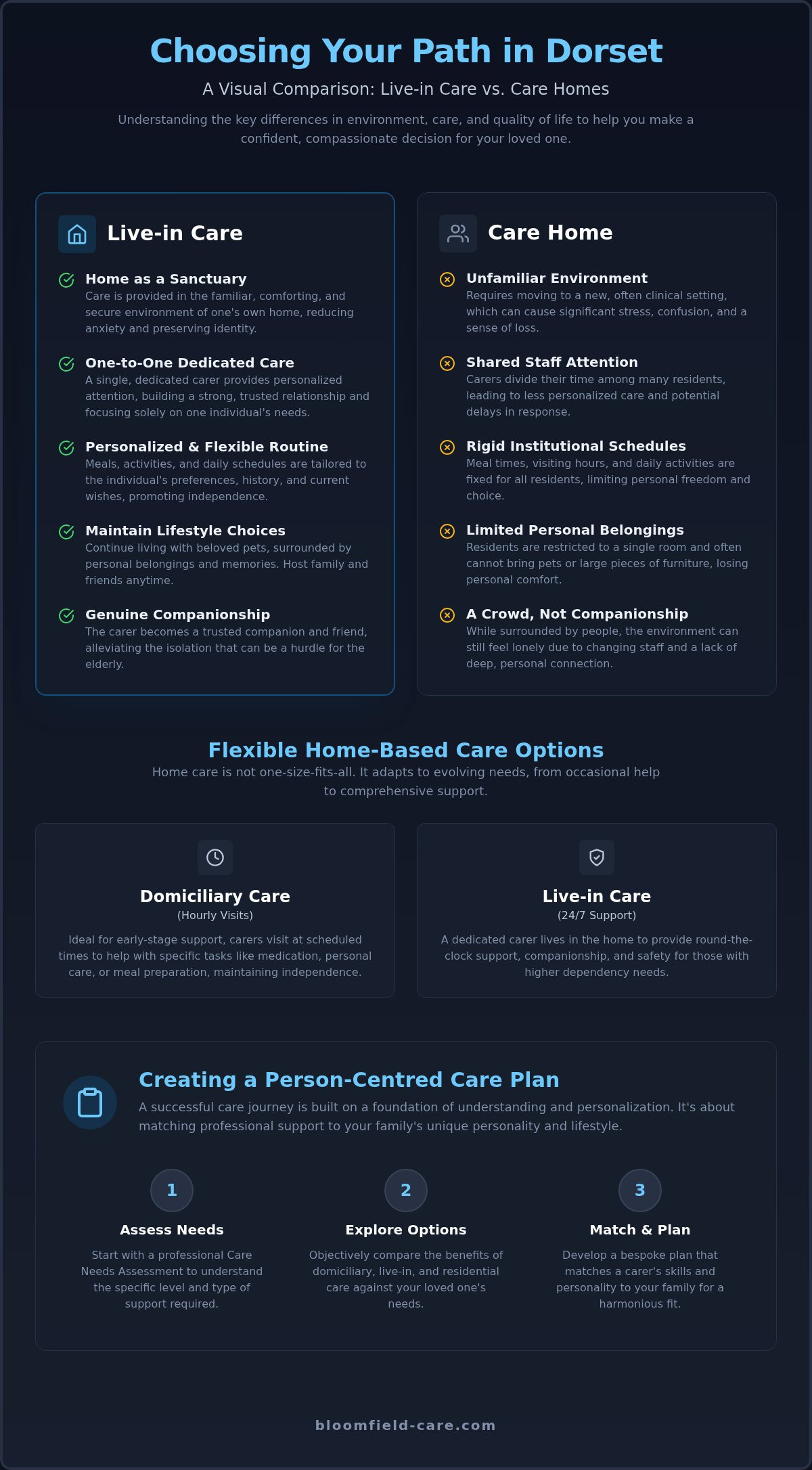
By 2026, the landscape of professional support has evolved. We now have access to sophisticated monitoring tools and telehealth systems that allow for a level of safety at home that was once only possible in a hospital setting. Unlike the rigid schedules of a care home, where meals and activities are dictated by the needs of the group, person-centred care revolves entirely around the individual. It’s a partnership that respects the person’s history and current wishes, providing a sense of stability during a time of change.
The Concept of ‘Home as a Sanctuary’
For individuals living with dementia or Alzheimer’s, a familiar environment is more than just a comfort; it’s a vital part of their well-being. The specific creak of a floorboard or the light through a particular window acts as a cognitive anchor, helping to ground them when the world feels confusing. This sense of familiarity is a cornerstone of UK Home Care Services, which prioritise keeping people in the places they love.
One-to-one care ensures that dignity remains at the forefront of every interaction. There’s no rushing to meet the needs of dozens of other residents. Instead, there’s time to listen and time to care. Maintaining a home as a sanctuary means your loved one can:
- Prepare meals according to their own dietary preferences and timings.
- Continue to live with beloved pets that provide emotional support.
- Stay surrounded by personal belongings and photographs that hold a lifetime of memories.
Addressing ‘Care Home Guilt’
It’s common for family members to feel a heavy weight of guilt when they can no longer manage care on their own. There’s often a misconception that high-dependency needs can only be met in a residential facility. This isn’t the case. When comparing live-in care vs care home in Dorset, it’s clear that professional home-based alternatives provide the same 24/7 safety standards, giving families peace of mind without the trauma of relocation.
In the more rural parts of Dorset, isolation can be a significant hurdle for the elderly. A care home might offer a crowd, but it doesn’t always offer true companionship. A dedicated carer becomes a trusted advisor and a friend, bridging the gap between clinical safety and genuine human connection. It’s about enhancing life quality, not just managing a condition, ensuring that the family stays together in the environment they know best.
Domiciliary Care: The Flexible Alternative for Dorset Residents
Choosing how to support a family member often starts with small, thoughtful steps. Domiciliary care is a person-centred approach where professional carers visit your home at scheduled times throughout the day. It’s designed to fit around your existing life, providing just the right amount of help to keep things running smoothly. When families evaluate live-in care vs care home in Dorset, they often discover that these flexible visits are the perfect starting point for maintaining independence.
These visits cover a wide range of essential daily tasks. A carer might arrive in the morning to help with personal care and medication, then return later to prepare a nutritious lunch or assist with light household chores. While the NHS Guide to Care Homes offers a comprehensive look at communal living, domiciliary care focuses entirely on the individual’s existing routine. This support integrates seamlessly with local Dorset health services, ensuring that your GP’s advice and social service plans are followed strictly within your own four walls.
Hourly Care for Early-Stage Support
In the early stages of needing assistance, a few hours of help can make a world of difference. Morning and evening visits help establish a safe, predictable routine that prevents small challenges from becoming major hurdles. Medication assistance is a key part of this service, ensuring that health is managed accurately without the stress of remembering complex schedules. Our specialist team provides bespoke domiciliary care in Weymouth, ensuring that every visit adds value to your day and keeps your sanctuary functioning exactly as it should.
Overnight Care: Safety While the World Sleeps
Anxiety often peaks during the quiet hours of the night. For families in Dorset worrying about night-time falls or the confusion associated with sundowning, overnight support provides profound reassurance. We offer both sleeping and waking night care. A sleeping night involves a carer being present in the house to help if needed, while a waking night means the carer stays alert to provide constant assistance. This level of support bridges the gap between independent living and 24/7 care, allowing everyone to rest easier knowing professional help is just a few steps away.
If you’re unsure which level of support is right for your situation, our team can help you explore person-centred care plans tailored to your family’s unique needs.
Live-in Care: 24/7 Support Without Leaving Home
Live-in care represents a profound commitment to maintaining your loved one’s lifestyle while ensuring total safety. It involves a professional carer residing within the home, providing a consistent presence that adapts to your family’s rhythm. When weighing up live-in care vs care home in Dorset, many families find that this model offers the safety of a facility without the upheaval of moving. It’s a partnership that values the individual’s history, allowing them to remain the master of their own domain while receiving expert assistance.
Having a single, dedicated point of contact is invaluable for complex needs. Instead of different staff members on every shift, your loved one builds a deep, trusting bond with one person who understands their unique preferences and medical history. This continuity is especially vital for high-dependency requirements like advanced dementia or palliative care, where stability and calm are paramount. It ensures that subtle changes in health or mood are noticed immediately, providing a level of preventative care that is difficult to achieve in a busy residential setting.
Live-in Care vs. Care Homes: A Comparison
The most striking difference lies in the level of attention provided. In a residential setting, staffing ratios often mean one carer is responsible for four or more residents. In contrast, live-in care offers dedicated one-to-one (1:1) support. While NHS information on care homes outlines the benefits of communal living, it cannot match the bespoke flexibility of staying at home. Your loved one keeps total control over their meal times, when they welcome visitors, and where they go for their daily outings along the Dorset coast. We provide compassionate live-in care in Oxfordshire and Dorset that prioritises this autonomy above all else.
Specialist Support at Home
High-dependency needs don’t have to mean a move to a nursing facility. Professional live-in carers are trained to manage complex medication regimes and mobility support with clinical precision. They also help adapt the home environment to make it safer for specialist dementia care, such as improving lighting or removing trip hazards. This personalised approach ensures that safety protocols are woven into the fabric of daily life rather than imposed by a rigid institution. Live-in care is the gold standard for home-based independence. It allows for a seamless blend of professional healthcare and the warmth of a domestic sanctuary, keeping the family unit together in the environment they know best.
How to Evaluate Your Loved One’s Needs in Dorset
Recognising the moment when support needs to increase is a delicate, emotional process. It often starts with subtle signs: a fridge that remains empty, missed social appointments in Christchurch, or a sudden lack of confidence in managing the stairs. When families weigh up live-in care vs care home in Dorset, they aren’t just looking at medical checklists. They’re looking for a way to preserve a lifetime of independence while acknowledging that 24/7 safety is now a priority.
The financial landscape for 2026 is a key part of this evaluation. For the 2026-2027 financial year, the Dorset Council upper capital limit for local authority support is £23,250. If your loved one has assets above this amount, they’re responsible for their own care costs. However, a significant advantage of choosing home-based care is that the value of the primary residence is almost always excluded from the local authority’s financial assessment. This often makes professional support at home more accessible than many families first realise, especially when considering the Attendance Allowance, which currently provides up to £114.60 per week for those with higher-rate needs.
The Assessment Process in Weymouth and Poole
A Care Needs Assessment is your first step toward clarity. Whether conducted by the local authority or a private care manager, this visit focuses on what your loved one can still do, rather than just what they find difficult. In communities like Weymouth and Poole, we ensure the individual remains the central voice in these conversations. It’s about partnership, not take-over. During this time, we can also provide a detailed breakdown of the cost of home care in Dorset to help you plan with confidence.
Respite Care: Testing the Waters
If you’re feeling uncertain about a long-term commitment, respite care offers a gentle way to trial professional support. This short-term arrangement allows your loved one to experience the benefits of a dedicated carer within their own sanctuary. It also provides family caregivers across Dorset with a necessary, compassionate break to recharge. You can explore our respite care in Oxfordshire and Dorset to see how a temporary stay can offer a fresh perspective on what’s possible at home.
To begin your journey toward peace of mind, contact our local Dorset-based care management team for a friendly, no-pressure conversation about your family’s unique needs.
Bespoke Home Care with Bloomfield Care
At Bloomfield Care, we believe that professional assistance should feel like an extension of your own family. Our commitment to dignity and respect is woven into every person-centred care plan we create. When families compare live-in care vs care home in Dorset, they’re often looking for more than just a list of tasks; they’re looking for a genuine connection. This is why we focus on matching our carers to your loved one’s personality, hobbies, and life story. It isn’t just about medication and meals. It’s about sharing a conversation over a cup of tea or enjoying a familiar coastal view together, ensuring the individual’s lifestyle remains intact.
Our personality-led approach builds a foundation of trust that is often missing in larger, more clinical facilities. We act as a trusted advisor and a dedicated caregiver, listening more than we speak to ensure your wishes are always at the forefront. We don’t just manage a condition; we enhance life quality through unhurried, supportive communication that respects the sanctity of the private residence. This partnership-driven approach empowers your loved one to maintain their autonomy while receiving the professional safety standards they deserve.
Expertise in Dementia and Alzheimer’s
Memory loss brings unique challenges that require a gentle, expert touch. Our specialist training programmes ensure that every Dorset-based carer understands the nuances of cognitive change. We focus on creating a safe, supportive environment that reduces anxiety and promotes a sense of self-sufficiency. By understanding dementia stages, we can adapt our support as needs evolve, ensuring that your loved one always feels empowered rather than patronised. We’ve found that this tailored approach works; 96% of our clients reported a significant reduction in daily anxiety in the 12 months prior to August 2026 after our team took over their care.
Your Local Dorset Care Partner
Being a local agency means we’re part of the same community you are. Whether your family is in Weymouth, Christchurch, Poole, or one of our surrounding villages, our local management team is always nearby to provide responsive support. This community knowledge allows us to integrate care with local health services and social groups seamlessly. We don’t just manage logistics. We value the human connections that make Dorset home and provide a sense of stability through structured yet soft phrasing in everything we do.
Taking the first step toward professional support is a brave decision. We’re here to guide you through that process with patience and integrity, never rushing your family’s decision-making. You can contact Bloomfield Care to discuss home-based alternatives today and request a free, no-obligation care consultation. Let’s work together to ensure your home remains the sanctuary it was always meant to be.
Choosing a Future of Dignity and Comfort
Deciding on the next chapter of support is a journey of love and careful consideration. You now have the clarity to see that home isn’t just a place; it’s a sanctuary that preserves identity and peace of mind. Whether you choose flexible domiciliary visits or the comprehensive safety of 24/7 support, your loved one can remain in the environment they cherish. When evaluating live-in care vs care home in Dorset, remember that professional safety and the warmth of a domestic setting can exist in perfect harmony.
As a CQC Regulated Provider with a local Dorset management team, we’re here to ensure every step you take is supported by expertise and genuine kindness. Our specialist dementia carers focus on enhancing life quality, not just managing daily tasks. Safety shouldn’t mean relocation. We invite you to Book a Compassionate Care Assessment in Dorset to explore how we can tailor our services to your family’s unique needs. You aren’t alone; we’re ready to listen and help you find the stability your loved one deserves.
Frequently Asked Questions
What are the main alternatives to a care home in Dorset?
The primary alternatives involve professional support delivered within your own residence. Domiciliary care offers scheduled hourly visits for daily tasks, while live-in care provides a constant, 24-hour presence for those with higher dependency. These options focus on companionship and personal autonomy. They allow Dorset residents to remain in their communities, such as Christchurch or Poole, instead of relocating to a residential facility where schedules are often rigid and group-oriented.
Is live-in care in Dorset more expensive than a residential care home?
When comparing live-in care vs care home in Dorset, the cost often aligns closely with residential fees, but the value is significantly different. For couples, having one carer at home is frequently more economical than paying for two separate beds in a care home. Additionally, when receiving care at home, the value of your property is typically excluded from local authority financial assessments. This keeps your family home secure while providing dedicated one-to-one attention.
Can I get help from Dorset Council to fund home care?
Yes, you can request a Care Needs Assessment from Dorset Council to determine your eligibility for financial support. For the 2026-2027 period, the upper capital limit for local authority assistance is £23,250. If your assets fall below this threshold, you may receive partial or full funding. Even if you’re self-funding, the council provides vital guidance on safety standards and can help you navigate the complex terminology of social care in the UK.
How do I know if my parent is safe with home care instead of a care home?
Safety is our highest priority, and home care often provides a more attentive environment than a busy residential ward. With one-to-one support, a carer is solely focused on your parent, noticing subtle changes in health or mood immediately. All our services are CQC regulated, ensuring we meet strict professional standards. This dedicated presence reduces the risk of falls and provides peace of mind that help is always at hand in a familiar sanctuary.
What happens if my loved one’s care needs increase over time?
Our person-centred care plans are designed to be fluid and responsive. If health requirements change, we simply adjust the level of support provided. You might start with a few hours of domiciliary care each week and gradually transition to full-time live-in care as needs become more complex. We conduct regular reviews with our local Dorset management team to ensure the support remains perfectly matched to your loved one’s evolving lifestyle and physical health.
Do you provide specialist dementia care at home in Weymouth?
We provide highly specialist dementia and Alzheimer’s care across Weymouth and the wider Dorset area. Our carers receive dedicated training to support individuals with memory loss, focusing on maintaining dignity and reducing the anxiety often caused by confusion. We work closely with families to create a calm, supportive environment that respects the individual’s history. This local expertise ensures that your loved one feels safe and understood in their own home.
Can a home carer help with medical tasks and medication?
Professional carers are fully trained to assist with medication management and basic health monitoring. They follow strict protocols to ensure that prescriptions are taken accurately and on schedule, which is vital for maintaining stability at home. While they don’t provide clinical nursing tasks, they work in partnership with local GPs and district nurses. This collaborative approach ensures that your loved one’s physical health is professionally managed within the comfort of their private residence.
How quickly can home care be arranged in Dorset?
We strive to be as responsive as possible, typically beginning with a friendly care consultation to understand your specific needs. Because we have a local management team based in Dorset, we can often arrange an initial assessment quickly. The exact timeline depends on the complexity of the requirements and the type of support needed. We never rush the process, as finding the right personality match between the carer and your loved one is essential for success.