
The assumption that moving a loved one into a residential facility is the most cost-effective way to ensure their safety is often a misconception. When you start comparing live-in care vs care home costs Wallingford, you might be surprised to find that staying in a cherished family home isn’t just a matter of comfort; it can also be a smarter financial safeguard. In a town where residential fees now average around £1,693 per week, the decision feels heavier than ever. You want to provide the best for your parent without the fear of losing the house they worked their whole life to build.
We understand the weight of this choice and the anxiety that comes with complex fee structures or “hidden” extras. It’s natural to feel a sense of guilt at the thought of moving a parent away from their familiar community. This guide explores the financial and emotional realities of senior care in Oxfordshire. You’ll discover a clear comparison of local options, learn how the £23,250 capital limit affects your funding eligibility, and see how to protect your family assets. We’ll help you find a path that balances professional safety with the dignity and familiarity of home.
Key Takeaways
- Compare average weekly fees in Wallingford to see how staying at home provides a more sustainable financial path for your family.
- Discover why live-in care vs care home costs Wallingford comparisons favor couples, as one carer can support two people for a single fee.
- Uncover the “invisible” hotel charges and service extras that can significantly increase the final bill in a residential facility.
- See how one-to-one support protects your loved one’s independence and keeps them connected to the local Wallingford community they love.
- Get clarity on the transition from hourly help to full-time support so you can plan for the future with confidence and peace of mind.
The Care Dilemma: Understanding Options in Wallingford
Deciding how to support an aging parent is one of the most emotional journeys a family can take. In Wallingford, where community ties run deep, the choice often boils down to a fundamental question of environment. You’re likely weighing up live-in care vs care home costs Wallingford, but the decision involves much more than just the monthly bill. It’s about where your loved one feels most like themselves. While some families look toward residential facilities, many are discovering that the sanctuary of home provides a level of comfort and safety that a communal setting simply cannot replicate.
What is Live-in Care?
This model of support allows an individual to remain in the familiar surroundings of their own house while a professional carer moves in to provide around-the-clock assistance. Unlike the broader UK Home Care System, which often involves short, scheduled visits, live-in care offers a dedicated one-to-one relationship. This continuity means the carer truly gets to know your parent’s rhythms. They understand how they like their morning tea, the specific ways they prefer to manage their medication, and the small details that make their day feel complete. It’s a partnership designed to enhance autonomy. It focuses on companionship and specialized elderly care that adapts to the person, not the other way around.
The Reality of Residential Care in South Oxfordshire
Residential care involves moving into a managed facility where staff are shared among many residents. While these homes provide a safe environment, they often require a significant shift from independent living to a structured, institutional routine. For many in South Oxfordshire, leaving a long-term family residence is a source of profound anxiety. The loss of a private garden or the ability to visit local shops at will can impact mental well-being. In a communal setting, care is often delivered on the facility’s schedule. This can lead to a loss of the personal autonomy that defines a person’s later years.
Local families are increasingly looking for ways to keep their loved ones at home. Wallingford is a town of history and familiarity. It’s the place where neighbors know your name and the Saturday market provides a sense of belonging. The Bloomfield approach focuses on this person-centered philosophy. We believe that care should be a warm, family-oriented support system that prioritizes dignity. By choosing a home-based solution, you ensure that your loved one stays connected to their community. They maintain their lifestyle in the sanctuary they’ve spent decades creating, ensuring that their quality of life remains the highest priority.
Financial Breakdown: Live-in Care vs Care Home Costs
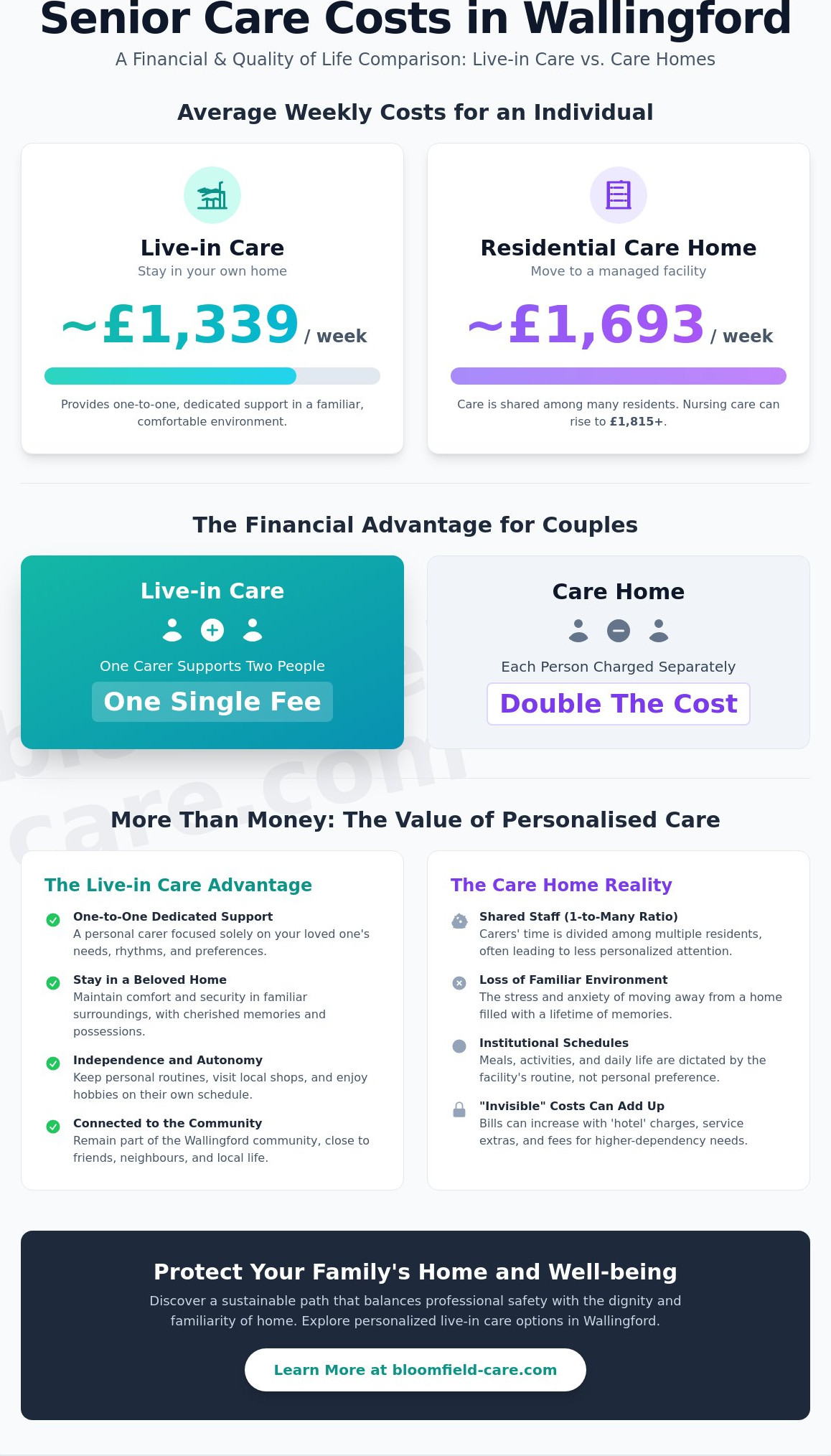
The financial reality of live-in care vs care home costs Wallingford often presents a surprising contrast. While residential care is often perceived as the standard option, the weekly fees in our local area can be significantly higher than many families anticipate. In Wallingford, the average cost for a care home placement is approximately £1,693 per week, with nursing care often rising to £1,815. In comparison, the average for live-in care in the same area is roughly £1,339 per week. This represents a substantial weekly saving while allowing your loved one to remain in the sanctuary of their own home. In 2026, the national average for live-in care typically ranges between £1,200 and £1,500 per week for a single person, depending on the complexity of their needs.
Comparing Weekly Fees for Individuals
When comparing weekly fees for individuals, it’s essential to look at the specific facilities available. Local homes such as Benson House or Westgate House reflect the high property values in South Oxfordshire, with rates often starting above £1,625 per week. These costs usually increase if your loved one requires high-dependency support or specialized dementia care. When you evaluate the cost of home care, you’ll find that the pricing is more transparently tied to the direct hours of one-to-one support provided. This model avoids the heavy overheads of running a large institutional facility, ensuring more of your budget goes directly toward excellence in service and individualized assistance.
The Couples Advantage: A Financial Game-Changer
For couples, the financial benefit of home-based support is even more pronounced. Most care homes charge two full fees for a couple, which can quickly drain life savings and put the family home at risk. When weighing live-in care vs care home costs Wallingford, the ability to stay together is often the deciding factor. Live-in care offers a distinct advantage because a single carer can often look after both individuals for one fee. This doesn’t just simplify the billing process; it protects the emotional bond of a couple who may have spent decades living side-by-side. Keeping them together in their private residence maintains their shared history and daily routines, which is vital for mental well-being.
The way you fund this care depends on your assets and savings. In Oxfordshire, the upper capital limit for social care funding is currently £23,250. If your savings or assets exceed this, you’re expected to self-fund the full cost of your assistance. Navigating the rules for Paying for a Care Home can be confusing, especially regarding how your home’s value is assessed. Crucially, the value of a primary residence is usually excluded from the means test if care is provided at home, which acts as a major safeguard for your family’s legacy. If you’re feeling overwhelmed by these figures, our team can help you explore how personalized live-in support might fit your specific financial situation.
The “Invisible” Costs of Residential Care
When you evaluate live-in care vs care home costs Wallingford, the figures you see on a brochure rarely tell the full story. Many families focus on the headline weekly fee, but residential facilities often operate with a complex structure of “hotel costs” and service extras. These additional charges can quietly inflate a monthly budget, turning a predictable expense into a source of financial stress. In contrast, staying at home allows for a more transparent approach to spending, where the focus remains entirely on the quality of the one-to-one support provided.
Additional Fees in Care Homes
Basic residential fees typically cover accommodation, meals, and general assistance. However, the everyday essentials that maintain a person’s dignity and joy often come at a premium. It’s common to find that the following services are billed as extras:
- Professional hair appointments and basic grooming.
- Chiropody and specialized foot care.
- Accompanied transport to medical appointments at local Wallingford clinics or the community hospital.
- Guest meals for visiting family members.
- Social outings or specific recreational activities organized by the facility.
These small additions can add hundreds of pounds to the annual cost. With a live-in carer, these elements are naturally integrated into the daily routine. Your carer is there to assist with domestic tasks, accompany your loved one to the shops, or help them attend a local social club without an itemized bill for every mile traveled or hour spent outside the house.
Asset Protection and the Family Home
The most significant “invisible” cost of residential care is often the loss of the family home as a financial asset. In Wallingford’s competitive property market, a house is more than just a building; it’s a hard-earned legacy. When a person moves into a care home, the local authority usually applies a “12-week property disregard.” During this short window, the value of the home isn’t counted toward care fees. Once those twelve weeks end, the property is often viewed as a liquid asset that must be sold to fund ongoing residential costs.
Choosing to receive care in your private residence changes this dynamic entirely. Under current Oxfordshire guidelines, the value of your primary home is generally excluded from the means test if you are receiving care within it. This strategy allows the property to remain within the family, preserving it for future generations while providing a familiar sanctuary for your parent. It avoids the emotional and financial pressure of a forced sale in a market where timing can significantly impact the final value.
Beyond the spreadsheets, there’s the unquantifiable cost of losing independence. Moving into an institution means following a communal schedule for meals, waking, and socializing. The “cost” here is measured in the loss of autonomy. By opting for a home-based solution, you protect both the financial value of the estate and the priceless sense of self that comes from living life on one’s own terms.
Evaluating Value: Quality of Life in Wallingford
True value in care extends far beyond the figures on a monthly invoice. While the debate over live-in care vs care home costs Wallingford is often driven by budgets, the emotional return on investment is what truly defines a person’s later years. In a residential facility, life often follows a “one size fits all” approach. Meals are served at set times, activities are group-based, and the rhythm of the day is dictated by the needs of the institution. Choosing to stay at home flips this dynamic. It places your loved one at the center of every decision, ensuring their lifestyle remains exactly as they wish it to be.
Nutritional autonomy is a perfect example of this difference. In a private residence, your parent chooses what they eat and when they eat it. There are no set menus or industrial kitchens. If they want a light snack while watching the birds in their own garden, or a traditional roast on a Tuesday, their carer is there to make it happen. This sense of control is vital for mental well-being. It is supported by the presence of compassionate live-in care, which focuses on the person’s happiness as much as their physical safety.
One-to-One Care vs Shared Staffing
The staffing model in many residential homes relies on a revolving team of carers who must split their attention between dozens of residents. This can lead to high staff turnover and a lack of consistency. Your loved one might see three different faces in a single day. A dedicated live-in carer provides a stable, reassuring presence. They don’t just provide assistance; they become a trusted family advisor who understands the subtle changes in your parent’s health or mood. This one-to-one observation is a significant safety benefit. It allows for immediate responses to potential issues that might be missed in a busy communal setting.
Staying Connected to Wallingford
Moving into a care home often means a gradual disconnection from the local community. Even the most beautiful facility garden can’t replace the joy of a slow walk through the Wallingford Castle Gardens or a visit to a favorite local shop. Home care allows these essential routines to continue. For those living with dementia, the familiarity of their own four walls and the surrounding streets provides a level of calm that no clinical environment can match. It also solves the heartbreak of pet ownership. Many residential homes have strict “no pet” policies, but with live-in support, a beloved dog or cat can stay right where they belong. This companionship is often the best medicine for loneliness.
Protecting your loved one’s quality of life means keeping them connected to the people and places they love. If you’re ready to explore a more personal alternative to residential facilities, we invite you to learn more about our individualized live-in care services.
Making the Choice: Is Bloomfield Care Right for You?
Choosing the right path for a parent requires a balance of logic and heart. We’ve seen how the comparison of live-in care vs care home costs Wallingford often reveals that staying at home is the more sustainable financial choice for many families. It protects the family home as an asset and preserves a legacy for the next generation. Beyond the spreadsheets, it’s about the feeling of waking up in your own bed, surrounded by the memories of a lifetime. It’s about the peace of mind that comes from knowing your loved one is safe, respected, and truly seen.
Many families begin this journey with domiciliary care, perhaps just an hour or two of help with the shopping or morning routine. As needs evolve, the transition to full-time live-in support can feel like a daunting leap. It doesn’t have to be. This progression is a natural way to enhance safety without the trauma of a relocation. It’s about adding a professional layer of protection to the domestic sanctuary your loved one already enjoys. It allows them to maintain their independence while you gain the reassurance that someone is always there to help.
The Bloomfield Approach to Live-in Support
We believe in professionalism with a domestic heart. Our person-centered care planning process isn’t a clinical checklist; it’s a conversation. We take the time to listen to your parent’s stories and understand their unique personality. This allows us to match carers based on shared interests and temperament, whether that’s a love for local Oxfordshire history or a passion for gardening. Our local expertise across Oxfordshire and West Berkshire means we understand the community rhythms that keep our clients feeling connected and valued. We don’t just manage care; we enhance life quality by fostering genuine human connections.
Getting Started with a Care Assessment
The first step is often the hardest, which is why we offer a free home care assessment in Wallingford to help clarify your options. During this visit, we sit down with you and your loved one to discuss their needs, preferences, and daily routines. We don’t just look at medical requirements. We look at how to protect their autonomy. We’ll help your family navigate the complexities of funding and logistics, providing a sense of stability during a time of change. Our goal is to empower you with choice, ensuring that dignity remains the cornerstone of every decision. You aren’t just finding a service; you’re finding a dedicated partner who values the sanctity of your parent’s lifestyle as much as you do.
Empowering Your Family’s Future in Wallingford
Choosing between live-in care vs care home costs Wallingford is ultimately about protecting your loved one’s independence while making a sound financial decision. We’ve explored how staying at home safeguards the family property from immediate sale and avoids the hidden extras common in residential facilities. Most importantly, it ensures your parent remains in the sanctuary they love, supported by a dedicated professional who understands their specific needs and daily rhythms.
As a CQC rated professional service with local Oxfordshire expertise, we specialize in providing the high-quality, person-centered support your family deserves. Whether you require companionship or specialist dementia support, our team is here to guide you through these sensitive topics with patience and integrity. You don’t have to navigate these choices alone; we’re here to help you find a path that balances safety with the heart of a domestic environment.
Take the first step toward peace of mind today. Book a Free Compassionate Care Assessment in Wallingford to discover how we can help your loved one thrive in the comfort of home. A brighter, more supportive future is within reach for your family.
Frequently Asked Questions
Is live-in care cheaper than a care home in Wallingford for couples?
Yes, live-in care is almost always significantly more cost-effective for couples. While residential homes typically charge two full fees, a live-in carer can support both individuals for a single weekly rate. This allows partners to stay together in their own home while protecting their joint savings from the double expense of facility beds.
What happens to my house if I choose live-in care in Oxfordshire?
Your home is generally protected from being sold to pay for care fees if you receive support within it. Under current Oxfordshire County Council guidelines, the value of your primary residence is excluded from the means test for home-based services. This ensures your house remains a family asset and a sanctuary, rather than being liquidated to cover institutional costs.
Does the local council pay for live-in care in Wallingford?
Local council funding depends on a means test of your capital and savings. In Oxfordshire, if your assets are above £23,250, you’ll likely need to self-fund your care. However, if your capital falls below this threshold, you may be eligible for a personal budget or direct payments to help cover the costs of your chosen home-based support.
Can a live-in carer provide nursing support for complex needs?
Live-in carers provide comprehensive personal and domestic support, but clinical nursing tasks are usually managed in partnership with community nursing teams. For complex conditions like advanced dementia or Alzheimer’s, specialized carers are trained to manage high-dependency needs safely at home. This collaborative approach ensures professional medical oversight while maintaining the comfort of a domestic environment.
How quickly can live-in care be arranged in the Newbury or Wallingford area?
Support can often be organized within a few days depending on the urgency and the specific needs of the individual. We prioritize a thorough matching process to ensure the carer’s personality and skills fit your family perfectly. While we move quickly to provide stability, we never rush the assessment process, ensuring every detail of the person-centered plan is correct from the start.
What are the hidden costs of residential care homes that I should look out for?
Many facilities bill separately for “hotel” services such as hairdressing, chiropody, and social outings. You might also encounter extra charges for transport to local medical appointments or even guest meals for visiting relatives. When evaluating live-in care vs care home costs Wallingford, it’s vital to ask for a full list of these extras to understand the true annual expense.
Can I keep my pets if I have a live-in carer at home?
Yes, staying at home allows you to keep your beloved pets, which are often not permitted in residential facilities. A live-in carer can even assist with basic pet care tasks like feeding or short walks. This companionship is a vital part of mental well-being and is one of the greatest emotional benefits of choosing home-based assistance over a care home.
Is live-in care safer than a care home during local health outbreaks?
One-to-one support at home naturally reduces the risk of viral transmission compared to communal living environments with shared staff and residents. By remaining in your own sanctuary, you limit exposure to the wider community while still receiving 24/7 professional observation. This model provides a controlled, safe environment that prioritizes your loved one’s health and peace of mind during challenging times.