

Choosing a care home because it seems like the “practical” financial choice is often a decision made in a moment of crisis, yet it may not be the most cost-effective or compassionate path for your family. We understand the quiet anxiety that comes with watching a loved one’s needs grow while your own confusion about live-in care costs Dorset deepens. You want to protect their dignity and their savings, but the maze of Dorset Council assessments and the fear of running out of funds can feel like an impossible weight to carry.
It’s our goal to provide the steady, professional guidance you need to make an informed choice with absolute confidence. This 2026 guide simplifies the complexities of care fees, explaining the vital differences between managed services and independent carers so you can avoid hidden administrative burdens. We’ll walk you through the latest funding thresholds, including how Attendance Allowance and NHS support can help make home care a viable reality. By the end of this article, you’ll have a clear understanding of the weekly investment required and the peace of mind that your loved one can remain in the sanctuary of their own home.
Key Takeaways
- Discover why 24-hour support in the sanctuary of your own home is often a more dignified and person-centered alternative to moving into residential care.
- Gain clarity on the current live-in care costs Dorset families should expect in 2026, including how specialist care needs for conditions like dementia are factored into the fee.
- Learn how to navigate the Dorset Council care needs assessment process and understand the 2026 capital thresholds that impact your eligibility for financial support.
- See how live-in care can be a more cost-effective solution for couples, often providing better value than paying for two separate placements in a care home.
- Understand the benefits of a fully managed service, which removes the stress of administrative tasks and employment responsibilities from your family’s shoulders.
Understanding Live-in Care in Dorset: A Modern Alternative
For many families across our beautiful county, the thought of a loved one leaving their familiar surroundings for a residential facility is deeply unsettling. In 2026, more people than ever are viewing the private residence as a sanctuary, a place where memories live and comfort is guaranteed. Live-in care offers a modern alternative, providing a dedicated carer who resides in the home to offer 24-hour, one-to-one support. This model isn’t just about safety; it’s about preserving a person’s dignity and autonomy. When exploring Home care in the United Kingdom, it becomes clear that staying at home can significantly boost mental well-being and overall wellness. While researching live-in care costs Dorset families often find that the value of one-to-one attention far outweighs the institutional approach of a care home.
We provide this specialized support across the region, from the coastal charm of Weymouth and the bustling communities of Poole to the historic streets of Christchurch. Our approach ensures that your loved one doesn’t just receive assistance but continues to live a life that feels authentic to them. By remaining in a familiar environment, individuals can maintain their daily rhythms, whether that’s enjoying a morning cup of tea in their own garden or keeping their cherished pets by their side. This continuity is essential for emotional stability, especially for those living with memory-related conditions.
Managed Care vs. Introductory Agencies
We believe in providing a sense of profound reassurance. That’s why we operate as a managed service. Unlike introductory agencies that simply match you with a carer and leave the administrative burden on your shoulders, a managed provider handles everything. We take care of training, CQC compliance, and finding cover if your regular carer is unwell. Choosing an introductory model often means you become an employer, inheriting complex legal and tax responsibilities that can be overwhelming. For families already dealing with the stress of a health crisis, the stability of a managed service is invaluable. It removes the risk of being left without care and ensures that every professional entering your home meets rigorous quality standards.
The Role of a Live-in Carer in Dorset
Our carers do more than manage logistics. They are companions who understand the importance of a walk along Weymouth’s seafront or a visit to a favourite cafe in Christchurch. From preparing nutritious meals to assisting with personal care and specialist dementia support, their presence ensures safety without sacrificing independence. Whether you’re in the heart of Poole or a quiet village, local knowledge helps maintain those vital social links that keep life feeling normal. This familiarity with Dorset landmarks and community hubs allows for a seamless continuation of a person’s lifestyle. Live-in care is a partnership-driven approach to wellness that empowers individuals to thrive in the comfort of their own home.
Breaking Down Live-in Care Costs in Dorset for 2026
Understanding the financial commitment of home-based support is often the first step toward peace of mind. As we move through 2026, the live-in care costs Dorset families encounter are influenced by several shifting factors, including national minimum wage increases and the rising cost of living in the South West. A typical weekly fee isn’t just a single number. It’s a composite of professional expertise, 24-hour availability, and the administrative security that a managed service provides. Unlike introductory agencies that may offer lower headline rates, a managed service includes the cost of recruiter vetting, ongoing training, and the essential backup care that keeps your loved one safe if a primary carer needs a break.
The complexity of individual needs plays a significant role in the final investment. For instance, if a person requires frequent assistance during the night or has limited mobility requiring two-person transfers, the level of support naturally increases. Location also matters within the county. While we serve all of Dorset, supporting someone in a remote rural village may involve different logistical considerations than a home in central Weymouth or Poole. These nuances ensure that the care provided is safe, sustainable, and tailored specifically to the individual’s lifestyle.
Specialist Care Premiums
Specialist support for complex conditions requires a higher level of clinical oversight and specific training. Families often find that investing in specialist dementia care at home is a transformative decision. It doesn’t just manage symptoms. It reduces the risk of distressing hospital admissions by providing a stable, familiar environment. Similarly, palliative care and end-of-life support involve intensive, compassionate assistance that prioritizes comfort and dignity. For those with significant health needs, it’s vital to explore NHS Continuing Healthcare, as this can sometimes cover the full cost of care if a primary health need is identified.
Additional Expenses to Consider
When evaluating live-in care costs Dorset households must also consider practicalities like food and travel. A carer living in the home will need a food allowance or for their meals to be provided as part of the household grocery shop. You should also consider modest increases in utility bills and travel expenses for local appointments or social outings in Christchurch or Poole. Most reputable providers will conduct a thorough initial assessment to create a person-centered plan. This one-off fee ensures the care provided is perfectly matched to your loved one’s personality and physical requirements. If you’re feeling overwhelmed by these details, our team is here to offer a gently guided conversation about your options.
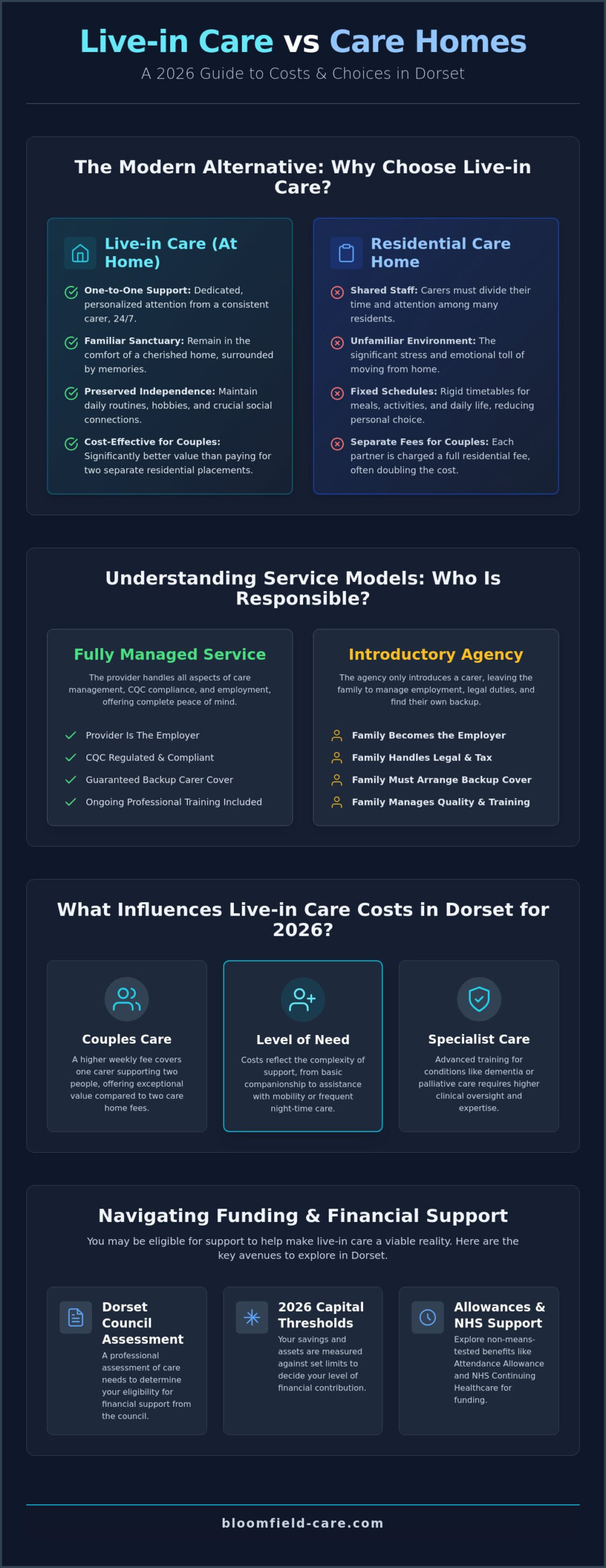
Live-in Care vs. Care Homes in Dorset: A Value Comparison
When families begin researching live-in care costs Dorset, they often start by comparing the weekly fees of local residential homes. While the headline figures may sometimes appear similar, the level of attention provided is worlds apart. In a typical Dorset care home, a single staff member is often responsible for the needs of several residents at once. This “one-to-many” ratio can lead to a more institutionalized experience where routines are dictated by the facility’s schedule. In contrast, live-in care offers a dedicated one-to-one relationship. Your loved one receives the undivided attention of a professional who learns their specific preferences, from how they like their tea to the exact pace they prefer for a morning stroll. This personalized focus ensures that care isn’t just a series of tasks, but a supportive presence that adapts to the individual.
Beyond the financial balance sheet, there’s a profound emotional weight to leaving a family home. Moving into a facility often means sacrificing the sanctuary of a private garden or the comfort of a familiar neighborhood in Christchurch or Weymouth. These “hidden” costs are often felt in a loss of autonomy and a decline in mental well-being. Staying at home allows your loved one to remain a part of their community, keeping their social ties and cherished possessions within reach. This continuity is a vital component of wellness that residential facilities simply cannot replicate.
The “Couples” Advantage
One of the most compelling reasons families choose home-based support is the ability to keep partners together. In many residential settings, couples with differing care needs may be separated into different wards or even different buildings. Live-in care allows them to remain in their shared home, preserving their bond and their daily rhythms. From a financial perspective, this is often the most sensible choice. Rather than paying for two separate care home beds, which can effectively double your expenditure, a single live-in carer can often support both partners for a significantly lower combined fee. For a deeper analysis of these options, our Bloomfield Care Home or Care at Home? guide provides further clarity.
Asset Protection and the Family Home
For many residents in Dorset, the family home represents a lifetime of hard work and security. When an individual moves into permanent residential care, the value of their property is usually included in the local authority financial assessment, which may necessitate its sale. However, when care is provided at home, the property is often excluded from these calculations, particularly if a spouse or a qualifying relative continues to live there. This can provide a significant layer of protection for the family’s future. To understand the wider context of these assessments, we suggest reviewing an Age UK guide to NHS care funding. Ultimately, home care is an investment in lifestyle, not just a management of needs.
Funding and Financial Support for Dorset Families
The financial side of care often feels like the most daunting hurdle, but you don’t have to face it alone. Understanding how to meet live-in care costs Dorset families encounter begins with a conversation with the local authority. The Dorset Council care needs assessment is a vital first step. This process isn’t just a clinical review; it’s a professional evaluation of your loved one’s daily life and the support they require to remain safe and comfortable. Even if you plan to fund care privately, this assessment provides a roadmap for the level of assistance needed, ensuring that any plan put in place is both sustainable and effective.
For 2026, the capital threshold for local authority financial support in England remains at £23,250. If your loved one has savings or assets above this amount, they’ll likely be responsible for self-funding their care. However, if their assets fall below this limit, the council may contribute toward the costs. In these instances, you might be offered a “Personal Budget.” This is a specific sum of money allocated to meet identified care needs, which can often be used to pay for live-in care, giving you the autonomy to choose a provider that aligns with your family’s values. We always recommend seeking independent financial advice to ensure your long-term care planning is as robust as possible.
NHS Continuing Healthcare (CHC) in Dorset
If your loved one’s primary need for care is related to a complex medical condition rather than social needs, they may be eligible for NHS Continuing Healthcare (CHC). This is a package of care that’s fully funded by the NHS. The Dorset Integrated Care Board (ICB) manages these assessments, which are famously rigorous. Eligibility isn’t based on a specific diagnosis but on the nature, intensity, and unpredictability of the person’s health needs. It’s important to distinguish between social care needs, such as help with dressing or meals, and primary health needs that require specialized clinical intervention. If you believe your loved one qualifies, speak with a member of our Dorset team for guidance on how to navigate this process.
Attendance Allowance and Carer’s Allowance
There are several non-means-tested benefits available that can help offset the cost of home care. For those over state pension age living in Dorset, Attendance Allowance is a significant resource. In 2026, the higher rate is £114.60 per week, while the lower rate is £76.70. This benefit is awarded based on the level of care required and isn’t affected by your income or savings. Additionally, if a family member provides at least 35 hours of care per week, they may be eligible for Carer’s Allowance, currently £83.30 per week. These funds can provide a helpful cushion, ensuring that your loved one can maintain their independence in the home they love for as long as possible.
Choosing Bloomfield Care: Transparent Support in Dorset
Finding the right support shouldn’t feel like a transaction. It’s a deeply personal journey that requires a partner who understands the emotional weight of inviting someone into your home. At Bloomfield Care, we structure our compassionate live-in care around the unique rhythms of your loved one’s life. We know that when families investigate live-in care costs Dorset, they’re looking for more than just a price list. They’re looking for a partner who values dignity as much as safety. By choosing a managed service, you’re opting for a layer of protection that introductory agencies simply don’t provide. We handle the complex logistics of recruitment, training, and 24-hour backup, allowing you to step back from being a care manager and return to being a daughter, son, or spouse.
Our philosophy is rooted in person-centered planning. This means we don’t just assign a carer; we match personalities. We look for shared interests and compatible temperaments, ensuring that the professional entering your home becomes a trusted companion. This focus on human connection is what turns a care plan into a lifestyle investment. Whether your loved one is a keen gardener or enjoys quiet afternoons with a book, our goal is to enhance their autonomy within the sanctuary of their own home.
The Bloomfield Difference
Our local presence in Weymouth and Poole is a cornerstone of the reassurance we offer. We aren’t a distant corporate office; we’re a community-focused team that understands the local landscape and the specific needs of Dorset residents. This proximity allows us to provide continuous monitoring and hands-on support for our Dorset-based carers. We believe that a well-supported carer provides the highest quality of care, which is why we invest heavily in their ongoing development and mental well-being. Our commitment to excellence ensures that every individual we support is treated with the profound respect they deserve, empowering them to maintain their self-sufficiency.
Starting Your Care Journey
Taking the first step can feel overwhelming, but we’re here to guide you with patience and integrity. Your journey begins with a free, no-obligation care needs assessment conducted in the comfort of your home. During this initial visit, we listen more than we speak. We want to understand not just the clinical requirements, but the small details that make your loved one’s house a home. From here, we build a bespoke care plan that respects their established lifestyle and addresses the specific live-in care costs Dorset families need to plan for. We provide our guidance with an unhurried, supportive nature that ensures you never feel rushed into a decision.
Taking the Next Step Toward Peace of Mind
Choosing the right support is a profound act of love. You’ve explored how a managed service protects your family from administrative burdens and why the sanctuary of home remains a superior alternative to residential facilities. While navigating live-in care costs Dorset families often discover that the value of one-to-one attention is truly immeasurable. By understanding the 2026 funding landscape and the benefits of person-centered support, you’re now equipped to make a choice that prioritizes your loved one’s autonomy and wellness.
Our local teams across Weymouth, Poole, and Christchurch are ready to provide the gentle, expert guidance you deserve. As a CQC Registered provider specializing in dementia and palliative care, we focus on excellence that respects the individual’s lifestyle. We’re here to listen and help you find a sustainable path forward that keeps your family together. It’s possible to maintain independence without sacrificing safety or financial stability.
Book your free, compassionate care assessment with Bloomfield Care today
Your loved one’s comfort is our priority, and we look forward to supporting you through this transition with kindness and integrity.
Frequently Asked Questions
Is live-in care more expensive than a care home in Dorset?
Live-in care is often comparable to residential care, but it provides far greater value through one-to-one attention. For many families, live-in care costs Dorset residents find are more manageable than paying for a premium nursing home. This is especially true for couples who can stay together in their own home rather than paying for two separate placements. Staying at home also means you avoid the high hotel costs often associated with residential facilities.
Will Dorset Council pay for my live-in care fees?
Dorset Council may contribute toward your fees if a care needs assessment confirms you require support and your assets are below the capital threshold. If eligible, you might receive a Personal Budget, which gives you the flexibility to choose your own provider. We recommend starting with a council assessment to understand your entitlements. This ensures you’re accessing all available local support before making a final decision about your care arrangements.
What are the 2026 capital limits for care funding in England?
The upper capital threshold for 2026 remains at £23,250. If your savings and assets exceed this amount, you’ll likely be responsible for self-funding your care. If your assets are between £14,250 and £23,250, you may be eligible for partial support from the local authority. It’s vital to remember that your primary residence is often excluded from this means test if a spouse or qualifying relative still lives in the property.
Does live-in care include the cost of food and utilities?
The weekly care fee covers the professional support provided by your carer, but it doesn’t typically include household bills or groceries. You’ll need to provide your carer with a bedroom and either include their meals in your weekly shop or provide a modest food allowance. While your utility bills may see a slight increase, these costs are usually offset by the significant emotional and physical benefits of staying in your own home sanctuary. It is also wise to ensure that home systems like heating and plumbing are fully functional to support a safe environment; for an example of professional standards in these areas, read more.
Can I get live-in care in Dorset if I have complex dementia?
Yes, live-in care is an excellent option for those living with complex dementia or Alzheimer’s. Specialist carers are trained to manage the unique challenges of memory loss while providing a stable, familiar environment that reduces distress. One-to-one support allows for a level of patience and personalized routine that’s difficult to achieve in a busy residential setting. This continuity helps preserve dignity and enhances overall mental well-being during every stage of the condition.
How do I apply for Attendance Allowance to help with care costs?
To apply for Attendance Allowance, you’ll need to complete a form from the Department for Work and Pensions. This benefit is non-means-tested, so your income and savings don’t affect your eligibility. In 2026, the higher rate is £114.60 per week, and the lower rate is £76.70. These funds can be a vital resource in helping families meet live-in care costs Dorset providers charge for professional, personalized assistance at home.
What is the difference between an introductory agency and a managed provider like Bloomfield Care?
A managed provider takes full responsibility for your care, including CQC compliance, staff training, and arranging cover if your regular carer is away. In contrast, an introductory agency simply matches you with a carer, leaving you as the legal employer. This means you’d be responsible for taxes, insurance, and finding your own replacement care during emergencies. If you require professional support with insurance or risk management, click here. Our managed model provides the ultimate stability and professional safety for families in distress.
Can two people (a couple) share one live-in carer in Dorset?
Yes, couples can absolutely share one live-in carer if the carer can safely meet both individuals’ needs. This is often one of the most cost-effective ways to arrange professional support. Instead of paying for two separate care home beds, you pay a single weekly fee with a small supplement for the second person. It allows partners to stay together in the comfort of their shared home while receiving tailored, compassionate assistance.