

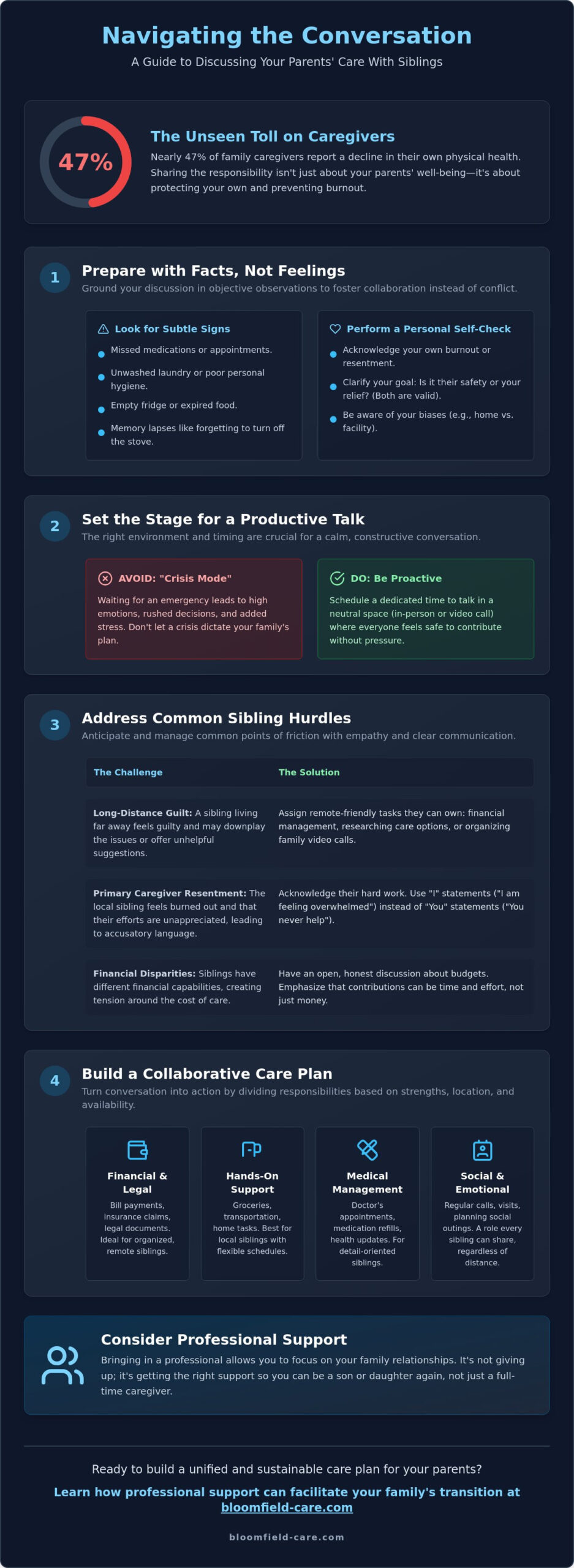
Did you know that nearly 47% of the 59 million family caregivers in the U.S. report a decline in their own physical health since starting their journey? This strain often happens when one person carries the weight of responsibility alone. Learning how to talk to siblings about parents’ care is the most important step you can take to protect your own well-being while ensuring your parents stay safe and comfortable in the home they love.
It’s exhausting to feel like the only one noticing the changes in your parents’ health, especially if your siblings live far away and don’t see the daily reality. You might worry about sounding pushy or fear the conflict that sensitive topics can bring. We believe that caring for a parent should be a shared act of love, not a source of family tension. This guide will help you navigate these complex emotions with grace, patience, and professional insight.
You’ll learn how to build a collaborative care plan for your parents with empathy and clarity. We will explore effective ways to discuss support options like companionship or live-in care, ensuring every family member feels heard and every parent feels respected. Let’s move toward a future where your family works together as a supportive, unified team.
Key Takeaways
- Learn how to assess your parents’ daily needs objectively to ground family discussions in facts rather than emotions.
- Discover why avoiding “crisis mode” conversations ensures a calmer environment where every sibling feels safe to contribute.
- Master how to talk to siblings about parents’ care by addressing common hurdles like long-distance guilt and primary caregiver resentment.
- Build a sustainable care plan by dividing responsibilities based on individual strengths, from financial management to providing companionship.
- Understand how introducing professional support allows you to focus on your family relationships while ensuring your parents remain safe in their own homes.
Preparing for the Conversation: Assessing Your Parents’ Needs Objectively
Before you sit down with your brothers or sisters, you need a foundation of facts. A Family Care Meeting isn’t a place to issue demands or air old grievances. Instead, think of it as a collaborative sanctuary where everyone shares what they’ve seen. This shift in perspective is the secret to how to talk to siblings about parents’ care without causing defensiveness. By focusing on objective observations, you move the conversation away from who is right and toward what is best for your parents.
A person-centred approach is the foundation of any successful family agreement. This means keeping your parent’s dignity and lifestyle at the heart of every word. To do this, you must gather objective facts about their Activities of Daily Living (ADLs) before the talk begins. It’s much easier to discuss a care plan when you can point to specific safety requirements rather than vague feelings of worry.
Recognising the Subtle Signs that Support is Needed
Sometimes the need for help arrives in whispers rather than a shout. You might notice “red flags” during a weekend visit that your siblings haven’t seen yet. Look for missed medications, unwashed laundry, or a fridge that’s empty or filled with expired food. These are tangible indicators that the current routine is no longer serving their well-being. It’s about protecting the sanctuary of their home, not taking away their independence.
If your parent is living with memory loss, understanding dementia stages can help you gauge the urgency of the conversation. Documenting specific incidents, like a parent getting lost on a familiar route or forgetting to turn off the hob, provides a clear picture for siblings who live further away. Facts are harder to ignore than emotions; they help everyone reach a consensus faster.
Performing a ‘Self-Check’ on Your Own Motives
It’s vital to check your own emotional temperature before the meeting. Many family caregivers who live locally in Oxford or Poole experience high levels of burnout without even realising it. If you’ve been the primary support, your perspective might be clouded by exhaustion or resentment. Ask yourself if your goal is truly about your parent’s safety or if you’re simply desperate for a break. Both are valid, but they require different solutions.
Be honest about your biases. You might feel strongly about keeping them at home, while a sibling might think a care home is safer. Prepare to listen to those who see things differently. Their distance might actually give them a clearer view of the big picture. By acknowledging your own feelings first, you can enter the discussion with a calm, supportive heart rather than a defensive one. This clarity is essential when deciding how to talk to siblings about parents’ care in a way that preserves family bonds.
Choosing the Right Time and Place for a Sibling Meeting
Waiting for an emergency to strike is the most common mistake families make. When you’re in ‘crisis mode’, perhaps following a fall or a sudden illness, emotions run high and decisions are often rushed. Understanding how to talk to siblings about parents’ care requires a proactive approach. By starting the conversation early, you allow everyone the time to process their feelings and contribute to a thoughtful plan without the pressure of an immediate medical deadline.
The environment you choose for this talk matters deeply. Aim for a neutral, private location where everyone feels safe to speak their mind. While your parent’s home is a sanctuary, it can be an emotionally charged place for a first meeting, and it might feel like you are ‘policing’ their life behind their back. Instead, consider a quiet library room, a sibling’s home, or a peaceful outdoor space. For family members spread across Dorset or living abroad, technology like Zoom or Microsoft Teams provides a reliable bridge to ensure no one feels excluded from these vital family decisions.
Many families find success with a ‘No-Parent’ rule for the very first discussion. This isn’t about being secretive; it’s about providing a safe space for siblings to resolve internal conflicts, address financial concerns, and get on the same page. Once you have a unified, supportive front, you can then bring your parent into the conversation with clarity and reassurance.
How to Invite Your Siblings to the Talk
The way you frame the invitation sets the tone for the entire meeting. Avoid ‘ambush’ conversations during Christmas dinner or birthday celebrations, as these are times meant for joy, not logistics. Instead, send a gentle, non-threatening message a few days in advance. You might say: ‘I’ve been noticing a few things about Dad’s mobility recently, and I’d love for us to have a quick chat about how we can support him.’ Sharing an informal agenda, covering points like home safety or daily routines, can significantly reduce anxiety among siblings who might otherwise feel defensive.
Setting Ground Rules for Communication
To keep the discussion productive, establish a few simple ground rules. Create a ‘no-blame’ zone where past family dynamics are left at the door. Use a ‘one voice at a time’ approach to ensure the quietest sibling has as much input as the most vocal one. Most importantly, keep your parent’s wishes as the ultimate ‘North Star’. If the logistics of coordinating this transition feel daunting, exploring personalised elderly care services can provide the professional guidance your family needs to move forward together with confidence.
Navigating Sibling Dynamics and Resolving Care Disagreements
Family dynamics don’t disappear just because a parent needs help; often, they intensify. When you’re figuring out how to talk to siblings about parents’ care, you’re also navigating decades of shared history and established roles. It’s common for a sibling living far away to feel a sense of guilt that manifests as denial. They might insist “Mum is doing great” because they only see the highlights during a brief phone call. Meanwhile, the sibling living locally may feel a growing resentment as they manage every doctor’s appointment and grocery run alone.
De-escalating these feelings requires a shift from blame to validation. Acknowledge that the long-distance sibling isn’t being heartless; they’re simply seeing a different version of reality. Similarly, the primary caregiver needs their exhaustion to be seen and respected. If historical rivalries start to resurface, gently bring the focus back to your parent’s sanctuary. The goal isn’t to win an argument; it’s to ensure your parent continues to live with dignity and safety. By focusing on the parent’s current needs rather than past grievances, you create a path forward that preserves your family bonds.
Common Sibling Roles and How to Bridge the Gap
Every sibling brings a unique strength to the table. The “Organiser” might be excellent at managing spreadsheets and insurance papers, while the “Emotional Support” sibling provides the listening ear your parent needs most. Both roles are essential for a stable care plan. If a sibling can only contribute financially, validate that this support is a vital gift that allows for professional services. By valuing every type of contribution, you keep a person-centred philosophy at the heart of the conversation and reduce the pressure on any single individual.
What to Do When You Reach an Impasse
Sometimes, despite your best efforts, you might reach a standstill. When siblings can’t agree on the level of support needed, a neutral third party can provide much-needed clarity. This is often the best time to request a professional home care assessment in Oxfordshire. An expert’s view can cut through family bias and provide an objective look at safety and wellness. An assessment helps everyone see the situation through the eyes of a dedicated professional rather than an emotional family member.
You might also agree to a “trial period” for companionship or domiciliary care. This lowers the stakes of the decision, allowing everyone to see the positive impact of professional support without feeling like the choice is permanent. It gives siblings the chance to observe how extra help enhances their parent’s quality of life. These steps make the process of how to talk to siblings about parents’ care feel less like a battle and more like a shared act of love.
Turning Conversations into a Collaborative Care Plan
Once you have reached a place of mutual understanding, the focus shifts toward the practical logistics of support. This is the moment where the lessons on how to talk to siblings about parents’ care translate into a sustainable, living document. A successful care plan isn’t a rigid set of rules; it’s a flexible partnership that respects each sibling’s capacity and your parent’s autonomy. By formalising these steps, you ensure that the process of how to talk to siblings about parents’ care leads to real, positive change for your family.
Start by dividing responsibilities based on individual strengths. One sibling may excel at managing complex finances, while another is better suited to coordinating medical appointments or handling home maintenance in Newbury. Creating a shared digital folder for medical records, contact details, and daily care notes ensures that everyone stays informed, regardless of where they live. This transparency builds trust and reduces the anxiety of the ‘unknown’ for siblings who aren’t there every day. It allows the family to function as a unified support system rather than a collection of individuals working in isolation, especially when coordinating larger tasks like reorganising the home with the help of Carryall Transport.
If your plans for home maintenance involve more significant upgrades to improve the property’s comfort and long-term value, you can check out Arborfield Joinery for professional guidance on high-quality timber window installations.
Financial clarity is equally vital for long-term peace of mind. Discussing the cost of home care early on allows the family to budget effectively and explore available funding options without the pressure of a crisis. Understanding the difference between hourly domiciliary care and live-in care is essential here. While hourly visits are perfect for help with specific tasks or companionship, a live-in professional provides a reassuring, constant presence that can truly enhance a parent’s quality of life and safety at home.
Evaluating Home Care vs. Care Homes Together
For many families in Wallingford or Newbury, the primary goal is to preserve the home as a sanctuary. Moving to a care home can feel like a loss of identity, whereas home care focuses on enhancing life quality in familiar surroundings. Reviewing the Bloomfield Care Home vs Care at Home guide as a family can help you weigh the pros and cons objectively. This is also the time to walk through the home together to identify necessary safety modifications, such as personal alarms or improved lighting, to ensure the environment remains a place of comfort and security.
Formalising the Agreement
To prevent ‘selective memory’ or future misunderstandings, write down the agreed-upon plan in clear, gentle language. This document should outline who is responsible for what and include a date for a follow-up meeting to review how the arrangement is working. It’s also the right time to have a calm conversation about Power of Attorney (PoA) if it isn’t already in place. If your family is ready to take the next step toward professional support, our team can help you design a personalised care plan that honours your parent’s lifestyle and provides the reassurance you all deserve.
Introducing Professional Support: How Bloomfield Care Facilitates Family Transitions
Bringing in professional support isn’t about giving up your role as a child; it’s about restoring the quality of your relationship. When you’ve navigated the complexities of how to talk to siblings about parents’ care, the next step is finding a partner who can turn your shared plan into a reality. A professional agency acts as a neutral bridge, taking the ‘policing’ role off your shoulders. This allows you and your siblings to stop being managers and start being family again, focusing on shared moments rather than medication schedules.
The Bloomfield Care approach is rooted in person-centred support across Oxfordshire and Dorset. We understand that every family dynamic is unique, which is why we offer a free care needs assessment. This process is invaluable for aligning sibling expectations with the actual reality of a parent’s health. By providing an objective, professional view of what is required to maintain safety and dignity at home, we help families move past disagreements and toward a unified solution that everyone feels confident in.
The emotional weight of caregiving is a heavy burden to carry alone. Statistics from 2026 show that 42% of family caregivers experience emotional strain or burnout at least weekly. Introducing respite care or companionship provides essential breathing room for the primary caregiver while ensuring the parent remains in the sanctuary of their own home. It’s a gentle way to protect your own well-being while enhancing the life quality of the person you love.
Starting Small: Domiciliary Care as a Gentle Introduction
Sometimes, the best way to move forward is through small, manageable steps that don’t feel overwhelming for your parent. Hourly domiciliary care visits for simple tasks like meal preparation or medication reminders can ease a parent into the idea of professional support. In communities like Abingdon or Weymouth, our teams focus on building genuine trust and friendship first. We provide regular updates to the whole family, ensuring that even siblings living far away feel connected to their parent’s daily progress through transparent communication. This steady rhythm of care provides a sense of stability that benefits everyone involved.
Next Steps for Your Family
We invite you to book a no-obligation consultation with our compassionate team to discuss your specific family situation and explore how we can support your parent’s independence. Our local presence in Wallingford, Thatcham, and Poole ensures that we can provide immediate, personalised assistance tailored to your parent’s lifestyle and home environment. How to talk to siblings about parents’ care becomes much easier when you have a dedicated advisor by your side to guide the way.
Contact the Bloomfield Care team today to help bridge the gap for your family and ensure your parents continue to thrive with the respect and excellence they deserve.
Moving Forward as a Unified Family
Starting the journey toward professional support is a shared act of love that preserves the sanctuary of your parent’s home. By focusing on objective needs and choosing a neutral space for discussion, you’ve already taken the most important steps. You now have the tools to navigate how to talk to siblings about parents’ care with empathy, ensuring that every family member feels heard and every parent remains safe and respected.
Remember that you don’t have to manage these transitions alone. As a CQC-regulated provider, we’ve been specialists in dementia and live-in care since 2014, supporting families across Oxfordshire, Dorset, and West Berkshire. Our goal is to provide the professional stability your family needs so you can return to your role as a son or daughter again, leaving the logistics to a team you can trust.
When you’re ready to turn your collaborative plan into action, our advisors are here to guide you. Book a Compassionate Care Assessment with Bloomfield Care today. Let’s work together to ensure your parent continues to live a life of dignity, comfort, and joy in the home they love.
Common Questions About Family Care Planning
How do I deal with a sibling who is in total denial about our parent’s health?
Focus on sharing objective facts rather than emotional opinions. Denial often stems from fear or a lack of daily exposure to the situation. Provide specific examples of safety concerns, such as a fridge full of expired food or missed medication doses. Inviting your sibling for a weekend visit can help them see the reality of your parent’s daily life firsthand. This approach keeps the focus on your parent’s well-being rather than personal conflict.
What should we do if our parent refuses to have carers in the house?
Introduce the idea of support gradually by starting with non-medical help. You might frame the assistance as a “companion” who helps with light hobbies or meal preparation rather than a “carer.” Emphasize that these services are designed to protect their independence and keep their home as a sanctuary. Allowing your parent to meet and choose their own support team helps them feel empowered and respected throughout the transition.
Who should take the lead on managing the finances for home care?
The sibling with the strongest financial background or the one named as Power of Attorney should ideally manage the logistics. Transparency is the most important factor in maintaining family trust. Use a shared digital folder or a simple spreadsheet to track all care-related expenses and invoices. This ensures every sibling stays informed about how funds are being used to support your parent’s lifestyle and safety.
Is it better to have a family meeting with or without the parent present?
The very first meeting should usually be siblings-only. This provides a private space to resolve disagreements and align on how to talk to siblings about parents’ care before presenting a unified front. Once the siblings have reached a consensus, you should bring your parent into the discussion. This approach ensures they feel supported by a unified family team rather than overwhelmed by conflicting opinions.
How do we split the cost of care if siblings have different income levels?
Honest and gentle communication is essential for finding a fair solution. Some families choose to split costs equally, while others prefer a proportional approach based on what each person can comfortably afford. If a sibling has less financial flexibility, they might contribute more time toward tasks like home maintenance, grocery shopping, or providing companionship. The goal is to ensure the parent’s needs are met without placing an unfair burden on any single individual.
What happens if one sibling is doing all the work and feels burnt out?
Acknowledge the burnout immediately and look for ways to share the weight of responsibility. It’s unsustainable for one person to carry the full emotional and physical load of daily care. Even siblings who live far away can take over tasks like managing medical appointments or handling insurance paperwork. Introducing professional respite care can also provide the primary caregiver with the essential rest they need to maintain their own health.
Can a professional mediator help with sibling care disputes?
Yes, a professional mediator or an experienced care manager can provide an objective perspective that family members might lack. They help cut through decades of family history to focus solely on your parent’s current safety requirements. Often, a professional care assessment serves as a natural form of mediation. It provides a clear, neutral roadmap that helps everyone move past an impasse and toward a decision rooted in facts.
How do we find a reputable care agency in Oxfordshire or Dorset?
Look for providers that are fully CQC-regulated and have a strong reputation for person-centred support. Check for specific expertise in areas like dementia or live-in care to ensure your parent’s unique needs are met. A reputable agency in Oxfordshire or Dorset will always offer a free initial consultation. This meeting is a vital step in learning how to talk to siblings about parents’ care with the guidance of a trusted professional advisor.