

Last week, a daughter in Poole sat in her kitchen, watching a carer prepare tea for her father, yet she felt a familiar knot of worry because she didn’t know how to mention a small change in his routine without causing friction. It’s a common struggle. Learning how to communicate effectively with your home carer in Poole isn’t just about giving instructions; it’s about transforming a professional service into a meaningful, respectful partnership. You deserve to feel confident that your voice is heard without the anxiety of “rocking the boat.”
We believe your home should always feel like a sanctuary, where care is seamless and transparent. This guide will help you master the art of open dialogue, ensuring you never feel out of the loop regarding your loved one’s progress. We’ll explore practical ways to set clear expectations during initial assessments, use digital care logs for real-time updates, and foster a relationship built on mutual dignity. By following these steps, you can create a harmonious household where high-quality care and peace of mind go hand in hand.
Key Takeaways
- Establish a true partnership by setting clear communication boundaries during the first 72 hours of care to ensure everyone’s on the same page from the start.
- Explore how to communicate effectively with your home carer in Poole by utilizing digital logs and physical communication books to track daily progress and medication.
- Use the “Sandwich Method” to share feedback gently, allowing you to address concerns while maintaining a positive and respectful relationship with your care team.
- Improve daily routines by sharing local insights, such as preferred routes at Poole Park or your choice of local independent pharmacies over larger chains.
- Gain peace of mind through person-centered care planning that prioritizes your family’s voice and keeps you involved in every step of the care journey.
The Foundation of Successful Home Care Communication
Welcoming a professional into your private sanctuary is a step that requires trust and clarity. To understand how to communicate effectively with your home carer in Poole, you must first view the relationship as a partnership rather than a simple service transaction. This partnership model ensures that carers are treated as valued members of your support network, fostering an environment where dignity and mutual respect thrive. When a carer feels like a trusted partner, they’re more empowered to provide the high-quality, intuitive support your family deserves.
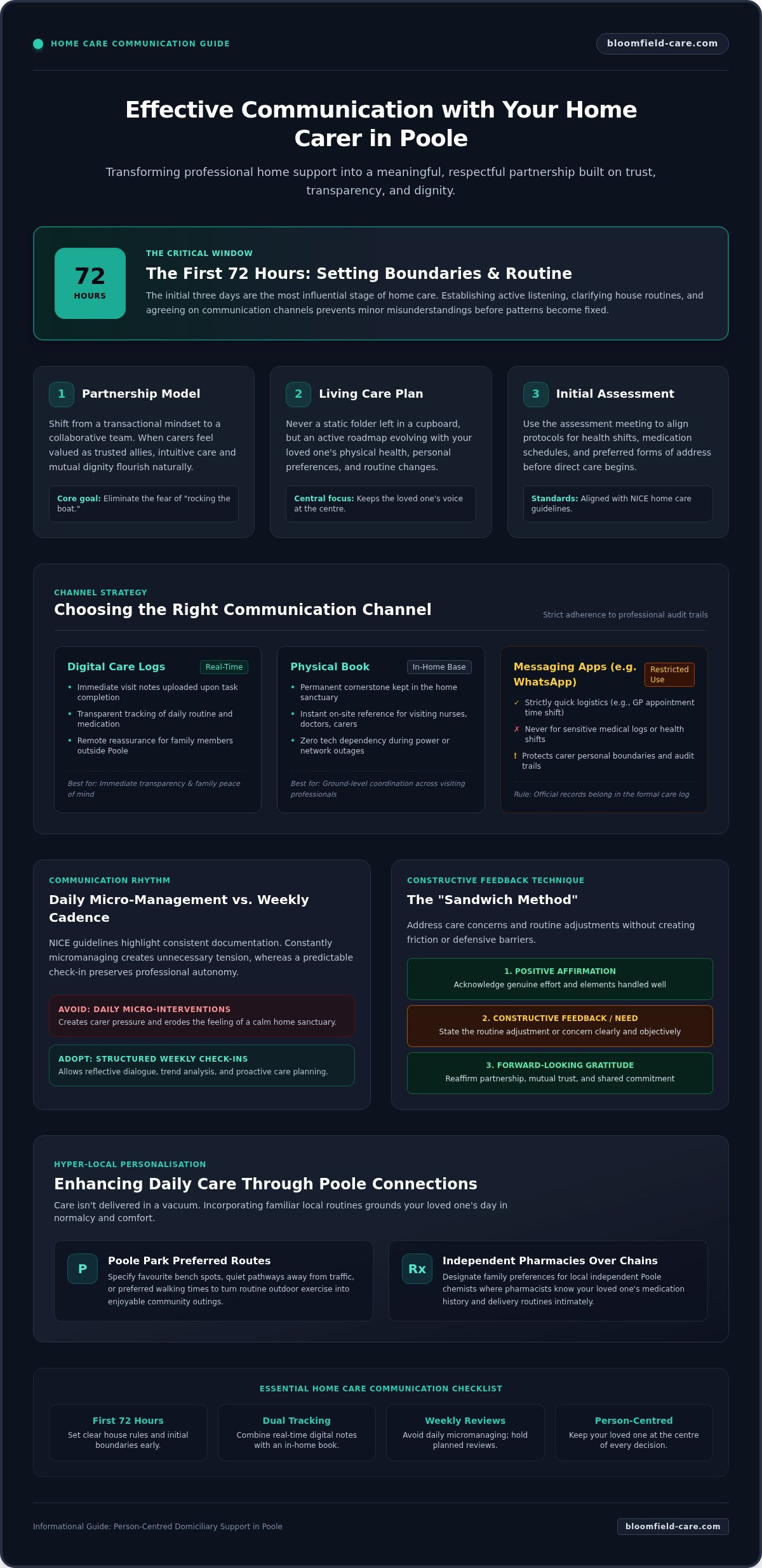
The first 72 hours of any new care arrangement are the most influential. This window allows you to set boundaries and establish a rhythm before routines become fixed. Applying active listening principles during these initial visits helps prevent small misunderstandings from growing into anxieties. By clarifying preferences early, you provide your care team with the stability they need to deliver excellence. It’s about creating a safe space where questions are encouraged and feedback is viewed as a tool for growth.
Central to this success is the Care Plan. We view this as a living document that breathes with your loved one’s changing needs. It isn’t a static file to be tucked away in a cupboard; it’s a roadmap for consistent care quality. Crucially, your loved one should remain at the heart of every conversation. Involving them directly in the dialogue preserves their autonomy and ensures their voice isn’t lost in the logistics of daily support. Even when communication is challenging, maintaining their presence in decision-making is vital for their mental well-being.
Setting Expectations Early
Establishing “house rules” doesn’t have to feel patronising. It’s simply about sharing the nuances of your home, from how the kettle works to where the garden waste bin is kept. Be clear about non-negotiables, particularly regarding medication timings or specific personal care routines. Even small details, like whether your parent prefers to be called by their first name or a more formal title, contribute to a person-centred atmosphere. Clear expectations prevent the “out of the loop” feeling that often causes family stress.
The Role of the Initial Care Assessment
At Bloomfield Care, we use the home care assessment as a vital bridge for communication. This is your opportunity to ask questions and align expectations from day one. You might ask how the team handles sudden changes in health or what the protocol is for sharing daily updates. When everyone starts on the same page, the path toward a harmonious household becomes much clearer. Truly mastering how to communicate effectively with your home carer in Poole begins with the honesty and transparency of this very first meeting.
Practical Tools for Daily Communication in Poole
Maintaining a steady flow of information is the key to a harmonious household. When considering how to communicate effectively with your home carer in Poole, you’ll likely choose between digital portals and traditional paper-based logs. Digital systems offer real-time peace of mind, allowing you to see visit notes the moment they’re uploaded. However, a physical “Communication Book” remains a cornerstone of the home sanctuary, providing an immediate reference for anyone stepping into the residence. Both tools have their place, but the goal is always transparency and safety.
Following NICE home care guidelines, consistent documentation ensures that care remains person-centred and reliable. These standards emphasize the importance of routine feedback, which is why we recommend scheduling structured weekly check-ins. Daily micro-management can unintentionally create a sense of pressure, whereas a dedicated weekly chat allows for reflective conversation and long-term planning. It’s about building a rhythm that respects the carer’s professional autonomy while keeping you fully informed.
While messaging apps like WhatsApp are convenient for quick logistical updates, such as a change in a GP appointment time, they shouldn’t replace formal records. Sensitive medical details or significant changes in health should always be recorded in the official log to maintain a clear audit trail. Professional boundaries protect both your family and the carer, ensuring that the focus remains on your loved one’s mental well-being and physical health. If you’re looking for a partner who prioritises these clear channels, our team at Bloomfield Care is here to support you.
Using the Communication Book Effectively
The Communication Book is more than a checklist; it’s a narrative of your loved one’s day. When reviewing entries, look for nuances in mood, appetite, and mobility rather than just “tasks completed.” You can leave “helpful hints” for the carer, such as “Dad enjoyed the garden today,” which helps build rapport. Always ensure that sensitive medical information is handled with care to remain GDPR compliant, keeping the book in a secure but accessible location within the home.
Adapting for Hourly vs Live-in Care
Communication needs shift depending on the type of support provided. For those receiving compassionate live-in care, the dialogue is naturally more immersive because the carer shares the home. This requires a high level of openness and regular “quiet time” to discuss evolving needs. In contrast, hourly care relies heavily on concise handover notes between different visiting staff. Ensuring that each carer knows exactly what happened in the previous visit is vital for maintaining continuity and a sense of stability.
Navigating Difficult Conversations and Feedback
Even in the most harmonious partnerships, you’ll eventually need to provide feedback. Understanding how to communicate effectively with your home carer in Poole involves mastering the balance between warmth and professionalism. We recommend the “Sandwich Method” to keep these conversations constructive. Start by highlighting something the carer does exceptionally well, such as their gentle approach during morning routines. Then, introduce the area for improvement, before closing with a reaffirmation of your trust in their support. This approach ensures the carer feels valued rather than criticised, which is essential for maintaining a positive environment in your home sanctuary.
It’s helpful to distinguish between a style preference and a safety concern. A style preference might be the way a cupboard is organised or the specific order of a morning stroll. In contrast, a safety concern involves medication errors, missed meals, or mobility risks. While preferences can be discussed casually during a weekly check-in, safety issues require immediate and clear dialogue. If you’re ever unsure about the level of professional support your loved one requires, reviewing our guide on Bloomfield Care Home or Care at Home can help clarify the specific service standards you should expect.
Addressing Care Concerns Gracefully
When routines slip or tasks are missed, use a simple three-step script to keep the conversation focused. First, express appreciation: “I really value how much Dad enjoys your companionship.” Second, state the observation clearly: “I noticed the afternoon medication wasn’t recorded yesterday.” Third, invite collaboration: “Is there a way we can adjust the log to make this easier for you?” This invites the carer to share their perspective, which is vital for active listening. You might discover they were prioritising a more urgent emotional need for your loved one. Be mindful that cultural or generational differences can influence how feedback is received, so keep your language direct yet consistently gentle.
The Escalation Process
If direct conversations don’t resolve the issue, it’s time to contact our Poole branch office. Speaking with a manager provides a neutral space to review the care plan and make necessary adjustments to the partnership. For broader guidance on local standards and support pathways, the BCP Council adult social care services portal offers essential resources for families in our community. Additionally, the Care Quality Commission (CQC) monitors communication and safety standards across all providers to ensure excellence. Knowing when to escalate ensures that care quality remains consistent and that your home continues to feel like a safe, familiar haven for everyone involved.
Enhancing Care Through Local Poole Connections
Integrating local knowledge into your care routine transforms a standard visit into a rich, community-connected experience. When discussing how to communicate effectively with your home carer in Poole, don’t forget to share your expertise on the local area. For instance, explaining the most accessible, level paths at Poole Park ensures your loved one can enjoy the lakeside view without physical strain. This level of detail empowers your carer to act as a local guide, enhancing the sense of sanctuary both inside and outside the house. It’s these small, thoughtful insights that make a partnership truly person-centred.
Pharmacy preferences are another vital detail to communicate early on. Whether you rely on the convenience of the Boots in the Dolphin Centre or prefer the familiar face at a local independent pharmacy, being specific prevents delays in medication delivery. It’s also beneficial to keep local GP surgeries in the communication loop. By authorising your carer to speak with the surgery regarding routine queries, you create a seamless triangle of support between the family, the care team, and healthcare professionals. Using local events, such as coffee mornings at the church or seasonal festivals at Poole Quay, can also spark wonderful conversation and provide meaningful companionship.
Poole Resources for Carers and Families
Providing your carer with a tailored list of Dorset-specific emergency contacts offers profound reassurance for everyone involved. This list should include more than just medical numbers; include local community transport options like Dial-a-Ride Poole to help your loved one maintain their independence. If your primary care routine needs a temporary adjustment, connecting with our network for respite care in Dorset ensures that high-quality support continues without interruption. This proactive approach keeps the household running smoothly and preserves the mental well-being of the whole family.
Community Engagement and Social Wellbeing
Social well-being is often just as important as physical health for maintaining a high quality of life. Encourage your carer to facilitate visits to Poole’s local libraries or social clubs to maintain vital community ties. You might even share a “Social Prescription” with them; this is a simple plan outlining specific activities that bring your loved one joy. This could include mapping out landmarks that hold personal significance, such as a favourite bench at Sandbanks or a specific shop in Old Poole Town. If you’re ready to see how local expertise can enhance your family’s life, contact Bloomfield Care today to discuss our personalised domiciliary and companionship services.
How Bloomfield Care Facilitates Seamless Dialogue
At Bloomfield Care, we believe that the best support is built on a foundation of listening. Our commitment to person-centred care planning ensures that every conversation begins with your loved one’s unique story. Understanding how to communicate effectively with your home carer in Poole becomes much simpler when the framework for dialogue is already woven into the care plan itself. We don’t just provide a service; we create a support system that bridges the gap between complex medical needs and the quiet comfort of a domestic sanctuary.
Our open-door policy means that families in Poole and the surrounding Dorset areas are always heard. Whether you have a small suggestion or a significant update, our local management team is here to listen and act. We invest heavily in continuous training for our carers, focusing on the nuances of empathy and active listening. This ensures that every member of our team has the tools to understand not just what is being said, but the feelings behind the words. It’s about maintaining a rhythmic steadiness in your home, providing stability through every season of life.
The Bloomfield Difference in Poole
Our local management team plays a vital role in mediating the relationship between families and carers. We conduct regular quality assurance visits to ensure that communication remains clear and that your household environment stays harmonious. These visits aren’t just about compliance; they’re about checking in on the human connection. For families navigating the complexities of cognitive decline, we use specialised techniques to communicate through various dementia stages. This expertise helps alleviate the anxiety of feeling out of the loop as needs become more intricate.
Next Steps for Your Family
If you feel that your current communication rhythm could be improved, we invite you to review your care plan with a Bloomfield specialist. You can request a dedicated Communication Review at any time if you feel routines are slipping or instructions aren’t being followed as you’d like. This proactive approach ensures that minor misunderstandings never grow into major concerns. We are here to walk beside you, providing the professional safety and domestic warmth your family deserves to thrive in the comfort of home. You are not alone in this journey.
Strengthening Your Partnership at Home
Building a truly supportive relationship with a professional carer is a journey rooted in mutual respect and clear dialogue. We’ve explored how the first 72 hours set the tone for success and why tools like the Communication Book are vital for transparency. By integrating local Poole knowledge and using constructive feedback methods, you can ensure your loved one receives care that is both safe and deeply personal. Mastering how to communicate effectively with your home carer in Poole transforms a standard care visit into a meaningful partnership that honours your family’s unique needs.
As a CQC Registered provider with expert dementia support, our locally managed team in Dorset is dedicated to maintaining the sanctuary of your home environment. We believe that open communication is the heartbeat of quality care, and we’re here to help you navigate every step with confidence and grace. You don’t have to manage these transitions in isolation.
Ready to build a better support network for your loved one? Book a Free Care Assessment with our Poole Team to begin your journey toward a more harmonious household. You’re never alone in this process; help is always just a conversation away.
Frequently Asked Questions
How often should I meet with my home carer to discuss the care plan?
You should aim for a structured weekly check-in to ensure the care plan remains a living document that evolves with your loved one’s needs. While daily updates happen via logs, a dedicated weekly conversation allows you to discuss long-term goals and mental well-being without the rush of a shift change. This steady rhythm helps you understand how to communicate effectively with your home carer in Poole, building a partnership based on trust rather than just task management.
What is the best way to leave instructions for a new visiting carer in Poole?
The most reliable method is using a physical Communication Book kept in a consistent place within the home sanctuary. For a new carer, include a “One-Page Profile” that highlights essential non-negotiables like medication timings and personal preferences, such as how they like their tea or their favourite local walking route. This ensures that even during staff rotations, the quality of care remains high and instructions are followed with precision and respect for the individual’s routine.
Should I use a digital app or a paper logbook for home care communication?
Choosing between a digital app and a paper logbook often depends on your family’s lifestyle and need for real-time updates. Digital portals are excellent for families who aren’t always present, providing instant notifications of visits and medication compliance. However, a paper logbook remains a vital tool for immediate reference by anyone inside the home. At Bloomfield Care, we often recommend a hybrid approach to ensure that communication is both modern and accessible for everyone involved in the partnership.
What do I do if I feel my carer isn’t listening to my concerns?
If you feel your voice isn’t being heard, we recommend using the “Sandwich Method” to provide gentle, constructive feedback directly to the carer. Start with a positive observation, address the concern clearly, and end with a reassuring comment. If this direct dialogue doesn’t resolve the issue, you should contact our Poole branch manager immediately. Our local team is here to mediate and ensure that the person-centered philosophy of your care plan is being fully respected and implemented.
How can I communicate effectively if my loved one has advanced dementia?
Communicating when a loved one has advanced dementia requires a focus on non-verbal cues and specialized techniques that prioritize dignity. We encourage families to create detailed “All About Me” charts that help carers understand conversational triggers and personal history. This knowledge allows the carer to provide compassionate dementia care that goes beyond physical tasks. Learning how to communicate effectively with your home carer in Poole regarding these nuances ensures your loved one feels safe, understood, and truly valued.
Is it okay to ask my home carer to help with local errands in Poole?
Yes, helping with local errands is a common part of domiciliary care and companionship services. Whether it’s a trip to the Boots in the Dolphin Centre or a visit to the local library, these outings are vital for maintaining independence. It’s important to include these tasks in the initial care assessment so they are properly scheduled. Clear communication about these preferences ensures the carer can safely facilitate community engagement while managing other essential personal care duties.
How does Bloomfield Care handle handovers between different carers?
We ensure seamless handovers by using a combination of our secure internal digital system and the physical logbook kept in your home. Because we employ our own dedicated team rather than using agency staff, our carers have a deeper understanding of each client’s history. Every visiting carer reviews the notes from the previous session before starting their tasks. This rigorous process maintains the continuity of care and ensures that no detail, however small, is ever missed during the transition.
Can I change my communication preferences once the care has started?
You can absolutely change your communication preferences at any time. We view the care plan as a living document that should adapt as your family becomes more comfortable with the routine. Whether you want to move from daily phone calls to weekly emails or change how feedback is shared, our local management team is always ready to listen. Maintaining an open-door policy allows us to refine our approach, ensuring that your home remains a sanctuary of professional, compassionate support.