

Imagine sitting in a quiet kitchen in Wimborne or Bridport, watching a loved one struggle with a simple task and realizing that life is shifting. You want them to remain in the home they love, but the fear of them losing their independence or the worry about finding a trustworthy carer can feel overwhelming. Understanding how to arrange home care in Dorset shouldn’t feel like a bureaucratic hurdle when you’re already dealing with the emotional weight of change.
It’s completely natural to feel confused by the difference between council funding and private care, or to worry about the quality of support entering your family’s private sanctuary. We believe that care should be a partnership that empowers your loved one rather than diminishes them. This guide provides a clear, stress-free roadmap to help you secure high-quality support that feels like an extension of your own family.
Key Takeaways
- Recognise the subtle physical and cognitive signals that show it’s time to introduce professional support into your loved one’s routine.
- Compare the flexibility of hourly domiciliary care with the constant reassurance of live-in care to find the right balance for your family.
- Follow a clear roadmap on how to arrange home care in Dorset, so you’re prepared for council assessments and financial planning.
- Evaluate local providers using CQC ratings and community reputation to find a team that feels like family.
- Discover how a person-centered approach protects autonomy and keeps the home a sanctuary.
Recognising the Signs: When to Arrange Home Care in Dorset
Deciding to seek support for a loved one is rarely the result of a single event. It’s usually a collection of quiet realisations. You might notice the garden in Christchurch looking a little less tended than usual, or perhaps the fridge contains out-of-date milk. These small details aren’t just household chores; they’re often the first signals that the daily rhythm of life is becoming a burden. When families begin researching how to arrange home care in Dorset, they’re often looking for a way to restore the sense of peace and order that has slowly slipped away.
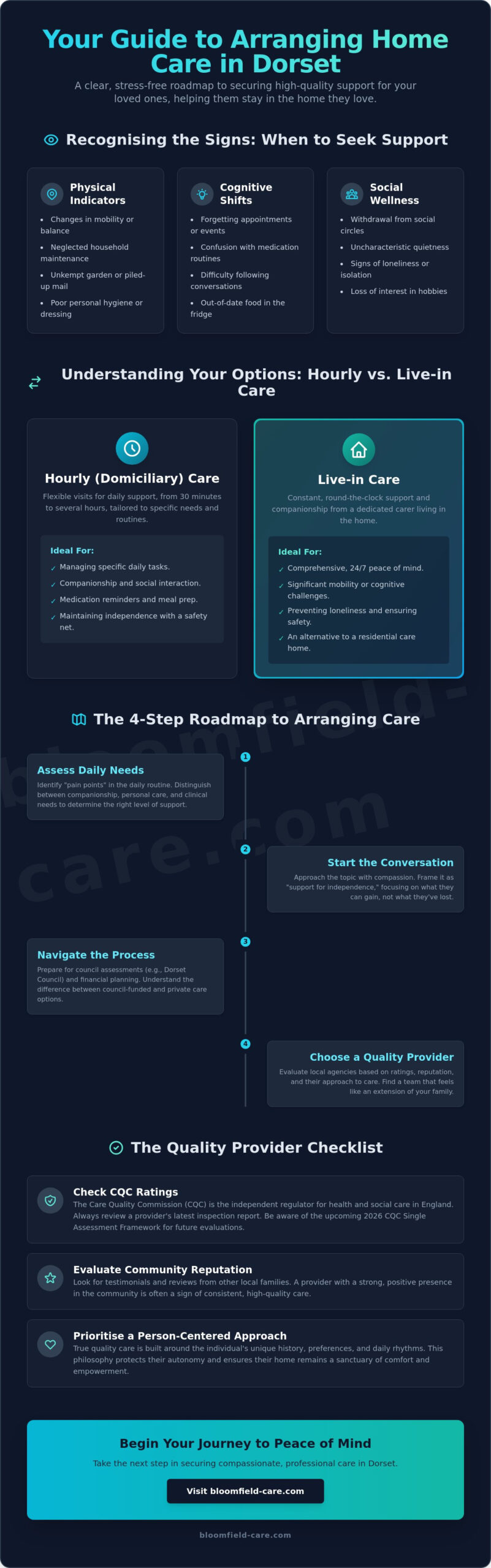
Physical indicators are frequently the most visible. You might observe a change in mobility, such as a hesitation at the top of the stairs or a new reliance on furniture for balance. Neglected household maintenance is another common sign. If a normally house-proud parent is suddenly ignoring the laundry or letting mail pile up, it’s a signal that their energy is being entirely consumed by basic survival. Cognitive shifts can be more subtle. Forgetting a lunch date in Dorchester or feeling confused by a long-standing medication routine suggests that a little extra guidance could prevent a future crisis.
Social wellness is just as vital as physical health. In rural parts of our county, isolation can creep in unnoticed. If a loved one is withdrawing from their usual social circles or seems uncharacteristically quiet, loneliness might be affecting their mental well-being. Transitioning to Home care in the United Kingdom isn’t about admitting defeat; it’s about adding a layer of safety that actually protects their independence. The goal is to keep the private residence as a sanctuary where they feel empowered, not restricted.
Starting the Conversation with Compassion
Approaching this topic requires a gentle touch to avoid causing defensiveness. Instead of focusing on what they can no longer do, frame the discussion around “support for independence.” You might say, “I want to make sure you have the energy for the things you enjoy, like your bridge club, rather than worrying about the hoovering.” Choose a relaxed time and a familiar place for this family talk. There’s no need to rush. It’s a partnership where their voice remains the most important one in the room.
Assessing Daily Living Requirements
To understand the level of assistance needed, it helps to create a simple list of “pain points” in their current routine. Does the struggle happen in the morning with dressing, or is it the evening meal that feels overwhelming? Distinguishing between companionship needs and clinical personal care is a helpful step in knowing how to arrange home care in Dorset effectively. Person-centred care is a philosophy that ensures every support plan is built entirely around the unique history, preferences, and daily rhythms of the individual. By identifying these specific needs early, you can ensure that any future care feels like a natural extension of their existing lifestyle.
Understanding Your Options: Hourly vs. Live-in Care in Dorset
Choosing between different types of assistance is a deeply personal decision that balances safety with the comfort of familiar surroundings. For many families in our county, the primary goal is to avoid the upheaval of a residential home. Staying at home allows a loved one to keep their social connections, their garden, and those precious daily rituals that define who they are. Discovering how to arrange home care in Dorset starts with identifying whether the goal is occasional assistance or a more permanent presence in the home. When you begin looking into Dorset Council’s adult social care services, you’ll find that the focus is often on helping people remain in their own residences for as long as possible.
Your home’s layout plays a practical role in this decision. Hourly care works well in any setting, but live-in care requires a spare room for the professional to stay in. This choice often comes down to the level of peace of mind your family needs. While some require just a few hours of help to keep things running smoothly, others benefit from the constant presence of a dedicated companion. The emotional benefits of remaining in a sanctuary filled with memories are significant, often leading to better mental well-being and a greater sense of autonomy.
Bespoke Domiciliary Care for Daily Support
Hourly visits, often called domiciliary care, offer a flexible way to manage daily life without a full-time presence. This model is perfect for those who are still largely independent but need a helping hand with specific tasks. A professional can visit to assist with meal preparation, medication reminders, or light household duties. It’s also an excellent way to introduce companionship into a routine, providing a friendly face for a chat or a walk along the coast. One of the greatest benefits of this approach is its ability to scale. You might start with two visits a week and gradually increase the frequency as needs evolve. If you are looking for bespoke domiciliary care in Weymouth, we focus on providing support that respects your sanctuary while ensuring your safety.
The Reassurance of Live-in Care
For individuals living with advanced dementia or complex health needs, live-in care provides a level of stability that hourly visits cannot match. Having a resident carer means there is always someone there to navigate moments of confusion or help with mobility during the night. This consistency is vital for maintaining routines, which can be incredibly grounding for those with memory loss. It also means that beloved pets can stay at home, avoiding the heartbreak of separation. When considering compassionate live-in care, families often find that the relationship between the carer and the individual becomes a source of profound comfort. Learning how to arrange home care in Dorset involves weighing these emotional benefits against practical requirements, ensuring the chosen path feels right for everyone involved. If you’re unsure which route best suits your family, speaking with a local advisor can help clarify your options.
Navigating the Assessment Process: Dorset Council and Beyond
Once you’ve recognised that support is needed, the next phase is formalising that help. Knowing how to arrange home care in Dorset often begins with a choice between the statutory route through the local authority or a private assessment. Both paths aim to identify how to best preserve a loved one’s dignity while ensuring their needs are met. This process is not just about ticking boxes; it’s about creating a foundation for a safe and fulfilling life at home.
For those looking for local authority funding, Step 2 involves a financial assessment. As of June 2026, individuals with assets over £23,250 are expected to fund their own care costs. If assets fall between £14,250 and £23,250, a “tariff income” contribution is calculated. This means testing ensures that council resources are directed to those with the greatest financial need. However, the complexity of these figures can sometimes feel overwhelming during an already emotional time, which is why many families appreciate having a clear roadmap to follow.
Dorset Council Care Needs Assessment
The first official step for many is contacting the Dorset Adult Access Team. A Dorset Council needs assessment is a structured conversation designed to understand how a person’s condition affects their daily life. During the interview, the focus remains on outcomes and safety. The assessor will distinguish between social care needs, such as help with washing or meal preparation, and primary health care needs, which might require NHS involvement. It’s a vital step in securing the right level of support within the community.
The Private Assessment Advantage
Many families choose a private assessment because of the depth and speed it offers. A private assessment can often be arranged within 24-48 hours. Agencies like Bloomfield Care use this time to look beyond basic medical requirements. We focus on matching carers to personalities and interests, ensuring that the person coming into the sanctuary of the home feels like a true companion. This approach allows for a much more nuanced understanding of a loved one’s history and preferences, which is often missed in more clinical evaluations.
The final step is creating a person-centred care plan tailored to the individual’s lifestyle. This document isn’t just a list of tasks; it’s a living agreement that respects their autonomy and daily rhythms. Whether it’s ensuring they can still attend a local gardening club or simply having their morning tea exactly how they like it, the plan prioritises their happiness. By focusing on these small but significant details, we help maintain the sense of self that makes a house a home.
How to Evaluate and Choose a Care Provider in Dorset
Choosing a partner for your loved one’s care is a significant decision that goes far beyond simple logistics. It’s about finding a team that respects the sanctuary of the home and values the individual’s lifestyle. When you’re researching how to arrange home care in Dorset, the search often begins with the Care Quality Commission (CQC). In 2026, the CQC utilizes a Single Assessment Framework to provide a continuous, up-to-date view of quality. You should always look for a ‘Good’ or ‘Outstanding’ rating, but remember that these scores are only one part of the story.
Local reputation carries immense weight in close-knit communities like Christchurch and Poole. Often, the most profound insights come from a neighbor’s recommendation or a conversation at a local community hub. Trust is built on consistency. You’ll want to know if your loved one will see the same friendly face every day, as continuity is the foundation of any meaningful relationship. We believe that seeing the same person fosters a sense of stability and safety that’s essential for emotional well-being.
It’s also vital to assess the training and vetting process for individual carers. A professional provider won’t just look at medical certifications; they’ll look for empathy, patience, and integrity. By understanding how a provider supports their staff, you gain a clearer picture of the excellence they bring into your home. If you’re ready to find a team that prioritizes human connection, you can contact our friendly Dorset team to discuss your specific needs.
Key Questions to Ask During a Consultation
A consultation is your opportunity to see if an agency’s values align with your own. Don’t hesitate to ask how they handle emergencies or overnight needs, as this ensures your loved one is never left without support. Inquire about their process for matching a carer to your loved one’s personality. A good match makes the difference between a clinical visit and a warm companionship. Finally, ask how they involve your family in ongoing care plan reviews. A partnership-driven approach ensures that as needs change, the support remains perfectly tailored.
Understanding the True Cost of Care
Financial clarity provides peace of mind during a time that can feel uncertain. Look for transparent pricing that clearly distinguishes between hourly rates for domiciliary care and fixed weekly fees for live-in care. It’s important to avoid hidden costs, such as administrative setup fees or travel time charges, which can complicate your budgeting. For a detailed breakdown of what to expect, you can read our guide on the cost of home care in Oxfordshire and Dorset. Having this information upfront allows you to focus on what truly matters: the comfort and happiness of your loved one.
Beginning Your Journey with Bloomfield Care in Dorset
At Bloomfield Care, we understand that inviting someone into your loved one’s home is an act of profound trust. It is more than just a logistical arrangement; it is the beginning of a relationship built on mutual respect and genuine kindness. Our commitment is simple: we treat every individual as if they were a member of our own family. When you are researching how to arrange home care in Dorset, you aren’t just looking for a checklist of tasks. You’re looking for a team that values the sanctity of the private residence and the unique history of the person living within it.
The Bloomfield difference lies in our person-centred philosophy. We believe that professional support should empower self-sufficiency rather than replace it. Our goal is to enhance the quality of life, helping your loved one maintain their autonomy while providing the safety net they need to feel secure. We support families across Weymouth, Poole, and the wider Dorset area, ensuring that high-quality assistance is accessible right where it’s needed most. When you reach out to our friendly team, you’ll find advisors who listen more than they speak, providing the stability and calm you need during this transition.
Our Presence in Weymouth and Christchurch
Having a local partner makes a world of difference when navigating the complexities of the healthcare system. Our teams in Weymouth and Christchurch possess deep knowledge of Dorset’s community resources and healthcare networks. This local insight allows us to provide a seamless experience, connecting your family with the right support at the right time. We pride ourselves on an unhurried and supportive rhythm that mirrors the patient nature of the care we provide. If you are still weighing up your options, our guide on Bloomfield Care Home or Care at Home? can help you finalise the decision that best suits your family’s lifestyle.
Book Your Free Care Needs Assessment
Taking the first step doesn’t have to be daunting. We offer a no-obligation visit to discuss your family’s unique situation in the comfort of your own home. This initial meeting is a relaxed opportunity for us to get to know your loved one’s personality, preferences, and daily routines. We cover everything from medical requirements to the small details that make a house a home, ensuring a perfect fit between the individual and their carer. Understanding how to arrange home care in Dorset is a journey of partnership, and we are here to guide you through every sensitive topic with grace and clarity. You don’t have to navigate this transition alone; we are here to provide the expertise and heart your family deserves.
Embracing a Brighter Future at Home
Securing the right support for a loved one is a journey rooted in love and the desire to protect their independence. By recognizing the subtle signs that help is needed and understanding the choice between flexible hourly visits and dedicated live-in care, you’ve already laid a strong foundation. Learning how to arrange home care in Dorset shouldn’t be a source of stress; it’s a bridge to a more stable and fulfilling lifestyle within the sanctuary of the home.
As a CQC regulated provider, we pride ourselves on delivering specialist dementia and Alzheimer’s support through our team of highly trained local Dorset carers. We’re here to listen, to guide, and to ensure that every step you take is met with professional excellence and genuine warmth. You don’t have to carry the weight of these decisions alone.
Arrange a Compassionate Care Assessment in Dorset Today
We look forward to helping your family navigate this transition with the grace and clarity you deserve. Your loved one’s comfort remains our greatest priority.
Frequently Asked Questions
How do I apply for a care assessment with Dorset Council?
You can apply by contacting the Adult Access Team at Dorset Council through their online portal or by calling their dedicated helpline. This statutory assessment identifies specific social care needs and determines if your loved one is eligible for local authority support. It’s a helpful first step for anyone beginning the journey of finding assistance, providing clarity on what help is available within the community.
Can I arrange home care in Dorset privately without a council assessment?
Yes, many families choose to contact private providers directly to avoid long waiting lists. When you’re looking into how to arrange home care in Dorset, a private agency can often conduct a personalized assessment within a few days. This allows you to maintain control over the selection process and ensures a swifter start to the support, often bypassing the administrative delays of the public system.
How much does hourly domiciliary care cost in Dorset?
The investment for care depends on the complexity of the requirements and the number of hours requested each week. We provide clear and transparent pricing that reflects the high level of professional support and companionship our carers offer. We suggest discussing your unique situation during a free consultation to get an accurate understanding of the investment, as this ensures the plan is perfectly tailored to your budget and needs.
What is the difference between home care and a care home in Weymouth?
Home care provides professional assistance within your loved one’s private residence, whereas a care home requires them to move into a communal facility. Staying at home in Weymouth allows your family member to remain in their sanctuary, surrounded by familiar memories and their beloved pets. It focuses on enhancing life quality and maintaining independence rather than just managing daily routines in a clinical setting.
How quickly can home care be started in an emergency?
In urgent situations, support can often be arranged very quickly following an initial meeting. Private agencies typically have the flexibility to perform an assessment and match a suitable carer within 24 to 48 hours. This rapid response provides immediate peace of mind for families facing sudden changes in health or mobility, ensuring that safety is never compromised during a difficult or unexpected transition.
Will my loved one have the same carer for every visit?
Continuity is one of our most important values because we know how vital a familiar face is for emotional stability. We aim to ensure the same small team of carers visits your loved one regularly. This consistency allows for a deep bond of trust and friendship to grow over time, which is essential for providing a sense of stability and reassurance within the home environment.
Is there financial support available for home care in Dorset?
Financial help is available through Dorset Council if your loved one’s assets are below £23,250, as verified in June 2026. You might also be eligible for non-means-tested benefits like Attendance Allowance. The council ensures a Minimum Income Guarantee, which for a single person over pension age is £241.45 per week, ensuring that individuals are left with a specific amount of money to live on.
What happens if my loved one’s needs increase over time?
Care plans are flexible, living documents designed to grow alongside your loved one’s changing requirements. We conduct regular reviews to ensure the support remains effective, whether that means increasing hourly visits or transitioning to more comprehensive live-in care. This partnership-driven approach ensures they always have the right level of assistance to stay safe and comfortable, no matter how their health or mobility evolves.