

When you’re arranging support for someone you love, hourly home care costs in Dorset can be hard to estimate. One important distinction is that a carer’s hourly pay is not the fee a family pays for care. It’s understandable to want a clear figure before making decisions, but the cost depends on the support the person needs and how visits are arranged.
A useful starting point is to think about the person’s day. Do they need help with one particular routine, or support with several tasks? When would a visit be most useful, and what would they like to keep doing independently? The answers help shape a care plan around their life, rather than relying on a single hourly figure.
This guide explains what can influence home care costs, how carer pay differs from a client’s fee, and how to prepare for a free assessment. Whether you’re considering care in Weymouth, Dorchester, Ferndown, Wimborne, Christchurch, Bournemouth or Poole, the aim is to make the next step clearer while keeping your loved one’s comfort, dignity and independence in view.
Key Takeaways
- There isn’t one fee for hourly home care costs in Dorset. The support needed, daily routine and visit pattern all help shape an individual plan.
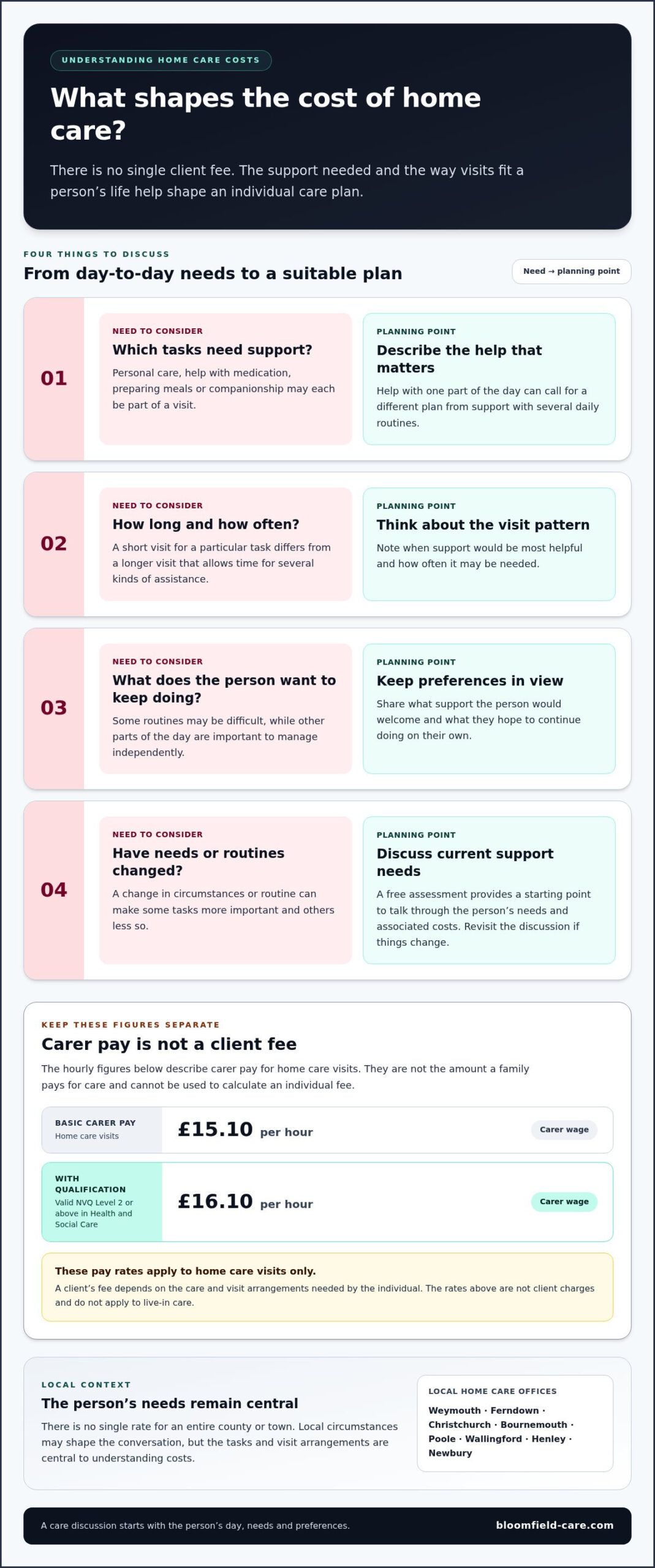
- Bloomfield Care’s £15.10 basic hourly rate, or £16.10 for carers with a valid NVQ Level 2 or above in Health and Social Care, is carer pay for home care visits, not a client fee.
- Home care visits can provide help with agreed tasks at planned times. Live-in care is a different arrangement for people who need broader support at home.
- Make a note of useful tasks, preferred routines and concerns before discussing support. This can help make a free assessment more focused.
- Bloomfield Care is CQC-registered and rated Good overall by the CQC. Its local home care offices include Weymouth, Ferndown, Christchurch, Bournemouth, Poole, Wallingford, Henley and Newbury.
What affects hourly home care costs in Dorset?
There isn’t one client fee for home care visits because people need different kinds and levels of support. To understand the likely cost, first consider what help is needed at home, then think about how visits could fit around the person’s routine. An assessment provides an opportunity to discuss these details and the costs associated with the care needed.
Home care costs depend on the tasks, visit duration and pattern of support that suit the individual. A carer’s pay is separate from the fee a client pays. For an overview of the kinds of help that can be provided at home, see Home care.
Which parts of a care plan can shape the fee?
The tasks included in a visit are one part of the picture. Support might involve personal care, assistance with medication, preparing meals or companionship. Someone who wants help with one part of the day may need a different plan from someone who needs support with several daily routines. Be specific about the tasks that would make life at home more comfortable and manageable.
Visit duration and frequency are also relevant. A short visit for a particular task is different from a longer visit that allows time for several kinds of assistance. Think about when support would be most helpful, how often it may be needed and whether there are routines the person wants to keep. These details give the assessment a practical starting point.
Care needs can change. A person may need more support after a change in their circumstances, or their routine may shift in another way. Let the care team know what has changed and which tasks are now more or less important. Reviewing the person’s current needs helps keep the discussion focused on suitable support, rather than a figure based on an outdated routine.
Why does local Dorset context matter?
Bloomfield Care provides home care visits through local offices in Weymouth, Ferndown, Christchurch and Bournemouth, Poole, Wallingford, Henley and Newbury. Families considering care in Dorset, including Weymouth, Dorchester, Ferndown, Wimborne, Christchurch, Bournemouth and Poole, can discuss the person’s circumstances and the support they need at home. Families in Oxford, Abingdon, Wallingford, Henley-on-Thames, Newbury and Thatcham can also explore home care options in their area.
Local circumstances may shape the conversation, but there isn’t one rate for an entire county or town. The tasks and visit arrangements remain central to understanding client costs. A free assessment helps establish what support is needed and discuss the associated costs, based on the individual rather than a general hourly figure.
You don’t need to have every detail decided before talking about care. It can help to describe which parts of the day feel difficult, what support the person would welcome and what they hope to continue doing independently. These practical details help make the conversation more useful and keep the person’s preferences at the centre.
The assessment gives the family and care team a starting point for discussing a suitable plan. If needs or routines change, raise this so the support can be discussed in light of the person’s current situation. The aim is care that fits the individual and their life at home.
Does the £15.10 hourly carer wage equal the cost of home care?
No. £15.10 per hour is the basic carer pay rate for home care visits, not the charge a client pays. Carers with a valid NVQ Level 2 or above in Health and Social Care receive £16.10 per hour. These rates apply to home care visits only, not live-in care.
A carer’s pay is a wage, while a client’s fee depends on the care and visit arrangements needed by that person. Keeping these figures separate helps families avoid mistaking an employment pay rate for the amount they may pay for care.
What does the £15.10 home-visit pay figure mean?
It is the basic hourly pay for a carer providing home care visits. The higher rate applies to carers with a valid NVQ Level 2 or above in Health and Social Care. Neither figure is a client charge, and neither can be used on its own to calculate the cost of someone’s care.
When you come across an hourly figure, check what it refers to before using it in a family budget. A wage describes a carer’s pay. It does not explain what support a person needs, how often visits may be arranged or what their individual fee will be. The distinction matters whether you’re planning care for a relative or trying to understand figures you’ve seen elsewhere.
Why are carer pay and client fees different?
The figures answer different questions. Pay describes what a carer earns for home care visits. A client’s fee relates to the support arranged for an individual, so it depends on their circumstances and care needs. A wage cannot be treated as the client charge or used to work out a personal estimate.
Wider market information can offer context about the homecare sector, but it won’t provide a quote for one family’s arrangements. LaingBuisson’s UK Homecare Market Report provides background on the UK homecare and supported living market. An individual care fee still depends on the support needed.
For a clearer understanding of costs, talk through the person’s day-to-day needs, the tasks they would like help with and the visit pattern that may suit them. Bloomfield Care offers a free assessment to discuss the support needed and its associated costs. To arrange a conversation, contact Bloomfield Care.
Are hourly home care visits or live-in care a better fit?
The right arrangement depends on how support fits into the person’s day. Home care visits provide help with agreed tasks at planned times. Live-in care is a different arrangement, with a carer living in the person’s home and providing broader support. Consider the tasks involved, when help is needed and how much support would feel reassuring while preserving the person’s independence.
| Care arrangement | Support pattern | May suit someone who |
|---|---|---|
| Home care visits | Help with agreed tasks at planned times during the day. | Has specific routines or tasks where support would be helpful. |
| Live-in care | A carer lives in the person’s home and provides a broader form of support. | Needs more continuous assistance at home, shaped around their circumstances. |
When might scheduled home care visits suit someone?
Visits can be arranged around tasks such as personal care, help with meals, medication assistance or companionship. Someone who manages much of the day independently might value support with a particular part of their routine, such as getting ready or preparing a meal. Planned visits can provide help while leaving room for the person to continue familiar activities and make choices about daily life.
Think about how the tasks fit together. When is help most useful? What would the person prefer to do for themselves? Are there parts of the day when support would make things easier? Having answers to these questions can make a conversation about hourly home care costs in Dorset more focused, because the plan can be discussed in relation to the support actually needed.
When might families explore live-in care?
Live-in care may suit someone who needs broader support at home than visits focused on particular tasks can provide. Whether it is a good fit depends on the person’s needs, preferences and household circumstances. Discussing a typical day can help clarify what support would feel comfortable and useful.
Families considering this option can also read Bloomfield Care’s guide to compassionate live-in care in Oxfordshire, Dorset and West Berkshire. Live-in care is available across the south of England. An assessment can help explore how the person’s needs and preferred routines might be supported at home, without assuming that the same arrangement suits every household.
It can help to discuss practical details as a family: which tasks matter most, what the person wants to continue doing independently and where support would bring peace of mind. These questions can guide a person-centred conversation about home care visits or live-in care. The aim is not simply to choose between two labels, but to find a pattern of support that respects the person’s comfort, dignity and familiar way of life.
How can a Dorset family understand the support and cost needed?
Start with the person’s everyday life rather than trying to guess a weekly total. A clear picture of their routine can show where support would make a difference and what kind of visits might fit. You don’t need to have every answer before beginning the conversation.
A simple sequence can help you prepare:
- Describe daily routines. Note what a typical day looks like, including tasks the person is comfortable managing independently.
- Identify support needs. Write down where a helping hand would be welcome, along with any concerns or changes in routine.
- Discuss visit patterns. Consider when support may be most useful and how it could fit around preferred activities and habits.
- Request an assessment. Talk through these details so the support needed and its associated costs can be discussed in relation to the person.
What should families note before an assessment?
Keep notes simple and practical. List the tasks where support may help, such as personal care, preparing meals, medication assistance or companionship. Add routines the person wants to preserve, such as having breakfast at a familiar time or continuing an activity they value. These details help make the discussion specific to their life.
Include the older person’s preferences and questions wherever possible. They may have views about what feels comfortable, what they want to keep doing themselves or what is causing concern. Listening to them helps keep the conversation focused on their dignity and choices, as well as the family’s worries.
What happens when support needs are discussed?
The conversation focuses on the individual’s circumstances and the help they would like at home. Bloomfield Care’s free assessment gives families a chance to discuss those needs and the associated costs. There’s no need to arrive with a finished care plan. Your notes can provide a helpful starting point, and costs depend on the care needed.
Families looking for wider context can also refer to the existing 2026 guide to the cost of home care in Oxfordshire and Dorset. For a personal discussion, arrange a free assessment with Bloomfield Care using the contact form. A conversation can help turn broad questions about hourly home care costs in Dorset into a clearer understanding of the support that may suit your family.
How Bloomfield Care supports Dorset home care families
Choosing support for someone you love is a personal decision. Bloomfield Care provides person-centred home care visits, shaped around the individual, their home and the routines that matter to them. The aim is to understand what would make everyday life safer, more comfortable or less difficult, while helping the person retain choice and independence.
Care should fit into someone’s life, not make them feel that familiar routines have to disappear. Tell the care team what your loved one values, what they would like help with and what they prefer to manage themselves. These details can guide a discussion about support that suits the person.
What kinds of support can home visits include?
Support may include personal care, assistance with medication, help preparing meals, companionship and dementia care. The mix depends on the person’s needs. A visit might focus on practical help, a friendly conversation or a combination of support. The care plan should reflect what would help the person feel comfortable and respected at home.
For someone living with dementia, support should take account of their individual needs and preferences. Families can explain what feels reassuring and what the person prefers to do independently. Sharing these details helps keep the discussion centred on the individual.
- Personal care: help with everyday personal routines, offered with dignity.
- Medication assistance: support with medication as agreed in the care plan.
- Meals and companionship: help with meal preparation and friendly company.
- Dementia care: individual support that takes account of the person’s needs and preferences.
What is a reassuring next step for Dorset families?
Begin with a conversation about the person’s routine, priorities and the support they would welcome. Explain what has become difficult, what they hope to keep doing independently and what would help them feel at ease. Include your loved one’s wishes and questions wherever possible.
A free assessment helps establish the support needed and its associated costs. You don’t need to have every detail worked out beforehand. A few notes about daily life can give the discussion a useful starting point.
Call your local Bloomfield Care office or use the contact form to arrange a free assessment and discuss support for your family.
Take the next step at your own pace
Deciding what support may help doesn’t mean you need to settle every detail straight away. A first conversation gives your family space to explain what matters most, discuss possible options and consider the next step together. Include your loved one wherever possible, so their wishes are part of the discussion.
Thinking about hourly home care costs in Dorset can feel daunting, but you don’t have to work through the questions alone. A discussion about individual needs can make the way forward more manageable, without rushing an important decision.
Arrange a free home care assessment to talk through your family’s circumstances and understand the support needed and its associated costs. Call your local Bloomfield Care office or use the contact form to take the next step.
Frequently Asked Questions
How much does hourly home care cost in Dorset?
There isn’t one fee that applies to every family. Hourly home care costs in Dorset depend on the support a person needs and how visits are arranged. Someone seeking help with one part of their routine may need a different plan from someone who needs support with several daily tasks. A free assessment can help your family understand the care needed and its associated costs.
Is £15.10 an hour the price families pay for home care?
No. £15.10 per hour is the basic carer pay rate for home care visits, not the charge to a client. The rate is £16.10 per hour for a carer with a valid NVQ Level 2 or above in Health and Social Care. These figures apply to home visits only. They aren’t a way to calculate a family’s care fee, which depends on the support needed.
What can change the cost of home care visits?
The tasks included, how long visits need to be and how often support is arranged all help shape an individual plan. Someone may need help at a particular point in their day or assistance with several parts of a routine. If circumstances change, share this during an assessment so the support can be discussed in light of the person’s current needs.
Can home care visits be arranged in Weymouth or Bournemouth?
Yes. Bloomfield Care has local home care offices serving Weymouth and Bournemouth. Families in either area can discuss support for an older person at home. It can help to explain where the person lives, which parts of their routine they want help with and what they would prefer to continue doing independently. This gives the discussion a practical starting point.
How do hourly home care visits differ from live-in care?
Home care visits provide support at agreed times for particular tasks. With live-in care, a carer lives in the person’s home and provides broader support. Visits may suit someone who mainly wants help with defined parts of the day. Families considering live-in care can discuss the person’s needs, preferences and household circumstances to explore which arrangement may be a better fit.
Does Bloomfield Care provide a free assessment for home care?
Yes. Families can request a free assessment to discuss the person’s needs and the costs associated with their care. Before the conversation, consider what help would make daily life easier and which routines the person wants to maintain. You don’t need a complete plan. Sharing your questions and the support you have in mind can help make the discussion more useful.
Is Bloomfield Care registered with the CQC?
Yes. Bloomfield Care Ltd is registered with the Care Quality Commission, commonly known as the CQC, and is rated Good overall by the CQC. The CQC is the independent regulator of health and social care in England. To discuss home care for someone in your family, call your local Bloomfield Care office or use the contact form.