
It’s a quiet Tuesday morning in Weymouth when the phone rings, and suddenly, the world feels very fragile because your elderly parent has suffered a fall. In that heartbeat, panic often takes over, followed by a deep, aching worry about whether they can still live safely in the home they love. You aren’t alone in this fear; many families across Dorset find themselves lost in the complex web of healthcare pathways while trying to protect a loved one’s dignity. Finding the right home care after a fall in Weymouth is about more than just physical recovery. It’s about restoring a sense of security and ensuring the private residence remains a sanctuary rather than a place of risk.
We understand the weight of these moments, and we’re here to help you move forward with clarity and heart. This guide offers a compassionate, step-by-step plan to manage the immediate aftermath of a tumble, from accessing local medical resources to preventing future incidents. You’ll learn how to navigate the Weymouth Community Hospital Urgent Treatment Centre, understand financial support like the Attendance Allowance, and implement a long-term strategy that prioritizes your parent’s autonomy. We’ll walk through the essential local services and practical home adjustments that turn fear into a sustainable plan for wellness and independence.
Key Takeaways
- Learn the vital first steps to take when a parent falls, focusing on immediate reassurance and assessing when it’s safe to move them.
- Navigate local healthcare pathways with confidence, including the Weymouth Community Hospital Minor Injuries Unit and Dorset County Hospital.
- Identify the root causes of balance issues, from medication side effects to vision changes, to address the source of the problem.
- Discover how professional home care after a fall in Weymouth provides companionship and support that reduces the risk of future incidents.
- Turn your parent’s home back into a sanctuary by conducting a room-by-room “hazard hunt” and installing practical safety aids.
Immediate Steps After a Fall: A Safety Checklist for Weymouth Families
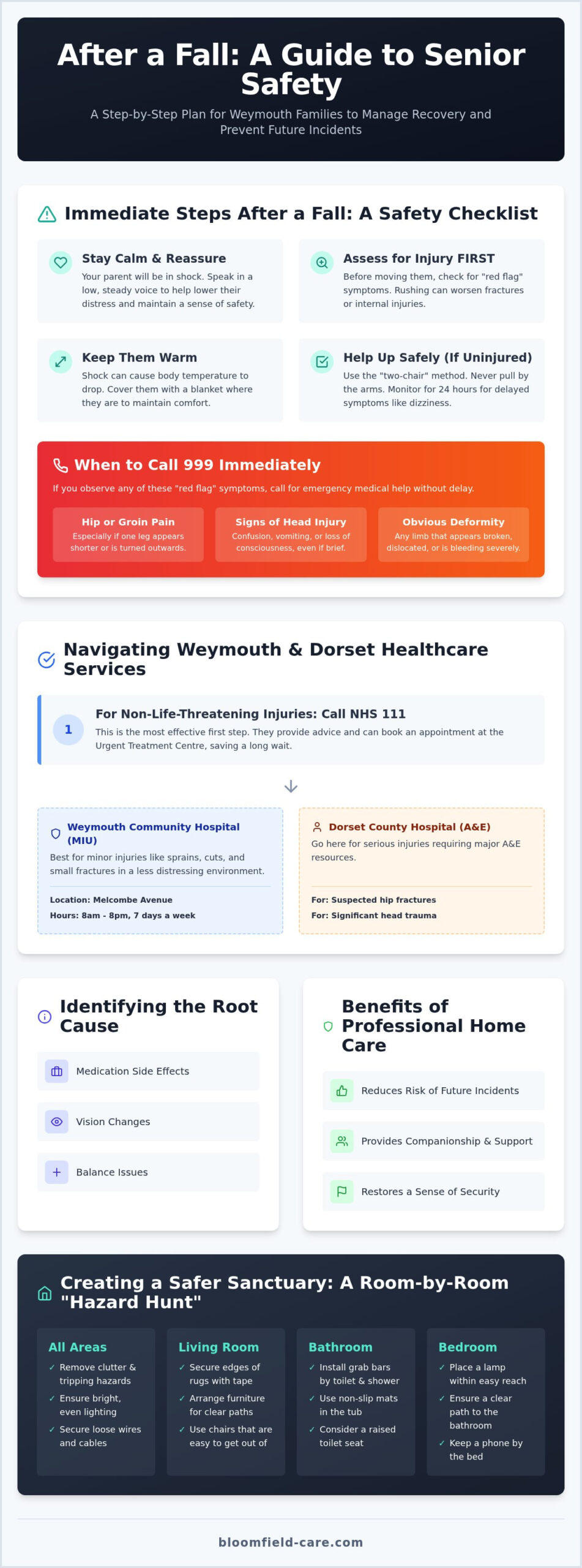
Finding a parent on the floor is a distressing experience that can cloud your judgment with adrenaline and fear. Your first and most vital task is to remain calm. Your parent will likely be in shock, so offer gentle verbal reassurance immediately. Speak in a low, steady voice and maintain eye contact to help lower their distress. Before you attempt to help them up, you must assess the situation thoroughly. Rushing to move someone can often worsen an underlying injury, especially when understanding the risks of falls in older adults reveals how common fractures and internal injuries are in these scenarios.
Check for “red flag” symptoms such as severe bleeding, obvious limb deformities, or signs of a head injury. If they aren’t in immediate danger, keep them warm with a blanket where they are while you assess their pain levels. Shock can cause body temperatures to drop quickly, so maintaining their comfort is a priority while you decide on the next step. This initial safety check is the foundation of recovery. Many families find that arranging professional home care after a fall in Weymouth ensures these critical assessments happen correctly every time, providing a layer of safety that protects the home sanctuary.
When to Call 999 Immediately
Certain symptoms require urgent medical intervention from Dorset emergency services. If your parent is complaining of severe pain in their hip or groin, look for physical clues like one leg appearing shorter than the other or turning outwards. These are classic signs of a hip fracture. Head trauma is equally serious; watch for any confusion, vomiting, or a brief loss of consciousness. When you call 999, provide clear location details. Mentioning specific landmarks in Weymouth or using a service like What3Words can help crews reach your home more quickly during peak traffic times on the A354 or near the seafront.
Helping Them Up Safely (If Uninjured)
If they aren’t in significant pain and feel able to move, use the “two-chair” method to help them up without strain. Place one sturdy chair near their head and another by their feet. Have them roll onto their side and move into a kneeling position using the first chair for support. They can then slowly bring their strongest leg forward to stand up and sit in the second chair. You should never pull a parent up by their arms or under their armpits, as this can cause shoulder dislocations or painful skin tears. Even if they seem fine, monitor them for 24 hours. Delayed symptoms like increased dizziness or confusion can signal a slow-developing issue that needs professional attention.
Navigating Local Support: Weymouth Hospitals and Dorset Healthcare Services
Once the initial shock of a fall has passed, your focus will naturally shift toward professional medical assessment. In Weymouth, we’re fortunate to have a structured healthcare network designed to support seniors through these exact moments. For non-life-threatening injuries, calling NHS 111 is the most effective first step. They can provide immediate advice and, if necessary, book an appointment at the local Urgent Treatment Centre. This ensures your parent doesn’t have to endure a long, exhausting wait in a crowded waiting room. Establishing this medical connection is a vital part of planning home care after a fall in Weymouth, as it helps identify any immediate health needs that require monitoring.
Weymouth Community Hospital Minor Injuries Unit (MIU)
The Urgent Treatment Centre at Weymouth Community Hospital, located on Melcombe Avenue, is a cornerstone of local care. It’s open from 8 am to 8 pm, seven days a week, including bank holidays. This unit is perfectly equipped to handle injuries like sprains, minor cuts, and small fractures that don’t require the full resources of a major A&E. For many elderly residents, the quieter, more familiar environment of the Melcombe Avenue site is much less distressing than a trip to a larger hospital. Navigating these local options is a key step in building a robust plan for home care after a fall in Weymouth, ensuring your parent feels supported by their own community.
If the situation is more serious, such as a suspected hip fracture or significant head trauma, Dorset County Hospital in Dorchester serves as the primary A&E for the region. Regardless of where they receive treatment, you should always follow up with their Weymouth-based GP for a post-fall “frailty review.” This assessment follows UK government guidance on fall prevention to check for underlying issues like medication interactions or blood pressure changes. It’s about looking beyond the physical injury to protect your parent’s long-term health and wellbeing.
The Role of the Dorset Fall Prevention Service
Your GP can also facilitate a referral to the Dorset Fall Prevention Service. This specialist team provides a comprehensive balance and gait analysis to understand why the fall happened in the first place. They often suggest local community programs, such as the “Better Balance” classes held across Weymouth, which focus on gentle strength and stability exercises. If managing these appointments feels overwhelming during the recovery period, our team at Bloomfield Care can provide the companionship and practical assistance needed to ensure your parent stays connected to these essential services while remaining in the comfort of their own home.
Identifying the Root Cause: Why Falls Happen to Seniors at Home
A fall is often the first sign that something in your parent’s health or environment has shifted. While it’s tempting to blame a loose rug, the root cause is frequently a complex mix of factors. Understanding these triggers is essential when organizing home care after a fall in Weymouth. It allows us to address the “why” rather than just the “where.” Many seniors experience “silent” health issues like Urinary Tract Infections (UTIs). These don’t always present with typical symptoms but can cause sudden confusion and loss of balance. Similarly, poor vision or hearing can quietly erode a person’s spatial awareness, making the home they’ve lived in for years feel unfamiliar and treacherous.
Biological and Physical Risk Factors
Physical health plays a massive role in stability. Medications for blood pressure or sleep can cause dizziness or sudden drops in pressure when standing. There is also a significant link between different dementia stages and an increased risk of stumbling. This happens as spatial awareness and judgment become compromised over time. External factors like footwear are equally important. Loose-fitting slippers or worn-out soles are common culprits that lead to slips. Maintaining muscle mass through gentle movement and proper nutrition is a cornerstone of preventing falls and fractures. This proactive approach helps break the psychological cycle where the fear of falling leads to inactivity and further muscle wasting.
Environmental Triggers in Coastal Homes
In our local Weymouth area, the coastal environment brings unique challenges. Coastal dampness can make kitchen and bathroom tiles surprisingly slick, especially in older period properties. Hallways and stairs often become cluttered over time, creating obstacles that are easy to miss. Without bright, consistent lighting, a simple trip to the bathroom at night can become hazardous. When arranging home care after a fall in Weymouth, a professional eye can help identify these trip points. We look at everything from trailing electrical cords to the lack of visual contrast between different floor levels. Creating a safe sanctuary means looking at the home through a lens of both comfort and safety, ensuring every room supports your parent’s independence.
Creating a Safer Sanctuary: Fall-Proofing Your Parent’s Weymouth Home
Transforming a house back into a sanctuary after an accident requires a thoughtful, room-by-room “hazard hunt.” While we previously identified common triggers like coastal dampness and poor lighting, the focus now shifts to practical, life-enhancing solutions. A safer home environment doesn’t have to feel clinical or cold. Instead, it should feel like a reinforced version of the place they love. When arranging home care after a fall in Weymouth, our team often starts by identifying simple modifications that provide immediate security. This might include installing high-contrast grab rails in the bathroom or ensuring that double handrails are fitted to any internal stairs to provide balanced support on both sides.
Lighting is one of the most effective tools for creating a sanctuary. Motion-sensor nightlights in hallways and bathrooms remove the need for a parent to fumble for switches in the dark, which is a high-risk moment for stumbles. For those living in Weymouth, Dorset Council provides guidance on home adaptations, and you may be eligible for a Disabled Facilities Grant to help cover the costs of larger changes like walk-in showers. Local mobility shops along the Esplanade or in the town centre can also provide expert advice on the right walking aids and non-slip mats to suit the specific flooring in your parent’s residence.
Key Room Adjustments for Immediate Safety
Small changes in layout can make a profound difference in daily confidence. In the kitchen, move frequently used items like kettles, tea bags, and favourite mugs to waist-height shelves. This prevents the need for overreaching or bending, which can often cause a sudden drop in blood pressure. In the living room, we recommend creating clear “walking paths” by rearranging furniture. Ensure there is enough space for a walking frame or simply a clear route to their favourite armchair. On the stairs, check that carpets are tightly secured and that lighting is consistent from top to bottom, eliminating any “shadow pools” that might hide a step edge.
Technology and Human Monitoring
Modern technology offers several layers of protection that work silently in the background. Personal alarm pendants are a classic choice for Weymouth families, providing immediate peace of mind that help is only a button-press away. Newer smart home sensors can even detect unusual patterns of movement, such as a parent staying in the bathroom longer than usual, without the need for intrusive cameras. However, technology is most effective when paired with a person-centred approach. Professional domiciliary care Weymouth provides the human oversight that sensors cannot match, offering companionship and a watchful eye that notices subtle changes in health before they lead to a fall. If you’re ready to explore how tailored support can protect your parent’s independence, reach out to us today to discuss a bespoke care plan.
Long-Term Peace of Mind: Preventing Future Falls with Professional Care
While physical adjustments to the home provide a vital foundation, the human element of support is what truly sustains a parent’s independence over time. Many falls occur when a senior pushes their physical limits while alone, perhaps trying to reach a high cupboard or navigating a steep garden step without help. Professional home care after a fall in Weymouth bridges this gap by providing a watchful, compassionate presence that notices small changes before they lead to a crisis. Companionship care isn’t just about social interaction; it’s a preventative measure that reduces the risk of “hidden” falls during long periods of isolation, ensuring someone is there to offer a steadying hand when it’s needed most.
Beyond physical presence, managing the root causes of instability requires consistent daily attention. We’ve discussed how medication side effects and dehydration can lead to dizziness. A dedicated carer ensures that prescriptions are managed safely and that your parent remains well-hydrated and nourished. Maintaining physical strength through proper nutrition and gentle movement is essential for cognitive clarity and balance. This comprehensive approach provides profound reassurance for families who live far away or have busy work schedules, knowing their loved one’s sanctuary is being looked after with professional integrity and genuine kindness.
The Bloomfield Care Approach to Safety
Our philosophy focuses on creating a person-centred care plan that prioritises mobility without compromising dignity. We understand that returning home after a hospital stay can be a vulnerable time. Our carers support this transition with patience, helping your parent regain their confidence in a familiar environment. By identifying and mitigating daily risks, such as a slippery bathroom floor or a poorly lit hallway, we help maintain the home as a place of comfort rather than a source of anxiety. We listen more than we speak, ensuring that every adjustment respects your parent’s lifestyle and autonomy.
Live-in Care vs. Hourly Support
Choosing the right level of assistance depends on your parent’s specific needs and their level of self-sufficiency. For those who require 24-hour reassurance or have more complex health needs, live-in care offers a constant, dedicated presence that ensures safety around the clock. This is often an empowering alternative to a residential home, allowing the individual to stay in their own cherished residence. Conversely, hourly domiciliary visits provide essential check-ins for more active seniors who just need help with specific tasks or medication management. If you’re unsure which path is right for your family, contact Bloomfield Care today for a gentle, unhurried care assessment in Weymouth to explore your options.
Restoring Confidence and Safety in the Home Sanctuary
A fall doesn’t have to be the end of your parent’s independence. By acting quickly with local medical resources and identifying the root causes of instability, you can turn a moment of crisis into a proactive plan for the future. Whether it’s making small adjustments to the kitchen layout or understanding how hydration impacts balance, every step you take reinforces the home as a place of safety. Finding the right home care after a fall in Weymouth ensures that these safety measures are maintained daily through compassionate human connection.
As a CQC Regulated Care Provider with a Local Weymouth Support Team, we offer Specialist Dementia & Mobility Training to help your family navigate this journey with grace. We invite you to Request a Free Care Needs Assessment in Weymouth to see how we can support your parent’s unique lifestyle. You don’t have to walk this path alone; we’re here to listen and help you build a sustainable plan for long-term peace of mind. Your parent’s comfort and dignity remain our highest priority as we work together to keep them safe at home.
Frequently Asked Questions
What is the best way to help an elderly person up after a fall?
The safest way is the “two-chair method” once you’ve confirmed they aren’t seriously injured. Place one sturdy chair by their head and another by their feet. Help them roll onto their side and move into a kneeling position. Use the chairs for support as they slowly stand. Never pull them up by their arms or under their armpits, as this can cause painful shoulder injuries or skin tears.
Should I call 111 or 999 after my parent falls at home in Weymouth?
Call 999 if your parent is unconscious, has a serious head injury, or shows signs of a broken bone like a shortened leg. For non-life-threatening situations where they are in pain but stable, call 111. They can book appointments at the local Urgent Treatment Centre. Organizing home care after a fall in Weymouth often starts with this medical triage to ensure your parent receives the correct level of clinical attention.
How can I tell if my parent has broken a hip after a fall?
Look for physical clues such as one leg appearing shorter than the other or the foot turning outwards. Severe pain in the hip or groin and an inability to bear any weight are also major indicators. If you notice these signs, don’t attempt to move them. Keep them warm with a blanket and call 999 immediately. A hip fracture is a medical emergency that requires professional paramedic assistance and hospital treatment.
Where is the Minor Injuries Unit in Weymouth located?
The Minor Injuries Unit is part of the Urgent Treatment Centre at Weymouth Community Hospital, located on Melcombe Avenue. It’s open from 8 am to 8 pm every day, including bank holidays. This facility is ideal for treating sprains, minor fractures, and cuts that don’t require a full A&E department. Always call 111 before visiting to secure an appointment, which helps reduce waiting times and distress for your elderly parent.
Can a UTI cause an elderly person to fall suddenly?
Yes, a Urinary Tract Infection (UTI) is a very common cause of sudden falls in seniors. Unlike younger adults, elderly people often don’t get a fever or typical pain. Instead, a UTI can cause sudden confusion, dizziness, and reduced spatial awareness. This “silent” infection can lead to a loss of balance. When arranging home care after a fall in Weymouth, our carers often look for these subtle cognitive changes to prevent future incidents.
What local Weymouth services help with home safety adaptations?
Dorset Council offers support through their adult social care team, including Occupational Therapy assessments and Disabled Facilities Grants for larger adaptations. For smaller aids like grab rails or non-slip mats, local mobility shops in Weymouth town centre provide expert advice. Bloomfield Care also works with families to identify hazards during our person-centred assessments. We focus on turning the private residence into a safe sanctuary that supports your parent’s ongoing independence and dignity.
How does home care help prevent falls compared to a care home?
Home care provides dedicated one-to-one support that is often more personalised than a residential setting. A carer in the home focuses exclusively on your parent’s specific environment, noticing unique trip hazards or hydration needs. Whether through live-in care or daily visits, professional support ensures that medication that causes dizziness is managed correctly. This tailored approach maintains the familiarity of the home sanctuary while providing the safety oversight needed to prevent the next tumble.
Is there a fall prevention team I can contact in Dorset?
You can access the Dorset HealthCare Falls Prevention Service through a referral from your Weymouth-based GP. This specialist team provides comprehensive assessments, including gait analysis and strength reviews. They also run community-based balance classes across the Weymouth area. These sessions focus on gentle exercises to improve stability. Our companionship services can help your parent attend these vital appointments, ensuring they stay engaged with the local recovery pathways available in Dorset.