

The most effective healthcare doesn’t happen in a clinical setting; it happens in the sanctuary of a person’s own home. You likely feel a profound responsibility to care for your parents just as they once cared for you, yet the reality of balancing life often brings a heavy sense of guilt. Choosing the right elderly care at home Oxfordshire involves more than just ticking boxes; it’s about finding a partner like Bloomfield Care who values your loved one’s autonomy as much as you do. It’s completely normal to feel confused by the jargon or fearful of inviting a stranger into such a private space.
We understand that you need more than just a service; you need peace of mind. This guide will help you understand the options for home-based support to ensure your loved one remains safe, independent, and dignified in their familiar surroundings. We will clarify the distinctions between hourly and live-in care, explain the 2026 local funding landscape, and show you how to identify an agency that treats your home with the respect it deserves. By the end, you’ll have a clear plan to transform uncertainty into a sustainable path forward for your family.
Key Takeaways
- Learn why person-centred support is essential for maintaining your loved one’s dignity and autonomy as their needs evolve.
- Compare the benefits of hourly visiting care and 24/7 live-in assistance to determine which model best supports your family’s daily rhythm.
- Discover how preserving the home as a sanctuary prevents transfer trauma and protects long-term mental well-being.
- Gain clarity on the complexities of self-funding and local authority support when arranging elderly care at home oxfordshire to secure a sustainable plan.
- Understand how a partnership-driven approach provides a seamless blend of professional safety and the comforting warmth of a domestic environment.
Understanding Elderly Care at Home in Oxfordshire
Choosing the right support for an ageing parent is one of the most significant decisions a family can make. Home care isn’t a single, rigid service; it’s a broad spectrum of support designed to adapt as needs change. For many, it begins with a few hours of companionship each week. For others, it involves 24/7 live-in assistance. At Bloomfield Care, we believe that elderly care at home oxfordshire should always treat the private residence as a sanctuary, prioritising emotional well-being alongside physical safety.
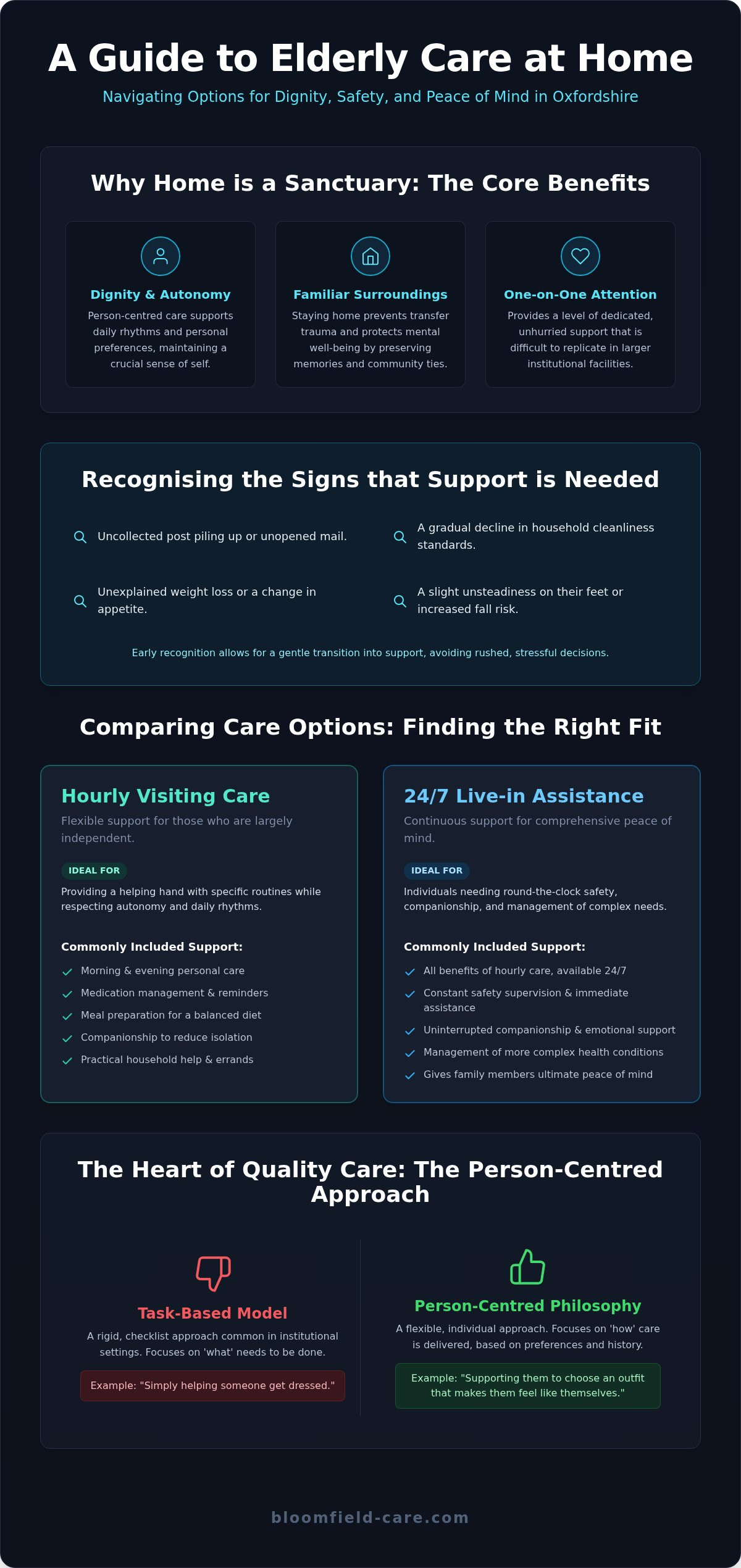
The heart of our approach is person-centred care. This philosophy moves away from the “task-based” model often found in institutional settings. Instead, it focuses on the individual’s history, preferences, and daily rhythms. While the broader framework of Social care in England provides the regulatory standards, the real value lies in how that care is delivered. It’s the difference between simply helping someone get dressed and supporting them to choose an outfit that makes them feel like themselves.
Oxfordshire families are increasingly moving away from traditional residential care. The desire to stay in familiar surroundings, surrounded by memories and local community ties in places like Abingdon or Oxford, is a powerful motivator. Home-based solutions allow for a level of one-on-one attention that is difficult to replicate in a care home, ensuring that dignity and autonomy remain at the forefront of the ageing process.
What Does Domiciliary Care Actually Include?
Domiciliary care, often referred to as visiting care, involves professional carers coming to the home at scheduled times. This support covers essential daily living tasks such as personal hygiene, dressing, and medication management. It also extends to practical household help, including meal preparation to ensure your loved one maintains a healthy, balanced diet. In the more rural parts of the county, companionship is a vital component. Regular visits help reduce the senior isolation that can occur when mobility decreases, providing a consistent human connection that brightens the day.
Recognising the Signs that Support is Needed
It isn’t always a sudden crisis that signals the need for help. Often, the indicators are subtle. You might notice uncollected post piling up by the door or a gradual decline in the usual standards of household cleanliness. Physical signs are equally telling. Unexplained weight loss, a change in appetite, or a slight unsteadiness on their feet can suggest that daily tasks are becoming a struggle. Recognising these signs early allows for a gentle transition into support rather than a rushed decision during an emergency. If you’re noticing these changes, you might find it helpful to read our specific guide on Signs Your Parent Needs Care at Home in Wallingford.
Comparing Care Options: Finding the Right Fit for Your Family
Every family’s journey with ageing is unique. There isn’t a one-size-fits-all solution, and the best choice often depends on the level of dependency and the specific health challenges involved. Professional elderly care at home oxfordshire offers a distinct advantage over family-led care: the gift of time. When relatives take on the role of primary caregiver, visits can become a rushed series of tasks and chores. A professional carer brings an unhurried, patient pace that restores the balance, allowing family members to return to being daughters, sons, or spouses while the practical needs are met with expertise.
Finding the right fit starts with a clear understanding of your loved one’s daily challenges. We often suggest getting a needs assessment from your council as a helpful first step to identify specific requirements. This process helps clarify whether a few hours of support or a more comprehensive live-in arrangement is necessary. It’s about building a framework that protects their lifestyle while ensuring their safety.
Hourly Visiting Care: Flexibility and Routine
Visiting care is ideal for individuals who remain largely independent but require a helping hand with specific routines. This might include assistance with morning personal care, meal preparation, or medication management. It’s a flexible model that respects the individual’s autonomy while providing a safety net. For residents in Oxford and Abingdon, this support ensures they can continue attending local clubs or visiting friends without the stress of managing everything alone. If sleep patterns become disrupted, adding overnight care can prevent the anxiety and fall risks associated with waking up confused in the dark.
Live-in Care: The Gold Standard for Safety
When needs become more complex, particularly for those living with dementia or Alzheimer’s, live-in care provides the highest level of reassurance. A dedicated carer resides in the home, offering a 24-hour presence that ensures safety at all times. The psychological benefits are profound. Having a consistent, familiar face reduces the agitation often seen in those with cognitive decline. This continuity of support is why many choose Compassionate Live-in Care in Oxfordshire. It transforms the care experience from a series of appointments into a genuine partnership. If you’re unsure which path is right for your family, speaking with a trusted advisor at Bloomfield Care can help clarify your options.
The Benefits of Staying Put: Why ‘Home’ is a Sanctuary
Home is far more than a physical structure; it is a repository of a lifetime’s memories and a source of profound emotional security. For many, the familiar creak of a floorboard or the view from a favourite armchair provides a sense of continuity that clinical environments simply cannot replicate. When families explore elderly care at home oxfordshire, they are often looking to protect this sense of belonging. Staying in a private residence allows individuals to remain anchored to their history, which is vital for maintaining mental well-being and a sense of self as they age.
One of the most compelling reasons to choose home-based support is the avoidance of “transfer trauma.” This term describes the physical and emotional stress often experienced by seniors when they are uprooted from their familiar surroundings to move into residential care. This relocation stress can lead to increased confusion, anxiety, and a decline in physical health. By introducing professional care into the existing home environment, we ensure that support adapts to the individual’s established lifestyle, rather than forcing them to conform to the rigid schedules of an institution.
Preserving Autonomy and Independence
Maintaining control over the small details of daily life is essential for dignity. At home, your loved one remains the decision-maker, choosing what they eat, who visits, and how they spend their afternoons. For many, the ability to step into their own garden or spend time with a long-term pet is the highlight of their day. These simple joys are powerful tools for combating loneliness and depression. Person-centred care is a methodology that prioritises the individual’s history and preferences. This approach ensures that care isn’t just about managing health; it’s about life enrichment. Whether it’s following a specific morning routine or keeping up with local social clubs, professional support works around the person, not the clock.
Specialist Support in Familiar Surroundings
For those living with cognitive challenges, the environment acts as a silent caregiver. Familiar landmarks, such as a specific painting on the wall or the layout of the kitchen, provide vital cues that help navigate the day. Moving to an unfamiliar setting can accelerate the symptoms of decline because these cues are lost. Dementia care is significantly more effective when the person remains in a constant, predictable environment. Understanding the nuances of these conditions is essential, and you can learn more about how needs evolve in our guide to Understanding Dementia Stages.
There is also immense reassurance in staying connected to local professional networks. Knowing the local GP at the Wallingford medical centre or having a long-standing relationship with the community pharmacist provides a layer of stability. Neighbours who have been friends for decades offer a watchful eye and a friendly word, maintaining the social fabric that keeps people feeling valued and safe within their own community.
Navigating Logistics: Funding and Choosing an Oxfordshire Agency
Financial planning for elderly care at home oxfordshire often feels like a mountain to climb. We understand the quiet worry that comes with balancing a loved one’s needs against the family budget. While it’s natural to feel overwhelmed, clarity is the first step toward confidence. Choosing an agency is a transition that requires both practical due diligence and an emotional connection; it’s about finding a team that feels like an extension of your own family.
Understanding Funding and Benefits
In 2026, the landscape of social care support remains complex but manageable with the right information. Most families start by determining if they are self-funders or eligible for local authority support. In Oxfordshire, individuals with savings and assets below £23,250 may be eligible for council assistance. If assets are above this threshold, you’ll likely be expected to self-fund. However, non-means-tested support like Attendance Allowance is available regardless of your financial situation. For the 2026/27 period, the higher rate of Attendance Allowance provides £114.60 per week, which can significantly contribute toward personal care costs. Understanding these nuances helps you build a sustainable plan. Explore our detailed breakdown of The Cost of Home Care in Oxfordshire to see how these figures apply to your family’s journey.
What to Look for in a Care Agency
The Care Quality Commission (CQC) is your primary resource for verifying professional safety. A “Good” or “Outstanding” rating ensures the agency meets rigorous standards for safety and leadership. Beyond the rating, look for a provider that prioritises specialist training in areas like dementia and palliative care. The heart of excellent support is “matching.” A carer shouldn’t just have the right skills; they should share similar interests or a compatible personality with your loved one. Having a local presence in Abingdon, Wallingford, or Oxford is equally vital. It ensures that the management team is responsive and understands the specific community resources available to you.
Bringing up the topic of support is often the hardest part of the process. We suggest starting the conversation early and framing it around “enhancing independence” rather than “taking it away.” Use “we” to show it’s a collaborative family effort, and listen deeply to your parent’s fears or preferences. If you’re ready to take that first step toward a person-centred plan, you can contact a Bloomfield Care advisor for gentle, professional guidance tailored to your specific needs.
Bloomfield Care: Your Partner in Oxfordshire Home Support
Bloomfield Care isn’t just a service provider; we’re a community-focused support system dedicated to the families we serve. We’ve spent over a decade refining our approach to elderly care at home oxfordshire, ensuring that every family feels heard and every individual feels valued. We understand that inviting someone into your sanctuary is a significant step. Our role is to act as a trusted advisor, guiding you through the complexities of care with patience, integrity, and a gentle hand. We believe that professional support should feel like a natural extension of your own family’s love.
The “Bloomfield Difference” lies in our ability to blend clinical excellence with the genuine warmth of a domestic environment. While we maintain high standards of professional safety, we never lose sight of the heart. Our carers don’t just perform tasks; they build meaningful relationships. This person-centred philosophy ensures that your loved one’s dignity and autonomy are protected at every stage. We listen more than we speak. This allows us to tailor our support to the unique lifestyle, history, and personality of the person we’re caring for, focusing on enhancing their quality of life rather than just managing it.
Our Local Commitment
From the historic university streets of Oxford to the bustling market squares of Abingdon and Wallingford, our presence is deeply rooted in the local community. Being local means we’re responsive and accountable. We understand the local pharmacies, the community groups, and the unique character of Oxfordshire life. This local focus isn’t limited to one county; we bring the same level of excellence to other regions, offering Bespoke Domiciliary Care in Weymouth and Beyond. Our branches are staffed by professionals who live and work in your area, providing a level of familiarity that national entities often lack.
Starting Your Journey with Compassion
Taking the first step shouldn’t feel like a transaction. We offer a free, unhurried care needs assessment to understand your family’s specific situation. During this visit, we look at more than just physical requirements. We discuss interests, daily routines, and the emotional support needed to maintain mental well-being. This initial conversation forms the foundation of a care plan that isn’t static; it evolves as your loved one’s needs change. We’re here to provide stability during a time of transition, ensuring that the home remains a place of comfort and joy. Contact Bloomfield Care today for a reassurance-led conversation about your family’s needs.
Securing Your Loved One’s Future in Familiar Surroundings
Choosing to embrace elderly care at home oxfordshire is a profound decision that prioritises dignity and emotional well-being. By preserving the home as a sanctuary, you avoid the stress of relocation and ensure your loved one remains connected to their community and history. We’ve explored how person-centred planning turns a house into a safe, supportive environment where independence isn’t just managed but actively enhanced. Whether you need a few hours of companionship or comprehensive live-in support, the right partner makes all the difference.
Bloomfield Care has been proudly serving Oxfordshire since 2014. As a CQC Registered Provider with specialist dementia care trained staff, we’re dedicated to providing the stability and warmth your family deserves. You don’t have to navigate these choices alone. Our unhurried approach ensures that every decision is made with grace and clarity, keeping your loved one’s autonomy at the centre of the journey.
Ready to transform uncertainty into a clear, sustainable plan? Book a Compassionate Care Assessment with Bloomfield Care today. Let’s work together to ensure your family home remains a place of safety, memories, and enduring comfort for years to come.
Frequently Asked Questions
What is the difference between home care and a care home in Oxfordshire?
Home care allows your loved one to remain in their own sanctuary while receiving professional support, whereas a care home requires moving into a residential facility. In Oxfordshire, choosing home-based support means maintaining familiar routines and local social connections. This approach prevents the transfer trauma often associated with moving and ensures that the care adapts to the individual’s lifestyle, rather than forcing them to conform to institutional schedules.
How do I know if my parent is eligible for council-funded home care?
Eligibility is primarily determined through a financial and needs assessment conducted by Oxfordshire County Council. In 2026, the capital threshold for support remains £23,250; those with assets below this amount may qualify for assistance. Regardless of funding, everyone is entitled to a needs assessment to identify the required level of elderly care at home oxfordshire. We recommend contacting the council early to begin this essential process.
Can home care provide support for dementia patients in Oxford?
Yes, specialist dementia and Alzheimer’s care is a core part of our service for families in Oxford. Our carers are trained to understand the nuances of cognitive decline, providing emotional reassurance and practical safety. By keeping the home environment constant, we help reduce the agitation and confusion that often occur when someone with dementia is moved to an unfamiliar setting, protecting their mental well-being.
Is live-in care more expensive than a residential home in Oxfordshire?
Live-in care is often comparable in cost to high-quality residential care homes, but it offers the significant advantage of one-on-one, person-centred attention. For couples in Oxfordshire, live-in care is frequently a more cost-effective alternative to paying for two separate beds in a care home. It allows partners to stay together in their own residence while receiving the professional support and companionship they both require to live safely.
How quickly can home care services be started in Wallingford or Abingdon?
We strive to begin services as soon as a safe and comprehensive care plan is in place for residents in Wallingford or Abingdon. After your initial enquiry, we schedule a gentle, unhurried assessment to understand specific needs and preferences. While the exact timeline depends on the complexity of the requirements, our local branches are structured to be responsive, ensuring that support starts without unnecessary delays.
What happens if my loved one’s care needs increase over time?
Care plans are designed to be flexible and evolve alongside your loved one’s changing requirements. We perform regular reviews to ensure the level of support remains appropriate for their health and happiness. If needs increase, we can seamlessly transition from hourly domiciliary visits to more intensive live-in care, providing a steady sense of stability and professional safety as health challenges or mobility issues progress.
Are your carers in Oxfordshire specifically trained for palliative care?
Our carers are specifically trained to provide compassionate palliative support, focusing on comfort, dignity, and respect. We work in partnership with local GPs and district nurses across Oxfordshire to ensure a comprehensive approach to end-of-life care. This specialist assistance allows individuals to remain in the sanctuary of their own home, surrounded by family and familiar comforts, during their final days, avoiding the stress of a clinical environment.
Can I get help with medication and meal preparation through domiciliary care?
Yes, our domiciliary care services include practical assistance with medication management and the preparation of nutritious meals. These tasks are essential for maintaining physical wellness and preventing hospital admissions. Our carers support your loved one to eat well and take their prescriptions safely, all while encouraging them to remain as active and independent as possible within their daily kitchen routines and familiar household environment.