

Choosing to stay in your own home with dedicated one-to-one support often feels like a luxury reserved for the few, yet for many families, it’s actually the most financially sound way to protect both a loved one’s legacy and their quality of life. We understand the quiet weight of the decisions you’re facing right now. It’s natural to feel a sense of unease regarding live-in care costs Dorset, especially when faced with complex contracts or the fear that the local council might require the sale of the family home to fund residential fees.
You deserve a partnership built on transparency and dignity rather than hidden charges or administrative stress. This guide provides a clear, honest breakdown of the 2026 pricing structure, helping you understand exactly how to balance your budget while ensuring the highest standards of professional care. We’ll explore the latest capital thresholds, compare the true value of home care against nursing home fees, and explain how a managed service handles the complexities of carer payroll and holiday cover for you. By the end, you’ll have a roadmap to secure your sanctuary and provide your family with lasting peace of mind.
Key Takeaways
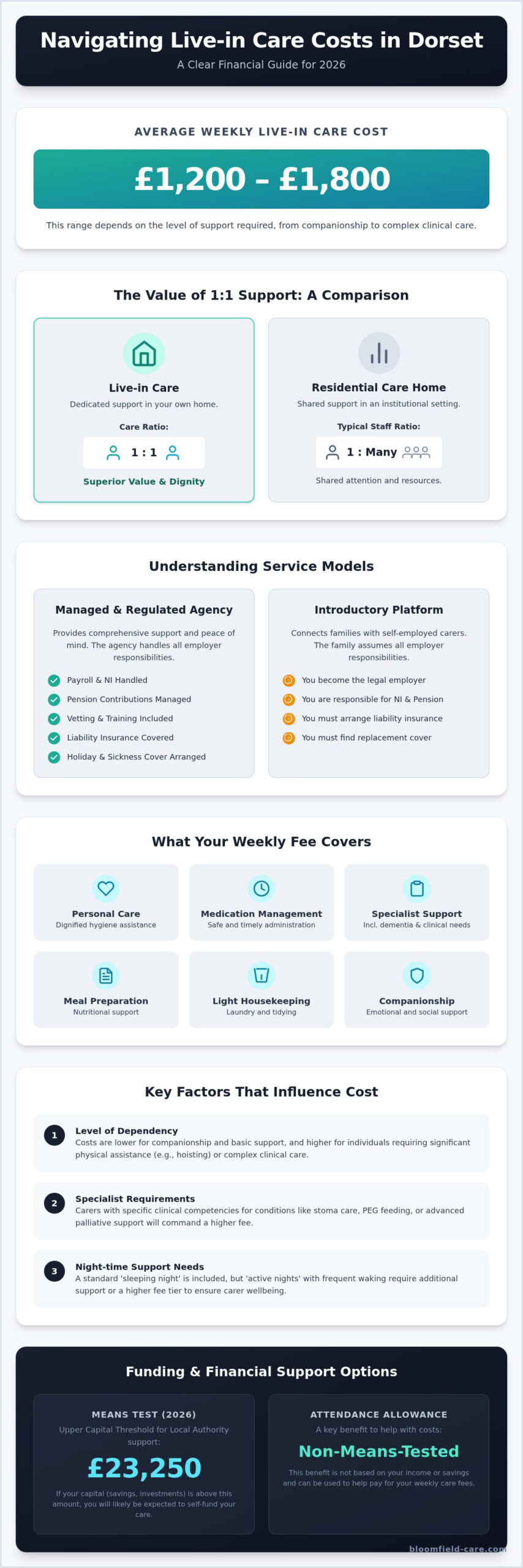
- Understand the typical 2026 budget for a managed service, with live-in care costs Dorset families can expect to range from £1,200 to £1,800 per week depending on specific needs.
- Discover how the 1:1 care ratio in your own home provides superior value and dignity compared to the staff-to-resident ratios often found in traditional nursing homes.
- Learn how to navigate the 2026 means test and the £23,250 upper capital threshold to determine your eligibility for local authority financial support.
- Explore how non-means-tested benefits like Attendance Allowance can help subsidise weekly fees while keeping your loved one in the comfort of their familiar sanctuary.
- See why local oversight in Weymouth, Poole, and Christchurch ensures a person-centered approach that matches professional carers to your loved one’s unique personality.
Average Weekly Live-in Care Costs in Dorset
Live-in care is a deeply personal service where a professional caregiver resides within your loved one’s home, providing dedicated 24-hour support. It’s a partnership that transforms the house into a safe, familiar sanctuary. When exploring live-in care costs Dorset for 2026, most families find that typical weekly fees across the county range from £1,200 to £1,800. This estimate depends on the level of assistance needed, from gentle companionship to complex clinical support. While urban centers like Bournemouth and Poole often see higher demand, rural areas across North Dorset also require careful planning to ensure consistent, high-quality oversight.
Managed Agencies vs. Introductory Platforms: The Financial Truth
It’s tempting to look at lower headline rates from introductory platforms, but these often hide significant financial and legal responsibilities. Families using these platforms effectively become employers. This means you’re responsible for National Insurance, pension contributions, and liability insurance. In contrast, choosing compassionate live-in care through a managed, CQC-regulated provider like Bloomfield Care removes this burden entirely. We handle all recruitment, training, and contingency cover. This managed approach is a vital part of Social care in the UK, ensuring that if a carer falls ill, a qualified replacement is already waiting. It’s about risk mitigation. It’s about total peace of mind for the family.
What Your Weekly Fee Actually Covers
Your weekly fee isn’t just a number; it’s an investment in a comprehensive lifestyle. A standard agreement typically includes:
- Personal care and hygiene assistance
- Medication management and administration
- Nutritional support and meal preparation
- Light housekeeping and laundry
- Specialist support for conditions like dementia
It’s helpful to clarify that “hotel costs” for the carer, such as their food and a private bedroom, are provided by the client. Beyond the logistics, the emotional return on investment is immeasurable. Your loved one remains in the community they love. They might still enjoy the salt air in Weymouth or the familiar gardens of Christchurch. This continuity of life is the ultimate metric of quality. Understanding live-in care costs Dorset allows you to plan for a future where dignity and independence remain at the heart of the home.
Key Factors That Influence Your Weekly Care Fees
Every person’s journey is unique, and live-in care costs Dorset reflect the specific level of support required to maintain safety and comfort at home. Pricing isn’t a static figure; it’s built around the individual’s daily reality. For instance, someone who is mobile but needs companionship and help with meals will sit at a different price point than a person requiring hoist assistance or regular clinical management. These dependency levels are the primary drivers of the weekly fee, ensuring the carer has the right skills to match the situation.
Specialist requirements also play a significant role in determining the final budget. If a loved one requires stoma care, PEG feeding, or advanced palliative support, the carer must possess specific clinical competencies to ensure medical safety within the home. The Care Act 2014 statutory guidance highlights how local authorities must consider these complex needs during a care assessment. This assessment helps define the necessary support level and ensures the care plan is both safe and sustainable.
Night-time support is another variable to consider. Most standard live-in arrangements include a ‘sleeping night’, where the carer is available but expects a full night’s rest. If an individual has ‘active night’ needs, such as frequent waking due to distress or medical requirements, an additional night carer or a higher fee tier may be necessary to ensure the primary carer remains well-rested and alert during the day.
Dementia and Specialist Support Costs
Supporting a loved one through cognitive decline requires a specific, empathetic set of skills. Understanding dementia stages is crucial, as needs often intensify from early-stage memory support to managing complex behaviours or high-risk falls. These situations require a higher tier of professional expertise to maintain a calm and safe environment. Our person-centred planning at Bloomfield Care ensures you don’t over-pay for unneeded services, as we tailor the support specifically to the current stage of the condition. You might find it helpful to reach out to our Dorset team for a gentle discussion about your family’s specific needs.
The Financial Logic of Couples Care
For many families in Dorset, the most compelling financial argument for home-based support is the ‘couple’s advantage’. In a residential care home, you’re usually charged for two separate beds, which effectively doubles your weekly outgoings. With live-in care, one professional can often support both partners for a single fee plus a modest second-person supplement. This model can save a couple up to 40% per week compared to the cost of two residential placements. Beyond the financial savings, it preserves the sanctity of their marriage, allowing them to remain together in familiar surroundings rather than facing the emotional trauma of being separated after decades of life together.
Live-in Care vs. Care Homes in Dorset: Cost Analysis
Deciding between a move to a residential facility and arranging support within the familiar walls of your own house is a significant crossroads. When evaluating live-in care costs Dorset, it’s essential to look beyond the headline figure and consider the total value of the service. In 2026, the average cost of a nursing home in the UK is approximately £1,535 per week. While a bespoke live-in service often sits within a similar range, the level of attention is fundamentally different. In a residential setting, staff ratios are typically one carer for every four residents, or even lower during night shifts. At home, your loved one benefits from a dedicated 1:1 ratio, ensuring their needs are met immediately and with complete focus.
Residential facilities also frequently include hidden costs that can surprise families. These might include separate charges for laundry, hairdressing, or premium room top-ups for specific views or larger spaces. Choosing the sanctuary of your home provides a transparent fee structure where the focus remains entirely on the individual’s well-being without these incremental expenses.
Asset Protection: Why Homeowners Choose Live-in Care
One of the most significant financial advantages of home-based support is how the government treats your property. Under current regulations, the Primary Residence Rule means that if you receive care in your own home, the value of that property is disregarded during the council’s financial assessment. This is a stark contrast to residential care, where the home is often viewed as a liquid asset and sold to fund fees once other savings fall below the threshold. According to Age UK’s guide to paying for care, understanding these distinctions is vital for long-term financial security. By opting for live-in support, you effectively protect the family home and preserve the inheritance for the next generation.
Quality of Life: Sovereignty and Choice
The financial value of sovereignty is often overlooked in traditional cost analyses. Staying at home means your loved one retains the power to choose their own meals, wake-up times, and even keep their cherished pets. For those living in Weymouth or Poole, it allows for continued engagement with local routines and community groups that have been part of their lives for years. This sense of autonomy is not just a comfort; it has clinical benefits too. Research suggests that 1:1 care can significantly reduce hospital readmissions by identifying health changes early, which ultimately saves families from the financial and emotional toll of crisis management.
Funding Options and Financial Support for Dorset Families
Understanding how to manage live-in care costs Dorset starts with a clear view of the 2026 financial thresholds. For many, the first step is the local authority means test. In 2026, the upper capital limit for Dorset Council support remains at £23,250. If your loved one’s qualifying assets and savings are above this figure, they’ll likely be responsible for self-funding their care. However, if assets fall between £14,250 and £23,250, the council may provide partial assistance. It’s a delicate calculation, and we always suggest families seek a professional assessment early to avoid any last-minute financial surprises.
Even if you’re self-funding, non-means-tested benefits provide vital support. Attendance Allowance is a significant help for many of our families. For 2026, the higher rate is £114.60 per week, while the lower rate is £76.70 per week. These payments are not based on income or savings; they’re based on the level of support needed. Claiming this benefit can help subsidise your home care fees, making 24-hour support more sustainable over the long term. For those with primary health needs, NHS Continuing Healthcare (CHC) remains the ‘golden ticket’, potentially covering the full cost of live-in support if a health professional determines the individual’s needs are primarily medical.
Navigating Dorset Council Assessments
Requesting a ‘Needs Assessment’ from Dorset Adult Social Care is a right, regardless of your financial situation. This document acts as a roadmap for the level of support required. If you’re eligible for support, we recommend exploring ‘Direct Payments’. This system empowers you to receive funding directly from the council, giving you the freedom to choose a specialist provider like Bloomfield Care rather than being limited to council-commissioned agencies. Having a financial advocate or a trusted family member present during these assessments ensures your loved one’s voice is heard and their needs are fully documented.
Private Funding and Equity Release
For families who don’t qualify for state support, private funding strategies can provide long-term security. Immediate need annuities are one option; they involve a one-off lump sum payment that guarantees a set income for care for the rest of a person’s life. Alternatively, equity release allows homeowners to unlock the value in their property to fund live-in care costs Dorset while they remain living there. We strongly recommend speaking with a SOLLA-accredited financial advisor in the South West who understands the specific nuances of the Dorset property market. If you’re ready to explore how these options fit your specific situation, reach out to our compassionate team for a gentle, no-pressure conversation.
Why Bloomfield Care Provides the Best Value in Dorset
Value in care is measured by the peace of mind it brings to a family and the dignity it restores to an individual. While we’ve discussed the technical aspects of live-in care costs Dorset, the true worth of a service lies in its local responsiveness and professional safety. Our presence in Weymouth, Christchurch, and Poole means we aren’t just a distant agency; we’re a community-based support system. This local knowledge allows our managers to provide hands-on oversight and build genuine relationships with the families we serve. We believe that a 1:1 care ratio is the ultimate metric for quality of life, ensuring your loved one is never just a number in a system.
Stability is essential for emotional well-being, which is why our ‘Carer Matching’ process is so rigorous. We don’t just look for clinical skills; we seek a personality fit that ensures long-term harmony within the home. Whether it’s a shared love for the Dorset coastline or a similar temperament, finding the right companion creates a sense of security that prevents the stress of frequent carer changes. This focus on compatibility is what allows the private residence to remain a true sanctuary.
Our Managed Service: Peace of Mind for Busy Families
Choosing a CQC-regulated, fully managed service means you’re protected by professional standards of safety and accountability. We handle the complexities of the 2026 regulatory updates and all mandatory training requirements so you don’t have to. If a carer needs a holiday or falls ill, our managed model ensures a seamless transition with a qualified replacement. This level of risk mitigation is invaluable for busy families who need to know their loved one is safe at all times. Whether you’re seeking short-term respite care or a permanent arrangement, our local managers are always available to visit the home at short notice to provide support and advice.
Next Steps: Securing Your Family’s Future
We understand that deciding on the right support is a journey that shouldn’t be rushed. To help you plan your budget and understand the specific live-in care costs Dorset for your situation, we offer a simple, supportive three-step process:
- Consultation: A gentle, unhurried conversation to listen to your concerns and goals.
- Assessment: A comprehensive, no-obligation care needs assessment conducted in the comfort of your home.
- Carer Matching: Selecting a professional whose skills and personality align with your loved one’s lifestyle.
Our person-centred philosophy ensures that we only provide the support that’s truly needed, allowing for a bespoke weekly rate that respects your financial boundaries. We’re here to act as your trusted advisor, guiding you through these sensitive topics with clarity and grace. If you’re ready to take the first step toward a more supported future, please Contact our Dorset team for a personalized quote today.
Securing a Future of Dignity and Comfort in Dorset
Deciding on the right support is a profound act of love. By understanding the 2026 landscape of live-in care costs Dorset, you’ve taken a vital step toward protecting your loved one’s independence and their family home. Whether you’re navigating the council’s capital thresholds or exploring the 1:1 benefits of staying in your own sanctuary, you now have the clarity to make an informed choice that prioritizes quality of life over clinical logistics. Staying at home isn’t just about care; it’s about preserving the routines and memories that define us.
Our team brings CQC-regulated professional care and deep local expertise to families across Weymouth and Poole. We specialize in providing the gentle, steady support needed for complex dementia and palliative care, ensuring every individual feels seen and respected. You don’t have to manage these complexities alone. We’re here to listen, guide, and help you create a sustainable plan that feels right for your family. Request a Compassionate Care Assessment in Dorset Today. Your home is the heart of your story, and we’re dedicated to helping you keep it that way.
Frequently Asked Questions
Is live-in care in Dorset cheaper than a nursing home?
Live-in care is frequently more cost-effective than residential nursing homes, particularly when you consider the level of dedicated support provided. While a nursing home charges per bed, a live-in carer focuses entirely on one individual or a couple within the home. This 1:1 ratio often leads to better health outcomes and fewer hospital visits, which reduces the long-term financial and emotional strain on the family while keeping your loved one in their sanctuary.
Will I have to sell my house in Weymouth to pay for a live-in carer?
You won’t be required to sell your home to fund this type of support. Under current regulations, your primary residence is disregarded during the council’s financial assessment for care provided at home. This is a significant benefit for families concerned about live-in care costs Dorset, as it allows your loved one to remain in their familiar surroundings in Weymouth or Poole while protecting the family’s property and inheritance for future generations.
Can couples share a live-in carer to save money?
Couples can absolutely share a single live-in carer, which represents a substantial saving for the household. Rather than paying for two separate placements in a residential facility, you’ll typically pay one weekly fee plus a modest supplement for the second person. This arrangement allows partners to stay together in their own home, maintaining their shared routines and marriage while receiving professional assistance that adapts to both of their unique health and companionship needs.
Does Dorset Council provide funding for 24-hour live-in care?
Dorset Council can provide funding through Direct Payments if your loved one meets the eligibility criteria following a formal needs assessment. If their savings and assets fall below the 2026 capital threshold, the local authority may contribute toward the cost of their support. Using Direct Payments gives you the autonomy to choose a specialist provider like Bloomfield Care, ensuring the support remains person-centered and fits your family’s specific lifestyle and long-term goals.
What are the 2026 capital limits for social care in the UK?
The 2026 upper capital limit for local authority financial support in England is £23,250. If an individual’s assets are above this amount, they’re responsible for self-funding their own support. Those with assets between £14,250 and £23,250 may receive partial assistance, while those with less than £14,250 usually receive the maximum available help. Knowing these figures helps families plan their live-in care costs Dorset with greater accuracy and provides a sense of financial stability.
Do I have to pay for the live-in carer’s food and energy bills?
When hosting a live-in carer, the client is responsible for providing a private, furnished bedroom and meals. While this adds a small amount to your weekly household grocery and energy bills, it’s often offset by the fact that you aren’t paying the high ‘hotel’ costs associated with residential care homes. This arrangement ensures the carer is well-rested and integrated into the home, fostering a warm, family-oriented support system that feels natural and dignified.
Is dementia-specific live-in care more expensive than standard support?
Specialist dementia support may involve a higher tier of pricing because it requires carers with advanced training and expertise. Managing complex behaviors or high-risk falls requires a specific skill set to ensure your loved one remains safe and calm. However, our managed model focuses on person-centered planning, which means we only provide and charge for the specific level of professional expertise required for your loved one’s current stage of cognitive health and personal wellness.
What happens to the weekly cost if the carer falls ill or goes on holiday?
With a fully managed service, your weekly costs remain consistent even when your regular carer takes a well-deserved holiday or falls ill. We take care of all the logistics, including finding a qualified replacement, managing their training, and handling their payroll. This removes the administrative stress and financial uncertainty that often comes with hiring independent carers, providing your family with a sense of profound reassurance and stability throughout the entire year.