
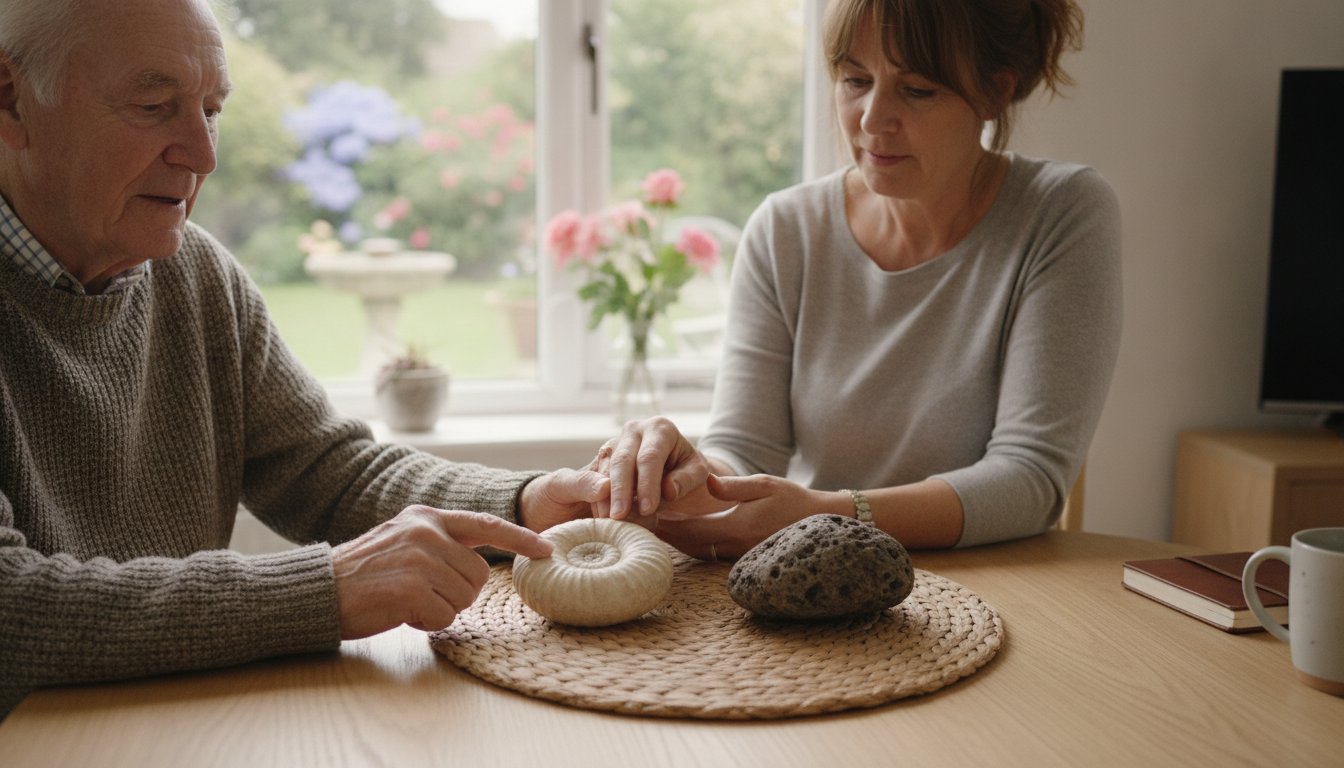
Imagine sitting in your sunlit kitchen in Christchurch, watching your father gaze at the garden while you struggle to find a way to spark a conversation. It’s a common scene for many families, where the desire to connect is met with the uncertainty of how to bridge the gap. Finding the right dementia-friendly activities at home in Dorset can transform your daily routine from a series of tasks into a meaningful partnership. Feeling overwhelmed by caregiver burnout or the weight of a loved one’s withdrawal is a deeply personal challenge, yet you aren’t alone in this journey. We understand that you want more than just a safe environment; you want a home filled with moments of genuine joy and dignity.
This 2026 guide provides practical, person-centred strategies to reduce agitation and help you find the person behind the diagnosis through sensory engagement. We’ll show you how to tap into the unique nostalgia of our beautiful county, from the rhythmic sounds of the Jurassic Coast to the familiar scents of a Dorset wildflower meadow. By the end of this article, you’ll have a toolkit of ideas to strengthen your emotional bond and create a manageable schedule. Our goal is to help you prioritise your loved one’s autonomy while bringing a sense of calm and stability back into your private sanctuary.
Key Takeaways
- Learn how to align daily activities with your loved one’s personal history and current strengths to reduce anxiety and sundowning.
- Discover how to create sensory nostalgia using dementia-friendly activities at home in Dorset, such as tactile kits filled with treasures from the Jurassic Coast.
- Understand the subtle art of adapting hobbies as dementia progresses, moving from complex tasks to simple, comforting sensory feedback.
- Explore simple environmental adjustments, like optimising natural light and using clear signage, to transform your home into a safe and supportive sanctuary.
- See how professional companionship and domiciliary care can provide the consistent routine and specialist expertise needed to maintain a high quality of life.
Meaningful Engagement for Dementia Care at Home
Meaningful engagement is more than a way to pass the hours; it’s a bridge to a person’s history and sense of self. When we talk about dementia-friendly activities at home in Dorset, we’re referring to moments that align a person’s past identity with their current abilities. This approach creates a sense of achievement and belonging that “busy work” simply cannot provide. By focusing on what a person can still do, we help maintain their dignity and self-worth.
Integrating structured activity into the day is a powerful tool for managing symptoms. Many families find that a consistent routine helps reduce the restlessness and confusion known as “sundowning” which often occurs as evening approaches. Engaging the mind through Dementia caregiving techniques can actually help build cognitive reserve. While the condition is progressive, the brain’s neuroplasticity allows for emotional connections and skills to remain accessible longer when they’re used regularly.
Your home should be a sanctuary where these connections happen naturally. It’s a place of safety and familiarity that provides the perfect environment for successful engagement.
Combatting Loneliness and Withdrawal
Inactivity often leads to a faster cognitive decline and a sense of isolation. There’s a vital difference between “keeping busy” and “purposeful living.” Purposeful living involves activities that feel useful or rewarding. In Dorset, our familiar landscapes and local history offer a wonderful backdrop for this work. Professional support, such as domiciliary care in Weymouth, can help facilitate these routines in the comfort of your own living room. Using a loved one’s connection to the local area can help ground them in the present and reduce the risk of depression.
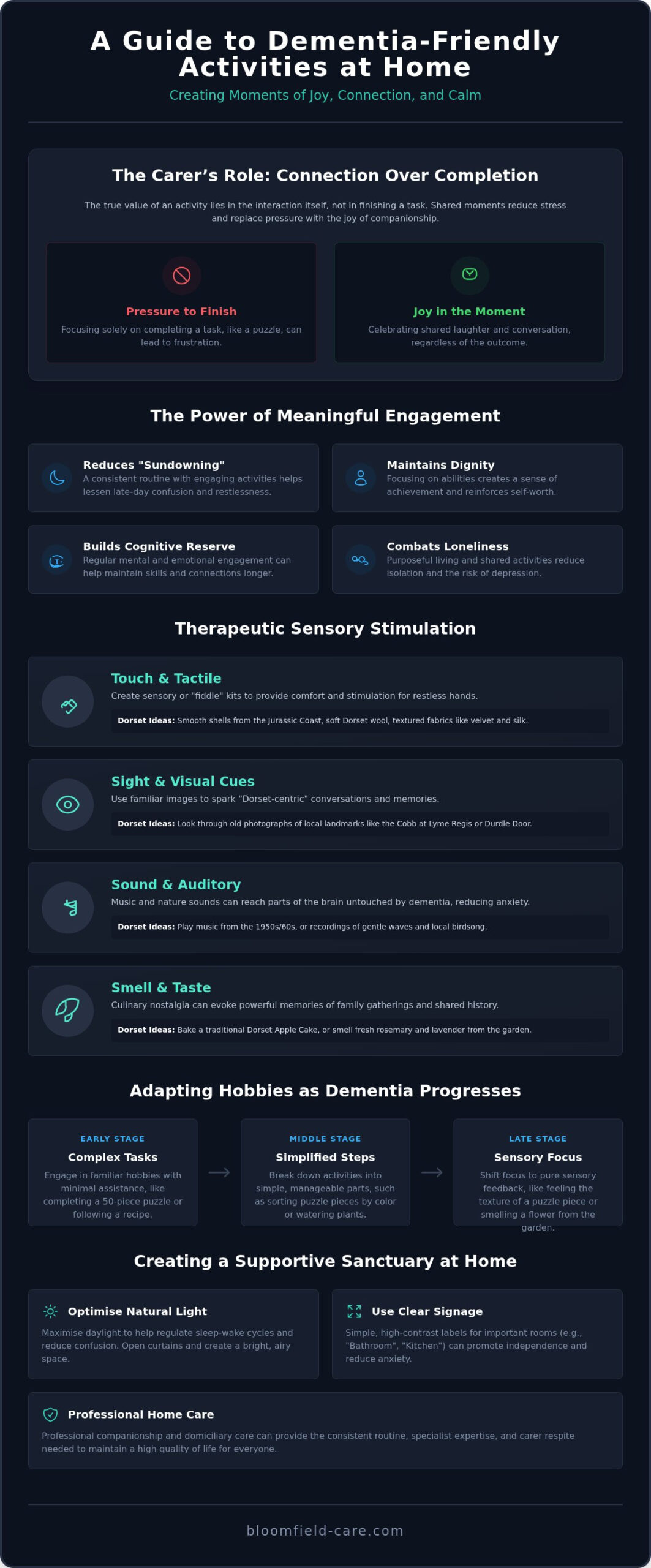
The Carer’s Role: Connection Over Completion
It’s easy to get caught up in the desire to finish a task, like completing a 50-piece puzzle or finishing a painting. However, the real value lies in the interaction itself. If the puzzle pieces end up in a pile but you’ve spent thirty minutes laughing and talking, the activity was a success. Shared dementia-friendly activities at home in Dorset reduce carer stress by replacing the pressure of “management” with the joy of companionship. Person-centred care is the foundation of all home activities, ensuring that every interaction respects the individual’s unique history and preferences.
Therapeutic Activities: Stimulating the Senses and Memory
Sensory stimulation is a gentle way to reconnect with a loved one when words begin to fail. By creating “Sensory Boxes,” you can bring the outside world into your living room. A tactile kit might include smooth shells from Weymouth beach, a skein of soft Dorset wool, or sprigs of fresh rosemary and lavender from the garden. These items aren’t just objects; they’re keys that can unlock deep-seated memories and provide a sense of peace. Because these items are familiar and local, they feel safe rather than confusing.
Visual cues are equally powerful for those living with cognitive changes. Looking at old photographs of the Cobb at Lyme Regis or the majestic arch of Durdle Door can spark “Dorset-centric” conversations that might otherwise remain dormant. Music often reaches parts of the brain that remain untouched by dementia. Playing familiar tunes from the 1950s and 60s can trigger “reminiscence bumps,” where a loved one might suddenly remember lyrics or the feeling of a first dance. These moments of clarity are precious and help maintain the emotional bond between you.
Culinary nostalgia is another wonderful tool to explore. The scent of a traditional Dorset Apple Cake baking in the oven can stimulate both smell and taste, often evoking memories of family gatherings. These dementia-friendly activities at home in Dorset help turn the kitchen back into a place of warmth and shared history. When you focus on the process rather than the perfect result, even simple tasks like stirring or smelling spices become therapeutic.
Auditory and Tactile Stimulation
Nature sounds provide a soothing backdrop for the day and can help ground a person in the present. Playing recordings of gentle waves or local birdsong creates a calming atmosphere, reducing the anxiety that often accompanies “sundowning.” For those with restless hands, “fiddle muffs” or various textured fabrics like velvet and silk offer comfort and stimulation. A gentle hand massage using locally-sourced chamomile oil is a deeply reassuring way to maintain physical connection and promote relaxation.
Reminiscence Therapy in the Living Room
A “Life Story Book” is a beautiful way to guide daily conversations. It’s a collection of photos, mementos, and short notes that celebrate your loved one’s unique journey. When discussing the past, it’s vital to validate feelings rather than correcting facts. If they remember a Dorset landmark differently, focus on the emotion they’re expressing. Watching old local news archives or films can also help bridge the gap between the past and present. If you find it challenging to maintain these routines alone, our domiciliary care in Weymouth can provide the companionship and support needed to keep these activities consistent.
Adapting Activities to Different Stages of Dementia
Dementia is a journey of constant change, which means your approach to engagement must be equally fluid. What sparks joy one month might cause confusion the next. Successful dementia-friendly activities at home in Dorset rely on your ability to observe and pivot based on your loved one’s current energy and cognitive capacity. By tailoring the complexity of a task to their specific stage, you preserve their sense of autonomy and prevent the frustration that comes from being overwhelmed. It isn’t about the completion of the task, but the feeling of inclusion it provides.
In the early stage, the focus remains on maintaining executive function and social connection. You might continue with complex hobbies like birdwatching or light woodworking. As things move into the middle stage, it’s best to simplify tasks into single, achievable steps that focus on sensory feedback. By the late stage, the goal shifts entirely to comfort, presence, and basic sensory stimulation through touch and sound. For more detail on progression, see our guide on understanding dementia stages.
Case Study: The “Dorset Garden” Activity
Gardening is a wonderful way to illustrate this stage-based adaptation. In the early stage, your loved one might enjoy planning the layout, choosing seeds at a local nursery, and active weeding. As they transition to the middle stage, you can shift the focus to potting plants, watering, and simply naming familiar flowers like foxgloves or roses. In the late stage, the garden remains a sanctuary. The activity becomes about sitting together in the fresh air, feeling the warmth of the sun, and smelling the blooms. This allows them to remain connected to the natural beauty of Dorset without the pressure of performance.
Managing Frustration and Fatigue
It’s vital to recognise when an activity is no longer serving its purpose. Signs of over-stimulation often include agitation, restlessness, or physically turning away from the task. We recommend the “15-minute rule”: engage in short, meaningful bursts rather than trying to sustain an activity for an hour. If you notice signs of fatigue, don’t feel guilty about stopping or changing the pace. Always have a “Plan B” ready, such as a calming piece of music or a gentle hand massage. These flexible dementia-friendly activities at home in Dorset ensure that your time together remains a source of connection rather than a cause of stress for both of you.
Creating a Dementia-Friendly Environment in Your Dorset Home
The success of dementia-friendly activities at home in Dorset often depends on the physical space where they occur. A room that feels “busy” or cluttered can quickly lead to sensory overload, causing a loved one to withdraw rather than engage. By simplifying your surroundings, you create a sanctuary that supports focus and calm. Start by maximising natural light throughout the day. Well-lit spaces help regulate circadian rhythms and reduce the deep shadows that often trigger “sundowning” as the evening light fades over the Dorset coastline. Clear away unnecessary ornaments or patterned rugs that might cause confusion, allowing the person’s mind to rest on the activity at hand.
Autonomy is a vital part of dignity. Simple signage can help a loved one navigate their home independently for longer. Placing a clear picture of a plate on the kitchen door or a simple “Bathroom” sign with a clear icon reduces the anxiety of getting lost in a familiar place. This balance of safety and freedom allows for movement without the constant need for correction. When the environment is intuitive, your loved one feels more confident to participate in daily life, turning a walk to the kitchen into a successful moment of self-sufficiency.
The Role of Colour and Contrast
Visual-spatial changes often make it difficult for those with dementia to distinguish between objects of similar colours. Using high-contrast plates, such as a bright blue dish on a white tablecloth, can significantly encourage independent eating. You can also define “safe zones” for dementia-friendly activities at home in Dorset by using specific furniture arrangements or solid-coloured rugs. Be mindful of dark mats in doorways; to someone with altered perception, these can look like deep holes or obstacles, potentially causing a fear of falling. Choosing light, warm tones for flooring helps maintain a sense of a continuous, safe surface.
Bringing the Dorset Outdoors In
Nature has a profound effect on mental well-being. Setting up a bird feeder just outside a main window provides hours of passive engagement, allowing your loved one to watch local garden birds without needing to leave the house. If outdoor access is limited, an indoor window box with familiar herbs like mint or thyme offers year-round contact with the natural world. Biophilic design, which focuses on connecting people with nature, has been shown to reduce cortisol levels in dementia patients, fostering a deeper sense of peace. If you need help adapting your living space to better support your loved one, our specialist dementia care team can provide expert guidance on creating a safer, more engaging home environment.
How Professional Home Care Enhances Daily Engagement
While family members provide the heart of care, professional support adds the structure and specialised focus needed to maintain a vibrant lifestyle. A companionship carer does more than just supervise; they actively facilitate dementia-friendly activities at home in Dorset that might otherwise be missed during a busy day. Whether it’s sorting through old photographs or engaging in a gentle craft, these professionals have the training to find the “person behind the diagnosis.” They bring a fresh perspective and the patience required to make every interaction meaningful.
Our approach is rooted in partnership. We match carers with clients based on shared interests, ensuring that a love for Dorset’s local history or a passion for gardening becomes a shared bond. For those needing regular support, domiciliary care in Weymouth provides the consistent routine that reduces anxiety and provides a sense of security. If your loved one requires more comprehensive oversight, live-in care offers the safety of 24/7 engagement within the familiar sanctuary of their own home.
Respite for Family Carers
Caring for a loved one is a profound act of love, but it’s also physically and emotionally demanding. Taking a break isn’t a sign of failure; it’s essential for your own mental well-being. Using respite care in Dorset allows you to step back and simply be a daughter or son again, rather than just a carer. Knowing that a professional is facilitating dementia-friendly activities at home in Dorset gives you the peace of mind to recharge, ensuring you can return to your role with renewed heart and patience.
Next Steps: Requesting a Care Assessment
Every journey begins with a conversation. During a Bloomfield Care needs assessment, we don’t just look at medical requirements; we look at the whole person. We explore their hobbies, their favourite Dorset landmarks, and what truly brings them joy. This information allows us to build a bespoke activity plan directly into the core care package. If you’re ready to explore how we can support your family, contact our Dorset team for a friendly, no-obligation chat. We’re here to listen and help you find the best path forward for your loved one’s comfort and happiness.
Embracing a Life of Purpose and Connection
Creating a home environment that celebrates your loved one’s history is a profound way to honour their dignity. We’ve explored how tapping into the sensory landscape of our county and adapting tasks to specific stages can reduce anxiety and foster joy. By focusing on the process rather than the result, you can turn daily routines into meaningful interactions. Implementing dementia-friendly activities at home in Dorset ensures that your private residence remains a sanctuary of safety and familiarity throughout every stage of the journey.
You don’t have to manage these transitions alone. As a CQC registered agency, we provide local Dorset-based carers who have undergone specialist dementia care training to support your family’s unique needs. We’re here to help you find the person behind the diagnosis and maintain the emotional bonds that matter most. If you’re ready to explore a partnership-driven approach to care, please Request a Free Care Needs Assessment in Dorset. Together, we can build a manageable daily routine that brings stability and light back into your home.
Frequently Asked Questions
What are the best low-cost dementia activities I can do at home?
Low-cost dementia-friendly activities at home in Dorset include creating a sensory box with local items like shells from Weymouth beach or lavender from your garden. You might also try simple household tasks like folding soft towels or sorting socks, which provide a sense of purpose and achievement. Listening to local radio stations or looking through old family photo albums are excellent ways to spark conversation without any financial burden.
How do I encourage someone with dementia to participate in activities?
The most effective way to encourage participation is by framing the activity as a request for help rather than a task to be completed. Instead of saying “let’s do a puzzle,” try saying “I’m struggling with this, could you help me find the blue pieces?” This approach fosters a sense of being needed and valued. It’s also helpful to time activities for when your loved one is most alert and comfortable.
Can gardening help with dementia symptoms?
Gardening is highly effective at reducing common dementia symptoms such as agitation and anxiety. The combination of fresh air, gentle physical movement, and sensory triggers like the scent of roses or the feel of soil can be deeply grounding. For those in the middle or late stages, simply sitting in a Dorset garden and watching bird feeders provides passive engagement that lowers cortisol levels and promotes a better night’s sleep.
Is it safe to do arts and crafts with late-stage dementia?
Arts and crafts are safe and beneficial in the late stages when you focus on sensory feedback rather than a finished product. Use non-toxic, easy-to-handle materials like large sponges for water painting or soft, air-dry clay. These activities provide tactile stimulation and a way to express emotions when verbal communication becomes difficult. Always ensure the environment is calm and well-lit to prevent any confusion or sensory overload during the session.
How often should we do activities throughout the day?
We recommend engaging in short bursts of activity several times throughout the day rather than one long session. Following the “15-minute rule” helps prevent fatigue and keeps engagement levels high. A structured routine that includes a morning walk, an afternoon sensory activity, and a calming evening ritual can significantly reduce the confusion often associated with sundowning. Consistency is the foundation of a successful and manageable home care plan.
What should I do if my loved one gets frustrated during an activity?
If your loved one shows signs of frustration, it’s best to validate their feelings and gently pivot to a different, more calming activity. Stop the current task immediately without making them feel they’ve failed. You might offer a soothing hand massage with lavender oil or play a favourite song from the 1950s. Recognising early signs of over-stimulation, such as turning away or restlessness, allows you to change the pace before agitation escalates.
Are there local Dorset groups that provide activity ideas for home use?
Several organisations offer resources for dementia-friendly activities at home in Dorset, including Age UK North, South & West Dorset, which provides support groups for a small fee of £2.50. PramaLife and Help & Care also offer community-based ideas and coordinator services that can be adapted for domestic use. These local groups are excellent sources for finding Dorset-centric reminiscence materials, such as archives of local news or photos of the Jurassic Coast.
How can a professional carer help with dementia-friendly activities?
A professional carer brings specialist dementia care training to your home, ensuring that activities are safely tailored to your loved one’s specific needs and interests. They provide the consistent companionship and patience required to facilitate meaningful engagement while you take a well-deserved break. By matching carers to clients based on shared hobbies, we ensure that every interaction is person-centred and helps maintain the individual’s unique sense of identity and self-worth.