

What if the secret to keeping your parents safe isn’t about taking control, but about empowering their choices? Many families find themselves caught between the fear of a sudden fall and the guilt of not being there every second. When you start creating a care plan for elderly parents at home, it’s natural to feel overwhelmed by the terminology and the logistics of organizing support. You aren’t just looking for a checklist; you’re looking for a way to protect the sanctuary of their own home while ensuring they have the professional assistance they deserve.
We understand that this journey is deeply personal and often emotionally taxing. It’s okay to feel unsure about how to balance safety with your parent’s desire for autonomy. This guide provides a compassionate roadmap to building a person-centered care plan that prioritizes dignity and mental well-being. You’ll learn how to assess specific needs, explore options like companionship or live-in care, and find the peace of mind that comes from a structured yet gentle approach to daily wellness.
Key Takeaways
- Understand why a proactive care plan is the foundation for maintaining your parent’s dignity and preventing health crises before they happen.
- Learn how to assess the “Four Pillars of Care” when creating a care plan for elderly parents at home to address physical health and daily living needs.
- Discover the differences between hourly domiciliary care and professional live-in care to choose the right level of support for your family’s unique situation.
- Master the process of documenting personal preferences, from medication schedules to morning rituals, to ensure care remains truly person-centred.
- Find out how a professional assessment can turn a complex logistical challenge into a clear, manageable roadmap for your parent’s safety and well-being.
What is a Care Plan for the Elderly and Why is it Essential?
At its heart, a care plan is far more than a medical checklist or a schedule of visits. It’s a living, evolving document that captures the physical, emotional, and social needs of your loved one. When we explore What is a Care Plan, we see it as a holistic map designed to ensure your parent’s daily life remains as rich and fulfilling as possible. It’s about shifting from reactive crisis management, where decisions are made under the pressure of an emergency, to a proactive, steady approach that provides comfort before a problem arises.
The Core Purpose: Independence, Not Interference
The primary goal of any well-crafted plan is to empower your parent to stay in the familiar comfort of their own home. By identifying risks early, such as mobility issues or medication complexities, a structured plan significantly reduces the likelihood of hospital readmissions. This isn’t about taking away their control. Instead, it’s about providing the right level of assistance so they can maintain their dignity. When a parent has a say in their morning wake-up ritual or how their meals are prepared, they feel respected rather than managed. Safety and autonomy can, and should, exist together.
Starting the Conversation with Empathy
One of the hardest hurdles is often the initial discussion. Many seniors fear that admitting they need help is the first step toward losing their home. When you begin creating a care plan for elderly parents at home, try to focus the conversation on “what you want to keep doing” rather than “what you can’t do anymore.” For example, instead of focusing on their difficulty with cooking, talk about how a companion could help with the prep work so they can still enjoy their favourite recipes. By involving your parents as the primary authors of their care journey, you transform the plan from something “done to them” into something “created with them.” This collaborative spirit is the key to a successful, gentle transition.
Assessing Your Parent’s Needs: The Four Pillars of Care
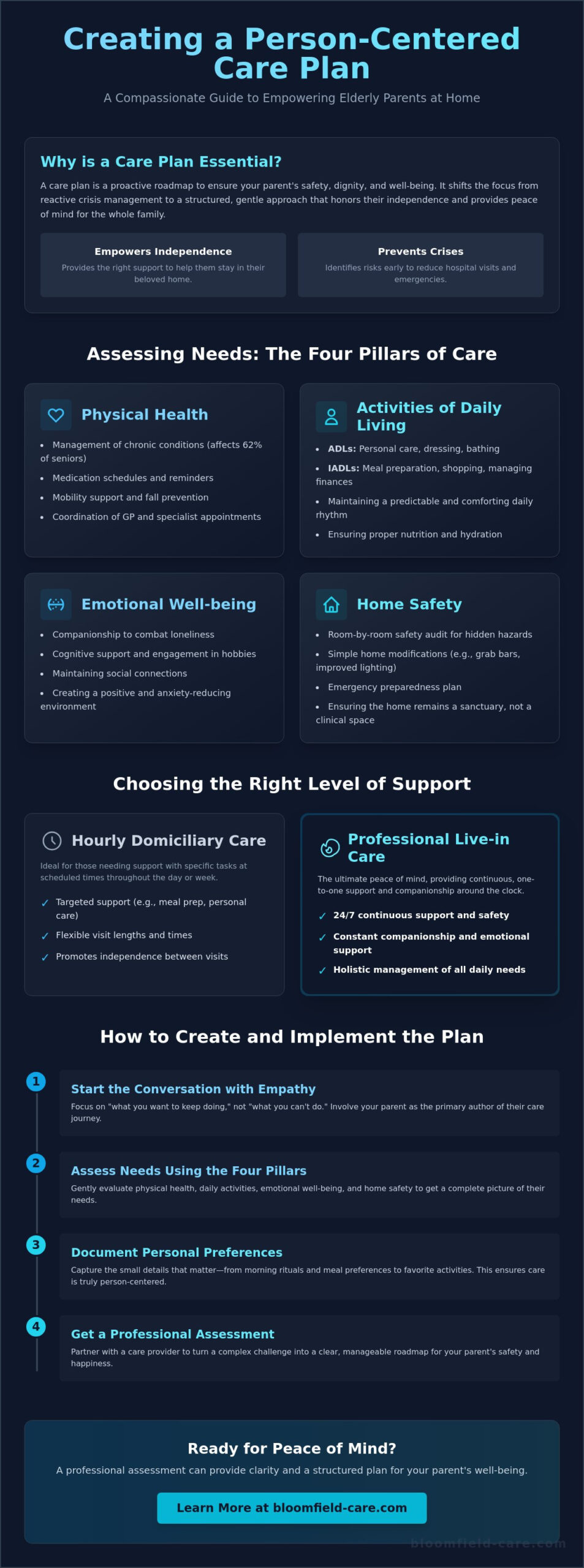
To build a truly supportive environment, we must look beyond obvious medical needs and see the whole person. When you begin creating a care plan for elderly parents at home, the process starts with a gentle, thorough assessment of their daily life. We view this through four essential pillars: physical health, activities of daily living, emotional well-being, and home safety. By looking at these areas together, we ensure that no part of your parent’s identity or comfort is overlooked. It’s about preserving the sanctuary of their home while providing the exact level of support they require.
Physical health involves more than just attending GP appointments. It includes managing chronic conditions, which affects 62% of seniors aged 65 and older according to 2026 data from Meals on Wheels America. We also consider mobility and the complexity of medication schedules. Activities of Daily Living (ADLs) focus on the practicalities of personal care, dressing, and nutrition. For those living with cognitive changes, Assessing Your Parent’s Needs often involves creating a predictable daily rhythm that reduces anxiety and fosters a sense of accomplishment.
Evaluating ADLs and IADLs
It’s helpful to distinguish between basic personal care and Instrumental Activities of Daily Living (IADLs), such as managing finances or shopping. A person-centred assessment asks: “What does a good day look like for you?” This helps identify invisible needs, like the desire for companionship during a meal or cognitive support to stay engaged with a hobby. If you feel overwhelmed by these details, a professional home care assessment can help clarify which level of support will best maintain your parent’s autonomy.
Environmental Safety and Home Modifications
The family home is a place of memories, but it can also present hidden hazards as we age. A room-by-room safety audit identifies simple changes, like improving lighting or removing trip hazards, that prevent accidents. In 2026, technology plays a supportive role through AI-powered predictive health monitoring and smart home sensors. These tools offer fall detection and safety alerts without being intrusive. The goal is always to balance these modern safety measures with the warmth and familiarity of their surroundings, ensuring they feel secure but never watched. By creating a care plan for elderly parents at home that includes these environmental checks, you provide a foundation of stability for the years ahead.
Choosing the Right Level of Support: Hourly vs. Live-in Care
Deciding on the volume of support is a pivotal step when creating a care plan for elderly parents at home. It isn’t just about hours on a clock. It’s about matching the rhythm of your parent’s life with the right level of professional presence. For many, the journey begins with hourly visits. These sessions provide a gentle structure to the day, ensuring medications are taken and meals are enjoyed without the pressure of a 24-hour stay. It’s a flexible way to introduce help while respecting their need for privacy and independence.
There often comes a “tipping point” where the needs of a parent exceed what family members can safely or emotionally provide. This is a common reality, as 85% of older adults prefer to age at home rather than in institutional settings, according to 2026 data from USAging. When this happens, overnight care can act as a vital bridge. It offers security during those quiet hours when the risk of a fall or confusion feels most acute, allowing both the parent and the family to sleep with peace of mind.
The Benefits of Domiciliary Care in Your Local Area
Flexible domiciliary care Weymouth services allow you to tailor support to specific daily windows. This might include help with a morning routine or assistance with the evening meal. We believe that care is most effective when it feels like a visit from a friend. By matching caregiver personalities to your parent’s lifestyle and interests, we ensure that domiciliary care feels like a natural part of their day rather than an intrusion.
When Live-in Care Becomes the Logical Choice
For those with complex needs or those living with dementia, the reassurance of a 24-hour presence is often transformative. Live-in care provides a professional alternative to a residential setting, allowing your loved one to remain in their sanctuary. When you compare the bloomfield care home experience to staying at home, the primary difference is the continuity of companionship. Having a dedicated person who understands their wake-up rituals and favourite stories fosters a deep sense of mental well-being and stability. It’s a comprehensive approach that ensures safety without sacrificing the comfort of familiar surroundings. Creating a care plan for elderly parents at home that includes this level of support provides a robust safety net for the entire family.
Step-by-Step: Writing and Implementing the Plan
The process of creating a care plan for elderly parents at home begins with gathering your ‘Care Team’. This isn’t a task you should shoulder alone. It involves family members, your parent’s GP, and professional care advisors who bring a wealth of experience to the table. Together, you’ll document the fine details of your parent’s life. This includes everything from their morning wake-up rituals to their favourite evening meals. These aren’t just preferences; they’re the threads that maintain their sense of self and dignity within their sanctuary.
Setting clear goals helps keep everyone focused on what truly matters. Short-term goals often centre on immediate safety, such as ensuring mobility aids are used correctly. Long-term goals focus on quality of life, like maintaining social connections or continuing a beloved hobby. Remember that a care plan is a living document. It needs a regular review cycle to adapt as your parent’s needs shift. The dynamic nature of creating a care plan for elderly parents at home ensures that the support remains relevant, respectful, and deeply person-centred.
The Practicalities: Medication and Nutrition
Practical safety is the foundation of any successful plan. We help families establish fail-safe medication management systems that reduce the risk of missed doses or confusion. Nutritional wellness is equally vital to physical and mental health. We focus on meal preparation that respects personal tastes, cultural heritage, and seasonal favourites. A person-centred meal plan is one that prioritises the individual’s history and joy over mere caloric intake. It’s about making the dining experience a moment of comfort and connection rather than just a routine task.
Specialist Considerations: Dementia and Alzheimer’s
When a parent lives with cognitive decline, the plan needs extra layers of sensitivity and expertise. This involves tailoring the approach for the unique challenges of dementia stages. Communication strategies and consistent routine-building are essential for providing cognitive stability and reducing distress. Read our guide on understanding dementia stages for deeper insight. These strategies help your parent feel anchored in their environment, even as their internal world changes. If you feel ready to move from planning to action, our team is here to help you implement a bespoke care plan that protects your parent’s independence.
Partnering with Bloomfield Care for Peace of Mind
Choosing a partner to support your family is a significant decision. It’s about finding a team that respects the sanctity of your parent’s home while providing the highest standards of safety. At Bloomfield Care, we’re dedicated to person-centred care across Oxfordshire, Dorset, and West Berkshire. We don’t just provide services; we build relationships. Our approach ensures that creating a care plan for elderly parents at home isn’t just a paperwork exercise. It’s the start of a journey where your parent’s autonomy and mental well-being are always at the heart of what we do.
The Bloomfield assessment is an unhurried process where we listen more than we speak. We help families refine their goals, moving from general concerns to specific, actionable support. Whether it’s companionship or more complex elderly care, our goal is to enhance life quality rather than just manage it. We take great pride in our caregiver matching process. We look for a blend of professional competence and personal warmth, ensuring the person entering your parent’s home feels like a trusted guest who understands their unique lifestyle and history.
Local Expertise Across the South
We’re deeply rooted in the communities we serve, including Wallingford, Abingdon, Oxford, and Poole. Our teams maintain close relationships with local authorities and adhere to CQC standards of excellence, providing you with the reassurance that your loved ones are in capable hands. If you’re currently managing care yourself, we also support families through respite care during transitions or periods of rest. This flexibility allows you to step back with confidence, knowing the standards of care your parent deserves are being met with integrity and kindness.
Requesting Your Free Care Needs Assessment
The first step toward professional support shouldn’t feel like a clinical interview. Our initial consultation is a supportive conversation designed to turn your family’s anxieties into a clear roadmap for the future. We’ll discuss how creating a care plan for elderly parents at home can address everything from medication safety to social engagement. This is your opportunity to ask questions and explore how our dedicated caregivers can help maintain the familiarity and comfort of your parent’s domestic environment. Contact Bloomfield Care today for a compassionate assessment and let us help you find the stability and peace of mind your family needs.
Embracing a Future of Safe, Dignified Independence
A care plan is more than a logistical arrangement; it’s a promise to your parents that their history and preferences still lead the way. By understanding the four pillars of care and deciding between hourly support or professional live-in assistance, you’re building a foundation of stability. Remember that creating a care plan for elderly parents at home is an evolving process that adapts as their needs change, ensuring their sanctuary remains a place of comfort and joy. You don’t have to navigate these sensitive decisions alone.
Since 2014, we’ve served families across Oxfordshire and Dorset as a CQC Registered Provider. As specialists in dementia and Alzheimer’s care, we understand the nuances of providing support that feels like home. Our dedicated team is here to listen and help you refine your goals into a sustainable, person-centred reality. When you’re ready to move forward, we invite you to Book a Compassionate Care Assessment with Bloomfield Care. Taking this step today ensures your parents can enjoy their independence with the professional safety and heart they deserve.
Frequently Asked Questions
How often should a care plan for an elderly parent be reviewed?
A care plan should be reviewed at least every six months or whenever there is a significant change in your parent’s health or living situation. This ensures the document stays relevant and continues to provide the right level of support. If a fall occurs or a new diagnosis is made, an immediate review is necessary to keep the sanctuary of their home safe and responsive to their needs.
What is the difference between a care plan and a support plan?
A care plan typically focuses on physical and clinical requirements, such as medication schedules and mobility assistance. A support plan is often more holistic, detailing social preferences, emotional well-being, and lifestyle goals. In modern person-centered care, these documents often merge to ensure every aspect of an individual’s identity and daily joy is respected and nurtured.
Can I create a care plan for my parents without a professional?
You can certainly begin creating a care plan for elderly parents at home on your own by documenting their daily routines and personal preferences. However, partnering with a professional ensures that clinical risks and safety requirements aren’t overlooked. A professional advisor brings an objective perspective that helps balance essential safety with your parent’s desire for independence and autonomy.
How do I include my parent in the care planning if they have dementia?
Focus on their history, long-standing habits, and emotional likes or dislikes rather than asking them to manage complex logistics. Even when cognitive changes are present, individuals can often express how they feel about certain routines or environments. Use gentle, open-ended questions and observe their non-verbal reactions to ensure their personality remains the heart of the planning process.
What should I do if my parent refuses to follow the care plan?
Start by listening to their concerns without judgment to understand the root of their resistance. Often, refusal stems from a fear of losing control or a feeling that the plan is an intrusion. Adjusting the plan to prioritize their specific choices can transform it from a source of conflict into an empowering tool that supports their daily life on their own terms.
Is a care plan legally binding in the UK?
A care plan isn’t a legally binding contract like a deed, but it’s a vital professional requirement for regulated care providers. For agencies, it’s a mandatory document used to ensure safety and meet CQC standards of excellence. It serves as an essential guide for all caregivers to follow, providing a consistent and safe framework for the assistance your parent receives.
How much does it cost to have a professional care agency create a plan?
The cost for developing a plan varies depending on the complexity of your parent’s needs and the depth of the initial assessment. Many providers include the creation of the care plan as part of their unhurried initial consultation or assessment process. It’s best to ask potential agencies about their specific approach to ensure you understand their process before moving forward with any professional partnership.
What are the first signs that my parent needs a formal care plan?
Common signs include noticeable changes in personal hygiene, a cluttered home environment, or missed medication doses. You might also notice they are withdrawing from social activities they once loved or appearing more frail during simple walks. When these subtle shifts occur, creating a care plan for elderly parents at home provides a structured way to restore their safety and confidence while protecting their dignity.