
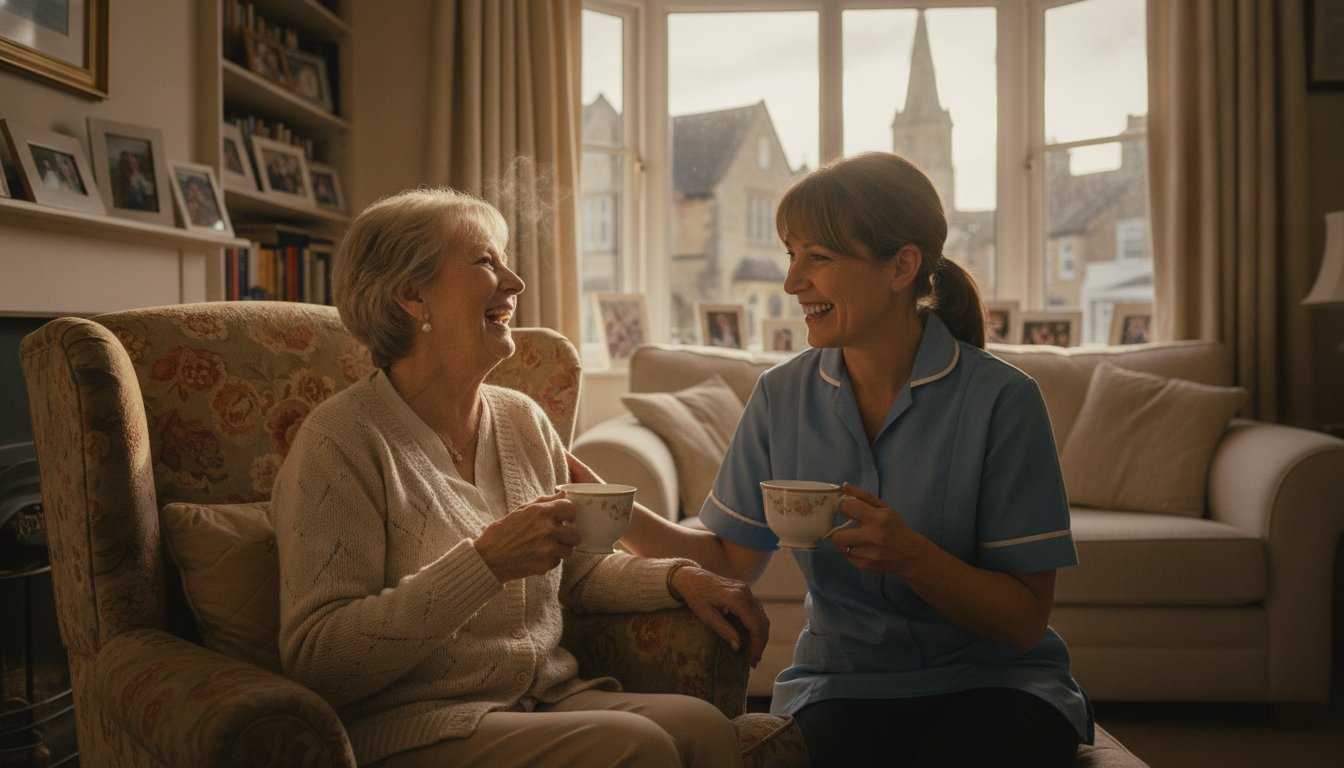
Imagine your mother sitting in her favourite armchair in her Abingdon home, glancing at the clock and wishing for a friendly face to share a cup of tea with. You want to be that person, but the demands of work and your own children often pull you in different directions, leaving you with a heavy sense of guilt. It’s a common struggle for many families across Oxfordshire, where over 137,000 residents are now aged 65 and over. This is where companionship care Abingdon becomes more than just a service; it acts as a vital social bridge that protects the sanctuary of the home while preventing the dangerous isolation of aging.
We know you want your loved one to thrive, not just manage, within the place they feel safest. It’s natural to worry about the cognitive decline that isolation can trigger or to feel confused about whether they need medical help or simply a dedicated friend. You’ll discover how personalised companionship care in Abingdon can alleviate loneliness and help your loved ones stay connected to their community while living safely at home. We’ll look at the difference between social support and clinical care, providing the clarity you need to ensure your family’s peace of mind and your loved one’s continued independence.
Key Takeaways
- Understand how non-clinical support focuses on emotional well-being and can help slow cognitive decline by keeping the mind active.
- Discover how companionship care Abingdon helps seniors safely enjoy local landmarks like Abbey Meadows and the Market Place.
- Learn to recognise the subtle signs that a loved one may be struggling with isolation, such as a dwindling social calendar or neglected household tasks.
- Explore how regular social interaction acts as a preventive measure for physical health, helping individuals regain the confidence to engage with their community.
- See the value of a person-centred approach that matches carers with seniors based on personality and life history to foster genuine, lasting friendships.
What is Companionship Care in Abingdon? More Than Just a Friendly Face
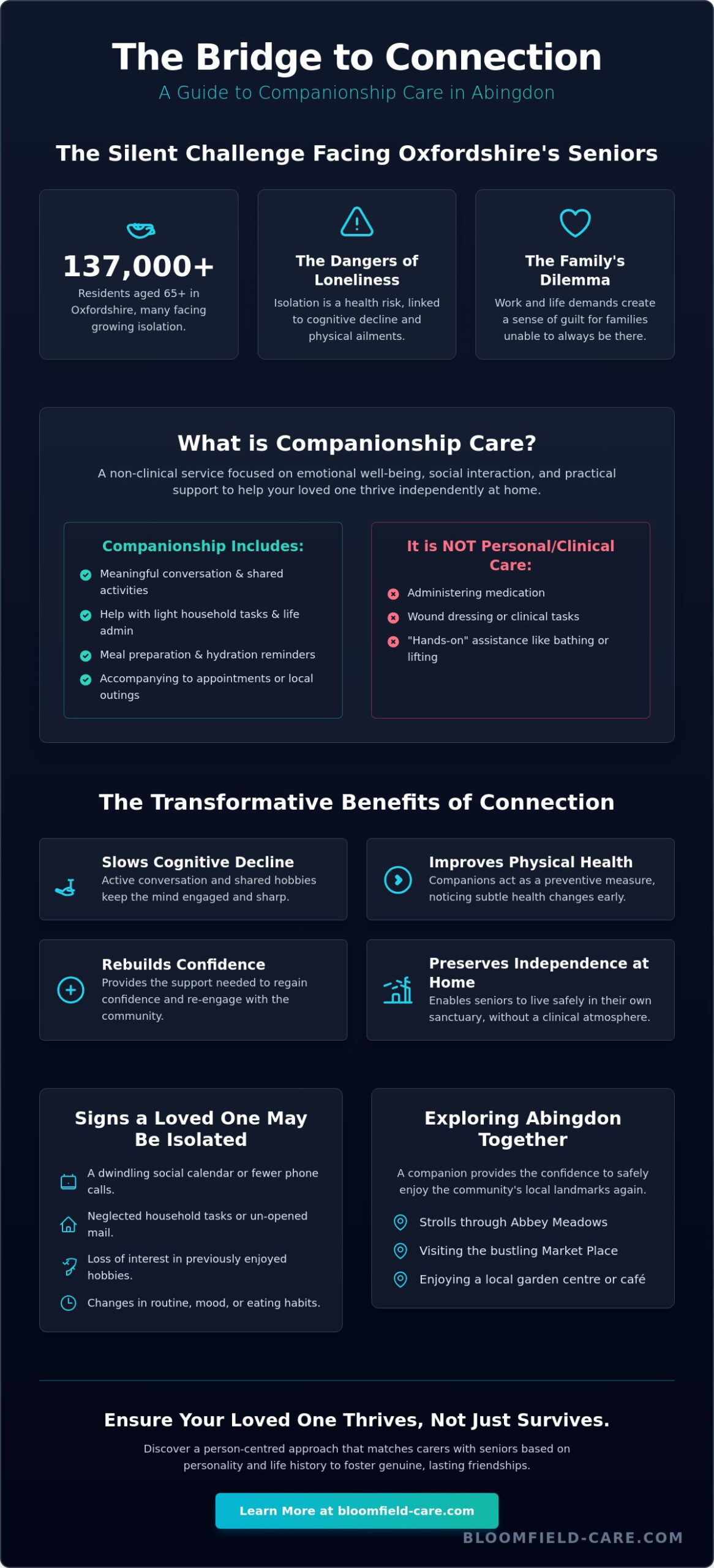
When we talk about companionship care Abingdon, we aren’t just describing a quick check-in or a functional visit. It’s a non-clinical service designed to put the person at the centre of their own story again. This support focuses on emotional well-being, meaningful social interaction, and the practical daily assistance that keeps a household running smoothly. This service sits within the broader spectrum of Elderly care, focusing specifically on the social and emotional requirements that are often overlooked in traditional medical models. It’s about building a partnership based on trust and mutual respect.
Prevention is a powerful aspect of this support. Regular visits can help slow cognitive decline by keeping the mind engaged through active conversation and shared activities. It’s also about physical health; a companion often notices if a person isn’t drinking enough water or if they’ve stopped moving as much as they used to. In a historic market town like Abingdon, staying connected is vital for mental wellness. The community is vibrant, but without a bridge to the outside world, the walls of a home can start to feel like a barrier rather than a sanctuary. Companionship preserves the independence of living at home without the clinical atmosphere of a care facility.
The Core Elements of a Companion’s Visit
A companion’s visit is never a “one size fits all” experience. It’s tailored to what brings the individual joy and comfort. Because every person has a unique life history, the support they receive should reflect that. Common elements include:
- Meaningful Connection: This might involve deep conversations about local history, working through a complex puzzle together, or simply bird watching from the garden window.
- Life Admin: We help with the small tasks that can feel overwhelming, such as sorting through post, organising a weekly calendar, or managing light household chores.
- Nutritional Support: Preparing fresh, wholesome meals together ensures that healthy eating remains a pleasure rather than a chore, while also encouraging consistent hydration throughout the day.
Companionship vs. Personal Care
It’s helpful to understand where the boundaries lie. Companionship is primarily social and practical. It doesn’t involve clinical tasks or “hands-on” assistance like wound dressing or help with bathing. However, it often serves as a gentle introduction to professional support. As life changes, these visits can naturally transition into domiciliary care if physical health needs become more complex.
The companion plays a vital role in identifying early health changes. Because they know the individual’s habits and personality so well, they’re often the first to notice subtle shifts in mood or mobility. This proactive approach allows families to make informed decisions early, ensuring that the home remains a safe, comfortable, and happy place to be. Integrating companionship care Abingdon into a daily routine provides that essential layer of reassurance for the whole family, knowing their loved one is never truly alone.
The Benefits of Social Connection for Abingdon’s Elderly Population
Social connection is a fundamental human need, yet for many seniors in Abingdon, the world can slowly begin to shrink. The loss of a spouse, the retirement of peers, or a slight decline in mobility can lead to days where the only voice heard is the television. This isolation is more than just an emotional burden. It carries significant health risks of social isolation, including increased blood pressure, a weakened immune response, and heightened levels of cortisol. By introducing companionship care Abingdon, we help break this cycle, replacing silence with meaningful engagement that nourishes both the body and the spirit.
Building confidence is a cornerstone of this support. After a period of staying indoors, the prospect of navigating the Abingdon Market Place or visiting a local garden centre can feel daunting. A companion provides the steady arm and the encouraging word needed to regain that lost courage. This isn’t just about the outing itself. It’s about reclaiming a sense of belonging within the community. When a person feels seen and valued, their overall outlook on life shifts from one of endurance to one of active participation.
Mental Well-being and Cognitive Health
Consistent human connection serves as a powerful tool for maintaining mental agility. Engaging in regular conversation and “reminiscence therapy”, where seniors share stories of their past, helps keep neural pathways active and vibrant. This stimulation is particularly important when navigating various dementia stages, as it provides a sense of continuity and identity that clinical care alone cannot offer. Social prescribing is a holistic approach where healthcare professionals refer individuals to local community groups or social activities to improve their overall health and well-being. It’s a method that recognises that a friendly chat can sometimes be as vital as a prescription.
Practical Peace of Mind for Families
For families, the relief provided by a companion is profound. When you live in another city or have a demanding career, the worry about a parent’s well-being is constant. A companion acts as a professional set of eyes, noticing if the home environment has changed or if a rug has become a trip hazard. This support often works in harmony with respite care, giving primary caregivers the essential time they need to recharge. It allows adult children to stop being the “unpaid carer” and return to their cherished role as a son or daughter. If you’re wondering how this might benefit your loved one, exploring our approach to companionship can provide the clarity and reassurance you need.
Exploring Abingdon Together: Local Social Connection
Abingdon is a town defined by its rich history and its stunning riverside beauty. However, for those living alone, the cobblestones of the Market Place or the winding paths along the Thames can start to feel out of reach. Companionship care Abingdon bridges this gap by turning a solitary afternoon into a shared adventure. Whether it’s a slow walk through Abbey Meadows to watch the boats or a visit to local garden centres like Millets Farm, having a dedicated companion ensures these outings are safe, dignified, and enjoyable. This active engagement is vital because we must work together to combat the epidemic of loneliness and isolation that often affects our older population.
Our carers don’t just provide a lift; they provide the logistical support that removes the stress of travel. They handle the transport, assist with mobility aids, and ensure that every outing is paced to the individual’s comfort. For families who want to organise larger group excursions using a minibus or coach, you can learn more about Bucks Travel Ltd to explore professional transport options. This might mean a morning spent at a local ‘Knit and Natter’ group or a trip to a favourite cafe for a slice of cake and a chat. These moments of connection keep seniors connected to the town’s pulse. It ensures they remain active participants in local life rather than spectators from their windows.
Staying Active in the Community
Staying involved in the community often involves revisiting familiar haunts that hold special meaning. A trip to the Abingdon County Hall Museum can spark wonderful conversations about local history and personal memories, providing essential cognitive stimulation. For those who prefer a quieter pace, attending a local coffee morning or a church group provides a gentle way to socialise without feeling overwhelmed. We also encourage gentle exercise at places like Tilsley Park or along the riverside. The combination of fresh air and natural scenery does wonders for mental clarity and physical stamina.
The Importance of Routine
Signs Your Loved One May Benefit from a Companion
Noticing that a parent or relative needs extra support isn’t always a single “lightbulb” moment. It’s often a series of subtle shifts that, when viewed together, suggest that the sanctuary of their home is becoming a place of isolation. One of the clearest indicators is the ’empty calendar’. If a once-active social life has dwindled to zero engagements, it’s a sign that the effort of socialising has become too much to manage alone. When the highlights of the week are limited to a brief phone call or a delivery, the risk of loneliness becomes a reality.
You might also notice the ‘repeat story’ phenomenon. When an individual lacks new experiences or fresh conversation, they often cycle through the same memories. While these stories are precious, a lack of new stimulation can lead to lethargy or withdrawal from family calls. Irritability often masks a deeper sense of loneliness, as the frustration of a quiet house takes its toll. Introducing companionship care Abingdon provides the new “chapters” in their daily life that keep the mind engaged and the spirit lifted, ensuring they have fresh news to share during your next visit.
Physical and Environmental Red Flags
Often, the home environment tells a story that words don’t. You might find a fridge filled with expired food or notice significant weight loss, suggesting that the motivation to prepare fresh meals has faded. These subtle signs of self-neglect often point to a person who has lost their “spark” for daily living. Look out for the following indicators:
- Unopened mail piling up on the hallway table or neglected household plants that were once a source of pride.
- Unwashed dishes or a general decline in the cleanliness of the kitchen and living areas.
- A decline in mobility that makes the front step feel like an insurmountable obstacle, leading them to stay indoors for days at a time.
Emotional and Cognitive Indicators
Isolation often exacerbates feelings of confusion or disorientation, particularly for those in the early stages of cognitive change. If your loved one expresses that they feel like a ‘burden’ when you visit, it’s a heart-breaking sign that they’ve lost their sense of autonomy. They might also stop asking about local Abingdon news or lose interest in long-held hobbies, such as gardening or local history, simply because they have no one to share those interests with. This withdrawal isn’t just “part of getting older”; it’s a call for connection. If these signs feel familiar, it’s time to act with compassion. You can contact our team at Bloomfield Care to discuss how a dedicated companion can bring light and laughter back into your loved one’s home.
Why Choose Bloomfield Care for Companionship in Abingdon?
Choosing the right support for a loved one is a journey of trust. At Bloomfield Care, we don’t believe in simply filling a slot on a rota. We believe in fostering genuine, life-enhancing friendships. Our approach to companionship care Abingdon is built on the idea that the home should always remain a sanctuary of comfort and familiarity. We strike a balance between professional excellence and the warmth of a family-oriented support system, ensuring your loved one feels empowered rather than patronised.
Our roots are firmly planted in the local community. Because our carers live and work in the Abingdon area, they share a common language and local knowledge with the people they serve. This local connection makes every outing feel more natural, whether it’s a trip to a familiar shop or a stroll through the park. We also ensure that our vetting process is exceptionally rigorous. We look for individuals who aren’t just skilled in care, but who possess a natural, gentle kindness. As needs evolve, our seamless care planning allows us to integrate social support with more comprehensive live-in care, providing a steady foundation for the future.
The Bloomfield Matching Process
We understand that the success of companionship depends entirely on the relationship between two people. That’s why our matching process is so detailed. It begins with an unhurried ‘get to know you’ assessment where we identify interests, values, and daily routines. We don’t just look for a carer; we look for a personality match. Consistency is our priority. We want the same friendly face to walk through the door every time, allowing a deep bond of trust to form. We also provide continuous reviews, adjusting the care plan as the relationship grows and needs change, ensuring the support remains perfectly tailored.
Starting the Conversation
It’s common for a parent to feel reluctant about “needing help.” We suggest introducing the idea of a companion as a social addition to their life rather than a clinical necessity. Focus on the activities they enjoy and the places they miss visiting. Our commitment to dignity and respect means we never rush this process. We listen more than we speak, acting as a trusted advisor to your family. If you’re ready to explore how we can help your loved one stay connected to their community, you can book a free care needs assessment in Abingdon today. We’re here to provide the stability, safety, and heart your family deserves.
Reclaiming Connection and Independence in Abingdon
Bringing a companion into a loved one’s life is about more than just filling time. It’s about restoring the social bridges that make life in our historic town so rewarding. We’ve explored how companionship care Abingdon serves as a vital tool for preventing isolation, protecting cognitive health, and allowing families to return to being daughters and sons rather than full-time carers. Whether it’s a stroll through Abbey Meadows or a quiet chat over tea, these moments of connection preserve the dignity of living independently at home.
Choosing support is a significant step. As a CQC Registered Provider with a locally managed Oxfordshire team, we’re dedicated to a dignity-first approach that puts your loved one’s personality at the heart of everything we do. We don’t just provide a service; we provide a partnership built on trust and genuine kindness. If you’re ready to see your loved one thrive again, we’re here to listen and support you every step of the way.
Book Your Free Abingdon Companionship Assessment
Frequently Asked Questions
What exactly does a companionship carer do?
A companion focuses on emotional well-being and social interaction rather than clinical tasks. They might spend an afternoon playing chess, help with light gardening, or assist with sorting through the post. Their presence provides the human connection that keeps a person’s spirit vibrant while they remain in the comfort of their own home.
How often can a companion visit my loved one in Abingdon?
The frequency of visits is entirely tailored to your family’s needs and your loved one’s preferences. Some families choose a single weekly visit for a few hours of companionship care Abingdon, while others prefer more frequent interaction to ensure daily social stimulation. We work with you to find a rhythm that provides consistent reassurance without feeling intrusive.
Can a companionship carer help with medication?
A companion can provide gentle reminders and prompts to ensure medication is taken on time. However, the physical administration of medicine is a clinical task that usually falls under personal care services. If your loved one’s needs change, we can easily discuss how to integrate more formal support into their existing routine.
How do you match a carer with my parent’s personality?
We use a detailed assessment process to identify your parent’s hobbies, values, and life history. This allows us to match them with a companion who shares similar interests, whether that’s a love for local Oxfordshire history or a passion for gardening. This person-centred approach ensures that the relationship feels like a genuine friendship rather than a transactional service.
Is companionship care covered by local authority funding in Oxfordshire?
Funding depends on an individual’s financial assessment by Oxfordshire County Council. Under the Care Act 2014, those with assets and savings over £23,250 are typically required to self-fund their care. We recommend requesting a care needs assessment from the local authority to understand what support might be available for your specific circumstances.
What is the difference between companionship and domiciliary care?
The primary difference lies in the level of physical assistance provided. Companionship focuses on social engagement and light practical tasks, whereas domiciliary care includes personal care such as help with bathing, dressing, and mobility. Domiciliary care is often the next step if an individual’s physical health needs become more complex over time.
Do your carers have their own transport for outings in Abingdon?
Yes, our carers are typically able to provide safe accompaniment and transport for local outings. Whether it’s a trip to Millets Farm or a visit to the Abingdon County Hall Museum, having a dedicated driver and companion makes these excursions stress-free. It ensures your loved one can stay connected to the town they love without worrying about logistics.
Can companionship care be provided overnight?
While companionship is usually a daytime service, we can provide overnight support through our live-in care or night sitting options. This provides peace of mind for families who worry about their loved one being alone during the evening hours. It’s a supportive way to ensure safety and comfort throughout the night within the sanctuary of the home.