
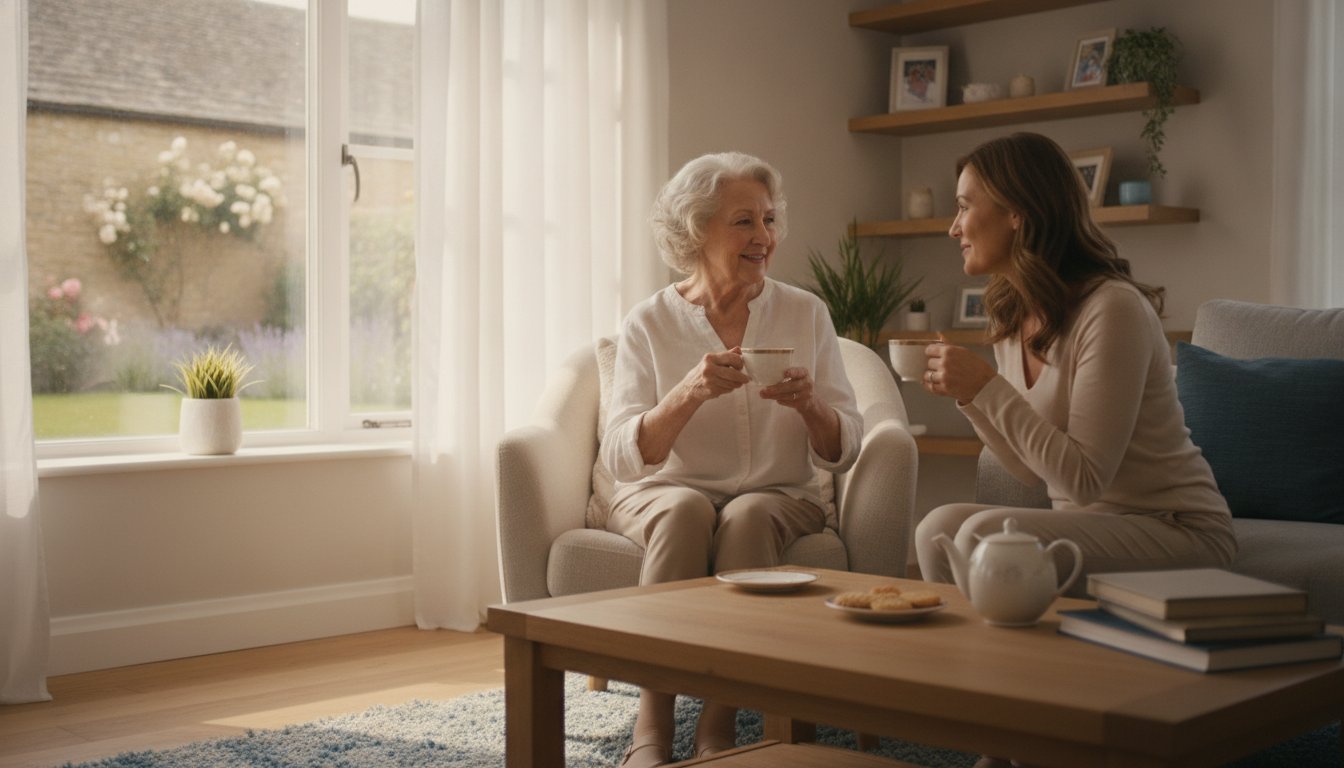
What if the safest place for your loved one isn’t a clinical facility with rigid schedules, but the very home where they’ve spent a lifetime building memories? Most families across the county feel a heavy weight of guilt when they start searching for alternatives to a care home in Oxfordshire, fearing that residential placement is the only way to ensure round-the-clock safety. It’s a difficult transition that often feels like a loss of autonomy for the individual and a loss of the family sanctuary for everyone involved. You’re likely looking for a way to protect their well-being without sacrificing the comfort of their familiar surroundings.
This guide will help you understand how live-in and domiciliary care provide safe, person-centered support that keeps your loved one exactly where they want to be. We’ll walk through Oxfordshire-specific funding, CQC ratings, and the practical steps to maintaining self-sufficiency through bespoke dementia and elderly care. By the end, you’ll have a clear, unhurried path toward a solution that honors your family’s lifestyle and provides the professional reassurance you need.
Key Takeaways
- Understand how your private residence can remain a sanctuary through tailored support that prioritizes dignity and mental well-being.
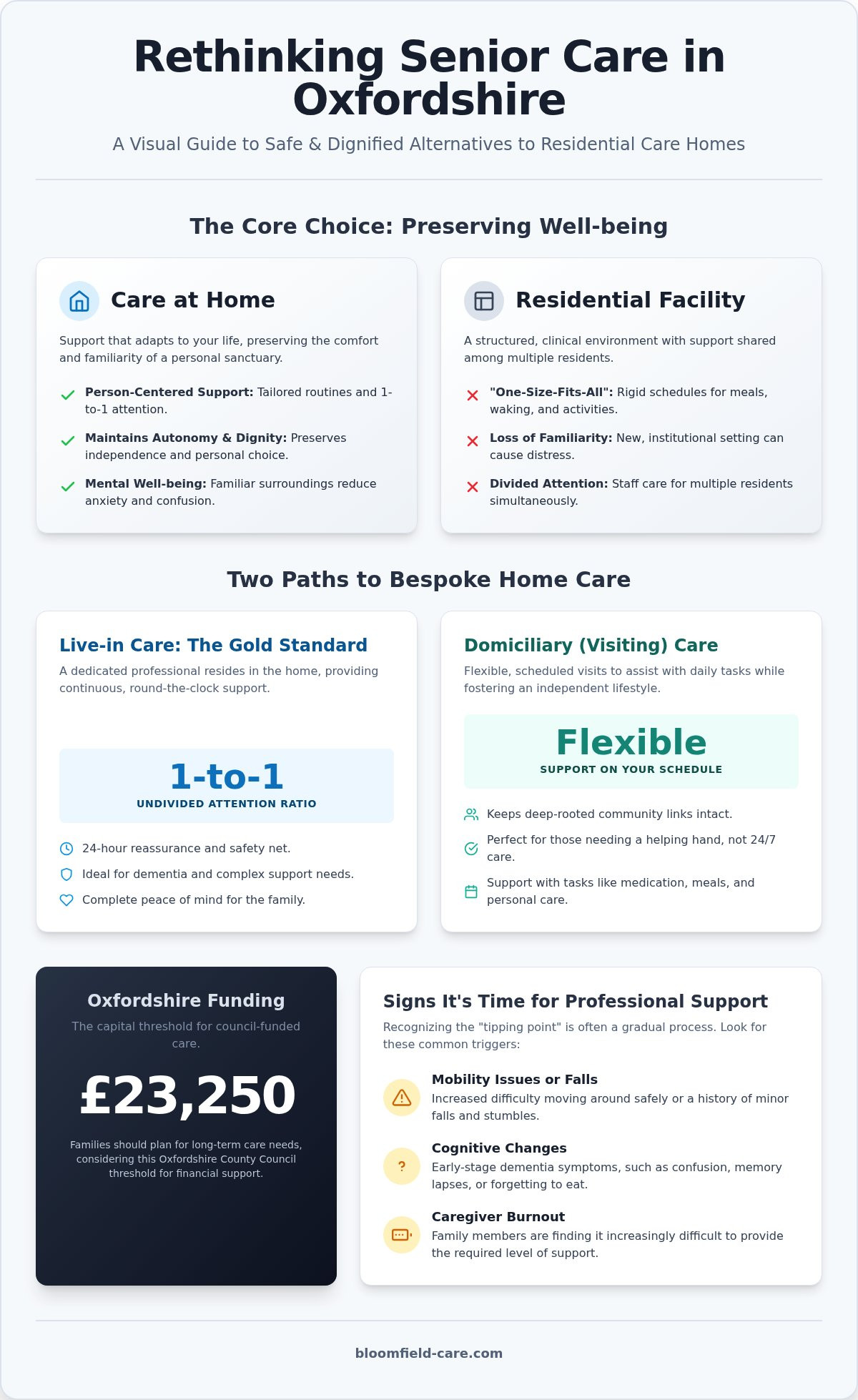
- Discover how live-in and visiting care serve as effective alternatives to a care home in Oxfordshire, providing dedicated 1-to-1 attention that institutional settings can’t match.
- Learn about the flexibility of domiciliary care for those who need a helping hand with daily tasks while maintaining their independent lifestyle.
- Identify the financial implications of the £23,250 Oxfordshire County Council threshold to better plan for your family’s long-term care needs.
- Find out how to approach sensitive care conversations with grace and how to arrange a professional assessment to ensure your loved one’s safety.
Exploring the Dilemma: Why Families Seek Care Home Alternatives
Choosing between the familiar comfort of home and the structured environment of a residential facility is one of the most taxing decisions a family can face. In Oxfordshire, many families find themselves at a crossroads where the need for safety begins to clash with the desire for independence. This emotional weight isn’t just about finding a bed; it’s about preserving a person’s history and sense of self. When we speak of alternatives to a care home in Oxfordshire, we are describing a shift in perspective. It is support that comes to you, adapting to your rhythm rather than forcing you to conform to a clinical schedule.
The family home often serves as a profound sanctuary, especially for those living with cognitive challenges. Familiar surroundings act as an anchor for mental well-being, providing a level of stability that an institutional setting simply cannot replicate. Staying in a private residence allows for a continuity of life that fosters calm and reduces the anxiety often triggered by sudden environmental changes. It’s about more than just four walls; it’s about the memories and the comfort of a known layout that promotes a sense of security.
The Shift Toward Person-Centered Care
Traditional care homes often operate on a “one-size-fits-all” routine, where meals, waking hours, and activities are pre-determined for a large group. Person-centered care flips this model. By choosing home-based support, individuals in towns like Wallingford and Abingdon can maintain their deep-rooted community links. They keep their local GP, continue to see the same friendly faces at the local shop, and remain in the neighborhood they know and love. This autonomy is vital; being able to choose the small details of one’s day is the foundation of maintaining true dignity.
Identifying the Signs: When is an Alternative Needed?
Recognizing the “tipping point” for professional help is rarely about a single event. Instead, it’s often a gradual realization that companionship alone isn’t meeting the person’s needs. Common triggers include:
- Increased difficulty with mobility or a history of minor falls.
- Early-stage dementia symptoms, such as confusion or forgetting to eat.
- Caregiver burnout, where family members can no longer provide the level of support required.
Safety concerns are paramount, yet they don’t have to mean a move to a facility. Care home alternatives serve as a vital bridge to independent living, offering the necessary security without the constraints of an institutional routine. By integrating professional support into the domestic environment, families can find a balance that ensures safety while protecting the sanctity of the home. This approach allows for a level of customization that prioritizes the individual’s lifestyle above all else.
Live-in Care: Gold Standard Home Care in Oxfordshire
Live-in care represents the most comprehensive choice among alternatives to a care home in Oxfordshire. It involves a dedicated care professional residing within your loved one’s home, providing round-the-clock support while allowing them to remain in their sanctuary. Unlike the institutional setting of a residential facility, this model ensures that life continues on the individual’s terms. Household routines remain intact; the cat still sleeps at the foot of the bed, and breakfast is served exactly when and how it’s always been preferred.
The primary benefit of this approach is the 1-to-1 attention. In many residential settings, staff members must divide their time between multiple residents, often leading to a “one-to-many” ratio that can feel hurried or impersonal. With live-in care, the focus is entirely on one person. This undivided attention allows the carer to spot subtle changes in health or mood that might otherwise go unnoticed, providing a level of proactive safety that institutional care often struggles to match.
24-Hour Reassurance and Safety
For families living in Oxford, Newbury, or further afield, the constant presence of a professional offers profound peace of mind. You don’t have to worry about a midnight fall or a missed dose of medication. A bespoke care plan is created to evolve with the individual, ensuring that as needs change, the support adapts. This professional safety net is woven into the domestic environment, maintaining the home’s warmth while adding the security of a clinical eye. If you are beginning to weigh these options, exploring bespoke home support can provide the clarity your family needs.
Expertise in Dementia and Complex Support
Familiarity is a powerful tool in managing memory loss. Staying at home is often clinically beneficial as it reduces the confusion and distress associated with new environments. Specialized Alzheimer’s care in Oxfordshire focuses on these environmental advantages to promote wellness. Through compassionate live-in care, we can help manage “sundowning” and anxiety. Consistent, familiar faces provide a sense of continuity that stabilizes the day, ensuring that even as cognitive abilities shift, the person’s dignity and comfort remain the highest priority.
Domiciliary and Visiting Care: Flexible Support for Independence
While live-in care offers a constant presence, many families find that their needs are best met through a more flexible, hourly approach. Domiciliary care serves as one of the most practical alternatives to a care home in Oxfordshire for those who value their self-sufficiency but require a helping hand with specific daily routines. It’s a gentle bridge that allows for managed assistance while keeping the individual firmly in control of their own schedule. This type of support integrates naturally into the Oxfordshire lifestyle, ensuring that local community ties remain strong and the private residence remains a place of comfort.
Bespoke Visits in Wallingford and Oxford
Professional visits are never just about a checklist; they’re about the person. In towns like Wallingford and the historic streets of Oxford, care can be tailored to fit precisely around existing habits and local activities. Some may only require a 30-minute check-in to ensure medication is taken, while others benefit from multiple daily visits to assist with personal care, light domestic tasks, or meal preparation. These visits also provide vital respite care in Oxfordshire for family members who are managing the bulk of support themselves. It’s a partnership that preserves the family’s energy while ensuring professional standards of safety and domestic comfort are always met. By focusing on specific tasks, we ensure that the individual remains the master of their own sanctuary.
The Power of Companionship
Choosing between various alternatives to a care home in Oxfordshire depends largely on the level of autonomy a person wishes to retain. Beyond the physical tasks of dressing or cooking, the emotional benefit of visiting care is a cornerstone of mental well-being. Loneliness can often creep in when mobility decreases, making regular social interaction a vital lifeline. A visiting carer becomes a trusted advisor and friend who encourages hobbies, facilitates local outings to familiar spots, and provides meaningful mental stimulation. Whether it’s a short walk through a local park or a simple chat over a cup of tea, these interactions help maintain a sense of self and purpose. We focus on building long-term relationships based on trust and mutual respect, ensuring that every visit feels like a supportive connection rather than a clinical appointment. This human-centered approach ensures that wellness isn’t just managed but actively enhanced through genuine human connection. It’s about honoring the individual’s history while providing the support they need to enjoy their present.
Costs and Lifestyle: Home Care vs. Residential Care
Financial clarity is essential when your family is exploring alternatives to a care home in Oxfordshire. The local landscape is governed by the Oxfordshire County Council capital threshold, which currently stands at £23,250. If your loved one’s savings or assets exceed this amount, they will likely be considered a self-funder. Understanding the cost of home care in Oxfordshire helps you compare the bespoke model of home support against the “all-inclusive” fees of residential facilities. While a care home fee covers the room and board, it often lacks the flexibility to scale support up or down based on the individual’s actual daily needs.
Lifestyle impacts are equally significant. Moving into a facility often requires giving up a beloved garden, parting with pets, and losing the privacy of a personal front door. Home care allows the private residence to remain a sanctuary. Your loved one keeps their familiar kitchen, their favorite armchair, and the freedom to host visitors whenever they choose. It’s a choice that prioritizes the sanctity of the individual’s lifestyle over the rigid logistics of an institutional routine.
Value Beyond the Price Tag
For couples, the financial benefit of home-based support is often profound. In a residential setting, you’re typically required to pay for two separate beds, which can double the weekly expenditure. A single live-in carer can often support a couple together, allowing them to stay in their shared home for a fraction of the cost. We also consider the emotional value of avoiding “transfer trauma.” This is the documented decline in physical and mental health that can occur when an elderly person is moved from a familiar environment to a clinical one. Staying at home preserves stability and fosters a sense of unhurried continuity.
Safety and CQC Standards
Professional safety should never be a secondary concern. When researching alternatives to a care home in Oxfordshire, it’s vital to choose a provider regulated by the Care Quality Commission (CQC). Unlike introductory agencies that merely “match” you with a carer and leave you to manage the legalities, a regulated provider takes full responsibility for training, background checks, and ongoing supervision. This ensures that the support provided meets high clinical and safety standards. If you’re ready to discuss a tailored plan for your family, you can contact our specialist team to explore your options with a trusted advisor. We focus on rigorous standards to ensure that the home remains not just a place of comfort, but a place of absolute safety.
Making the Right Choice for Your Family in Oxfordshire
Choosing the right path forward requires patience and a gentle heart. It’s often the conversations we find most daunting that lead to the most profound peace of mind for the whole family. When you begin discussing alternatives to a care home in Oxfordshire, start by listening more than speaking. Ask your loved one what they value most about their daily life. Often, it’s the simple things: the view from a favorite window, the ability to make a cup of tea whenever they wish, or the presence of a family pet. By focusing on these anchors of identity, you can explore support options that feel like an enhancement of their life rather than an institutional replacement.
A professional care needs assessment serves as the foundation of this transition. It isn’t a clinical interrogation. Instead, it’s a collaborative process designed to understand how to best support autonomy within the home. We look at the physical environment, specific health requirements, and the emotional well-being of the individual. This assessment allows us to build a roadmap that prioritizes your loved one’s wishes while ensuring their safety. It’s about finding a balance that honors their history while providing the professional reassurance you need.
Your Next Steps Toward Reassurance
Booking a free assessment is a practical way to replace anxiety with a clear, actionable plan. When a care manager visits your home, they aren’t just looking at mobility aids or medication charts. They are looking at how to preserve the sanctuary of the domestic environment through unhurried, compassionate support. This visit is your opportunity to ask questions about our local expertise across Oxfordshire, Dorset, and West Berkshire. You should look for a partner who listens to the small details and respects the sanctity of your home. We aim to ensure your support system is deeply rooted in your local community.
The Bloomfield Difference
Since our founding in 2014, we’ve operated with a person-centered philosophy that treats every individual with the dignity they deserve. We don’t just manage tasks; we focus on comprehensive wellness and the promotion of self-sufficiency. Our goal is to help your loved one thrive in their own surroundings, maintaining the lifestyle they’ve worked so hard to build. This commitment to excellence is why many families trust us as their dedicated caregivers and advisors. If you’re still weighing your options, you can request a consultation with our Bloomfield Care home or care at home specialists. We’re here to guide you through these alternatives to a care home in Oxfordshire with grace and clarity.
Embracing a Future of Comfort and Independence
Choosing the right path for a loved one is a journey of the heart. We’ve explored how live-in and domiciliary care serve as empowering alternatives to a care home in Oxfordshire, allowing the private residence to remain a sanctuary of memories and familiar routines. Whether it’s the 1-to-1 attention of a live-in professional or the flexible support of visiting care, these options prioritize dignity and mental well-being over institutional schedules. You don’t have to navigate these complex financial and emotional decisions alone.
Since 2014, we’ve served as a trusted advisor to families across Oxfordshire and Dorset. As a CQC regulated provider with specialist dementia care expertise, we focus on wellness and the sanctity of the individual’s lifestyle. Our team is here to listen and guide you through every step of this transition with patience and integrity. When you’re ready to explore a roadmap that honors your family’s wishes, we invite you to Book a Compassionate Care Assessment with Bloomfield Care. Together, we can ensure your loved one continues to thrive in the home they love.
Frequently Asked Questions
What are the main alternatives to a care home in Oxfordshire?
The primary alternatives to a care home in Oxfordshire include live-in care and visiting domiciliary care. These services bring professional support directly to your front door, allowing your loved one to stay in their familiar surroundings. While live-in care provides a constant presence, domiciliary care offers flexible, hourly visits for specific tasks. Both options prioritize the individual’s autonomy and keep them connected to their local community and neighbors.
Is live-in care more expensive than a residential care home?
Live-in care costs are often comparable to residential care homes, particularly when you consider the high level of 1-to-1 attention provided. For couples, staying at home is frequently more cost-effective since they share one carer rather than paying for two separate beds in a facility. It’s a bespoke model where you only pay for the specific level of assistance required, rather than a flat, all-inclusive institutional fee.
Can I get help from Oxfordshire County Council to fund home care?
You can certainly apply for financial support through Oxfordshire County Council, though it depends on a means-tested assessment. If your loved one’s capital and savings fall below the £23,250 threshold, the council may contribute toward the cost of home care. We recommend requesting a formal care needs assessment to determine eligibility and to understand how local funding can support your family’s specific situation and long-term goals.
How do I know if my parent is safe with an alternative to a care home?
Safety is ensured through rigorous CQC regulation and the dedicated 1-to-1 nature of home-based support. Unlike a residential setting where staff ratios are shared, a home carer focuses entirely on one individual. This constant, professional presence means that changes in health or mobility are spotted immediately. Choosing a regulated provider ensures all staff undergo thorough background checks and receive ongoing specialist training to maintain high standards.
Does live-in care provide support for advanced dementia?
Yes, live-in care is an excellent option for those living with advanced dementia or Alzheimer’s. Staying in a familiar environment is often clinically beneficial as it reduces the confusion and “sundowning” symptoms that new clinical settings can trigger. Specialized carers use their expertise to create a calm, stable atmosphere that respects the individual’s history while managing the complex challenges of memory loss with genuine patience and dignity.
What happens if our needs change over time?
Care plans are designed to be flexible and will evolve alongside your loved one’s requirements. If needs increase, we can seamlessly adjust the frequency of visits or transition from domiciliary support to a full-time live-in arrangement. This unhurried approach ensures that the level of assistance always matches the person’s current reality, providing a sense of stability and reassurance as life changes. We act as your trusted advisor throughout.
Are home care providers in Oxford regulated by the CQC?
Professional home care providers in Oxford must be registered with and regulated by the Care Quality Commission (CQC). This independent body inspects services to ensure they’re safe, effective, and well-led. When researching alternatives to a care home in Oxfordshire, always verify a provider’s current rating. Regulation provides an essential layer of protection and ensures that the care delivered meets strict national standards for safety and professional excellence.
Can a live-in carer help with pets and housework?
A live-in carer’s role extends beyond personal care to include light housework, meal preparation, and pet care. Maintaining a clean, comfortable home and keeping a beloved pet is vital for a person’s mental well-being and sense of self. Whether it’s walking the dog or managing the weekly laundry, these domestic tasks are handled with respect to ensure the home remains a sanctuary. It’s about enhancing life quality, not just management.