

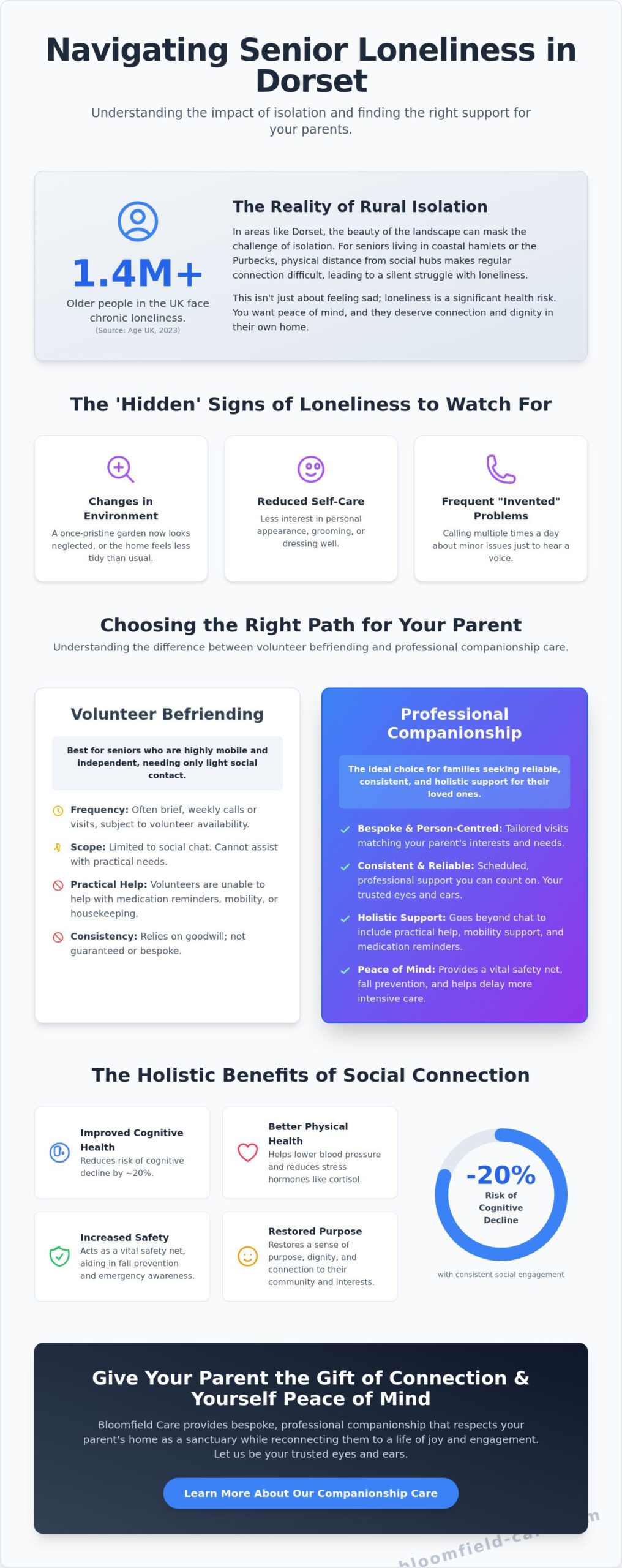
Imagine it’s 6:00 PM on a Sunday in Dorchester. You hang up the phone feeling that familiar, heavy knot of guilt because your mother insisted she’s “perfectly fine,” yet her voice sounded thinner than it did last week. You aren’t alone in this worry. Recent data from Age UK in 2023 highlights that over 1.4 million older people in the UK struggle with chronic loneliness, a figure that often translates into sleepless nights for their adult children. You want them to be safe and socially engaged, but you also respect their need to remain the master of their own home. Finding the right companionship for lonely parents Dorset is about more than just filling time; it’s about preserving the lifestyle they love.
We understand that the word “care” can feel like a threat to a proud parent’s dignity. You deserve to feel like a son or daughter again, rather than a constant coordinator of safety checks. This guide explains how bespoke social support provides a gentle solution, restoring your parent’s independence while acting as your trusted eyes and ears on the ground. We will explore how tailored visits can transform a quiet house back into a sanctuary of connection and give you the absolute peace of mind you’ve been looking for.
Key Takeaways
- Understand how bespoke companionship care addresses the unique challenges of rural isolation in the South West, restoring a sense of purpose and dignity to your parent’s daily life.
- Learn why professional companionship for lonely parents Dorset offers a more consistent and reliable alternative to volunteer befriending services for those seeking long-term peace of mind.
- Discover the holistic benefits of regular social connection, from reducing the risk of cognitive decline to providing a vital safety net for physical wellbeing and fall prevention.
- Gain a practical framework for mapping out a bespoke social calendar that respects your parent’s home as a sanctuary while reconnecting them with local gems like Poole Quay.
- Explore how a tailored matching process ensures your loved one is paired with a companion who shares their interests, blending clinical safety with the genuine warmth of a family home.
Understanding the Impact of Isolation on Seniors in Dorset
Companionship care is a bespoke, person-centred service that prioritises a senior’s emotional and social wellbeing above clinical tasks. It’s about more than just checking boxes; it’s about fostering a genuine human connection that respects the dignity of the individual. In 2026, we recognise that emotional health is the cornerstone of physical health. For those seeking companionship for lonely parents Dorset offers a unique landscape where the beauty of the Jurassic Coast often masks the quiet reality of rural isolation. Many seniors living in the Purbecks or tucked away in coastal hamlets find themselves physically distanced from local hubs, making regular social interaction a logistical challenge.
We understand the pressure felt by the Sandwich Generation. You’re likely balancing a career and your own children’s needs while carrying a heavy weight of worry for a parent who spends most days alone. It’s a difficult tightrope to walk. However, providing a regular visitor isn’t just a luxury. Research shows that consistent social engagement can reduce the risk of cognitive decline by approximately 20 percent. Understanding Loneliness in Seniors reveals that a simple chat is actually vital preventative healthcare, lowering blood pressure and reducing the cortisol levels associated with chronic stress.
The “Hidden” Signs of Loneliness to Look For
Loneliness doesn’t always announce itself loudly. You might notice subtle red flags during your weekly visits, such as a garden that was once pristine now looking neglected, or a parent who seems less interested in their personal appearance. Sometimes, the signs are more indirect. A parent might call you multiple times a day to discuss a minor, “invented” problem with the kettle or the television just to hear another voice. In a 2026 context, social isolation refers to a measurable lack of physical contact with others, while loneliness is the subjective, painful feeling that one’s social needs aren’t being met despite the presence of digital tools.
Why Dorset Families Are Seeking Professional Support
The traditional family structure has shifted significantly over the last decade. With many adult children now living in London or even further afield, the ability to pop in for a daily tea is no longer a reality for most. Professional companionship for lonely parents Dorset provides that essential peace of mind for families who can’t be there in person. Our approach focuses on maintaining independence within the sanctuary of the home. By providing consistent social support, we often help families delay the transition to more intensive domiciliary care in Weymouth. This holistic support ensures your loved one stays connected to their community while enjoying the comfort of their familiar surroundings.
Companionship Care vs. Befriending: Choosing the Right Path
Deciding how to best support an ageing parent is a journey filled with emotion and careful thought. In Dorset, families often find themselves choosing between volunteer befriending schemes and professional companionship care. While both aim to reduce the silence of a quiet home, they offer very different levels of support and reliability. Understanding these distinctions is the first step toward ensuring your loved one feels truly seen and supported.
When Volunteer Befriending is Enough
Volunteer befriending is a wonderful community resource, often provided by charities like Age UK. These services are typically designed for seniors who remain highly mobile and independent but would benefit from a friendly chat. It’s a light-touch approach that focuses on basic social contact. You might find this option suitable if your parent simply needs:
- A weekly 30 minute phone call to check in.
- A brief social visit for a cup of tea once a week.
- A friendly face to share local news with.
However, volunteer services are rarely bespoke. Because they rely on the gift of time from local people, visits can be less frequent or subject to change. Volunteers are also unable to assist with practical needs. They cannot help with medication reminders, light housekeeping, or the mobility support that often becomes necessary as we age. While these programmes are a vital part of the Dorset community, they may not be enough to combat the deep health risks of social isolation that can impact physical well-being.
The Advantages of Professional Companionship
Professional companionship for lonely parents Dorset offers a more robust and reassuring framework. It’s a dedicated partnership built on consistency and professional training. Unlike a volunteer, a professional companion is there at a guaranteed time, providing a reliable rhythm that many seniors find deeply comforting. This stability is essential for building a trusting relationship where your parent feels safe to be themselves.
The support provided is holistic. A professional companion doesn’t just sit and talk; they integrate themselves into your parent’s daily life. This might include preparing a fresh meal together, accompanying them to a garden centre in Wimborne, or providing gentle reminders for their morning routine. Finding the right companionship for lonely parents Dorset means looking for a service that matches your parent with someone who shares their hobbies, whether that’s a love for local history or a passion for knitting.
We understand that the idea of a “stranger in the house” can be a significant worry. This is why the matching process is so vital. We don’t just assign a staff member; we introduce a companion whose personality and life experience align with your parent’s. This turns a care visit into a meaningful connection with a trusted friend. If you’re starting to notice your parent needs more than just a weekly chat, exploring our bespoke companionship options can help you find that perfect balance of safety and social joy.
The Holistic Benefits of Regular Social Connection
Loneliness is more than a fleeting emotion; it’s a physiological state that can impact every facet of a senior’s life. The NHS highlights that chronic isolation has a serious effect on health, contributing to higher blood pressure and weakened immune systems. When arranging companionship for lonely parents Dorset, families aren’t just booking a visitor; they’re investing in a bespoke safety net. A regular companion notices the subtle shifts that a phone call might miss, such as a change in mobility or a dip in mood, ensuring that small concerns don’t escalate into crises.
Cognitive Stimulation and Dementia Support
Engaging the mind through conversation and shared interests is a powerful tool against cognitive decline. For those living with memory loss, social visits must be tailored to their specific needs. This involves understanding dementia stages to ensure activities remain stimulating rather than overwhelming. We use “Reminiscence Therapy,” where companions look through life journals or old photographs together. This practice validates the individual’s history and strengthens neural pathways by accessing long-term memories, providing a profound sense of identity and calm.
Physical Wellbeing and Confidence
Stepping outside often feels daunting for a parent who hasn’t left the house in weeks. A companion provides the physical and psychological reassurance needed to rediscover the local community. Whether it’s a gentle stroll along the Weymouth promenade or a visit to a local garden centre, having a trusted partner reduces the “fear of falling” that keeps many seniors housebound. This movement isn’t just about exercise; it’s about the confidence that comes from knowing someone is there to offer a steadying arm and a watchful eye.
Beyond movement, companionship for lonely parents Dorset addresses the vital link between socialising and nutrition. It’s a known fact that people eat better when they have company. A companion can help prepare a fresh meal and sit down to enjoy it with the parent, turning a functional task into a social highlight. This ensures they’re receiving the right nutrients while preventing the weight loss often seen in isolated seniors. Our approach always focuses on empowering independence by celebrating what a parent can do, such as choosing their own groceries or helping with a light recipe, rather than focusing on their limitations. This dignity-first model ensures your loved one feels like the lead protagonist in their own life, supported by a dedicated partner who truly cares.
Planning a Bespoke Social Calendar in Dorset
Creating a meaningful routine for an elderly loved one requires more than just a list of appointments. It’s about crafting a lifestyle that fosters independence while gently introducing social connection. Finding the right companionship for lonely parents Dorset involves a bespoke approach that respects their history and current comfort levels. A well-planned calendar provides a sense of rhythm and anticipation, which are vital for mental well-being.
Step 1: Identify your parent’s “Sanctuary”. Every person has a space where they feel most secure. For some, it’s a sun-drenched conservatory; for others, it’s a specific bench at a local park. Understanding this allows a companion to meet them where they are emotionally, building trust before venturing further afield. This sanctuary serves as the baseline for all future social expansion.
Step 2: Map out local Dorset interests. Our county offers a wealth of sensory experiences that can spark memories and conversation. Whether it’s watching the boats come in at Poole Quay or admiring the historic architecture of Christchurch Priory, these outings should be tailored to their specific passions. A walk through a familiar landscape doesn’t just provide exercise; it reinforces a person’s connection to their community.
Step 3: Integrate “Micro-Moments” of joy into the weekly routine. A successful social calendar doesn’t need to be packed with grand events. Small, consistent interactions, like a 15-minute daily chat about the morning news or a shared cup of tea, often provide more emotional stability than a monthly party. These moments become the anchors of their week, providing something to look forward to every single day.
Step 4: Set clear boundaries and goals for the companionship relationship. For a companionship relationship to thrive, clarity is essential. Discuss what your parent hopes to achieve, whether that’s walking a short distance to the local shop or finishing a specific craft project. Setting these milestones together ensures the support feels like a partnership rather than an imposition, maintaining their sense of agency.
Local Dorset Activities for Seniors
Dorset is home to vibrant communities that welcome older adults with open arms. You might consider the “Coffee and Chat” groups in Wareham, which provide a low-pressure environment for socialising with peers. Local garden centres also offer a wonderful sensory experience, combining gentle movement with the beauty of nature. If your family needs a temporary social boost or professional assistance during a transition, exploring respite care in Dorset can provide the necessary bridge to a more permanent social routine. The Dorset coastline remains one of our greatest assets; even a short drive to see the sea can significantly lift a person’s spirits and provide a fresh perspective.
How to Start the Conversation with Your Parent
Approaching this topic requires sensitivity and grace. Avoid using the word “care,” as it can sometimes imply a loss of autonomy. Instead, focus on “assistance” or “lifestyle support.” You might frame the companion as a “personal assistant” who is there to help them enjoy their social outings and hobbies more fully. Suggesting a trial visit is a practical way to see if the chemistry is right. This low-pressure introduction allows your parent to feel in control of the decision, ensuring their dignity remains the priority throughout the process. It’s about adding to their life, not taking anything away.
Discover how our bespoke companionship services can bring peace of mind and joy to your family today.
How Bloomfield Care Reconnects Families in Dorset
At Bloomfield Care, we believe high-quality support shouldn’t feel like a clinical transaction. Our philosophy blends rigorous clinical safety with the genuine warmth of a family home. We understand that for many, the search for companionship for lonely parents Dorset isn’t just about finding someone to check a box; it’s about finding a new friend. Our bespoke matching process is central to this mission. We don’t just assign a carer; we find a companion who shares your parent’s specific interests, whether that’s a love for the Jurassic Coast, local history, or traditional gardening techniques.
Distance often creates a heavy emotional burden for adult children living in London or further afield. Our carers act as a vital bridge, providing regular updates and ensuring the family remains part of the daily narrative. This constant connection helps reduce the guilt often felt by the “sandwich generation” and replaces it with a shared sense of security. By 2026, we’ve refined our communication tools to ensure you’re always informed about your loved one’s well-being without ever intruding on their privacy.
The Bloomfield Difference: Compassion and Integrity
Every home visit is built on a foundation of dignity and respect. For those who require more than a few hours of social interaction, our compassionate live-in care in Dorset provides a comprehensive solution for 24-hour engagement. One local family recently shared that our service gave them “the first full night’s sleep in three years,” knowing their mother was safe and happy. We’ve supported hundreds of families across the South West, focusing on the small details that make a house feel like a sanctuary.
- Bespoke matching based on personality and hobbies.
- Consistent carers to build long-term trust.
- Regular family check-ins and transparent reporting.
- Emphasis on maintaining local community links.
Your Next Steps to Peace of Mind
Starting the journey is a gentle, unhurried process. During a Bloomfield home visit and assessment, we sit down with you to understand the rhythms of your parent’s life. We involve the whole family in our person-centred planning, ensuring the support plan reflects personal preferences rather than just medical requirements. You can expect a transparent discussion about how to enhance independence while maintaining safety. We’ll never rush your decision because we value the sanctity of your loved one’s established lifestyle above everything else.
Contact us today for a free, gentle care needs assessment to see how we can provide the right companionship for lonely parents Dorset. We’re here to ensure your loved one continues to live a life full of purpose, connection, and joy within their own home.
Empowering Your Loved One to Thrive at Home
Choosing the right support isn’t just about filling hours; it’s about restoring a sense of purpose and belonging. We’ve explored how isolation impacts physical health and why a tailored social calendar provides more than just a distraction. As a CQC-regulated provider, Bloomfield Care combines professional excellence with the heart of a family-run business. We use bespoke matching based on your loved one’s specific hobbies and life history to ensure every visit feels natural and rewarding. Finding high-quality companionship for lonely parents Dorset is a vital step in protecting their independence and mental wellbeing. Our team focuses on holistic connection, moving beyond basic check-ins to create genuine friendships that respect your parent’s dignity. You don’t have to navigate these changes alone. We’re here to provide the stability, warmth, and professional reassurance your family deserves to move forward with confidence.
Frequently Asked Questions
What exactly does a companionship carer do during a visit?
A companionship carer focuses on shared activities that bring joy and mental stimulation to your loved one’s day. This might include a bespoke trip to Sherborne Abbey, assistance with a lifelong hobby, or simply sharing a pot of tea while looking through old photographs. Our carers act as a bridge to the community, ensuring your parent stays connected to the world they love while maintaining their independence at home.
Is companionship care available in rural parts of Dorset like Purbeck?
We provide companionship services across the entire county, including rural locations such as Purbeck, Wareham, and Swanage. Dorset spans over 2,500 square kilometres, and we’re committed to reaching families in even the most secluded villages. Our team understands that isolation is often higher in rural areas, so we ensure our travel schedules accommodate visits to these beautiful but remote parts of the coast and countryside.
How much does professional companionship for lonely parents cost in Dorset?
The cost of companionship care varies based on the level of support required, but industry benchmarks provide a helpful starting point. The Homecare Association’s 2024 report suggests a minimum hourly rate of £28.53 is necessary to provide sustainable, high-quality care in the UK. We provide a transparent breakdown during our initial consultation to help you plan your family’s budget with complete peace of mind.
Can a companion help with medication or light housework too?
Yes, our holistic approach means companionship for lonely parents Dorset often includes help with light domestic tasks and medication reminders. While the focus remains on emotional well-being, a carer can assist with dusting, laundry, or preparing a nutritious meal. This integrated support ensures the home remains a sanctuary of comfort and safety, allowing your parent to focus on the activities they enjoy most.
How do you match a carer with my parent’s personality?
We use a detailed person-centred assessment to match carers based on shared interests, temperament, and life experiences. If your parent is a retired teacher who loves gardening, we’ll look for a team member with a similar passion for nature and conversation. This careful selection process ensures a genuine friendship can blossom, rather than just a formal service arrangement, fostering a sense of true partnership.
What happens if my parent doesn’t get along with their companion?
If the initial match doesn’t feel quite right, we’ll work closely with you to find a more suitable companion immediately. We prioritise your parent’s comfort above all else and understand that personal chemistry is vital for successful support. Our management team reviews every placement within the first 14 days to ensure both parties feel happy, respected, and at ease with the new arrangement.
Is companionship care suitable for parents with early-stage dementia?
Companionship care is highly effective for those living with early-stage dementia as it provides vital cognitive stimulation and routine. According to the Alzheimer’s Society, there are roughly 900,000 people living with dementia in the UK, and consistent social interaction can significantly improve their quality of life. Our carers receive specialist training to provide gentle, patient support that respects the dignity of every individual navigating memory loss.
Can I book companionship visits for just a few hours a week?
You can certainly book companionship for lonely parents Dorset for as little as two or three hours per week. Flexibility is at the heart of our service, allowing you to increase or decrease support as your family’s needs evolve over time. Whether it’s a single weekly visit for a shopping trip or daily afternoon chats, we tailor the schedule to fit your parent’s unique lifestyle and preferences.