
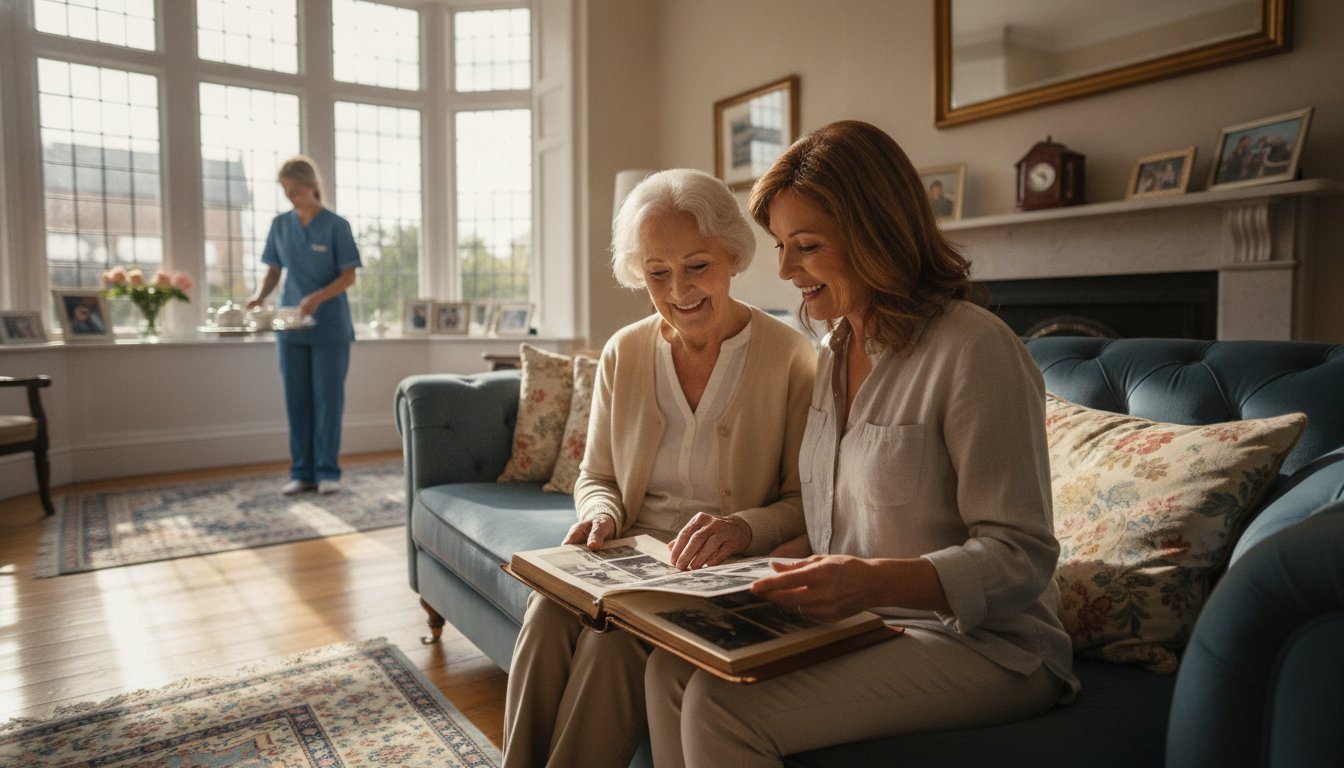
Imagine lying awake at 2:00 AM, heart racing because you aren’t sure if your father is safely in bed or wandering through a dark hallway. For many families across Oxfordshire and Dorset, this persistent fear leads to a level of caregiver burnout that feels impossible to escape. You want to protect their dignity, yet the guilt of considering a residential care home weighs heavily on your heart. Exploring the benefits of live-in care for dementia patients offers a compassionate alternative that keeps your loved one in the sanctuary of their own home. It’s about finding a balance where safety and professional expertise meet the warmth of a familiar environment.
We understand that you’re looking for more than just a service; you’re seeking peace of mind and a way to restore your family relationship. This article explains how specialized, person-centered support manages dementia-specific behaviors while ensuring your loved one remains in the local community they know and love. You’ll discover how 24-hour assistance provides a memory anchor to slow cognitive distress, allowing you to step back from the exhaustion of care tasks and return to being a daughter, son, or spouse again. We’ll walk you through the practicalities of professional live-in support and how it transforms the quality of life for everyone involved in 2026.
Key Takeaways
- Discover why a 1:1 staffing ratio provides a level of safety and personalized attention that residential care homes simply cannot match.
- Learn how staying in a familiar environment acts as a memory anchor, helping to reduce the confusion and agitation often triggered by new surroundings.
- Explore the primary benefits of live-in care for dementia patients, including the preservation of daily routines that foster a sense of autonomy and dignity.
- Understand the practical steps for transitioning to home-based support, from preparing the physical space to having gentle, supportive conversations with your loved one.
- See how professional assistance allows family members to move away from the exhaustion of caregiving and return to their cherished roles as family.
What is Specialist Live-in Care for Dementia Patients?
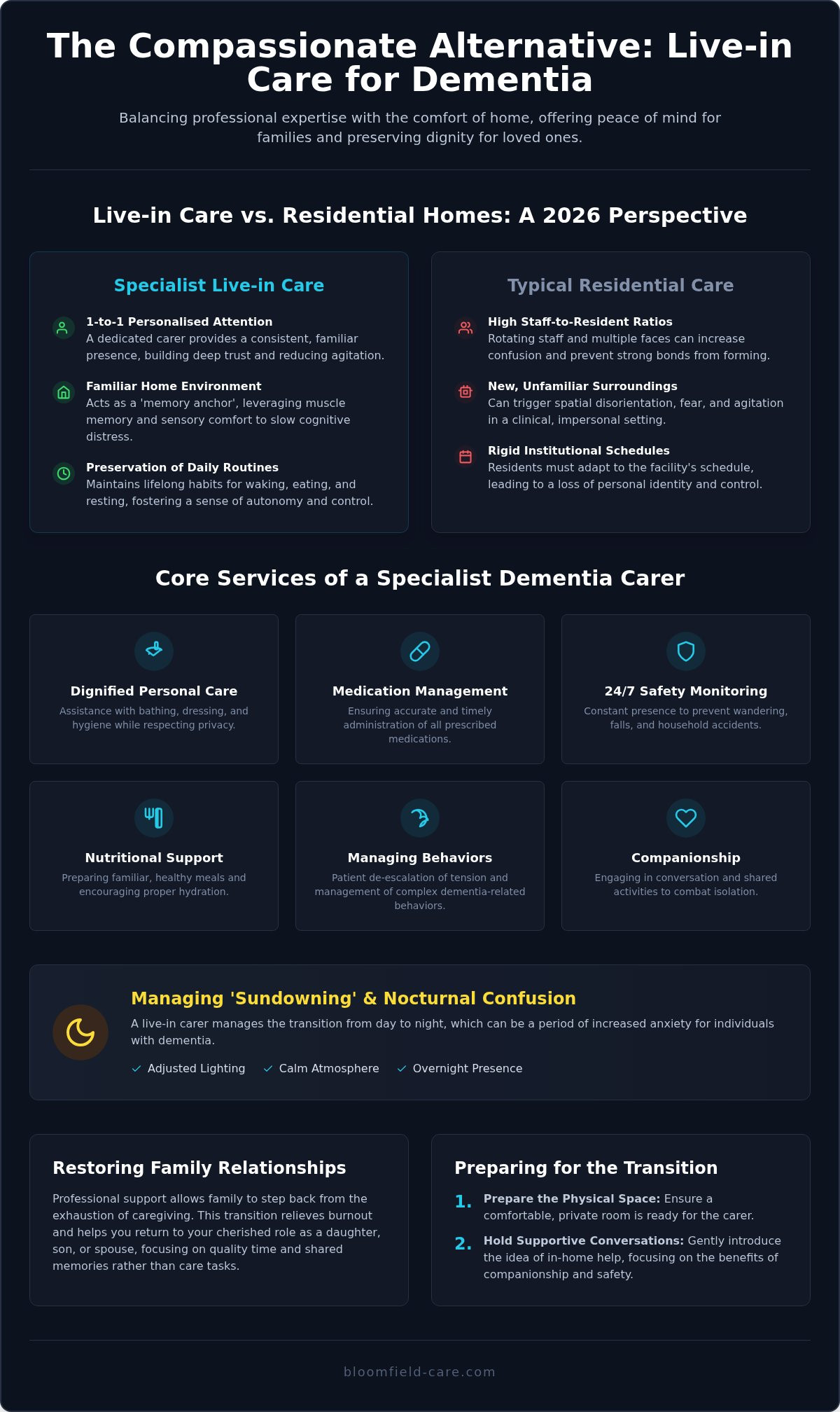
Specialist live-in care is a person-centered model where a professional resides within the home to provide round-the-clock support. This isn’t just about having someone in the house; it’s a dedicated 1-on-1 partnership that prioritizes the individual’s personal history and daily preferences. One of the primary benefits of live-in care for dementia patients is the elimination of rotating staff. In a typical residential setting, a person might see several different faces in a single week. At home, they see one familiar person who understands their unique needs. This 1-on-1 advantage is superior for those with memory issues, as it builds deep trust and reduces the agitation caused by constant change.
When families explore the question, What is a Caregiver?, they discover that specialist dementia support is a distinct, professional discipline. While companionship focuses on social interaction and light help, specialist care involves managing complex behaviors, medication schedules, and personal hygiene with clinical precision. A dedicated carer understands that a sudden change in mood might signal physical discomfort or a reaction to a specific trigger. They’re trained to de-escalate tension with patience and kindness, ensuring the private residence remains a calm sanctuary for your loved one in Oxfordshire or Dorset.
Why Familiarity is a ‘Memory Anchor’ in Dementia
Dementia often leads to spatial disorientation, making new environments feel frightening or hostile. Staying at home allows a person to rely on years of muscle memory. They know the height of the steps and the location of the light switches without having to consciously process the information. This familiarity extends to the senses. The specific scent of the garden in Poole or the sound of the church bells in Abingdon can provide profound psychological comfort. Environmental stability slows the ‘distress’ phase of dementia by providing a predictable and safe backdrop for daily life.
The Core Services of a Dementia Live-in Carer
A specialist carer takes on the essential daily tasks that often become overwhelming for family members. They provide dignified personal care, such as assistance with bathing and dressing, while ensuring medication is managed accurately. Nutritional support is equally vital; since dementia can affect appetite and thirst, carers prepare familiar, healthy meals and encourage regular hydration to prevent secondary health issues. Most importantly, they provide constant safety monitoring. Having someone present 24/7 significantly reduces the risk of household accidents or wandering, providing families across West Berkshire with much-needed peace of mind.
Key Benefits of Live-in Care for Dementia Patients
Choosing home-based support allows an individual to maintain their unique identity while receiving professional assistance. One of the primary benefits of live-in care for dementia patients is the preservation of autonomy. Instead of adhering to a rigid facility schedule, your loved one continues to wake, eat, and rest according to their lifelong habits. This consistency of routine is vital; it provides a sense of control and significantly reduces the agitation often seen when a person feels lost in a clinical environment. According to the National Institute on Aging, long-term care should adapt to the person’s needs, and live-in care does exactly this by centering all activity around the individual’s comfort.
The continuity of care provided by a single, dedicated carer creates a bond that rotating staff cannot replicate. This trust is essential for social interaction. In late-stage dementia, isolation is a common risk, but a live-in professional ensures your loved one remains engaged through conversation and shared activities tailored to their cognitive abilities. If you’re considering how this might work for your family, exploring personalized dementia care options can help clarify the next steps.
Managing ‘Sundowning’ and Nocturnal Confusion
Sundowning refers to a state of increased confusion and anxiety that often occurs in the late afternoon or early evening. It happens because the brain’s internal clock becomes disrupted, making the transition from daylight to darkness stressful. A live-in carer manages this by gradually adjusting lighting and maintaining a calm, quiet atmosphere during these sensitive hours. Having an overnight presence is equally important for those who experience sleep-wake cycle disruptions. When a person wakes up disoriented at 3:00 AM, their carer is immediately there to provide reassurance, preventing the distress that leads to wandering or accidents.
Physical Safety Without Restraint
Safety in a private residence is achieved through careful observation rather than restriction. A specialist carer identifies and removes trip hazards like loose rugs or cluttered pathways while respecting the home’s layout. By using subtle assistive technology alongside human presence, they create a ‘safe zone’ that protects the individual without the feeling of a locked ward. This approach ensures that the primary benefits of live-in care for dementia patients, such as safety, dignity, and comfort, are realized every day. It allows your loved one to move freely within their own space.
Live-in Care vs. Residential Care Homes: A 2026 Perspective
The choice between a residential facility and staying at home is often the most difficult decision a family faces. While care homes offer structured safety, they can’t match the 1:1 staffing ratio of live-in support. In a home setting, one carer is dedicated entirely to your loved one; in a residential home, that same carer might be responsible for five or more residents simultaneously. This level of focus is one of the key In-Home Care Options that ensures an immediate response to confusion or physical needs. Beyond the ratio, the inherent infection control of a private house provides a layer of safety that communal living simply lacks.
Personalization is where home-based support truly excels. Autonomy is often lost in a facility’s rigid schedule. In your own home, you choose when to wake up and what to eat. There’s no “breakfast window” or set visiting hours. This freedom to lead a life on one’s own terms is among the most profound benefits of live-in care for dementia patients, as it preserves a sense of self that can be eroded in more clinical settings.
When is Home Care the Better Choice?
For many living in Oxfordshire or Dorset, the home is more than just a building. It’s the garden they’ve tended for decades and the pets that provide silent companionship. For someone with advanced memory loss, the trauma of moving can accelerate cognitive decline. Staying in a familiar environment acts as a stabilizer, keeping them connected to their local community in places like Abingdon or Poole. If you’re weighing these paths, our guide on Bloomfield Care Home or Care at Home? offers deeper insights into making the right choice for your family’s specific situation.
The Financial Reality of Care Options
Residential suites often come with hidden costs, such as additional fees for specialized dementia units, laundry, or personal items. Live-in care fees are generally more transparent and inclusive of the professional’s dedicated time. One of the significant financial benefits of live-in care for dementia patients is how it supports couples. Instead of paying for two separate beds in a care home, a couple can often stay together in their own house for a fraction of that total cost. To understand the local landscape, read The Cost of Home Care in Oxfordshire and Dorset for a clear breakdown of what to expect in 2026.
Preparing for the Transition to Live-in Care
Introducing a new presence into a private sanctuary is a sensitive transition that requires grace and clear communication. When you begin ‘the conversation’, focus on the positive outcomes rather than the loss of independence. Frame the carer as a companion or a helper who allows your loved one to stay in their beloved home. This approach highlights the benefits of live-in care for dementia patients by emphasizing safety and friendship over clinical management. If your loved one is suspicious or confused, starting with short visits before the full transition can build essential trust.
Practical preparation is equally important. A live-in carer needs a private, furnished bedroom to ensure they remain well-rested and attentive. Beyond the physical space, creating a ‘Life Story Book’ is a wonderful way to bridge the gap between a stranger and a trusted advisor. This book should detail your loved one’s history, favorite meals, and even small preferences like how they take their tea. During the first 48 hours, stay present to help set boundaries and expectations, ensuring everyone feels secure in this new partnership.
Choosing the Right Dementia Carer
Finding the right match is about more than just a resume. While specialist training is non-negotiable, ‘soft skills’ like patience and genuine kindness are what truly sustain a long-term relationship. During the initial assessment, ask potential carers how they handle repetitive questions or specific triggers. The goal is to find someone whose personality complements your loved one’s temperament, creating a calm and supportive atmosphere in the home. It’s this human connection that transforms professional support into a family-oriented system.
Adapting the Home Environment
Simple, non-clinical modifications can significantly enhance safety and autonomy. Consider adding clear signage to the bathroom door or improving lighting in hallways to reduce evening confusion. Non-slip flooring and removing loose rugs are practical steps that prevent accidents without making the house feel like a hospital ward. As needs evolve, it’s helpful to stay informed about the journey ahead; you can read more about Understanding Dementia Stages to anticipate future requirements.
If you’re ready to discuss how a dedicated professional can support your family in Oxfordshire or Dorset, contact Bloomfield Care today to learn more about our person-centered approach.
The Bloomfield Care Approach to Dementia Support
Bloomfield Care was founded in 2014 with a clear mission: to provide the high level of professional safety expected from a healthcare provider while maintaining the warmth of a domestic environment. We believe that the private residence is a sanctuary. Our person-centered approach ensures that every individual in Oxfordshire, Dorset, and West Berkshire receives support that respects their dignity and history. The benefits of live-in care for dementia patients are most effective when the carer becomes a trusted advisor, working in partnership with the family to handle the emotional complexities of the condition. We don’t just manage symptoms; we focus on enhancing the individual’s lifestyle through genuine connection.
Local Support Across the South of England
A common concern when choosing a provider is the feeling of being just another number in a national database. We address this through our local branch structure in Wallingford, Weymouth, and Newbury. This means a local manager who understands the community in Abingdon or Poole can visit your home in person to ensure everything is running smoothly. Our network of carers is deeply rooted in the South of England, providing a level of local expertise that national agencies often miss. You can learn more about our regional presence by visiting Compassionate Live-in Care in Oxfordshire, Dorset, and West Berkshire.
Next Steps: Your Free Care Assessment
The journey toward professional support begins with a gentle, comprehensive needs assessment. During this visit, we focus on understanding the individual’s routine, preferences, and specific cognitive challenges. This isn’t a clinical audit; it’s a conversation designed to create a bespoke care plan that evolves as the person’s needs change. We listen to your concerns and observe the home environment to ensure every safety detail is addressed.
By choosing this path, families often find they can finally release the weight of caregiver burnout. One of the most profound benefits of live-in care for dementia patients is the way it restores the family dynamic. When a professional manages medication, meal preparation, and safety, you’re free to return to your role as a loved one. We empower you to spend quality time together, focused on connection rather than the exhaustion of daily care tasks. Our CQC regulated service provides the professional clinical safety you need, allowing you to find peace of mind while your loved one remains in the comfort of their own home.
Embracing a Future of Comfort and Dignity at Home
Choosing the right path for a loved one living with memory loss is a journey rooted in love and the desire for safety. By prioritizing the home as a sanctuary, you ensure that familiarity and muscle memory remain powerful anchors in their daily life. The benefits of live-in care for dementia patients extend beyond physical assistance; they offer a way to preserve a person’s unique identity and rhythm without the upheaval of moving to a clinical facility.
At Bloomfield Care, we’re here to walk this path with you as a trusted advisor. As a CQC Regulated Provider with specialist dementia-trained staff and local branches in Wallingford, Weymouth, and Newbury, we provide the professional clinical safety your family deserves. Our person-centered approach is designed to restore your role as a family member rather than a full-time caregiver. You don’t have to face these challenges alone. We invite you to Request a Free Dementia Care Assessment in Oxfordshire or Dorset today. Let’s work together to create a supportive environment where your loved one can continue to live with dignity and grace.
Frequently Asked Questions
Is live-in care safe for someone with advanced dementia?
Yes, live-in care is highly safe because it provides a dedicated 1-on-1 presence that residential homes often cannot match. A specialist carer monitors the home environment 24/7, reducing the risk of falls or wandering during periods of nocturnal confusion. This constant supervision ensures that the primary benefits of live-in care for dementia patients, like immediate response to distress, are always active. It prevents accidents in a familiar space they already know.
What happens if the live-in carer needs a break?
We ensure that your loved one is never left without support. Every live-in carer is entitled to daily breaks and longer periods of rest, which we manage through a seamless relief system. A secondary, equally qualified carer steps in during these times to maintain the routine. This partnership-driven approach ensures continuity of care, so your family member remains safe and comfortable while their primary carer recharges to maintain their high standard of service.
How do you manage a person with dementia who refuses care?
Managing resistance requires a gentle, person-centered approach rooted in patience and trust. Our carers are trained in de-escalation techniques that prioritize the individual’s dignity. Instead of forcing a task, they might suggest a different activity or return to the request later when the person feels more at ease. This unhurried rhythm helps reduce the anxiety that often leads to refusal, turning a potentially stressful moment into a calm, supportive interaction.
Can a live-in carer stay with a couple if only one person has dementia?
Yes, live-in care is an excellent solution for couples who wish to stay together in their own home. The carer provides specialized support for the partner with dementia while offering light assistance or companionship for the other. This arrangement is often more cost-effective than two separate care home beds. It allows the healthy partner to regain their role as a spouse, offloading the physical and emotional exhaustion of full-time caregiving.
Is live-in care more expensive than a nursing home in Oxfordshire?
In Oxfordshire, the cost of live-in care is often comparable to high-end residential suites, but it offers significantly more value through 1-on-1 attention. While residential homes have fixed fees that might not include specialized dementia support, live-in care is transparent and tailored to the individual. For couples, staying at home with a single carer is typically much more affordable than paying for two separate nursing home placements in local areas like Wallingford or Abingdon.
How quickly can dementia live-in care be arranged in Dorset?
We understand that care needs can change rapidly, often following a hospital discharge or a sudden decline in health. In Dorset, we aim to arrange a comprehensive needs assessment within a few days of your initial inquiry. Once we understand the specific cognitive requirements and home environment in places like Weymouth or Poole, we can typically match a specialist carer and begin the service shortly after, providing immediate peace of mind for the family.
What qualifications do dementia live-in carers have?
Our carers possess a blend of professional certifications and specialist dementia training. As a CQC regulated provider, we ensure every team member undergoes rigorous background checks and continuous education in Alzheimer’s and dementia care. Beyond medical qualifications, we prioritize soft skills like empathy, patience, and integrity. This ensures they can manage complex behaviors with a gentle touch, focusing on enhancing life quality rather than just managing a clinical condition.
Can live-in care help with end-of-life or palliative needs?
Yes, providing palliative care at home is one of the most compassionate benefits of live-in care for dementia patients. Our specialist carers work alongside local district nurses and GPs to manage pain and comfort during the final stages of life. Staying in the sanctuary of a private residence allows for a peaceful, dignified transition surrounded by familiar sights and sounds. It empowers the family to focus on connection and shared memories during a sensitive time.