
Did you know that nearly one in three hospital beds is occupied by someone who is medically fit to leave, yet remains stuck because they lack the right support? This “revolving door” effect is a source of deep anxiety for families who watch their loved ones face the trauma of long ER waits and the risk of hospital-acquired infections. You likely feel that the hospital should be a place of temporary healing, not a recurring destination that leads to further decline. Focusing on avoiding hospital admission with home care allows you to protect your loved one’s dignity while transforming their house back into a safe, calm sanctuary.
We believe that every senior deserves a stable, predictable health routine that prioritizes their comfort and autonomy. This guide will show you how proactive home care can break the cycle of emergency admissions and keep your loved ones safe in their own familiar environment. You’ll discover how consistent attention to hydration, nutrition, and mobility can prevent health dips before they become crises. We will walk through the steps to creating a preventative care plan that offers your family lasting peace of mind and ensures your loved one stays where they are happiest.
Key Takeaways
- Understand the “revolving door” risks of hospitalisation and why maintaining the private residence as a sanctuary is vital for long-term well-being.
- Discover the four pillars of preventative care, focusing on how hydration and medication management are essential for avoiding hospital admission with home care.
- Learn how to transform a familiar home environment into a clinical-grade safety net through one-to-one attention and remote monitoring technology.
- Gain practical steps for conducting home safety audits and spotting early health “red flags” before they escalate into an emergency.
- Explore how person-centred support across Oxfordshire and Dorset can provide families with the peace of mind that comes from professional, compassionate vigilance.
The ‘Revolving Door’ Challenge: Why Avoiding Hospital Admission is Vital for Seniors
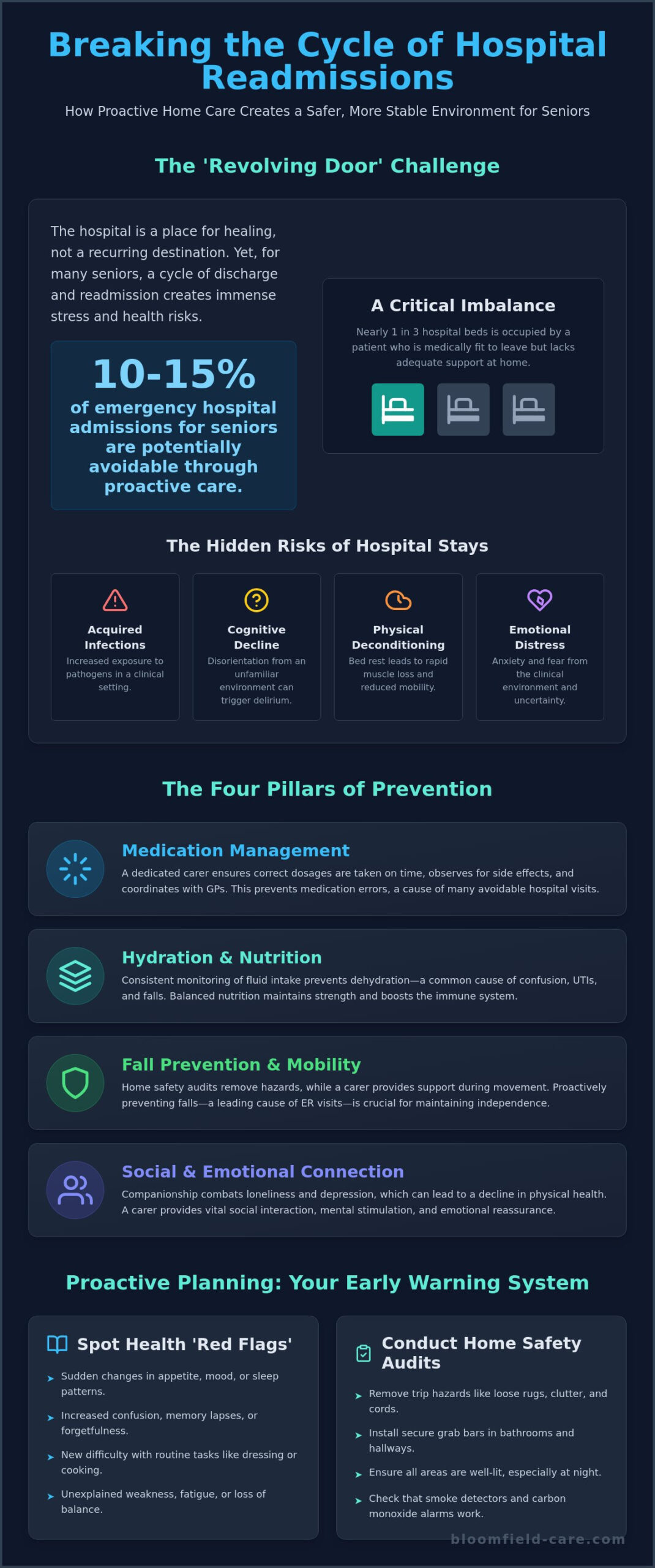
For many families, an emergency room visit feels like a necessary safety net. However, for a senior, the hospital environment can often be the start of a distressing cycle known as the “revolving door.” This phenomenon occurs when a patient is discharged, only to return within weeks because the underlying causes of their health dip weren’t managed effectively at home. Statistics from early 2026 show that the national average for potentially avoidable emergency admissions is 10%, rising to 15% in some areas. Focusing on avoiding hospital admission with home care is about more than just medical management; it’s about protecting the dignity and physical strength of your loved one. It’s a vital step in maintaining their quality of life.
The first 30 days after leaving a ward are the most critical. This period is fraught with risk, as the sudden shift from 24 hour clinical supervision to a quiet house can lead to missed medications or poor hydration. Without a steady hand to guide them, many seniors find themselves back in an ambulance before they’ve even finished their recovery. The emotional toll is just as significant. The fear of being rushed away creates a state of constant high alert for the individual, turning their home from a sanctuary into a place of uncertainty.
The Hidden Risks of the Clinical Environment
Hospitals are essential for acute crises, but they aren’t designed for long term comfort. For those living with dementia, a change in environment often triggers severe confusion and hospital acquired delirium. This disorientation can lead to a rapid decline in mental well being that is difficult to reverse once they return home. Physical “deconditioning” is another silent threat. Even a few days of bed rest in a hospital can lead to permanent mobility loss for a frail senior. Choosing bespoke domiciliary care in Weymouth or similar local support allows for professional monitoring in a familiar setting. Understanding What is Home Care? can help families see that professional support isn’t just about chores; it’s about providing clinical vigilance in a domestic setting that keeps confusion at bay.
The Economic and Social Cost of Emergency Care
The strain on our local NHS services in Oxfordshire and Dorset is immense. In early 2026, hospital bed occupancy rates reached 92.5%, well above the recommended safe levels. One in three hospital beds is currently occupied by someone medically fit for discharge but lacking social care support. Proactive care prevents the “crisis point” that often forces families into making rushed decisions about long term residential care. By prioritising avoiding hospital admission with home care, we can reduce the burden on local trusts while keeping our elders in the comfort of their own communities. Maintaining autonomy in a familiar setting respects the individual’s lifestyle while ensuring they receive the gentle, professional vigilance they need to stay well.
The Four Pillars of Prevention: How Home Care Reduces Emergency Risks
Stopping a health crisis before it starts requires more than luck. It’s about building a foundation of daily habits that protect a loved one’s health from the ground up. This proactive approach to avoiding hospital admission with home care depends on four essential pillars: medication management, hydration, fall prevention, and social connection. By focusing on these areas, we can break the cycle of emergency room visits and ensure your loved one remains safe in their own home.
Medication Adherence and Monitoring
Errors in medication are a significant contributor to the 10% of emergency admissions that are considered potentially avoidable. A dedicated carer doesn’t just hand over a pill. They act as a vigilant observer of subtle side effects that might otherwise go unnoticed. By coordinating with local GPs in Abingdon, Wallingford, and Oxford for regular prescription reviews, we ensure that treatments remain effective without causing new complications. For those with complex needs, compassionate live-in care provides 24/7 security. It ensures that no dose is missed and no adverse reaction goes unnoticed.
Eliminating the “Silent Killers”: Dehydration and UTIs
Dehydration and UTIs are often called “silent killers” because their symptoms are surprisingly subtle in older adults. Many seniors naturally lose their thirst reflex. This makes it easy to fall into chronic dehydration. Carers play a vital role by gently encouraging fluid intake throughout the day. They’re trained to identify early signs of infection, such as sudden confusion or lethargy. These are signs families often miss. Maintaining proper nutrition is just as vital. It directly impacts muscle strength and bone density. Studies on Preventing Hospital Readmissions highlight how these daily interventions are often more effective than clinical treatments after a crisis has already begun.
Fall prevention involves more than just removing rugs. It means monitoring strength and balance during daily movements. When a carer notices a slight wobble, they can adjust the routine to build confidence. Social connection is also a powerful tool. Isolation often leads to depression, which can mask physical decline. Having a regular companion ensures emotional well-being is nurtured alongside physical health. This holistic strategy is the cornerstone of avoiding hospital admission with home care, providing the stability your family deserves. If you’re noticing these subtle shifts, exploring live-in care can help you build a plan before a crisis occurs.
Home vs. Hospital: Creating a Clinical-Grade Safety Net in Your Private Residence
A hospital ward is a place of constant movement, bright lights, and the persistent hum of machinery. While these are necessary for acute care, they can be incredibly disruptive to a senior’s recovery. In contrast, the one-to-one attention provided by a dedicated carer creates a focused environment that a busy ward simply cannot match. By prioritising avoiding hospital admission with home care, families can ensure their loved ones receive professional vigilance without the sensory overload of a clinical setting. This personalised approach means that every subtle change in appetite or mood is noticed immediately, rather than being lost in the shuffle of a rotating nursing shift.
Modern technology has made it possible to bring the safety of a hospital into the sanctuary of the home. We use a combination of pendant alarms, fall sensors, and remote monitoring to provide a continuous safety net. These tools offer reassurance without being intrusive, allowing your loved one to maintain their independence. Unlike generic hospital discharge notes that often feel like a checklist, a personalised care plan is a living document. It evolves with the individual, ensuring that their specific health routines are maintained, right down to the time they prefer to take their morning tea.
Why Familiarity is a Form of Medicine
There is a profound science behind why we feel better in our own space. “Place attachment” refers to the emotional bond we have with our homes, and it has a documented effect on recovery rates. For those living with dementia, avoiding clinical white spaces is vital for reducing anxiety and preventing the “revolving door” of readmissions. When a senior sleeps in their own bed and follows their own rhythm, their body is in a better state to heal. To help families weigh these benefits, our Bloomfield Care home or care at home guide provides a detailed comparison of how different environments impact long-term wellness.
Professional Oversight Without the Clinical Coldness
Creating a “hospital-at-home” setup requires a blend of high-level training and genuine empathy. Our carers are skilled in spotting the subtle health changes that might signal an impending dip, allowing for early intervention. We work closely with community nurses across Dorset and Berkshire to ensure that clinical needs are met with the right equipment and support. This collaborative model is backed by research on hospital care at home, which suggests that many conditions can be managed more effectively in a domestic setting. By choosing this path, you aren’t just avoiding hospital admission with home care; you’re choosing a lifestyle that values comfort, dignity, and professional safety in equal measure.
Proactive Planning: Spotting ‘Red Flags’ Before a Crisis Occurs
Prevention isn’t a single event. It’s a continuous process of gentle observation and mindful planning. By identifying small shifts early, families can take control of the narrative rather than being at the mercy of a sudden emergency. This is the heart of avoiding hospital admission with home care. It’s about acting while the environment is calm, ensuring that your loved one’s sanctuary remains a place of safety. When we look ahead, we move from a state of constant worry to one of empowered reassurance.
- Step 1: Conduct a home safety audit. Walk through each room to identify physical hazards. Look for loose rugs, poor lighting in hallways, or the lack of sturdy grab rails in the bathroom. These small changes can prevent the falls that often lead to long clinical stays.
- Step 2: Monitor baseline health. Know what “normal” looks like for your loved one. This includes their typical energy levels, appetite, and how easily they move around the kitchen. When you know the baseline, a slight dip becomes much easier to spot.
- Step 3: Recognise cognitive shifts. A sudden bout of confusion isn’t always a sign of aging. It often signals a physical problem, such as an infection or a reaction to new medication. Recognising these shifts early allows for swift, home-based intervention.
- Step 4: Establish a professional support network. Don’t wait for a crisis to meet a carer. Introducing a companion early builds a foundation of trust. It ensures that when more intensive support is needed, the individual feels safe and respected.
- Step 5: Review care needs regularly. As conditions like dementia or Alzheimer’s progress, needs will naturally change. A care plan that worked six months ago might need a gentle adjustment today to remain effective.
Common Red Flags Every Family Should Know
Watch for subtle changes in daily habits. Sudden shifts in appetite or sleep patterns are often the first quiet signals that something is wrong. You might notice an increased frequency of “near-miss” trips or stumbles that your loved one tries to brush off. Withdrawal from social activities in local communities like Newbury or Poole is another significant indicator. Isolation often masks a physical or mental decline that requires a compassionate, professional eye to uncover.
The Role of Professional Assessments
A professional care assessment is fundamentally different from a standard GP visit. While a doctor focuses on clinical data, a care professional looks at how a person actually lives within their home. They can identify the need for specialist dementia or Alzheimer’s support long before a crisis hits. Starting this conversation doesn’t have to be difficult. We recommend approaching it as a partnership focused on maintaining independence. If you’re ready to take a proactive step, you can learn more about our elderly care and support services to see how we can help your family stay ahead of the curve.
Partnering with Bloomfield Care: Professional Support Across Oxfordshire and Dorset
At Bloomfield Care, we understand that the journey to wellness is deeply personal. Our person-centred approach is designed specifically for avoiding hospital admission with home care by creating a bridge between clinical safety and domestic comfort. We serve families across the region, from the historic heart of Oxford to the serene coastal communities of Weymouth. By providing a consistent, familiar face, we ensure that your loved one is never just another patient on a busy ward, but a valued individual living in their own sanctuary. Our team acts as a dedicated partner, listening to your concerns and providing the professional reassurance you need to feel confident in your choice.
The “Bloomfield Difference” lies in our commitment to combining compassion with clinical excellence. We don’t just provide a service; we build a support system that adapts as your needs change. For families transitioning a loved one from a hospital stay back to their private residence, we provide unhurried, attentive support to manage the critical first 30 days of recovery. This seamless transition is vital for breaking the “revolving door” cycle and ensuring that the return home is a permanent one, filled with dignity and respect.
Bespoke Care Plans for Every Individual
We recognise that every health journey is unique. Whether your loved one is managing the complexities of Parkinson’s or navigating stroke recovery, our care plans are tailored to their specific lifestyle and medical needs. We offer flexible options to suit your family’s rhythm, ranging from hourly domiciliary care for those needing a little extra help to full-time live-in care for those requiring constant vigilance. Our focus is always on enhancing life quality and promoting self-sufficiency, ensuring that our presence empowers the individual rather than making them feel dependent. Every plan is built on a foundation of comprehensive wellness, prioritising mental well-being alongside physical health.
Next Steps: Securing a Safer Future at Home
Choosing the right support is a significant decision, and we are here to guide you through it with grace and clarity. We invite you to book a free care needs assessment in your local area, where we can discuss your family’s specific situation in the comfort of your own home. During our first visit, we’ll listen to your story, conduct a gentle safety review, and begin drafting a roadmap for avoiding hospital admission with home care. There’s no rush and no pressure; our goal is simply to provide the stability and peace of mind your family deserves. Contact our friendly team today to discuss avoiding hospital admission and take the first step toward a more predictable, peaceful health routine for your loved one.
Taking the First Step Toward Lasting Peace of Mind
Choosing a path that prioritises the sanctuary of the home is a profound gift to your loved one. By focusing on the four pillars of prevention and creating a clinical-grade safety net within a private residence, you can break the distressing “revolving door” cycle of emergency room visits. We’ve explored how identifying subtle red flags and maintaining consistent routines in a familiar environment are the most effective tools for avoiding hospital admission with home care. This proactive approach doesn’t just manage health; it enhances the individual’s quality of life and preserves their dignity.
Since 2014, Bloomfield Care has served families across Oxfordshire, Dorset, and West Berkshire as a CQC regulated provider. As specialists in dementia and complex care, we pride ourselves on delivering the gentle, professional vigilance required to keep your loved ones safe. You don’t have to navigate these sensitive decisions alone. Our team is here to listen, support, and help you build a stable future where your loved one can thrive in the place they love most. Request a Free Care Needs Assessment to Prevent Hospital Admission today. Let’s work together to provide the reliable, heart-centred care your family deserves.
Frequently Asked Questions
Can home care really prevent hospital visits for someone with dementia?
Yes, home care is highly effective at preventing hospital visits for those living with dementia by maintaining a stable, familiar environment. Clinical white spaces often trigger confusion and delirium, which can lead to falls or severe emotional distress. A dedicated carer provides the gentle, consistent routine necessary to spot subtle health shifts before they escalate into an emergency, keeping your loved one safe in their own sanctuary.
What are the most common causes of avoidable hospital admissions in seniors?
The most common causes include urinary tract infections (UTIs), dehydration, medication errors, and falls. Statistics from early 2026 indicate that approximately 10% of emergency admissions are potentially avoidable with better community support. By focusing on avoiding hospital admission with home care, families can address these “silent killers” through consistent monitoring of hydration, nutrition, and strict medication adherence.
How does live-in care differ from a standard care home in preventing emergencies?
Live-in care provides dedicated one-to-one attention, whereas a standard care home involves staff managing multiple residents at once. This constant, personalised vigilance means a carer knows your loved one’s “normal” baseline intimately. They can detect a slight wobble or a change in appetite immediately, allowing for much faster intervention than might be possible in a busy ward or residential setting.
What happens if my loved one has a medical emergency while a carer is present?
If a medical emergency occurs, our carers follow a clear, professional protocol to ensure immediate safety. They’ll contact emergency services and provide essential health information to paramedics while offering calm, compassionate reassurance to your loved one. The carer also acts as a vital link for the family, ensuring you’re updated promptly and that all medical details are communicated accurately to healthcare professionals.
Is preventative home care available in rural parts of Dorset and West Berkshire?
Yes, we provide comprehensive support across rural Dorset and West Berkshire, ensuring that distance isn’t a barrier to quality care. Whether you’re located in a coastal community near Weymouth or a quiet village outside Newbury, our team is committed to reaching families who need us. We believe every senior deserves the safety and comfort of their own home, regardless of their postcode.
How do we transition a parent from hospital back to home safely?
Transitioning safely requires careful coordination between the hospital discharge team and your home care provider. We start by conducting a home safety audit and a thorough medication review to ensure everything is ready for their arrival. Having a carer present during the first 30 days is a proven strategy for avoiding hospital admission with home care, as it provides the stability needed during the critical recovery phase.
Can a carer help with post-operative recovery to prevent readmission?
Yes, our carers are specifically trained to support post-operative recovery by following clinical discharge instructions with precision. They assist with mobility exercises, monitor for signs of infection, and ensure that all medications are taken as prescribed. This dedicated oversight reduces the physical strain on the individual, allowing them to heal faster in their own bed and significantly lowering the risk of readmission.
What is the first step in setting up a preventative care plan with Bloomfield?
The first step is to book a free care needs assessment, which allows us to understand your family’s unique situation. During this unhurried visit, we’ll discuss your loved one’s health goals, daily routines, and any specific concerns you have. This partnership-driven approach ensures we create a person-centred plan that prioritises dignity, safety, and long-term wellness in the sanctuary of their own home.