
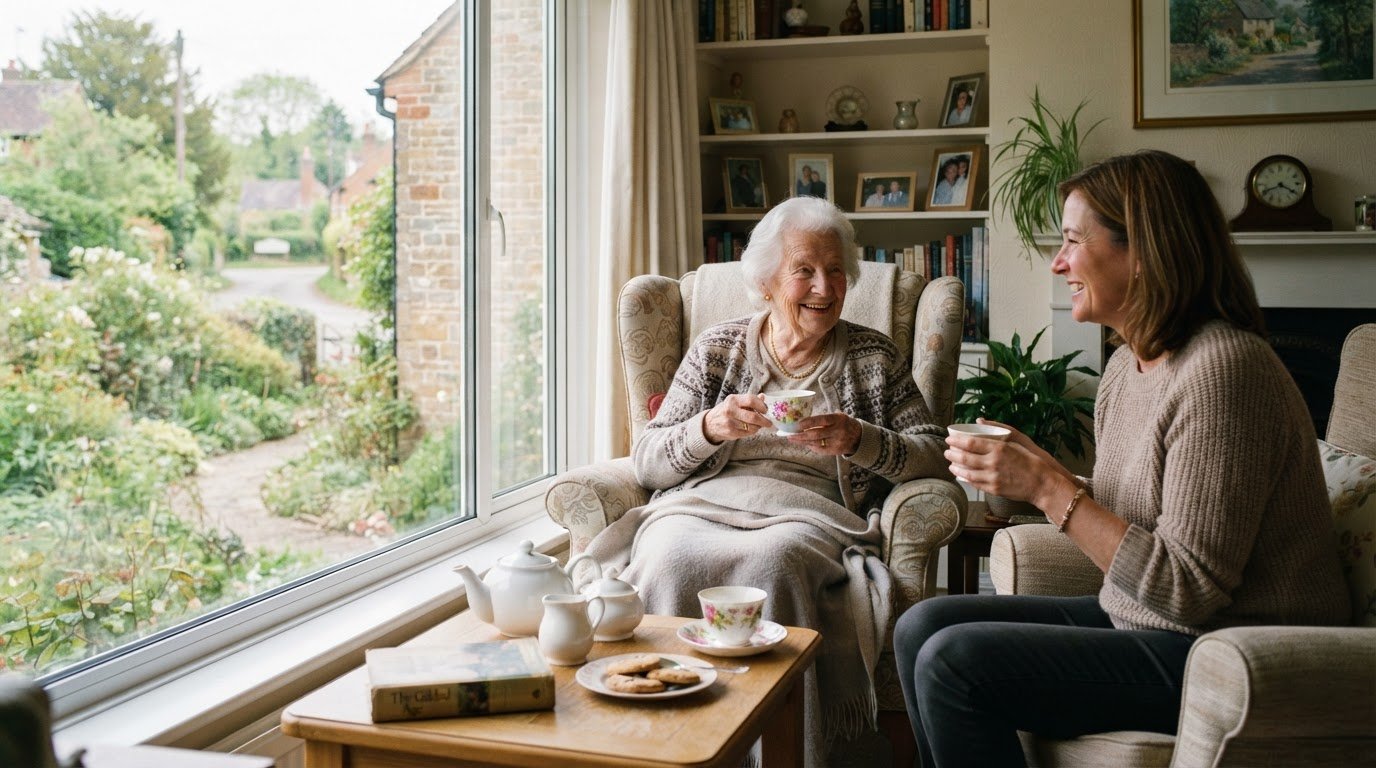
What if the best social visit isn’t a planned outing, but a relaxed chat over a favourite cup of tea? When you’re arranging social visits for elderly in Thatcham, start with what the person enjoys. That helps time together feel natural, rather than like another appointment in their day.
It’s understandable to worry when an older relative seems lonely or has fewer chances to see people. But a visit needs to fit their energy, mobility, routines and preferences. A thoughtful plan can make more room for conversation and connection while respecting their choices and independence.
This guide explains how to plan around familiar interests, choose a comfortable activity and allow for rest or a change of plans. It also covers how companionship support from Bloomfield Care can help make visits easier to arrange, with the older person’s wishes and dignity at the heart of each interaction.
Key Takeaways
- Start with the older person’s interests and preferences so social time feels enjoyable and personal.
- Use a simple plan: ask what they’d like, agree a suitable time, prepare together and talk afterwards about how it felt.
- Compare a visit at home, a familiar local outing and a supported community activity by comfort, travel and energy.
- For dementia-aware visits, explain what to expect, keep the pace gentle and offer simple choices.
- Arranging social visits for elderly in Thatcham can feel more manageable with companionship support shaped around familiar routines and personal choice.
Why social visits matter for older people in Thatcham
A social visit is time set aside for conversation, a shared interest or an enjoyable outing. It gives an older person a chance to connect with someone at a pace and in a setting that feels comfortable. When arranging social visits for elderly in Thatcham, begin with the individual rather than a ready-made activity list.
People’s circumstances and preferences differ. One person may look forward to getting out, while another may prefer a chat at home, where familiar surroundings and routines feel comfortable. Regular, meaningful contact creates opportunities for conversation and shared enjoyment, but shouldn’t be treated as a cure for loneliness or a promise of a particular health outcome. The overview of Loneliness in old age describes circumstances associated with loneliness, including changes in health, relationships and daily life.
What makes a social visit meaningful?
Ask what the person enjoys, remembers fondly or might like to try. A favourite subject, a familiar pastime or simply catching up can give a visit shape without making it feel like a task. Companionship is shared time, not a forced activity or an assessment. A quiet conversation over a drink can matter just as much as going out.
Let the person’s energy and mood guide the visit. Adjust or set aside the plan if they’d rather rest. In Thatcham and across West Berkshire, a visit doesn’t need a special destination to feel worthwhile. Attention, familiarity and genuine interest can make time together meaningful.
How can visits support independence and connection?
Offer choices about when to meet, what to do and who will join. This keeps the older person involved and helps the visit fit into their life rather than take it over. Listen, make suggestions and respect a “not today” without pressure.
Person-led companionship means spending time together in a way shaped by the older person’s interests, choices and comfort.
Example: If someone enjoys talking about gardening but has little energy for an outing, a visitor could join them at home for a conversation about plants. Another day, they might choose a short outing for a change of scene. The older person decides what feels enjoyable and manageable.
How to plan social visits in Thatcham around personal preferences
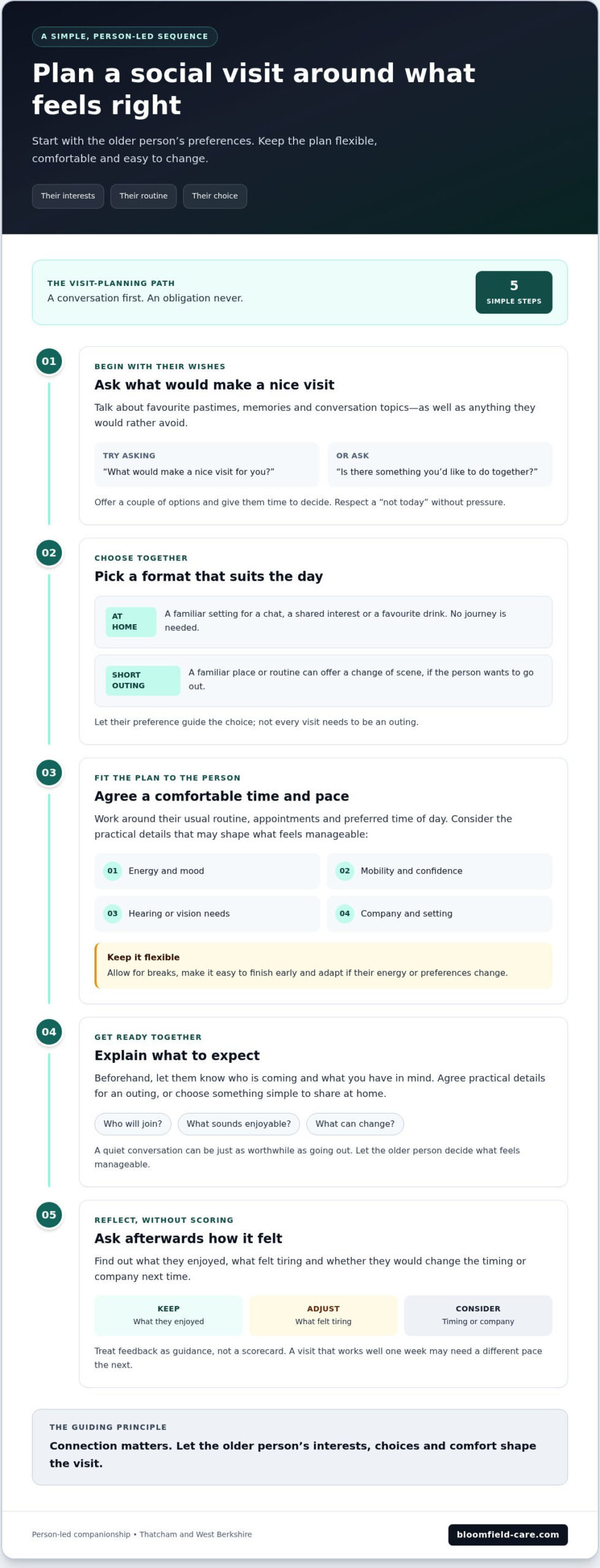
A personal visit starts with a conversation, not a calendar full of activities. For families arranging social visits for elderly in Thatcham, a simple sequence can keep the older person involved: ask what they’d enjoy, choose an idea together, agree a suitable time, prepare for the visit and check afterwards how it felt. The plan should support connection, not create an obligation.
How do you find out what the older person would enjoy?
Try open questions such as, “What would make a nice visit for you?” or “Is there something you’d like to do together?” Talk about pastimes, memories, favourite conversation topics and activities they’d rather avoid. Offer a couple of options, such as a chat at home or a short outing, and give them time to decide. Some people enjoy one-to-one company; others prefer family visits or a quieter setting.
Ask about practical preferences, too. Hearing or vision needs may affect the best setting, while mobility, confidence and energy can help determine whether an activity feels manageable. A familiar Thatcham-area routine or place may appeal, but only if the person wants it. Not every visit needs to be an outing. Research from Rush University Medical Center explores social activity and dementia; its findings shouldn’t be treated as a promise about what an individual visit will achieve.
How should you agree the timing and pace?
Fit the visit around the person’s usual routine, appointments and preferred time of day. They may have more energy earlier or value a quiet period after lunch. Keep the plan manageable, allow for breaks and make it easy to finish early. Beforehand, explain who’s coming and what you have in mind. On the day, adapt if their energy or preferences have changed.
A short note afterwards can help make future visits more personal. Record what they enjoyed, what felt tiring and whether they’d change the timing or company next time. Treat their feedback as guidance, not a scorecard. A visit that works well one week may need a different pace the next.
Sample plan: Ask whether they’d prefer a family member to visit at home or join them on a brief, familiar outing. Agree a time that fits their routine, keep the plan flexible and ask afterwards what they’d like to repeat or change. Use this as a starting point, and let the older person’s wishes shape each decision.
If companionship support would make planning or sharing visits easier, Bloomfield Care companionship support can be shaped around familiar routines and preferences.
Choosing between a home visit, a short outing and companionship support
There’s no single best format for a social visit. Choose based on what the older person wants, how they’re feeling and what will make the time comfortable. As Age UK’s research on loneliness in later life highlights, social connection matters, but its form should suit the individual.
| Visit option | Comfort and preparation | Travel and energy | Best guided by |
|---|---|---|---|
| Home visit | Familiar surroundings can feel reassuring; little preparation may be needed beyond choosing something to share. | No journey is needed, which may suit a quieter, lower-effort visit. | A preference for conversation or familiar routines at home. |
| Short, familiar outing | Agree the plan and practical details beforehand. | Travel may take more energy, so consider mobility, confidence and the person’s preferred pace. | An interest in a change of scene and feeling ready to go out. |
| Supported community activity | Knowing what to expect and who will be there may help the visit feel more manageable. | Travel, the setting and the length of the activity all affect how demanding it feels. | An interest in shared activities or meeting others, with support that respects their choices. |
When might a visit at home feel most comfortable?
A home visit can centre on a shared drink, photographs, music, a hobby or an unhurried conversation. Familiar surroundings may suit someone who wants company without the effort of preparing for a journey. Staying in doesn’t mean giving up social contact; it may simply be how the person feels most at ease that day.
When might an outing or companion be helpful?
If the older person would enjoy getting out, talk through their confidence, mobility, energy and the journey before deciding. A companion can share the experience, help the plan feel manageable and adapt the pace while leaving choices with the older person. Companionship can offer another source of conversation and shared activity, but it doesn’t replace family relationships.
For families arranging social visits for elderly in Thatcham, preferences may change from one visit to the next. A home-based chat one day and a short outing another may both be right. Bloomfield Care’s person-centred home care is tailored around individual routines and preferences, helping support feel familiar and respectful.
Making social visits comfortable, safe and dementia-aware in West Berkshire
A reassuring visit is one where the older person knows what to expect and can influence the plan. Agree the details beforehand: who’s coming, when they’ll arrive and what you might do together. Explain the plan simply and give the person time to respond. For families arranging social visits for elderly in Thatcham, a familiar plan can make it easier to prepare while leaving room to change course.
How can a visit feel reassuring for someone living with dementia?
Use a calm introduction and, where helpful, familiar topics or predictable steps. A favourite song, a well-known hobby or an everyday conversation can offer a comfortable starting point. Avoid turning the visit into a memory test or correcting someone unnecessarily. Instead, listen and follow their lead. Responses to conversation and activities vary, so notice what seems comfortable for the person.
Families looking for broader guidance can read about understanding dementia stages. If care needs or responses to visits change, discuss your concerns with an appropriate health or care professional.
What practical details make an outing easier?
Before setting off, consider the person’s comfort and access needs as well as their wishes. Check the weather and choose suitable clothing. Think about the journey, how much walking or waiting may be involved, and where the person could rest. Agree a flexible return plan, including what to do if they’d rather go home sooner. These preparations can reduce pressure without making the outing feel over-managed.
- Set expectations: Explain the plan and who will be there in a calm, familiar way.
- Allow for comfort: Consider clothing, access, breaks and the person’s preferred pace.
- Stay flexible: If they seem tired or uncomfortable, offer a pause, a quieter option or an early return without suggesting they’ve done anything wrong.
- Keep their wishes central: Family views can help with planning, but the older person’s preferences should guide the visit wherever possible.
Notice changes in expression, conversation or energy that may suggest the person needs a break. Ask gently rather than assuming, and make adjusting the plan an ordinary choice. Bloomfield Care’s person-centred companionship can help make social time more manageable while respecting familiar routines and individual preferences. Explore companionship support for social visits.
How Bloomfield Care can help arrange companionship visits in Thatcham
Making social time possible can take more than choosing an activity. A familiar routine, a comfortable pace and support that respects the older person’s wishes all matter. Bloomfield Care provides companionship and domiciliary care in Thatcham, supporting older people to enjoy connection at home while maintaining their independence and personal choices.
What can companionship support look like?
Companionship can include conversation, sharing an interest or spending time together in a way the person enjoys. That might mean talking about a favourite subject, looking through photographs or taking part in a familiar pastime at home. There’s no need to follow a fixed schedule or fill every moment with activity. The focus is on listening and shaping the time around the person’s preferences, energy and usual routines.
For families arranging social visits for elderly in Thatcham, companionship can complement existing family and community relationships, not replace them. A companion can offer another opportunity for conversation and shared interests while the older person remains involved in deciding what feels right. Bloomfield Care’s approach is person-centred, with dignity and comfort at its heart.
What is a gentle next step for Thatcham families?
Start with a calm conversation with the older person. Ask what kind of company they’d welcome, what they’d enjoy sharing and which routines or preferences they’d like any support to fit around. Their answers can guide a discussion with Bloomfield Care about companionship and home support. The aim is to understand what matters to the person and what help would feel comfortable, without rushing them into a decision.
Families have needs of their own, too. If a family carer would value time to rest, learning about respite care options for families may help them consider what support could look like alongside companionship.
You don’t need to have every detail decided before beginning a conversation. A thoughtful discussion can clarify what matters to the older person and how support might fit into everyday life. Talk to Bloomfield Care about support when you feel ready.
Make room for more meaningful connection
Social visits work best when they reflect the older person’s interests, comfort and wishes. A familiar conversation at home can be just as welcome as an outing, and plans can adapt to energy, mobility and changing preferences. Asking, listening and agreeing on the details together helps keep the person involved and their independence respected.
For families arranging social visits for elderly in Thatcham, companionship support can make shared time easier to plan while complementing existing relationships. Bloomfield Care provides companionship and domiciliary care in Thatcham and across local areas including Wallingford, Newbury, Abingdon, Oxford, Dorset, Weymouth, Christchurch and Poole.
If you’re considering how a companion could help make social connection part of everyday life, talk to Bloomfield Care about companionship support. Get in touch to discuss support shaped around the older person’s routines and preferences.
Frequently Asked Questions
How do I arrange social visits for an elderly relative in Thatcham?
Start by asking what kind of company or activity your relative would welcome. Agree a convenient time, how long to spend together and a simple plan. If you’re going out, consider comfort, mobility and travel. Keep the first visit flexible, then ask what they enjoyed or would change. If extra companionship would help, Bloomfield Care provides person-centred support in Thatcham that respects individual preferences and routines.
What can an older person do during a companionship visit?
Activities can reflect the person’s interests and might include conversation, a familiar hobby, looking through photographs, sharing a drink or enjoying an outing they prefer. There’s no fixed activity menu, and not everyone wants a structured plan. Give the older person a genuine choice, including the option to keep the visit quiet, simply chat or change plans. The aim is to share time in a way that feels comfortable to them.
Can a companion accompany an older person on an outing in Thatcham?
Companionship can include shared activities shaped around the person’s preferences. Before planning an outing, consider mobility, comfort, travel arrangements, timing and a manageable pace. A visit at home may be a better fit on some days. Shape the plan around the individual rather than assuming a particular destination or activity will suit them.
How often should older people have social visits?
There’s no single schedule that suits everyone. The right rhythm depends on the older person’s wishes, energy, existing relationships and daily routine. Some people may prefer regular, shorter visits, while others enjoy spending longer together occasionally. Ask what feels welcome, begin with a manageable plan and adjust based on their feedback. A visit should offer connection without making the person feel they have to follow a timetable.
How can I make a social visit easier for someone with dementia?
Explain the plan simply, use familiar conversation and allow plenty of time. Avoid testing memory or correcting the person unnecessarily; instead, listen and follow their lead. Keep choices manageable, notice signs of tiredness or discomfort and be ready to shorten or change the visit. Preferences differ, so draw on what the person and family know about their routines and comfort, adapting gently if the plan no longer feels right.
Can companionship care help an older person feel less isolated?
Companionship can create more opportunities for conversation and shared activities, but it can’t guarantee a particular emotional or health outcome. The older person’s wishes and existing relationships should remain central. Bloomfield Care provides companionship and domiciliary care as part of person-centred support at home. Local areas include Thatcham, Wallingford, Newbury, Abingdon, Oxford, Dorset, Weymouth, Christchurch and Poole.
What should I consider before arranging an outing for an older person?
Start by asking whether the person wants to go, then consider mobility, energy, access needs, weather, travel and preferred pace. Agree a flexible plan, including a comfortable way to return home if they’d like to leave early. Involve the older person in each decision and don’t assume an outing is better than a home visit. Their comfort and choice should guide the arrangements.