
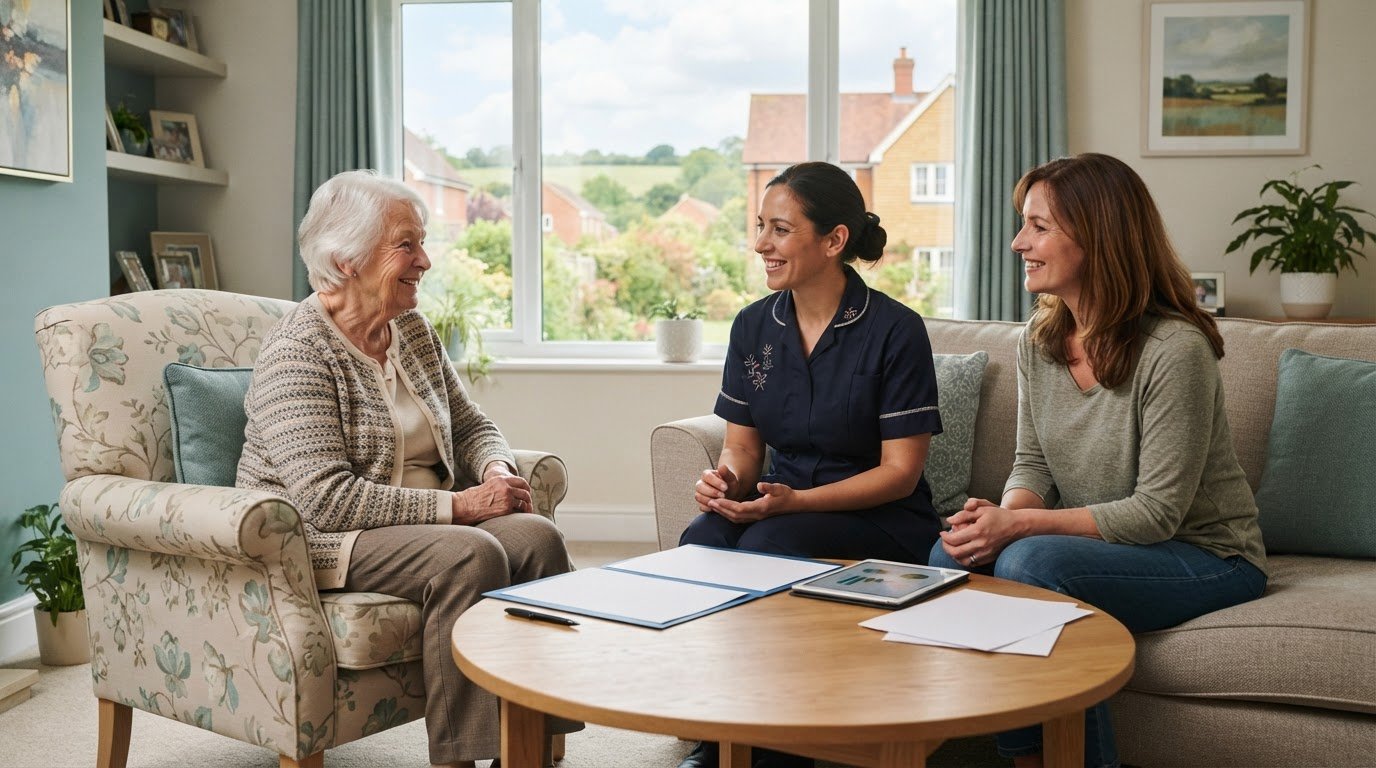
The annual care plan review process in Thatcham is a chance to check whether home support still fits the person’s everyday life. It can cover familiar routines and personal preferences, as well as changes in health, confidence or practical needs. If you’re unsure what will be discussed or who should take part, a little preparation can help make the conversation easier.
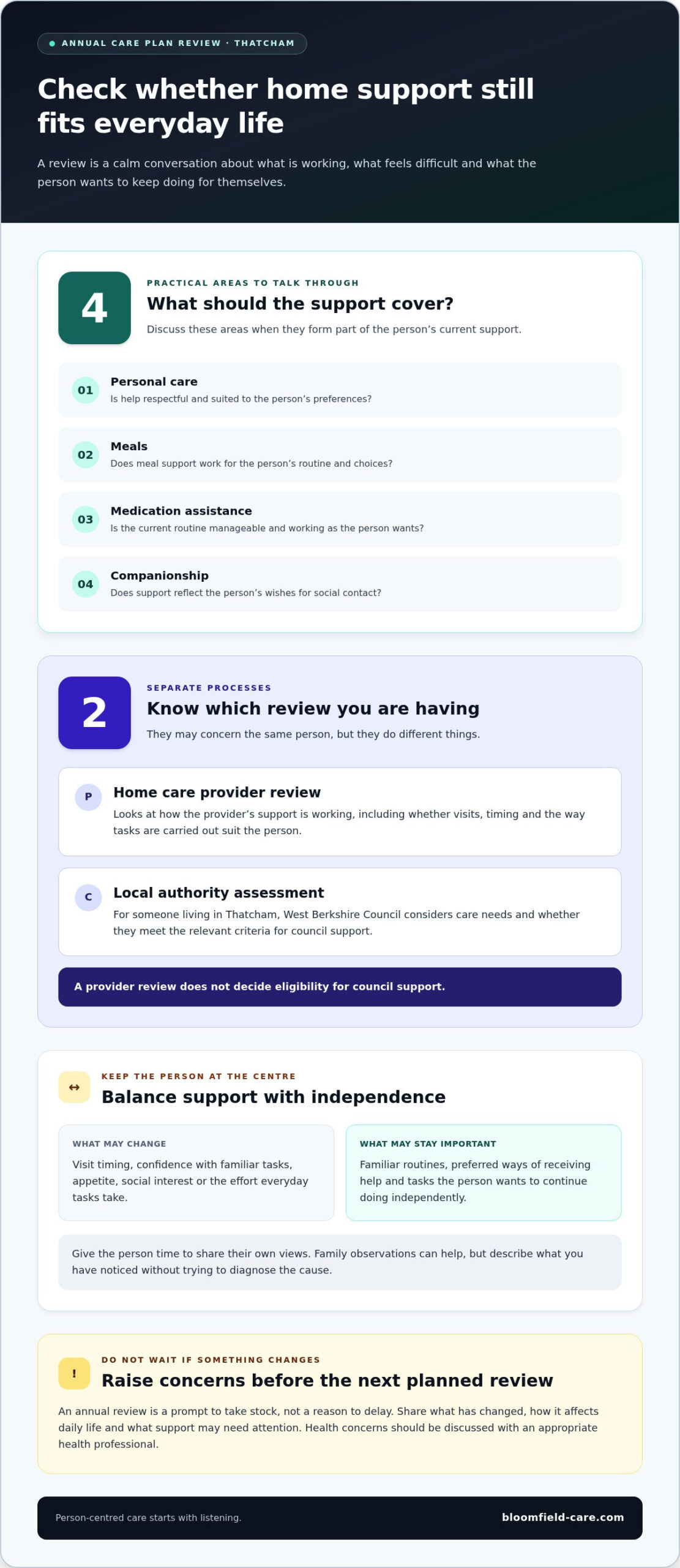
A useful review gives the person space to share what matters to them and lets family members raise observations or questions. It also helps to distinguish between two processes: a home care provider’s review looks at how its support is working, while a local authority assessment considers care needs and eligibility for council support. They may relate to the same person, but they are not the same thing.
This guide explains what a review may cover, who could take part and how to prepare. It also looks at how to describe changes, keep the person’s wishes and independence central, and raise concerns before the next planned review. Whether you’re arranging care in Thatcham or nearby Newbury, the focus should be on the person and the life they want to lead.
Key Takeaways
- The annual care plan review process in Thatcham can help families consider whether support still reflects everyday routines, preferences and needs.
- Use the review to discuss practical changes in personal care, meals, medication assistance or companionship.
- Ask the older person who they want involved and how they would like to share their views.
- Bring the current care plan and brief notes on what is working well or proving difficult.
- Agree what actions will be recorded, and raise new concerns if needs change before the next review.
What an annual care plan review in Thatcham is meant to achieve
A review is a chance to check whether the support someone receives still suits them. It does not mean anything has gone wrong. Needs, routines and preferences can shift over time, and a calm conversation can identify what is working well and what may need attention.
A care plan records the support agreed with the person, their preferences and relevant day-to-day needs. It might describe the help they want at home, how they prefer tasks to be approached and small details that make support feel comfortable. The person’s own views should guide the discussion as far as possible.
The annual care plan review process in Thatcham will depend on the service involved and the arrangements for that support. Use the review to compare the written plan with the person’s current routine. An annual date is a prompt to take stock, not a reason to wait if something changes or a concern comes up sooner.
A provider review is not the same as a council assessment
A home care provider’s review focuses on the support it delivers. The person can discuss whether the agreed help fits their routine, preferences and current circumstances. For example, they may be happy with the visit itself but want to discuss the timing or how a particular task is carried out.
A local authority assessment is separate. For someone living in Thatcham, West Berkshire Council considers care needs and the support arrangements that may be appropriate, including whether needs meet the relevant criteria for council support. A provider review does not decide council eligibility, and a council assessment is not a review of the provider’s service.
Why an annual check can matter even when things seem settled
Gradual changes can be easy to miss. Someone may feel less confident preparing meals, prefer help at a different point in the day or find that a familiar task now takes more effort. Their preferences may change too. A review gives them a chance to explain what they have noticed without assuming that every change needs a major adjustment.
It is just as useful to confirm what should stay the same. A familiar routine, a preferred way of receiving help or the right balance between support and independence can make a real difference to feeling at home. Recording what works well helps keep those details in view.
A person-centred care plan review is a conversation about whether agreed support continues to reflect the individual’s needs, choices and everyday life.
Approach the meeting as a chance to listen, check understanding and discuss changes together, not as a test. If the person needs something different before the next planned review, raise it with the team responsible for their support. Record the concern clearly, including what has changed and how it affects daily life.
What should be discussed during a Thatcham home care plan review?
A useful review looks beyond whether visits are taking place. It considers how support fits into the person’s day, what they value, what feels difficult and what they want to keep doing independently. Their experience is the best starting point for deciding whether care remains helpful.
Talk through the agreed visits and the support provided. Does the timing still work with the person’s routine? Do they feel comfortable with the way help is offered? A small preference, such as having time to get ready at their own pace, can make a practical difference.
Daily routines, preferences and independence
Familiar patterns can bring comfort and help someone feel in control at home. Discuss preferred timings, everyday choices and any tasks the person wants to continue doing for themselves. Support should enable independence rather than take over automatically. Someone may welcome help preparing a meal, for example, while still wanting to choose what to eat or manage part of the preparation. Note these preferences so they can guide the discussion.
Consider personal care, meals, medication assistance and companionship where they form part of the person’s support. Is the help respectful and suited to their preferences? Is there anything they would like done differently? The annual care plan review process in Thatcham should make room for these practical details as well as broader concerns.
Changes in health, mood or practical needs
Ask whether the person or family has noticed changes since the last discussion. Examples might include feeling less steady when moving around the home, having less confidence with familiar tasks, changes in appetite or less interest in social contact. Describe what you have observed without trying to diagnose the cause. Discuss health concerns with an appropriate health professional.
Consider changes in the home environment too. A rearranged room, difficulty reaching everyday items or a change in how the person manages a usual task may affect what support feels useful. If cognitive changes are part of the picture, the guide to dementia stages may help families find clear, compassionate information.
Medication assistance and meal preparation are worth discussing if they are part of the current support. Has the routine become harder to manage, or is the existing help still working as the person wants? Keep the examples specific. A family member can share observations while giving the person time and space to express their own views.
If you’re considering home care or want to understand how personalised support can fit everyday routines, explore Bloomfield Care’s home care support.
Who takes part, and how can families keep the review person-led?
Start by asking the older person who they would like involved and how they would feel most comfortable sharing their views. They may want a relative beside them, prefer to speak privately first or find it easier to communicate in writing. Do not assume family members should answer on their behalf. Make room for the person’s choices and pace.
Who takes part depends on the purpose of the discussion and the person’s wishes. A home care review may include the person, a family member or representative if they want one, and someone from the care team who can discuss the support being delivered. A GP or another relevant professional may contribute when their input is appropriate.
Making space for the older person’s voice
Clear, respectful questions can make it easier for someone to express what matters. Ask one question at a time, allow time for an answer and do not rush to fill a pause. For example, “Is there anything you’d like us to do differently?” gives the person room to respond. If speaking is tiring or difficult, use another suitable way to share views that reflects their communication preferences.
Families can help by listening, adding context when invited and checking that the person has been heard. If relatives remember an issue differently, describe what they have noticed without presenting their view as the person’s decision. The annual care plan review process in Thatcham stays person-led when the individual is part of the conversation, not simply the subject of it.
Sharing information with family and professionals
A family member may notice details that are useful to raise, such as a change in a familiar routine or difficulty with an everyday task. Share observations calmly and respect the person’s wishes and privacy. If a health concern needs clinical advice, involve the GP or another relevant professional. Sharing a concern is not the same as making a diagnosis, deciding treatment or changing medication.
These roles can help everyone understand where their input fits:
The person: Shares what they want, what feels comfortable and what matters in daily life.
Family member or representative: Offers observations or support with communication, while respecting the person’s preferences and keeping them central.
Care team: Discusses the home care support it delivers and practical matters relating to that support.
Relevant professionals: Contribute information within their role when their input is appropriate to the discussion.
If you’re thinking about home care in Thatcham or nearby Newbury, explore person-centred home care support from Bloomfield Care.
How to prepare for the review and follow through on agreed changes
A little preparation can make a care review feel calmer and keep the conversation focused. You do not need a long report or a perfect account of every day. Bring the person’s priorities, explain what has changed and make sure you understand any agreed next steps.
A simple preparation checklist for families in Thatcham
Before the meeting, ask the person what they want to discuss and who they would like to attend. Keep their views central, even if you are helping to organise notes. The current care plan is a useful starting point. Add brief notes about changes since it was last discussed.
- Note changes in routines, preferences, confidence or practical support needs.
- Write down what is working well and what feels difficult or no longer suitable.
- Record the person’s own priorities and any questions they want answered.
- Bring the current care plan and relevant information about the support being discussed.
Keep notes concise and relevant. “Finding it harder to manage breakfast independently” is more useful than a lengthy account of unrelated details. If the person has a preferred way to communicate, plan how to make room for that during the discussion.
Agreeing actions and recognising when needs change again
Take the conversation one step at a time: describe what has changed, agree which matters most, discuss possible adjustments and confirm what happens next. If something is unclear, ask for a plain-language explanation. The annual care plan review process in Thatcham should lead to practical next steps that reflect the person’s needs and wishes.
Before the discussion ends, make sure the actions are clear and proportionate. Notes should say what is changing, who will take each action and how the relevant care records will reflect it. If no change is needed, record what remains suitable and why. This gives everyone a shared point of reference.
Needs can change again after a review. Raise new concerns with the care team or council, depending on which part of the support they relate to. If an immediate safety concern arises, seek appropriate help promptly rather than waiting for a planned review. Contact the relevant health professional about health concerns.
If you’re weighing up home care options as needs change, the home care costs guide offers general context. Costs depend on the care needed. To discuss person-centred home care in Thatcham and nearby Newbury, contact Bloomfield Care.
Bloomfield Care: Person-Centred Home Care in Thatcham
A care review can bring everyday experiences into focus: what feels comfortable, where a person would welcome assistance and which parts of their routine they want to keep managing themselves. Bloomfield Care’s person-centred approach puts the individual’s wishes and circumstances at the heart of conversations about support. For families in Thatcham and nearby Newbury, this keeps discussions grounded in the person’s life at home.
The annual care plan review process in Thatcham is a useful prompt to consider whether support still reflects someone’s priorities. If home care is part of the picture, the discussion may include personal care, medication assistance, meal preparation or companionship, depending on the individual’s needs. These are areas of support to consider, not a fixed package. The important thing is to understand what the person wants and discuss suitable support without assuming a particular outcome.
Connecting review conversations with everyday home support
Small details can shape how care feels. Someone may want help with personal care while choosing the order of their morning routine, or welcome meal preparation while continuing to choose what they eat. Another person might value companionship and conversation about familiar interests. Sharing these preferences makes the discussion practical and respectful, with attention to dignity and independence at home.
Bloomfield Care Limited is registered with the Care Quality Commission (CQC) and rated Good overall by the CQC. This is useful context for families considering home care, alongside a clear discussion of the person’s circumstances and wishes. Support should be considered individually, rather than assuming what suits one person will suit another.
A gentle next step for Thatcham families
If you’re considering support, or a change in circumstances has prompted questions about care at home, talk through what matters to you and your family. A free assessment is an opportunity to discuss the person’s needs and preferences. Costs depend on the care needed, so the assessment can help you understand the options for your situation.
Taking the next step does not mean making an immediate decision. You can speak with Bloomfield Care about home care in Thatcham and nearby Newbury, explain what the person hopes to maintain and ask questions about the support being considered. A thoughtful conversation can help clarify what may be appropriate while keeping the person’s comfort, routines and independence in view.
For a calm conversation about your circumstances, talk with Bloomfield Care about a free assessment, or call your local office or use the contact form.
Take the next step at your own pace
A review can start a more open conversation about what would help someone feel comfortable and confident at home. You do not need to have every answer before exploring support. Begin with what matters most to the person, and let their priorities guide the next discussion.
If you’re considering the annual care plan review process in Thatcham because circumstances have changed, or you’re planning ahead, a conversation can help clarify what support may suit everyday life. Bloomfield Care offers a free assessment to discuss individual needs and preferences. Costs depend on the care needed, so the assessment can help you understand the options for your situation.
Talk with Bloomfield Care about a free assessment, or call your local office or use the contact form. You can take things one step at a time, with the person’s wishes at the heart of each decision.
Frequently Asked Questions
How often should a home care plan be reviewed in England?
There isn’t one review schedule that applies to every home care plan. Arrangements depend on the service and the person’s circumstances. The care plan should help clarify when support is due to be reviewed. For support arranged by a council, its review arrangements are separate from a provider’s process.
Can a care plan review happen sooner if someone’s needs change?
Yes. The person or their family can raise a change before the next planned review. For example, if getting around the home becomes harder or an existing routine no longer feels manageable, share that promptly with the relevant care team or council. If there’s an immediate safety concern, seek appropriate help straight away rather than waiting for a review appointment.
Does a care plan review automatically change the number of care visits?
No. A review is a chance to discuss whether the current arrangements still fit. It does not automatically mean visits will increase, decrease or change. Explain what has prompted the conversation and discuss what options may be suitable. Any proposed change should be discussed with the person and the organisation responsible for arranging the support, with the reasons and next steps made clear.
Can an older person ask for a family member to join their care review?
Yes, an older person can say they would like a family member or another trusted person to join. It can help to agree beforehand what support they want from that person, such as taking notes or helping explain a concern. If the person would rather speak alone about something, make that preference clear to the review organiser. Their wishes should guide who is involved.
What should we bring to an annual care plan review?
Bring the current care plan and short notes that help explain any concerns. A simple example can be more useful than a long account: note what happened, when it occurred and how it affected the person. You might also bring a list of questions or relevant updates, such as a change to the home setup. Keep information focused on the issues being discussed.
What if the family and the person receiving care disagree about support?
Give the person time to explain what they want, then describe the family’s concerns calmly and with specific examples. Explain what you have observed and why it worries you, without presenting your view as the person’s decision. Ask the care team to clarify what can be considered and record any unresolved points. If the disagreement concerns health or treatment, speak with an appropriate health professional.
Is a care provider review the same as a council needs assessment?
No. A provider review concerns the home care support that provider delivers. A council needs assessment is handled separately and considers a person’s care needs and possible council support. In Thatcham, identify who is organising the meeting and what it will consider. A provider meeting does not decide council eligibility, and a council assessment is not a review of a provider’s service.