

What if the most respectful help is the kind that lets your parent do as much as they can for themselves? Ensuring dignity during personal care for parents begins with small, thoughtful choices: asking before stepping in, protecting privacy and keeping familiar routines where possible.
It’s understandable to feel unsure about when to offer help and when to step back. Your parent may feel embarrassed or exposed, while changes in mobility, memory or health can make everyday tasks more difficult. A calm conversation and patience can help them feel heard, involved and more at ease.
This guide shares practical ways to support your parent’s choice and control during washing, dressing and other personal care at home. You’ll learn how to create privacy, communicate respectfully and adapt routines without taking over. We’ll also explore when personalised domiciliary or live-in care may offer extra support, helping your parent remain in familiar surroundings while easing pressure on the family.
Key Takeaways
- Protect your parent’s privacy and independence by agreeing which personal care tasks they’d like to manage themselves and where they welcome help.
- Explain what you’re about to do and ask permission each time, using calm, clear language that keeps your parent involved.
- If your parent refuses or seems embarrassed, pause and listen. Their response may signal a need for more privacy, a different approach or another time.
- To ensure dignity during personal care for parents, prepare the space, follow familiar routines and check that your parent feels comfortable throughout.
- Person-centred domiciliary or live-in care may help maintain familiar surroundings and routines when family support alone is no longer enough.
Why dignity matters when helping a parent with personal care
Personal care can involve close physical contact and deeply private routines. Dignity means being treated with respect, having a voice in what happens and retaining meaningful choices. For your parent, that might mean deciding what to wear, choosing the order of familiar tasks or asking for a moment alone. These decisions can help intimate support feel like a partnership rather than something being done to them.
Privacy, consent and independence all shape the experience. A closed door, a towel that keeps someone covered and a quiet explanation before offering help can make a real difference. So can listening to how your parent prefers things to be done. The concept of dignity is discussed in relation to ethics, law and human rights, but at home it is also reflected in ordinary interactions: speaking directly to your parent, respecting their boundaries and taking their wishes seriously.
It can be tempting to step in quickly, especially if a task takes longer or seems difficult. But offering support isn’t the same as taking over. If your parent can wash their face, choose their clothes or complete part of a routine safely, give them the time and space to do so. Offer help with the specific part they find challenging instead of assuming they need assistance with everything. Ensuring dignity during personal care for parents means recognising both the support they may need and the abilities they still want to use.
What does dignity look like during personal care?
Dignity is respect for a person’s autonomy and privacy, expressed through choices that matter to them. Use the name and words your parent prefers, explain what you’re offering and ask before helping, even with familiar tasks. For example, ask whether they’d like help fastening a button instead of reaching in to do it. That pause gives them room to agree, decline or suggest another way.
Why can accepting help feel difficult for a parent?
Accepting help from an adult child can feel unfamiliar. Your parent may feel embarrassed, worry that assistance means losing independence or find it difficult to adjust to a change in family roles. A health change may also make a once-easy routine harder, without changing who your parent is or what matters to them. Listen without judgement, acknowledge their feelings and leave the conversation open. They may need time to explain what kind of help feels comfortable.
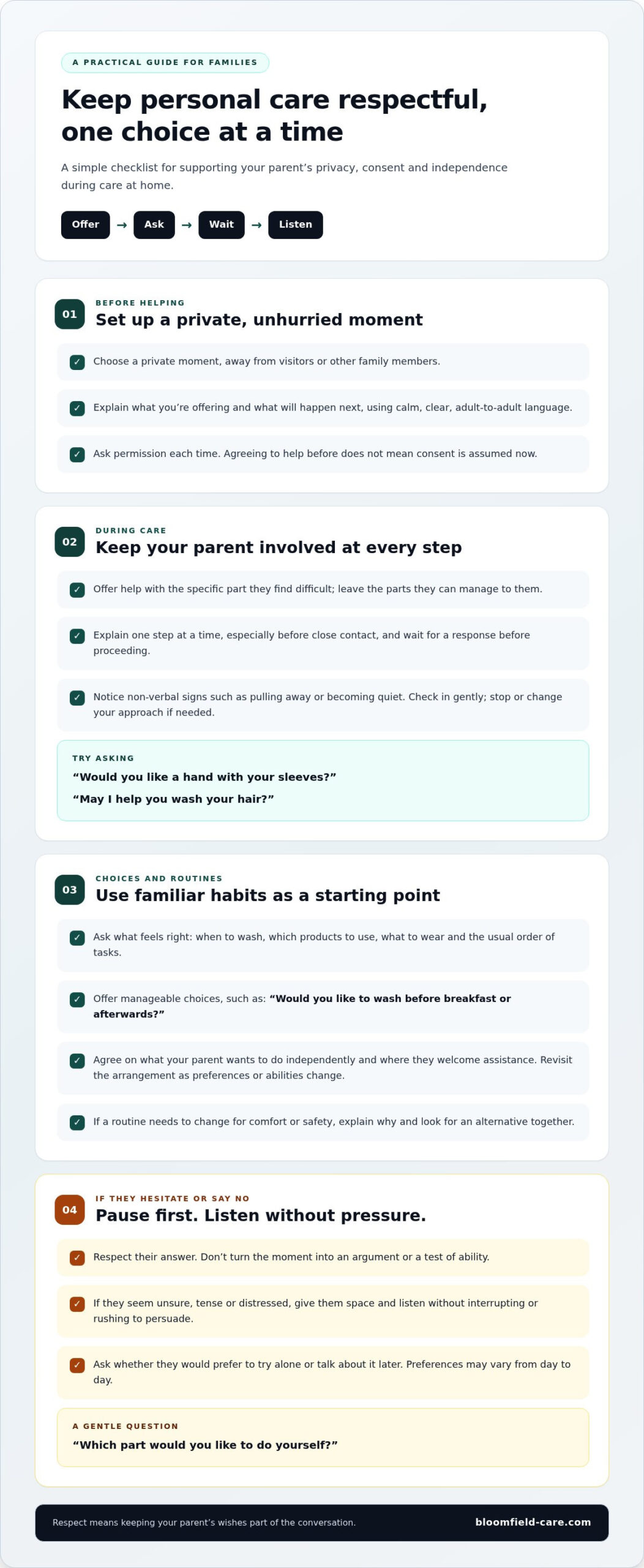
Try not to interpret hesitation as ingratitude or assume you know what your parent wants. A gentle question such as, “Which part would you like to do yourself?” can make it easier to talk about support without turning the moment into a test of ability. Preferences may vary from day to day, too. Paying attention to those changes helps keep care responsive while preserving your parent’s sense of self and role in decisions about their own body.
How consent, communication and routine make personal care respectful
Respectful personal care is a conversation, not a sequence of tasks to complete. Before helping, explain what you’re offering and what will happen next, then give your parent time to respond. Consent isn’t assumed because they accepted help yesterday. Ask again each time and before moving on to another task. Your parent may agree to help with washing but prefer to dress independently, for example.
Consent and clear communication support dignity by keeping your parent informed, involved and able to express their wishes. Offer manageable choices, such as “Would you like to wash before breakfast or afterwards?” rather than making every decision for them. If they decline, respect their answer. You can ask whether they’d prefer to try alone or talk about it later, without turning the moment into an argument.
How can you ask before helping without making it awkward?
Choose a private moment, away from visitors or other family members, and use calm, adult-to-adult language. Try, “Would you like a hand with your sleeves?” or “May I help you wash your hair?” Then listen without interrupting or rushing to persuade. If your parent seems unsure, tense or distressed, pause. A little space can help them feel safer and decide what they want.
Explain one step at a time, especially when the task involves close contact. For example, say, “I’m going to help you stand now, if that’s alright,” and wait for a response before proceeding. Watch for non-verbal signs, too, such as pulling away or becoming quiet. These may indicate discomfort, even if your parent hasn’t said no. Check in gently and be prepared to stop or change your approach.
How can familiar routines preserve a parent’s sense of control?
Ask what feels right to your parent: when they prefer to wash, which products they like, what clothes they want to wear and the order they usually follow. Keeping these choices can make assistance feel less disruptive. If a routine needs to change for comfort or safety, explain why and look for an alternative together. Familiarity can be particularly reassuring if memory changes affect communication; this guide to dementia stages explores how needs may change over time.
It may help to agree on a simple routine when you’re both relaxed, rather than deciding everything during a rushed or uncomfortable moment. Ask which parts your parent wants to do independently and where they’d welcome assistance. Revisit the arrangement if their preferences or abilities change. The aim isn’t to preserve a routine at all costs, but to use familiar habits as a starting point for choices that still work for them.
If family support is becoming difficult to sustain, personalised home care can provide support shaped around a person’s preferences and established routines. Bloomfield Care provides domiciliary and live-in care at home, helping your parent receive assistance while remaining involved in everyday decisions.
Responding to refusal, embarrassment and changing care needs
A refusal of personal care can feel worrying, particularly if you’re concerned about your parent’s comfort or wellbeing. Try not to treat “no” as a judgement of you or assume it means they’ll never accept help. It may be a request for privacy, a sign that the timing feels wrong, or a way of expressing discomfort with a particular task or approach.
What can you do if your parent refuses personal care?
Pause rather than arguing or rushing. Ask gently, “Is there something that would make this feel more comfortable?” or “Would you prefer to try later?” Offer a smaller option, such as help with one part of getting dressed while your parent manages the rest. Avoid threats, shame or repeated pressure. A single refusal doesn’t settle what your parent may want on another day.
Separate the immediate practical concern from assumptions about your parent’s capacity or motivation. If they decline a wash, for example, consider whether they’re tired, cold, embarrassed or simply prefer another time. Focus first on what needs attention now, then discuss the wider routine when you’re both calm. If a change in health or ability makes personal care harder, ask your parent what they’ve noticed and what support they would find acceptable.
How can you support privacy during intimate tasks?
Gather what’s needed before starting, so your parent isn’t left waiting or exposed while you look for items. Close doors or curtains, keep them covered as much as possible and avoid interruptions. Ask who they’re comfortable having nearby. Respect their preferred level of independence while staying attentive to immediate safety concerns. If you’re unsure how to adapt a task safely, pause and seek guidance rather than improvising.
Changes in mobility, memory or general health can make an established routine more difficult. Notice specific changes, such as a new struggle with buttons or increasing distress during washing, without defining your parent by them. They remain a person with preferences, history and strengths. Discuss what’s changed in a calm, practical way, and consider whether a small adjustment to the setting, timing or amount of help could make the task feel manageable.
If care needs continue to change, or you’re concerned about safety, seek appropriate professional guidance. A GP or relevant care professional can help you consider what support may be suitable. Avoid making a decision about your parent’s abilities based on one difficult moment. Keeping notes about what happened, what seemed to help and what your parent said can make those conversations clearer.
Ensuring dignity during personal care for parents means taking reluctance seriously without letting a difficult moment define the relationship. If family assistance is becoming hard to sustain, personalised domiciliary or live-in care can provide additional support at home, shaped around your parent’s preferences and needs. Bloomfield Care provides person-centred home care to support people in familiar surroundings.
Practical steps families can use to protect dignity at home
A simple plan can make personal care feel calmer and more predictable for both of you. Agree which tasks your parent wants to manage independently and where they’d welcome help. Revisit that agreement if their mobility, memory, confidence or usual routine changes. Ensuring dignity during personal care for parents is an ongoing process, not a one-off conversation.
A simple preparation routine before personal care
Before you begin, take a moment to prepare. This helps avoid rushing and gives your parent more opportunity to stay involved. Use this short sequence as a starting point:
- Talk privately: Choose a comfortable moment to discuss what help is needed, away from visitors or other family members.
- Ask preferences: Find out what your parent would like to do themselves and what support they’d find helpful.
- Prepare the space: Gather the items you’ll need, close the door or curtains and make the room comfortable.
- Seek consent: Explain the next step and ask before helping, rather than treating agreement to one task as consent to another.
- Check comfort: During and after the task, ask if your parent is comfortable or would like anything adjusted.
Keep these check-ins natural. A quiet “Is this comfortable?” or “Would you like a moment?” can show care without making an ordinary routine feel clinical. If your parent’s preferences differ from yours, listen and look for an approach that respects their choice while addressing any immediate safety concern.
When might additional support at home help?
Consider whether more support may be useful if personal care regularly leads to distress, tasks are becoming harder to manage or helping is putting strain on family relationships. These signs don’t mean you’ve failed or that your parent must give up independence. They may simply indicate that the current arrangement needs to change. A private conversation can help clarify what kind of assistance your parent would accept.
Person-centred domiciliary or live-in care can be shaped around a parent’s established routines, preferences and changing needs, while support takes place in familiar surroundings. Live-in care is one option for ongoing support at home. If the family carer needs time to rest or manage other responsibilities, this guide to respite care explains how additional support may provide a break.
Support should work with your parent, not replace their voice. Explore personalised home care support as one way to help maintain familiar routines while sharing personal care responsibilities.
How person-centred home care can help preserve dignity
For some parents, receiving help at home can feel less disruptive because they remain among familiar belongings, routines and surroundings. That familiarity may make it easier to explain what support feels comfortable and keep meaningful habits in place. Home care should not mean taking over. It can provide assistance with personal care while leaving room for the person to make choices and do what they can for themselves.
Person-centred care starts with the individual, not a standard routine. Their preferences, abilities and changing needs help shape how support is offered. One person may want to choose their clothes and wash independently, but appreciate help with a difficult fastening. Another may prefer support at a particular time or want a family member present. Listening to these wishes helps make daily assistance more respectful and personal.
What should families expect from respectful home care?
Respectful home care involves listening to the person and taking their preferences seriously during personal care. Support can be adjusted to preserve privacy, explain each step and encourage independence where possible. Practical help may sit alongside companionship, meal preparation or medication assistance, depending on the person’s needs. The aim is to work with the individual’s familiar routines, not reduce them to a list of tasks.
Before discussing outside support, note what your parent already manages, what has become difficult and what they would welcome help with. Keep the conversation focused on their priorities. For instance, rather than starting with a broad question about needing care, ask which parts of the morning routine feel tiring or where an extra pair of hands would make a difference. This can make the discussion more manageable and keep your parent involved.
How can a family take a calm next step?
Choose a relaxed time to talk, and invite your parent to share what would feel comfortable. If family support alone is becoming difficult to sustain, domiciliary care offers support at home, while live-in care is another home-based option. Consider both in light of the help needed and the routines your parent values. The conversation doesn’t need to settle every detail at once.
Ensuring dignity during personal care for parents remains central as needs change: support should respect your parent’s voice, privacy and independence. Bloomfield Care provides person-centred support in people’s homes, including personal care and companionship. Explore compassionate home care with Bloomfield Care to learn more about support shaped around your family’s needs.
Take a thoughtful next step together
Your parent doesn’t need to make every decision about support at once. A gentle next step could be asking what would make personal care feel more comfortable, or discussing one task where they’d welcome assistance. Keep their wishes at the centre of the conversation and allow time for them to consider what feels right.
Ensuring dignity during personal care for parents is an ongoing commitment to treating them as a person with their own preferences, rather than focusing only on the tasks that need doing. If your family would value support, Bloomfield Care provides personal care, domiciliary and live-in care, and specialist dementia care in people’s homes.
Explore compassionate home care with Bloomfield Care and consider what kind of support could fit your parent’s routines and wishes. Bloomfield Care supports people in Wallingford, Newbury, Thatcham, Abingdon, Oxford, Dorset, Weymouth, Christchurch and Poole. With patience, open conversation and the right help, you can take the next step together while keeping your parent’s voice at the heart of care.
Frequently Asked Questions
How do I help my elderly parent with personal hygiene without embarrassing them?
Speak to your parent privately and make the offer specific, rather than referring broadly to their hygiene. For example, ask, “Would you like help setting out your things for a wash?” This gives them room to accept only the assistance they want. Use the words they’re comfortable with, and avoid discussing personal care in front of visitors. A calm approach can make it easier to talk about preferences.
Can my parent refuse help with personal care?
Yes, your parent can say they don’t want help with a particular task. Try to understand what’s behind the refusal, without pressuring them to change their mind immediately. They may be tired, uncomfortable or prefer help from someone else. If there’s an immediate concern about their wellbeing, seek appropriate professional guidance rather than using threats or force. A refusal today doesn’t necessarily mean they’ll feel the same tomorrow.
What should I do if my parent becomes upset during personal care?
Pause the task and give your parent space to settle, provided it’s safe to do so. Speak gently, reduce noise or other distractions, and ask what’s troubling them. They may be cold, uncomfortable or finding the situation overwhelming. Don’t insist on finishing simply because you’ve started. If the upset is new, intense or keeps happening, consider whether pain or a change in health could be involved and seek appropriate advice.
How can I protect my parent’s privacy while helping them wash or dress?
Keep personal care discreet by choosing a time when your parent won’t be interrupted and limiting who is present to people they’re comfortable with. Have clean clothes and toiletries within reach before beginning, so your parent isn’t left waiting. If someone enters unexpectedly, cover your parent and pause. For dressing, offer clothing choices in private and let them manage any parts they can comfortably do themselves.
How can I encourage my parent to accept personal care at home?
Start by asking what kind of help feels acceptable, rather than trying to persuade your parent to agree to a full routine. They might welcome help with hair washing but prefer to manage the rest themselves. Explain how a small amount of assistance could make a specific task easier, then give them time to decide. If they decline, avoid turning the conversation into a test of affection or trust.
Does dementia change how I should support a parent with personal care?
Dementia can affect how a parent understands instructions, communicates preferences or responds to familiar tasks. Use short, clear prompts and allow extra time for a response. Showing an item, such as a flannel, may be easier than giving several instructions at once. Notice whether a particular time, sound or step causes distress, and adapt where possible. Specialist dementia care can offer families support shaped around changing needs.
When should a family consider professional personal care at home?
Consider additional support if personal care is becoming difficult to manage, your parent regularly needs more help than you can provide, or the demands are affecting family wellbeing. Domiciliary care and live-in care are home-based options to discuss with your parent. Bloomfield Care supports people in Wallingford, Newbury, Thatcham, Abingdon, Oxford, Dorset, Weymouth, Christchurch and Poole. A calm conversation can help your family explore what assistance may feel suitable.