
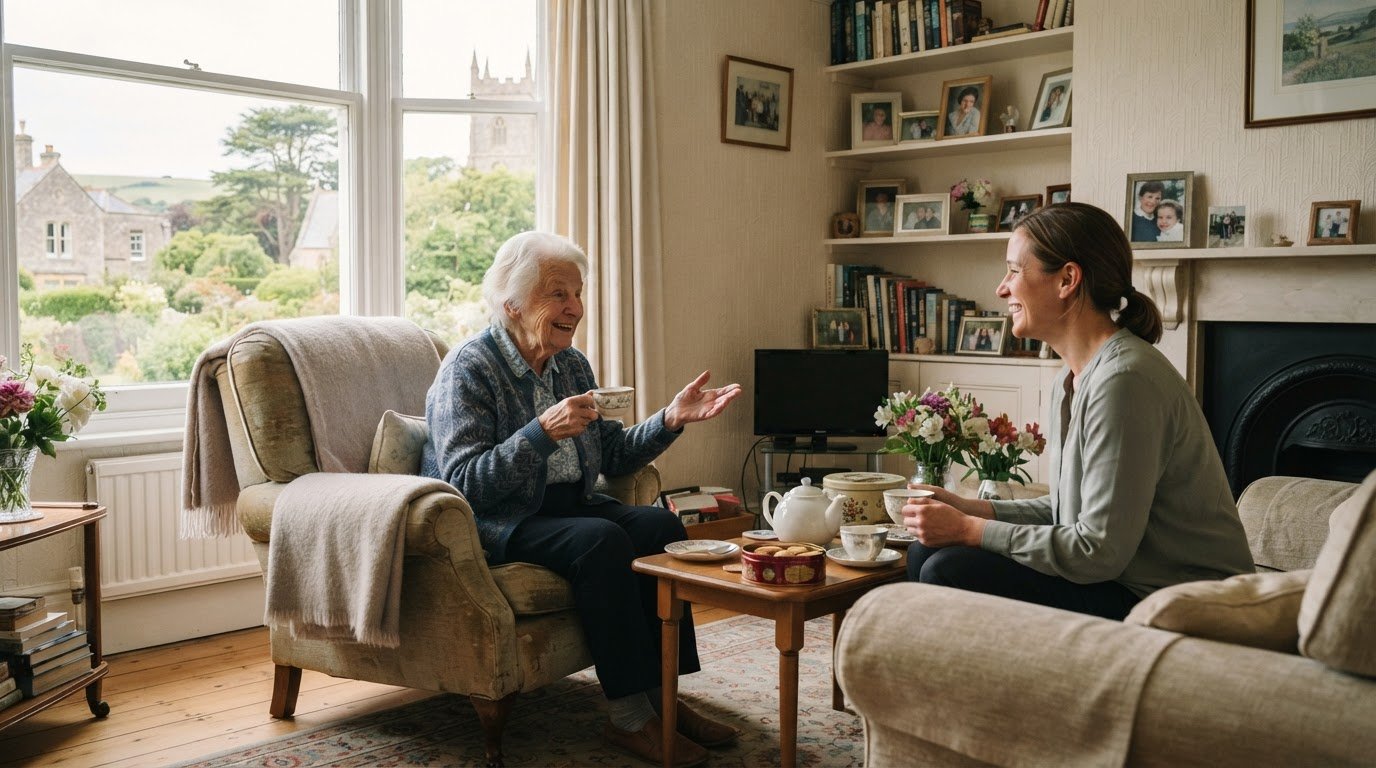
Could a little more company help an older person feel connected without taking control of their day? For families concerned about a loved one spending more time alone, companionship care for seniors living alone in Christchurch can bring regular human connection into the comfort of home.
It’s understandable to wonder what this support looks like in everyday life, or whether accepting help might feel intrusive. Good companionship care is shaped around the person, their routines and their choices. It can offer conversation and shared time while respecting the independence and familiarity that make home feel like their own. It isn’t a replacement for clinical care, but it can sit alongside other home support if needs change.
This guide explains what companionship care can offer, signs that regular visits or additional support may be helpful, and how to think about the right level of care in Christchurch. Bloomfield Care provides person-centred support at home, focused on dignity and independence. Understanding the options is a thoughtful first step, and there’s no need to rush a decision.
Key Takeaways
- Living alone doesn’t automatically mean someone wants or needs to move. Support can be shaped around their preferences at home.
- Learn what companionship care for seniors living alone in Christchurch may offer, and how it differs from clinical care.
- Compare family contact, community activities, companionship visits and broader home care to see how each can support everyday life.
- Start by listening to the senior’s wishes and identifying what would help them feel more connected or supported.
- Bloomfield Care’s person-centred companionship can respect familiar routines, dignity and independence.
Companionship Care for Seniors Living Alone in Christchurch: What It Can Offer
Living alone doesn’t automatically mean someone wants or needs to move. For some older people, home remains the place where they feel most comfortable and in control, even if days can sometimes feel quiet. Companionship care for seniors living alone in Christchurch brings supportive company and, where appropriate, practical help into a familiar home environment.
The person receiving support should remain at the centre of decisions. Their routines, interests and preferences help shape what companionship looks like, from the pace of a visit to the topics they enjoy discussing. It’s support alongside someone, not a reason to take over their everyday choices.
What can a companionship visit involve?
A visit might include conversation over a cup of tea, talking about family or familiar interests, or sharing time with a book, music or another activity the person enjoys. These are examples, not a fixed menu. What matters is that the time feels comfortable and meaningful to the individual.
Some people may also appreciate appropriate practical help as part of support at home. Agree what would be useful rather than assuming what the person needs. A companion can listen, offer company and support agreed tasks without making decisions on someone else’s behalf.
How can companionship support independence at home?
Social contact can add a point of connection to everyday life while familiar surroundings and personal routines remain in place. For a senior in Christchurch, this might mean having someone to talk with at home rather than feeling that support must involve a major change to their living arrangements.
Good support is a partnership. The person can express their preferences, keep doing what they’re comfortable doing for themselves, and decide how they would like time together to feel. A respectful approach protects dignity and choice, rather than treating age or living alone as a reason to assume someone can’t manage their own life.
Loneliness is personal: living alone doesn’t necessarily mean someone feels lonely, and people experience social connection differently. The overview of Loneliness in old age offers further context on the subject. Companionship may provide social support, but it doesn’t diagnose or treat mental health conditions and isn’t a substitute for clinical care. If someone’s wellbeing is a concern, companionship is one form of support, not the whole answer.
Loneliness, Mental Wellbeing and the Limits of Companionship Care
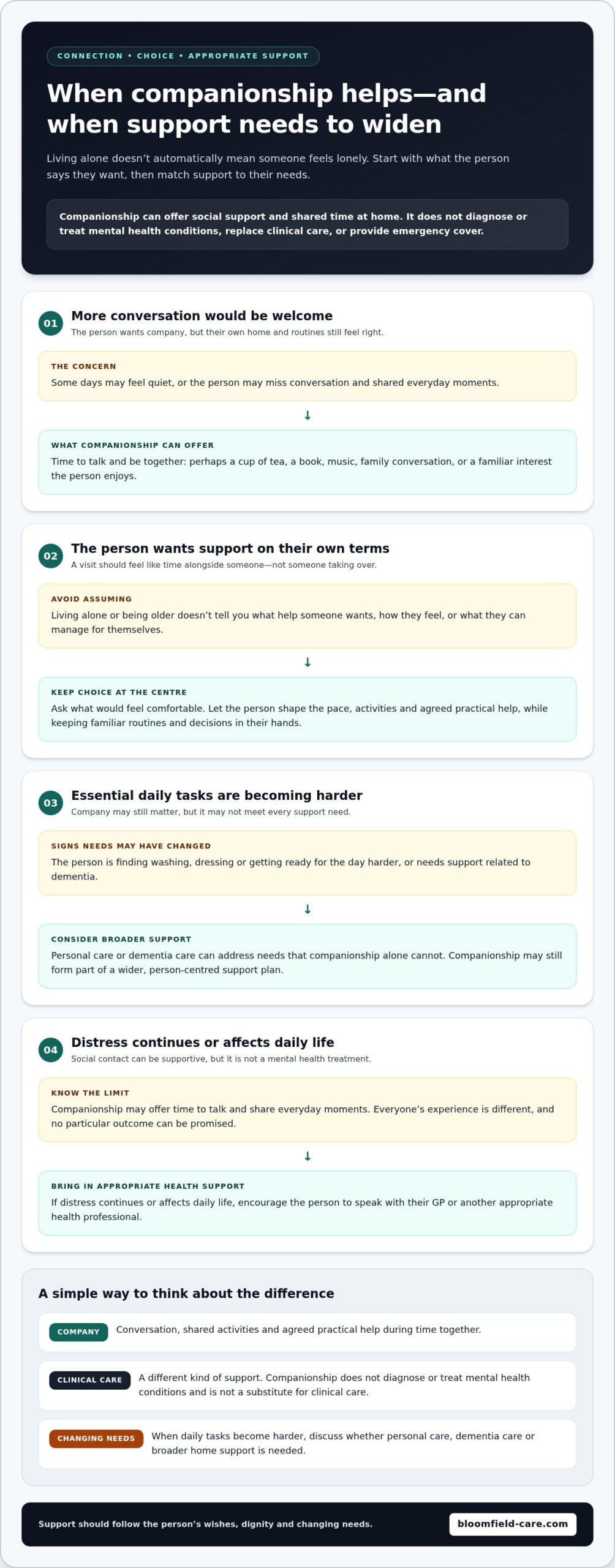
Living alone and feeling lonely aren’t the same thing. One person may value plenty of quiet time, while another may miss conversation or find their social circle has changed. Don’t assume how a senior feels based on their living arrangements. A gentle conversation can help reveal whether more company would be welcome and what kind would feel right.
Can companionship help when someone feels isolated?
For someone who would like more social contact, companionship can provide time to talk and share everyday moments. Regular visits may offer a welcome connection, though everyone’s experience is different and no particular outcome can be promised. Involving the senior in decisions matters: they can express what they enjoy, how they prefer to spend time and whether support feels comfortable.
If distress continues or affects daily life, encourage the person to speak with their GP or another appropriate health professional. Companionship is social support. It doesn’t diagnose or treat a mental health condition, and it isn’t a substitute for clinical care.
When might someone need more than companionship?
Notice whether the person is finding essential daily tasks harder or whether their needs have changed. For example, they may need help with washing, dressing or preparing for the day, or require support related to dementia. These needs can call for a different or broader form of care. Companionship may still be part of a person-centred support plan, but personal care and dementia care address needs that company alone cannot meet.
Accepting help doesn’t mean giving up independence. Support can be discussed as a way to make daily life more manageable while keeping the senior involved in decisions. The aim is to respond to their preferences and changing needs, not to take control unnecessarily.
Know the difference between an ongoing concern and immediate danger. If there’s an urgent safety risk or a medical emergency, call 999 in the UK. For a non-emergency health concern, the person or family can contact their GP or NHS 111 for guidance. Companionship visits aren’t emergency cover, so urgent situations need the appropriate emergency response.
If you’re considering companionship care for seniors living alone in Christchurch, a calm conversation about what feels helpful can be a respectful first step. Explore Bloomfield Care’s companionship support as one option for connection at home.
Companionship Care vs Family, Community & Home Care
Different kinds of support can meet different needs. Family visits, community activities and companionship care may all offer social connection, while broader home care can also help with practical or personal tasks. They can complement one another, with the senior’s wishes guiding what feels useful.
| Option | Purpose and setting | Continuity and support |
|---|---|---|
| Family contact | Personal connection through visits, calls or shared activities, at home or elsewhere. | Follows family relationships and availability; support can be emotional or practical, depending on what’s agreed. |
| Community activities | Opportunities to meet people or take part in shared interests outside the home. | May offer group contact, with the setting and frequency shaped by the activity. |
| Companionship visits | Social company and appropriate practical help in the person’s home. | Can provide planned contact shaped around personal preferences and routines. |
| Broader home care | Support at home with daily living needs, which may include personal care. | Arranged around the person’s support needs; live-in care is a more continuous home-care arrangement. |
How does companionship care differ from family visits?
Professional companionship can add planned support without replacing or diminishing family relationships. Relatives may remain an important source of affection and shared history, while a companion offers another form of company as part of a person’s support at home. This isn’t a judgement on what family can provide, or an expectation that relatives must meet every need.
The senior can help agree what feels comfortable: how visits fit around their routine, what they enjoy talking about and which parts of their home life they prefer to manage privately. Clear preferences and boundaries help support feel respectful.
When is companionship different from domiciliary or live-in care?
Companionship centres on social contact and appropriate practical help. Domiciliary care can provide broader assistance with daily living, including personal care where needed. Live-in care is a more continuous arrangement for people who need a greater level of support at home. These forms of care serve different purposes; companionship shouldn’t be treated as a substitute for personal care, clinical support or emergency help.
If needs change, the type or level of home support can be reconsidered while keeping the senior involved. For an overview of a more continuous arrangement, read Bloomfield’s compassionate live-in care guide. For families considering companionship care for seniors living alone in Christchurch, this comparison can help clarify which forms of support might fit together.
How to Explore Companionship Care in Christchurch at the Senior’s Pace
Considering companionship care for seniors living alone in Christchurch can begin with a conversation, not a commitment. The senior’s wishes should lead the way. Rather than deciding what they need on their behalf, ask what would make everyday life feel more connected or manageable, then consider the options together.
How can families start a respectful conversation?
Choose a calm moment and use open questions that invite the person to share their perspective. For example: “What do you enjoy doing during the week?” or “Would you like a bit more company at home?” Listen without rushing to solve the concern. If they’re unsure, let the conversation rest and return to it later.
Offer choices, not pressure. The senior might want to talk about the kind of company they’d enjoy, what parts of their routine matter most, or what they’d prefer to keep private. Include them in discussions about visit preferences and personal boundaries, and make clear that exploring support doesn’t mean losing control over their home or decisions.
What can a first care discussion help clarify?
A thoughtful discussion can build a picture of the person’s day as it is now and what they might like to change. Consider:
- Which parts of the week feel enjoyable, and which feel quiet or difficult?
- What kind of company feels comfortable, and what shared interests might help conversation flow?
- Are there routines, private spaces or personal preferences that support should respect?
- Would social company be enough, or are other daily support needs also changing?
These details help shape a person-centred conversation about suitable support, without assuming that one arrangement will fit everyone. Needs and preferences can shift over time, so revisit what’s working and what the senior would like to adjust. If a family carer could benefit from temporary support, read this guide to respite care for families for related information.
In Christchurch, the next step can be discussing companionship with Bloomfield Care and sharing what matters to the person. Explore companionship care at home as a way to begin that conversation at the senior’s pace.
Bloomfield Care: Support Respecting Home and Choice
For an older person, home is more than an address. It holds familiar routines, treasured belongings and the freedom to make everyday choices. Bloomfield Care provides companionship as part of its person-centred support at home, with an approach focused on helping people live safely and independently in familiar surroundings. Christchurch is among the areas included in its local coverage, alongside Wallingford, Newbury, Thatcham, Abingdon, Oxford, Dorset, Weymouth and Poole.
What does person-centred companionship mean in practice?
It starts with listening. A respectful conversation can help establish what matters to the person, from how they like to spend their time to the routines they want to keep. Their preferences guide how support is shaped, rather than assuming that every older person wants the same kind of company or help.
Privacy and dignity matter, too. The senior remains involved in decisions about their home and daily life, and companionship should sit alongside the things they continue to do for themselves. The purpose is to offer considerate support without making someone feel that their home or independence is no longer their own.
Bloomfield Care has operated since 2014 and describes its support as person-centred, with a focus on independence at home. For companionship care for seniors living alone in Christchurch, that means beginning with the individual’s wishes and shaping support around what feels appropriate to them.
What is a gentle next step for Christchurch families?
A first discussion doesn’t need to settle every detail. The senior and their family can share what daily life is like, what kind of company might feel welcome, and whether any other support needs have emerged. Taking time to listen helps make the conversation practical and reassuring, rather than pressure-led.
Support can also be reconsidered as circumstances change. Companionship may suit someone whose main need is social connection, while domiciliary, live-in or specialist dementia care may be relevant if broader support becomes important. The person’s preferences should remain central as those needs are discussed.
If you’re supporting an older relative, talk with Bloomfield Care about their circumstances and explore what companionship or other home support could look like in Christchurch. A calm, person-centred conversation is a respectful place to begin.
Take the Next Step Towards Support That Feels Right
Companionship can offer welcome social contact at home while leaving the senior in control of their routines and choices. Company is different from personal or clinical care, so the right support depends on what the person wants and needs.
For families considering companionship care for seniors living alone in Christchurch, start by listening to the older person and talking through what would make everyday life feel more connected. Support can be considered alongside other home care if needs change, without rushing decisions or losing sight of dignity and independence.
Bloomfield Care provides companionship as part of its person-centred support at home. Christchurch is included in its local coverage. To discuss what support could look like for your family, talk with Bloomfield Care about companionship support.
A thoughtful conversation is a positive first step, and the senior’s wishes can guide what happens next.
Frequently Asked Questions
What is companionship care for seniors living alone?
Companionship care is supportive company provided at home, with appropriate practical help where agreed. A visit might include conversation, sharing an interest or offering company during an everyday task. The senior’s preferences should shape the support. Companionship focuses on social connection and isn’t the same as personal care, such as help with washing or dressing, or clinical care provided by a health professional.
Can companionship care help an older person who feels lonely?
Companionship may offer welcome conversation and social contact for an older person who feels isolated, but each person’s experience is different and outcomes can’t be guaranteed. The senior should have a say in what kind of company feels comfortable. If distress persists or affects everyday life, encourage them to discuss it with their GP or another appropriate health professional. Companionship isn’t a treatment for mental health conditions.
Is companionship care the same as a befriending service?
Not necessarily. A befriending service generally centres on social connection, while companionship care is support at home that may also include appropriate practical help as agreed with the person. The purpose, setting and arrangements can vary between services, so the labels don’t always mean the same thing. Neither should be assumed to provide personal care or clinical support unless those needs are addressed through another appropriate service.
What can a companion do during a home visit?
A companion might spend time chatting, sharing an interest or offering company while the person goes about a familiar part of their day. These are flexible examples, not a fixed visit format. The senior’s routines, preferences and boundaries should guide what happens. The purpose is to provide meaningful social support without taking over everyday decisions or assuming that every person enjoys the same activities.
How do I talk to a parent about companionship care?
Start by listening, then ask open questions such as, “Would you like more company during the week?” or “What do you enjoy doing?” Avoid presenting support as a decision already made. Offer choices and give your parent time to think, even if they’re unsure at first. Include them in conversations about what kind of support feels comfortable, their routines and any personal boundaries they’d like respected.
When might a senior living alone need more than companionship?
Consider whether daily support needs are changing, for example if essential tasks such as washing, dressing or preparing meals are becoming difficult. Domiciliary, personal or dementia care may be more suitable for needs that companionship alone can’t meet. For an urgent safety risk or immediate danger in the UK, call 999. For non-emergency health concerns, contact a GP or NHS 111 for guidance.
Is companionship care available for seniors in Christchurch, Dorset?
Yes. Bloomfield Care provides companionship as part of its person-centred support at home, and Christchurch is included in its local coverage. The organisation has operated since 2014, with coverage also including Dorset, Weymouth, Poole, Wallingford, Newbury, Thatcham, Abingdon and Oxford. Families can share the senior’s preferences and explore what companionship or other home support could suit their needs.