

What if an honest, simple conversation helps a child feel safer than silence? Learning how to talk to your children about grandparents needing care can feel daunting, especially when you’re unsure how much to explain or how they’ll react. You may also worry that changes linked to dementia or extra support will make someone they love seem unfamiliar.
Those concerns are understandable. Children deserve truthful answers, but they don’t need every detail at once. A calm explanation in words they can understand, followed by time for questions and feelings, can help them make sense of what’s changing. It can also reassure them that the situation isn’t their fault and that their relationship with their grandparent still matters.
This guide explains how to tailor the conversation to your child’s age, describe memory changes and everyday help, and respond gently to difficult questions. You’ll also find ways to help children stay connected while showing how family support and personalised care at home can assist a grandparent without taking away their dignity or independence.
Key Takeaways
- Before talking, consider what your child has noticed and agree on a clear, honest explanation with other adults.
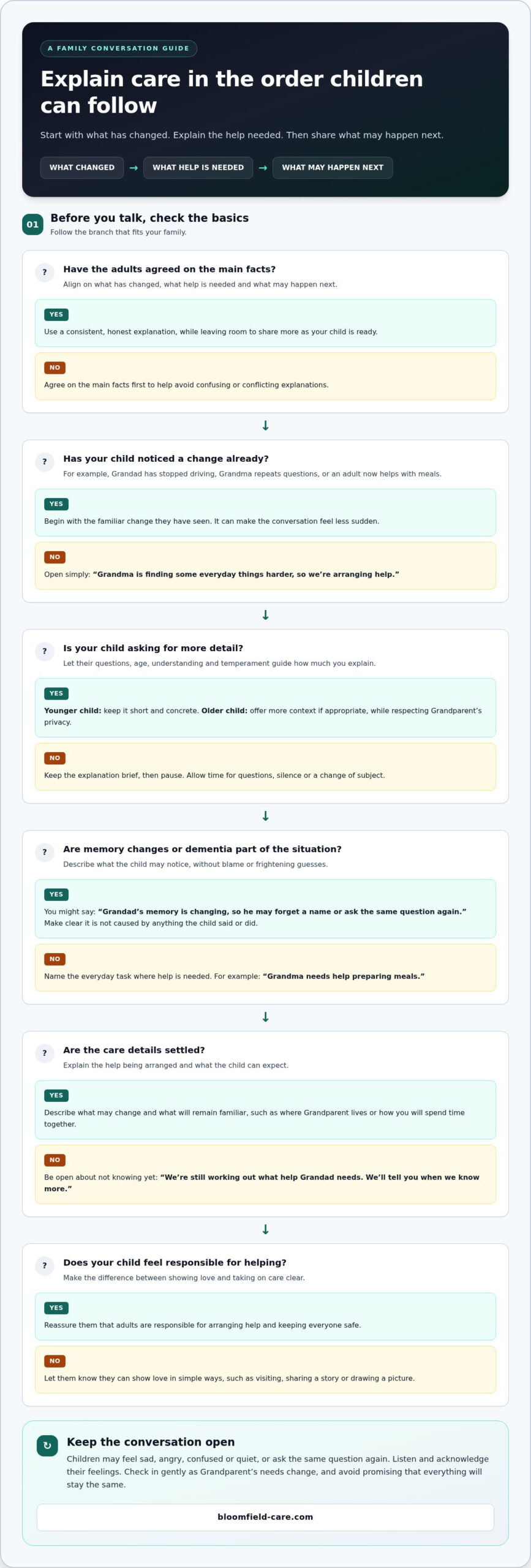
- When considering how to talk to your children about grandparents needing care, explain what has changed, what help is needed and what may happen next.
- Make space for sadness, anger, silence or repeated questions. Listen and acknowledge feelings without rushing to solve them.
- Keep the conversation open with gentle check-ins as your grandparent’s needs change, while respecting family privacy.
- Explain home care as personalised help with everyday life that can support a grandparent’s independence and familiar routines.
How to prepare before telling your children their grandparent needs care
Before explaining what’s happening, think about what your child has already noticed. Perhaps Grandad has stopped driving, Grandma repeats questions, or an adult now helps with meals. Starting with familiar changes can make the conversation feel less sudden than introducing a label such as “care” or “dementia” without context.
Choose a calm, familiar moment when you won’t need to rush away. You don’t need a perfect speech, but allow time for questions, pauses or a change of subject. If several adults will talk with the child, agree on the main facts first. Consistent, honest explanations help avoid confusion, while leaving room to share more as the child is ready.
Decide what your child needs to know first
Consider your child’s age, temperament and understanding of what they’ve seen. Younger children often benefit from short, concrete explanations; older children may ask for more detail. Describe changes you’ve observed without making frightening guesses or promising that everything will stay the same. Use the name Grandparent prefers and language that respects them. A thoughtful conversation can also support intergenerational relationships, helping children understand that connection can continue as family roles change.
Prepare an honest, reassuring explanation
Plan one simple opening sentence, then let your child’s questions guide what comes next. For example: “Grandma is finding some everyday things harder, so we’re arranging help.” Explain what may change and what will remain familiar, such as where Grandparent lives or how you’ll spend time together. If you don’t know an answer, say so and offer to find out together.
Be clear that care is support for Grandparent, not a job your child must take on. They might enjoy a visit, share a story or draw a picture, but adults are responsible for arranging help and keeping everyone safe. This distinction reassures children that they can show love without feeling responsible for fixing the situation.
Keep the explanation truthful but measured. Avoid sharing distressing details a child hasn’t asked for, and don’t promise that a condition will improve if you can’t know that. A steady message such as “We’ll tell you what changes, and you can always ask us about it” gives children permission to return to the conversation as they make sense of it.
What to say when explaining that a grandparent needs care
A simple order can help you explain the situation without giving your child more information than they can take in at once: what has changed, what help Grandparent needs and what may happen next. Keep each part brief, then pause. Your child might need a moment to think or may respond with a question that shifts the conversation.
Use everyday examples rather than broad phrases such as “Grandma can’t cope”. You could say, “Grandad sometimes forgets to take his medicine, so an adult will help him remember,” or “Grandma needs help getting washed and preparing meals.” This describes the support without suggesting Grandparent has lost all independence. Be truthful about changes and avoid promising that nothing else will change.
Adapt the conversation to your child’s age
For a younger child, try: “Grandma gets confused sometimes, so we’re going to help her with things at home.” Keep the explanation concrete and invite a question, such as, “What would you like to know?” An older child may want more context about the care plan or what visits will look like. Share what’s appropriate while respecting Grandparent’s privacy. Age can guide your approach, but your child’s understanding and temperament matter too.
Explain dementia or changing abilities in everyday language
If dementia is involved, describe what your child may notice without blame: “Grandad’s memory is changing, so he may forget a name or ask the same question again.” Make clear that it isn’t caused by anything the child said or did. The Child Mind Institute offers practical guidance on explaining a grandparent’s illness, including the value of clear, age-appropriate language.
Then explain what help is being arranged and what the child can expect: “Someone will help with meals, and we’ll still visit and spend time together.” If the details aren’t settled, be open about that rather than making a promise you can’t keep. You might say, “We’re still working out what help Grandad needs. We’ll tell you when we know more.”
For families considering support at home, domiciliary care means practical help tailored to a person’s needs and daily life. It can include personal care, medication assistance, meal preparation and companionship. Reading a guide to understanding dementia stages may help adults find clear language before talking together. Bloomfield Care provides person-centred home care to support people in their own homes.
How to respond when children feel upset, angry or confused
A child may cry, become irritable, go quiet or ask the same question repeatedly. These reactions can be ways of making sense of change, not signs of misbehaviour. Try to stay curious rather than correcting the response. You might say, “You seem cross that Grandad needs help. Do you want to tell me what’s bothering you?” Give them time to answer, or simply sit with them if they aren’t ready to talk.
Listen before offering reassurance. Reflect what you hear, such as, “You miss how things used to be,” rather than rushing to say everything will be fine. This helps a child feel understood without asking them to hide difficult feelings. When thinking about how to talk to your children about grandparents needing care, remember that reassurance can come from explaining who is helping and which familiar routines will continue, not from promising that nothing will change.
Answer difficult questions without making promises
Answer honestly in words your child can manage. If they ask whether Grandparent will get better, separate what you know from what’s uncertain: “We don’t know yet, but the adults are making sure Grandma gets help.” It’s all right to say you need to find out more. Avoid asking a child to keep the situation secret, which may leave them feeling alone or worried about talking to someone they trust.
Keep children connected without making them responsible
Offer small, optional ways to stay connected, such as visiting, sharing a favourite story, drawing a card or choosing a song together. Let your child decide whether they’d like to take part, and make clear that they aren’t responsible for Grandparent’s care. Adults and care professionals arrange the practical support. A child’s role is simply to be a grandchild, with room to enjoy the relationship in a way that feels comfortable.
Keep checking in after the first conversation. A child might seem settled at first and raise worries later, perhaps before a visit or after noticing a change. Gentle prompts such as “How did that feel for you?” can open the door without demanding an answer. Respect a wish to pause, too.
If distress continues or starts affecting everyday life, such as sleep, school or time with friends, consider talking with a trusted professional, such as your child’s GP or school pastoral staff. This isn’t about labelling or diagnosing your child. It’s a way to seek support and make sure they have a safe person to talk to while the family adjusts.
How to keep talking as a grandparent’s care needs change
The first conversation is a starting point, not a one-off announcement. As routines or support change, children may need a fresh explanation, even if they seemed comfortable before. Keep trusted adults aligned on the main facts so a child hears a consistent account. Share only what they need to understand the change, while respecting Grandparent’s privacy.
Build a simple, predictable follow-up routine
Choose natural moments to check in, such as on the way home from a visit or during a quiet part of the day. Ask, “What have you been wondering about Grandad’s care?” If your child isn’t ready to talk, let them know they can bring it up later. Before a visit, explain practical changes that may affect them, such as a care worker being there or a different activity being planned. Keep the update brief, then allow time for questions.
Familiar calls, visits or shared routines can help preserve a sense of connection, adapted to what Grandparent can manage and what feels comfortable for the child. If a visit needs to be shorter or quieter, explain that beforehand and offer another way to stay in touch, such as a phone call or a card. Avoid presenting changes as a test of how much the child cares.
Explain practical support in ways children can understand
Children may wonder who the helper is and why they’re there. Explain home care as tailored support with everyday life, which may include personal care, help with medicines, preparing meals or companionship. You could say, “A care worker helps Grandma with some daily tasks so she can have support at home.” This frames care as assistance that can help a person live safely and independently, not as a replacement for family relationships.
Children don’t need to manage the care plan or carry messages between adults. Keep practical decisions with the grown-ups, and invite the child to take part in family moments only if they want to. If worry continues or starts affecting everyday activities, involve a trusted family member or an appropriate professional, such as a GP or school pastoral staff. You don’t need to diagnose the cause to ask for support.
If home support is part of your family’s plans, explore Bloomfield Care’s home care support for help tailored to a grandparent’s needs in familiar surroundings.
How home care can support a grandparent and reassure the family
Home care means support provided in a person’s own home, shaped around their individual needs and daily routines. For a grandparent, that might mean help with personal care, medication, preparing meals or having someone to talk with. The right support looks different for every person. It can be tailored to what they find helpful, what they can do independently and how they prefer their day to unfold.
Describe support without suggesting a loss of independence
Children may hear “care” and imagine that Grandparent can no longer make choices or enjoy familiar surroundings. Explain that support is there to help, not to take over. For example: “Grandma can still choose what she’d like for lunch. Someone can help prepare it.” Involving your grandparent in decisions, as far as possible, helps keep their preferences, dignity and sense of control at the centre.
For a grandparent who needs ongoing support at home, live-in care provides a caregiver in the home, offering a 24-hour presence and support. Bloomfield Care provides person-centred support in people’s own homes, including specialist dementia care, with assistance shaped around the person’s circumstances.
Choose a gentle next step for your family
A useful first step may be a calm family conversation about your grandparent’s wishes and the everyday tasks where support could help. Talk about what they want to continue doing for themselves, which routines matter to them and where they would welcome assistance. This can help adults explain the plan to children clearly, without presenting care as a sudden or total change.
Keep inviting children to ask questions as plans develop, while making clear that adults are responsible for arranging appropriate support. They can stay involved as grandchildren through ordinary moments of connection, rather than taking on caring duties. This can make care feel like practical help around a relationship that still matters, not a replacement for it.
If you’re considering personalised support at home for your family, explore compassionate home care with Bloomfield Care. Understanding the support available can help you decide how to talk to your children about grandparents needing care in a way that feels honest, reassuring and true to your grandparent’s needs.
Keep the conversation open and connection strong
Learning how to talk to your children about grandparents needing care isn’t about finding perfect words. Start with an honest explanation they can understand, listen to their feelings without rushing to fix them, and return to the conversation as circumstances change. Reassure them that adults are responsible for care, while their relationship with Grandparent can continue through familiar visits, calls and shared moments.
Practical support can also help a grandparent remain comfortable in their own home, with assistance shaped around their needs and preferences. Bloomfield Care provides person-centred support at home, including domiciliary care, live-in care, companionship and specialist dementia care. Bloomfield Care serves families across Dorset, Oxfordshire and West Berkshire, including Wallingford, Newbury, Thatcham and Abingdon.
If home care could help your family, explore compassionate home care with Bloomfield Care. With truthful conversations, thoughtful support and space for everyone’s feelings, your family can keep moving forward together.
Frequently Asked Questions
How do you explain to a young child that Grandma needs care?
Use simple, concrete language that describes what the child may notice. You could say, “Grandma finds some everyday things harder, so an adult will help her.” Give one example, such as help preparing a meal, then pause and let your child ask questions. Reassure them that they haven’t caused the change and aren’t responsible for fixing it. Keep the conversation open so they can ask more when they’re ready.
Should I tell my child that their grandparent has dementia?
You can explain that a grandparent has dementia in words your child can understand, while sharing only as much detail as they need. For example, “Grandad’s brain is changing, so he may forget things or feel confused.” Describe what your child might see without blame or frightening guesses. Make clear that dementia isn’t caused by anything they said or did, and invite questions without expecting them to understand everything at once.
What should I say if my child asks whether their grandparent will get better?
Answer truthfully, and don’t promise an outcome you can’t know. You might say, “We don’t know whether Grandma will get better, but we’re making sure she has help.” If you’re unsure about something, say so and explain that you’ll find out together. Children can feel reassured by knowing which adults are supporting their grandparent and what familiar routines will continue, even when the future isn’t certain.
Can children visit a grandparent who is receiving care at home?
Visits can often be planned around the grandparent’s needs and the child’s comfort. Explain beforehand who may be there and what the visit might look like, then allow the child to ask questions or choose a shorter visit. Bloomfield Care provides home-based support for families across Wallingford, Newbury, Thatcham, Abingdon, Oxford, Dorset, Weymouth, Christchurch and Poole. Keep visits flexible as circumstances change.
How can I reassure a child who is worried about a grandparent?
Start by acknowledging the worry: “It makes sense that you feel concerned about Grandad.” Listen before offering reassurance, and explain what adults are doing to arrange support. Make clear that the child isn’t responsible for keeping their grandparent safe or well. Familiar calls, visits or shared activities may help them feel connected, but let them choose what feels comfortable and remind them they can talk with you again.
Should children help care for their grandparents?
Children shouldn’t be given responsibility for a grandparent’s care. Adults and care professionals should manage practical needs such as personal care, medicines and safety. A child may choose to make a card, share a story or help select a song, but these should be optional family gestures, not duties. Explain the difference clearly: they can show love and enjoy time together without being responsible for their grandparent’s wellbeing.
What if my child does not want to talk about their grandparent needing care?
Respect their pace and don’t force a conversation. Let your child know you’re available whenever they have questions, then check in gently at a calm moment, perhaps by asking, “Have you been wondering anything about Grandma?” Some children may prefer to talk while walking or doing an activity together. Keep explanations consistent and watch for ongoing distress that affects everyday life, seeking support from a trusted adult or appropriate professional if needed.