

Imagine the quiet of a Tuesday afternoon in Abingdon, where you’re gently adjusting a pillow for your mother, yet a small patch of redness on her heel sends a surge of panic through your chest. You want nothing more than for her to be comfortable and safe in her own home, but the constant worry about medical terms like “Stage 4 ulcers” and the exhaustion of round-the-clock monitoring can feel overwhelming. This is why understanding effective pressure sore prevention for bed-bound clients in Abingdon is so vital for your peace of mind.
It’s completely natural to feel anxious about causing pain or missing a warning sign. We want to help you replace that fear with confidence. Discover how proactive, person-centred care routines can protect your loved one from pressure ulcers while they remain in the comfort of their familiar sanctuary. This guide provides a clear, manageable routine to maintain skin health, simplifies complex terminology, and clarifies exactly when it’s time to reach out for professional Oxfordshire-based support. By focusing on dignity and small, consistent actions, you can ensure your home remains a place of healing rather than a place of clinical worry.
Key Takeaways
- Learn how the clinical SSKIN bundle can be adapted into a gentle, person-centred routine that fits naturally into your daily life at home.
- Understand how to access essential pressure-relieving equipment and Occupational Therapy assessments through local Oxfordshire support networks.
- Discover the vital role that nutrition and hydration play in strengthening skin resilience and promoting healing from the inside out.
- Explore why bespoke live-in care offers the most reliable approach to pressure sore prevention for bed-bound clients in Abingdon by ensuring consistent, 24/7 monitoring.
- Gain the confidence to identify early warning signs, helping you maintain your loved one’s dignity and comfort while avoiding the stress of constant clinical worry.
Understanding Pressure Sore Risks for Abingdon’s Bed-Bound Residents
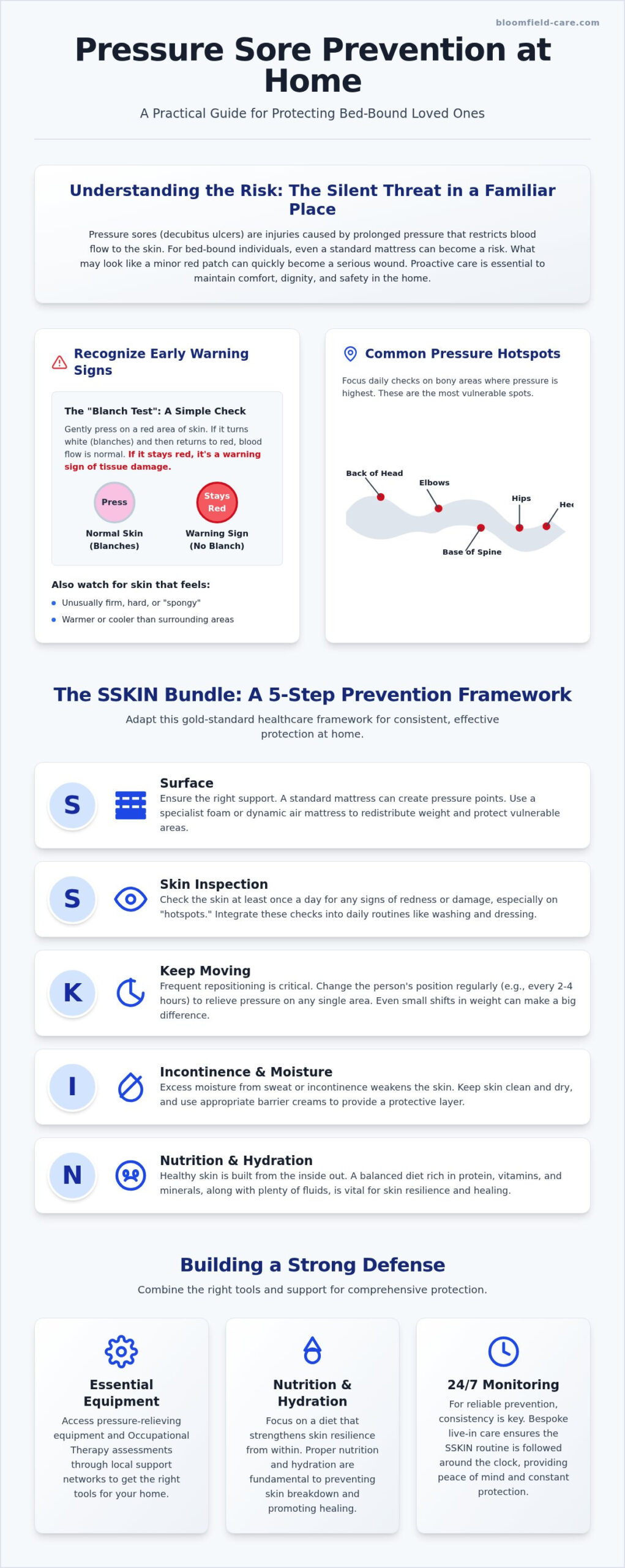
Pressure sores, often referred to as decubitus ulcers, are injuries to the skin and underlying tissue caused by prolonged pressure. They occur when the blood supply to a specific area is restricted, depriving the skin of essential oxygen and nutrients. For a loved one spending most of their time in bed, even the weight of their own body against a mattress can become a silent threat. In the familiar surroundings of an Abingdon home, it’s easy to overlook how quickly these issues develop. Immobility is the leading risk factor; when someone can’t shift their weight independently, the skin remains under constant, unrelenting stress.
Effective pressure sore prevention for bed-bound clients in Abingdon starts with recognizing that what looks like a minor “heat rash” can escalate into a deep, painful wound within hours. Proactive care isn’t just about medical safety. It’s about preserving the dignity and comfort of your family’s sanctuary. By acting before a mark appears, you ensure your home remains a place of peace rather than a site of medical crisis.
Identifying the Early Warning Signs
Vigilance is your best tool for maintaining skin health. You can perform a simple “Blanch Test” at home: press your finger gently against a red or darkened patch of skin. Healthy skin should turn white (blanch) and then return to its usual colour quickly once you let go. If the area stays red or feels unusually firm, it’s a clear signal that damage has already begun. Focus your checks on “hotspots” where bones are close to the skin’s surface:
- The base of the spine (sacrum) and hips: These areas bear the most weight when lying or sitting.
- Heels and ankles: These are particularly vulnerable due to thin skin and lack of fatty padding.
- Elbows and the back of the head: Often overlooked, these points experience constant friction against bedsheets.
Watch for changes in texture, such as skin that feels “spongy” or unusually hard. Temperature is another indicator; an area that feels noticeably warmer or cooler than the surrounding skin deserves immediate attention.
Why Home Care Requires Extra Vigilance
Hospitals are designed for clinical monitoring, but a private residence is designed for living. This means the risks are often hidden. Standard domestic mattresses, while comfortable for most, don’t distribute weight the way specialist medical surfaces do. Without professional-grade pressure sore prevention for bed-bound clients in Abingdon, a standard bed can actually accelerate skin breakdown by trapping heat and moisture.
Beyond the physical pain, the emotional toll of skin damage is significant. It can make your loved one feel vulnerable or “ill” in their own home, stripping away the sense of normalcy you’ve worked so hard to maintain. Our goal is to help you bridge the gap between the comfort of home and the safety of professional monitoring, ensuring your loved one feels secure and respected every day.
The SSKIN Bundle: A Proven Framework for Prevention at Home
In the UK, healthcare professionals rely on a structured framework known as the SSKIN bundle to maintain skin health. The SSKIN bundle is a comprehensive five-step approach to skin integrity. While originally designed for hospital wards, these steps are incredibly effective when adapted for pressure sore prevention for bed-bound clients in Abingdon. By bringing this gold-standard protocol into the home, we can ensure that medical safety doesn’t compromise the warmth and comfort of a private residence.
Consistency is the heartbeat of this framework. A 24-hour care routine means that protection doesn’t stop when the sun goes down. When these five pillars are integrated into daily life, they become a protective shield for your loved one. If managing these requirements feels daunting, bespoke live-in care can provide the steady, professional presence needed to maintain this vital routine around the clock.
Surface and Skin Inspection
The right support surface is your first line of defence. Standard mattresses often create pressure points, so exploring specialized foam or dynamic air mattresses is essential. These surfaces redistribute weight, reducing the burden on vulnerable areas like the sacrum and heels. Alongside the right equipment, daily skin inspections are paramount. To respect your loved one’s dignity, these checks are best performed during natural moments of personal care, such as morning washing or evening dressing. Keeping a simple log of skin colour and texture helps you share clear, accurate information with Oxfordshire district nurses or GPs if you notice any changes.
Keep Moving and Incontinence Management
Movement is medicine for the skin. The “2-hour turning rule” remains a non-negotiable standard because it allows blood to flow back into compressed tissues. Even small shifts in position can make a profound difference in pressure sore prevention for bed-bound clients in Abingdon. However, movement alone isn’t enough if moisture is present. Incontinence can quickly lead to skin maceration, where the skin becomes soft, white, and easily damaged. Managing this requires a gentle touch; use pH-balanced cleansers and barrier creams rather than harsh soaps. This preserves the skin’s natural protective barrier, ensuring it remains resilient against the challenges of immobility.
Essential Equipment and Local Oxfordshire Support
Providing the right tools is a gesture of love that transforms a standard bedroom into a safe haven. For effective pressure sore prevention for bed-bound clients in Abingdon, the choice of mattress is your most significant decision. Static mattresses, made of high-specification foam, are often suitable for those with some limited mobility. However, for those who are completely bed-bound, dynamic air mattresses are the gold standard. These systems use a quiet pump to inflate and deflate air cells in a rhythmic cycle, ensuring no single part of the body bears weight for too long. When your loved one is able to sit up, specialized pressure-relieving cushions are equally vital to protect the sacrum and hips while they enjoy a change of scenery.
Navigating these choices requires professional guidance and a clear understanding of the resources available to you. When planning for these additions and the support required to manage them, it’s helpful to review The Cost of Home Care in Oxfordshire and Dorset for clear budget planning and peace of mind.
Navigating Abingdon’s Healthcare Resources
Your local GP surgery, such as The Abingdon Surgery or Malthouse Surgery, serves as the primary gateway to specialist support. They can refer you to the Abingdon Integrated Care Team, where district nurses and therapists provide hands-on advice tailored to your situation. An Occupational Therapy (OT) assessment is particularly valuable; these professionals evaluate your home environment and recommend specific aids to make daily care safer. In Oxfordshire, equipment loan schemes are available to help families access medical-grade beds and mattresses, with updated local schemes expected to continue through 2026 to support residents in their own homes.
Creating a Safe Sanctuary at Home
A room should feel like a bedroom, not a clinical ward. To balance medical necessity with comfort, consider the layout carefully. Ensure there’s enough space on both sides of the bed for a caregiver to perform gentle repositioning without strain. This space is crucial for maintaining the 2-hour turning routine mentioned earlier. Lighting is another practical essential. Soft, dimmable lamps are lovely for atmosphere, but you’ll need a clear, bright light source available for those vital daily skin inspections. By choosing equipment that blends into the decor and maintaining a tidy, accessible space, you preserve the sanctuary of the home while ensuring professional-level pressure sore prevention for bed-bound clients in Abingdon.
Nutrition and Hydration: Healing from the Inside Out
While physical movement and specialist mattresses provide external protection, the body’s internal resilience is just as vital. Skin is an organ that requires constant nourishment to remain strong and elastic. For those focusing on pressure sore prevention for bed-bound clients in Abingdon, nutrition is the foundation of long-term health. Protein acts as the primary building block for skin repair, helping to knit tissues back together if they become stressed. Vitamins A and C, along with zinc, play supporting roles in collagen production and immune function, creating a robust barrier against external pressure.
Hydration is equally critical for maintaining skin integrity and overall wellness. Dehydration leads to “paper-thin” skin that is more susceptible to shearing, where the skin layers slide against each other and tear easily. When skin lacks moisture, it loses its “bounce” and becomes brittle, making it far more likely to break under the weight of the body. Encouraging small, frequent sips of water or offering hydrating snacks like melon and cucumber can make a significant difference without being overwhelming for your loved one.
The Carer’s Role in Meal Preparation
Our carers understand that mealtime is more than just a task; it’s an opportunity for connection and comfort within the home sanctuary. We support nutritional goals through bespoke meal planning that respects individual tastes and cultural preferences, ensuring every bite is both nutritious and enjoyable. Monitoring fluid intake is handled with a gentle, unhurried touch, ensuring the client never feels pressured or rushed. For those living with dysphagia, we carefully adapt textures, such as pureeing or thickening foods, to ensure every meal is safe and dignity remains a priority. If you’re looking for dedicated support to manage these complex needs, our live-in care services provide the consistent attention required for optimal nutrition and skin health.
Supplements and Professional Dietetic Advice
Sometimes, even the most carefully planned meals need a boost to meet high energy requirements. If appetite remains low, high-calorie, nutrient-dense snacks like fortified yoghurts, creamy soups, or cheese and crackers can provide essential energy in small portions. Identifying signs of malnutrition, such as unintended weight loss, loose-fitting clothes, or increased lethargy, allows you to act before skin health declines. If you’re concerned, your GP at an Abingdon surgery can provide a referral to a specialist Oxfordshire dietitian for a comprehensive assessment. They may recommend specialized nutritional shakes that are formulated specifically to support pressure sore prevention for bed-bound clients in Abingdon, ensuring that even on days when appetite is poor, the skin receives the nutrients it needs to stay resilient.
Live-in Care in Abingdon Provides 24/7 Protection
While domiciliary care is a wonderful resource for many, the intensive needs of a bed-bound individual often require a more constant presence. Hourly visits, even when scheduled multiple times a day, naturally leave significant gaps where a person remains in one position for too long. For effective pressure sore prevention for bed-bound clients in Abingdon, the “2-hour turning rule” must be maintained through the night as well as the day. This is where Compassionate Live-in Care in Oxfordshire becomes the most reliable solution, ensuring that professional vigilance never wavers.
A live-in carer doesn’t just manage a checklist; they become a protective presence within the home sanctuary. They’re there to notice the subtle shift in skin colour or the slight grimace that indicates discomfort before it escalates. This level of dedicated support provides a profound sense of reassurance for families who’ve been exhausted by the demands of 24/7 monitoring. It allows you to return to being a daughter, son, or spouse, knowing the medical safety of your loved one is in expert hands.
The Bloomfield Care Approach to Skin Integrity
Our approach is rooted in the belief that safety and dignity go hand in hand. Every person-centred care plan we create is tailored to the individual’s specific risk level and lifestyle. We don’t work in isolation; our carers collaborate closely with Abingdon District Nurses to ensure that clinical advice is followed precisely within the home environment. Beyond the physical checks, we prioritize mental well-being. Bed rest can be isolating, so our carers provide companionship that keeps spirits high, whether through shared stories, reading aloud, or simply being a steady, comforting presence in the room.
Taking the Next Step for Your Loved One
Transitioning from family-led care to professional live-in support is a significant emotional step. It’s common to feel a mix of relief and hesitation, but you don’t have to navigate this journey alone. We’re here to listen and guide you through the process, starting with a free care needs assessment in Abingdon to understand your unique situation. This unhurried conversation helps us match your loved one with a carer who fits their personality and clinical needs. By choosing professional support, you’re not just helping with pressure sore prevention for bed-bound clients in Abingdon; you’re enhancing the quality of life and preserving the sanctuary of your home for years to come.
Providing a Future of Comfort and Dignity at Home
Protecting your loved one from skin damage is a journey of small, consistent actions that preserve their dignity. By combining the SSKIN framework with specialized equipment and focused nutrition, you create a powerful defence against the risks of immobility. Most importantly, recognizing when the physical and emotional demands of round-the-clock care require professional support is a sign of strength. Expert pressure sore prevention for bed-bound clients in Abingdon ensures that the home remains a sanctuary of peace rather than a site of constant clinical anxiety.
At Bloomfield Care, we provide person-centred care plans tailored to Oxfordshire families, offering expert live-in care for 24/7 peace of mind. Our compassionate support respects the sanctity of your home while ensuring your loved one is safe and cherished. If you’re ready to explore how dedicated support can transform your daily life, we invite you to Request a Free Care Needs Assessment in Abingdon Today. You don’t have to manage this complex journey alone; let’s work together to provide the excellence in service your family deserves.
Frequently Asked Questions
How often should a bed-bound person be turned to prevent pressure sores?
A bed-bound person should typically be repositioned every two hours to maintain healthy blood flow. This “2-hour turning rule” is the gold standard for care. Frequent movement prevents prolonged pressure on vulnerable areas like the sacrum and heels. If managing this schedule overnight feels impossible for family caregivers, live-in support ensures this vital routine continues without interruption, keeping your loved one safe and comfortable throughout the night.
Can a standard mattress be used for a bed-bound client in Abingdon?
While standard domestic mattresses are designed for comfort, they aren’t equipped to redistribute weight for someone who is immobile. For high-risk individuals, a medical-grade support surface is essential. This might include a high-specification foam mattress or a dynamic air mattress that uses alternating pressure cells. Using the correct equipment is a cornerstone of home safety, as it significantly reduces the stress placed on delicate skin tissues during long periods of rest.
What does an early-stage pressure sore look like?
An early-stage pressure sore often appears as a persistent red or darkened patch that doesn’t turn white when pressed. This is known as a “non-blanching” mark. The skin might also feel warmer, cooler, or firmer than the surrounding area. Identifying these subtle changes early is crucial for effective pressure sore prevention for bed-bound clients in Abingdon. Catching these signs allows you to adjust positioning and equipment before the skin actually breaks.
Are pressure sores a sign of neglect in home care?
Pressure sores aren’t always a sign of neglect; they can develop very quickly even with attentive care, especially in frail individuals. However, they are a signal that the current prevention routine needs urgent adjustment. Proactive, person-centred care focuses on identifying risks before they become injuries. If a sore develops, it’s a time for compassion and professional review rather than blame, ensuring your loved one receives the specialized support they need to heal safely.
Does the NHS provide pressure-relieving mattresses for use at home in Oxfordshire?
The NHS often provides pressure-relieving equipment through local equipment loan schemes in Oxfordshire. To access this support, you should contact your local GP surgery in Abingdon or Wallingford to request an Occupational Therapy or district nurse assessment. These professionals evaluate the client’s risk level and can arrange for medical-grade mattresses or cushions to be delivered to your home. These schemes are a vital resource for families managing long-term care in a private residence.
How can I keep my loved one’s skin dry if they have incontinence?
Keeping skin dry requires a gentle, consistent approach to hygiene. You should use pH-balanced skin cleansers rather than standard soaps, which can be too harsh. Applying a high-quality barrier cream creates a protective layer that shields the skin from moisture. Frequent checks and changes are essential, as moisture from incontinence is a major factor in skin breakdown. This careful management ensures the skin’s natural barrier remains resilient and healthy despite the challenges of immobility.
What foods are best for healing pressure ulcers?
Healing requires a diet rich in protein, which acts as the primary building block for tissue repair. You should also include foods high in Vitamin C, such as citrus fruits or leafy greens, and sources of Zinc like meat or fortified cereals. For clients with a poor appetite, offering high-calorie, nutrient-dense snacks ensures they receive the energy needed for skin resilience. Good nutrition supports the body’s internal ability to repair itself and maintain skin elasticity over time.
When should I call a doctor about a red patch on the skin?
You should call a doctor or district nurse immediately if you notice a red patch that doesn’t blanch or if the skin looks broken, blistered, or swollen. Early intervention is the most effective way to prevent a minor mark from becoming a serious ulcer. Seeking professional Oxfordshire-based support at the first sign of change provides the best protection for your loved one and is a key part of pressure sore prevention for bed-bound clients in Abingdon.