

At 2:00 AM, you find yourself sitting upright, straining to hear the softest creak of a floorboard or the click of a door handle from the next room. It is the quietest hour of the night, yet for many families, it is often the most exhausting. You desperately want your loved one to remain in the sanctuary of their own home, but the constant worry about falls or wandering makes deep sleep feel like a distant memory. It is natural to feel a weight of guilt when considering outside help, but looking after your own well-being is exactly what allows you to remain the supportive, loving presence they need during the day.
This guide explores how specialist overnight dementia care Oxfordshire can transform these restless hours into a time of restorative safety. We will look at managing the complexities of sundowning, the practical differences between waking and sleeping nights, and how professional support preserves your loved one’s dignity. Discover how tailored assistance provides the peace of mind you need to finally sleep through the night, knowing your home remains a place of comfort and security for everyone.
Key Takeaways
- Understand how specialist support during the critical hours of 10 PM to 7 AM effectively manages the confusion and anxiety often triggered by sundowning.
- Identify the practical differences between waking nights and sleeping nights to ensure your loved one receives the most appropriate level of safety and attention.
- Discover how professional overnight dementia care Oxfordshire restores the home as a sanctuary, allowing family carers to regain their own sleep and well-being.
- Learn how a structured evening routine and person-centred assistance can preserve an individual’s dignity while preventing the risks of nighttime wandering.
- Gain clear guidance on the local steps needed to arrange a care needs assessment and access trusted nighttime support across Wallingford, Abingdon, and Oxford.
Understanding the Need for Overnight Dementia Care in Oxfordshire
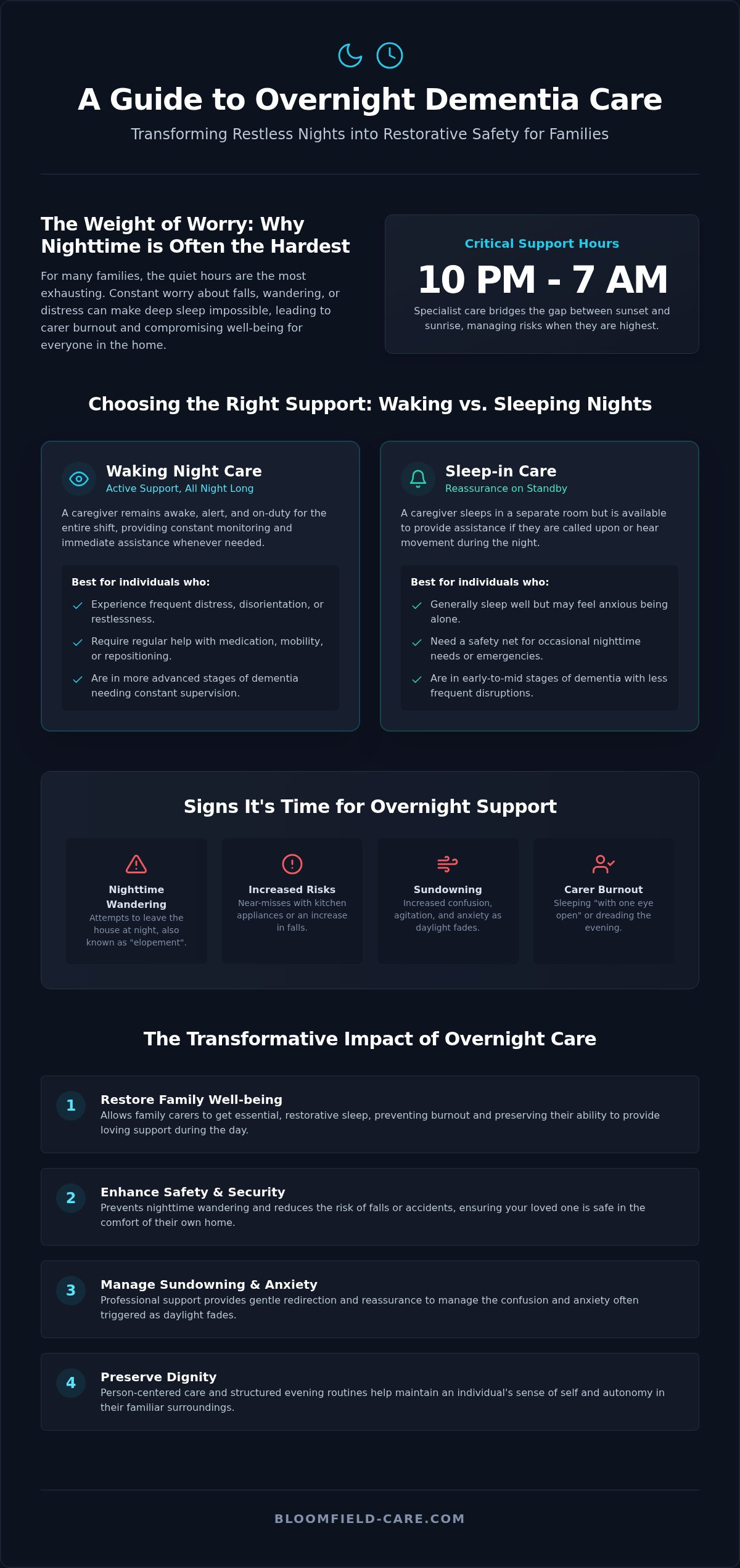
Overnight care is more than a presence in the house. It’s a specialized service designed to support individuals between the hours of 10 PM and 7 AM. In Oxfordshire, many families find that while daytime routines are manageable, the night brings a unique set of challenges that can quickly become overwhelming. This dedicated support ensures that a trained professional is available to provide reassurance, manage safety, and assist with personal needs during the hours when risks are highest. By bridging the gap between sunset and sunrise, professional care helps maintain the home as a stable, loving environment.
One of the primary reasons families seek overnight dementia care Oxfordshire is to manage Sundowning. This phenomenon involves increased confusion, agitation, and anxiety that often peaks as the daylight fades. For a person living in Oxford or Abingdon, the shifting shadows can trigger a deep sense of disorientation. Without professional intervention, this often leads to a cycle of distress for both the individual and their family. Continuous sleep deprivation for a primary carer isn’t just tiring; it’s a significant health risk that can lead to burnout and, ultimately, the inability to continue providing care at home.
The Impact of Dementia on Sleep-Wake Cycles
Dementia often disrupts the body’s internal clock, known as the circadian rhythm. This disruption means your loved one might lose the ability to distinguish between day and night. They may wake up at 3 AM fully dressed for a walk or become distressed because they don’t recognize their bedroom in the dark. Professional support focuses on maintaining the home as a sanctuary. By using gentle redirection and familiar cues, caregivers help reduce nighttime anxiety and encourage a more natural sleep pattern, ensuring the individual feels safe and secure in their familiar surroundings.
When is it Time to Consider Professional Nighttime Support?
It’s often difficult to know when the shift from daytime help to overnight support is necessary. You might notice your loved one attempting to leave the house at night, a behavior often called “elopement,” or perhaps there have been near-misses with kitchen appliances in the early hours. If you find yourself sleeping with one eye open or feeling a sense of dread as evening approaches, it’s a clear signal that the current arrangement is no longer sustainable. Introducing professional care during these hours provides a safety net that often prevents avoidable hospital admissions and helps delay the need for a move into a residential care home.
Waking Nights vs. Sleeping Nights: Which is Right for Your Family?
Choosing the right level of support is a deeply personal decision that depends on your loved one’s specific needs and the rhythm of their nights. It’s about finding a balance between ensuring safety and respecting their autonomy within their own home. Understanding the nuances of overnight dementia care Oxfordshire allows you to make an informed choice that brings genuine relief to the whole family. Every individual’s journey is different, so the support must be equally unique.
Waking Night Care: Active Support for High-Dependency Needs
In a waking night scenario, the caregiver remains awake and alert throughout the entire shift, typically from 10 PM to 7 AM. This level of assistance is vital for individuals who experience frequent distress, disorientation, or physical restlessness. If your loved one needs help with medication at specific intervals, requires assistance with mobility to prevent falls, or needs regular repositioning to maintain comfort, this is the appropriate choice. It’s particularly beneficial for those in more advanced dementia stages where confusion can escalate quickly without immediate, gentle redirection. The carer is there to provide constant monitoring, ensuring that any needs are met the moment they arise.
Sleep-in Care: Reassurance and Emergency Assistance
Sleep-in care provides a different kind of security. The caregiver sleeps in a separate room but is available to assist if they’re called upon or if they hear your loved one moving about. This model is ideal for those who generally sleep well but might feel anxious about being alone at night. It offers a vital safety net for those in early-to-mid stages of dementia who might occasionally wake up disoriented but don’t require constant, active supervision. It’s a cost-effective way to ensure that if an emergency arises or a sudden moment of confusion occurs, a professional is already on-site to provide calm reassurance.
To decide which model fits your situation, consider how often your loved one wakes and what they do during those moments. Are they simply looking for a glass of water, or are they attempting to leave the house? The Alzheimer’s Association provides excellent resources on Sleep Issues and Sundowning that can help you track these patterns over several nights. While the service levels differ in their intensity, the goal remains the same: to preserve the individual’s dignity and ensure their home remains a sanctuary. Our team can help you assess these nighttime patterns to find the most supportive path forward, ensuring Bloomfield Care provides the exact level of help your family needs.
Specialist Management of Sundowning and Nighttime Anxiety
As the afternoon light shifts, many people living with dementia experience a distinct period of increased agitation. This phenomenon, often referred to as Sundowning and dementia, can be one of the most challenging aspects for families managing overnight dementia care Oxfordshire. It isn’t just a physical reaction to the end of the day; it’s a complex emotional response to fatigue and sensory changes. Sundowning is a common but manageable phase of the dementia journey that requires a gentle, person-centred approach rather than clinical restriction.
Professional carers focus on creating a rhythmic flow to the evening that signals the body it’s time to rest. By managing the environment, we can reduce the triggers that lead to nighttime distress. This involves a delicate balance of maintaining the individual’s autonomy while providing the invisible safety net they need to feel secure in their own sanctuary.
Practical Strategies for a Calmer Evening
Managing sensory input is the first step in easing the transition to sleep. High noise levels or harsh lighting can cause sensory overload, leading to heightened anxiety. We recommend softening the atmosphere by drawing curtains early to prevent confusing reflections and playing familiar, soothing music. Nutrition also plays a vital role; a warm drink or a light, protein-rich snack can prevent hunger-related wakefulness. These small, therapeutic adjustments form a structured routine that helps anchor the individual in the present moment, easing them toward a restful night.
Ensuring Safety Without Feeling Restrictive
True safety is achieved through presence and patience, not through barriers. We implement discreet safety measures such as floor sensors that alert the carer if someone leaves their bed, allowing for immediate but quiet assistance. If a loved one begins wandering, the carer uses gentle redirection, walking with them and listening to their concerns before calmly guiding them back to bed. This ensures the client is never alone in their distress while staying safe at home. By maintaining the sanctity of the bedroom as a place of comfort, we protect both their physical safety and their inherent dignity.
Arranging Overnight Care in Oxfordshire: Local Steps and Logistics
Oxfordshire families often feel a sense of relief once they decide to seek help, but the logistical path forward can seem daunting. Whether you’re in the historic streets of Abingdon or the quieter lanes of Wallingford, arranging overnight dementia care Oxfordshire is a structured process designed to place your loved one’s needs at the centre of every decision. It isn’t just about filling hours; it’s about creating a seamless transition from your existing daytime domiciliary care to a protected, peaceful night.
Finding the right “carer match” is perhaps the most vital step. We don’t just look at clinical skills; we consider personality, temperament, and shared interests. A caregiver who understands your father’s love for local history or your mother’s preference for a specific nightly tea brand provides a level of reassurance that clinical checklists simply cannot capture. This connection ensures the carer is seen as a trusted companion rather than a stranger in the home.
The Care Assessment: A Collaborative Family Process
The journey begins with a home visit from a care manager. This is an opportunity to discuss specific nighttime triggers, such as disorientation or restlessness, which we’ve noted in previous sections. We work together to set clear, measurable goals, like ensuring your loved one feels safe enough to sleep for several uninterrupted hours. A care assessment is a conversation, not an audit. It’s a chance for us to listen to your story and understand the unique rhythm of your household so the care plan feels like a natural extension of your home life.
Local Support and Funding in Oxfordshire
Navigating the financial aspect is a key part of the logistics. For the 2026/27 period, Oxfordshire County Council has set a ceiling threshold rate for sleep-in care at £84.97 per night. If your loved one has capital below the upper threshold of £23,250, you may be eligible for local authority funding. We recommend contacting the council for a formal financial assessment to see what support is available to your family.
Choosing a local provider ensures we have deep roots in the community. This proximity allows for better coordination with local healthcare hubs like the John Radcliffe Hospital in Oxford for emergency planning and integrated support. Understanding the cost of home care helps you plan for a sustainable, long-term solution. If you’re ready to discuss how we can support your family, contact our Oxfordshire team today to begin your personalized care assessment.
Why Choose Bloomfield Care for Nighttime Support in Oxfordshire?
Choosing a care provider is a step taken with both the head and the heart. You need the professional assurance of a CQC-regulated service, but you also want the warmth of a caregiver who truly listens. At Bloomfield Care, we understand that your home is a sanctuary. Our approach to overnight dementia care Oxfordshire is built on the belief that everyone deserves to feel safe, respected, and understood in their own environment. We don’t just manage conditions; we support people, focusing on the human connection that national agencies often overlook.
Families in Wallingford and Abingdon often tell us that our caregivers feel like a natural extension of their own family. This is because we prioritize an unhurried, gentle pace that allows for genuine interaction. By providing a consistent, familiar presence, we help alleviate the anxieties that nighttime can bring, allowing you to finally sleep soundly knowing your loved one is in safe, compassionate hands.
Our Compassionate Approach to Dementia
We train our staff to look beyond the clinical symptoms of Alzheimer’s or dementia to see the person who remains. This means understanding their history, their comforts, and their unique fears. Whether it’s a specific way they like their pillows arranged or a familiar story that helps them settle, these details matter. Our 2026 commitment to excellence in Oxfordshire home care ensures that every nighttime visit is rooted in the latest person-centred practices, prioritizing emotional well-being alongside physical safety. For many families in Abingdon and Wallingford, our carers have become trusted advisors, helping to navigate the complexities of the dementia journey with grace and patience.
Next Steps: Restoring Balance to Your Home
As needs evolve, we can also discuss how live-in care might serve as a sustainable, long-term alternative to a residential home. This allows your loved one to remain in the place they love most while receiving continuous, specialized support. We believe in a collaborative approach, which is why we offer a free, no-obligation consultation with our Oxford team. This isn’t a high-pressure meeting; it’s a chance for us to listen to your concerns and see if we’re the right fit for your household dynamic.
We often suggest a trial period for our overnight support. This ensures that the arrangement works for everyone and that the “carer match” we discussed previously is providing the peace of mind you deserve. You don’t have to carry the weight of nighttime worry alone. By inviting a professional into your home, you’re not giving up; you’re gaining the strength to be the best version of yourself for your loved one during the day. Contact our local Oxfordshire branch today to explore how we can help restore balance and rest to your home.
Restoring Peace and Security to Your Nighttime Routine
Navigating the challenges of dementia doesn’t mean you have to sacrifice your own well-being or the safety of your loved one. We’ve explored how tailored support can manage the complexities of sundowning and prevent the risks of nighttime wandering, ensuring the home remains a true sanctuary. By choosing the right level of overnight dementia care Oxfordshire, you provide your loved one with professional reassurance while giving yourself the vital opportunity to rest and recover.
Our team brings local Oxfordshire expertise, CQC regulated professional care, and specialist dementia trained staff directly to your doorstep. We focus on the person, not just the diagnosis, ensuring every interaction is rooted in dignity and genuine kindness. You don’t have to carry this responsibility alone; professional help is a bridge to a more sustainable and loving care journey for the whole family.
If you’re ready to bring stability back to your evenings, we’re here to listen and guide you through the next steps. Request a Compassionate Care Assessment in Oxfordshire today and discover how we can help your family sleep soundly again. Let’s work together to ensure your home remains a place of comfort and calm throughout the night.
Frequently Asked Questions
What is the difference between a waking night and a sleep-in carer?
A waking night carer remains alert throughout the entire shift to provide immediate, active assistance with personal care or medication. In contrast, a sleep-in carer stays in a separate room and is available for occasional support if they’re called upon. Waking nights are generally better for those who wake frequently or experience high levels of distress. Sleep-in care offers a safety net for those who usually sleep well but shouldn’t be left alone.
How much does overnight dementia care cost in Oxfordshire?
The cost of overnight dementia care Oxfordshire depends on the level of support required. Waking nights are priced higher because the professional remains active throughout the shift. For sleep-in care, Oxfordshire County Council has set a ceiling threshold rate of £84.97 per night for 2026/27. Many families find that private rates vary based on specialized needs. We recommend a full assessment to determine a sustainable plan that fits your family’s budget and requirements.
Will having a carer at night upset my loved one with dementia?
Introducing a new face at night can be sensitive, but we manage this through a gentle, gradual introduction. We match carers based on personality and shared interests to build trust quickly. By maintaining familiar routines and using the person’s own home as a sanctuary, we reduce the risk of distress. Most individuals find great comfort in having a calm, professional presence nearby, which often reduces the anxiety associated with nighttime confusion and sundowning.
Can overnight care be arranged on a short-term or respite basis?
Yes, overnight care can be arranged on a short-term basis to provide family carers with a much-needed break. This respite allows you to rest and recover while knowing your loved one is safe. Whether it’s for a single night or a few weeks, temporary support is an excellent way to trial the service. It helps ensure the arrangement works for everyone before committing to a longer-term plan for support in the home.
What happens if the carer needs help during the night?
Our professionals are never truly alone. Every carer has access to a dedicated on-call manager who provides guidance and support throughout the night. If an emergency occurs, we have clear protocols for contacting medical services or local hospitals like the John Radcliffe. This robust support system ensures that both the client and the caregiver are protected. You can sleep soundly knowing there’s a professional framework standing behind the person in your home.
Is overnight care a better option than a residential care home?
Home care allows your loved one to stay in familiar surroundings, which is vital for managing dementia. In residential settings, an estimated 70% of residents have dementia, which can sometimes lead to a noisy or confusing environment. Overnight care provides one-on-one attention that is difficult to replicate in a large facility. By staying at home, your loved one preserves their dignity and independence while receiving highly personalized, specialist support tailored to their specific lifestyle.
How do you match a carer to my parent’s personality and needs?
We use a collaborative family process to identify the best carer match for your parent. During our initial home visit, we discuss their life history, hobbies, and temperament. We look for a caregiver who shares similar interests or has a personality that complements your loved one’s nature. This partnership-driven approach ensures the caregiver is seen as a trusted companion. It’s about finding someone who feels like a natural extension of your own family.
Do we need to provide a separate room for an overnight carer?
For sleep-in care, you’ll need to provide a separate, private bedroom where the carer can rest. This is essential as they must be able to sleep to remain effective. For waking night care, a separate bedroom isn’t strictly required since the professional remains awake. However, they’ll need a comfortable area with adequate lighting and access to facilities. We’ll discuss these practical logistics during your care assessment to ensure the environment is suitable for everyone.