
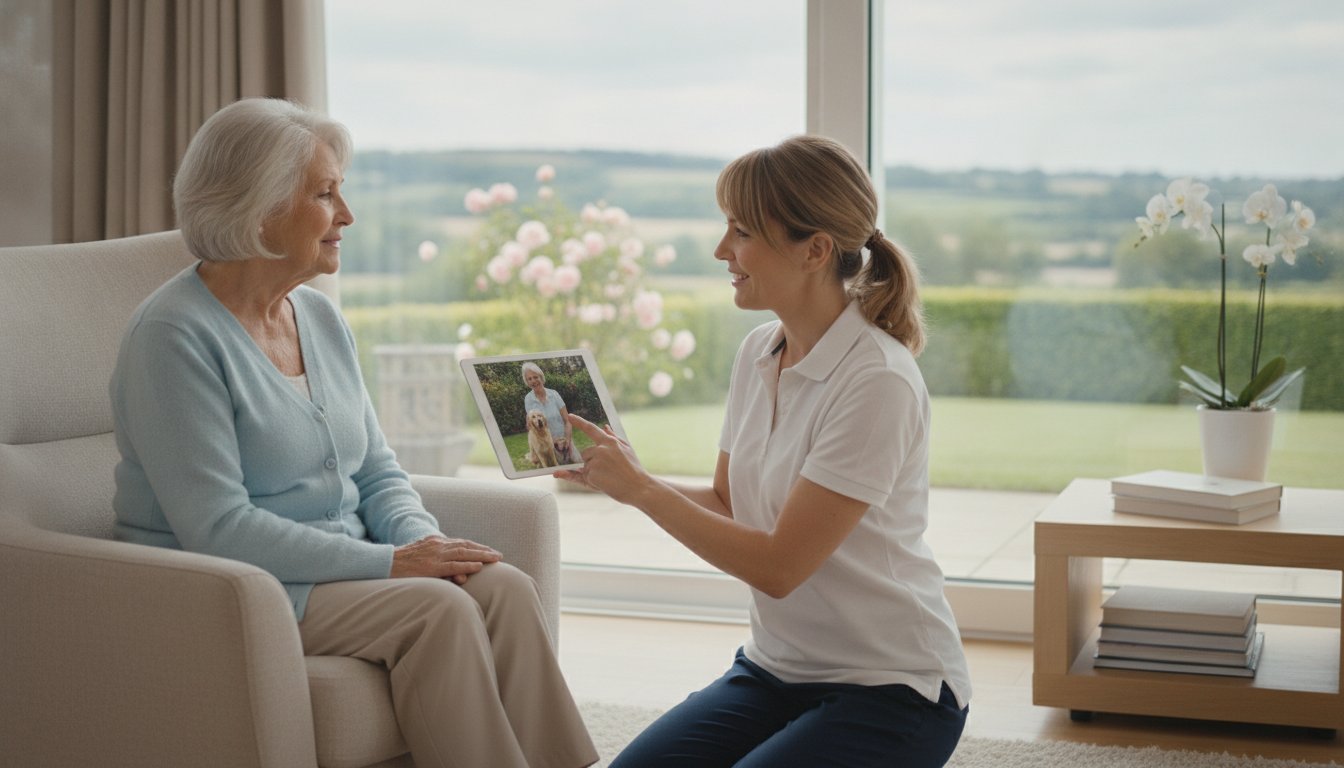
With dementia cases in West Berkshire projected to rise by 50% by 2030, you aren’t alone if you feel the weight of a diagnosis pressing down on your family. It’s heartbreaking to watch a loved one’s personality flicker, and it’s equally exhausting to carry the mantle of a full-time carer without a moment’s rest. You likely believe that your loved one deserves to stay in the home they love, surrounded by the memories they’ve built over a lifetime. Finding reliable dementia care at home West Berkshire doesn’t have to be a journey you take in isolation. Support is available.
This 2026 guide is designed to help you understand the local support landscape with clarity and confidence. We’ll show you how to maintain your loved one’s dignity and independence while significantly reducing the strain on your own well-being through professional assistance. By exploring the differences between council funding and private care options in Newbury and Thatcham, you’ll discover how a person-centred approach can transform a house back into a sanctuary of safety and comfort.
Key Takeaways
- Understand why a private residence provides a vital psychological sanctuary, helping to reduce anxiety and manage the effects of “sundowning” through familiar surroundings.
- Compare the practical benefits of hourly domiciliary care versus 24-hour live-in support to determine the most appropriate level of assistance for your family’s needs.
- Learn how to use a specialist home safety checklist to adapt living spaces in Newbury and Thatcham for the sensory and cognitive changes associated with dementia.
- Discover how professional dementia care at home West Berkshire prioritises dignity and independence through a person-centred approach regulated by the CQC.
- Gain clarity on navigating local support networks, allowing you to transition from the role of an exhausted carer back to being a supportive family member.
Understanding Dementia Care at Home in West Berkshire
Dementia care at home isn’t just about managing symptoms; it’s a specialist service designed to nurture cognitive health within the sanctuary of a familiar environment. For families in Newbury and Thatcham, this means your loved one can stay in the place they know best while receiving professional support tailored to their unique needs. Choosing dementia care at home West Berkshire allows for a person-centred approach, where the individual’s personality and life story take precedence over their diagnosis. We often work alongside local resources like the West Berkshire Dementia Hub to ensure families feel connected to a wider network of community support and expert advice.
The Local Landscape: Dementia in Newbury and Thatcham
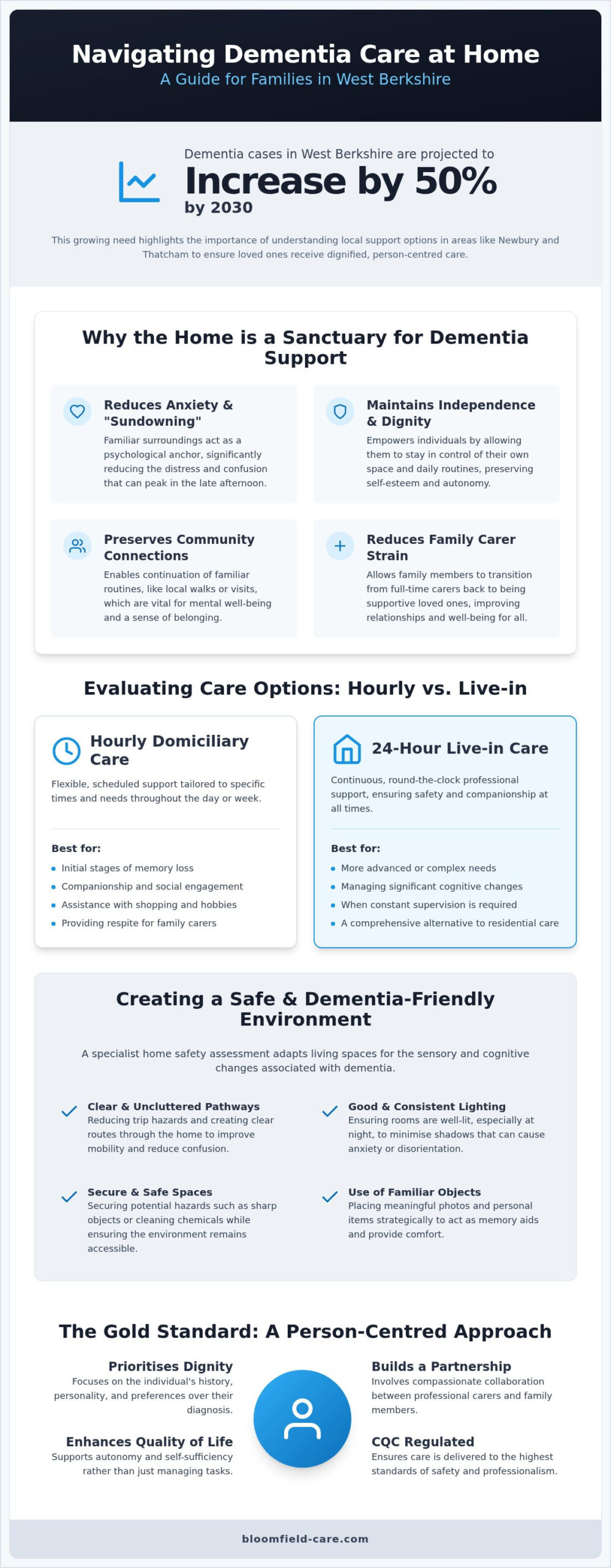
The need for dedicated support in our region is growing rapidly. Statistics from the Alzheimer’s Society project a 50% increase in dementia cases across West Berkshire by 2030. This shift explains why so many local families now choose home care over residential facilities. The home is more than just a building; it’s a repository of memories and a source of profound comfort. By remaining in Newbury or Thatcham, individuals can maintain their existing community links, which are vital for mental well-being. Whether it’s a familiar walk in Victoria Park or a visit to a local cafe, these small routines provide a sense of stability that clinical environments often struggle to replicate.
Recognising the Stages of Care Needs
Every journey with memory loss is unique and requires a flexible approach. Support often begins with simple companionship, such as help with the weekly shop or encouragement to keep up with long-held hobbies. Over time, these needs may evolve into more specialist requirements, including assistance with personal care or managing more complex cognitive changes. It’s helpful to learn about understanding dementia stages to anticipate how your needs might change and when to introduce more structured assistance.
The realities of Dementia caregiving involve a compassionate partnership between family members and professional carers. We define person-centred care as the gold standard for dementia support because it prioritises the individual’s dignity, history, and personal preferences above all else. This approach ensures that care isn’t just about safety, but about enhancing the quality of life and maintaining a sense of self throughout every stage of the condition.
Why the Home is a Sanctuary for Dementia Support
For someone living with memory loss, every familiar object in their house tells a silent story. This “place attachment” isn’t just sentimentality; it’s a psychological anchor that provides safety when the world feels increasingly confusing. When we provide dementia care at home West Berkshire, we respect the sanctity of the private residence. Familiar surroundings are one of the most effective tools for reducing “sundowning” and the deep anxiety that often peaks in the late afternoon. In a home environment, the sensory triggers are known and manageable, which significantly lowers the risk of distress compared to a clinical setting.
Staying at home allows your loved one to keep their connection to the local community and their own personal history. It might be the specific way the light hits the kitchen table during breakfast or a gentle stroll through Victoria Park on a crisp morning. Even a visit to the Newbury markets can be a vital part of a therapeutic routine that maintains a sense of normalcy. In this familiar environment, a professional carer acts as a trusted advisor, blending into the home’s rhythm rather than disrupting it with rigid institutional schedules.
Maintaining Independence and Dignity
Home care empowers individuals to remain in control of their own space for as long as possible. It’s about more than just safety; it’s about preserving self-esteem through discreet and respectful personal care. We focus on supporting self-sufficiency rather than simply managing tasks. If your loved one can still enjoy gardening in their own backyard or help prepare a simple meal, we encourage that autonomy. This person-centred philosophy ensures that dignity remains intact, even as care needs become more complex over time.
The Emotional Impact on Family Carers
Acting as a full-time unpaid carer is physically and emotionally draining. Many family members in Newbury and Thatcham reach a point of exhaustion where they’re no longer acting as a son or daughter, but as a manager of medication and logistics. Seeking professional support isn’t a sign of failure; it’s a way to reclaim your relationship. By following NHS advice for dementia carers, families can learn to balance their own health with their loved one’s needs.
Professional assistance allows you to return to being a family member again. You can focus on sharing a conversation while we handle the more clinical or demanding aspects of daily life. If you find yourself needing a short break to recharge, exploring respite care options can provide the temporary relief you need. If you’re feeling overwhelmed, we’re here to help you find a supportive path forward that prioritises your family’s overall wellness.
Evaluating Care Options: Hourly vs. Live-in Care
Deciding on the right level of support is a deeply personal process that evolves as needs change. For families looking into dementia care at home West Berkshire, the choice usually sits between structured hourly visits and the continuous support of live-in care. Each model offers distinct advantages tailored to different stages of cognitive health. While hourly care provides a flexible way to introduce help, live-in care offers a comprehensive safety net for those with more advanced requirements.
Hourly domiciliary care involves visits that focus on specific tasks like medication management or meal preparation. It’s a rhythmic, predictable way to ensure safety without overwhelming someone who still values their privacy. Live-in care, however, involves a carer moving into a spare room to provide round-the-clock assistance. This removes the anxiety of being alone at night and ensures that help is always just a few steps away. You can explore the financial aspects of these choices in the cost of home care guide.
Hourly Domiciliary Care: Flexibility for Early Stages
This model works best for individuals who require a helping hand but still maintain a degree of independence. Flexible scheduling across Newbury and Thatcham allows us to tailor visits to the times of day when support is most needed. Consistency is the cornerstone of this approach. Seeing the same familiar carers helps reduce the anxiety that can sometimes accompany dementia. These sessions often focus on:
- Gentle companionship and social engagement to prevent isolation.
- Assistance with light housework, laundry, and nutritious meal prep.
- Support with local outings, appointments, or the weekly shop.
Live-in Care: 24-Hour Safety and Peace of Mind
When a loved one reaches a stage where they are at risk of wandering or experience significant confusion after dark, live-in care provides essential peace of mind. The carer becomes a gentle presence within the home, learning the individual’s unique preferences and non-verbal cues. This level of support is particularly effective for managing complex Alzheimer’s symptoms while avoiding the trauma of a move to a residential facility. To understand how this works in practice, read our live-in care guide. Having a professional on hand 24/7 ensures that your loved one’s dignity is maintained through every challenge, providing a sense of stability for the entire family.
Creating a Safe Environment: A Home Safety Checklist
Adapting a house for dementia care at home West Berkshire requires a delicate balance between practical safety and emotional comfort. It’s about turning a residence into a safer sanctuary without stripping away the warmth that makes it a home. Sensory changes often mean that a person with dementia perceives their environment differently. For example, a dark rug might look like a hole in the floor, while poor lighting can cause shadows that lead to confusion. Environmental cueing is a technique used to aid memory by placing visual or physical prompts throughout the home to guide daily activities.
Simple technology can play a significant role in preventing falls without making the house feel like a hospital. Floor sensors or wearable pendants provide an invisible safety net that alerts carers to movement during the night. These adaptations allow your loved one to move freely within their own space, preserving their autonomy while ensuring help is never far away. The goal is to create an environment that supports independence rather than one that restricts it.
Room-by-Room Adaptations
In the kitchen, clear labelling on cupboards or installing automatic shut-off devices on hobs can prevent accidents while encouraging self-sufficiency. The bathroom often needs non-slip mats and discreet grab rails. Using contrasting colours, such as a brightly coloured towel or toilet seat, helps with visibility and reduces the cognitive load required to navigate the space. In the bedroom, motion-sensor lighting for nighttime navigation is essential to reduce the risk of trips during moments of disorientation.
- Kitchen: Use transparent containers and safety locks for hazardous items.
- Bathroom: Install thermostatic mixing valves to prevent scalding.
- Bedroom: Keep the path to the bathroom clear and well-lit.
The Importance of Routine and Familiarity
Maintaining a sense of self is just as important as physical safety. We often recommend using memory boxes and familiar photographs to ground individuals in their own history. Professional carers don’t come in to take over the house. Instead, they integrate into existing household routines to minimize disruption. This partnership respects the individual’s lifestyle while providing a professional safety net. If you’re looking for guidance on making your home in Newbury or Thatcham more accessible, our team can help you create a personalised safety plan that prioritises both safety and comfort.
The Bloomfield Care Approach in West Berkshire
Bloomfield Care has served as a dedicated local advisor since 2014, providing a bridge between professional healthcare and the warmth of a family home. We understand that choosing dementia care at home West Berkshire is one of the most significant decisions a family can make. That’s why our CQC-regulated services are built on a foundation of integrity and genuine kindness. We don’t just manage tasks; we foster human connections that value the sanctity of your loved one’s lifestyle. Our process begins with a Free Care Needs Assessment, a detailed yet gentle conversation that helps us understand the specific support required to keep your home a sanctuary.
We see ourselves as a community-focused partner rather than just a service provider. Our team is deeply rooted in the local landscape, often collaborating with regional healthcare professionals to ensure a seamless support network. This partnership-driven approach means we’re here to listen, providing a sense of stability and reliability to families who may feel overwhelmed by the complexities of memory loss. We’re committed to excellence in service, ensuring that every individual we support feels empowered and respected within their own four walls.
Our Person-Centred Care Planning
We believe that effective care is a partnership between the individual, their family, and our team. Our person-centred planning goes beyond clinical needs to look at the person behind the diagnosis. This includes a careful matching process where we find a carer whose personality and interests align with your loved one’s temperament. Whether they share a love for local history or enjoy a specific style of gardening, these connections make the transition into care much smoother. We maintain continuous communication with families in Newbury and Thatcham, ensuring that the care plan evolves alongside your needs and provides ongoing peace of mind.
Next Steps: Starting Your Care Journey
Beginning this journey often starts with a simple, informal chat. You can contact our West Berkshire team to discuss your situation without any pressure to make an immediate decision. During our initial home visit, we take the time to listen more than we speak. We’ll walk through your home together, discussing potential adaptations and answering any questions you have about daily routines. This visit is unhurried and supportive, designed to provide clarity and reassurance during a sensitive time.
We’re here to ensure that your home remains a place of comfort and dignity. By choosing a community-focused partner, you’re not just hiring a service; you’re gaining a dedicated support system committed to enhancing life quality. We look forward to helping you navigate this path with grace, professionalism, and the heart of a domestic environment.
Embracing a Future of Comfort and Connection
Support for memory loss is a journey best shared with partners who value the sanctity of your home. By prioritising familiar surroundings and implementing thoughtful safety adaptations, you help your loved one maintain their independence while protecting their dignity. Whether you choose flexible hourly visits or the constant presence of live-in support, professional dementia care at home West Berkshire ensures that safety and warmth go hand in hand.
As a CQC regulated provider with specialist dementia training, Bloomfield Care offers dedicated local support across Newbury and Thatcham. We invite you to Request a Free Care Needs Assessment in West Berkshire to explore how we can support your family’s unique needs. You don’t have to navigate these changes alone. It’s possible to move forward with confidence, ensuring your home remains the peaceful sanctuary it was always meant to be.
Frequently Asked Questions
How much does dementia care at home cost in West Berkshire?
Costs depend on whether you require hourly visits or 24-hour live-in support. While we don’t provide fixed quotes without an assessment, it’s helpful to know that social care funding in West Berkshire is means-tested. For the 2026/27 period, the upper capital limit is £23,250. If your assets are above this, you’ll likely self-fund your dementia care at home West Berkshire. We recommend a full assessment to understand the exact level of support required.
What is the difference between dementia care and Alzheimer’s care?
Dementia is a broad umbrella term for various symptoms of cognitive decline, whereas Alzheimer’s is the most common specific disease causing those symptoms. In practice, both require a person-centred approach that focuses on dignity and routine. Whether your loved one has a specific Alzheimer’s diagnosis or another form of dementia, our specialist training ensures we provide tailored assistance that respects their individual personality and helps manage their unique cognitive challenges effectively.
Can West Berkshire Council help fund my home care?
West Berkshire Council provides financial assistance based on a Care Needs Assessment and a subsequent financial means test. If your savings and assets fall below the upper capital limit of £23,250, you may be eligible for some level of local authority funding. For those with assets below £14,250, the council often covers the standard cost of care. It’s best to contact West Berkshire Adult Social Care to begin this formal assessment process.
Is live-in care safer than a residential care home for dementia?
Live-in care offers a unique level of safety because it maintains the individual’s familiar environment, which significantly reduces the confusion and “sundowning” often triggered by moves to residential facilities. Unlike a care home where staff are shared among many residents, a live-in carer provides dedicated one-to-one attention. This constant presence ensures immediate support for wandering or nighttime disorientation, making it a highly effective and reassuring alternative to residential care for many local families.
How do I know when it is time to start professional dementia care?
It’s often time to consider professional support when you notice signs of carer burnout or when safety becomes a primary concern. If your loved one is struggling with personal hygiene, medication management, or experiencing increased confusion and wandering, professional dementia care at home West Berkshire can provide essential relief. Starting care early, even with just a few hours of companionship, helps establish a trusting relationship before more complex needs arise in the future.
Can I keep my own doctor while receiving home care in Newbury?
You absolutely keep your own doctor and existing healthcare team while receiving home care in Newbury or Thatcham. Because our services are delivered within your private residence, there’s no need to change your GP registration or move away from the local clinics you trust. We act as a professional partner to your doctor, ensuring that any medical advice or prescriptions are followed accurately within the comfort and safety of your own home environment.
What happens if my loved one’s dementia symptoms worsen?
Our care plans are designed to be flexible and evolve alongside your loved one’s needs. If symptoms worsen, we can increase the frequency of domiciliary visits or transition to a full live-in care model for 24-hour safety. We maintain constant communication with families to monitor these changes closely. This unhurried approach ensures that we’re always providing the right level of support to maintain dignity and comfort as the condition progresses through different stages.
Do you provide overnight care in Thatcham?
Yes, we provide comprehensive support for residents in Thatcham who require assistance during the night. This can be achieved through our live-in care service, where a carer resides in the home, or through specific overnight visits. These services are particularly beneficial for those who experience nighttime anxiety or need help with mobility. Having a professional presence after dark provides a sense of profound reassurance for both the individual and their family members.