

Did you know there are approximately 35,500 unpaid carers across the Dorset Council area, many of whom are balancing their own health with the round-the-clock needs of a loved one? It’s a role driven by love, yet the physical and emotional exhaustion can often feel overwhelming. You might worry that seeking respite care at home Dorset is a sign of giving up, or perhaps you’re anxious that a new face will disrupt the sanctuary of your daily routine.
We understand that your home is a place of comfort and dignity where familiarity brings peace of mind. This guide will show you how professional support provides the essential break you need while ensuring your loved one remains safe and happy in their own environment. We’ll explore how to find a trustworthy local carer who values human connection and respects your family’s autonomy, allowing you to return from your rest feeling truly refreshed and reassured.
Key Takeaways
- Understand why prioritising your own well-being is a necessity, not a luxury, to ensure you can continue providing the best care for your loved one.
- Learn how flexible respite care at home Dorset allows your family member to stay in their cherished sanctuary while you take a much-needed rest.
- Discover the emotional and practical benefits of choosing home-based support over residential care, keeping daily routines and comforts intact.
- Follow a practical guide to arranging care, from identifying specific needs to researching CQC-rated providers in Weymouth, Poole, and Christchurch.
- Find out how person-centred support from a trusted local partner can help you return to your caring role feeling refreshed and reassured.
The Vital Role of Respite Care at Home in Dorset
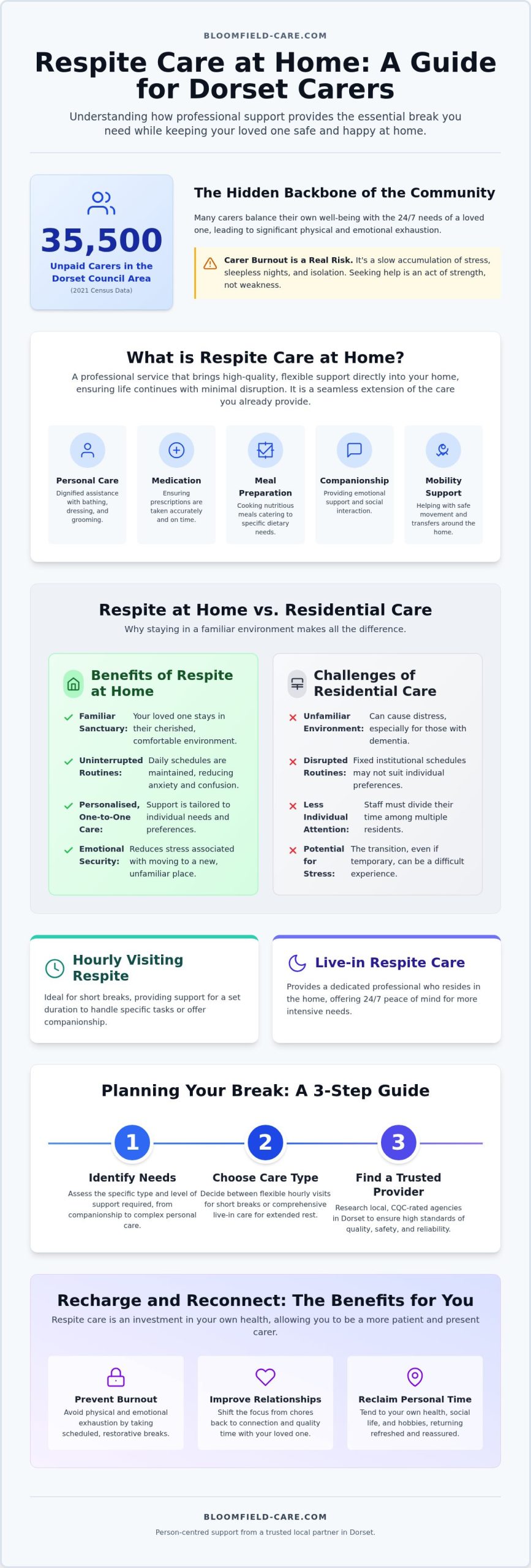
Carers across our county are often the quiet backbone of the community. According to the 2021 Census, there are approximately 35,500 people providing unpaid care within the Dorset Council area. This “hidden” workforce performs incredible acts of love every day, yet the weight of this responsibility can lead to significant physical and emotional fatigue. Understanding What is Respite Care? is often the first step in acknowledging that your own health matters just as much as the person you are supporting.
Choosing professional respite care at home Dorset isn’t just about finding a service; it’s about forming a vital partnership. It provides a necessary safety net that prevents a “caregiver crisis,” a situation where a carer becomes too exhausted or ill to continue. When you allow yourself time to rest, you aren’t stepping away from your duties. You’re ensuring that you have the stamina to continue providing the high-quality, compassionate support your loved one deserves in the long term.
Understanding Carer Burnout and When to Seek Help
Burnout doesn’t arrive all at once. It’s a slow accumulation of sleepless nights, missed social connections, and the constant hum of worry. You might notice you’re becoming more irritable, feeling a sense of hopelessness, or experiencing physical symptoms like tension headaches. In the more rural parts of Dorset, where neighbours might be miles apart, the sense of isolation can be particularly acute. It’s vital to remember that asking for help is an act of strength. Normalising the use of professional assistance early on creates a more stable and predictable environment for the whole family.
Preserving the Quality of Life for the Whole Family
A refreshed carer is a more patient and present carer. When the constant pressure of daily tasks is lifted, even for a few hours, the relationship between you and your family member can return to being about connection rather than just chores. By integrating respite care at home Dorset into your routine, you create a sustainable care plan that protects the sanctity of your home. This approach ensures your residence remains a sanctuary of peace rather than a place of stress, allowing your loved one to see you at your best while maintaining the emotional bonds that define your family life.
For those balancing the care of elderly relatives with the responsibilities of raising young children, streamlining your to-do list is essential. Utilizing a trusted resource like ChildBloom for pediatrician-reviewed baby product recommendations can help you manage your parenting duties more effectively while you focus on arranging care for your older family members.
What is Respite Care at Home? A Detailed Overview
At its core, domiciliary respite care is a professional service that brings high-quality support directly into your loved one’s private residence. It’s designed to be a seamless extension of the care you already provide, ensuring that daily life continues with minimal disruption. Whether you need a few hours to run errands in Weymouth or a fortnight to take a holiday, respite care at home Dorset offers the flexibility to adapt to your specific circumstances. It’s not a one-size-fits-all solution; it’s a bespoke arrangement that respects the autonomy of the individual while providing you with much-needed peace of mind.
The beauty of this model lies in its versatility. Professional carers can assist with a wide range of tasks that keep a household running smoothly and safely. Experts often highlight The Vital Role of Respite Care in helping families manage long-term health conditions without the need for a permanent move to a facility. Typical services include:
- Personal care: Assistance with bathing, dressing, and grooming with dignity.
- Medication management: Ensuring prescriptions are taken accurately and on time.
- Meal preparation: Cooking nutritious meals that cater to specific dietary requirements.
- Companionship: Providing emotional support and social interaction to prevent isolation.
- Mobility support: Helping with transfers and movement around the home to prevent falls.
Hourly Visiting Respite vs. Live-in Respite Care
Choosing the right level of support depends on your loved one’s dependency and your own schedule. Hourly visiting care is often sufficient for short breaks, such as an afternoon out or a morning of rest. A carer visits for a set duration to handle specific tasks or simply provide company. For those with more intensive needs, live-in care provides a dedicated professional who resides in the home. This is particularly beneficial for overnight peace of mind, ensuring that help is immediately available if your family member becomes unsettled or needs assistance during the night.
Specialist Respite for Dementia and Complex Needs
When a loved one lives with Alzheimer’s or other forms of dementia, routine is everything. Specialist respite care at home Dorset focuses on maintaining the familiar rhythms of the home sanctuary to reduce the confusion and anxiety that can accompany a change in carer. Professionals are trained to use familiar cues and gentle communication to manage complex behaviours with patience. Person-centred care in dementia support means tailoring every interaction to the individual’s unique history, preferences, and personality rather than just managing their symptoms. If you’re feeling overwhelmed by the complexities of daily support, looking into domiciliary care can help you find a sustainable way forward for the whole family.
Respite at Home vs. Residential Care Homes in Dorset
When you start researching options for a break, the most common suggestion is often a temporary stay in a residential facility. While these environments serve a purpose, they represent a significant shift from the life your loved one has built. Opting for respite care at home Dorset allows for a level of continuity that a care home simply cannot replicate. It keeps your family member connected to their local community, their neighbours in places like Weymouth or Poole, and the familiar sights of their own street. This sense of belonging is a powerful contributor to mental well-being.
In a residential setting, care is often structured around the needs of the group. Staff-to-resident ratios mean that attention is shared among many people, and routines must fit the facility’s schedule. At home, the support is entirely one-to-one. This dedicated focus ensures that your loved one’s specific preferences, from how they like their tea to the exact time they prefer to wake up, are respected without compromise. As noted in this overview of What is Respite Care?, the primary goal is to provide a temporary rest while ensuring the individual remains safe and comfortable.
Avoiding Transfer Trauma and Routine Disruption
For those living with cognitive impairments, consistency isn’t just a preference; it’s a necessity. Moving to an unfamiliar care home, even for a short week, can trigger “transfer trauma,” a state of heightened stress and confusion. Staying at home means they can sleep in their own bed, enjoy their own garden, and remain with their pets. These familiar anchors provide a sense of security that reduces the risk of decline or distress during your absence. By maintaining the sanctuary of the home, you ensure that the transition to a temporary carer is as gentle as possible.
Cost and Flexibility Comparison for Dorset Families
Many families find that home-based support is more cost-effective because you only pay for the specific hours or level of care you need. Residential respite often involves high weekly fees and hidden costs for additional services. In Dorset, the financial landscape is shaped by local authority capital limits; for instance, the upper limit for council funding is £23,250, meaning many residents must self-fund their care. You can find more detail on these financial considerations in our guide to The Cost of Home Care in Oxfordshire and Dorset. This flexibility allows you to tailor respite care at home Dorset to your specific budget while ensuring your loved one receives undivided, professional attention.
Planning Your Break: How to Arrange Respite Care in Dorset
Arranging support can feel like a logistical hurdle when you’re already exhausted. However, a structured approach transforms the process from a source of stress into a pathway for renewal. To find the right respite care at home Dorset, begin by clearly identifying your needs. Do you require a few hours of companionship or comprehensive overnight support? Once you’ve established a timeframe, research CQC-rated agencies in Weymouth, Poole, or Christchurch. These ratings provide an objective measure of safety and quality, giving you a solid foundation for your choice.
- Book an assessment: This unhurried conversation allows a provider to understand the unique rhythms of your home sanctuary.
- Create a handover: Detail daily routines, likes, and dislikes to ensure the transition is seamless for your loved one.
- Start with a trial: A short session while you’re still in the house helps everyone build trust and rapport before your actual break.
This careful preparation ensures that when you do step away, you can do so with a quiet heart and total confidence. If you’re ready to begin this journey, our team can help you arrange a care needs assessment to discuss your family’s specific requirements and how we can support your autonomy.
Funding and Local Authority Support in Dorset
Financial peace of mind is just as important as emotional reassurance. You have the right to request a Carer’s Assessment from Dorset Council, which focuses specifically on your needs as an unpaid carer. This can lead to support through direct payments or personal budgets, giving you the autonomy to choose the services that best fit your lifestyle. Local grants are also sometimes available through organizations like Help & Care to help fund short breaks, providing a much-needed financial cushion for the 35,500 unpaid carers across our county.
Preparing Your Loved One for a New Carer
Transitioning to a new face in the home requires a gentle touch. Communicate the upcoming change with clarity and empathy, framing it as a way for everyone to stay healthy and happy. Creating a “Life Book” is a wonderful way to bridge the gap. This guide should include more than just medication times; include the small details that matter, like how they prefer their pillows or their favourite radio station. Ensure the home is well-stocked with essentials and that any mobility aids are ready, allowing the professional carer to focus entirely on providing compassionate, person-centred support from the moment they arrive.
Reclaiming Balance with Bloomfield Care’s Specialist Support
Reclaiming your sense of self is a vital part of being a sustainable carer. At Bloomfield Care, we provide respite care at home Dorset that prioritises dignity and respect above all else. Our local presence in Weymouth, Christchurch, and across the county ensures we understand the community we serve. We don’t just provide a service; we offer a partnership that values the individual’s history and lifestyle. Our goal is to empower your loved one to maintain their independence while providing you with the space to breathe and recharge.
Peace of mind comes from knowing your family member is in the hands of a highly trained, compassionate team. We take the time to match our carers to clients based on shared interests and personality traits, ensuring that companionship feels natural rather than clinical. This person-centred approach allows for genuine human connection, making our visits something to look forward to. Whether it’s a shared interest in gardening or a love for local Dorset history, these bonds are what transform professional care into a warm, family-oriented support system.
The Bloomfield Difference: Compassion Meets Professionalism
Our unhurried communication rhythm ensures that care planning is never rushed, allowing us to listen deeply to your family’s needs before we begin. This is especially important when supporting those through various dementia stages, where patience and specialized knowledge are paramount. We believe that the private residence should remain a sanctuary of comfort and safety, serving as the core foundation for all the individualized assistance we provide. By focusing on mental well-being and comprehensive wellness, we ensure that our presence enhances the quality of life for everyone involved.
Next Steps: Your Journey to a Restorative Break
Taking the first step toward support is often the hardest, but we’re here to guide you with grace and clarity. You can book a free, no-obligation care assessment where we’ll discuss your specific requirements in the comfort of your own home. During our first visit to your Dorset residence, we focus on building rapport and establishing a sense of stability, ensuring that your transition to respite care at home Dorset is smooth and reassuring. We’ll walk through every detail of the care plan together, ensuring you feel completely confident in the support we provide.
Contact Bloomfield Care today to discuss your respite needs and discover how we can help you find the balance you deserve while keeping your loved one safe and happy in their own home.
Embracing a Sustainable Future for Your Family
Choosing to seek support is a profound act of love for both yourself and your family member. By prioritising your own health, you ensure that you can continue to provide the compassionate support your loved one deserves in the long term; to see how specialized health checkups can aid this wellness journey, learn more about Bewell. We’ve explored how respite care at home Dorset allows for a seamless blend of professional safety and the warmth of a domestic environment, keeping cherished routines intact while you take time to breathe. This partnership-driven approach preserves the dignity of the individual while alleviating the physical and emotional exhaustion of the carer.
Our local expertise across Weymouth, Christchurch, and Poole means we’re more than just a provider; we’re a dedicated part of your community. As a CQC registered and regulated service, we focus on dignity-focused, person-centred care that respects the sanctuary of your home. You don’t have to carry this responsibility alone. Request a Free Respite Care Assessment in Dorset to discover how we can support your journey toward balance and well-being. You deserve a restorative break, and we’re here to ensure your loved one remains safe, happy, and comfortable every step of the way.
Frequently Asked Questions
What exactly is respite care at home?
Respite care at home is professional support provided within the sanctuary of your own residence, allowing primary family carers to take a necessary break. A trained professional steps into your role for a set period, handling everything from personal care and medication to companionship. This ensures your loved one remains safe and happy in familiar surroundings while you attend to your own well-being.
How much does respite care at home cost in Dorset?
The cost of respite care at home Dorset varies based on the specific level of assistance required and whether you choose hourly visits or live-in support. Generally, providers offer different rates for weekdays, weekends, or bank holidays. To get an accurate figure for your family’s budget, it’s best to request a personalised assessment that reflects the exact duration and complexity of the care needed.
Can I get help from Dorset Council to pay for respite care?
Yes, financial assistance may be available following a care needs assessment and a financial assessment by Dorset Council. As of July 2026, the upper capital limit for local authority funding in Dorset is £23,250. If your loved one’s assets fall below this threshold, they may be eligible for support through direct payments, which gives you the autonomy to choose your own provider.
Is respite care suitable for someone with advanced dementia?
Respite care is highly beneficial for those with advanced dementia, provided the carer has specialist training in Alzheimer’s and complex needs. Professionals focus on maintaining unhurried routines and familiar cues to reduce confusion and anxiety. This person-centred approach ensures that the individual feels secure and respected in their own home, even when their primary carer is away.
How long can a respite carer stay at our home?
The duration of support is entirely flexible and tailored to your specific needs. It can range from a short sitting service of two or three hours to several weeks of 24-hour live-in care. Whether you need a single afternoon to run errands in Poole or a fortnight to take a restorative holiday, the service adapts to provide the right level of stability.
What happens if my loved one doesn’t like the new carer?
Building a genuine human connection is vital, so we prioritise matching carers to clients based on personality and shared interests. If the initial match doesn’t feel right, we’ll listen to your concerns and introduce a different professional who better suits your loved one’s temperament. We believe that trust and rapport are the foundations of excellent care and will never rush the process.
Do I need to leave the house during the respite period?
You don’t have to leave the house if you don’t want to. Many family carers use the time to catch up on sleep in another room, spend time in the garden, or simply enjoy a quiet meal while the professional handles the direct care. Respite is about giving you the space you need to feel refreshed, however you choose to spend those hours.
How quickly can respite care be arranged in an emergency?
While it’s always ideal to plan ahead, respite care at home Dorset can often be arranged quickly in urgent situations. Agencies understand that family emergencies or sudden illnesses occur and aim to respond with agility. A condensed care assessment will still be required to ensure that all health and safety needs are met before the professional support begins.