

What if the most effective way to soothe the confusion of memory loss isn’t a clinical setting, but the familiar sight of a sunlit kitchen or the comfort of a lifelong routine? You’ve likely spent many restless nights wondering how much longer you can manage on your own, balancing the constant fear of a fall with the deep desire to keep your loved one in the place they love most. Specialist live-in dementia care Dorset offers a compassionate alternative to residential placement, providing a professional safety net within the sanctuary of home.
We understand that the weight of caregiver burnout and the confusion over local funding can feel overwhelming. In this guide, you’ll learn how 24/7 one-to-one support allows your family member to maintain their dignity and cherished habits while receiving expert symptom management from dedicated professionals. We’ll explore the practicalities of person-centred care, the current financial landscape for Dorset residents, and how matching carers to personalities can restore the peace of mind your family deserves.
Key Takeaways
- Understand how the “sanctuary” of a familiar home environment can actively reduce common dementia symptoms like sundowning and disorientation.
- Discover why live-in dementia care Dorset provides a safer, one-to-one alternative to residential facilities by preserving personal routines and autonomy.
- Learn how specialist carers manage complex needs through nutritional support and structured daily rhythms that help stabilise a loved one’s “internal clock.”
- Get clear guidance on navigating Dorset Council assessments and exploring eligibility for NHS Continuing Healthcare (CHC) to help fund your care journey.
- Explore the “unhurried” approach to care that prioritises personality matching to ensure a deep, meaningful connection between the carer and your family.
What is Live-in Dementia Care and Why is it Essential for Dorset Families?
Live-in dementia care is a dedicated partnership where a professional carer resides within your loved one’s home, providing round-the-clock support tailored to their specific needs. It’s far more than just a sequence of tasks; it’s the creation of a safety net that allows a person to remain in their most cherished environment. For many families, choosing live-in dementia care Dorset becomes essential when the unpredictable nature of memory loss outpaces what hourly visits can provide. This transition marks a shift from simply managing symptoms to preserving a person’s lifestyle and identity in the place they know best.
The “Sanctuary” philosophy is at the heart of this approach. Familiar surroundings act as a powerful therapeutic tool, helping to reduce the confusion and “sundowning” agitation that often occurs in the late afternoon. When someone stays in their own home, their brain doesn’t have to work overtime to interpret new, clinical, or noisy environments. Dorset offers a unique advantage here. The gentle coastal air and the quiet, rural rhythms of our county provide a natural sensory calm that supports mental well-being and helps maintain a steady emotional state.
The Core Benefits of 24/7 Specialist Presence
Having a professional carer on hand at all hours means that moments of nighttime disorientation or sudden wandering are met with immediate, gentle redirection rather than panic. This consistency of care allows for a deep, trusting bond to form, which is vital for understanding dementia as a lived experience rather than just a medical condition. We believe in a person-centred approach that prioritises your loved one’s unique history, preferences, and personality over their clinical diagnosis, ensuring they feel seen and respected every day.
Reducing the “Relocation Stress” of Dorset Care Homes
Moving a person with advanced dementia into a residential facility in Weymouth or Poole can often trigger “relocation stress syndrome,” a condition that can significantly accelerate cognitive decline. Staying at home preserves “place memory”-the instinctive knowledge of where a favourite chair is or how the light falls in the garden. By choosing live-in support, your loved one keeps their autonomy and stays connected to the things that make life meaningful:
- Familiarity: Sleeping in their own bed and using their own belongings.
- Social Ties: Maintaining visits from local friends and neighbours without restrictive visiting hours.
- Routine: Keeping the same mealtimes and “unhurried” daily rhythms they’ve enjoyed for years.
- Companionship: Staying with a beloved pet, which is often impossible in traditional care settings.
Specialist Support: How a Live-in Carer Manages Dementia Symptoms
Managing the symptoms of memory loss requires more than just supervision; it demands a deep understanding of how the condition affects daily life. When you choose live-in dementia care Dorset, you’re introducing a skilled professional who focuses on stabilising your loved one’s “internal clock.” By creating a structured yet flexible routine, a carer helps regulate sleep patterns and reduces the distress often caused by a lack of predictability. This unhurried approach ensures that every part of the day, from a morning cup of tea to getting ready for bed, feels safe and familiar.
Nutrition and hydration play a critical role in brain health. A live-in carer doesn’t just prepare meals; they monitor intake to prevent dehydration, which can often lead to increased confusion or physical illness. They also coordinate closely with local Dorset GPs to manage medications with absolute consistency. This joined-up approach aligns with NHS dementia support guidelines, ensuring that clinical needs are met without making the home feel like a hospital ward. Beyond physical health, carers engage in “life story” work, tailoring activities to past hobbies or interests to keep the mind active and the spirit bright.
Managing Challenging Behaviours with Compassion
Distress or agitation are often forms of communication when words fail. Our carers are trained to look beneath the surface of the behaviour to identify triggers, such as pain, hunger, or environmental noise. By using gentle de-escalation techniques and validating the person’s feelings, they can often soothe anxiety without the need for clinical intervention. Understanding how these needs change as the condition progresses is vital, and you can find more detail in our guide to understanding dementia stages. If you’re feeling overwhelmed by these changes, reaching out for a friendly conversation can provide the clarity you need.
Safety and Mobility in the Home Environment
Dorset is famous for its beautiful, characterful properties, but steep stairs or uneven floors in older homes can present significant risks. A live-in carer conducts thorough home safety audits to identify potential trip hazards while suggesting subtle modifications that preserve the house’s domestic charm. They provide dignified assistance with mobility and personal care, ensuring your loved one moves through their home with confidence. Any necessary medical equipment is managed discreetly, keeping the focus on the sanctuary of the home rather than the limitations of the illness.
Comparing Options: Home Care vs. Care Homes in Dorset
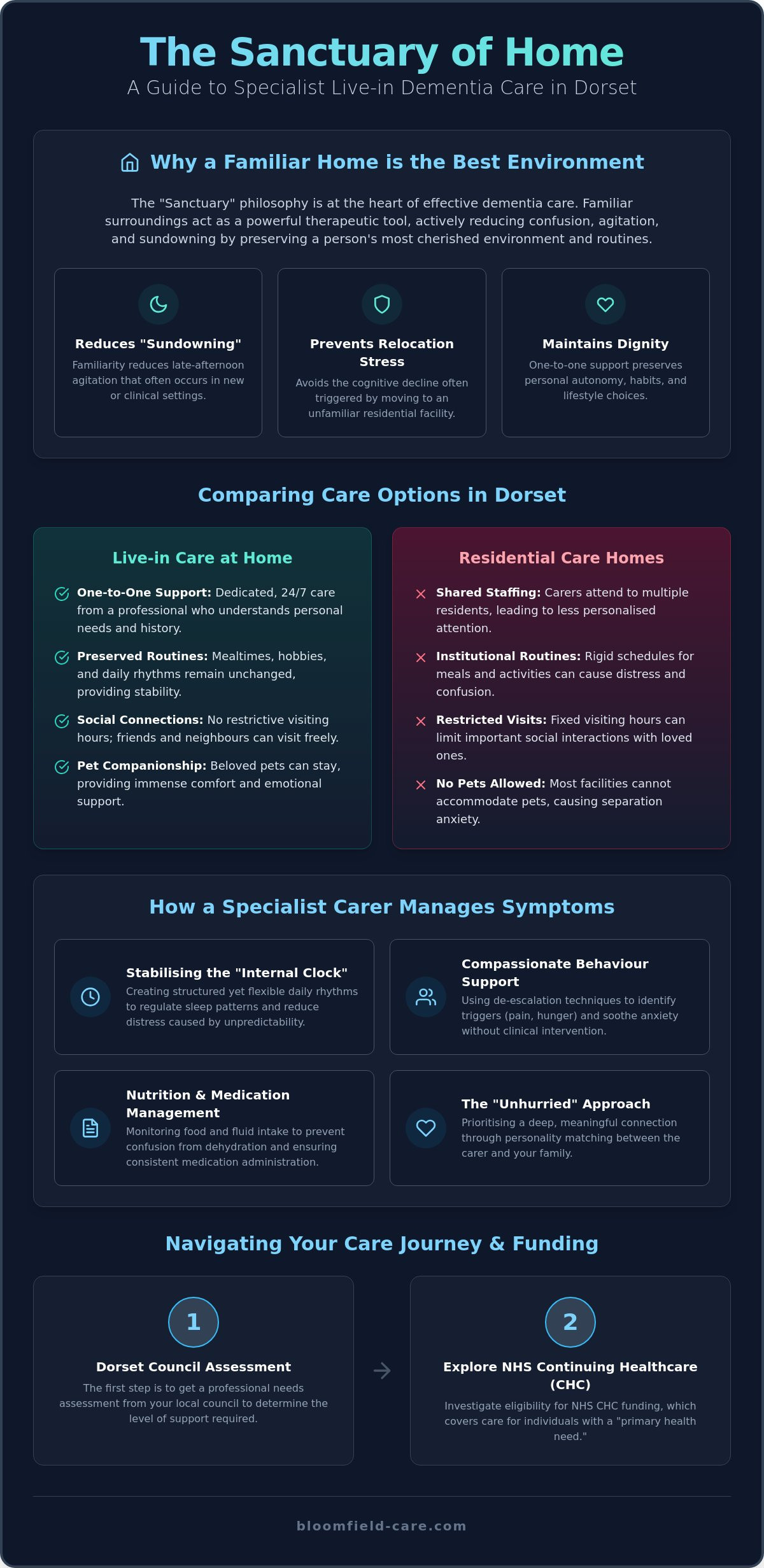
Choosing between a residential facility and staying at home is a significant crossroads for any family. In a typical Dorset care home, staff ratios often mean one carer is responsible for multiple residents. This “one-to-many” model can be challenging for those with dementia who need immediate, calm reassurance to manage anxiety. With live-in dementia care Dorset, the ratio is always one-to-one. This dedicated focus ensures that your loved one is never left waiting or confused by a rotating cast of staff, which aligns with UK government guidance on dementia regarding the importance of consistent, high-quality support.
Autonomy is the cornerstone of dignity. In a facility, life follows a set schedule where mealtimes and activities are standardised for the group. Staying in the sanctuary of a private home in Weymouth or Poole allows for a life led by personal choice. Whether it’s a late breakfast or a quiet afternoon in the garden, the routine belongs to the individual, not the institution. For couples, the benefits are even clearer. Live-in support allows partners to stay together in their own home, often proving more cost-effective than paying for two separate beds in a residential facility, where specialist dementia fees can reach up to £1,800 per week.
Financial Considerations for 2026
Understanding the cost of home care in Dorset is the first step in making an informed decision. While residential care might seem straightforward, it often carries “hidden costs” like top-up fees or the emotional toll of selling a family home to meet the £23,250 capital threshold. Private live-in arrangements can often be implemented much faster than a facility placement, providing an immediate solution when a crisis occurs. This speed of response is vital for families who find themselves at a breaking point and need professional help without the delay of a waiting list.
The Emotional Impact on the Family
One of the most profound benefits of live-in support is the way it restores family roles. When a professional takes over the demanding daily tasks, you’re free to become a daughter, son, or spouse again rather than a primary caregiver. If you’re currently managing alone, exploring respite care in Dorset can offer a much-needed bridge while you consider a permanent live-in solution. Staying at home means family traditions continue uninterrupted, and visitors can drop by whenever they like, keeping the person with dementia connected to their community and loved ones.
Planning and Funding Your Dementia Care Journey in Dorset
Planning for the future can feel like a daunting task, especially when you’re already managing the daily realities of memory loss. The first step in securing live-in dementia care Dorset is requesting a Care Needs Assessment from Dorset Council. This assessment determines the level of support required and triggers a financial assessment. For the 2026/2027 financial year, the upper capital limit in Dorset is £23,250. If your loved one’s assets are above this amount, they’ll likely be responsible for their own care costs. With Dorset Council proposing a 4.99% Council Tax rise for the 2026/27 budget to fund rising adult social care costs, understanding these thresholds is vital for long-term stability.
For those with more complex or rapidly progressing needs, it’s essential to determine eligibility for NHS Continuing Healthcare (CHC). This is a package of care funded entirely by the NHS for individuals with a “primary health need.” While the national eligibility rate at full assessment has fallen to 16.65% in early 2026, it remains a crucial avenue for those with advanced symptoms. Alongside this, don’t overlook the Attendance Allowance. This is a non-means-tested subsidy available to those over pension age who need help with personal care. Coordinating these financial threads with your local Dorset GP and Memory Clinic ensures that clinical oversight and financial support work in harmony.
Navigating Local Dorset Support Systems
Liaising with the Dorset HealthCare University NHS Foundation Trust provides access to specialist mental health services and community nursing. We also encourage families to engage in Advance Care Planning (ACP). This process allows your loved one to document their future wishes while they still have the capacity to do so. Beyond formal medical support, Dorset is home to wonderful community resources like memory cafes in Christchurch and Poole, which offer social connection and peer support in a relaxed, non-clinical setting.
Legal and Ethical Considerations
Establishing a Lasting Power of Attorney (LPA) for health and welfare is a vital legal safeguard, giving you the authority to make decisions if your loved one can no longer do so. We also ensure the “Gold Standards Framework” is applied to our home-based care, which focuses on high-quality coordination and dignity. A specialist care plan acts as a legal and clinical roadmap, ensuring every medical and personal requirement is documented and followed. If you’re ready to start this process, you can request a personalised care consultation to discuss your family’s specific needs.
The Bloomfield Difference: Compassionate Dementia Care in Dorset
At Bloomfield Care, we believe that the best support is never rushed. Our commitment to “unhurried” care is central to everything we do, particularly when supporting those with memory loss. People living with dementia often need extra time to process information or complete a task; our carers are trained to provide that space with patience and grace. By choosing live-in dementia care Dorset, you’re ensuring your loved one isn’t just managed by a schedule, but is truly seen and heard by a professional who values their dignity above all else.
We don’t just assign a carer; we match them. We look beyond clinical needs to find a professional whose personality, hobbies, and life history align with your loved one’s. Whether it’s a shared love for the Dorset coastline or a common interest in gardening, these bonds are what turn a service into a genuine companionship. Our team receives continuous training in specialist Alzheimer’s techniques, ensuring that our live-in dementia care Dorset remains at the forefront of person-centred support. Our local managers in Weymouth and Christchurch provide a constant point of contact for families, offering the reassurance that expert help is always just a phone call away.
Bespoke Care Planning for Dorset Residents
Every journey with dementia is unique, which is why our care plans are designed to be living documents. We create a flexible roadmap that evolves as needs change, ensuring that our live-in care services remain effective and supportive over time. Our goal is to ensure the sanctuary of home remains a place of joy and comfort, rather than just a site for medical management. We focus on what a person can still do, celebrating small victories and maintaining the familiar rhythms that bring peace to their daily life.
Taking the First Step: Your Free Care Assessment
Making the decision to bring a carer into the home is a significant step, and we’re here to guide you through it with sensitivity. During our free, compassionate home visit, we take the time to listen to your concerns and understand the specific dynamics of your family. We don’t just support the individual. We support the whole family through this transition, helping to alleviate the guilt and burnout that often accompany long-term caregiving. You aren’t alone in this journey; we’re here to provide the professional safety and domestic warmth your family deserves.
Embracing a Future of Comfort and Connection in Dorset
Choosing the right path for a loved one with memory loss is one of the most significant decisions a family can make. By prioritising the sanctuary of home, you’re choosing an environment that naturally supports cognitive well-being and preserves the precious routines of a lifetime. We’ve explored how specialist live-in dementia care Dorset provides the 24/7 safety and one-to-one attention that residential facilities often struggle to match. It’s about more than just managing symptoms; it’s about reclaiming the joy in daily life through unhurried, compassionate support.
Our CQC regulated team is specialist dementia trained and operates through local branches in Weymouth and Christchurch. We’re dedicated to person-centred care that focuses on dignity, independence, and the unique history of every individual we serve. You don’t have to navigate these complex decisions alone. Speak with our compassionate Dorset team today for a free dementia care assessment. We’re here to listen, guide, and help your family find the peace of mind you deserve.
Frequently Asked Questions
Is live-in dementia care available throughout all of Dorset?
Yes, we provide specialist support across the entire county, including rural villages and larger hubs like Weymouth, Christchurch, and Poole. Our local managers ensure that families from the Jurassic Coast to the North Dorset downs can access the same high standard of person-centred care. Whether you live in a coastal town or a quiet hamlet, our team is equipped to bring professional support directly to your doorstep.
How much does live-in dementia care cost in Dorset for 2026?
Costs for live-in dementia care Dorset are determined by the specific level of support your loved one requires. While residential care often has fixed fees, live-in support is highly personalised, reflecting the complexity of needs and whether care is for an individual or a couple. We recommend a free care assessment to provide an accurate estimate tailored to your family’s unique situation and budget.
Can a live-in carer help if my loved one becomes aggressive or wanders?
Specialist carers are trained in gentle de-escalation techniques and safety protocols to manage distress behaviours like wandering or agitation. Instead of clinical intervention, they use their deep understanding of the individual’s triggers to soothe anxiety and provide quiet reassurance. This 24/7 presence ensures that your loved one is never alone during moments of confusion, significantly reducing the risk of falls or injury.
Do we need to provide a separate bedroom for the live-in carer?
Yes, a live-in carer requires their own private, furnished bedroom within the home to ensure they can rest effectively. As they’ll be living alongside your loved one, providing a comfortable space is essential for their well-being and helps them maintain the high level of energy needed for specialist care. Access to a bathroom and kitchen facilities is also necessary to make the arrangement sustainable and professional.
How does Bloomfield Care coordinate with our Dorset GP or district nurses?
We work in close partnership with Dorset HealthCare University NHS Foundation Trust, local GPs, and district nurses to ensure a seamless medical roadmap. Your live-in carer acts as a vital link, monitoring health changes and attending appointments to provide consistent feedback to healthcare professionals. This joined-up approach ensures that clinical needs are met while your loved one remains in the comfort of their own home.
Can live-in care support someone in the later stages of Alzheimer’s?
Live-in care is highly effective for those in the advanced stages of Alzheimer’s, providing the intensive, one-to-one support that’s often difficult to find in busy residential settings. Our carers are trained to manage complex symptoms, including mobility challenges and late-stage communication needs. By staying in a familiar environment, people in these later stages often experience less relocation stress and maintain a higher quality of life.
What happens if our live-in carer is unwell or needs a break?
We manage all aspects of carer handovers, ensuring that your loved one’s routine is never interrupted when a regular carer takes a break or is unwell. Our local managers in Weymouth and Christchurch coordinate relief support with professionals who are equally trained and familiar with the personalised care plan. This consistency provides total peace of mind for the family, knowing that professional support is always guaranteed.
How quickly can live-in dementia care be arranged in Poole or Weymouth?
We understand that care needs can escalate quickly, so we aim to arrange support in Poole or Weymouth within a few days of your initial enquiry. Our local presence allows us to conduct assessments promptly and match a suitable carer to your loved one’s personality and needs. While we prefer a planned transition, we’re experienced in responding to urgent situations where immediate 24/7 safety is required.