
Did you know that over 40% of seniors now manage five or more different prescriptions every day? It is a staggering number that often turns a private residence from a sanctuary into a complex pharmacy. You likely feel the weight of this responsibility every time you visit. The constant fear of a missed dose or an accidental overdose makes medication management for elderly at home feel like a high-stakes challenge rather than a simple routine. It’s exhausting to be on constant alert, and it’s difficult to focus on quality time when you’re worried about clinical logistics. You want your loved one to stay safe, but you also want them to keep the independence they treasure.
We understand that managing health is about more than just pills; it’s about protecting the person you love and preserving the peace of your household. This guide will show you how to build a fail-safe system that reduces your stress while ensuring their absolute safety. We’ll preview the latest 2026 Medicare drug price changes, explore smart dispensing tools that can increase adherence by up to 20%, and share practical routines that bring professional-grade reliability into your family’s daily life. By the end, you’ll have a clear path to managing complex care with confidence, grace, and genuine reassurance.
Key Takeaways
- Identify and manage the risks of polypharmacy by conducting a thorough audit of every prescription and supplement in the home.
- Create a reliable Master Medication List to simplify medication management for elderly at home, providing clarity for every family member involved.
- Compare the benefits of traditional pill organizers against advanced automated dispensers to choose a system that truly protects your loved one’s independence.
- Learn how to anchor health routines to cherished daily habits, like a morning cup of tea, to make remembering doses feel natural and stress-free.
- Discover how professional domiciliary care support uses structured records to ensure clinical safety while maintaining the warmth of a home environment.
The Challenges of Medication Management for Seniors at Home
The private residence should be a sanctuary of comfort, yet for many seniors, the kitchen table has transformed into a satellite pharmacy. Managing multiple prescriptions, a challenge known as polypharmacy, is a growing reality for families today. Recent data shows that over 40% of adults aged 65 and older now take five or more prescriptions daily. This complexity creates a significant hurdle for effective medication management for elderly at home. When schedules become this dense, the risk of drug interactions or simple oversight rises naturally. It’s a heavy weight for any family to carry alone.
Physical changes also play a quiet but persistent role in these daily struggles. Arthritis can make “child-proof” caps feel like impossible puzzles, while the tiny size of modern tablets makes them easy to drop or misplace. Even the choice of where to keep these items matters. Many families still use bathroom cabinets, yet the heat and humidity of a shower can degrade the chemical stability of many life-critical drugs. Moving these to a cool, dry, and visible location is often the first simple step toward ensuring safety and efficacy.
The Risks of Medication Errors
Errors aren’t always obvious. You might notice your loved one appearing unusually drowsy, confused, or unsteady on their feet. Adverse drug reactions can sometimes mimic the symptoms of early-stage dementia, leading to unnecessary worry for the family. This is why regular reviews with an Oxfordshire or Dorset GP are vital. Professionals often use Medication Therapy Management strategies to ensure every pill still serves a purpose and doesn’t conflict with another. If you notice a sudden change in mood or physical ability, it’s often worth checking the pillbox before assuming a new cognitive decline.
The Emotional Burden on Family Caregivers
If you feel a knot in your stomach every time you check a prescription bottle, you aren’t alone. Medication anxiety is a very real experience for families in Wallingford and throughout the region. It’s the silent stress of balancing a demanding career with the rigid timing of a parent’s insulin or heart medication. For busy medical professionals in this situation, Mortgages for Doctors provides the specialized financial support they need to manage their own homes while caring for others. Sometimes, conflict arises when a parent, wanting to maintain their autonomy, resists help. They might view your reminders as a loss of independence rather than an act of care. Validating these feelings is the first step toward finding a partnership-driven solution that respects their dignity while ensuring their wellness.
Essential Steps for Safe Medication Administration
Setting up a reliable routine is the best way to transform a stressful task into a manageable part of the day. To achieve successful medication management for elderly at home, you must first clear the fog of confusion. Start by gathering every bottle, packet, and supplement found throughout the house. This audit is your baseline. It’s common to find expired prescriptions or duplicate bottles tucked away in different rooms. Once you have a clear view of what is being taken, you can move toward a structured system that protects your loved one’s wellness. Creating a fail-safe environment requires a few deliberate steps to ensure every dose is correct and recorded.
- Conduct a full audit. Empty every drawer and cabinet to find hidden packets.
- Build your Master List. This serves as your single source of truth.
- Designate a “Medication Station”. Consistency breeds safety and reduces the chance of misplacing items.
- Implement a double-check system. For high-risk medications like blood thinners or insulin, use a second person or a clear visual alert.
- Document every dose. Use a simple logbook to mark off doses as they are swallowed. This prevents the “did I take that already?” panic.
Creating Your Master Medication List
A Master Medication List is more than just a piece of paper; it’s a vital communication tool. Ensure it includes the drug name, the exact dosage, its purpose, and the prescribing doctor’s contact details. It is essential to include over-the-counter vitamins or herbal remedies, as these can sometimes interact with prescribed treatments. Families in Newbury or Abingdon should keep a digital copy on their phones. This ensures that if an emergency arises, every family member has the same accurate information at their fingertips. Helping seniors manage their medications safely begins with this level of detail.
Safe Storage and Disposal Protocols
Storage requires a balance between accessibility and safety. Find a single, dedicated station that is cool, dry, and away from direct sunlight. While it needs to be easy for a carer to reach, it must remain out of sight of visiting grandchildren. If you find expired items during your audit, don’t just throw them in the bin. Take them to a local Dorset pharmacy for safe disposal. This prevents accidental ingestion and protects the environment. If the complexity of these steps feels overwhelming, professional domiciliary care can provide the structured support needed to keep your home a sanctuary of safety.

Pill Organisers vs. Professional Home Care Support
Choosing the right method for medication management for elderly at home often starts with a simple question: how much help is truly needed today? For many seniors in the early stages of a health journey, a physical tool provides just enough structure to maintain independence. These aids help families safely take and keep track of your medicines without requiring constant supervision. However, as needs evolve, the gap between a plastic box and a professional presence becomes more apparent. It’s about recognizing when a tool is no longer sufficient to ensure safety and comfort in the private residence.
The Pros and Cons of Medication Tools
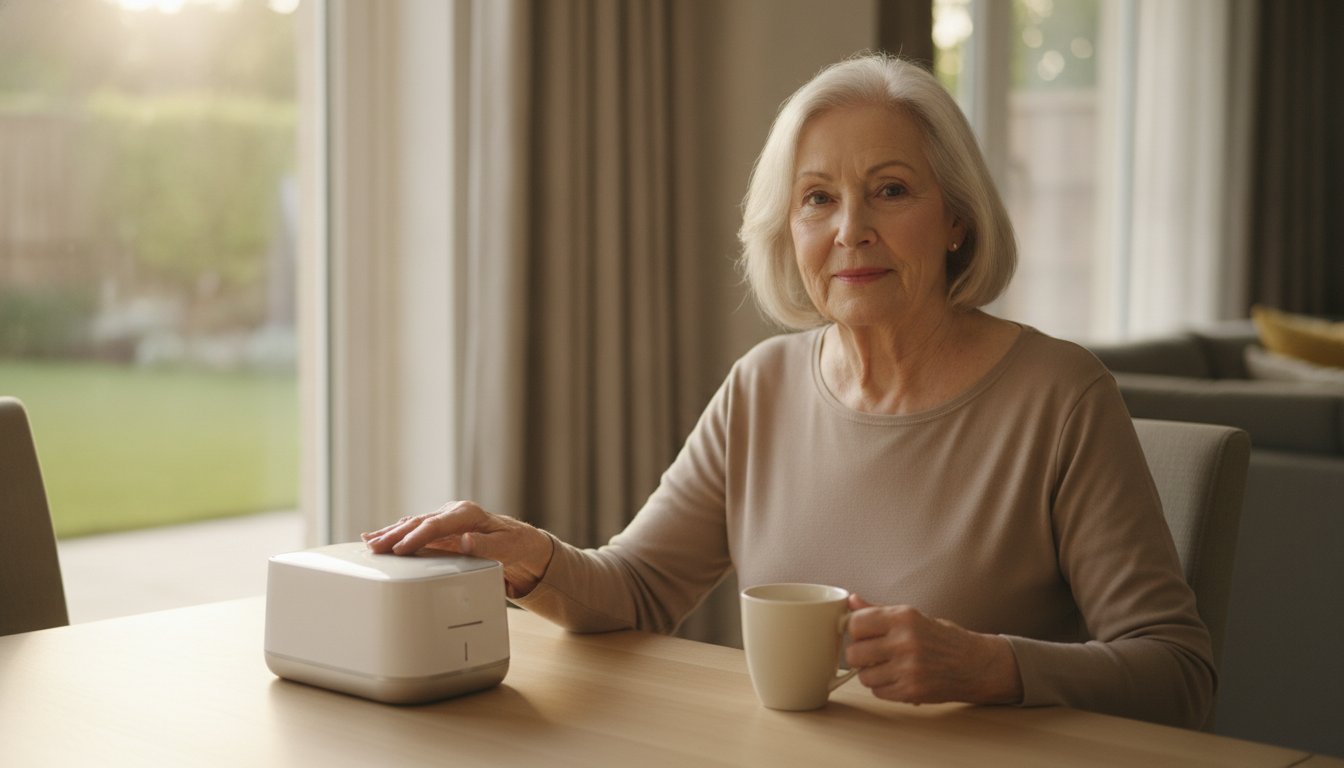
Weekly pill organisers, often called Dosette boxes, are a familiar sight in many households. They are cost-effective and have been shown to increase medication adherence by 15-20% in elderly patients. Yet, they rely entirely on the accuracy of the person filling them. A single manual loading error can have serious consequences. For families in Oxford, many local pharmacies now offer pre-filled blister packs, which remove this specific risk. If forgetfulness is the main concern, automated pill dispensers offer a modern alternative. While basic models start around $73, advanced versions with remote monitoring can cost upwards of $789. These digital alarms are excellent for reminders, but they cannot confirm if the pill was actually swallowed or simply left on the counter.
The Value of a Professional Carer
There comes a point where cognitive boundaries or physical limitations make standalone tools unreliable. A machine cannot notice if a senior is suddenly more lethargic or if they are developing a subtle side effect from a new prescription. This is where the human element of professional assistance becomes indispensable. A dedicated carer provides more than just compliance; they offer a sense of companionship and vigilant safety. They ensure that medications are taken with the necessary hydration or specific meals to prevent discomfort. For families seeking domiciliary care Weymouth, this holistic approach means health is managed through human connection. It transforms a clinical necessity into a moment of gentle, person-centred support that respects the individual’s lifestyle.
Practical Strategies for a Stress-Free Routine
Effective medication management for elderly at home relies on the power of habit rather than the strength of memory. By anchoring health tasks to “unbreakable” daily rituals, you remove the mental weight of remembering. For instance, placing the morning dose next to the kettle for that first cup of tea or near the toothbrush makes the action feel natural. Visual cues are equally powerful in reducing daily stress. We recommend using colour-coded stations, such as bright yellow for morning doses and a calming blue for night-time, to provide a clear, non-verbal signal that helps prevent confusion.
For family members living in West Berkshire who may be supporting a loved one from a distance, the “Check-Back” method offers vital reassurance. This involves a quick, scheduled phone call or a shared digital log to confirm a dose was taken. It isn’t about monitoring; it’s about creating a gentle safety net that allows everyone to feel secure. Preparing for GP appointments is another essential part of a calm routine. Always take an updated list to the surgery and ask specific questions, such as: “Is this medication still essential for their current health?” or “Can we simplify the timing of these doses to reduce the daily burden?”
Working with Local Healthcare Teams
Managing Changes in Prescriptions
Transitions of care, such as returning from a hospital stay in Oxford, are high-risk periods for errors. It’s crucial to update your Master List immediately upon discharge to ensure that new hospital instructions don’t clash with existing home routines. Removing discontinued medications from the home immediately is the only way to prevent the dangerous risk of a loved one accidentally taking an outdated prescription. If you find that coordinating these moving parts is becoming overwhelming, our elderly care services provide the professional, person-centred support needed to maintain a safe and sanctuary-like environment at home.
How Bloomfield Care Ensures Medication Safety
At Bloomfield Care, we see medication management for elderly at home as a vital part of protecting the sanctity of your loved one’s lifestyle. Our approach is rooted in a partnership between professional safety and personal respect. We serve families across Oxfordshire and Dorset, providing a steady hand that alleviates the exhaustion of constant monitoring. Our goal isn’t just to manage a condition; it’s to enhance the quality of every day. We believe that by providing a reliable system, we allow families to return to being daughters, sons, and partners rather than clinical supervisors.
Every one of our carers completes rigorous training on MAR (Medication Administration Record) charts. This provides a clinical level of accuracy within the domestic environment, ensuring that the right dose is given at the right time, every time. For families in Thatcham and Abingdon, this means total transparency. You can rest easy knowing there’s a clear, professional record of every dose. This level of oversight prevents the confusion that often arises when multiple family members try to coordinate a complex schedule without a central log.
We understand that health needs can change over time. When hourly support is no longer sufficient for complex routines or high-dependency needs, we offer a seamless transition to live-in care. This ensures that someone is always there to monitor for side effects or provide a glass of water with a late-night prescription. It provides 24-hour peace of mind while keeping your loved one in the familiar comfort of their own home.
The Bloomfield Difference: Compassion Meets Compliance
Our carers look beyond the prescription bottle. They monitor for subtle changes in mental well-being or physical ability that a machine or a simple alarm would miss. By noticing these shifts early, we can coordinate with your GP to adjust care before a small issue becomes a crisis. We also believe in empowering the individual. If a senior can still safely participate in their routine, we encourage that autonomy. It ensures that medication management feels like a supportive choice rather than a patronizing requirement, preserving their dignity at every stage.
Getting Started with Professional Support
The first step toward a more manageable routine is a gentle, thorough home care assessment. We visit your private residence to identify specific risks, such as difficult packaging or storage concerns. From there, we build a customized plan that ranges from simple reminders to comprehensive administration. Speak with our friendly team in Wallingford or Weymouth today to see how we can provide the reassurance and safety your family deserves.
Restoring Peace and Safety to Your Home Routine
Managing a complex health schedule doesn’t have to be a source of constant anxiety. By auditing prescriptions, creating a master list, and anchoring doses to daily rituals, you can transform a chaotic kitchen table back into a place of family connection. You’ve learned how to identify cognitive boundaries and recognize when a simple pillbox might need the support of a professional presence. Effective medication management for elderly at home is about more than just clinical accuracy; it’s about preserving the dignity and independence of the person you love.
It’s okay to ask for help when the responsibility feels too heavy. As a CQC Regulated Provider with specialist Dementia and Parkinson’s training, we’re here to provide that steady hand. Our locally managed branches in Oxfordshire and Dorset offer the personalized touch and professional safety your family deserves. Request a Free Care Consultation with Bloomfield Care today to discover how we can support your journey. You’re doing a wonderful job, and you don’t have to walk this path alone.
Frequently Asked Questions
What is the difference between medication reminders and medication administration?
Medication reminders are simple verbal prompts to help a senior remember their schedule, whereas medication administration involves the physical act of preparing and giving the medicine. Reminders are suitable for those who are independent but occasionally forgetful. Administration is a clinical task required when a person can no longer safely handle the pills or bottles themselves. It’s a higher level of support that ensures the correct dose is actually swallowed.
Can a home carer in the UK legally give my parent their medication?
Yes, a home carer can legally assist with or administer medication in the UK provided they have received specific training and follow a strict Medication Administration Record (MAR). The carer must be acting under the direction of a healthcare professional, such as a GP. This ensures that medication management for elderly at home remains safe and follows legal safeguarding standards. It provides a professional safety net within the comfort of your own home.
What should I do if my elderly parent refuses to take their prescribed medication?
If your parent refuses their medication, stay calm and try to understand the underlying reason, such as a bad taste, difficulty swallowing, or fear of side effects. Never force or hide medication in food without medical advice, as this can damage trust and lead to safety risks. It’s best to consult their GP or a specialist nurse to discuss alternatives or to see if the prescription can be simplified to reduce their distress.
How often should an elderly person’s medication be reviewed by a doctor?
A medication review should happen at least once every twelve months, though more frequent checks are necessary if your loved one takes five or more prescriptions. If you notice new symptoms, a change in mood, or a decline in physical ability, request an earlier review with their GP. Regular reviews ensure every pill is still effective and reduce the risk of dangerous drug interactions. This proactive approach helps maintain long-term health and wellness.
What is a MAR chart and why is it important for home care?
A MAR chart, or Medication Administration Record, is a formal document used to log every dose of medication given to a senior. It records the name of the drug, the dosage, the exact time it was taken, and the signature of the person who assisted. This chart is essential for home care because it provides a clear audit trail and prevents double-dosing or missed doses. It offers families a sense of profound reassurance regarding daily safety.
Are there any local pharmacies in Dorset that offer blister pack services?
Many local pharmacies throughout Dorset, including both independent shops and larger chains, offer blister pack services to help organize complex routines. These pre-packaged sets arrange pills by the day and time they should be taken, which significantly reduces manual loading errors. It’s helpful to call your nearest pharmacy in towns like Dorchester or Weymouth to confirm if they can provide this service for your parent’s specific prescriptions and supplements.
How can I manage my parent’s medication if I live far away from them?
Managing a parent’s health from afar is possible by utilizing smart pill dispensers with remote alerts and coordinating with local pharmacies for home delivery. You can also arrange for a professional carer to provide regular check-ins and administration. This ensures that medication management for elderly at home is handled by a physical presence you can trust. These systems allow you to stay informed about their wellbeing even when you’re miles away.
Is live-in care safer than domiciliary care for medication management?
Live-in care offers a higher level of safety for high-dependency needs because it provides 24-hour oversight and an immediate response to any side effects. Domiciliary care is highly effective for scheduled doses but relies on the senior being safe between visits. The best choice depends on whether your loved one needs constant monitoring or just structured help at specific times. Both services provide professional safety while respecting the individual’s lifestyle and independence.