
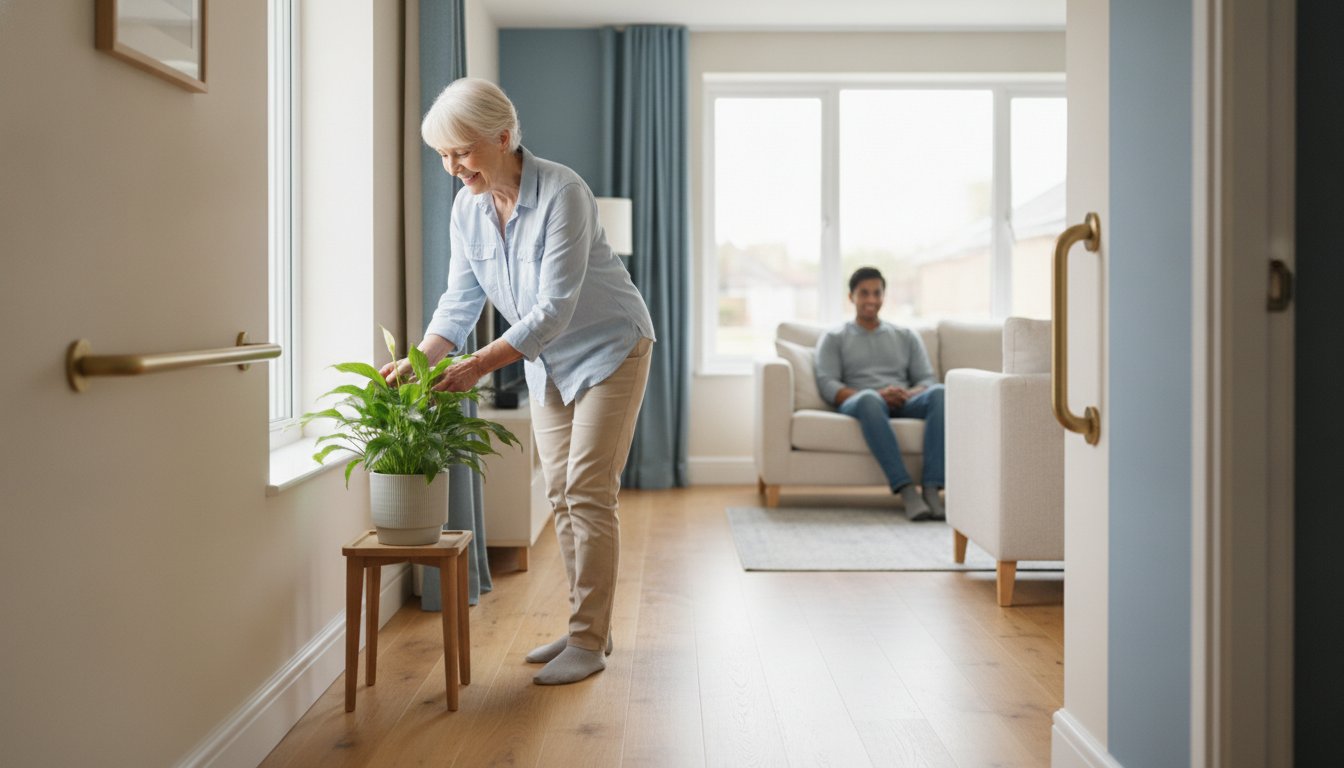
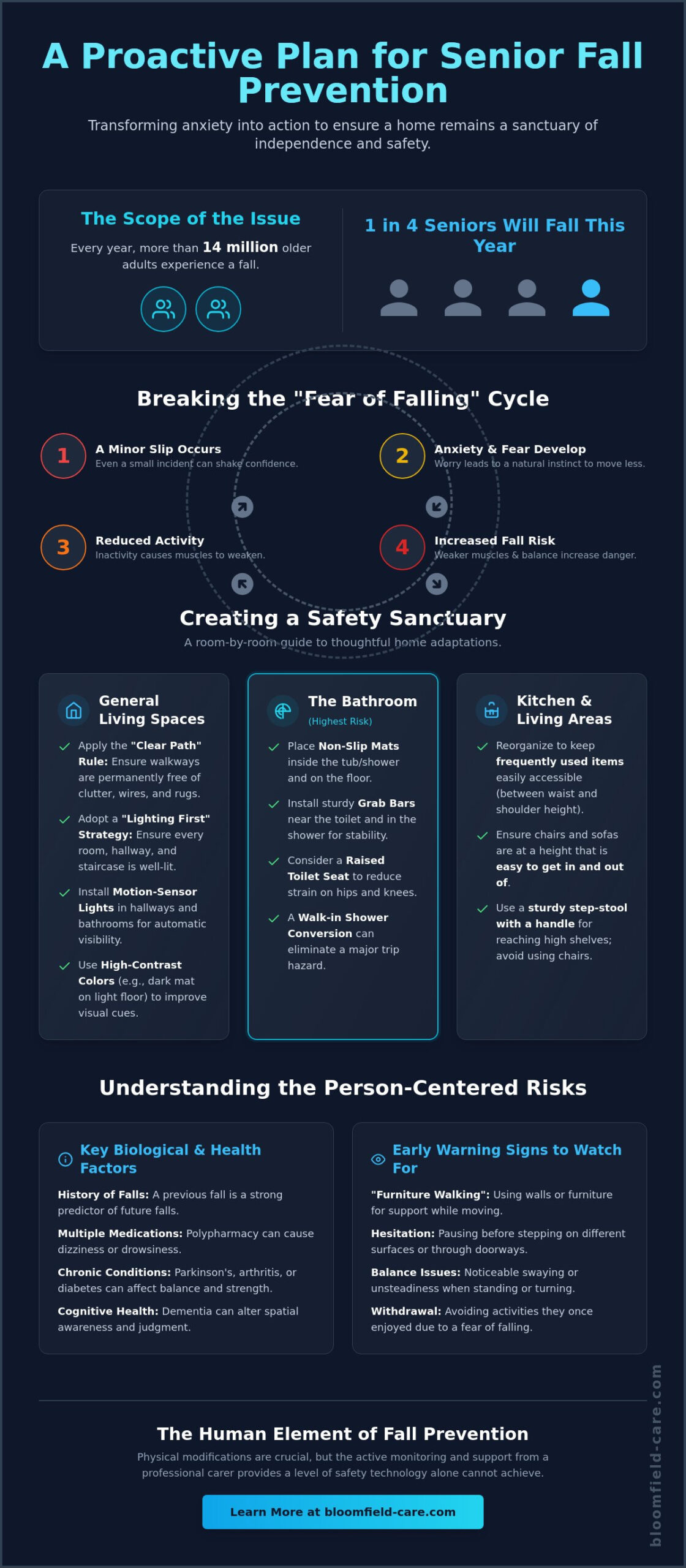
Every year, more than 14 million older adults experience a fall, a statistic that translates to one in four seniors facing a sudden, life-changing moment in the place they should feel safest. If you’ve spent sleepless nights worrying about a potential hip fracture or felt the heavy weight of guilt because you can’t be there every hour of the day, you aren’t alone. It’s natural to feel overwhelmed by the conflicting advice on home modifications. Our goal is to transform that anxiety into a proactive plan for fall prevention for seniors at home, ensuring your loved one’s residence remains a true sanctuary of independence.
This 2026 safety guide offers a compassionate, person-centered approach to securing the home without sacrificing the dignity of the person living there. You’ll discover how to identify hidden trip hazards, understand the latest in supportive equipment, and foster the physical confidence your family member needs to move freely. We’ll walk through essential environmental changes and mobility strategies that provide you with lasting peace of mind and your loved one with the security they deserve.
Key Takeaways
- Learn how to break the “Fear of Falling” cycle that often leads to a decline in activity and muscle strength.
- Discover how a room-by-room safety audit and the “clear path” rule create a reliable foundation for fall prevention for seniors at home.
- Identify the biological factors that contribute to instability and explore ways to maintain muscle health and balance.
- Explore the latest 2026 safety technologies to find the right balance between subtle lighting and active alert systems.
- Understand how the presence of a professional carer offers a level of active monitoring that physical modifications alone can’t achieve.
The Hidden Impact: Why Fall Prevention for Seniors at Home is Critical
For many families, the home is a place of comfort and shared memories. Yet, for seniors in the UK, it can also become a place of hidden risks. Statistics show that falls are the leading cause of emergency hospital admissions for older adults. When we talk about fall prevention for seniors at home, we aren’t just discussing safety rails or non-slip mats. We’re talking about the preservation of a person’s dignity and their right to live independently in familiar surroundings. Effective fall prevention is a proactive strategy to preserve autonomy rather than a simple reaction to an injury.
One of the most damaging aspects of a fall is the “Fear of Falling” cycle. It often starts with a minor slip that doesn’t cause a physical injury but shakes a person’s confidence. This anxiety leads to a natural instinct to move less. Unfortunately, inactivity results in muscle wastage and reduced balance, which actually increases the likelihood of a future accident. Breaking this cycle requires a gentle, supportive approach that encourages movement while ensuring the environment is secure.
The Physical and Emotional Cost of a Fall
The physical consequences of a tumble can be severe. We often see hip fractures, head trauma, and long-term mobility issues that require significant lifestyle adjustments. However, the emotional toll is just as heavy. A single fall can strip away a senior’s confidence, leading them to withdraw from social activities and hobbies they once loved. This isolation can impact mental well-being deeply. The good news is that many of these incidents are preventable. By implementing evidence-based fall prevention strategies and making small, incremental changes to the living space, we can help our loved ones feel secure again.
Identifying High-Risk Individuals
Understanding who is most at risk is the first step toward a safer home. Certain factors significantly increase the chance of a fall, such as a history of previous slips, the use of multiple medications, or living with chronic conditions like Parkinson’s. Cognitive health plays a major role too. For those living with dementia, changes in spatial awareness can make navigating a hallway or a set of stairs much more difficult. These conditions require a more tailored approach to safety that respects the individual’s routine.
If you’re caring for a family member in Oxford or Newbury, keep a watchful eye for subtle signs of instability. You might notice them “furniture walking,” which means touching tables or walls for balance, or hesitating before stepping onto different floor surfaces. Recognizing these early signals allows you to intervene with compassion before a serious incident occurs. True fall prevention for seniors at home begins with this attentive, person-centered observation and a commitment to maintaining the home as a sanctuary.
Creating a Safety Sanctuary: A Room-by-Room Home Audit
Your private residence is more than just a building; it’s a sanctuary of comfort and familiarity. As we age, however, the spaces we love must evolve to support our changing needs. Creating a safer environment doesn’t mean turning a home into a clinical space. Instead, it’s about thoughtful adaptations that empower independence. A core principle of fall prevention for seniors at home is the “clear path” rule. This involves ensuring that every walkway is permanently free of clutter, loose wires, and stray items that could cause a trip.
We also advocate for a “lighting first” strategy. Many accidents happen in the dim light of dawn or dusk, so ensuring every corner is well-lit is vital. Consider adding motion-sensor lights in hallways and bathrooms to provide instant visibility. For those with declining vision, high-contrast colors can be a lifesaver. Using a dark mat on a light-colored tile floor, or a bright strip on the edge of a dark step, provides the visual cues necessary for confident movement throughout the day.
The Bathroom: Managing Slippery Surfaces
The bathroom is frequently the highest-risk area due to the combination of moisture and hard, unforgiving surfaces. To mitigate these risks, non-slip mats are essential both inside the tub and on the floor. Installing sturdy grab bars near the toilet and inside the shower provides a steadying hand during transitions. If hip mobility is a concern, a raised toilet seat or a walk-in shower conversion can significantly reduce the physical strain of daily routines, allowing for a safer and more dignified experience.
Kitchen and Living Areas: Eliminating Obstacles
In common living areas, simple reorganization can prevent unnecessary reaching or bending. Try moving frequently used items to waist-height cupboards to avoid the dizziness that sometimes comes with changing positions quickly. Throw rugs are a significant hazard; it’s safest to remove them entirely or secure them firmly with high-quality double-sided tape. When choosing furniture, avoid low-profile sofas or chairs with wheels that might slide away during use. Following a room-by-room home safety checklist ensures no detail is missed during your audit.
Stairs and Hallways: Navigating Levels Safely
Navigating different levels requires extra security. Dual bannisters are a necessity, and they should ideally extend beyond the final step to offer support until the senior is on flat ground. You can also use glow-in-the-dark tape on step edges to improve visibility at night. Keeping landing areas clear is vital, especially for those using walking frames or sticks. If you’re feeling unsure about where to start, a professional domiciliary care assessment can provide the expert guidance needed to keep your home a safe and supportive haven.
Health and Vitality: The Biological Side of Fall Prevention
While modifying the environment is a vital step, the physical health of the individual is the other half of the safety equation. Biological changes that occur with age can subtly impact stability, often without us noticing until a slip happens. Sarcopenia, the age-related loss of muscle mass, is a common contributor to instability. When muscles weaken, it becomes harder to recover from a small stumble. Beyond muscle strength, simple factors like hydration and nutrition play a massive role in fall prevention for seniors at home. Dehydration can lead to sudden drops in blood pressure, causing the lightheadedness that precedes a fall. We encourage families to maintain a close relationship with their local GP or chemist in Dorset or Oxfordshire to monitor these changes. Integrating simple fall prevention tips into a daily routine can help manage these biological risks effectively.
Strength and Balance Exercises
Improving core stability doesn’t require intense workouts. Low-impact activities like Tai Chi or seated yoga are wonderful for building the coordination needed for a steady gait. You can even try simple drills in the kitchen, like the “heel-to-toe” walk, which mimics walking on a tightrope to sharpen balance. If you’re worried about a loved one exercising alone, respite care offers a supportive bridge, providing professional supervision during these vital movement sessions. This ensures they stay active without the risk of being unsupervised during physical activity.
Medication Management and Polypharmacy
Polypharmacy occurs when a person takes multiple medications, which is common for managing various health conditions in later life. However, the way these drugs interact can sometimes cause side effects like dizziness, blurred vision, or extreme fatigue. It’s essential to have a pharmacist or doctor review all prescriptions regularly to see if any can be adjusted to reduce fall risks. For those who find it difficult to keep track of various tablets, a dedicated carer can provide reliable medication support, ensuring safety and peace of mind for the whole family.
Vision and Footwear: The Foundations of Stability
The way we see and the way we step form the foundation of our balance. Annual eye tests are crucial for spotting cataracts or glaucoma early, as clear vision is necessary to navigate floor level changes safely. Footwear is another critical factor. While soft slippers feel cozy, they often lack the structure and grip needed to prevent a slide on smooth surfaces. Opt for sturdy, well-fitting shoes with non-slip soles instead. Also, be mindful if your loved one uses bifocals. These can sometimes interfere with depth perception on stairs, making a clear view of each step more difficult than it should be.
Essential Tools and Technology for Home Safety
The 2026 landscape of assistive technology offers a sophisticated safety net that was once the stuff of science fiction. Integrating these modern tools into a daily routine is a cornerstone of effective fall prevention for seniors at home. We generally categorize these tools into two groups: passive and active safety. Passive safety features, such as automated lighting, work silently in the background to prevent a trip from ever occurring. Active safety systems, like fall alarms, provide an immediate response if an incident happens. These tools should never feel like a burden or an embarrassment; instead, they should empower your loved one to move through their day with renewed confidence.
Technology provides a vital bridge for families who cannot be present 24/7. It offers a way to monitor safety without being intrusive, respecting the senior’s desire for autonomy while providing the family with much-needed peace of mind. When chosen carefully, these devices blend seamlessly into the domestic environment, maintaining the home as a sanctuary rather than a clinical space.
Personal Alarms and Fall Detectors
Modern wearable pendants and smartwatches have become incredibly discreet, often looking like stylish jewelry or standard timepieces. These devices use advanced sensors to automatically detect the specific motion of a hard fall, sending an alert even if the wearer is unable to press a button. For those who still enjoy the fresh air of the Dorset countryside, GPS-enabled devices are a wonderful choice. They allow monitoring centers or emergency contacts to pinpoint a person’s exact location, ensuring help arrives quickly whether they are in the garden or out for a stroll.
Smart Home Integration
Smart homes aren’t just about convenience. They’re about safety. By using voice-activated systems like Alexa or Google Home, a senior can illuminate a dark hallway before they even step out of bed, eliminating the risk of a misstep in the shadows. Video doorbells are another excellent addition. They allow a person to see and speak with visitors from their armchair, removing the need to rush to the door, which is a common cause of trips and breathlessness. Motion-sensor floor lighting is also highly effective for midnight trips to the bathroom, providing a soft, clear path without the glare of overhead lights.
While technology provides a vital safety net, it works best when paired with the warmth of human connection. If you’re looking for professional support to complement these safety tools, explore our elderly care options to see how we can help your loved one stay safe and independent.
Professional Care: The Human Element of Fall Prevention
While environmental changes and smart technology provide a sturdy foundation, the most effective strategy for fall prevention for seniors at home is the watchful presence of a dedicated professional. A grab bar is a helpful, passive tool, but it cannot notice if a loved one is feeling particularly dizzy one morning or if their gait has changed over the week. Professional care provides “active monitoring,” a dynamic layer of safety that responds to the person’s needs in real time. For families in Wallingford, Abingdon, and Weymouth, this human connection often provides the missing piece in the safety puzzle, turning a house back into a stress-free sanctuary.
As mobility needs change, the level of support should evolve too. For many, the transition from hourly visits to live-in care becomes the most reassuring choice. Having a carer reside in the home ensures that help is always at hand during those high-risk moments, such as navigating the stairs at night or moving from the bed to the chair. This constant presence doesn’t just manage risks; it preserves the individual’s independence by giving them the confidence to remain in the home they love.
How Domiciliary Care Reduces Risks
Daily tasks that once felt simple can become significant hazards. Carers provide essential support with high-risk activities like bathing, dressing, and navigating the transitions between rooms. Beyond physical assistance, companionship plays a surprising role in safety. Many falls occur when a senior rushes to answer the telephone or the front door. Having a carer present removes that sense of urgency, allowing the senior to move at their own pace. Our team acts as a “second pair of eyes,” spotting new hazards like a loose carpet edge or a misplaced footstool before they lead to an accident.
The Bloomfield Care Approach
At Bloomfield Care, we believe that safety should never feel like a loss of freedom. Our person-centred philosophy means we adapt our support to your loved one’s existing routine, ensuring their lifestyle is respected and upheld. We have a deep expertise in dementia care, where spatial awareness and perception can be uniquely challenging. By understanding the specific stages of cognitive change, we can implement safety measures that feel natural rather than restrictive. If you’re weighing up the best path forward, we invite you to explore whether home care or a care home is the right choice for your family’s unique circumstances.
Securing a Safer Future in the Home You Love
We’ve explored how room-by-room modifications, biological health, and the latest safety technologies create a layered defense against accidents. Most importantly, we’ve seen how a compassionate human presence provides the active monitoring that physical tools simply cannot match. Effective fall prevention for seniors at home is about more than just equipment; it’s about building a partnership that values dignity and autonomy above all else.
Since 2014, our team has supported families across Oxfordshire, Dorset, and West Berkshire with CQC rated professional care. Our deep expertise in dementia and specialist support ensures that every safety plan is as unique as the individual it protects. We invite you to Request a Free Home Safety and Care Needs Assessment today to see how we can help your loved one remain safe and independent. You don’t have to navigate these sensitive changes alone. We’re here to provide the stability and peace of mind your family deserves.
Frequently Asked Questions
What is the most common cause of falls for seniors at home?
Tripping over environmental hazards like loose rugs or navigating poorly lit hallways are the most frequent causes of accidents in the domestic setting. These physical obstacles often combine with biological factors, such as reduced muscle strength or impaired vision, to create high-risk situations. Ensuring a “clear path” throughout the home and removing clutter are the most effective ways to address these common dangers and maintain a safe environment.
How can I convince a stubborn parent to make home safety changes?
Focus the conversation on preserving their independence and autonomy rather than highlighting their limitations. Framing safety modifications as a way to “future-proof” their sanctuary allows them to feel in control of their lifestyle. It’s often helpful to introduce changes gradually, starting with subtle improvements like better lighting or motion sensors before moving to more visible aids like grab bars or walk-in showers.
Does the NHS provide free home assessments for fall prevention?
Yes, the NHS often provides free home assessments through an Occupational Therapist to identify potential risks. You can usually request this through a local GP, who’ll refer your loved one for a review of their living environment. This assessment is a vital first step in implementing fall prevention for seniors at home, as it provides professional recommendations tailored to their specific physical needs and routines.
Are grab bars and stairlifts covered by local authority funding in Dorset?
Local authorities in Dorset typically provide minor home adaptations, such as grab bars or handrails, free of charge if they cost less than £1,000. For more significant modifications like stairlifts, you may be eligible for a Disabled Facilities Grant. These grants are often means-tested, so it’s best to contact Dorset Council directly to arrange a formal financial assessment and check your family’s eligibility for support.
What should I do immediately after my elderly parent has a fall?
Stay calm and encourage your parent to remain still while you check for signs of pain, bruising, or broken bones. If they’ve hit their head, seem confused, or are in significant pain, call emergency services immediately and don’t attempt to move them. If they aren’t seriously injured, use a sturdy chair to help them up slowly, ensuring they rest afterward to recover from the shock.
Can dehydration really increase the risk of falling?
Dehydration is a significant but often overlooked risk factor because it leads to a drop in blood pressure and subsequent dizziness. When a senior isn’t drinking enough fluids, they may feel lightheaded when standing up quickly, which can result in a sudden loss of balance. Encouraging a regular intake of water or hydrating foods like soup is a simple yet powerful biological defense against fainting and instability.
How often should a senior’s home be audited for safety hazards?
We recommend conducting a thorough safety audit at least every six months or whenever there’s a change in your loved one’s health or medication. As mobility needs evolve, a hazard that seemed minor last year, like a slightly uneven doorstep, might become a major obstacle today. Regular reviews ensure that fall prevention for seniors at home remains proactive and adapts to their changing physical requirements.
Is live-in care safer than hourly care for fall prevention?
Live-in care generally offers a higher level of safety for those at high risk because it provides constant, active monitoring throughout the day and night. Unlike hourly care, a live-in carer is always present to assist with spontaneous movements, such as getting up for a glass of water or visiting the bathroom at midnight. This continuous support significantly reduces the window of time where an unsupervised accident or fall could occur.