

What if the most compassionate way to protect your parent’s independence is to actually invite a little extra support into their sanctuary? It’s a question that keeps many families awake at night, torn between the desire to honour a loved one’s autonomy and the growing worry that they’re no longer safe alone. You might feel a sense of guilt for not being able to do it all yourself, or perhaps you’re searching for the subtle signs my elderly parent needs help at home because you’re terrified that a crisis might happen before you can act.
We understand that these feelings come from a place of deep love. Research shows that over 90% of older adults in the UK want to stay in their own homes as they age, and our goal is to help them do exactly that. This guide will help you identify vital indicators of decline without compromising the dignity your loved one has spent a lifetime building. You’ll learn how to introduce the idea of companionship or domiciliary care as a way to enhance their lifestyle rather than limit it. We’ll provide a clear roadmap of red flags to watch for and practical advice on starting a gentle, supportive conversation that keeps your parent at the heart of every decision.
Key Takeaways
- Distinguish between natural ageing and critical physical indicators, such as changes in hygiene or nutrition, to ensure your loved one remains safe and well-nourished.
- Identify the specific environmental red flags and physical signs my elderly parent needs help at home so you can provide support before a minor issue becomes a crisis.
- Learn to spot “the stacking effect” of neglected household tasks and other subtle changes in the domestic sanctuary that signal a need for compassionate intervention.
- Master the art of the gentle conversation, using person-centred language to discuss care options while fully respecting your parent’s autonomy and choices.
- See how professional domiciliary care serves as a reassuring partnership that protects the sanctity of the home while providing expert, family-oriented support.
The Subtle Shift: Recognising the Need for Support Before a Crisis
The transition from complete independence to needing a helping hand is rarely a sudden event. It’s often a quiet, gradual change that reveals itself in small, easily missed moments. You might notice a slight hesitation when your parent stands up, or perhaps the kitchen isn’t quite as tidy as it used to be. While it’s natural to attribute these changes to “just getting older,” there’s a distinct line between normal ageing and the vital signs my elderly parent needs help at home. Normal ageing might involve occasionally forgetting a name; a sign for intervention is forgetting how to perform a familiar task or becoming confused in a well known environment.
Your intuition is one of the most powerful tools you have. Often, an adult child’s “gut feeling” that something isn’t right is the most accurate early diagnostic indicator. You know your parent’s rhythms, their quirks, and their standards better than anyone. If you feel a nagging sense of worry during your weekly visit, it’s usually because your subconscious has picked up on subtle indicators of decline that haven’t yet reached a crisis point. Trusting this feeling allows you to act proactively, ensuring that support is introduced as a gentle addition to their life rather than a reactive response to an emergency.
It’s also essential to understand why many parents work so hard to hide these struggles. To them, their private residence is more than just a house; it’s a sanctuary of memories and a symbol of their self-sufficiency. The fear of being “put in a home” is a powerful motivator to mask difficulties. They might stop inviting you into certain rooms or become defensive about their routine to protect this sense of autonomy. Home care readiness is the delicate equilibrium where professional support bridges the gap between an individual’s desire for independence and their physical or cognitive safety.
The Emotional Weight of Noticing Decline
Watching a parent struggle can trigger a complex mix of anxiety, guilt, and fear. You might feel guilty that you can’t provide all the care yourself, or fearful that suggesting help will damage your relationship. It’s helpful to shift your perspective from “taking over” to “supporting autonomy.” By introducing professional domiciliary care or companionship early, you aren’t removing their independence. Instead, you’re providing the scaffolding they need to remain in their sanctuary safely. This often improves the parent-child relationship, as it allows you to return to being a supportive son or daughter rather than a stressed primary carer.
Activities of Daily Living (ADLs) vs. Instrumental ADLs
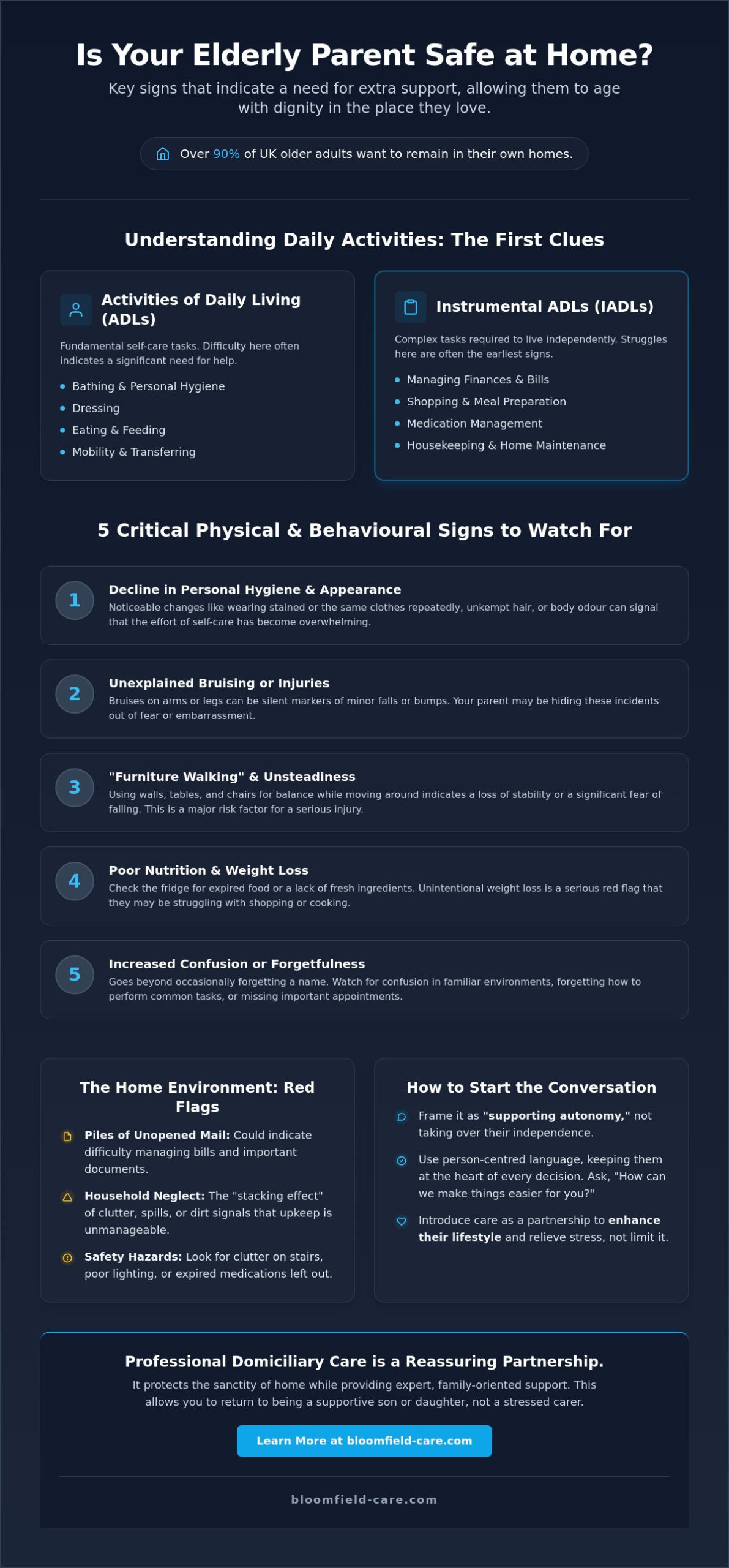
Healthcare professionals often categorise a person’s needs into two groups. The first group is Activities of Daily Living (ADLs), which are the fundamental tasks of self-care like bathing, dressing, and eating. The second group, Instrumental Activities of Daily Living (IADLs), involves more complex tasks such as managing finances, shopping, and keeping track of medications. Interestingly, a breakdown in IADLs is often the first real indicator that help is needed. If you notice unpaid bills or a lack of fresh food in the fridge, these are clear signs my elderly parent needs help at home to maintain their quality of life.
5 Critical Physical and Behavioural Signs to Watch For
The signs are often subtle. You might notice that your parent, who once took great pride in their appearance, is now wearing the same outfit for three days in a row. These changes aren’t just about “slowing down”; they’re often the first observable signs my elderly parent needs help at home. When daily routines become a struggle, it’s frequently because the physical or cognitive effort required to maintain them has become overwhelming. Recognising these indicators early allows for a gentle intervention that preserves their dignity before a crisis occurs.
One common sign is “furniture walking.” This is when a person uses walls, chair backs, and tables for balance as they move through the house instead of using a walking aid. It suggests a significant fear of falling or a loss of core stability. If you spot unexplained bruising on their arms or legs, these are often the “silent” markers of minor falls that your parent may be too embarrassed or fearful to mention. This National Institute on Aging guide suggests that observing these daily movements is a crucial step in assessing the safety of an older adult’s living environment.
Physical Appearance and Hygiene Red Flags
A decline in grooming is rarely about a lack of will. It’s often a signal of physical pain, such as arthritis making it difficult to reach or stand in the shower, or an early symptom of depression and social withdrawal. Unkempt hair, body odour, or a general lack of interest in personal care can be deeply distressing for both the individual and their family. When the domestic sanctuary begins to feel unmanageable, a person might simply “let the house go” because they no longer have the physical stamina to keep up with both personal hygiene and household chores.
Nutrition and Medication Safety
Nutrition often suffers when a parent lives alone. The “tea and toast” syndrome occurs when an individual lacks the energy or cognitive focus to prepare a full meal, relying instead on simple, low-nutrient snacks. Performing a quick “fridge test” for out-of-date food or a lack of fresh produce can reveal much about their daily wellness. With one in four adults in the UK living with two or more health conditions, managing multiple prescriptions becomes increasingly complex. Medication errors are a leading cause of avoidable hospital admissions for seniors, which is why domiciliary care Weymouth provides such essential peace of mind through professional medication oversight. A gentle partnership with a dedicated caregiver can ensure these vital signs my elderly parent needs help at home are managed with professionalism and warmth.
Evaluating the Home Environment: Safety Hazards and Neglect
A person’s home is their sanctuary, a place where they should feel most secure and at ease. However, when you visit, you might notice subtle shifts in the environment that suggest the daily upkeep has become a burden. These environmental indicators are often among the clearest signs my elderly parent needs help at home, revealing struggles that your loved one might be trying to hide to protect their independence. One of the most common patterns is the “stacking effect,” where life’s administrative and domestic tasks begin to pile up. You might see a stack of unopened mail on the hallway table, unpaid bills tucked away, or laundry that hasn’t been moved for days. These aren’t just signs of clutter; they’re signals that the cognitive or physical energy required to manage a household is depleting.
Odours can also provide vital clues about well-being. The faint smell of spoiled food in the kitchen, neglected pet areas, or the scent of urine in the living space shouldn’t be dismissed as a simple lapse in cleaning. They often indicate that your parent can no longer manage the sensory or physical demands of maintaining a hygienic environment. Safety hazards are another critical concern. Look for scorched pans in the kitchen, which may suggest forgotten burners, or cluttered walkways and poor lighting that significantly increase the risk of a fall. Even the state of the garden can be telling. If a once-pristine lawn is now overgrown, it often mirrors the indoor struggles, showing that the outdoor sanctuary has become too much to handle alone. According to the National Institute on Aging, identifying these Signs an elderly parent needs help involves looking for these specific changes in how they manage their surroundings.
To help your parent maintain a beautiful yet manageable outdoor space, you can visit Buds Nursery Cavan for advice on selecting hardy, flowering plants that require minimal upkeep.
The “Invisible” Hazards of a Neglected Home
Clutter isn’t just an aesthetic issue; it’s a significant safety hazard. For an older adult with reduced mobility, a pile of magazines or a loose rug can lead to a life-changing fall. It’s also vital to monitor technical hazards that are harder to see; for example, ensuring a gas boiler is serviced annually by specialists like Blueflame Boilers Ltd can prevent carbon monoxide risks or sudden heating failures. Beyond physical safety, a neglected home environment opens the door to financial risks. When complex correspondence becomes overwhelming, parents are more vulnerable to financial scams or the stress of mounting debt. Often, the shame of a messy home leads to social isolation, as they stop inviting friends or family over to avoid judgement, which further impacts their mental well-being.
Preserving the Sanctuary: Small Changes, Big Impact
Introducing support doesn’t mean taking away control. Instead, services like companionship care can help maintain the home’s standards, ensuring the sanctuary remains a place of comfort rather than a source of stress. A professional assessment can identify simple safety modifications, like better lighting or grab rails, that extend a person’s ability to live independently. Viewing these services and the cost of home care as a proactive investment in safety can prevent the much higher emotional and financial costs of a sudden crisis or hospital admission.
How to Approach the Conversation About Care Compassionately
Starting the dialogue about support is often the most daunting step for any family. You’ve observed the signs my elderly parent needs help at home, but bringing them up feels like you’re overstepping a boundary. It’s vital to remember that this isn’t a confrontation; it’s a partnership. Choose a moment when everyone is calm and unhurried, perhaps over a cup of tea in their favourite chair. Avoid bringing it up during a crisis or after a difficult day, as emotions will already be high. The goal is to create a space where your parent feels heard and respected, not managed.
Using “I” statements is a powerful way to express your feelings without making your parent feel judged. Instead of saying, “You aren’t eating enough,” try saying, “I feel worried when I see the fridge is empty because I want you to stay strong and healthy.” This keeps the focus on your love and concern rather than their perceived failings. Frame the introduction of care as a tool that allows them to remain in their sanctuary for longer. Listen more than you speak. Ask them what they’ve been finding difficult lately. You might be surprised to find they’ve been waiting for a way to ask for help without losing their dignity.
Dealing with Resistance and Denial
When a parent says “no” to help, they’re often really saying “I’m afraid of losing my identity.” Denial is a natural protective mechanism against the fear of change. If you meet resistance, try a gentle, persistent approach rather than pushing for an immediate decision. Suggesting a “trial period” for a few weeks can lower the stakes significantly. It’s much easier for someone to agree to a temporary visitor than a permanent change to their lifestyle. Starting with a few hours of companionship care is a non-threatening way to introduce a friendly face who can help around the house.
Involving Professionals in the Discussion
Sometimes, a neutral third party can provide the perspective needed to break an impasse. A GP or a professional care manager acts as a trusted advisor, taking the emotional “blame” off the family. They can provide a free care needs assessment, which focuses on objective safety and wellness needs. This is also an ideal time to discuss long-term wishes. While you might only need a little help now, understanding options like live in care early ensures that your parent’s voice is heard before a crisis limits their choices. If you’re ready to explore how a tailored support plan can protect your parent’s independence, contact our compassionate team today for a gentle conversation about your options.
Bloomfield Care: Reassuring Support in Oxfordshire and Dorset
Once you’ve identified the signs my elderly parent needs help at home, the natural next question is how to provide that support without disrupting the life they love. At Bloomfield Care, we believe that the most effective care is the kind that feels like a natural extension of family life. Our person-centred philosophy means we don’t ask your parent to adapt to us. Instead, we adapt to their established routines, preferences, and the unique rhythm of their household. We see the private residence as a sanctuary, and our goal is to enhance the quality of life within those familiar walls.
The Bloomfield Difference lies in our people. Our carers are chosen for their genuine kindness and professional integrity, often becoming a trusted part of the family circle. We provide a sense of stability that alleviates the anxiety of both the individual and their relatives. Whether your family requires short domiciliary visits to help with morning routines or the constant presence of live-in care, our services are designed to be flexible. We are committed to the highest CQC standards, providing the regulatory peace of mind that your loved one is in safe, highly competent hands. Our local expertise across Oxfordshire and Dorset ensures we are always close by when you need us most.
Tailored Care Plans for Every Stage
Care is never a one-size-fits-all solution. As needs evolve, our support evolves with them. We are specialists in supporting individuals through various dementia stages, providing the patience and expertise required for complex cognitive conditions. Many families start with simple companionship, which naturally transitions into more specialist personal care as physical or memory challenges increase. By providing professional medication oversight and mobility support, we help your parent maintain their self-sufficiency and dignity for as long as possible.
Next Steps for Your Family
Taking the first step is often the hardest, but you don’t have to do it alone. If you’re in Wallingford, Oxford, or anywhere across Dorset, you can request a local care assessment to discuss your parent’s specific needs. During our first visit to your parent’s home, we focus on listening. We want to understand their likes, their worries, and how they want their day to look. This initial meeting is unhurried and supportive, designed to build trust and clarity. You don’t have to navigate this journey alone; we are here to listen and help.
Protecting Their Independence and Your Peace of Mind
Recognising the signs my elderly parent needs help at home is a profound act of love, not an admission of failure. By observing subtle changes in their domestic sanctuary and trusting your intuition, you can introduce support long before a crisis occurs. This proactive approach ensures your parent remains in the home they love while receiving the professional, person-centred assistance they deserve. It’s about enhancing their quality of life, not limiting their freedom.
At Bloomfield Care, we are committed to providing a sense of stability through our CQC registered and inspected services. As specialists in dementia and live-in care, we act as a warm, family-oriented support system with local branches across Oxfordshire, Dorset, and West Berkshire. We’re here to help you navigate these sensitive decisions with grace and clarity, ensuring your loved one’s dignity is always at the heart of our partnership. You don’t have to carry the weight of caregiving alone.
Take the first step toward a safer, more supported lifestyle for your family today. Book a Compassionate Care Assessment Today and let us help you protect the sanctity of home. You’ve already done the hardest part by being attentive; let’s walk the rest of this journey together.
Frequently Asked Questions
How do I know if my parent is just being forgetful or has dementia?
Distinguishing between natural ageing and dementia involves looking at how memory loss affects daily safety and function. While forgetting a name or where the keys are is common for many, dementia often involves forgetting what keys are for or becoming confused in a familiar sanctuary. These are critical signs my elderly parent needs help at home that suggest a formal assessment is needed to protect their cognitive well-being.
What should I do if my elderly parent refuses help at home?
If your parent meets suggestions with resistance, it’s usually because they fear losing their autonomy and identity. Try to acknowledge their feelings with empathy and suggest a short trial period of companionship care rather than a permanent change. This unhurried approach allows them to experience the gentle benefits of support without feeling that their independence is being taken away.
Is home care safer than a residential care home?
Home care offers a unique level of safety by providing one-to-one attention within the comfort and familiarity of a person’s own residence. This personalised focus means a dedicated carer can spot subtle changes in health or domestic hazards immediately. For many, staying in their own environment reduces the confusion and distress often associated with the transition to a residential facility.
How much does home care cost in Oxfordshire and Dorset in 2026?
The cost of care in regions like Oxfordshire and Dorset depends entirely on the level of individualised assistance your parent requires. Professional home care rates reflect the high standard of person-centred support and the expertise of the carers involved. We recommend a full assessment to understand the specific needs and frequency of visits required to maintain your loved one’s lifestyle safely.
Can I get financial help for my parent’s home care from the local council?
Local authorities in England provide financial support if an individual’s capital and savings fall below specific thresholds. In 2026, if your parent has less than £23,250 in assets, they’re likely eligible for at least partial funding after a financial assessment. You should contact the adult social care department of your local council to begin this process and see what help is available.
How do I choose between hourly visiting care and live-in care?
Hourly visiting care is ideal for those who only need help with specific daily tasks like dressing, medication, or meal preparation. Live-in care is a more comprehensive option for individuals with complex needs or dementia who require a 24/7 presence for safety and reassurance. Both options are designed to enhance life quality and ensure your parent feels supported in their own home.
What is a care needs assessment and how do I get one?
A care needs assessment is a free evaluation carried out by the local council to identify what support a person needs to live safely and independently. It’s a vital step in identifying the specific signs my elderly parent needs help at home and determining the right level of intervention. You can request this assessment directly through the local authority’s social care website or by phone.
Will my parent have the same carer every time?
We understand that human connection is the heart of good care, so we strive for maximum consistency in our staffing. Your parent will typically be supported by a small, dedicated team of familiar carers who understand their routine and preferences. This allows for deep trust to develop, ensuring the support feels like a warm, reliable partnership rather than a series of visits from strangers.