Palliative Care at Home in Dorset: A Compassionate Guide for Families (2026)
Imagine your loved one waking up to the gentle light of a Dorset morning in their own bedroom, surrounded by the sights and sounds that define their life. While 30% of deaths in Dorset already occur within the home, many families still worry about whether they can truly provide the professional medical and emotional support required during such a sensitive time. Choosing palliative care at home Dorset isn’t just about managing symptoms; it’s about preserving the sanctity of the individual’s lifestyle while ensuring they receive professional, dignified assistance in their most familiar environment.
We understand the weight of responsibility you feel right now. You might worry about the complexities of pain management or feel overwhelmed by the need to coordinate with local GPs and district nurses under the new 2026 NHS standards. It’s a heavy burden to carry alone, but please know that your desire for a peaceful, pain-free environment is entirely achievable. This guide will help you discover how specialized support provides comfort for your loved one while protecting your family’s emotional well-being. We’ll walk you through the practicalities of coordinating care in the Dorset area, ensuring you have the clarity and confidence to focus on what matters most: spending precious time together.
Key Takeaways
- Understand the distinction between long-term palliative support and end-of-life care so you can plan the most appropriate journey for your family.
- Explore how palliative care at home Dorset integrates clinical medication management with compassionate assistance for daily tasks like bathing and mobility.
- Gain clarity on coordinating with Dorset-based GPs and navigating the NHS Continuing Healthcare assessment to secure the right professional support.
- Learn why the private residence is often the most therapeutic setting for maintaining dignity and identity compared to institutional environments.
- Discover how specialized live-in and domiciliary care can relieve the emotional pressure on family members, allowing you to focus on meaningful connection.
What is Palliative Care at Home in Dorset?
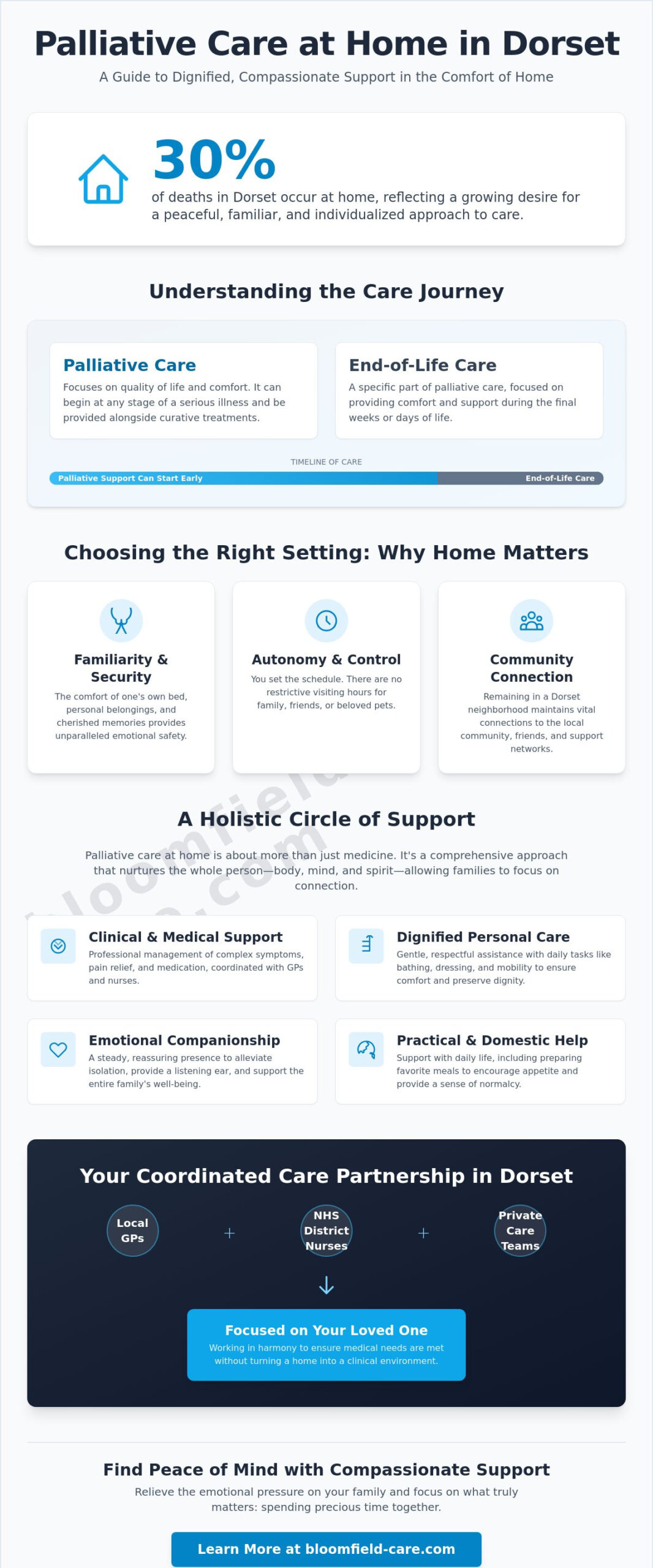
Many families feel a sense of quiet confusion when they first hear the term “palliative.” It’s often misunderstood as a service reserved only for the final days of life. In reality, palliative care at home Dorset is a specialized form of support designed for anyone living with a life-limiting condition, regardless of their age or the stage of their illness. It’s about living as well as possible for as long as possible. While end-of-life care specifically focuses on the final weeks or days, palliative support can be introduced much earlier. It works alongside curative treatments, providing a layer of comfort that helps manage symptoms and emotional distress.
In Dorset, this care is a partnership between various dedicated professionals. Private domiciliary care teams work in harmony with NHS district nurses and local GPs to ensure medical needs are met without turning your home into a cold, clinical environment. Your residence is your sanctuary. It’s where your memories live and where your routines are respected. Choosing home care means maintaining your dignity in a space that feels safe and familiar, rather than adapting to the rigid schedules of a hospital ward. Currently, around 30% of deaths in Dorset occur at home, reflecting a growing preference for this peaceful, individualized approach.
The Core Principles of Palliative Support
Palliative care is a holistic approach to health that prioritizes the enhancement of life quality and the alleviation of suffering above all other clinical outcomes. It looks at the whole person, not just a diagnosis. To gain a deeper understanding of the medical and historical background of these services, you can explore What is Palliative Care? for a broader perspective. The core goals include:
- Managing complex physical symptoms like breathlessness, fatigue, or persistent nausea.
- Providing psychological support to help families navigate the anxiety and grief of a diagnosis.
- Coordinating with medical teams to ensure medication is effective and timely.
- Ensuring the individual’s spiritual and emotional needs are met with genuine kindness.
Why Families in Dorset Choose Home Over Hospital
Dorset is a community-focused county, and staying connected to local life matters deeply. For many, the clinical excellence of a hospital cannot replace the emotional safety of one’s own living room. Families often choose palliative care at home Dorset for several reasons:
- Familiarity: Sleeping in your own bed and having personal belongings within reach provides a sense of security that institutions can’t replicate.
- Autonomy: You set the schedule. There are no restrictive visiting hours for family, friends, or even beloved pets.
- Community: Remaining in your Dorset neighborhood allows you to stay part of the community you love, surrounded by the people who know you best.
The Holistic Nature of Specialized Home Support
Specialized palliative care at home Dorset ensures that clinical excellence doesn’t come at the cost of personal warmth. It’s a common worry that moving medical care into the house might feel intrusive, but a holistic approach actually protects the domestic atmosphere. By managing complex medication and pain relief with professional precision, carers allow the family to step back from the role of “nurse” and return to being a daughter, a husband, or a friend. This clinical support is balanced with gentle personal care, where assistance with bathing and dressing is handled with the utmost dignity, ensuring your loved one always feels respected.
Beyond the physical, emotional companionship provides a steady, reassuring presence during moments of vulnerability. Whether it’s a quiet conversation or simply being in the room, this connection alleviates the isolation that often accompanies life-limiting conditions. We also recognize that comfort often starts in the kitchen. Preparing favorite meals isn’t just about nutritional support; it’s about the familiar aroma of a home-cooked dinner that can encourage a flagging appetite and provide a sense of normalcy in difficult times.
Person-Centred Care Planning
Every individual has a unique life story that should dictate how they are cared for. A person-centred plan isn’t a static document; it’s a living reflection of your loved one’s wishes, hobbies, and preferences. In line with the 2026 NHS Dorset strategy for personalized care, these plans undergo regular reviews to adapt as health needs change. This level of flexibility is exactly what bespoke domiciliary care in Weymouth provides, ensuring that the support evolves alongside the individual, always prioritizing their autonomy and mental well-being.
Supporting the Family Unit
Caring for a loved one is a profound act of love, but it can also lead to exhaustion. Providing Compassionate Palliative Support involves looking after the entire family unit, not just the individual. Respite care is essential to prevent burnout, giving family members the space to rest and recharge. Professional carers can also offer guidance on difficult conversations and help you understand what to expect in the coming months. If you’re feeling overwhelmed, remember that you don’t have to navigate this path alone; there are many local Dorset resources and bereavement services available to provide stability when you need it most.
Home, Hospice, or Hospital? Choosing the Right Setting in Dorset
Deciding where a loved one should spend their final months is one of the most profound choices a family will ever make. While 35% of deaths in Dorset currently occur in a hospital, many families find that clinical environments don’t always align with their desire for a peaceful, personal experience. Hospitals are designed for acute intervention, which often means rigid schedules, shared wards, and the constant hum of medical machinery. In contrast, palliative care at home Dorset prioritizes the individual’s comfort, allowing them to remain the center of their own story rather than a patient in a system.
Dorset is home to exceptional charitable organizations like Weldmar Hospicecare, which provides vital inpatient support for those in crisis. These hospices are incredible sanctuaries, yet they often rely heavily on community donations, with Weldmar needing to raise over £27,000 every single day to fund its services. Because hospice beds are often reserved for acute symptom management, home care serves as a crucial partner. It allows individuals to receive one-to-one attention in their own residence, preserving their mental well-being and cognitive health. For those living with dementia or Alzheimer’s, the stability of a familiar environment is often the best medicine for reducing anxiety and confusion.
The Live-in Care Advantage
One of the most significant benefits of staying at home is the continuity of support. In a hospital, staff rotations mean faces change every few hours. With a dedicated carer, a deep bond of trust is formed through a consistent, 24/7 presence. This doesn’t just improve safety; it preserves a sense of autonomy that is often lost in institutional settings. You can read more about compassionate live-in care and how it enables your loved one to set their own rhythm, from when they wake up to who they choose to see.
When Hospice Inpatient Care Might Be Necessary
There are times when a short-term stay in a hospice or hospital is the most responsible choice. If a clinical crisis arises or if pain management requires specialized equipment that isn’t easily moved, inpatient care provides the necessary stabilization. Many families use these facilities for “step-down” care, transitioning from a hospital back to the home environment once symptoms are under control. This collaborative approach ensures that palliative care at home Dorset remains a safe, sustainable option, providing a bridge between medical necessity and the comfort of the family sanctuary.
Practical Steps: Coordinating Palliative Care in Dorset
Starting the journey toward palliative care at home Dorset often begins with a quiet, honest conversation with your local GP. Whether you’re based in Dorchester, Weymouth, or Bournemouth, your doctor is the vital link to coordinating medical support. They can arrange for district nurses to visit and help manage clinical needs like pain relief or wound care. Since the new NHS Palliative and End of Life Care Standard came into effect on January 1, 2026, there’s a much stronger focus on seamless information sharing between your GP and other healthcare providers. This ensures everyone involved in your loved one’s care is on the same page from the very beginning.
Beyond medical coordination, you’ll need to consider the physical layout of the home. Creating a sanctuary requires a balance between comfort and accessibility. Local occupational therapy teams can assess the residence to see if specialized equipment, such as a profiling bed or mobility aids, is necessary to maintain safety. When selecting a care agency, it’s essential to look for providers with specific CQC specialisms in palliative support. This ensures the team has the training to handle complex emotional and physical needs with the professional grace your family deserves. It’s about finding a partner who values human connection as much as clinical safety.
Funding and Legal Considerations
Financing care is often a primary concern for families. If your loved one’s health is deteriorating rapidly, you may be eligible for Fast Track NHS Continuing Healthcare (CHC) funding. This is designed to bypass the usual lengthy assessments to get support in place within days. For those not eligible for Fast Track, Dorset Council’s 2026 financial thresholds apply; individuals with more than £23,250 in savings are typically required to pay the full cost of their care. It’s also a wise time to ensure a Lasting Power of Attorney (LPA) is in place. This empowers you to make decisions that honor your loved one’s wishes if they’re no longer able to do so. For a clearer picture of financial planning, you can consult the cost of home care in Oxfordshire and Dorset for detailed budgeting guidance.
Local Dorset Support Networks
You aren’t alone in this process. Dorset has a robust network of support, including Dorset Council Adult Social Care and specialized units like the Christchurch Macmillan Unit or Forest Holme in Poole. These organizations offer a wealth of expertise in symptom management and emotional support for the whole family. Coordinating with these local experts ensures a comprehensive safety net is wrapped around your residence. If you’re ready to discuss how a dedicated carer can support your family’s unique needs, you can reach out to our friendly Dorset team for a compassionate conversation about our live-in and domiciliary care options.
Compassionate Palliative Support with Bloomfield Care
At the heart of our service is a simple, profound philosophy: we treat every individual as if they were a member of our own family. Providing palliative care at home Dorset isn’t just about managing a checklist of medical needs; it’s about offering a hand to hold and a heart that understands. We believe that the best care happens when professional expertise meets genuine kindness. Our team doesn’t just step into your home; we enter your life as trusted partners, dedicated to preserving the comfort and dignity that only a private residence can provide. We listen first, ensuring that your voice and your loved one’s wishes remain the guiding force behind everything we do.
Our caregivers undergo specialized training that goes beyond the basics of elderly care. We focus heavily on the nuances of palliative support and dementia care, recognizing that conditions like Alzheimer’s require a particularly gentle and patient approach. We don’t work in isolation. Instead, we act as a bridge between your family and local Dorset healthcare providers, ensuring that every adjustment to a care plan is communicated clearly and implemented with grace. By prioritizing your loved one’s personal routines and life story, we ensure their residence remains a sanctuary of peace rather than a clinical setting. It’s about enhancing the quality of every moment spent in familiar surroundings.
The Bloomfield Difference in Dorset
One of the most distressing aspects of institutional care is the constant rotation of new faces. We prioritize consistency, ensuring that your loved one sees familiar people who understand their preferences, from how they like their tea to the stories that make them smile. This continuity builds a foundation of trust that is essential for maintaining autonomy and mental well-being. This person-centered approach is central to our commitment to respect and dignity. For a deeper look into our methodology and how we support families throughout the county, you can refer to our palliative care guide for 2026.
Next Steps: Arranging a Compassionate Assessment
We know that the first step is often the hardest to take. To help you find the right path, we conduct sensitive, no-obligation home assessments that focus on listening to your concerns and understanding your loved one’s specific needs. From this conversation, we create a bespoke care plan that covers everything from domiciliary care visits to full-time live-in support. We’re here to provide the stability you need during this difficult time, ensuring your family feels supported, heard, and empowered every step of the way. You don’t have to carry this burden alone; we’re ready to walk beside you with the professional safety and warmth your family deserves.
Embracing Peace and Dignity in the Comfort of Home
Choosing the right path for a loved one’s final chapter is a decision rooted in deep love and respect. You now understand how staying at home preserves identity and provides a therapeutic sanctuary that institutional settings often struggle to replicate. By coordinating with local healthcare teams and navigating the practical steps of funding, you can create a safe, supportive environment for everyone involved. Most importantly, professional assistance allows you to move away from the stress of daily medical logistics and return to being a present, loving family member during these precious moments.
When you choose palliative care at home Dorset, you’re choosing a path of profound dignity and individualized comfort. Since 2014, our family-owned service has provided local Dorset expertise with a truly person-centred approach. As a CQC regulated provider for specialist care, we prioritize professional safety alongside the warmth of a domestic environment. We invite you to contact our compassionate team for a sensitive care assessment. We’re here to listen, to support, and to help you find the clarity you need to move forward with confidence and peace of mind.
Frequently Asked Questions
How quickly can palliative care at home be set up in Dorset?
The timeframe for starting care depends on the urgency of the situation and the depth of the assessment required. In cases where health is deteriorating rapidly, the NHS Fast Track Continuing Healthcare (CHC) process can often secure funding and support within just a few days. For non-emergency situations, we focus on conducting a thorough, sensitive assessment to ensure the care plan is perfectly tailored to your loved one’s needs before service begins.
Is palliative care at home only for the very final days of life?
No, palliative support is designed to help anyone living with a life-limiting condition at any stage of their journey. While many people associate it with the very end of life, it’s actually about improving quality of life for months or even years. It works alongside other treatments to manage symptoms and provide emotional stability. Introducing support earlier can often help individuals remain more independent and comfortable in their own sanctuary for longer.
Who pays for palliative care at home in the UK?
Funding typically comes from three main sources: the NHS, your local council, or private funds. If the primary need is health-based, NHS Continuing Healthcare may cover the full cost. In Dorset, individuals with more than £23,250 in savings are generally required to pay for their own social care. Those with less than this amount may receive partial or full support from Dorset Council, depending on their income and specific care requirements as of 2026.
Can a palliative carer administer medication at home?
Trained carers can assist with the management and administration of prescribed oral medications, ensuring that schedules are followed precisely to maintain comfort. However, complex clinical tasks such as administering injections or managing specialized medical pumps are usually handled by NHS district nurses. Your care team works in close partnership with these medical professionals to ensure all aspects of pain relief and symptom management are delivered safely and effectively within the home.
What is the difference between palliative care and end-of-life care?
Palliative care is a broad approach that supports anyone with a serious illness to live as well as possible. It can begin at the point of diagnosis. End-of-life care is a specific subset of palliative support intended for those who are likely in their final weeks or days of life. Both prioritize dignity and comfort, but palliative care has a longer-term focus on holistic well-being and symptom management throughout the progression of an illness.
How does home care coordinate with my GP in Weymouth or Poole?
Modern care teams use integrated communication systems to stay in constant contact with your local Dorset GP. Under the NHS standards introduced in January 2026, there is a mandatory focus on seamless information sharing across all health settings. This means your GP is kept informed about any changes in your loved one’s condition, allowing for swift adjustments to prescriptions or medical interventions without the family needing to act as a constant intermediary.
Can we have a live-in carer for palliative support in Dorset?
Yes, live-in care is an excellent option for families seeking palliative care at home Dorset. It provides a consistent, 24/7 presence that ensures your loved one is never alone and their needs are met instantly. This continuity of care helps build a deep bond of trust and allows the carer to spot subtle changes in health or mood that might otherwise go unnoticed. It’s a supportive way to maintain the familiar rhythms of home life.
What happens if my loved one’s needs increase suddenly?
Care plans are designed to be flexible and are reviewed regularly to account for changing health requirements. If needs increase unexpectedly, your care provider will coordinate with the local GP and district nursing teams to escalate the level of support. This might involve increasing the frequency of domiciliary visits or transitioning to a full-time live-in care arrangement. The goal is always to adapt quickly so that your loved one remains safe, comfortable, and dignified in their own residence.