Understanding Overnight Care Costs in 2026: A Guide for Families in Oxfordshire and Dorset
Last Tuesday, Sarah found herself sitting upright in the dark, straining to hear if her father had managed the hallway safely in his Oxfordshire home. This quiet exhaustion is a heavy weight that many families across Dorset and the South East carry when they realize that daytime support is no longer enough to keep a loved one secure. You want your parent to stay in the sanctuary of their own home, but the fear of a midnight fall or the sheer physical toll of sleep deprivation is becoming unsustainable for everyone involved. It’s completely natural to feel overwhelmed when researching overnight care costs, especially when you’re trying to balance a family budget for 2026 with the need for professional, dignified assistance following the recent National Living Wage increase to £12.71 per hour.
We’re here to help you find clarity and peace of mind. This guide will show you exactly how overnight care is priced, explaining the vital differences between “sleep-in” and “waking night” services so you can choose the right level of support. You’ll discover how to access essential funding, from the 2026 Attendance Allowance rate of £114.60 to local authority thresholds, ensuring your loved one remains independent and safe in the place they love most. We’ll walk through these options together, helping you build a sustainable plan for the future.
Key Takeaways
- Understand the vital distinction between sleep-in and waking night support to ensure your loved one receives the right level of safety and rest.
- Learn how regional factors and the 2026 National Living Wage influence overnight care costs throughout Oxfordshire and Dorset.
- Identify available financial support pathways, such as non-means-tested benefits and Direct Payments, to help manage the investment in home-based care.
- Compare the practical and emotional advantages of remaining at home versus moving into residential care, including the hidden savings of staying in a familiar environment.
- Discover how a partnership-driven approach matches your family with a compassionate carer who respects your loved one’s routine and personal dignity.
Defining Overnight Care: Sleep-in vs. Waking Night
Transitioning from daytime assistance to overnight support is a significant step for any family. It represents a commitment to keeping your loved one in the sanctuary of their own home while ensuring they are never truly alone. When exploring domiciliary care in the UK, you’ll find that night-time support is generally divided into two distinct categories based on the intensity of need. These categories don’t just dictate the carer’s routine; they are the primary factor that determines your overnight care costs. Choosing the right path involves a gentle assessment of whether your parent needs a watchful eye or simply the comfort of knowing someone is nearby if they wake up.
The pricing structure for these services is built around the level of activity required. Because care is deeply personal, the costs naturally shift depending on whether a carer is resting or providing active, hourly intervention. Understanding these differences helps you plan with confidence, ensuring you aren’t paying for more support than is necessary, while never compromising on the safety of your family member.
What is a Sleep-in Care Visit?
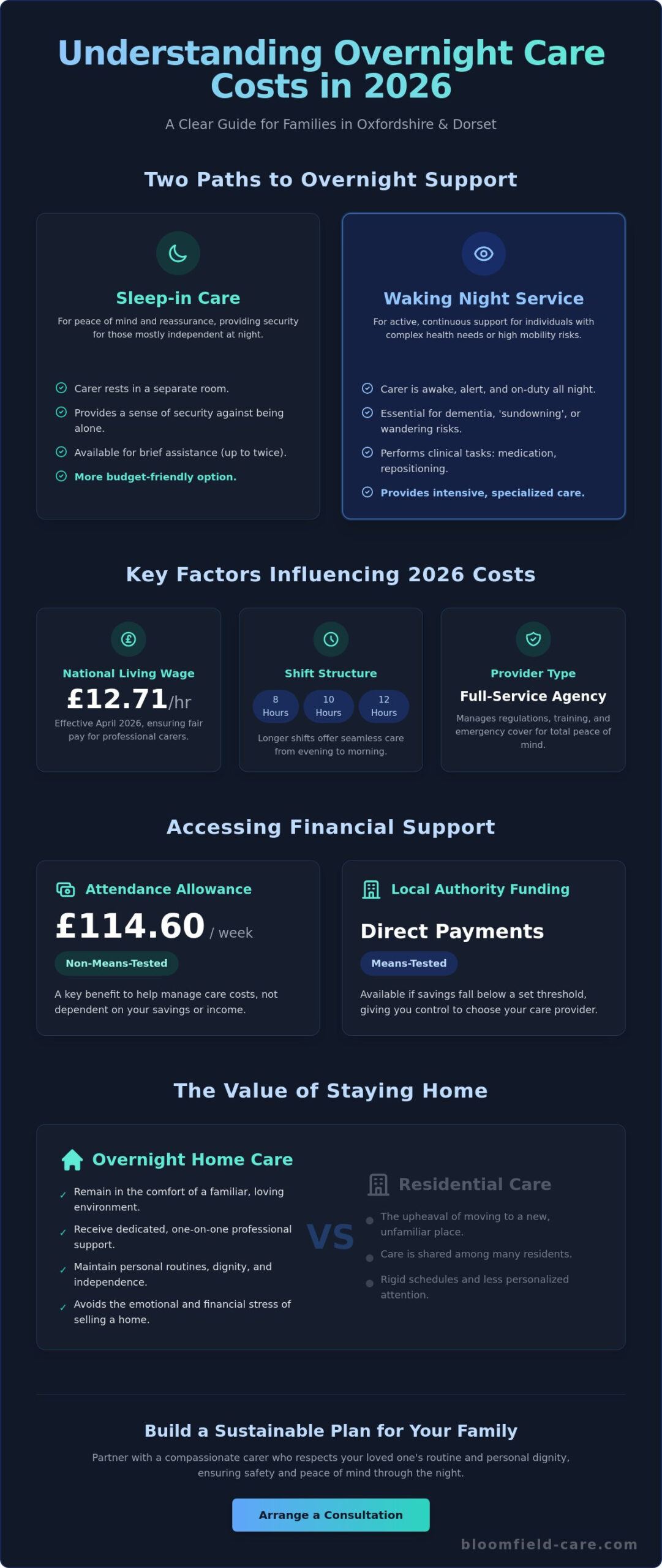
A sleep-in visit is designed for individuals who are largely independent during the night but feel vulnerable being alone. In this arrangement, a professional carer stays in the home and sleeps in a separate guest room. They’re there to provide a sense of security and can be called upon for brief assistance, such as help reaching the bathroom or a glass of water, up to twice per night. Because the carer is resting for most of the shift, this option is often more accessible for families managing a specific budget. It’s a perfect middle ground for those who don’t require constant monitoring but find that the presence of a supportive partner in the house brings much-needed peace of mind.
What is a Waking Night Service?
For families managing more complex health journeys, a waking night service provides a higher level of clinical and emotional vigilance. Unlike a sleep-in shift, the carer remains awake, alert, and fully on duty throughout the entire night. This active presence is essential for those navigating advanced dementia stages, where confusion or “sundowning” might lead to wandering or distress.
During these hours, the carer performs vital tasks such as regular repositioning to prevent pressure sores, administering medication at specific intervals, and providing compassionate personal care. Because the carer is working through the night without rest, the overnight care costs for this service reflect the specialized skills and continuous attention provided. It’s the standard for palliative care or high-mobility needs, ensuring that every midnight call for help is answered instantly with professional skill and a warm heart.
Factors Influencing Overnight Care Costs in 2026
Planning for the future requires a clear understanding of the shifting landscape in the care sector. As we move through 2026, the most significant driver of overnight care costs is the update to the National Living Wage. Effective from April 1, 2026, the legal minimum has risen to £12.71 per hour for those aged 21 and over. This change ensures that the dedicated professionals who look after your loved ones are fairly compensated, but it also means that care agencies must adjust their fees to remain sustainable while maintaining high standards of safety and excellence.
Beyond national regulations, the specific structure of the shift plays a major role in your budget. Most agencies provide support in windows of 8, 10, or 12 hours. A longer shift naturally increases the total fee, but it often provides a more seamless transition for the person receiving care, as it allows the carer to assist with both the evening wind-down and the morning routine. You might also notice a difference between full-service agencies and independent introductory platforms. While platforms may appear cheaper initially, a professional agency manages all the regulatory requirements, training, and emergency cover, providing a level of stability that is often vital for family peace of mind.
Regional Variances: Oxfordshire vs. Dorset
The cost of home care is deeply influenced by local economic conditions. Oxfordshire, situated in the South East, generally sees higher average rates for overnight support compared to Dorset. In bustling areas like Oxford city or Wallingford, the high demand for skilled carers can drive prices upward. Conversely, in rural parts of Dorset or West Berkshire, such as near Weymouth or Newbury, travel costs and accessibility become factors. If a carer needs to travel a significant distance to reach a sanctuary home in a remote village, agencies often include a small travel premium to cover their time and fuel, ensuring the carer arrives refreshed and ready to help.
Additional Cost Variables to Consider
When calculating your monthly requirements, it’s helpful to look at the finer details of the care plan. Most families find it beneficial to start with a professional assessment to determine the exact level of support needed. You can learn more about when the council might provide funding for your care through official NHS resources, which can help offset these expenses. Other variables include:
- Bank Holiday Premiums: Expect to pay higher rates, often double time, for care provided on public holidays.
- Complex Care Needs: If your loved one requires specialist clinical skills, such as stoma care or advanced peg feeding, the hourly rate may increase to reflect the carer’s advanced training.
- Weekend Rates: Some providers apply a modest increase for Saturday and Sunday shifts to ensure consistent staffing.
If you’re feeling unsure about how these variables apply to your specific situation, a quick conversation with a trusted advisor can help. You can reach out to our friendly team to discuss a personalized plan that respects both your budget and your parent’s dignity.
Funding and Financial Support for Overnight Care
Managing the financial side of home support often feels like a heavy burden, but you don’t have to carry it alone. Several pathways exist to help families manage overnight care costs, ensuring that safety and dignity remain within reach. The first and most essential step in this journey is requesting a Care Needs Assessment from your local council. This professional review isn’t just a formality; it’s the gateway to understanding exactly what help is required and which funding streams you might be eligible to tap into. For those with complex medical needs, you should also explore NHS Continuing Healthcare (CHC). This is a package of care funded solely by the NHS, and while the criteria are strict, it can cover 100% of care costs for individuals with a “primary health need.”
Attendance Allowance and PIP
One of the most helpful tools for families is Attendance Allowance, a benefit for those over State Pension age. It’s designed to help with the extra costs of having someone look after you. Crucially, these benefits are paid regardless of your savings or income, meaning your financial status won’t disqualify you from receiving this support.
To secure the higher rate of Attendance Allowance, which in 2026 has reached up to £114.60 per week, you must demonstrate a need for help during the night as well as the day. This might include needing assistance with medication, help to use the bathroom, or monitoring to prevent falls. By securing this higher rate, you can significantly subsidize a weekly schedule of professional support, making the sanctuary of home a much more sustainable option for the long term.
Local Authority Support in Dorset and Oxfordshire
If your loved one has assets and savings below the 2026 threshold of £23,250, they may be eligible for financial help from Dorset Council or Oxfordshire County Council. The council will perform a financial assessment to determine how much they can contribute toward your overnight care costs. If they decide to provide support, we highly recommend requesting “Direct Payments.” This system gives you the funds directly, allowing you the autonomy to choose a provider that matches your family’s values and routine rather than being limited to a council-contracted service.
In cases where the council’s standard rate doesn’t fully cover the average weekly care costs of your preferred agency, families can often provide a “top-up” payment. This partnership between state funding and private contribution ensures your parent receives the high-quality, person-centered care they deserve. Navigating these assessments takes time, so it’s always best to start the conversation with your local authority as early as possible to avoid any unnecessary stress during a crisis.
Overnight Care vs. Residential Care Homes: A Cost Comparison
When families begin to weigh their options, the most common question is whether staying at home is financially viable compared to a residential facility. In the South East, including Oxfordshire and Dorset, the average cost for self-funded residential care in 2026 has reached approximately £1,312 per week. If nursing care is required, that figure often climbs to an average of £1,579. When you compare these substantial weekly sums to the cost of targeted support, the value of staying at home becomes clear. For many, a plan involving several nights of professional help provides the necessary safety net while keeping total overnight care costs significantly lower than the price of a full-time care home placement.
Beyond the direct fees, staying at home offers hidden financial protections that are often overlooked. Moving into residential care often triggers the sale of the family home or complex decisions regarding property value and assets. By remaining in their own sanctuary, your loved one maintains their property investment, continues to benefit from existing council tax arrangements, and avoids the “room premiums” that many high-end care homes charge. Perhaps most importantly, the value per hour is vastly different. In a residential setting, a carer’s time is divided among many residents. At home, your loved one receives undivided, one-to-one attention, ensuring their specific needs are met with absolute precision and kindness.
Cost-Efficiency of Targeted Night Support
Introducing professional support for just two or three nights a week can be a transformative strategy for family carers. This targeted intervention prevents the “crisis move” to a care home that often happens when a primary carer reaches the point of total exhaustion. By protecting your own sleep and well-being, you can continue to provide high-quality daytime support for much longer. To help you decide which path is right for your family, we’ve created a detailed comparison of Bloomfield Care Home or care at home options, highlighting how preventative support can maintain independence.
The ‘Couple’ Advantage
For couples, the financial argument for staying at home is even more compelling. In a residential setting, you’re typically charged for two separate beds, effectively doubling your weekly expenditure. However, with home-based support, a professional carer can often look after both individuals within the same household for a single shift rate. It’s helpful to remember that home care rates usually cover the household’s needs during those hours, rather than being a per-person fee. This allows couples to maintain the profound bond of living together in their familiar environment while receiving the professional medical assistance they need to stay safe.
If you’re looking for a way to keep your parents together while managing your budget, our team can help you design a plan that prioritizes their shared life. Discover how our elderly care services can provide the specialized support your family needs to stay safely at home.
Arranging Overnight Care with Bloomfield Care
Deciding to invite a professional into your home during the most private hours of the night is a deeply personal choice. At Bloomfield Care, we view our role not just as providers of support, but as partners in your family’s well-being. Our approach is rooted in the belief that every individual deserves to feel safe and respected within their own sanctuary. We don’t believe in one-size-fits-all solutions. Instead, we focus on a person-centred philosophy that prioritizes the dignity and autonomy of your loved one, ensuring that overnight care costs translate into meaningful, high-quality life enhancements.
The heart of our service lies in the relationship between the carer and the individual. We take great care to match compassionate professionals with your loved one’s specific routine, personality, and preferences. Whether it’s a shared love for a particular evening radio program or a specific way they like their pillows arranged, these small details matter. By maintaining a dedicated, local team, we provide the continuity that is so vital for those living with dementia or those who simply find comfort in a familiar face. This consistency builds a bridge of trust, allowing you to rest easy knowing your parent is in capable and kind hands.
Our Local Presence in Your Community
We’re proud to serve families across the South East and South West, providing dedicated support in Wallingford, Newbury, Abingdon, Weymouth, and the many surrounding villages. Our commitment to excellence is reflected in our adherence to CQC standards and our dedication to transparent pricing structures that help families plan for the future without surprises. Beyond our standard night-time support, we also offer respite care. This service is a lifeline for family members who have been providing unpaid support and need a moment to recharge their own batteries, ensuring they can continue their caregiving journey with renewed strength.
Next Steps for Your Family
Taking the first step toward professional support is often the hardest part of the journey. We’re here to guide you through the process with patience and clarity. You can book a free, no-obligation care needs assessment where our care managers will visit your home to listen to your concerns and understand your goals. During this initial consultation, we encourage you to ask about our staff training, how we handle emergencies, and how we tailor our routines to match your loved one’s lifestyle. It’s a chance for us to begin building a partnership based on integrity and genuine kindness.
You don’t have to manage the complexities of overnight care costs or safety concerns alone. Contact Bloomfield Care today to discuss your overnight support needs and discover how we can help your loved one thrive at home.
Securing Your Family’s Peace of Mind at Home
Choosing the right support is about more than just numbers; it’s about protecting the sanctuary of home and the dignity of your loved one. You now understand the vital difference between sleep-in and waking night services and how to navigate the 2026 funding landscape. By focusing on targeted night-time assistance, you can often avoid the significant expense and emotional upheaval of a residential move while ensuring your parent remains in familiar surroundings. Managing overnight care costs is a manageable journey when you have a trusted partner to guide you through the local nuances of Oxfordshire and Dorset.
As a CQC Registered provider with specialist expertise in dementia and palliative care, we’re dedicated to providing the highest standard of professional safety with a warm, domestic heart. Our local branches are ready to listen and help you build a sustainable plan for the future. Book a Free Care Assessment with Bloomfield Care today to discuss how we can support your family. You’ve already taken the most important step by seeking information, and we’re here to help you move forward with confidence and clarity.
Frequently Asked Questions
Is overnight care cheaper than a residential care home in 2026?
Targeted home support is often significantly more cost-effective than moving into a residential facility. In 2026, self-funding a care home in the South East averages £1,312 per week. A few nights of professional help at home allows a loved one to stay in their sanctuary for a much lower total cost. This approach preserves both the family home and the individual’s autonomy.
Can I get help with overnight care costs from the council?
Local authorities in Oxfordshire and Dorset provide financial support if your loved one’s assets fall below the £23,250 capital limit. You’ll need to request a Care Needs Assessment and a financial assessment from your local council to determine eligibility. If you qualify, you can use Direct Payments to help manage your overnight care costs while choosing a provider that aligns with your family’s values.
What is the difference between a sleep-in and a waking night?
A sleep-in involves a carer staying in a separate room and resting; they’re available for up to two brief calls for assistance. A waking night means the carer remains alert and active throughout the entire shift to provide continuous monitoring or complex medical care. The choice depends on whether your parent needs gentle reassurance or constant, hands-on support.
Does Attendance Allowance cover the cost of a night carer?
Attendance Allowance can be a vital tool to subsidize your overnight care costs. The higher rate of £114.60 per week is available to those who require help during both the day and the night. Because this benefit isn’t means-tested, it provides a reliable weekly contribution regardless of your loved one’s savings or income level.
What happens if the carer is woken up during a sleep-in shift?
During a sleep-in, the carer can be woken up to twice per night for brief tasks like helping with a drink or reaching the bathroom. If your loved one’s needs become more frequent, we’ll gently transition the plan to a waking night service. This ensures the carer remains refreshed and capable of providing the high standard of safety your family expects.
Are there extra costs for overnight care on weekends or bank holidays?
Most providers apply premiums for weekends and bank holidays to ensure consistent, high-quality staffing. Bank holidays often involve double-time rates, while weekends may see a modest hourly increase. These adjustments are a standard part of the care sector, helping to value the dedication of professionals who work during family holidays.
How many hours does a standard overnight care shift last?
A standard overnight shift typically lasts between 8 and 12 hours, depending on your family’s specific routine. Many families find that a 10-hour window, such as 10pm to 8am, provides a seamless transition. This duration allows the carer to assist with the evening wind-down and the morning routine, ensuring your loved one starts their day with dignity.
Can I have overnight care just for a few nights a week as respite?
You can absolutely arrange overnight support for just a few nights a week. This flexible respite care is an excellent way for family carers to recharge while knowing their parent is safe in their own home. It acts as a bridge, preventing exhaustion and allowing everyone to maintain a healthy, supportive balance in their lives.