Specialist Stroke Recovery Support at Home in Oxford: A Compassionate Guide
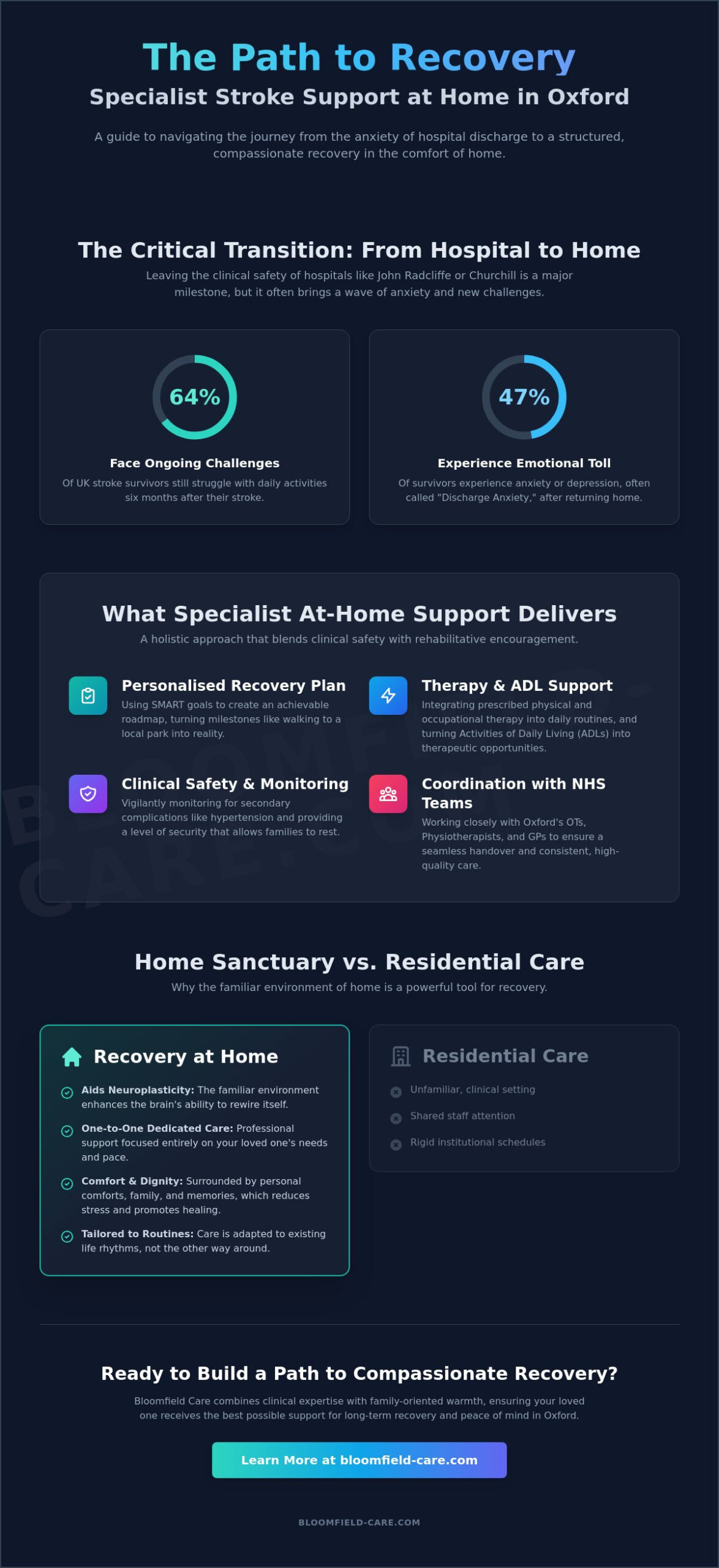
Did you know that 64% of stroke survivors in the UK still face significant challenges with their daily activities six months after their stroke? When you’re preparing for a loved one to leave the hospital, the clinical environment feels safe, yet the thought of returning home often brings a wave of anxiety. You might worry about managing complex therapy schedules alone or feel exhausted by the weight of new caregiving responsibilities. It’s a heavy burden to carry when you simply want your home to be a place of rest and healing.
We believe that recovery shouldn’t feel cold or clinical. This guide explains how specialist stroke recovery support at home in Oxford provides a clear roadmap for regaining independence and dignity. You’ll discover how a bespoke care plan offers the peace of mind that professional help is always nearby. This approach ensures your loved one can work on their speech and mobility within their own sanctuary, surrounded by the people and comforts they know best. We’ll show you how to move from the stress of hospital discharge to a structured, compassionate recovery at home.
Key Takeaways
- Learn how to navigate the transition from Oxford hospitals, such as the John Radcliffe or Churchill, back to the safety and comfort of your own home.
- Discover how specialist stroke recovery support at home in Oxford combines clinical safety with the rehabilitative encouragement needed to regain independence in daily activities.
- Understand why the familiar environment of a home sanctuary aids neuroplasticity and how bespoke live-in care costs compare to Oxfordshire nursing home fees.
- Find out how to create a personalised recovery roadmap using SMART goals to turn milestones, like walking to a local park, into achievable realities.
- Explore why a person-centred approach that blends professional clinical expertise with family-oriented warmth is essential for long-term recovery and peace of mind.
Navigating the Transition: Coming Home to Oxford After a Stroke
Leaving the sterile safety of the John Radcliffe or Churchill Hospital marks a major milestone in any recovery journey. However, this moment is often accompanied by a profound sense of vulnerability. While hospital staff provide round-the-clock monitoring, returning home means stepping into a space that, while familiar, now feels physically and emotionally different. It’s a transition that carries significant weight, as families move from a controlled clinical environment to the complexities of independent living. According to a comprehensive overview of stroke recovery, the initial phase after discharge is vital for setting the tone of long-term rehabilitation and psychological well-being.
The first 48 hours back in your own home are critical for long-term success. This window is when the reality of the situation often settles in for both the survivor and their family. Without the right stroke recovery support at home in Oxford, this period can feel overwhelming rather than celebratory. It’s the time to bridge the gap between clinical intervention and the rhythms of daily life. Establishing a safe, supportive routine immediately helps prevent setbacks and fosters the sense of sanctuary that is so essential for healing. By focusing on comfort and safety from the very first hour, we help transform a period of high stress into a steady step toward independence.
Coordinating with Oxford Healthcare Teams
Oxford’s healthcare landscape is world-class, but navigating it requires careful coordination. Our role involves working closely with the multidisciplinary teams that cared for your loved one in the hospital. This includes Occupational Therapists (OTs) who assess home safety and Physiotherapists who set specific mobility targets. We ensure a seamless handover of medical notes and recovery goals, liaising with local Oxford GPs and community nurses so care remains consistent. This partnership-driven approach ensures that the clinical safety of the hospital is brought directly into the home environment without losing the warmth of a family setting.
Overcoming the ‘Discharge Anxiety’
It’s natural to feel a sense of “discharge anxiety” as the hospital doors close. The fear of being on your own is a heavy burden, especially when 47% of survivors experience anxiety or depression following a stroke. Professional support acts as a safety net for the whole family. In that first week, we focus on setting realistic expectations. Recovery isn’t a race; it’s a steady journey. Having a trained caregiver present alleviates the pressure of juggling work and family caregiving, allowing you to focus on your relationship with your loved one while we handle the complexities of their daily support.
Specialist Stroke Recovery Support: What It Includes
Specialist stroke support is far more than a set of daily chores. It’s a delicate blend of clinical safety and rehabilitative encouragement designed to help survivors find their feet again. Unlike standard care packages, stroke recovery support at home in Oxford focuses on the holistic needs of the individual. We align our approach with the National Stroke Service Model, ensuring that the care received at home mirrors the high standards of the NHS. This involves a proactive stance where we don’t just ‘do’ for the person, but rather support them in doing for themselves. Assisting with Activities of Daily Living (ADLs) such as dressing or preparing a light meal becomes a therapeutic opportunity to rebuild confidence and fine motor skills.
Safety remains our foundation. We remain vigilant for secondary complications like hypertension or skin integrity issues that can arise from reduced mobility. By monitoring these clinical markers, we provide a level of security that allows families to rest. If you’re feeling overwhelmed by the technicalities of recovery, our specialist live-in care can provide the steady hand you need during this time. We believe that by combining professional vigilance with a gentle, encouraging presence, we create the best possible environment for neuro-rehabilitation to take place.
Physical and Occupational Therapy Support
Improving motor skills and balance requires consistency. We support the specific exercise routines prescribed by your clinicians, making sure they’re integrated into the day naturally. Whether it’s using adaptive equipment or practicing transfers, we ensure the home environment remains a place of progress. Our carers act as the daily hands of the therapist, ensuring that every movement made at home reinforces the goals set by your Occupational Therapist.
Communication and Cognitive Encouragement
Communication barriers like aphasia can be deeply frustrating for a survivor. We provide patience-led support, giving your loved one the time they need to find their words without pressure. Cognitive exercises are woven into daily life to help manage mental fatigue and improve focus. Beyond the clinical, the simple power of social companionship cannot be overstated. With 47% of survivors experiencing post-stroke anxiety, having a friendly, familiar face nearby prevents the isolation that often leads to depression. We listen more than we speak, offering the quiet, steady support that helps a person feel like themselves again.
Home-Based Rehabilitation vs. Residential Care in Oxfordshire
Choosing between a residential home and remaining in your own sanctuary is a decision that carries both emotional and practical weight. For many, the psychological power of staying at home is the deciding factor. Familiarity isn’t just about comfort; it’s a vital tool for neuroplasticity. When a survivor is in their own home, their brain can focus on recovery rather than trying to navigate an unfamiliar institutional layout. This sense of safety is a cornerstone of effective stroke recovery support at home in Oxford, allowing the individual to feel grounded while they work through the challenges of rehabilitation.
The financial aspect is also a key consideration for families in Oxfordshire. As of February 2026, the Oxfordshire County Council funding threshold remains at £23,250. If your savings or capital exceed this amount, you’re expected to pay the full cost of care. With live-in care services in Oxford often starting at approximately £1,700 per week, it’s a competitive alternative to high-end nursing homes. Unlike residential units where staff are shared between many residents, home-based care provides dedicated one-to-one attention. This means your loved one isn’t waiting for a call bell to be answered; their support is right there, focused entirely on their dignity and progress. Staying at home also allows survivors to maintain their ties to the local community, staying close to friends, family, and the Oxford landmarks that make them feel at home.
Preserving Independence and Dignity
Institutional schedules often dictate when a person eats, sleeps, or bathes. In contrast, bespoke care adapts to your life. There’s a profound sense of dignity in following your own personal routines without the pressure of a facility’s timetable. If you’re weighing up these choices, our guide on Bloomfield Care Home or Care at Home? A 2026 Guide provides deeper insights into making the right decision for your family. It’s about ensuring the care fits the individual, not forcing the individual to fit the care.
Safety and Continuity of Care
Safety at home extends beyond preventing falls. It also involves reducing the risk of hospital-acquired infections, which is a significant benefit of home isolation. Consistency is key to noticing the small details that matter. A dedicated carer learns the subtle changes in a person’s health or mood that an overstretched ward team might miss, ensuring the highest quality of stroke recovery support at home in Oxford. This continuity provides immense peace of mind, especially when coupled with support from the Stroke Association. Families also benefit from the freedom to visit whenever they wish, without the restrictive hours often found in residential settings.
Creating a Bespoke Recovery Roadmap for Your Loved One
A successful recovery doesn’t happen by accident; it’s the result of a carefully constructed plan that respects the individual’s history and hopes. When we begin stroke recovery support at home in Oxford, we start with a holistic assessment that looks far beyond physical limitations. We evaluate the emotional landscape and the physical environment of the home to ensure every corner supports healing. This process involves setting SMART goals that turn daunting challenges into manageable steps. For the 62% of survivors who face mobility issues six months after a stroke, a goal might be standing unaided for sixty seconds. For another, it’s the dream of walking to a local Oxford park, like University Parks, to enjoy the fresh air once again.
Family involvement is the heartbeat of this roadmap. We recognise that primary caregivers often face immense exhaustion. Data from 2025 indicates that 64% of survivors continue to struggle with daily activities half a year after their stroke, placing a long-term demand on loved ones. Our role is to provide the professional respite that allows you to step back from the role of ‘nurse’ and return to being a daughter, son, or spouse. By sharing the responsibility, we ensure the entire family has the strength to support the recovery journey. If you’re ready to start this journey, you can book a bespoke care assessment with our local team today.
The Environmental Audit
A safe home is the foundation of independence. We conduct a thorough audit to identify trip hazards, improve lighting, and ensure accessibility in every room. This often includes integrating discreet technology like fall sensors or smart medication dispensers that provide an extra layer of safety without feeling intrusive. Our bespoke approach to home modification ensures that every change is tailored to the specific mobility needs and layout of your unique Oxford residence.
The Emotional Support Plan
The ‘hidden’ effects of a stroke, such as sudden personality changes or heightened anxiety, can be the hardest for families to navigate. We match our carers’ personalities to our clients, ensuring there’s a genuine bond of companionship that goes beyond clinical needs. For those who may also be managing cognitive decline, our guide on Understanding Dementia Stages offers additional support for navigating these complex emotional shifts. We listen to the fears and frustrations that come with recovery, providing a steady, empathetic presence that fosters emotional resilience.
Why Oxford Families Trust Bloomfield Care for Stroke Support
Choosing a care provider is a deeply personal decision. For families across Oxfordshire, trust is built on the foundation of our person-centred philosophy. We understand that every one of the 100,000 strokes that occur in the UK each year represents a unique person with a unique life. Our approach to stroke recovery support at home in Oxford isn’t about fitting a survivor into a pre-existing schedule. Instead, we weave our support into the fabric of your existing life. The “Bloomfield Difference” lies in our ability to marry clinical excellence with the genuine warmth of a family-oriented system. We don’t just provide a service; we offer a partnership that values the sanctity of your home as a sanctuary for healing.
We empower independence by focusing on what a person can do, rather than what they cannot. Whether you require full-time live-in care or flexible hourly support, our services are tailored to the specific rhythms of Oxford lifestyles. This ensures absolute safety while encouraging the survivor to reclaim their dignity. By providing a consistent team of carers, we ensure that every subtle improvement is celebrated and every potential risk is caught early. This dedicated attention is what allows our clients to feel like individuals again, rather than patients in a system.
Our Bespoke Approach to Stroke Care
Our carers are more than just staff; they’re selected for their profound empathy and trained specifically to handle the complexities of neuro-rehabilitation. We take the time to match the right personality to your loved one, ensuring that companionship is at the heart of the recovery process. As a locally managed service with deep roots in the city, we provide a level of responsiveness that national agencies often struggle to match. If you’re looking for a service that understands the local landscape, our Compassionate Live-in Care in Oxfordshire offers the dedicated, high-quality support your family deserves.
Taking the First Step Toward Recovery
The path forward starts with a simple, unhurried conversation. During our free care needs assessment, we listen to your fears, your goals, and your family’s specific requirements. We also help navigate the often-confusing world of social care funding, providing clarity on how the Oxfordshire County Council thresholds might affect your situation. We’ll guide you through every step of the planning process with grace and transparency. Recovery is a journey that requires patience, expertise, and a lot of heart. It’s a journey we’re ready to take with you, providing the steady hand and professional reassurance needed to bring hope back into your home.
Reclaiming Independence and Comfort in Your Oxford Home
Choosing the right path after a stroke is about more than just managing symptoms. It’s about restoring a sense of self within the sanctuary of your own home. We’ve explored how transitioning from the John Radcliffe or Churchill Hospital requires a delicate balance of clinical expertise and emotional warmth. By choosing stroke recovery support at home in Oxford, you ensure that your loved one benefits from a bespoke roadmap designed to turn small daily victories into long-term independence. Whether it’s regaining the confidence to walk to a local park or finding the words to share a joke again, these milestones are most meaningful when they happen in familiar surroundings.
Our local Oxford-based management team is here to provide the stability and peace of mind your family needs. As a CQC registered and regulated provider, we take pride in delivering high-quality care that prioritises dignity and respect above all else. You don’t have to navigate this complex journey alone. We invite you to Book a Free Care Assessment in Oxford Today to discover how our person-centred plans can support your recovery goals. Let’s work together to make your home a place of progress, safety, and renewed hope for the future.
Frequently Asked Questions
Is stroke recovery support at home as safe as a hospital unit?
Home care is exceptionally safe because it provides dedicated one-to-one attention that a busy hospital ward simply cannot match. Our services are regulated by the Care Quality Commission (CQC) under the Single Assessment Framework, which utilizes 34 specific Quality Statements to ensure safety and effectiveness. By reducing the risk of hospital-acquired infections and providing a familiar sanctuary, we create a secure environment where recovery can thrive without the clinical coldness of a traditional ward.
How quickly can stroke care be arranged in Oxford?
We understand that hospital discharge often happens quickly, so we aim to arrange support within 24 to 48 hours of your initial enquiry. Our local Oxford team works efficiently to conduct a thorough assessment and match a carer to your loved one’s personality and clinical needs. This rapid response ensures that the critical first few days at home are managed with professional expertise, preventing the anxiety of being left without a safety net.
What is the difference between hourly and live-in care for stroke survivors?
Hourly care involves scheduled visits to help with specific tasks like morning routines or meal preparation. Live-in care provides a constant, 24-hour presence where a carer resides in the home to offer round-the-clock support. For many survivors, live-in stroke recovery support at home in Oxford is preferred because it offers the continuous monitoring and companionship necessary to manage the 47% risk of post-stroke anxiety and depression seen in national data.
Can a carer help with physiotherapy exercises at home?
Yes, our carers are trained to support the specific exercise routines prescribed by your Physiotherapists and Occupational Therapists. While we don’t replace clinical therapists, we act as their daily hands, ensuring that rehabilitative movements are practiced safely and consistently. This daily reinforcement is vital for neuroplasticity, helping your loved one work toward goals like walking to a local park or regaining fine motor skills in their own kitchen.
Will my loved one have the same carer every day for continuity?
Continuity is a cornerstone of our service because familiar faces build the trust necessary for successful rehabilitation. We strive to provide a small, dedicated team of carers so your loved one sees the same friendly faces regularly. This consistency allows our staff to notice subtle changes in health or mood, which is essential when 64% of survivors face ongoing challenges with daily activities six months after their stroke.
How much does specialist stroke recovery support cost in Oxford?
Costs for stroke recovery support at home in Oxford vary depending on the level of care required. In Oxfordshire, live-in care services typically start at approximately £1,700 per week, while hourly care across the county averages around £19.81 per hour according to 2026 market data. It’s also important to remember the Oxfordshire County Council funding threshold of £23,250; those with assets above this amount are usually expected to self-fund their care.
Does Bloomfield Care coordinate with the John Radcliffe Hospital team?
We maintain close links with the discharge teams at both the John Radcliffe and Churchill Hospitals to ensure a seamless transition. By liaising directly with hospital staff, we receive a full handover of medical notes and recovery objectives. This collaborative approach means that the high-quality clinical care started in the hospital continues without interruption once your loved one returns to their home in Oxfordshire.
What happens if my loved one’s care needs change during recovery?
Our care plans are bespoke and designed to be flexible as your loved one progresses through their recovery journey. We conduct regular reviews to adjust the level of support, whether that means increasing help during a setback or stepping back as independence is regained. Our goal is always to empower the individual, ensuring the support evolves to meet their physical and emotional needs at every stage of healing.