End of Life Care at Home in Dorset: A Guide for Families
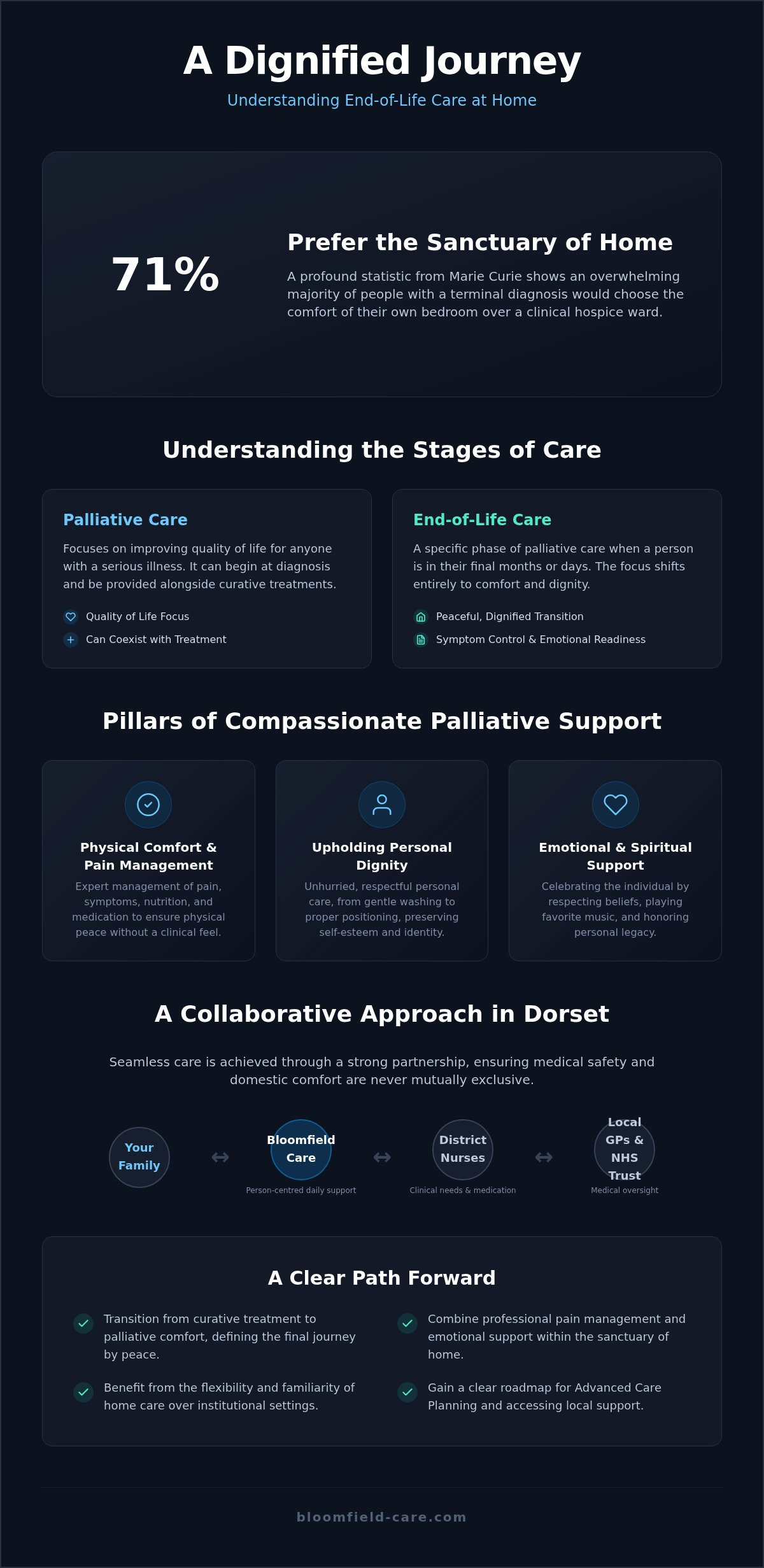
Did you know that 71% of people facing a terminal diagnosis would choose the peace of their own bedroom over a clinical hospice ward? It’s a profound statistic from Marie Curie that reflects a simple, human truth: home is our ultimate sanctuary. When considering end of life care at home Dorset families often carry a heavy weight of responsibility and worry. You might fear your loved one being in pain, or perhaps you feel a quiet guilt because you can’t provide intensive care alone. These feelings are completely natural, especially when the local care system feels confusing or clinical environments feel cold.
We believe that the final chapter of life should be defined by dignity and the warmth of a life well-lived. This guide will help you discover how to provide your loved one with a dignified, comfortable, and person-centred final journey in the familiar sanctuary of their own Dorset home. We’ll walk through the practicalities of palliative support, from ensuring expert pain management to choosing between visiting domiciliary care and 24-hour live-in support. By the end, you’ll have a clear, compassionate plan to maintain your loved one’s autonomy and peace while ensuring their clinical needs are met with professional excellence.
Key Takeaways
- Understand the transition from curative treatment to palliative comfort, ensuring your loved one’s final journey is defined by peace rather than clinical procedures.
- Learn how professional pain management and emotional support can coexist within the sanctuary of your own home, removing the need for rigid hospital routines.
- Compare the benefits of remaining in a familiar environment versus institutional care, highlighting the flexibility of private end of life care at home Dorset families rely on.
- Gain a clear roadmap for initiating Advanced Care Planning and requesting the necessary assessments from local authorities to secure the right support.
- Discover how a person-centred approach bridges the gap between expert clinical assistance and the warmth of a domestic setting.
What is End of Life Care at Home in Dorset?
End of life care is a specialised form of support designed for those in the final months or weeks of their life. It isn’t just about managing physical symptoms; it’s a holistic approach that embraces emotional, social, and spiritual well-being. For many, the choice to receive end of life care at home Dorset represents a significant shift in focus. It moves away from curative treatments that may no longer be effective, prioritising instead the comfort and quality of life of the individual. This transition allows families to focus on making every moment count, rather than navigating the logistics of hospital wards.
Choosing the home as a setting for this journey allows it to remain a sanctuary. In a private residence, your loved one is surrounded by their own memories, the scent of their own home, and the people they love most. This familiarity provides a level of psychological peace that clinical environments often cannot replicate. It offers a sense of autonomy and safety during a time that can otherwise feel uncertain. Dorset families are increasingly choosing this path because it preserves the individual’s lifestyle and dignity until the very end.
Palliative Care vs. End of Life Care
While often used interchangeably, these terms have distinct roles in a person’s journey. Palliative care focuses on improving the quality of life for anyone living with a serious, terminal illness. It can begin at the point of diagnosis and continue alongside active treatments. In contrast, end of life care is a specific phase of palliative support that usually begins when it’s clear the person is in their final months or days. The goal here is to ensure a peaceful, dignified transition, focusing entirely on symptom control and emotional readiness.
The Dorset Context: Local Support Networks
Arranging end of life care at home Dorset involves a collaborative effort between various healthcare professionals. We work closely with the Dorset HealthCare University NHS Foundation Trust and local GPs across Weymouth, Poole, and Christchurch to ensure a seamless experience. Our team at Bloomfield Care integrates with local district nurses to manage clinical needs, such as medication or wound care, while we provide the consistent, person-centred daily support that families need. This partnership ensures that medical safety and domestic comfort are never mutually exclusive.
- Personalised care plans tailored to individual lifestyle and dietary preferences.
- Coordination with NHS palliative teams for specialist equipment like hospital beds or hoists.
- Support for families to alleviate the physical and emotional burden of 24/7 caregiving.
The Pillars of Compassionate Palliative Support
Effective end of life care at home Dorset relies on a foundation of clinical excellence that feels almost invisible. It isn’t about hospital bleeps or sterile environments; it’s about the subtle, expert management of pain and symptoms within a familiar setting. We follow the latest recommendations for action to ensure that medical needs are met without disrupting the domestic peace. Practical assistance naturally includes managing nutrition, hydration, and complex medication schedules. This ensures the individual’s routine remains as normal as possible while their physical needs are fully addressed.
Beyond the physical, we focus on the spiritual and social threads that make a person who they are. Every life has a unique rhythm and a personal legacy. We respect individual beliefs, whether that involves specific religious rites or simply ensuring a favourite piece of music is playing. It’s about celebrating the person’s identity until the very end, ensuring they feel seen and valued as an individual rather than a patient.
Managing Physical Comfort and Dignity
Dignity often lives in the small details of personal care. Being unhurried is essential. Whether it’s a gentle wash or help with dressing, these moments shouldn’t feel like tasks on a checklist. They’re opportunities for connection and respect. Proper positioning and skin care are vital to prevent discomfort, especially for those spending more time in bed. By working closely with local district nurses, we ensure that medication for symptom relief is administered exactly when needed, maintaining a steady state of comfort and self-esteem.
Emotional Reassurance for the Whole Family
When a family member is nearing the end of their journey, the role of ‘carer’ can become overwhelming. It often eclipses the role of daughter, son, or spouse. Our goal is to lift that burden. By providing a steady, professional presence, we allow families to return to being loved ones. This emotional safety net extends to everyone in the house. We help navigate sensitive conversations with children or grandchildren, providing a calm atmosphere where they can say goodbye in their own way. If you’re feeling the weight of these responsibilities, our team provides bespoke live-in care designed to restore balance and peace to your home.
- Expert symptom control managed in coordination with Dorset GPs.
- Respectful personal care that prioritises the individual’s privacy.
- Psychological support to help families process the transition.
- Assistance with legacy work and spiritual preferences.
Choosing Between Home Care, Hospice, and Hospital Settings
Deciding where a loved one spends their final days is a deeply personal choice. While hospitals offer clinical efficiency, they can often feel rigid and impersonal. In contrast, end of life care at home Dorset provides a flexible environment where there are no restricted visiting hours or clinical shifts. Life continues in its own rhythm, dictated by the individual rather than a hospital timetable. This allows families to spend precious time together without the pressure of institutional routines.
A common concern for families is whether home care can match the safety and clinical standards of a hospital or hospice. Through rigorous CQC monitoring and specialist training, private care providers bridge this gap. We coordinate closely with local medical teams to ensure symptom management is as effective as it would be on a ward. While local charities like Weldmar provide vital ‘hospice at home’ support, their resources are often stretched. Private care offers a consistent, one-to-one presence that charity models sometimes cannot guarantee, ensuring your loved one is never left without immediate assistance.
When Home Care is the Right Choice
For many, the express wish to remain in a familiar setting is the most important factor. Home is where memories live, and for someone facing the end of their journey, this environment provides immense psychological comfort. When a person requires constant monitoring or has complex physical needs, live-in care becomes an invaluable option. It provides the security of 24/7 companionship, ensuring that help is always at hand for both physical comfort and emotional reassurance.
Understanding Live-in vs. Hourly Visiting Care
The level of support required often evolves over time. In the earlier stages of a terminal illness, hourly visiting care can provide essential help with daily tasks and companionship. It’s a gentle way to introduce support into the home. As needs become more intensive, domiciliary care in Weymouth and surrounding areas can adapt to provide more frequent visits or a full-time live-in presence. This flexibility ensures that the care plan grows alongside the individual, providing peace of mind that they are always safe and supported in their own sanctuary.
- No rigid visiting hours, allowing for natural family connection.
- One-to-one attention that institutional settings cannot always provide.
- A seamless transition from hourly support to 24-hour live-in care.
- Professional coordination with Dorset district nurses and GPs.
Practical Steps to Arranging End of Life Support in Dorset
Taking the first steps toward arranging end of life care at home Dorset can feel overwhelming, but breaking the process into manageable stages provides a sense of control. The journey typically begins with a formal needs assessment. You can request this through Dorset Council’s Adult Social Care team or directly through a private agency. This assessment identifies the level of support required, from occasional help with personal care to 24-hour live-in assistance. It’s also the time to establish a communication loop between your GP, district nurses, and your chosen carers, ensuring everyone is working toward the same goal of comfort and dignity.
Coordination is the thread that holds everything together. We recommend creating a shared folder or digital log where all healthcare professionals can leave notes. This prevents you from having to repeat sensitive information to every new visitor and ensures that medication changes or comfort preferences are instantly known by the whole team. This collaborative approach transforms a complex medical situation into a supported family environment.
Advanced Care Planning in Dorset
Advanced Care Planning (ACP) is about documenting wishes before they become urgent. In our local healthcare system, the ReSPECT form is a vital document. It stands for Recommended Summary Plan for Emergency Care and Treatment. This form stays in the home and tells emergency services exactly what kind of intervention your loved one does or doesn’t want. Alongside this, ensuring a Lasting Power of Attorney is in place for both health and finances provides legal clarity. It empowers you to make decisions that truly reflect your loved one’s values when they can no longer speak for themselves.
Preparing the Home for Palliative Care
Organising the physical space is about more than just medical access; it’s about preserving the feeling of “home.” You may need to arrange for specialist equipment like a profiling bed or pressure-relieving mattresses. These can often be sourced through the local occupational therapy team or private providers. While you prepare for these clinical needs, don’t forget the “peaceful corner.” This involves positioning the bed to catch the morning sun, keeping familiar scents like lavender nearby, or ensuring a favourite view of the garden is unobstructed. Balancing these logistics also means understanding the cost of home care so you can plan your resources with confidence and transparency.
If you’re ready to start this process but aren’t sure where to begin, our team is here to listen. Speak with a specialist advisor today to discuss a tailored plan for your family.
- Request a needs assessment from Dorset Council or a private provider.
- Complete a ReSPECT form to guide emergency medical decisions.
- Arrange a home visit from an occupational therapist for equipment advice.
- Establish a clear communication channel between the GP and the care team.
Why Dorset Families Trust Bloomfield Care for Final Journeys
Choosing a partner for the final chapter of a loved one’s life is a decision rooted in trust and the desire for absolute peace. At Bloomfield Care, we understand that providing end of life care at home Dorset families can rely on requires more than just clinical skill. It requires a deep, abiding respect for the individual and their life story. Our philosophy is person-centred, meaning we don’t just see a patient with a terminal condition; we see a person with a lifetime of experiences, preferences, and a unique personality that deserves to be honoured until the very end.
Our carers are the heart of this mission. Each member of our team is highly trained in palliative expertise, but they lead with their hearts. We prioritise consistency, ensuring that your loved one sees familiar faces every day. This reliability reduces anxiety and allows for genuine human connection to flourish. When a carer knows exactly how a person likes their tea or which window they prefer to look out of, the care becomes truly personal. It creates a bond that clinical hospital settings simply cannot replicate.
The Sanctuary Approach: Beyond Clinical Management
We treat every private residence as a sanctuary. This approach goes beyond managing symptoms to embrace the total well-being of the individual. We customise care plans to include mental health support and even small hobbies that bring joy, such as being read to or listening to a favourite radio programme. Autonomy remains a priority. Even in the most dependent stages of life, we ensure your loved one feels in control of their daily environment and choices, preserving their dignity through every interaction.
Seamless Integration with Dorset Health Services
Navigating the final weeks requires a coordinated effort. We have extensive experience working alongside local district nurses and GPs across Poole, Weymouth, and Christchurch. This partnership ensures that clinical safety and domestic comfort exist in harmony. If you are still weighing up your options, our guide on Bloomfield Care Home or Care at Home can help you decide which path best fits your family’s needs. Our commitment to excellence is reflected in our CQC monitoring and our transparent communication with families. We provide regular updates and a steady, reassuring presence that alleviates the physical and emotional burden of caregiving. Choosing end of life care at home Dorset with Bloomfield Care means choosing a journey defined by heart and professional integrity.
- Consistent, familiar carers to build trust and reduce patient anxiety.
- Expert collaboration with Dorset district nurses for clinical safety.
- A focus on mental well-being, hobbies, and personal autonomy.
- Support that extends to the family through the bereavement process.
A Peaceful Final Journey in the Comfort of Home
Choosing to spend final days in a familiar setting is a gift of peace for your loved one. We’ve explored how professional support can manage complex clinical needs while maintaining the warmth of a domestic sanctuary. By integrating specialist pain management with person-centred companionship, you can ensure their journey is defined by dignity rather than distress. This final chapter should be about connection and love, not the anxiety of medical logistics or the coldness of a clinical ward.
Navigating end of life care at home Dorset doesn’t have to be a journey you take alone. Our Dorset-based professional team is here to act as your trusted advisor, providing the stability and heart your family needs during this sensitive time. As a CQC Registered Provider with specialist palliative care training, we’re dedicated to upholding the highest standards of safety and compassion in every home we enter. You have the power to create a peaceful environment for your loved one, and we’re here to help you every step of the way.
Request a Compassionate Care Assessment Today and discover how we can support your family with integrity, patience, and genuine kindness.
Frequently Asked Questions
Can end of life care be provided at home if my loved one has complex medical needs?
Yes, complex medical needs can be managed at home through a collaborative approach. Private live-in carers provide the continuous presence needed for monitoring, while NHS district nurses handle clinical tasks like managing syringe drivers or wound care. This partnership ensures that even intensive end of life care at home Dorset services remain safe, professional, and entirely focused on the individual’s comfort within their own sanctuary.
What is the difference between palliative care and end of life care?
Palliative care is a broad term for support that begins at the point of a terminal diagnosis to improve quality of life. End of life care is a specific phase of this support, usually reserved for the final months or weeks. While palliative care can happen alongside curative treatments, end of life care focuses purely on comfort, dignity, and symptom management as the final journey approaches.
How do we arrange for a district nurse to visit our home in Dorset?
You should contact your local GP surgery or the hospital discharge team to arrange a district nurse visit. In Dorset, district nursing teams are managed by the Dorset HealthCare University NHS Foundation Trust. They work closely with families and private care providers to deliver clinical interventions, ensuring that medical needs are met seamlessly alongside the daily personal support provided by your regular carers.
Is 24-hour live-in care better than a hospice for someone with dementia?
For individuals with dementia, the familiarity of home is often transformative. While hospices provide excellent clinical care, the change in environment can cause significant distress and confusion for those with memory loss. 24-hour live-in care allows your loved one to remain in their own sanctuary with a consistent, familiar face, providing the one-to-one attention that institutional settings often struggle to match.
Who pays for end of life care at home in Dorset?
Funding typically comes from three sources: NHS Continuing Healthcare (CHC), Dorset Council, or private funds. If your loved one has a rapidly deteriorating condition, they may qualify for Fast Track CHC funding, which is non-means-tested. If not eligible, the council conducts a financial assessment. Currently, individuals in Dorset with assets over £23,250 are generally required to self-fund their end of life care at home Dorset.
What happens if our care needs change suddenly in the middle of the night?
Having a live-in carer ensures there is always a professional present to respond to changes immediately. If a medical emergency or a sudden increase in pain occurs, the carer can contact the Dorset out-of-hours GP service or the night district nursing team. This steady presence provides profound reassurance, knowing that you aren’t alone and help is always a phone call away, even in the early hours.
Can we still use home care if my loved one is under the care of a Dorset hospice?
Yes, private home care is designed to integrate with hospice-at-home services. While a hospice team like Weldmar might provide specialist nursing visits or equipment, they often cannot provide 24/7 presence. Private domiciliary or live-in care fills this gap, ensuring your loved one has constant companionship and personal care while the hospice team provides the high-level clinical oversight and specialist palliative advice.
How do I know when it is time to start end of life care?
It is often time to consider this care when curative treatments are no longer effective or when the focus shifts entirely to comfort. You should discuss this with your GP or consultant, who can help identify when the final months or weeks have begun. Early planning is always encouraged, as it ensures that your loved one’s wishes for dignity and peace are fully documented and respected.